United States Christian Commission


On November 14, 1861, a meeting of the Young Men’s Christian Association (YMCA) established the United States Christian Commission (USCC.) They were concerned with soldiers’ and sailors’ spiritual welfare and wanted to bring them to Christ.

Philadelphia merchant George Hay Stuart was the chairman. John A. Cole was general field agent.

Delegates of USCC helped regimental chaplains in caring for the soldiers. They gave religious tracts, hymnals, Bibles, and pocket testaments to soldiers. They held worship services, prayer meetings, and Bible Studies.

According to Chaplain William R. Eastman, 72nd New York, USCC provided a tent canvas for log chapels in the winter of 1863-64 near Brandy Station, each seating over 100 soldiers. Two daily services were held at City Point, Virginia—a 2:00 prayer meeting and 7:00 preaching service.

USCC also provided for physical needs. They carried no weapons yet went to battlefields, army camps, and hospitals. They worked as nurses. From the winter of 1863 on, they had about 100 Diet Kitchens to provide light meals. They gave stamps and stationery to soldiers for writing those important letters to loved ones back home.

They also provided coffee, a beverage dearly loved by soldiers. Their coffee wagons became popular. These wagons, traveling 8 miles per hour down rows of soldiers, supplied coffee for 1,200 men each hour. Hot coffee must have been quite a treat on a cold winter’s day.

Over 5,000 USCC volunteers traveled with the Union army throughout the South. Dwight Lyman Moody served as a volunteer. He held revival meetings at Confederate prisoner-of-war camps in Chicago, handing out pocket-sized Bibles.

-Sandra Merville Hart

Sources

Frey, Rebecca J. “U.S. Christian Commission,” Encyclopedia.com, 2018/12/28 https://www.encyclopedia.com/history/applied-and-social-sciences-magazines/us-christian-commission.

“United States Christian Commission,” Ohio History Central, 2018/12/28 http://www.ohiohistorycentral.org/w/United_States_Christian_Commission.

“United States Christian Commission,” Wikipedia, 2018/12/28 https://en.wikipedia.org/wiki/United_States_Christian_Commission.

Williams, Rachel. “The United States Sanitary and Christian Commissions and the Union War Effort,” National Museum of Civil War Medicine, 2018/12/27 http://www.civilwarmed.org/commissions/.
Civil War Women: Kady Brownell, Daughter of the Regiment

Kady Brownell, whose father was Colonel George Southwell, was born in a South African British army camp. After her mother died, the couple who raised Kady brought her to Providence, Rhode Island.

She fell in love with Robert Brownell while working as a weaver at a Providence mill. They married in April of 1861, the month the Civil War began. Robert mustered into the 1st Rhode Island Infantry.

Kady expressed her desire to fight alongside her husband to Governor William Sprague IV, the Governor of Rhode Island. Sprague, who did not believe the war would last longer than two days, intended to accompany the Rhode Island brigade into battle under the leadership of Colonel Ambrose Burnside. Sprague took Kady with him to Washington where she met up with her husband.

Colonel Burnside appointed Kady a Daughter of the Regiment and a color bearer. Robert was orderly sergeant in the 1st Rhode Island Infantry.

She actively participated with her husband in the First Battle of Bull Run, a Confederate victory, and then enlisted into the 5th Rhode Island Infantry along with her husband.

As color bearer, Kady carried the regiment’s flag into battle. The excellent markswoman also fought with Robert in several battles.

At the Battle of New Bern on March 14, 1862, their regiment fell under friendly fire in a dense forest. Kady waved their flag and ran ahead to show the Union soldiers firing on them that they were Rhode Island troops.

She stopped them but it was too late to save her husband from serious injury. Robert’s leg was shattered.

He recovered but the war was over for him. Kady didn’t want to remain a soldier without him. When they were both discharged, she became the only woman given discharge papers by the Union army.

-Sandra Merville Hart

Sources

“Brownell, Kady (b. 1842).”  Women in World History: A Biographical EncyclopediaEncyclopedia.com. 14 Dec. 2018<https://www.encyclopedia.com.

“Kady Brownell,” Wikipedia, 2018/12/14 https://en.wikipedia.org/wiki/Kady_Brownell.

Moore, Frank. Women of the War, Blue/Gray Books, 1997. (originally published 1866).

“William Sprague IV,” Wikipedia, 2018/12/14 https://en.wikipedia.org/wiki/William_Sprague_IV.

Civil War Women: Anna Maria Ross, Cooper Shop

Not long after the Civil War started, Philadelphia citizens realized Union troops passing through their city needed to be fed. Two refreshment saloons were established there in 1861—Union Volunteer Refreshment Saloon of Philadelphia and Cooper Shop Refreshment Saloon.

Wounded soldiers also arrived in Philadelphia, prompting local women to open a hospital. Anna Maria Ross worked there as Lady Principal. The 12-bed Cooper Shop Hospital received the first patients on October 29, 1861. The Cooper Shop was located at 1009 Otsego Street below Washington Street.

Day and night, Anna dressed soldiers’ wounds. She also made certain that discharged soldiers received a donation to tide them over until receiving their army pay.

Union troops passed through Philadelphia at all hours. A signal gun fired when regiments came. Women living near the Navy Yard—many responsible for their own families—responded to the signal. They walked to the refreshment saloons, day or night, to cook for the soldiers.

The Cooper Shop alternated days with the Union Volunteer Shop. The 24-hour daily period ended at 6 pm. Even if it wasn’t their day to serve, shop leaders could divide the soldiers and send them to the other shop if more than 200 men needed meals.

Wounded from Gettysburg arrived in July and August of 1863, crowding the saloon hospitals. Hospital trains passing through Philadelphia also benefited from supplies at the saloon hospitals. Shop volunteers, like Mrs. Eliza G. Plummer, gave the wounded toast and tea.

Anna was one who saw a need for a Soldiers’ Home to care for Civil War veterans. Along with others, she planned a fundraising fair in June of 1863, which provided enough money to obtain a building. Then they needed to furnish it.

Anna traveled in Pennsylvania and New Jersey to gain support, raising around $2,000. The Soldiers’ Home was dedicated December 22, 1863. Unfortunately, Anna caught a chill and died before the dedication.

She can be proud of her efforts. Throughout the war, the Cooper Shop Refreshment Saloon fed about 400,000 soldiers. Its hospital treated about 7,500 wounded. Most patients were temporary though not all. For instance, their annual statement for the year ending May 25, 1864, reported that 85 patients remained from 1 week to 1 year.

The Grand Army of the Republic gave her a posthumous honor–Post 94 in Philadelphia.

-Sandra Merville Hart

Sources

Brockett, L.P. MD and Vaughan, Mary C. Woman’s Work in the Civil War: A Record of Heroism, Patriotism and Patience, Zeigler, McCurdy & Co., 1867.

Edited by O’Brien, Kevin E. My Life in The Irish Brigade: The Civil War Memoirs of Private William McCarter, 116th Pennsylvania Infantry, Savas Publishing Company, 1996.

Moore, Frank. Women of the War, Blue/Gray Books, 1997. (originally published 1866).

Ross, Anna M.,” House Divided: The Civil War Research Engine at Dickinson College, http://hd.housedivided.dickinson.edu/node/33456.

Union Volunteer Refreshment Saloon, foot of Washington St., Philadelphia, by Union Volunteer Refreshment Saloon, 1861.


Civil War Women: Jennie Hodgers as Albert Cashier

Born in Ireland, Jennie Hodgers emigrated to United States as a girl. At her stepfather’s prompting, she dressed as a boy to find a job. Jennie moved to Illinois after her mother died.

Jennie enlisted in the Union army in August of 1862 under the name Albert D. Cashier. Small in stature. Quiet. Sought privacy when bathing. Kept her coat buttoned to the chin to hide a missing Adam’s apple. Still, other soldiers didn’t notice anything unusual about Private Cashier.

Jennie fought courageously in forty battles, narrowly escaping capture at Vicksburg.

She mustered out with her comrades in the 95th Illinois Infantry on August 17, 1865. Jennie then faced a dilemma. She couldn’t read or write and the jobs available to her as a woman would keep her at poverty. Living as a man, she’d work as a laborer. She later began receiving a military pension.

So she lived as Albert Cashier and eventually began working for Illinois State Senator Ira Lish. In 1911, Senator Lish ran over her with his car. With a badly broken leg, she was taken to a doctor … who discovered her long-held secret.

Jennie implored the doctor for his silence. Unwilling to see the veteran lose her pension, he agreed.

Things might have progressed as normal after that—if Jennie’s leg had healed. When it didn’t, Senator Lish placed her to the Soldiers and Sailors Home, a home in Quincy for male veterans. Staff members there kept Jennie’s secret.

Unfortunately, her mental health declined along with her physical health. In 1914, she entered Watertown State Hospital for the Insane. They discovered her sex and forced her to wear dresses again.

Newspapers printed her secret. A charge of defrauding the government by collecting a pension was investigated. Her comrades came to her defense, testifying to her bravery as a soldier. She kept her pension.

Jennie was buried in her soldier’s uniform with the name “Albert D. J. Cashier, Co. G, 95 Ill. Inf.” on her tombstone.

The executor of her estate, W.J. Singleton, spent nine years after her death tracking down her real name.

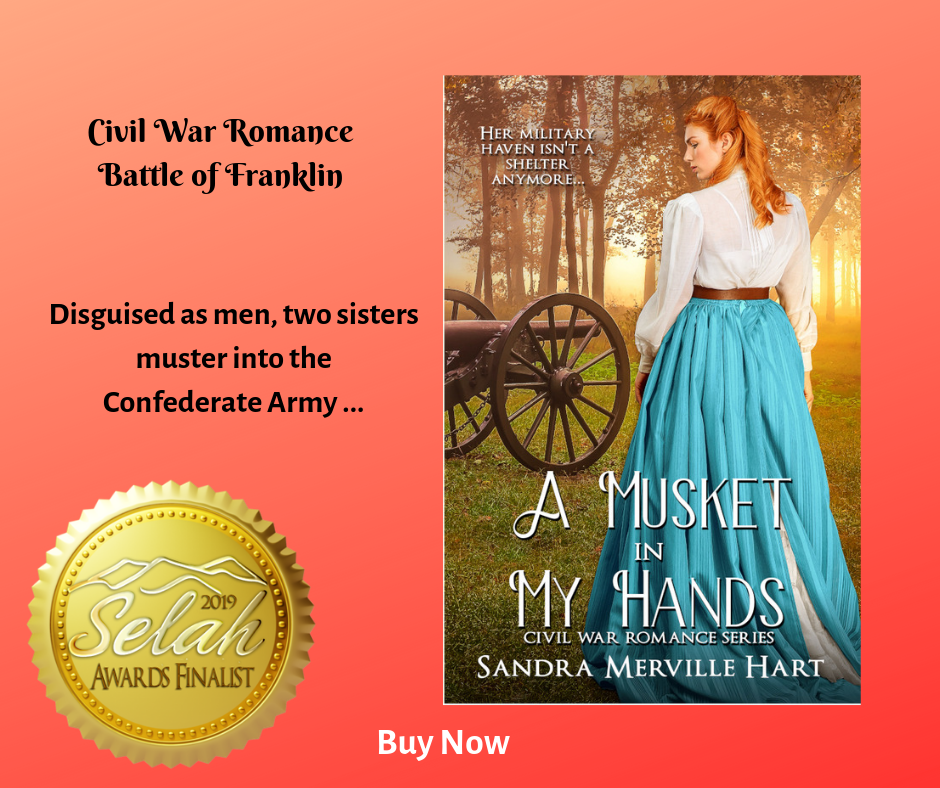
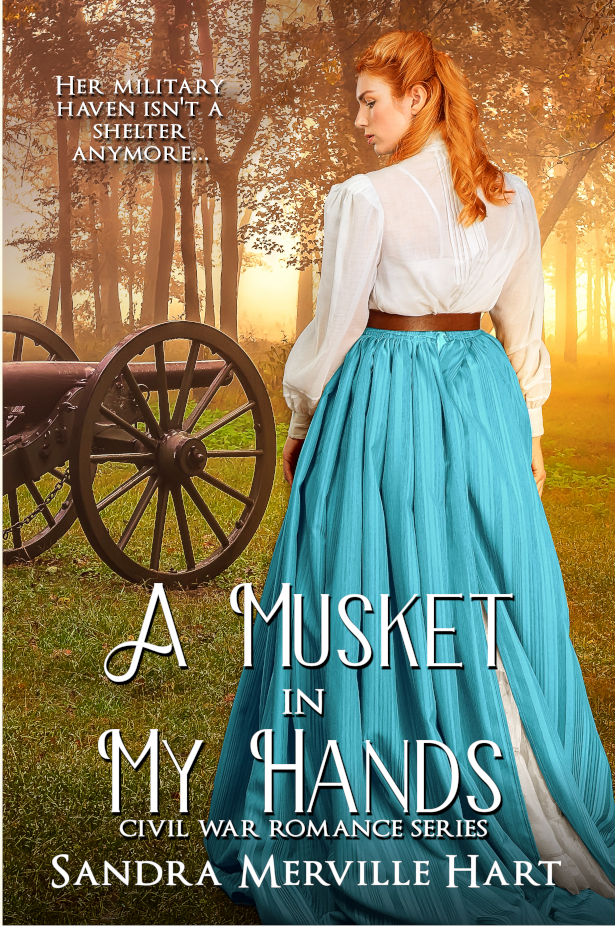
In my Civil War novel, A Musket in My Hands, an ultimatum from their father forces two sisters to disguise themselves as men and muster into the Confederate army in the fall of 1864—just in time for events and long marches to lead them to the tragic Battle of Franklin.

-Sandra Merville Hart


Sources

“Albert Cashier,” Wikipedia, 2018/12/10 https://en.wikipedia.org/wiki/Albert_Cashier.

Freedman, Jean R. “Albert Cashier’s Secret,” New York Times, 2018/12/10  https://opinionator.blogs.nytimes.com/2014/01/28/albert-cashiers-secret/.

Massey, Mary Elizabeth. Women in the Civil War, University of Nebraska Press, 1966.


“Jennie Hodgers aka Private Albert Cashier,” National Park Service, 2018/12/10 https://www.nps.gov/articles/jennie-hodgers-aka-private-albert-cashier.htm.


Civil War Women: Sarah Emma Edmonds as Franklin Thompson

At the age of sixteen in 1857, Sarah Emma Edmondson escaped an arranged marriage and an abusive father. She changed her last name to Edmonds. Emigrating to the United States from New Brunswick, she found a job more easily when disguised as a man, Franklin Thompson. When the war began, she lived in Flint, Michigan. Strong Union views led her to enlist in the 2nd Michigan Infantry as a male field nurse named Franklin Flint Thompson.

Emma nursed her comrades at such battles as the Battle of Antietam. She worked as a hospital attendant. She was also a mail carrier for her regiment, a dangerous job that often required horseback rides of over 100 miles.

A recurrence of malaria struck Emma in the spring of 1863. She requested a furlough, which was denied. Since she dare not visit the army’s medical staff for fear of discovery, she left camp in the middle of the night—Frank Thompson became a deserter.

Emma boarded a train to Oberlin, Ohio, where she recovered in a boarding house as Frank. Then she became a female nurse with the United States Christian Commission, where she served until the war ended. She wrote her memoirs in Nurse and Spy in the Union Army, first published in 1864.

There are no official records of Emma acting as spy for the Union army. She seems to have been talented at disguises. While a spy, she pretended to be Charles Mayberry, a Southern sympathizer; Cuff, a black man; and Bridget O’Shea, an Irish peddler.

After the war, Emma applied for a military pension. An Act of Congress finally cleared Franklin Thompson of desertion and she received the pension in 1884.

In 1897, Emma became the only woman admitted into the Grand Army of the Republic.

Emma left home to escape an arranged marriage, much as one of the sisters faced in my Civil War novel,  A Musket in My Hands. Two sisters disguise themselves as men and muster into the Confederate army in the fall of 1864—just in time for events and long marches to lead them toward the tragic Battle of Franklin.

-Sandra Merville Hart

Sources

Abbott, Karen. Liar, Temptress, Soldier, Spy: Four Women Undercover in the Civil War, Harper, 2014.

Blanton, DeAnne and Cook, Lauren M. They Fought Like Demons, Louisiana State University Press, 2002.

Massey, Mary Elizabeth. Women in the Civil War, University of Nebraska Press, 1966.

“Sarah Emma Edmonds,” Civil War Biography, 2018/12/10 https://www.battlefields.org/learn/biographies/sarah-emma-edmonds.

“Sarah Emma Edmonds,” National Park Service, 2018/12/10 https://www.nps.gov/people/sarah-emma-edmonds.htm.


Civil War Women: Malinda Pritchard Blalock as Sam Blalock

Malinda Pritchard Blalock is one of two women known to have fought for both the Confederacy and the Union during the Civil War. She expressed support for secession before the war started but her husband, William “Keith” McKesson Blalock, was pro-Union. Malinda soon shared his views.

The couple, who lived on Grandfather Mountain in North Carolina, feared Keith would be conscripted into the Southern army. To avoid this, he decided to muster into the Confederate army and then desert to join the Union army. He went with friends to the recruitment office and became part of the 26th North Carolina Regiment, Company F.

Sources disagree here as to whether Malinda signed up as his twenty-year-old brother “Sam Blalock” at the same time or if she disguised herself as a man and surprised him on the march.

The document still exists of her registering as “Samuel ‘Sammy’ Blalock” at Lenoir, North Carolina, on March 20, 1862. Her discharge papers have also survived, documenting a female soldier in the Confederate army.

Unfortunately for Keith and “Sam,” their regiment was stationed at Kinston, North Carolina—not in Virginia where it would be easier to desert.

About a month after they enlisted, Keith’s squad was given a night mission to find a particular Northern regiment. Skirmishing broke out and Malinda was shot in the shoulder. The surgeon who removed the bullet also discovered her identity. She was discharged.

Frantic that her secret was out, Keith found a patch of poison oak in the forest. Discarding his clothes, he rolled around in it and then returned to camp. By morning, a red rash covered his skin. Surgeons gave him a medical release. Malinda confessed that she was his wife and they left together.

Once Confederate forces learned that Keith had recovered they ordered him to return to his regiment. The Blalocks fled to Grandfather Mountain, finding other deserters there. They stayed with this group until Confederate troops found them.

The couple escaped to east Tennessee. Malinda pretended to be Sam again when they joined the 10th Michigan Cavalry. She served as Keith’s aide-de-camp.

Malinda, now pregnant, left the regiment to have her baby son in Knoxville. She rejoined her regiment two weeks later.

Keith and Malinda later joined Union Colonel Kirk’s voluntary guerrilla squadrons on scouting and raiding missions in North Carolina.

In my Civil War novel,  A Musket in My Hands, an ultimatum from their father forces two sisters to disguise themselves as men and muster into the Confederate army in the fall of 1864—just in time for events and long marches to lead them to the tragic Battle of Franklin.

-Sandra Merville Hart

Sources

Blanton, DeAnne and Cook, Lauren M. They Fought Like Demons, Louisiana State University Press, 2002.

“Malinda Blalock,” Wikipedia.com, 2018/12/10 https://en.wikipedia.org/wiki/Malinda_Blalock.

“Malinda Pritchard Blalock,” Rootsweb.com, 2018/12/10 http://sites.rootsweb.com/~ncmitche/sam.html.

Silvey, Ania. I’ll Pass for Your Comrade: Women Soldiers in the Civil War, Clarion Books, 2008.

Slappey, Kellie. “Sarah Malinda Pritchard Blalock (1839-1903),” North Carolina History, 2018/12/10 http://northcarolinahistory.org/encyclopedia/sarah-malinda-pritchard-blalock-1839-1903/.


Civil War Women: Mary Ann Clark as Henry Clark

Mary Ann Clark’s marriage hadn’t been easy. Her husband deserted her and her two children to go to California. According to her mother, Mary Ann suffered two nervous breakdowns when he wrote her that he was returning with a new wife. She divorced him.

At some point, she turned over the care of her two children, Caroline Elizabeth and Gideon P. Walker, to the care of Rev. Father Brady. Then Mary Ann disguised herself as a man (Henry Clark) and joined the Confederate army under General Braxton Bragg.

Clark was wounded at the Battle of Richmond, Kentucky, on August 30, 1862, captured, and imprisoned. Her identity was discovered while in prison. Union troops provided her a dress and asked her to swear to return to civilian life as a lady. Mary Ann agreed and wrote a letter to friends before leaving the prison, asking that they inform her mother of all that had happened to her.

Once free, she made her way back to the Confederate army—with one change. This time she rejoined as a female officer.

Southern newspapers called Mary Ann a heroine, yet they reported her story incorrectly. In their articles, they wrote that she followed her husband into the Battle of Shiloh where he was killed. The article went on to say that she buried him herself and then fought until she was captured.

Mary Ann didn’t follow her husband into war nor did she fight in the Battle of Shiloh.

In my Civil War novel, A Musket in My Hands, an ultimatum from their father forces two sisters to disguise themselves as men to muster into the Confederate army in the fall of 1864—just in time for events and long marches to lead them to the tragic Battle of Franklin.

-Sandra Merville Hart

Sources

Al-Jumaily, Sunshine. “’Tell Her What a Good Rebel Soldier I Have Been:’ Mary Ann Clark Disguised During the Civil War,” Kentucky Historical Society, 2018/12/10 http://history.ky.gov/landmark/tell-her-what-a-good-rebel-soldier-i-have-been-mary-ann-clark-disguised-during-the-civil-war/.

Blanton, DeAnne and Cook, Lauren M. They Fought Like Demons, Louisiana State University Press, 2002.

Howe, Robert F. “Covert Force,” Smithsonian.com, 2018/12/10 https://www.smithsonianmag.com/history/covert-force-70629819/.

“Mary Ann Clark, Confederate Soldier,” Civil War Talk, 2018/12/10 https://civilwartalk.com/threads/mary-ann-clark-confederate-soldier.104262/.


Rye Coffee

As the Civil War continued, food became scarce for folks in the South. Southerners also had a hard time obtaining coffee. They seemed to be just addicted to the beverage—especially soldiers—as people are today so they searched for substitutes. Rye was one of the substitutes.

In an early scene in my Civil War romance, A Musket in My Hands, the protagonist, Callie, does not have coffee beans to make her pa a cup of coffee. Instead she offers to fix him a cup from rye that she’d boiled and dried.

Though I am not a coffee drinker, I wanted to prepare rye for coffee. There is a recipe in Confederate Home Cooking.

Finding rye berries was the greatest challenge. A specialty food store near me sells them.

I’ve never seen or tasted rye coffee so this was a learning process. The recipe mentioned “parching” after drying, so I reached out to Southern cooks for help with this term. Parching means roasting, which makes sense. (Thanks, Charlotte and Debra!)

I boiled ¼ cup of rye on a medium high heat for 10 minutes. By experimenting, I discovered that longer than 10 minutes begins to split the grain, which the recipe advises against.

Boiling softened the grain, expanding it over double the original size. The water was a clear, brown broth.

The rye was drained and then set aside while I lined a cookie sheet with parchment paper. The oven was preheated to 275 degrees to dry the rye.

After spreading a thin layer of rye over the parchment paper, I set the cookie sheet into the oven, stirring the rye every five minutes. After 10 minutes, most of the grain was dry. After 15 minutes, it was removed from the oven.

While the oven preheated to 450 degrees, the rye was transferred onto a fresh piece of parchment paper on the cookie sheet.

Because the oven was so hot, I kept a close eye on the roasting process, checking the rye every 2 minutes. After 10 minutes, I removed them from the oven.

Many homes in the Civil War era had coffee grinders. I don’t own one so I ground the roasted rye with a rolling pin. Worked pretty well.

Then I experimented with how soldiers in camp might have made the coffee. Using 1 teaspoon of ground rye in each case, I tried the following:

1) Poured boiling water into a cup with the rye and let it steep about 5 minutes.  (left side of main photo)

2) Boiled water with rye—strongest coffee flavor. (middle)

3) NOT the way soldiers made coffee but applicable for folks today—a single-serving coffee maker. (right side of main photo)

All of these tasted like coffee to me. Granted, I am not a coffee drinker, but I agree that this probably worked well as a coffee substitute for soldiers. Though #2 made the strongest coffee, the others tasted almost as strong.

Tasting the beverage made me wonder if roasting it 2 minutes less would enhance the flavor. I will try roasting for only 8 minutes next time.

This was a fun experiment! I’d love to hear if you try it.

-Sandra Merville Hart

Sources

Mitchell, Patricia B. Confederate Home Cooking, 2014.

Attitudes Toward Women Civil War Soldiers

Approximately four hundred known cases of women serving as Civil War soldiers on either side–and an unknown number of ladies who slipped away or died without detection– subjected themselves to possible criticism from the general public and their comrades.

Society and the military were critical of women soldiers who didn’t accompany a male relative such as a husband or brother. The general public was not ready for unmarried women on the front lines.

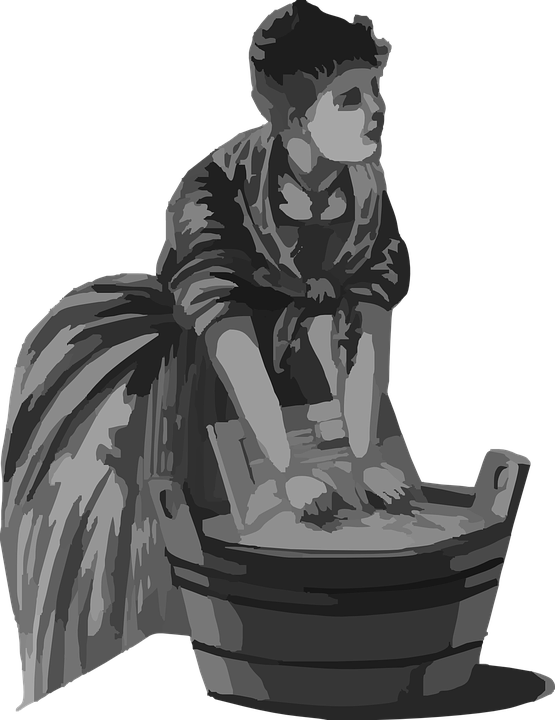
A Southern journalist categorized women in Confederate military camps in three ways: families of officers, laundresses and cooks, and prostitutes. So how did he classify female soldiers, scouts, and nurses?

The wives of officers living in army camps generally maintained the military’s respect. Union General Ulysses S. Grant sometimes had his family in camp.

The motivation of other women’s presence in army camps puzzled the public. There was a tendency to doubt the female soldier’s conduct. Some endured unjust accusations of misbehavior.

There were also female visitors in camp who came to see loved ones. Most parents refused to allow their young, unmarried daughters to visit army camps. They sometimes sneaked in anyway.

Many women simply wanted to be near their men.

Prostitutes followed the camps. Government records show that camp followers numbered in the thousands around army camps. Some bootlegged liquor and acted as spies.

Hundreds of women, including female soldiers, became pregnant in army camps.

The military and the public knew all this. Unfortunately, those experiences affected how men viewed women soldiers.

The women who served as Civil War soldiers endured many obstacles. Public opinion during and after the war was one of them.

In my Civil War novel, A Musket in My Hands, two sisters have no choice but to disguise themselves as men to muster into the Confederate army in the fall of 1864—just in time for events and long marches to lead them to the tragic Battle of Franklin.

-Sandra Merville Hart


Sources

Abbott, Karen. Liar, Temptress, Soldier, Spy: Four Women Undercover in the Civil War, Harper, 2014.

Blanton, DeAnne and Cook, Lauren M. They Fought Like Demons, Louisiana State University Press, 2002.

Massey, Mary Elizabeth. Women in the Civil War, University of Nebraska Press, 1966.

Silvey, Anita. I’ll Pass for Your Comrade: Women Soldiers in the Civil War, Clarion Books, 2008.

Velazquez, Loreta Janeta. The Woman in Battle: The Civil War Narrative of Loreta Velazquez, Cuban Woman & Confederate Soldier, The University of Wisconsin Press, 2003. (Previously published 1876)


Sweet Potato Biscuits

Sweet potatoes were a staple food during the Civil War. They grow in humid warm areas. Many large plantations had root cellars to store them.

When the leaves begin yellowing in fall, farmers harvest the roots. After brushing the sweet potatoes clean, the curing process begins. Potatoes are stacked in the field and covered with sand. Farmers leave them alone for weeks. Once the curing process is done, they may be stored several months.

Sweet potatoes may be baked, boiled, stewed, mashed, or fried. They were often used in pies, cakes, and puddings. As in the case of Civil War soldiers in my historical romance,  A Musket in My Hands, many Southerners liked sweet potato biscuits. I had to try them.

For my sweet potato biscuits, I followed the recipe of a well-known modern Southern cook—Paula Deen. Here’s the link to her recipe.

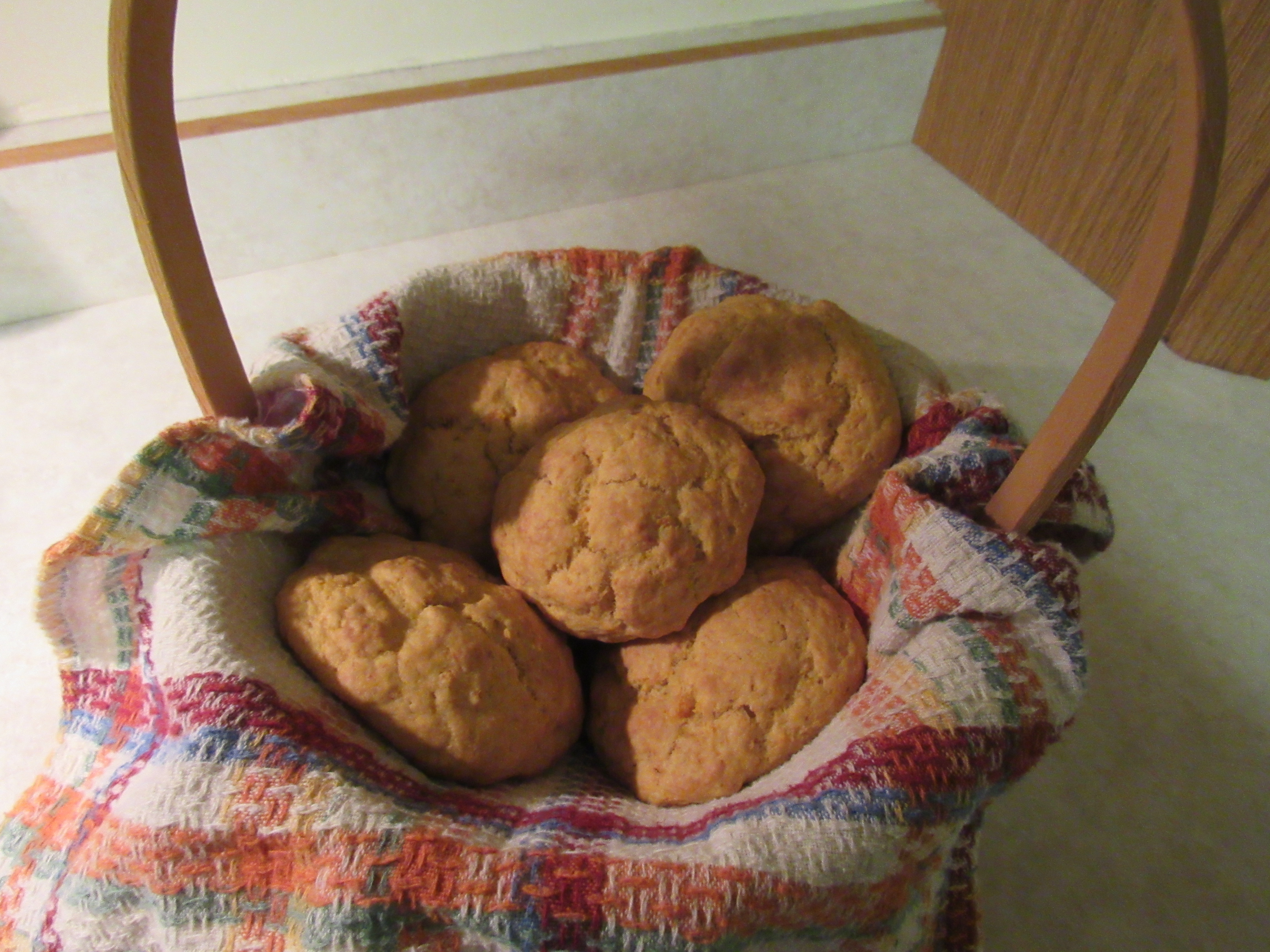
My dad preferred large home-made biscuits so I tend to follow his wishes even now that he’s not here to eat them. This recipe, meant to make 15-18 biscuits, made 5 large biscuits for me.

This was my first time eating this type of biscuit. They are delicious! The sweet potato flavor is light and pleasant, enhancing the biscuit without overpowering it.

I am already thinking ahead to holiday gatherings where I can bring them. Thanksgiving?

I’d love to hear if you try it.

-Sandra Merville Hart

Sources

Deen, Paula. “Sweet Potato Biscuits,” Paula Deen, 2018/09/27 https://www.pauladeen.com/recipe/sweet-potato-biscuits/.

“Food,” History Central, 2018/09/27 https://www.historycentral.com/CivilWar/AMERICA/food.html.

“Sweet Potato,” Encyclopedia.com, 2018/09/27 https://www.encyclopedia.com/plants-and-animals/plants/plants/sweet-potato.