Consequences of Discovery for Women Civil War Soldiers

There are about four hundred known cases of women serving as Civil War soldiers on either side. They enlisted for varying reasons. They faced challenges  at every turn. They were discovered in a variety of ways.

The consequences for the women varied. They could be dismissed or imprisoned, depending on the officer’s decision.

Newspaper reporters wrote of Southern women who were arrested while in uniform. Federals captured two female soldiers and imprisoned them.

A female Union soldier was captured after being wounded in battle. She was sent back to Union lines with a note, “As Confederates do not use women in war, this woman, wounded in battle, is returned to you.”

After being imprisoned on Johnson Island, a Confederate officer delivered a baby boy in December of 1864.

A Union major ordered her men in battle. They later discovered her identity and imprisoned her for violating the “regulations of war.”

Loreta Janeta Velazquez disguised herself as Confederate soldier Lieutenant Harry T. Buford. She was arrested when the apparatus of her disguise slipped. She was charged with acting as a spy and then released, but she returned to her soldier disguise. She was later arrested when comrades suspected her of being a woman. Loreta confessed. The mayor fined her $10 and ordered ten days imprisonment. After her release, she reenlisted in a different company, this one in the 21st Louisiana.

Confederate women who were imprisoned as POWs usually were kept there even after their identity became known.

Female soldiers facing a provost marshal received varying degrees of punishment.

Women were sometimes sent to civilian authorities who could order them to serve time in the city jail or the Guard House. Some women were sent to the workhouse while others were released.

One woman was court-martialed.
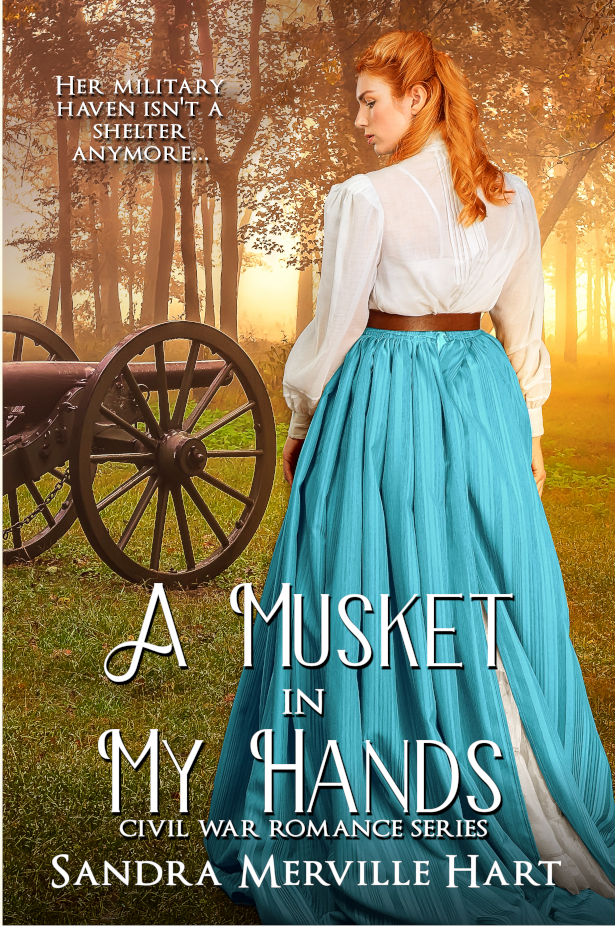
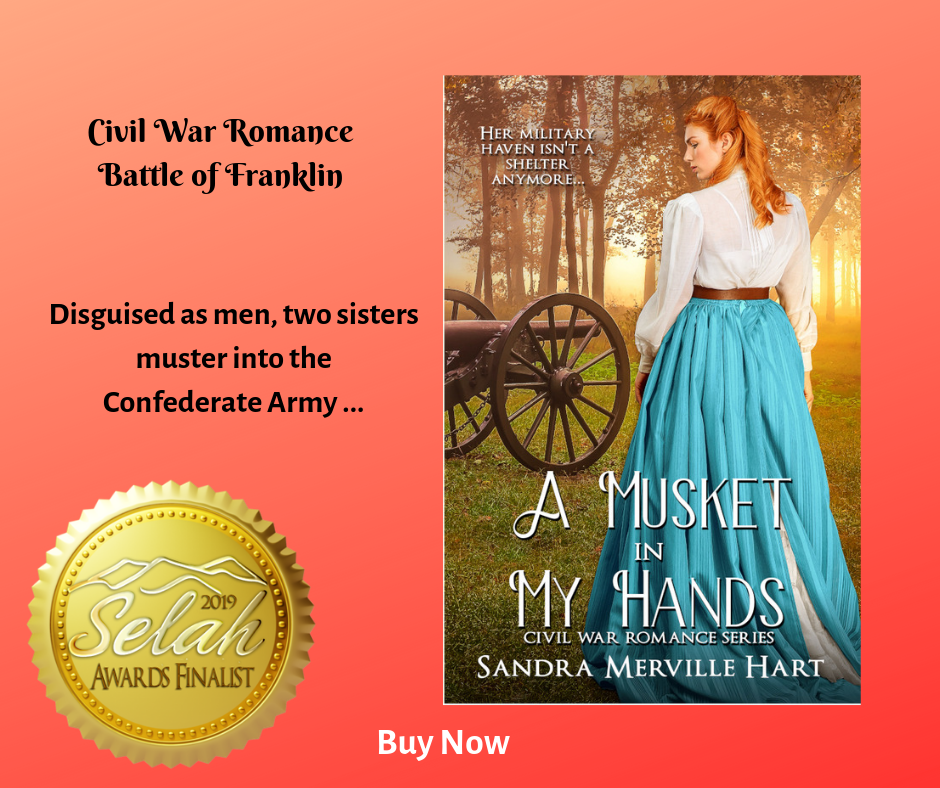
In my Civil War novel, A Musket in My Hands, two sisters have no choice but to disguise themselves as men to muster into the Confederate army in the fall of 1864—just in time for events and long marches to lead them to the tragic Battle of Franklin.

-Sandra Merville Hart

Sources

Abbott, Karen. Liar, Temptress, Soldier, Spy: Four Women Undercover in the Civil War, Harper, 2014.

Blanton, DeAnne and Cook, Lauren M. They Fought Like Demons, Louisiana State University Press, 2002.

Massey, Mary Elizabeth. Women in the Civil War, University of Nebraska Press, 1966.

Silvey, Anita. I’ll Pass for Your Comrade: Women Soldiers in the Civil War, Clarion Books, 2008.

Velazquez, Loreta Janeta. The Woman in Battle: The Civil War Narrative of Loreta Velazquez, Cuban Woman & Confederate Soldier, The University of Wisconsin Press, 2003. (Previously published 1876)
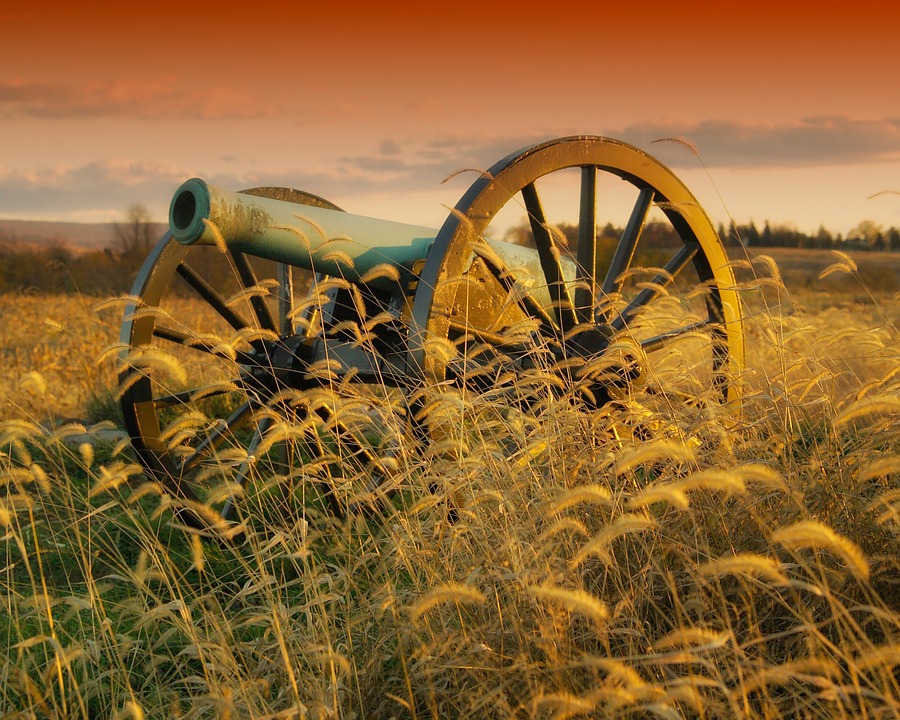
 

Civil War Romance Novel Releasing Today!

Releasing Today!!!

Sandra Merville Hart’s third Civil War romance, A Musket in My Handsfollows two sisters as they disguise themselves as soldiers and join the men they love in the Confederate army—just in time for the war to grow progressively difficult for Southern soldiers.

Tough marches lead them to the Battle of Franklin. How can anyone survive?

There are about four hundred known cases of women serving as Civil War soldiers on either side. What are some reasons that women chose to fight? What challenges  did they face? They feared discovery and rightly so.

Find out what two sisters faced on their dangerous journey leading to a fearsome battle, the Battle of Franklin, in A Musket in My Hands.

Back Cover Blurb

Can I count on you in times of great need?”

 Callie Jennings reels from her pa’s decision that she must marry his friend, a man older than him. Her heart belongs to her soldier hero, Zach Pearson, but Pa won’t change his mind. Callie has no place to hide. Then her sister, Louisa, proposes a shocking alternative.

Zach still hears his pa’s scornful word—quitter. He’s determined to make something of himself as a soldier. He’ll serve the Confederacy until they win the war. If they win the war.

Callie and Louisa disguise themselves as soldiers and muster into the Confederate army in the fall of 1864. Times are tough and getting tougher for their Confederacy. For Callie, shooting anyone, especially former countrymen, is out of the question—until truth and love and honor come together on the battlefield.

Available on Amazon

Endorsements for A Musket in My Hands:

I don’t always read Civil War novels, because I’m not into graphic battle scenes. Sandra Merville Hart’s A Musket in My Hands is a wonderful book. The characters grab your heart right from the beginning and they take you through a unique story line right into battles, where I followed willingly. The book isn’t battle-driven. It’s character driven, and the reader becomes intimately acquainted with these people who had to face things they never dreamed about happening. This is my favorite Civil War novel. I highly recommend it.

Lena Nelson Dooley – bestselling, multiple-award-winning author of Great Lakes Lighthouse Brides. 

Sandra Hart, author of the acclaimed A Stranger on My Land and A Rebel in My House has done it again with her third and best novel to date, A Musket in My Hands.  In this brilliant historical fiction, Sandra has sat against the backdrop of Confederate General John Bell Hood’s Tennessee Campaign a study of the little known but genuine phenomenon of women masquerading as men to serve and fight in the opposing armies of the Civil War.  An excellent and well-researched read, this is one of the first books I’ve read to put a touchingly human face on the horrendously bloody Battle of Franklin. 

Kevin Spencer – author of “ON THIS DAY in North Carolina History”

A Musket in My Hands shines with Sandra Hart’s talent for historical romance. Vivid historical details highlight the romance and adventure, excitement and heartache of those desperate to survive the Civil War, while an endearing collage of characters evaluates their own allegiances to God, country, and their fellow man.”

Carrie Del Pizzo – Del Pizzo’s Pen Editing “Words have value … use them well”

What would make two sisters escape the only home they’ve ever known to join the Confederate Army, disguised as men? Prompted by both love and fear, Callie and Louisa are caught up in the War between the States in a way they never imagined. It soon became a nightmare they couldn’t possibly foresee.

In “A Musket in my Hands,” author Sandra Merville Hart has penned a thrilling, well-researched novel set in the latter months of the Civil War. Her characters are believable, likeable, and, at times, frustrating in their decisions. But readers will find themselves rooting for the protagonists and anxiously awaiting resolution, not just in the fighting field, but in the battleground of their souls.

Inspiring and exciting, this novel will capture your heart as well as speed up your heartbeat. A historical romance well worth the read!

Elaine Marie Cooper – Author,  Saratoga Letters

Through A Musket in My Hands, Sandra Merville Hart brings to life the last months of the Confederacy as experienced by two Tennessee sisters who become soldiers for the South. Detailed research contributes to the realism in a tale of courage and strength during a tumultuous time in America’s history. I was moved by the despair and deprivation yet inspired by the characters’ resolve. A captivating read for historical fiction fans!

Sandra Ardoin – author of the award-winning historical romance A Reluctant Melody


Ways that Women Civil War Soldiers were Discovered

Women fighting as Civil War soldiers—whatever their reasons—kept their guard up constantly. There are about four hundred known cases of female soldiers fighting on either side. Many others likely joined for a short time and then donned a dress to quit without detection. Still, it was challenging for the women to remember their pretense twenty-four hours a day. Some were discovered.

A Wisconsin woman, Sarah Collins, donned her stockings and shoes the way a woman did and, before her regiment left town, was sent home.

It’s unclear what Mary Burns did, but she was probably recognized even wearing a uniform. She was arrested in Detroit—her company hadn’t left town yet.

“Charles Norton,” a female private in the 141st Pennsylvania Infantry, stole an officer’s boots. When her identity was discovered, she was quickly mustered out.

Two women soldiers got drunk on apple jack while on a foraging expedition. In their drunken state, they fell into a river. Comrades saved them from drowning. Their rescuers were shocked to discover they were women.

Comrades tossed apples to two female soldiers in the 95th Illinois. The women reached for their nonexistent aprons to catch the apples and were immediately discharged.

A female soldier from Rochester, New York, tried to don pants by pulling them over her head.

A pregnant corporal in a New Jersey regiment was promoted to sergeant for her bravery at the Battle of Fredericksburg in December of 1862. She hid her pregnancy by wearing an over-sized coat. On January 19, 1863, she went into labor on picket duty and complained of feeling unwell. Her complaints were ignored until her pain increased. Comrades carried her to a farmhouse where her healthy baby was born. Everyone learned the news but protected her by not mentioning her real name or her alias. Her name is still unknown today.

The most common way of discovery happened when women were wounded.

A girl from Brooklyn wanted to be the second Joan of Arc. Her family, desiring to save her, sent “Emily” to an aunt in Michigan. She ran away and joined the Army of the Cumberland as a drummer. Her identity was discovered when she was mortally wounded on Lookout Mountain.

Mary Owens enlisted with a man she secretly wed during their eighteen months in the army. She was wounded in the battle that took his life.

Malinda Pritchard Blalock, an excellent shooter, enlisted when her husband, Keith, was forced to muster into the 26th North Carolina Infantry. She pretended to be Keith’s brother, Sam. Her identity was discovered when she was wounded.

In my Civil War novel, A Musket in My Hands, two sisters have no choice but to disguise themselves as men to muster into the Confederate army in the fall of 1864—just in time for events and long marches to lead them to the tragic Battle of Franklin.

-Sandra Merville Hart

Sources

Abbott, Karen. Liar, Temptress, Soldier, Spy: Four Women Undercover in the Civil War, Harper, 2014.

Blanton, DeAnne and Cook, Lauren M. They Fought Like Demons, Louisiana State University Press, 2002.

Massey, Mary Elizabeth. Women in the Civil War, University of Nebraska Press, 1966.

Silvey, Anita. I’ll Pass for Your Comrade: Women Soldiers in the Civil War, Clarion Books, 2008.


The Army of Tennessee by Stanley F. Horn

A Military History

This nonfiction resource book traces the history of the Confederate Army of Tennessee from the beginning of the Civil War in 1861 to its ending in 1865.

When Tennessee voted to secede from the Union on June 1, 1861, volunteer military organizations were already in training. Drums and fifes played in the streets. Bands played Dixie and Bonnie Blue Flag.

This excellent book, published in 1941, provided many fascinating details not easily found in later publications.

For instance, I loved learning more about Sherman’s takeover of Atlanta. When he expelled the citizens from the city, the Army of Tennessee assisted the exiles as much as possible.

Excellent book for Civil War research and history lovers.

-Sandra Merville Hart

Spoon Biscuit Recipe

There is a scene my Civil War romance, A Musket in My Hands, where spoon bread is a great treat for Confederate soldiers in the Army of Tennessee. A spoon bread recipe from Confederate Home Cooking uses cornmeal, not flour as this biscuit recipe from Buckeye Cookery and Practical Housekeeping cookbook does. The bread recipe also begins with scalding the milk, which the Buckeye Cookery cook (Mrs. A.B. Morey) does not mention for making the biscuits.

Flour was pretty scarce in most of the South after the Civil War started. By 1864—when my story begins—corn meal was a staple for most of the breads for Southerners.

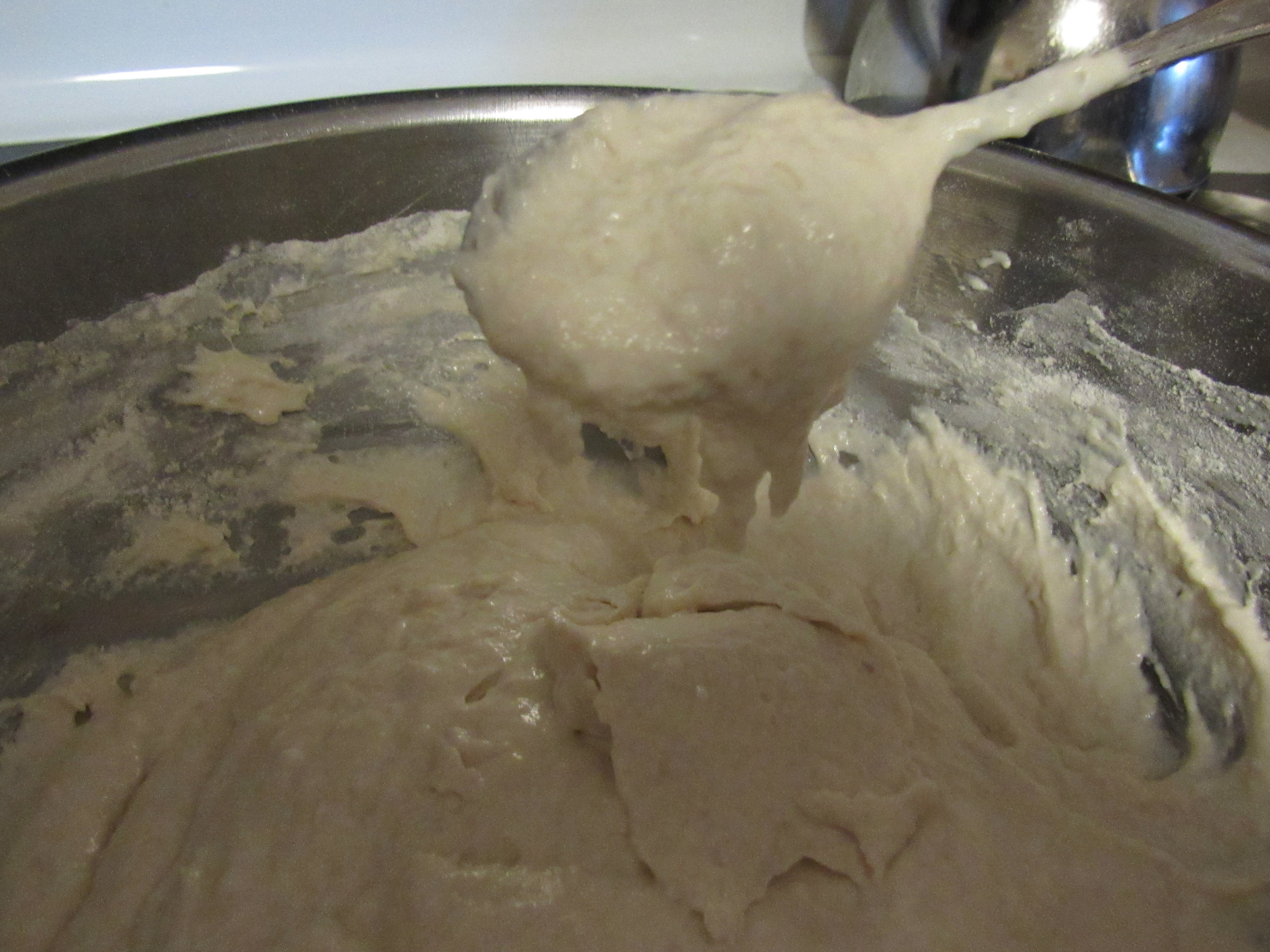
Pour 2 cups of buttermilk into a medium-sized mixing bowl. Stir in one teaspoon of baking soda and one teaspoon of salt.

Melt 2 tablespoons of shortening and stir into the mixture.

Then Mrs. Morey advises adding enough flour to achieve a stiff batter. This was 2 ½ cups of flour for me.

These were dropped by spoon into a gem pan. These pans resemble modern muffin pans. I sprayed my mini muffin pan with cooking spray and dropped the thick batter into the small slots.

Bake the biscuits at 400 degrees until lightly browned, about twenty minutes—longer if using larger muffin pans.

The biscuits were good but somewhat bland. It seemed that this type of bread was probably spread with jellies, jams, and fruit butters such as apple butter. I tried it with apple butter and liked it much better. Though my husband liked them plain, I’m thinking of making sausage gravy to go with the leftover biscuits from this batch. Yum!

I had extra batter so I baked the spoon biscuit dough in a small loaf pan. This made a thick, hearty loaf of bread.

I’d love to hear if you try it.

-Sandra Merville Hart

Sources

Compiled from Original Recipes. Buckeye Cookery and Practical Housekeeping, Applewood Books, 1877.

Mitchell, Patricia B. Confederate Home Cooking, 1991.


Civil War Novel Releasing in Two Weeks!

Sandra’s third Civil War romance, A Musket in My Hands, follows two sisters as they disguise themselves as soldiers and join the men they love in the Confederate army–just in time for the war to grow progressively difficult for Southern soldiers. Tough marches lead them to the Battle of Franklin. How can anyone survive? 

This novel releases on November 8, 2018!

So honored to receive the following endorsement from such a well-known and  talented author:

I don’t always read Civil War novels, because I’m not into graphic battle scenes. Sandra Merville Hart’s A Musket in My Hands is a wonderful book. The characters grab your heart right from the beginning and they take you through a unique story line right into battles, where I followed willingly. The book isn’t battle-driven. It’s character driven, and the reader becomes intimately acquainted with these people who had to face things they never dreamed about happening. This is my favorite Civil War novel. I highly recommend it.

Lena Nelson Dooley – bestselling, multiple-award-winning author of 12 Gifts of Christmas, Esther’s Temptation, and Great Lakes Lighthouse Brides.

Available for preorder on Amazon – buy today for prerelease prices!


Challenges Faced by Women Civil War Soldiers

Loreta Janeta Velazquez as Civil War soldier Lieutenant Harry T. Buford

The Civil War kindled patriotic feelings in men and women on both sides of the conflict. Women who desired to serve their country as soldiers had to disguise themselves as men. They also faced challenges in camp life and in marching with men.

The first thing a woman had to do was sew or buy men’s clothing. She’d need trousers, a coat, shoes, and men’s blouses. Padding strategically sewn on undergarments helped mask female curves. Loreta Velazquez, who disguised herself as Confederate Lieutenant Harry T. Buford, used wire net shields to hide her shape.

The women also had to cut their long hair. Short hair and men’s clothing enabled her to pass as a soldier.

As the war progressed, requirements for physical examinations relaxed. The army needed soldiers and didn’t want to find reasons not to accept them. They had to have teeth so they could tear cartridges open. They needed a trigger finger to fire muskets and rifles.

Life in army camps were challenging. Women used the privacy of the woods for nature calls instead of latrines.

Poor nutrition, long marches, intense physical activities, and weight loss might have caused the women’s menstruation to cease, especially during tough campaigns.

Soldiers slept fully clothed, wearing coat and shoes, so this helped the women’s disguise. Bathing was infrequent yet there were men who also preferred privacy when the opportunity for bathing arose.

Women claimed to be younger than they were to explain the lack of whiskers. They kept their coats buttoned all the way to hide the missing Adam’s apple.

They had to remember to talk like a man.

They carried at least thirty pounds of equipment in addition to their haversack (which held their food) and a knapsack (which held clothing and personal belongings.)

And then there were the challenges of battle. The fear. The chaos. Officers shouting orders. When the noise of battle was too loud for soldiers to hear their officers shout orders, buglers and drummers played them. Soldiers had to know what the tunes meant.

No matter the reason for joining, women who served as Civil War soldiers were courageous.

In my Civil War novel, A Musket in My Hands, two sisters have no choice but to disguise themselves as men to muster into the Confederate army in the fall of 1864—just in time for events and long marches to lead them to the tragic Battle of Franklin.

-Sandra Merville Hart

Sources

Blanton, DeAnne. “Women Soldiers of the Civil War,” National Archives, 2018/09/29 https://www.archives.gov/publications/prologue/1993/spring/women-in-the-civil-war-1.html.

Blanton, DeAnne and Cook, Lauren M. They Fought Like Demons, Louisiana State University Press, 2002.

Massey, Mary Elizabeth. Women in the Civil War, University of Nebraska Press, 1966.

Silvey, Anita. I’ll Pass for Your Comrade: Women Soldiers in the Civil War, Clarion Books, 2008.

Velazquez, Loreta Janeta. The Woman in Battle: The Civil War Narrative of Loreta Velazquez, Cuban Woman & Confederate Soldier, The University of Wisconsin Press, 2003. (Previously published 1876)
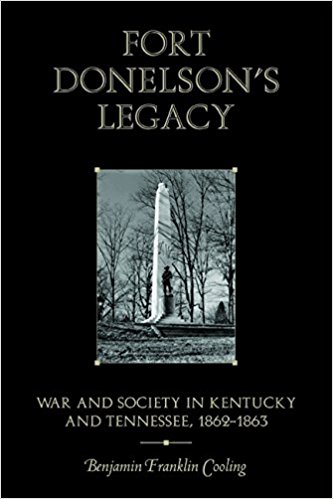
Fort Donelson’s Legacy by Benjamin Franklin Cooling

War and Society in Kentucky and Tennessee, 1862-1863

This nonfiction resource book begins with the Confederate surrenders of Fort Henry and Fort Donelson in February, 1862. A few days later, the Confederates moved from Nashville to Murfreesboro.

Citizens in the middle section of Tennessee learned of this with sinking hearts. They knew tough times lay ahead. They could not have foreseen just how difficult those bad times would become.

After the Battle of Shiloh (April 6-7, 1862) Union General Grant stopped ordering his troops to protect private property regardless of owner loyalty.

This book shows what Tennessee citizens endured in 1862-1863, and how their circumstances grew progressively worse.

Excellent book for Civil War research and history lovers.

-Sandra Merville Hart

Amazon

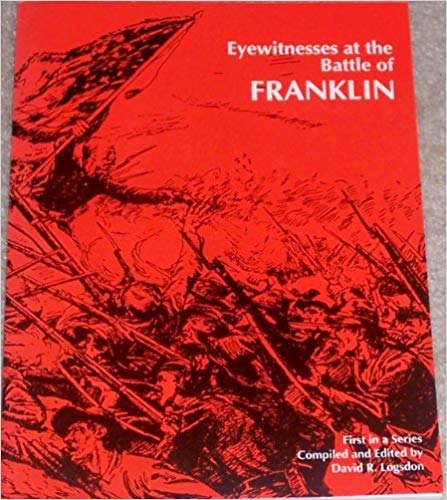
Eyewitnesses at the Battle of Franklin

Compiled and Edited by David R. Logsdon

What a great way to really dig into the history of a Civil War battle!

This historical resource book is skillfully arranged in chronological order for events before, during, and after the Battle of Franklin, Tennessee.

Quotes from officers and soldiers, both Union and Confederate, show what was happening at either side at the same time, giving valuable insight to many perspectives.

Quotes from townspeople and Franklin visitors present during the battle are also included, providing emotional details and popular opinions of the time.

Love this book! Reading it increased my understanding of what soldiers and townsfolk endured as part of my research for A Musket in My Hands, my Civil War romance that includes this battle.

Recommend this book for those interested in Civil War history, American history, and Tennessee history.

-Sandra Merville Hart

Amazon

Reasons Women Fought as Civil War Soldiers

The Civil War brought tough times for civilians as well as soldiers. Neither the Union nor the Confederate armies allowed women to fight as soldiers, leading some women to disguise themselves as men to muster into the army.

There are about four hundred women known to have served as soldiers on either side. Mary Livermore of the U.S. Sanitary Commission wrote in 1888 that she was convinced the number was much higher. Since most were discovered after being a soldier two years or more, Mrs. Livermore believed that some were never detected.

Why did women join the army?

Newspapers printed stories about soldiers involved in gambling, drinking, and other immoral behavior. Some women mustered in to keep an eye on husbands and beaus.

There were women who chose the army as an escape over unbearable family situations. Some women living in poverty joined for the pay. Some sought adventure, love, or excitement. Others wanted to be near a brother, husband, or fiancé.

As the war continued, bonuses offered to new recruits as well as soldier’s pay enticed some women to enlist.

A myriad of reasons, as individual as the women themselves, drove them to don a soldier’s garb and march into danger.

In my Civil War novel,  A Musket in My Hands, two sisters have no choice but to disguise themselves as men to muster into the Confederate army in the fall of 1864—just in time for events and long marches to lead them to the tragic Battle of Franklin.

-Sandra Merville Hart

Sources

Blanton, DeAnne. “Women Soldiers of the Civil War,” National Archives, 2018/09/29 https://www.archives.gov/publications/prologue/1993/spring/women-in-the-civil-war-1.html.

Blanton, DeAnne and Cook, Lauren M. They Fought Like Demons, Louisiana State University Press, 2002.

Massey, Mary Elizabeth. Women in the Civil War, University of Nebraska Press, 1966.

Silvey, Anita. I’ll Pass for Your Comrade: Women Soldiers in the Civil War, Clarion Books, 2008.