Women Wanted to Enlist as Civil War Soldiers?

It’s 1861. Before Abraham Lincoln can be sworn in as the new president of the United States of America, Southern states begin leaving the Union.

Everyone is on edge. What will happen next? Then the first shots are fired at Fort Sumter by the Confederates on April 12, 1861.

The Civil War had begun.

Early on, there were women on both sides who wanted to fight in the war as soldiers. Girls who tried to muster into the army by going to recruiting stations were praised by war journalists for their courage.

The Confederate Secretary of War received a letter from a group of over twenty women who offered to organize a volunteer regiment. These ladies from the Shenandoah Valley wanted to join the fight. Their offer was rejected.

Black women—residents of Northern cities like New York and Philadelphia—offered to serve their country as warriors if needed. Their request was refused by local officials.

Soldiers wrote home upon discovering women soldiers in their regiments during the war. Folks were aware of female soldiers fighting in both sides of the conflict.

In 1862, when a Southern woman was found in a Confederate training camp, a Georgia newspaper labeled her a “gallant heroine.”

Reporters and editors praised the patriotism of women soldiers throughout the war. Newspaper articles were reprinted in other cities, spreading the news.
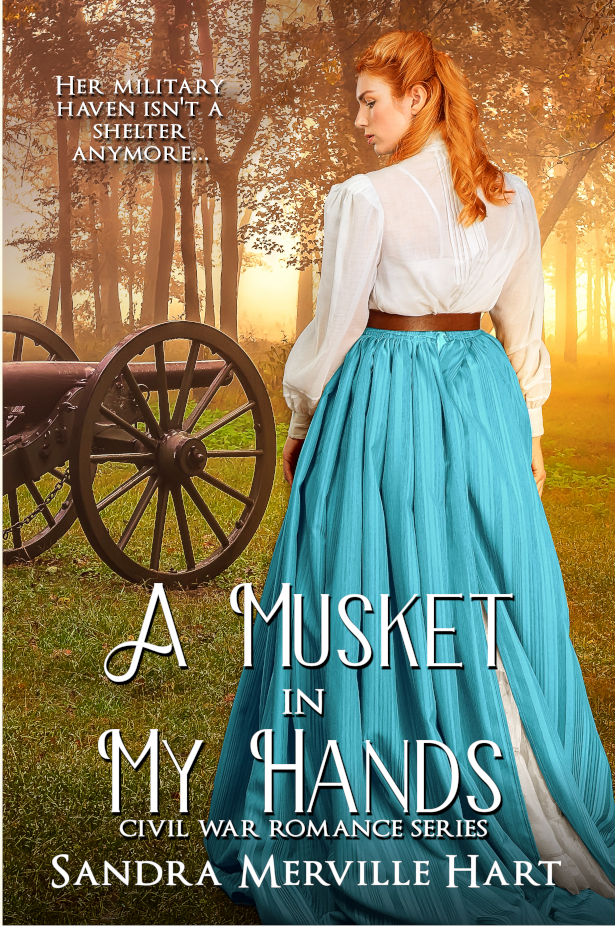
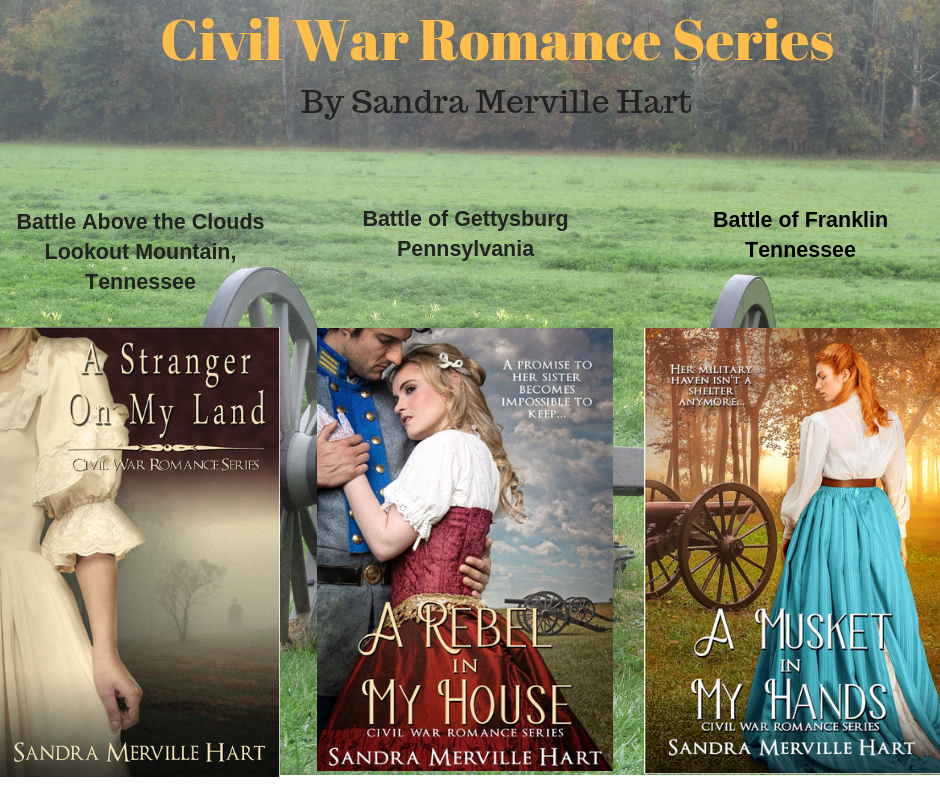
In my Civil War novel, A Musket in My Hands, two sisters have no choice but to disguise themselves as men to muster into the Confederate army in the fall of 1864—just in time for events and long marches to lead them to the tragic Battle of Franklin.

-Sandra Merville Hart

Sources

“Battle of Fort Sumter,” Wikipedia, 2018/09/18 https://en.wikipedia.org/wiki/Battle_of_Fort_Sumter.

Blanton, DeAnne and Cook, Lauren M. They Fought Like Demons, Louisiana State University Press, 2002.

Massey, Mary Elizabeth. Women in the Civil War, University of Nebraska Press, 1966.

Silvey, Anita. I’ll Pass for Your Comrade: Women Soldiers in the Civil War, Clarion Books, 2008.

 

Announcing Sandra Merville Hart’s next Civil War Romance Release!

Releasing November 8th!

Two sisters disguise themselves as men to muster into the Confederate army in the fall of 1864 to join the men they love. But the situation grows desperate for Hood’s Army of Tennessee at the Battle of Franklin.


“Can I count on you in times of great need?”

 Callie Jennings reels from her pa’s decision that she must marry his friend, a man older than him. Her heart belongs to her soldier hero, Zach Pearson, but Pa won’t change his mind. Callie has no place to hide. Then her sister, Louisa, proposes a shocking alternative.

Zach still hears his pa’s scornful word—quitter. He’s determined to make something of himself as a soldier. He’ll serve the Confederacy until they win the war. If they win the war.

Callie and Louisa disguise themselves as soldiers and muster into the Confederate army in the fall of 1864. Times are tough and getting tougher for their Confederacy. For Callie, shooting anyone, especially former countrymen, is out of the question—until truth and love and honor come together on the battlefield.

Endorsement for A Musket in My Hands:

 I don’t always read Civil War novels, because I’m not into graphic battle scenes. Sandra Merville Hart’s A Musket in My Hands is a wonderful book. The characters grab your heart right from the beginning and they take you through a unique story line right into battles, where I followed willingly. The book isn’t battle-driven. It’s character driven, and the reader becomes intimately acquainted with these people who had to face things they never dreamed about happening. This is my favorite Civil War novel. I highly recommend it.

Lena Nelson Dooley – bestselling, multiple-award-winning author of Great Lakes Lighthouse Brides.

A Musket in My Hands releases November 8th by Smitten Historical Romance, an imprint of Lighthouse Publishing of the Carolinas!

Available for Preorder on Amazon!

The Most Heroic Union Regiment in the Civil War

Today’s post was written by fellow author, Tamera Lynn Kraft. Welcome back, Tamera!

When I was asked to join the group of authors writing Murray Pura’s Cry of Freedom Anthology celebrating the anniversary of the Civil War, I knew what I wanted to write about. I’d researched the Ohio Seventh Volunteer Regiment for another novel I wrote and fell in love with them.

The Ohio Seventh was a regiment from northeastern Ohio that enlisted as soon as the Civil War began for a three-year term. During their tenure, they fought in many major battles including Gettysburg, Cedar Mountain, Lookout Mountain,  and Missionary Ridge. They are considered by many historians as the most heroic regiment.

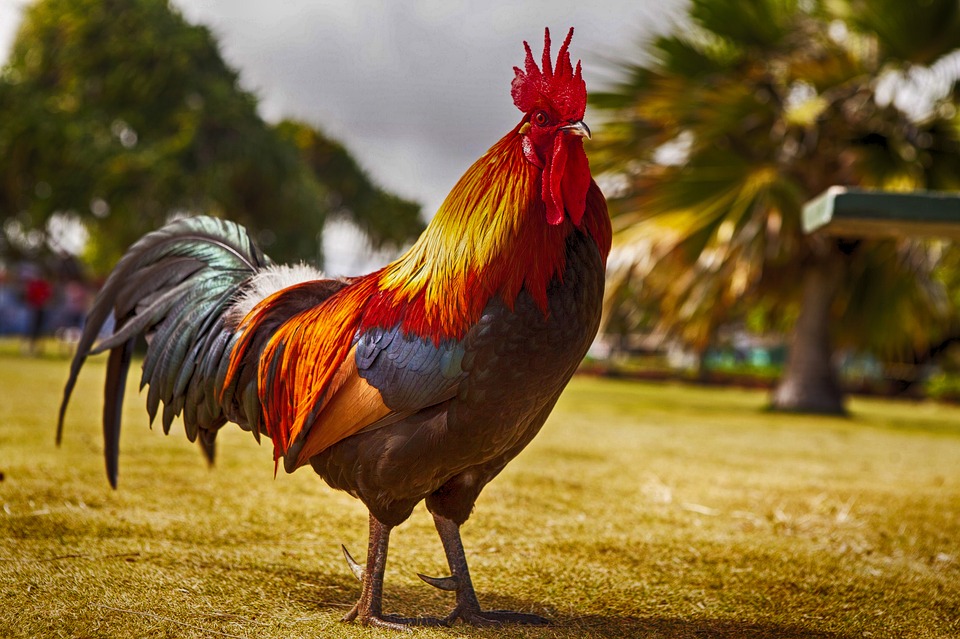
The Ohio Seventh was sometimes called the Rooster Regiment because, when they went into battle, they crowed like roosters. They were also known for their temperance. The leader, Colonel Creighton, was a Christian and didn’t allowing drinking, gambling, or soliciting prostitutes among the ranks. One company of the regiment came from Oberlin College. Oberlin was known for its abolitionist views and religious fervor. Charles Finney, the president of the college, had been one of the preachers of the Second Great Awakening. Because most of the regiment strived to live Christian lives even in the midst of war, they were also sometimes called the Praying Regiment.

Even with all their victories, the regiment came home after three years feeling defeated. Their last major battle, Ringgold Gap, was their worst. After two days of victories in Lookout Mountain and Missionary Ridge, the Seventh was ordered to chase the Confederate soldiers to Ringgold Gap. The Confederates stopped running and set up an ambush. Many were killed in the last battle including Colonel Creighton, their leader. Colonel Creighton died while trying to rescue Lieutenant-Colonel Crane, the man who had been his close friend. Both men died. When the battle was over, every officer in the regiment except four were wounded or killed along with many enlisted men. Colonel Creighton, who was loved by his men, left a young widow he had married a few days before the war. Very few of the men who were left reenlisted.

Soldier’s Heart

After returning home from the Civil War, will his soldier’s heart come between them?

Noah Andrews, a soldier with the Ohio Seventh Regiment can’t wait to get home now that his three year enlistment is coming to an end. He plans to start a new life with his young wife. Molly was only sixteen when she married her hero husband. She prayed every day for him to return home safe and take over the burden of running a farm.

But they can’t keep the war from following Noah home. Can they build a life together when his soldier’s heart comes between them?

Available on Amazon Kindle, Kobo Reader, and Barnes & Noble Nook.

Bio:

Tamera Lynn Kraft has always loved adventures. She loves to write historical fiction set in the United States because there are so many stories in American history. There are strong elements of faith, romance, suspense and adventure in her stories. Her novella, Soldier’s Heart, is featured in From the River to the Lake Anthology. Her newest novel, Red Sky Over America is Book 1 of the Ladies of Oberlin series and will be re-released in September, 2018.

Tamera has been married for 39 years to the love of her life, Rick, and has two married adult children and three grandchildren. She has been a children’s pastor for over 20 years. She is the leader of a ministry called Revival Fire for Kids where she mentors other children’s leaders, teaches workshops, and is a children’s ministry consultant and children’s evangelist and has written children’s church curriculum. She is a recipient of the 2007 National Children’s Leaders Association Shepherd’s Cup for lifetime achievement in children’s ministry.

Connect with Tamera on her website,  Word Sharpeners Blog,  Facebook,  and Twitter.


Battle of Gettysburg: Lee’s Long Line of Ambulances

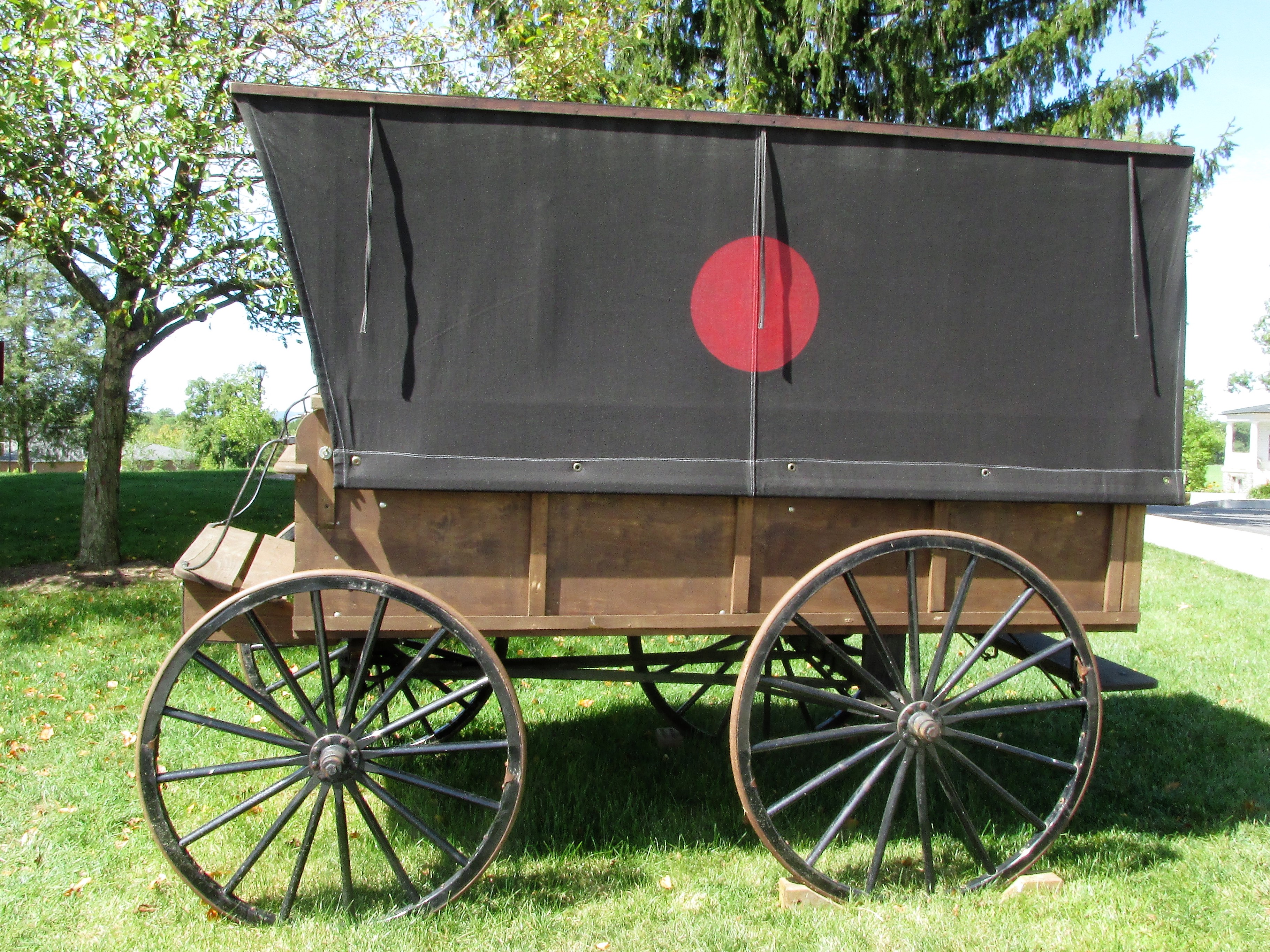
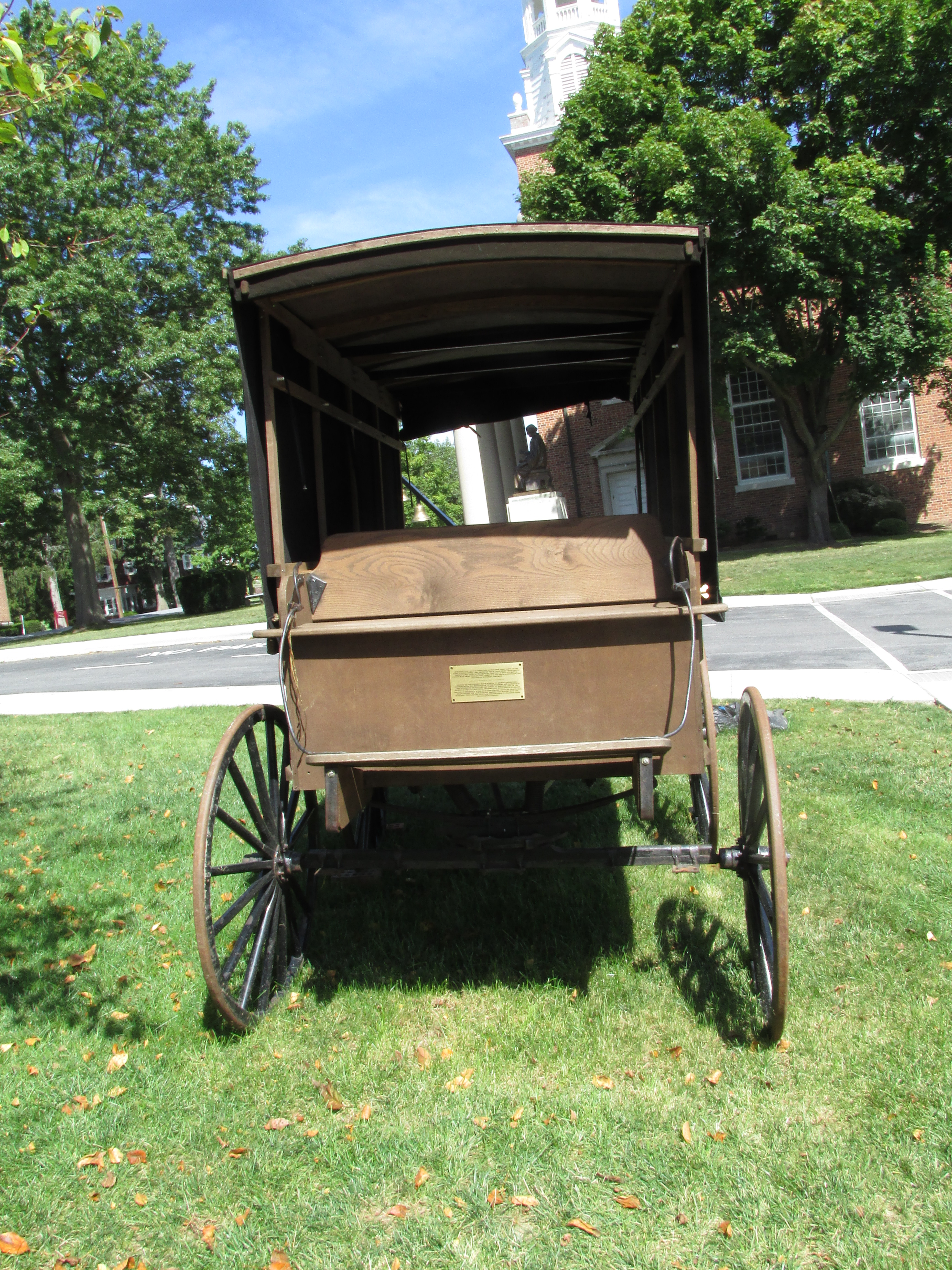
Ambulance outside Lutheran Seminary, Gettysburg.

Confederate General Robert E. Lee’s plan to transport thousands of wounded soldiers after the Battle of Gettysburg was a daunting task. He ordered General John Imboden to lead them to Cashtown before heading south to Williamsport, Maryland. When they reached Williamsport, they paused for a break. Once men and horses rested, they resumed their journey back to Virginia.

The ambulance wagon train stretched for 27 miles.

Tragic.

And 7,000 Confederate soldiers, wounded too severely to travel, were left behind in Gettysburg. Characters in my novel set during the Battle of Gettysburg, A Rebel in My House, had to deal with this issue.

Conservative estimates for Confederate wounded number around 13,000. Other sources report over 18,000. Either way, 27 miles of ambulances means a distressing number of injured soldiers traveled south, groaning in agony as rickety wheels jostled them over rutted dirt roads.

I wondered how many ambulance wagons might have been required and thought it might be fun to try to figure it out.

Ambulance outside of Lutheran Seminary, Gettysburg.

Many models in use at the time were 10 feet long or 10 feet, four inches. The heavier wagons required 4 horses to pull them while lighter ones needed only 2.

Some carried 10 patients—4 prone and 6 seated. The driver and 2 patients sat on a closed chest holding medical supplies.

A lighter model carried 5—15 wounded, depending on how many needed to lie prone for the journey.

It seems almost certain—with the number of wounded requiring transportation to Southern hospitals—that folks squeezed onto wagons meant to hold fewer men.

I confess that I got lost trying to figure the length of an average horse—it seems the larger horses are about 6 feet long. An ambulance 10 feet in length with a two-horse team might require about 20 feet. A four-horse team and wagon might need 30 feet.

Allowing 30 feet for each wagon to estimate how many ambulances might have been in this ambulance train … a staggering 4,752 wagons. The actual count was probably less because some patients with minor injuries walked.

Some ambulances held only 5 patients. If folks had to travel in a laying down, less patients could ride with them.

7,000 were left in Gettysburg. Going with the highest estimate of 18,000+, some 11,000 wounded traveled south. That means 2-3 folks traveled in each wagon.

If we allow 50 feet of space for each wagon, there are about 2,851 or 3-4 patients per wagon. If this is true, then lots of soldiers were in bad shape along the way. Possibly greater numbers of slightly injured weren’t included in the total count.

Has anyone run across this in their research?

-Sandra Merville Hart

Sources

“Battle of Gettysburg,” Encyclopeadia Britannica, 2018/06/15 https://www.britannica.com/event/Battle-of-Gettysburg.

“Battle of Gettysburg,” HistoryNet, 2018/06/15 http://www.historynet.com/battle-of-gettysburg.

“Battle of Gettysburg Facts,” Stone Sentinels, 2018/06/15 http://gettysburg.stonesentinels.com/battle-of-gettysburg-facts/.

“Civil War Ambulance Wagons,” Civil War Home, 2018/06/17 http://www.civilwarhome.com/ambulancewagons.html.

Compiled by Editors of Combined Books. The Civil War Book of Lists, Da Capo Press, 1994.

Edited by Kennedy, Frances H. The Civil War Battlefield Guide, Houghton Mifflin Company, 1990.

“Gallery: Field Medicine,” Trans-Mississippi Theater Virtual Museum, 2018/06/17, http://www.civilwarvirtualmuseum.org/medicine/field-medicine/ambulance.php.

Long, E.B and Long, Barbara. The Civil War Day by Day: An Almanac 1861-1865, A Da Capo Paperback, 1971.

Sheldon, George. When the Smoke Cleared at Gettysburg: The Tragic Aftermath of the Bloodiest Battle of the Civil War, Cumberland House, 2003.


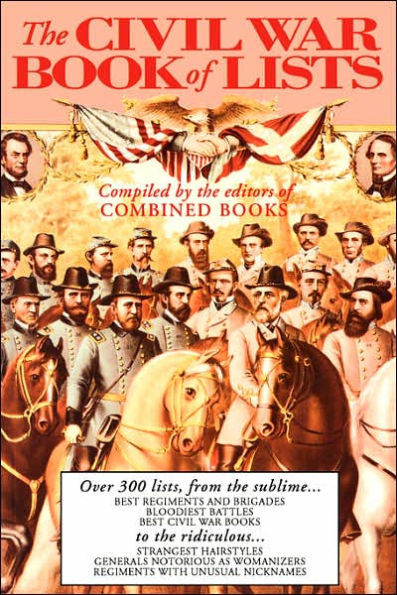
The Civil War Book of Lists Review

Compiled by the editors of Combined Books

I was happy to find this book of lists in a Civil War battleground museum store while on a research trip.

This book contains many fascinating lists. Here are just a few: Union Regiments of Foreign Born; Six Weapons Used for the First Time in the Civil War; The Ten Best Commanded Battles of the War; The Generals Listed by West Point Class and Rank; and The States in Order of Men Furnished for Confederate Service.

There are a few unusual lists as well: Occupations of Union Soldiers; Four Battles with Four Names; Eight Generals Who Had Served in the War of 1812; and Top 10 Strangest Hairstyles.

 As an of Civil War romances, these lists often pique my interest, leading me to more research.

 Even Civil War historians will discover new facts from this book, sparking discussions.

A great find for lovers of American history!

-Sandra Merville Hart

Barnes & Noble


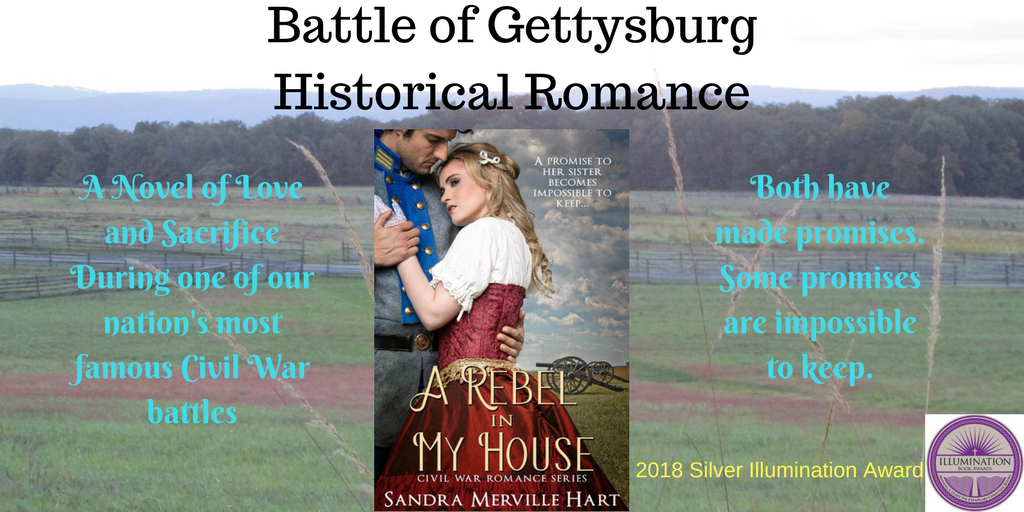
The Story Behind the Story-A Rebel in My House

After I wrote A Rebel in My House, my Civil War romance set during the turbulent Battle of Gettysburg, other authors and readers asked me why I wrote the novel. Since the anniversary of the historic battle is almost here, I thought I’d share the “story behind the story” with you, my readers and blog family.

Something drew me yet again to Gettysburg. I knew there was a story waiting there for me. My husband and I walked the battlefields. Ideas stirred when I found Tennessee troops in Archer’s Brigade, part of Heth’s Division who began the fighting on the first day. Nothing solidified so I kept digging. I discovered fascinating history at the Gettysburg Seminary Ridge Museum in Lutheran Theological Seminary. Surely my story touched this place. Spending several hours exploring the museum and surroundings sparked no ideas so I trudged on.

I explored Gettysburg museums, spending hours at the Gettysburg Museum and Visitor Center, Gettysburg Museum of History, Gettysburg Railroad Station, General Lee’s Headquarters Museum, and The David Wills House where President Lincoln stayed. I learned captivating facts at the Jennie Wade House, Shriver House Museum, and “The Women of Gettysburg Tour,” an evening walking tour.

Ideas swirled as my husband and I walked the town’s streets around the “Diamond” or the town square. This is where the women and children suffered through a nightmare from which they didn’t awaken for many months.

Then we spent another afternoon and evening at the battlefield.

Three Tennessee regiments fought the beginning battle on July 1st. They didn’t fight again until they joined in Pickett’s Charge.  

The sun sank low on the horizon as I stood alone on Cemetery Ridge. The expansive field crossed by Pickett’s Charge on July 3, 1863, captured my imagination. Though the land is peaceful once more, it still tells a story. My imagination soared while the sun disappeared.

As an author, I had to tell what the townspeople endured. What if a Gettysburg woman fell in love with a Confederate soldier? What if they both made promises to loved ones? Some promises are impossible to keep …

I reluctantly left the ridge. I had a story to write.

-Sandra Merville Hart

Civil War Battle of Gettyburg’s Numbers

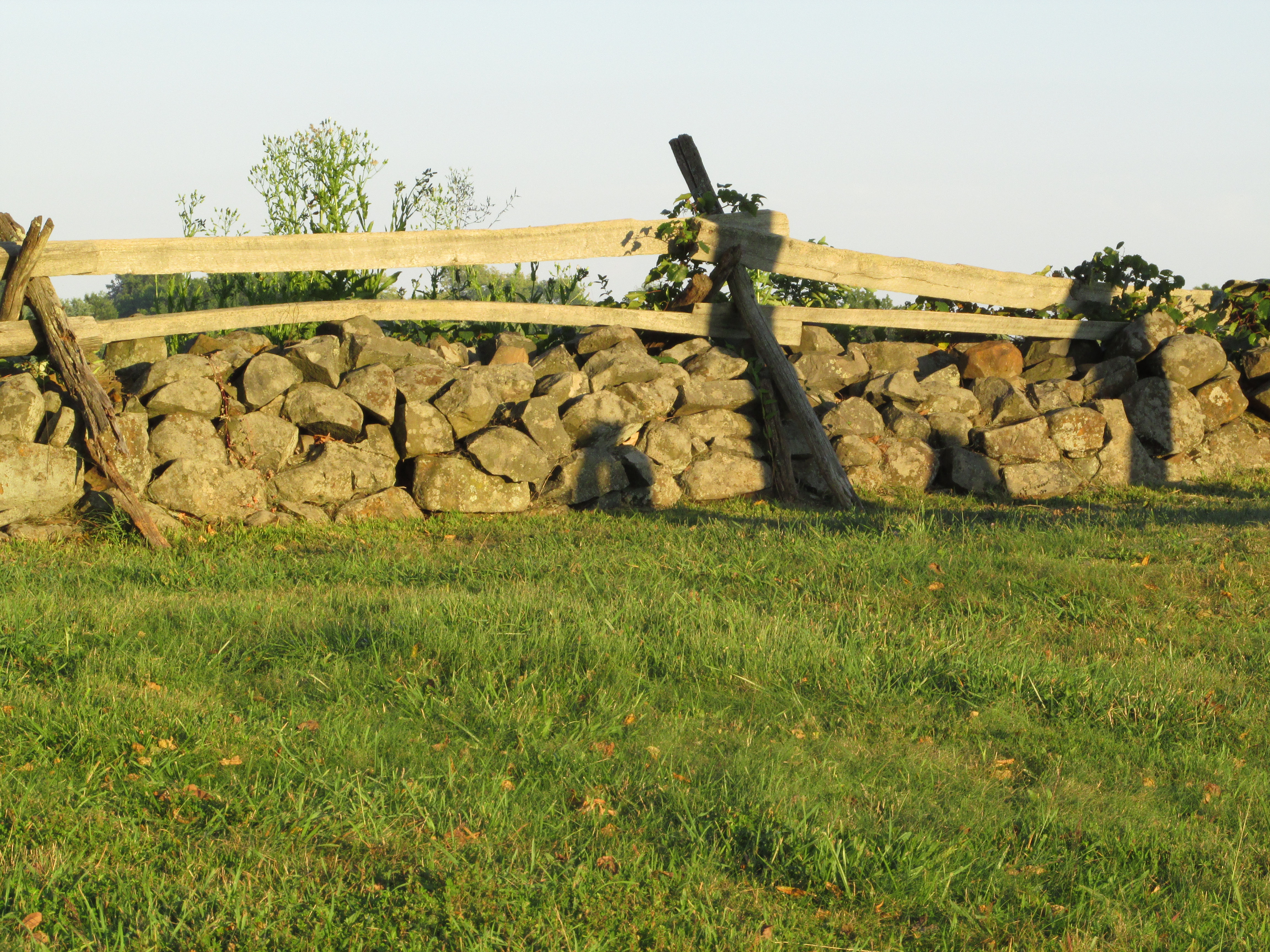
Post and rider fence common around Gettysburg in 1863 — at Gettysburg Battlefield


 With the July 1st—3rd anniversary of the Battle of Gettysburg approaching, I thought it would be fun to dig into some “number” facts pertaining to the battle.

How many soldiers fought in the famous Pennsylvania battle?

Sources disagree on this number due to inaccurate, incomplete, and missing records.

HistoryNet

 82,289 Union soldiers

75,000 Confederate soldiers

157,289 Total

Stone Sentinels

93,700 Union

 70,100 Confederate

163,800  Total

Book of Lists

93,693 Union (Corps Strength)

 70,136 Confederate (Corps Strength)

163,829 Total

Some sources reported round numbers:

Encylopaedia Britannica

94,000 Union

 71,000 Confederate

165,000 Total

The Civil War Battlefield Guide    

170,000+ soldiers fought

When the Smoke Cleared At Gettysburg

172,000+ soldiers fought

As you can see, some of these numbers are very close. The difference between the lowest and highest estimates is 14,711.

How many casualties did both sides suffer?

We first have to understand that casualties were broken down as follows: Killed, Wounded, and Missing. Sources also disagree on this number for the same reasons as above.

HistoryNet

3,155  Union killed

14,529 Union wounded

  5,365 Union missing

23,049 Total Union casualties


3,903  Confederate killed

18,735  Confederate wounded

  5,425  Confederate missing

28,063  Total Confederate casualties


23,049 Union (all casualties)

28,063 Confederate (all casualties)

51,112 Total casualties

Stone Sentinels*

3,150  Union killed

14,500 Union wounded

  5,165  Union missing

22,815  Total Union casualties


4,400  Confederate killed

12,950 Confederate wounded

  5,350  Confederate missing

22,700  Total Confederate casualties


22,815 Union (all casualties)

22,700 Confederate (all casualties)

45,515 Total casualties

*Stone Sentinel acknowledges their estimates are conservative, with actual casualties possibly as high as 51,000.

Book of Lists

22,807 Union (Corps)

22,557 Confederate (Corps)

45,364  Total casualties

When the Smoke Cleared At Gettysburg

3,155  Union killed

14,530 Union wounded

  5,365  Union missing

23,050  Total Union casualties


4,500  Confederate killed

18,750 Confederate wounded

   5,250 Confederate missing

28,500  Total Confederate casualties


23,050 Union (all casualties)

28,500 Confederate (all casualties)

51,550 Total casualties


Some sources reported round numbers:

Encylopaedia Britannica

23,000 Union casualties

28,000 Confederate casualties

51,000 Total casualties

The Civil War Battlefield Guide    

50,000+ Total casualties

Again, some numbers are close. The difference between the lowest and highest estimates is 6,186. It’s been surprising to find so many discrepancies in these numbers. As an author of a Civil War romance set during the Battle of Gettysburg, A Rebel in My HouseI’m often asked these numbers. It’s not an easy answer.

-Sandra Merville Hart

Sources

“Battle of Gettysburg,” Encyclopeadia Britannica, 2018/06/15 https://www.britannica.com/event/Battle-of-Gettysburg.

“Battle of Gettysburg,” HistoryNet, 2018/06/15 http://www.historynet.com/battle-of-gettysburg.

“Battle of Gettysburg Facts,” Stone Sentinels, 2018/06/15 http://gettysburg.stonesentinels.com/battle-of-gettysburg-facts/.

Compiled by Editors of Combined Books. The Civil War Book of Lists, Da Capo Press, 1994.

Edited by Kennedy, Frances H. The Civil War Battlefield Guide, Houghton Mifflin Company, 1990.

Long, E.B and Long, Barbara. The Civil War Day by Day: An Almanac 1861-1865, A Da Capo Paperback, 1971.

Sheldon, George. When the Smoke Cleared at Gettysburg: The Tragic Aftermath of the Bloodiest Battle of the Civil War, Cumberland House, 2003.

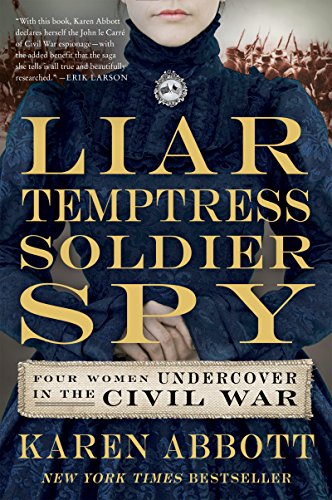
Liar, Temptress, Soldier, Spy by Karen Abbott

Four Women Undercover in the Civil War

This book is classified as a biography.

Belle Boyd was a rebel who shot a Union soldier. She became a spy for the Confederate army.

Emma Edmondson enlisted as “Frank Thompson” to become a Union soldier. She fell in love with Jerome Robbins while acting as a soldier. He knew her secret and returned her love, though she seemed a bit too fond of her tentmate, James Reid.

Widow Rose O’Neal Greenhow was a Confederate spy living in Washington D.C. She passed on information she learned from political connections and eventually was arrested.

Elizabeth Van Lew lived in Richmond but was an abolitionist. She acted as a Union spy.

The book is written more as a novel and is an easy read. Filled with surprises from the Civil War, this book is a page turner.

-Sandra Merville Hart

Amazon

Cherokee General Watie Surrenders First Indian Brigade

Degataga, Cherokee for “stand firm,” was the name given to Stand Watie at his birth. He was baptized as Isaac Watie so Stand Watie is a blend of his Cherokee and English names.

Watie supported the relocation of the Cherokee Nation to Indian Territory (modern-day Oklahoma.) Even though Chief John Ross and the majority of the Cherokee opposed the removal, Watie and a few other tribal members negotiated and signed the Treaty of New Echota. The treaty with the United States forced the Cherokee to leave their lands, traveling what was later called the Trail of Tears.

The treaty signers weren’t popular. A friend’s timely warning allowed Watie to escape being killed with other signers in 1839.

He joined the Southern cause in 1861. As colonel, he raised a Cherokee regiment, the Cherokee Regiment of Mounted Rifles. He and his troops helped drive pro-Union Native Americans from Indian Territory to Kansas.

Watie and his men excelled as scouts and skirmishers. His courage was noticed and he became Brigadier General Watie on May 6, 1864—the only Native American to receive this rank in the Civil War. He commanded the First Indian Brigade, made up of Cherokee, Seminole, Osage, and Creek soldiers.

After General Kirby Smith surrendered the Army of the Trans-Mississippi, Watie knew his turn was coming.

On June 23, he surrendered at Doaksville in Indian Territory.

The last Confederate general to surrender was Cherokee chief Stand Watie.

-Sandra Merville Hart

Sources

“Conclusion of the American Civil War,” Wikipedia.com, 2018/03/21 https://en.wikipedia.org/wiki/Conclusion_of_the_American_Civil_War.

“Conclusion of the American Civil War,” Wikiwand.com, 2018/03/22 http://www.wikiwand.com/en/Conclusion_of_the_American_Civil_War.

Long, E.B. and Long, Barbara. The Civil War Day by Day: An Almanac 1861-1865, A Da Capo Paperback, 1971.

Plante, Trevor K. “Ending the Bloodshed,” National Archives, 2018/03/21

https://www.archives.gov/publications/prologue/2015/spring/cw-surrenders.html.

“Stand Watie,” Civil War Home, 2018/04/22 http://www.civilwarhome.com/watiebio.html.

“Stand Watie,” Civil War Trust, 2018/04/22 https://www.civilwar.org/learn/biographies/stand-watie.

Brig. Gen. Wofford Surrenders Department of North Georgia

William T. Wofford served as a captain in the Mexican War. After the war, he was in the Georgia state legislature. As a member of the state convention in 1861, he voted against secession. When Georgia seceded, he joined the 18th Georgia Infantry as colonel.

His regiment was later assigned to General John Bell Hood’s Texas Brigade. As part of this brigade, Wofford and his men fought at Yorktown, Second Bull Run, South Mountain, Sharpsburg, and Antietam.

In November of 1862, 18th Georgia was transferred to the Georgia Brigade. Wofford was promoted to brigadier general on January 17, 1863.

He served with the Army of Northern Virginia until Georgia Governor Joseph E. Brown asked him to assume command of the Department of North Georgia around the end of 1864.

Georgia’s citizens needed protection from guerrilla attacks. Wofford strengthened his forces with stragglers, deserters—any available men. He commanded this department until May 12, 1865.

Lee and others had already surrendered when letters between Union Brigadier General Henry M. Judah and Wofford were exchanged. Union Colonel Louis Merrill believed there to be about 10,000 soldiers in Wofford’s command.

About a third of this number surrendered—the rest deserted.

A sign in Kingston, Georgia, located at the intersection of Church Street and West Main Street, marks where the surrender occurred.

-Sandra Merville Hart

Sources

“Conclusion of the American Civil War,” Wikipedia.com, 2018/03/21 https://en.wikipedia.org/wiki/Conclusion_of_the_American_Civil_War.

“Conclusion of the American Civil War,” Wikiwand.com, 2018/03/22 http://www.wikiwand.com/en/Conclusion_of_the_American_Civil_War.

Long, E.B. and Long, Barbara. The Civil War Day by Day: An Almanac 1861-1865, A Da Capo Paperback, 1971.

Plante, Trevor K. “Ending the Bloodshed,” National Archives, 2018/03/21

https://www.archives.gov/publications/prologue/2015/spring/cw-surrenders.html.

“W.T. Wofford (1824-1884),” New Georgia Encyclopedia, 2018/04/21 https://www.georgiaencyclopedia.org/articles/history-archaeology/w-t-wofford-1824-1884.