Civil War Women: Antonia Ford, Confederate Spy

Union officers often gathered at Antonia Ford’s family home in Fairfax Court House, Virginia. Like her father, the beautiful young woman was a secessionist. She learned of Union plans for the First Battle of Manassas and rode to warn the Confederate army. Southern officers held her under guard until her information was confirmed by other spies.

After this success, Antonia might have provided information to Brigadier General J.E.B. Stuart, who declared her an honorary aide-de-camp in October of 1861.

At 2 am on March 9, 1863, Cavalry Colonel John S. Mosby, along with 29 of his Confederate rangers, sneaked into Fairfax Court House and captured Union General Stoughton, several of his men, and horses.

Suspicions immediately shifted to Antonia, who had hosted Stoughton’s mother and sister in her home. The Secret Service sent a female undercover agent to the home, who spent hours talking with Antonia.

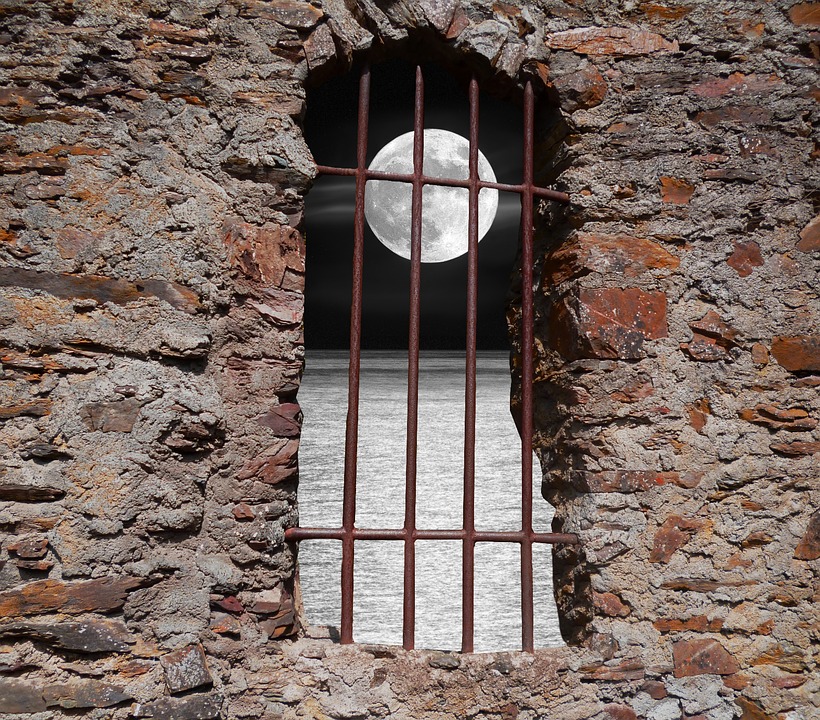
On March 15, Antonia was awoken by Secret Service agents. When she refused to pledge loyalty to the Union, they searched her house and found Confederate money and papers, letters from Federal officers, and J.E.B. Stuart’s order for her aide-de-camp. Charged with aiding and abetting Mosby’s capture of General Stoughton, she was arrested and held at Old Capitol Prison in Washington D.C.

While there, she met Union Major Joseph Willard, who worked to get her released. Willard was part owner of the Willard Hotel in Washington. They fell in love.

Antonia learned in May that she would be exchanged for Northern prisoners. She was arrested again with her father for not swearing allegiance to the Union. They were released on September 18, 1863 after both took the oath of loyalty to the Union.

Antonia married Major Willard on March 10, 1864, and moved to Washington.

-Sandra Merville Hart

Sources

“Antonia Ford Willard,” National Park Service, 2019/01/07 https://www.nps.gov/people/antonia-ford-willard.htm.

DiSilvestro, Roger. “Mosby’s Female Super Spy: Antonia Ford,” History.net, 2019/01/07 http://www.historynet.com/mosbys-female-super-spy-antonia-ford.htm.

Whitehead, A.M. “Antonia Ford (1838-1871).” Encyclopedia Virginia. Virginia Foundation for the Humanities, 27 May. 2014. Web. 7 Jan. 2019.


The “Gray Ghost” Disbands His Troops

Confederate Colonel John S. Mosby commanded the 43rd Virginia Cavalry, which used guerrilla warfare. These troops were called “Mosby’s Raiders.” Mosby’s raids on Union supply lines happened quickly and then he disappeared again, earning him the nickname of “The Gray Ghost.”

Mosby wasn’t ready to give up the fight when Lee surrendered at Appomattox on April 9, 1865. Requesting a cease-fire, he agreed to meet with Union General Hancock. In the wake of President Lincoln’s assassination, Hancock instead sent Brigadier General George Chapman to the meeting.

Mosby asked that the cease-fire be extended two additional days, which Chapman granted. A further request for a ten-day extension was denied.

Not wanting to surrender, Mosby wrote a letter to his troops. It was read to them on April 21st.  His letter disbanded the unit.

About 380 of his men, including most of the officers, surrendered at Winchester. They signed paroles and kept their horses. Others turned themselves in at Virginia towns.

Because Mosby didn’t surrender, Hancock offered $2,000 for his capture and soon raised it to $5,000.

Mosby hid near his father’s property outside Lynchburg with his brother, William.

A local provost marshal assured William in June that his brother would be paroled if he surrendered. Mosby went to the authorities the next day to find that Union leaders had canceled the offer of parole.

A few days later, General Grant stepped in. Mosby learned on June 16th that he’d be paroled, which happened at following day in Lynchburg.

-Sandra Merville Hart

Sources

“Conclusion of the American Civil War,” Wikipedia.com, 2018/03/21 https://en.wikipedia.org/wiki/Conclusion_of_the_American_Civil_War.

Golden, Kathleen. “Meet John S. Mosby, ‘Gray Ghost’ of the Confederacy, Smithsonian National Museum of American History, 2018/03/21 http://americanhistory.si.edu/blog/2013/12/meet-john-s-mosby-the-gray-ghost-of-the-confederacy.html.

“John Singleton Mosby,” Civil War Trust, 2018/03/21 https://www.civilwar.org/learn/biographies/john-singleton-mosby.

Plante, Trevor K. “Ending the Bloodshed,” National Archives, 2018/03/21

https://www.archives.gov/publications/prologue/2015/spring/cw-surrenders.html.