The Aftermath of the Battle of Gettysburg

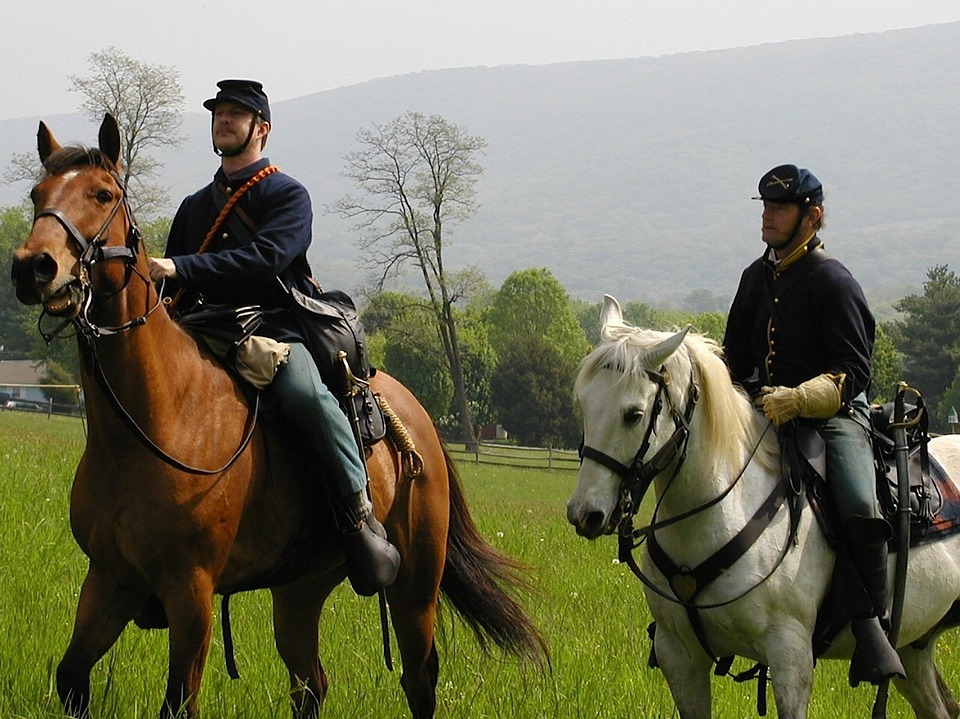
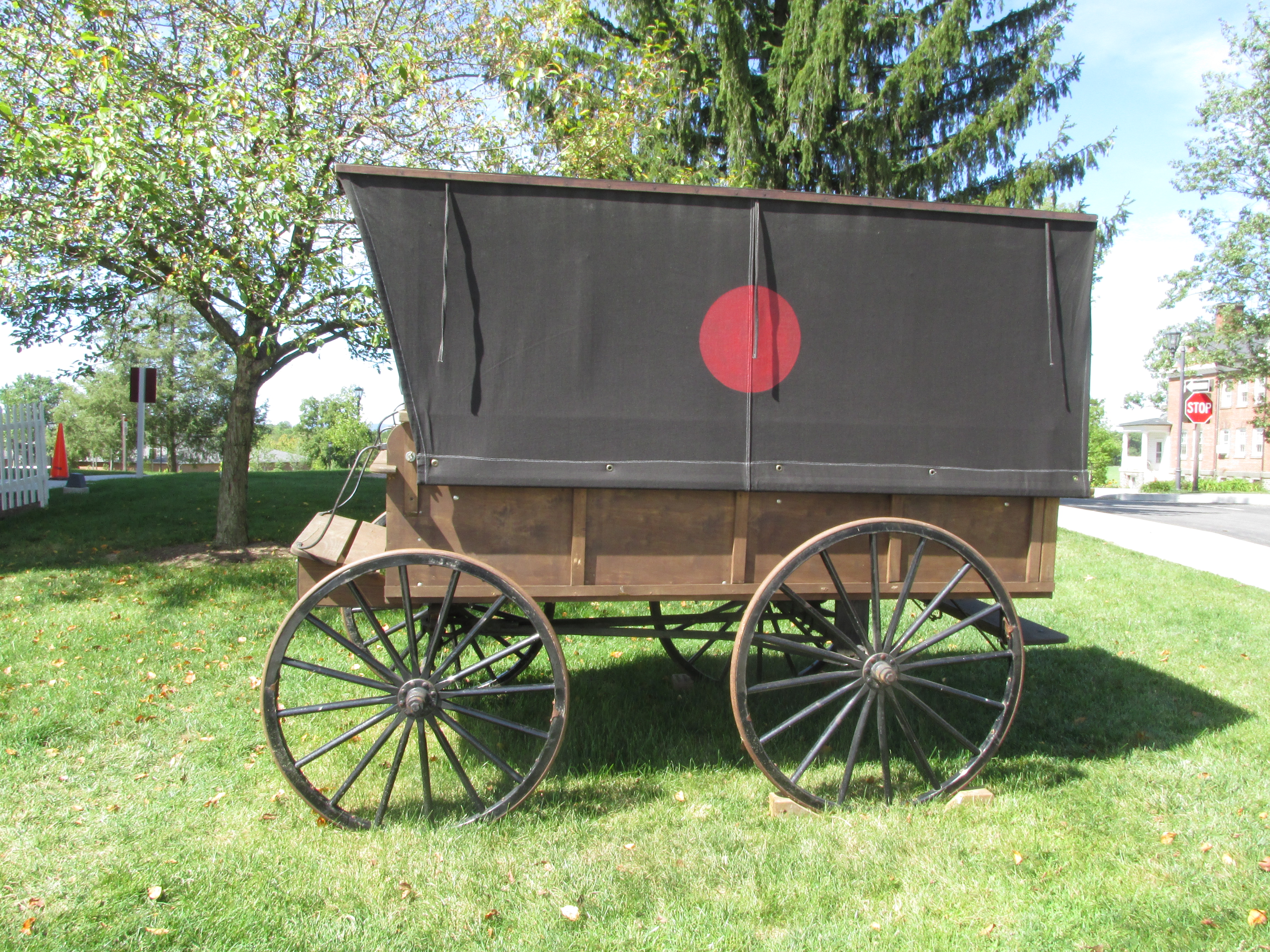
Ambulance outside Lutheran Seminary, Gettysburg.

On July 4, 1863, Confederate General Robert E. Lee began his retreat after the Battle of Gettysburg with an ambulance and wagon train that was about seventeen miles long. Nine Gettysburg men accused of spying or other suspicious activities went with them. Captured African Americans headed south along with thousands of military prisoners. Confederate sharpshooters continued to shoot at Union soldiers in town.

Confederates no longer controlled Gettysburg. The townspeople, who endured a nightmare during the battle, ventured outside their homes to a new ordeal. Their town didn’t look the same nor would it ever be the same.

Homes had been damaged by bullet holes and cannon balls. Soldiers’ discarded knapsacks, blankets, cartridge boxes, bayonets, ramrods, broken guns, food, and letters littered the streets and fields. Broken wagons, wheels, and unexploded shells remained after the battle.

Groans and shrieks from the wounded in churches, the courthouse, homes, and barns tugged at citizens’ hearts. Injured soldiers lay in tents in the fields and under blankets hung over cross-sticks.

Wounded from both sides lay on the battlefields, awaiting rescue. Some had waited since the first day of the battle.

Dead horses lay in the streets. Soldiers killed in battle needed to be buried. (Some 7,000-8,000 soldiers died—sources vary on exact numbers. See my article on Gettysburg’s numbers.) People, even in the stifling heat, closed their windows to block out the terrible odor. They treated the streets with chloride of lime. They cremated bodies of mules and horses with kerosene, adding to the smell.

The town mourned the loss of Jennie Wade, who was buried with dried dough on her hands. She’d been kneading dough when a Confederate bullet aimed at Union soldiers claimed her life.

General Lee left almost 7,000 men too wounded to travel. These soldiers ended up in area hospitals, and were transported to prisoner-of-war camps like Fort McHenry once they recovered.

Damaged rail lines were repaired about a week after the battle ended. About 800 men were then moved daily by train to larger city hospitals.

The Sanitary Commission gave food to several hospitals—10,000 loaves of bread, 11,000 pounds of poultry and mutton, 7,100 shirts, 8,500 dozen eggs, and more than 6,000 pounds of butter. The Christian Commission also gave out supplies.

Drinking water was in short supply.

The demand for food for so many extra people had local farmers charging steep prices. For example, a loaf of bread cost ten cents before the battle and seventy-five cents after it.

On July 7, 1863, Gettysburg resident Sarah Broadhead wrote, “I am becoming more used to sights of misery. We do not know until tried what we are capable of.”

-Sandra Merville Hart

Sources

Creighton, Margaret S. The Colors of Courage: Gettysburg’s Forgotten History, Basic Books, 2005.

McGaugh, Scott. Surgeon in Blue: Jonathan Letterman, the Civil War Doctor who Pioneered Battlefield Care, Arcade Publishing, 2013.

Sheldon, George. When the Smoke Cleared at Gettysburg: The Tragic Aftermath of the Bloodiest Battle of the Civil War, Cumberland House, 2003.

Slade, Jim & Alexander, John. Firestorm at Gettysburg, Schiffler Military/Aviation History, 1998.

Thomas, Sarah Sites. The Ties of the Past: The Gettysburg Diaries of Salome Myers Stewart 1854-1922, Thomas Publications, 1996.
 

Battle of Gettysburg: Lee’s Long Line of Ambulances

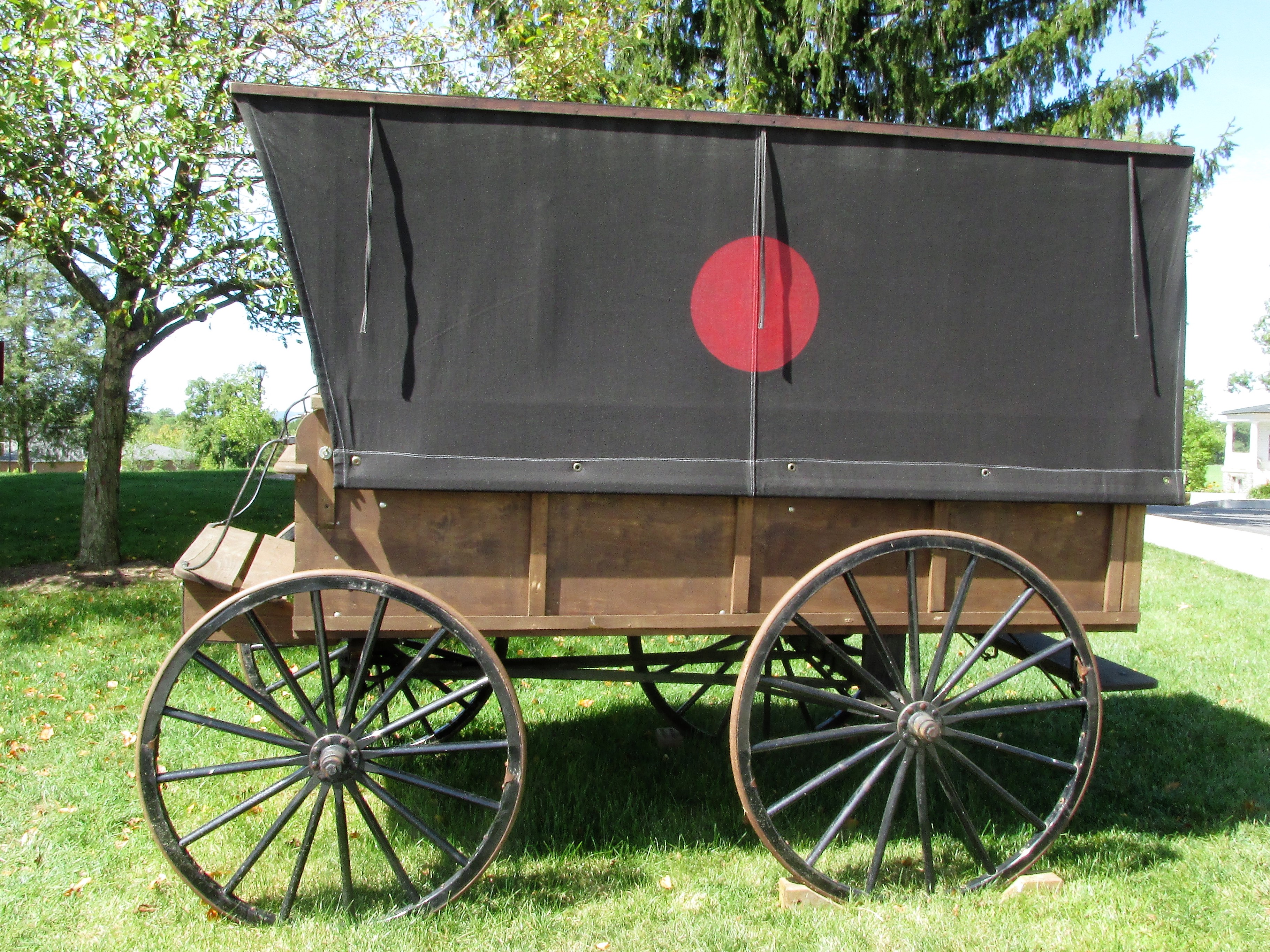
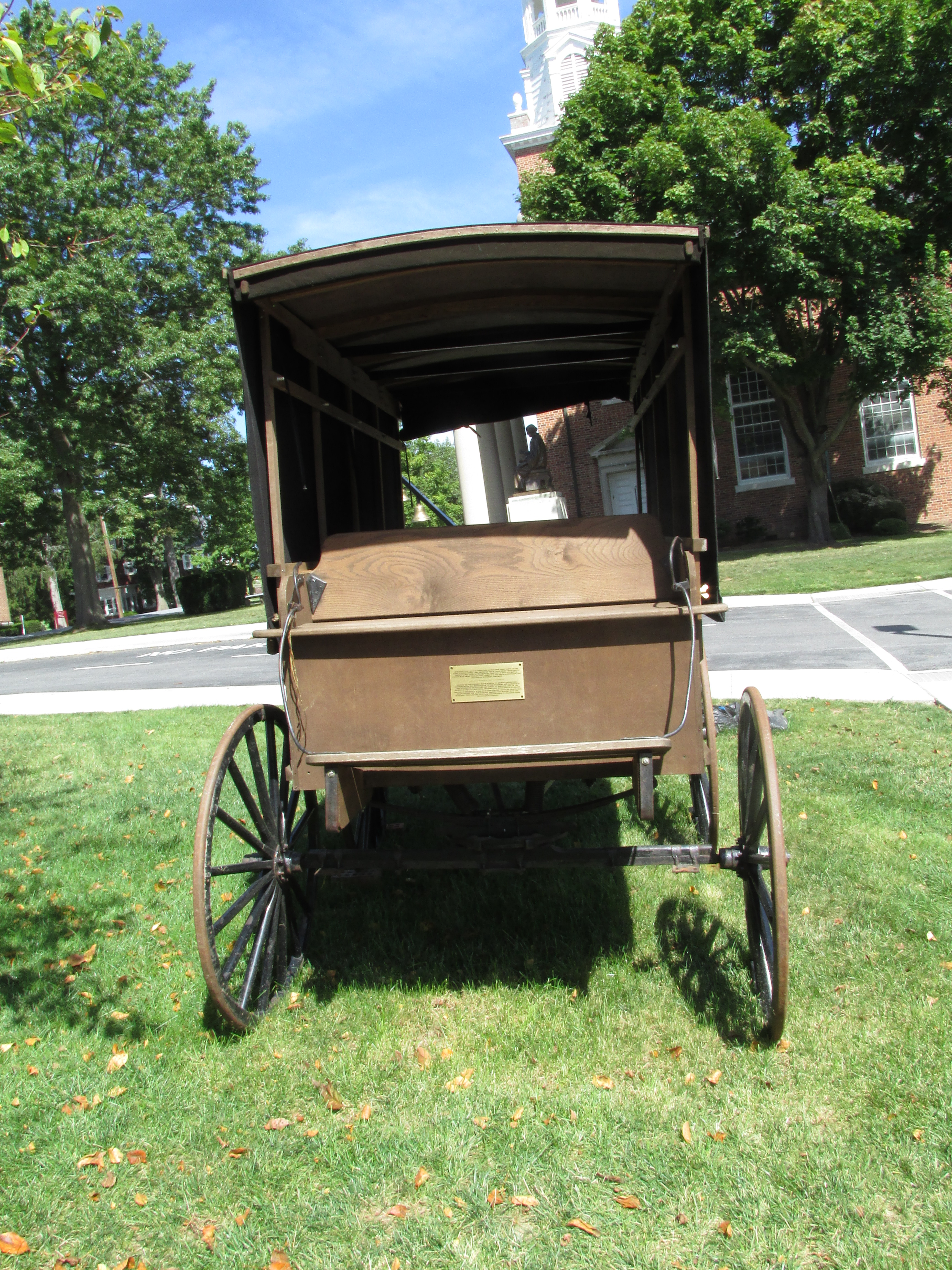
Ambulance outside Lutheran Seminary, Gettysburg.

Confederate General Robert E. Lee’s plan to transport thousands of wounded soldiers after the Battle of Gettysburg was a daunting task. He ordered General John Imboden to lead them to Cashtown before heading south to Williamsport, Maryland. When they reached Williamsport, they paused for a break. Once men and horses rested, they resumed their journey back to Virginia.

The ambulance wagon train stretched for 27 miles.

Tragic.

And 7,000 Confederate soldiers, wounded too severely to travel, were left behind in Gettysburg. Characters in my novel set during the Battle of Gettysburg, A Rebel in My House, had to deal with this issue.

Conservative estimates for Confederate wounded number around 13,000. Other sources report over 18,000. Either way, 27 miles of ambulances means a distressing number of injured soldiers traveled south, groaning in agony as rickety wheels jostled them over rutted dirt roads.

I wondered how many ambulance wagons might have been required and thought it might be fun to try to figure it out.

Ambulance outside of Lutheran Seminary, Gettysburg.

Many models in use at the time were 10 feet long or 10 feet, four inches. The heavier wagons required 4 horses to pull them while lighter ones needed only 2.

Some carried 10 patients—4 prone and 6 seated. The driver and 2 patients sat on a closed chest holding medical supplies.

A lighter model carried 5—15 wounded, depending on how many needed to lie prone for the journey.

It seems almost certain—with the number of wounded requiring transportation to Southern hospitals—that folks squeezed onto wagons meant to hold fewer men.

I confess that I got lost trying to figure the length of an average horse—it seems the larger horses are about 6 feet long. An ambulance 10 feet in length with a two-horse team might require about 20 feet. A four-horse team and wagon might need 30 feet.

Allowing 30 feet for each wagon to estimate how many ambulances might have been in this ambulance train … a staggering 4,752 wagons. The actual count was probably less because some patients with minor injuries walked.

Some ambulances held only 5 patients. If folks had to travel in a laying down, less patients could ride with them.

7,000 were left in Gettysburg. Going with the highest estimate of 18,000+, some 11,000 wounded traveled south. That means 2-3 folks traveled in each wagon.

If we allow 50 feet of space for each wagon, there are about 2,851 or 3-4 patients per wagon. If this is true, then lots of soldiers were in bad shape along the way. Possibly greater numbers of slightly injured weren’t included in the total count.

Has anyone run across this in their research?

-Sandra Merville Hart

Sources

“Battle of Gettysburg,” Encyclopeadia Britannica, 2018/06/15 https://www.britannica.com/event/Battle-of-Gettysburg.

“Battle of Gettysburg,” HistoryNet, 2018/06/15 http://www.historynet.com/battle-of-gettysburg.

“Battle of Gettysburg Facts,” Stone Sentinels, 2018/06/15 http://gettysburg.stonesentinels.com/battle-of-gettysburg-facts/.

“Civil War Ambulance Wagons,” Civil War Home, 2018/06/17 http://www.civilwarhome.com/ambulancewagons.html.

Compiled by Editors of Combined Books. The Civil War Book of Lists, Da Capo Press, 1994.

Edited by Kennedy, Frances H. The Civil War Battlefield Guide, Houghton Mifflin Company, 1990.

“Gallery: Field Medicine,” Trans-Mississippi Theater Virtual Museum, 2018/06/17, http://www.civilwarvirtualmuseum.org/medicine/field-medicine/ambulance.php.

Long, E.B and Long, Barbara. The Civil War Day by Day: An Almanac 1861-1865, A Da Capo Paperback, 1971.

Sheldon, George. When the Smoke Cleared at Gettysburg: The Tragic Aftermath of the Bloodiest Battle of the Civil War, Cumberland House, 2003.


Confederate Surrender at Appomattox Court House

Food supplies awaited Confederate General Robert E. Lee’s Army of Northern Virginia at Appomattox Station. He needed them—his men were hungry.

On April 8, 1865, Lee arrived in Appomattox County. Union cavalry reached the supplies first and then burned 3 supply trains. Union General Ulysses Grant wrote to Lee, requesting his surrender. Lee refused, hoping for supplies in Lynchburg.

The next morning, the Confederates, under Major General John Gordon attacked Union cavalry troops. He stopped the attack when he realized that two Union army corps supported the cavalry.

They were cut off from provisions. Lee is famously quoted as saying that he’d “rather die a thousand deaths” than go talk to General Grant about surrendering.

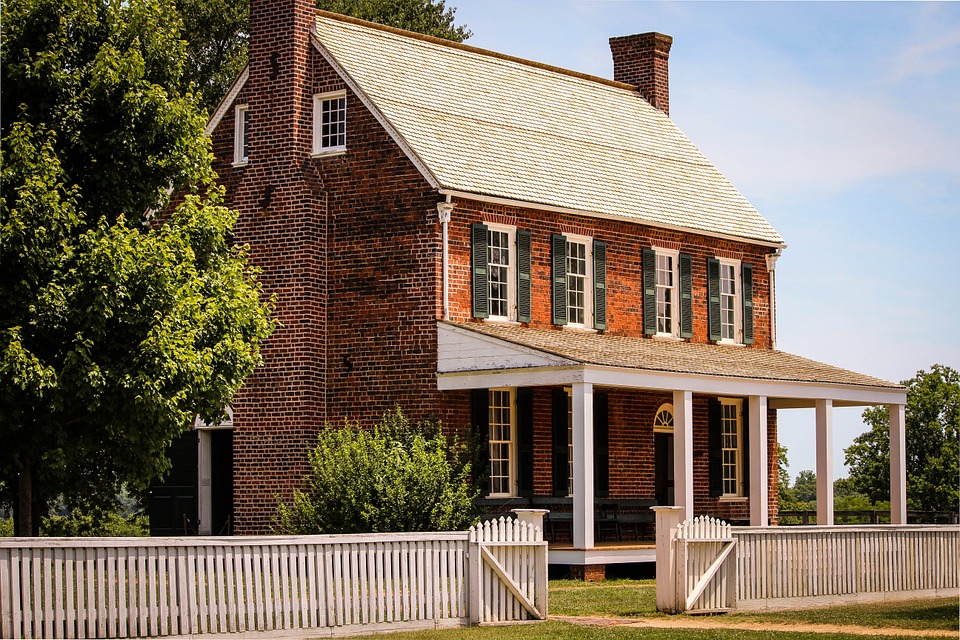
Grant arrived for the meeting in a muddy uniform. Lee came in full dress attire. They met in Wilmer McLean’s parlor at 1 pm on April 9th.

The generals awkwardly greeted one another, then Lee asked for surrender terms.

All officers and men would be pardoned—they’d go home with their personal property. The officers were to keep their side homes. Lee’s hungry soldiers were to receive food rations.

Lee signed the surrender.

Lee’s Army of Northern Virginia disbanded after being paroled. The war in Virginia had ended. Lee’s surrender was the first of several Confederate surrenders over the coming weeks.

-Sandra Merville Hart

Sources

“Appomattox Court House: Lee’s Surrender,” Civil War Trust, 2018/03/19 https://www.civilwar.org/learn/civil-war/battles/appomattox-court-house.

History.com Staff. “Appomattox Court House,” History.com, 2018/03/19 https://www.history.com/topics/american-civil-war/appomattox-court-house.

Civil War General Lee Sends a Frightening Message


Confederate President Jefferson Davis and his family lived in the executive mansion in Richmond, Virginia. Citizens grew accustomed to hearing artillery fire in nearby Petersburg after months of fighting. With General Robert E. Lee in command, they felt safe.

Confederate President Jefferson Davis didn’t feel quite as secure. By the morning of April 2, 1865, he had already sent his family away from the city.

Still, when Davis received a message during church services on Sunday morning, April 2, color drained from his face. He immediately exited the church, leaving the congregation to wonder what momentous event had occurred to warrant his haste.

The telegram was from General Lee. He advised Davis to leave Richmond that night.

Davis issued orders to evacuate the Confederate government, though citizens were not given notice for hours. However, the sight of official documents burning in front of government buildings warned of terrible events.

Citizens learned that the government was evacuating at 4 pm. Officials and other prominent citizens abandoned the city rapidly. They exited by train. They rode out on horseback, carts, and carriages. They boarded canal barges and boats to avoid the Union soldiers.

Davis arranged to leave by train at 8:30 pm yet continued to hope it wouldn’t be necessary. He and three cabinet members delayed leaving until 11 pm. Confederate soldiers crossed the river on pontoon boats.

Chaos reigned in Richmond. City officials ordered men to destroy kegs and bottles of liquor from saloons and warehouses. They poured them into street drains, attracting crowds. Folks scooped up whiskey in boots and hats to gulp it down.

Richmond’s military commander, Lieutenant General Richard Ewell, stayed behind with a few soldiers to burn the city’s supplies of cotton, tobacco, and food. These were set afire inside buildings with the fire department nearby to keep it under control.

The stocks of meat, coffee, and other staples enraged starving citizens. They grabbed the food and then began looting stores. Fires blazed out of control. Arsenals on ships exploded.

Fires still burned the next morning when Union cavalry arrived.

-Sandra Merville Hart

Source

“Reaction to the Fall of Richmond,” Civil War Trust, 2017/10/29 https://www.civilwar.org/learn/articles/reaction-fall-richmond.


This Week in History: Civil War Battle of Brandy Station, Virginia

Tuesday, June 9, 1863

Confederate General Robert E. Lee decided to fight the battle above the Mason-Dixon. He began marching his army west from Fredericksburg toward Culpeper Court House. Lee wanted the protection of the Shenandoah Valley and asked General J.E.B. Stuart to mask the army’s movements with his cavalry.

Stuart had about 9,500 cavalry troops at Brandy Station—a small crossroads between the Rappahannock River and Culpeper—on June 8, 1863. Lee ordered Stuart to lead a raid across the river on June 9th to create a diversion.

Federal General Joseph Hooker, having guessed Stuart’s plan, deployed his cavalry under General Alfred Pleasonton to attack on June 9th. His men surprised Confederate pickets at Beverly’s Ford at 4:30 am and chased them back to their camp near St. James Church on the road to Brandy Station.

Confederates suffered until their artillery was ready to fire on Union troops at the church. Union General Buford ordered his troops to charge. They were repulsed.

In the meantime, Union General David Gregg brought his cavalry behind Stuart’s men with Fleetwood Hill blocking them. Union artillery fired on Fleetwood Hill, startling Stuart but he rallied in time to fight the Union’s charge.

After almost five hours of hard fighting, Pleasonton received reports of Confederate reinforcements and withdrew at 5 pm. Union casualties totaled 866 with 81 killed. Confederate casualties were 523.

The infantry used to joke, “Whoever saw a dead cavalryman?”

The fierce battle at Brandy Station ended that.

The Union cavalry was respected after the battle.

And the battle hid the Confederate march northward.

-Sandra Merville Hart


Sources

“Brandy Station,” Civil War Trust, 2017/05/01, http://www.civilwar.org/battlefields/brandy-station.html?tab=facts.

Long, E.B with Long, Barbara. The Civil War Day by Day: An Almanac 1861-1865, A Da Capo Paperback, 1971.


This Week In History: Civil War Battle of Poplar Springs Church (Peebles’ Farm)

civil-186719_960_720

Thursday, September 29 – October 2, 1864

The Union lines under General Ulysses S. Grant had faced Confederate lines under General Robert E. Lee in trenches around Petersburg, Virginia, since June. The line extended to Richmond 25 miles to the north.

Grant attempted to drive the Southerners from the trenches. Warren’s Fifth Corps led an advance toward Poplar Spring Church with John G. Parke’s Ninth Corps following. Warren attacked successfully at first, but Confederate General A.P. Hill led a strong counterattack that drove Parke’s troops back and prevented territory loss.

The two Union corps then entrenched close to Peebles’ Farm. This newly formed line on Squirrel Level Road forced Confederates to shift positions. Hill brought in two additional divisions to meet the new threat.

Union soldiers attacked unsuccessfully on October 1st. They failed to reach the Southside Railroad, which remained under Confederate control.

-Sandra Merville Hart


Sources

Long, E.B with Long, Barbara. The Civil War Day by Day: An Almanac 1861-1865, A Da Capo Paperback, 1971.

“Battle of Poplar Springs Church (Peebles’ Farm,)” History.com This Day in History, 2016/08/04 http://www.history.com/this-day-in-history/battle-of-poplar-springs-church-peebles-farm.