Popcorn Balls

The Fannie Farmer Cookbook was originally published in 1896. Fannie Farmer’s name is still well-known today.

A recipe for Popcorn Balls stated that it was “an authentic old-fashioned version.” Intrigued by a recipe considered “old-fashioned” in 1896, I decided to make it.

Preheat oven to 250. (All temperatures are Fahrenheit.)

Pop 3 quarts of unbuttered, unsalted popcorn. To do this frugally, add 1/3 cup of popcorn to a lunch-sized paper bag. Important—tape the bag shut. Microwave it on the popcorn setting until popping slows. This makes at least 10 cups of popcorn, which was plenty.

Coat a large, oven-safe bowl with shortening. Pour the popcorn in the bowl and keep warm in a 250 oven.

You’ll need 2 to 4 tablespoons of butter later. For now, butter a large spoon or fork and set it aside. You’ll need some wax paper for the hot popcorn balls as well.

In a 3-quart heavy pot, combine 2 cups light corn syrup, 1 tablespoon cider vinegar, and ½ teaspoon of salt. Stir to mix together.

Cook over medium heat. Use a candy thermometer to monitor the temperature of the syrup until it reaches the hard-ball stage of 250 degrees.

There was a strong vinegar smell when the syrup began to cook that dissipated after a few minutes.

The recipe says you can stir occasionally, but I had to make this twice because I forgot to add vanilla at the end the first time. The final caramel-type mixture worked better without stirring.

When the temperature reaches 200, watch carefully as it begins to shoot up quickly.

Remove from heat when it reaches 250. Add 2 teaspoons of vanilla. I was surprised that the vanilla sizzled. Stir to mix it in.

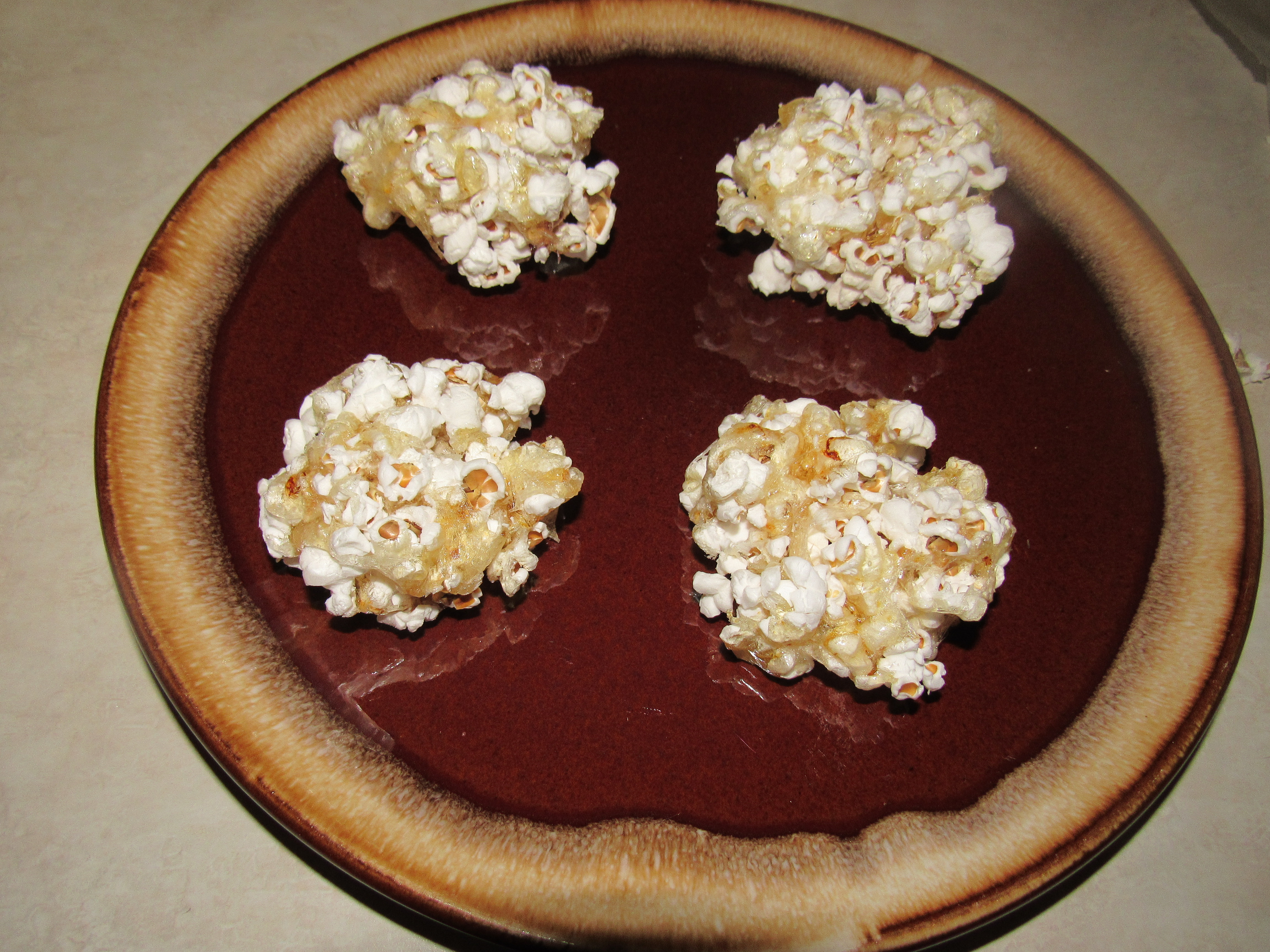
Remove the warm popcorn from the oven. Moving quickly, use the buttered spoon to toss the popcorn as you pour it slowly from the kettle. The caramel is very thick and pours in a thin ribbon while you move the popcorn around to cover it.

Butter your fingers. Since the popcorn sets quickly, as soon as the popcorn mixture cools enough to handle, begin shaping it into 3-inch balls. Start from the outside parts that have cooled a bit. Keep buttering your fingers to enable you to work with the sticky popcorn.

My husband and I both thought these popcorn balls tasted like Cracker Jacks. Delicious! But, if you cook it until 250, the caramel is little hard. I’d remove it at about 240—or even a little less. Experiment for the caramel consistency you enjoy.

I had fun learning how to make this, but the makers of Cracker Jacks have perfected it long ago. I think I’d buy a box next time. I bought Cracker Jacks a few months ago for a baseball party so they are still around.

Enjoy!

-Sandra Merville Hart

Sources

Revised by Cunningham, Marion and Laber, Jeri. The Fannie Farmer Cookbook, Alfred A Knopf Inc., 1983.



Early Baseball Snacks

Doscher Brothers, a Cincinnati confectioner, made a type of flat popcorn ball and named it Popcorn Fritters. The snack, resembling a rice cake, was sold to the Cincinnati Red Stockings, probably beginning in the mid-1870s. Their home ballpark from 1876-1879 was Avenue Grounds, located about four miles from the center of Cincinnati. Fans traveled in trains and horse-drawn streetcars to games.

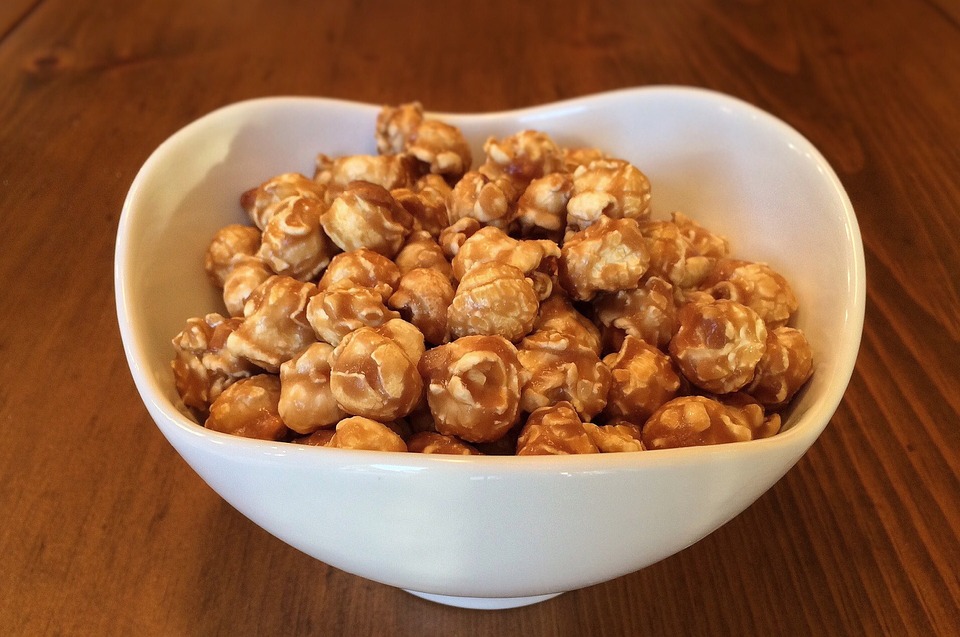
Two brothers, Frederick and Louis Rueckheim, experimented with adding molasses and peanuts into popcorn and introduced the treat when the World’s Fair came to Chicago in 1893. They perfected the product and began selling it as “Cracker Jacks” in 1896.

“Buy me some peanuts and Cracker Jacks” is a line from the popular 7th inning stretch baseball tune “Take Me Out to the Ballgame.” This song, written by Albert Von Tilzer and Jack Norworth in 1908, immortalized both baseball snacks.

Sometime from 1896 to 1908, Cracker Jacks had become a popular snack at ballgames.

The song also mentions peanuts. That salty snack got its start in 1895. Harry Stevens, a ballpark concessioner, sold advertising on scorecards. A peanut company paid for their advertisement with peanuts—a very wise decision because Stevens sold them to fans at the ballparks.

It seems we can also thank Harry Stevens for bringing hot dogs to ballparks.

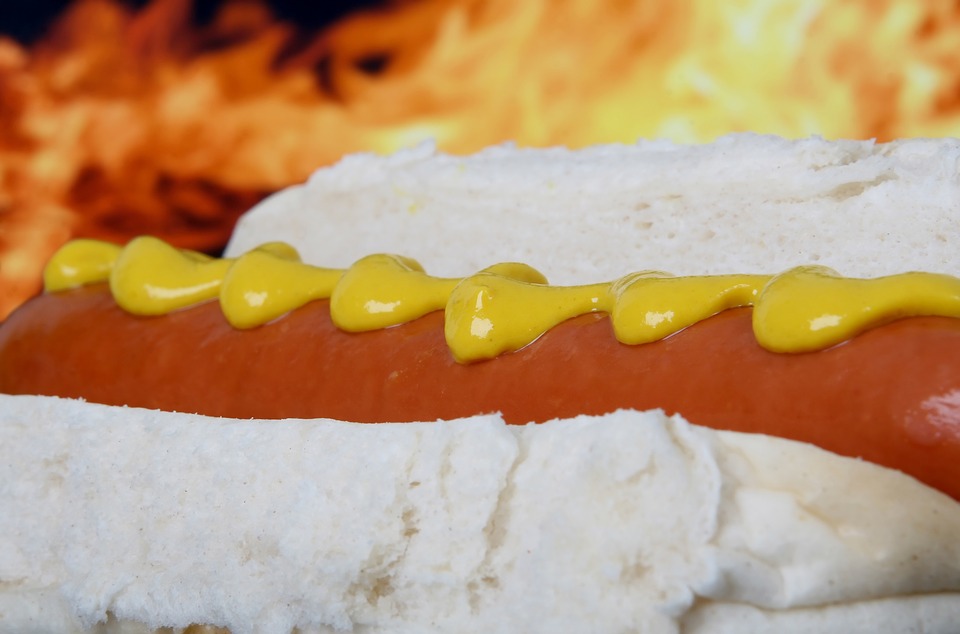
Ice cream—another early ballpark food!—wasn’t selling well on a cool Spring day in 1905. Stevens sent his employees to buy sausages and Vienna rolls. The sausages were served on the rolls to fans and called “red hots.” They sold so well that he kept them on the menu. In 1910, a cartoonist shortened the name to “hot dog.”

What about drinks?

Brooklyn’s first enclosed ballpark included a saloon on an outfield corner where they sold beer.

The Cincinnati Reds ballpark from 1902-1911 was the Palace of the Fans, a grandstand designed after the Chicago’s World’s Columbian Exposition of 1893. This park either had a bar on the grounds or one nearby because waiters served beer to standing-room crowds on “Rooter’s Row,” an area underneath opera-style boxes that jutted out three rows from the grandstand.

Since families attended baseball games, it seems likely those early ballparks also sold lemonade, tea, or coffee.

-Sandra Merville Hart

Sources

“Reds Ballparks,” Reds.com, 2019/03/23 http://mlb.mlb.com/cin/history/ballparks.jsp.

Suess, Jeff. “Red’s legendary Palace of the Fans symbol of baseball’s growth,” Cincinnati.com, 2019/3/22 https://www.cincinnati.com/story/news/2017/04/05/reds-legendary-palace-fans-symbol-baseballs-growth/100063096/.

“The History of Ballpark Food,” History.com, 2019/03/23 https://www.history.com/news/the-history-of-ballpark-food.

“The Story Behind Peanuts and Baseball,” National Peanut Board, 2019/03/25  https://www.nationalpeanutboard.org/news/whats-story-behind-peanuts-and-baseball.htm.

Weber, Roger. “A History of Food at the Ballpark,” SportsLibrary.net, 2019/03/25 http://baseballjudgments.tripod.com/id45.html.

Wilson, Laurnie. “Candy History: Cracker Jacks,” Candyfavorites.com, 2019/03/25 https://www.candyfavorites.com/blog/history-of-cracker-jacks-retro/.

Woellert, Dann. Cincinnati Candy—A Sweet History, American Palate, 2017.