These are the Times that Try Men’s Souls

Thomas Paine lived in England until traveling to the colonies in 1774. He wrote articles about issues of the days, such as slavery and women’s rights, for the Pennsylvania Magazine.

It was a time of unrest in the colonies. There was growing dissatisfaction with Great Britain. After the Battle of Lexington and Concord in April of 1775, George Washington was appointed as commander-in-chief of the Continental army. Though already at war with England, many colonists hesitated to split from England.

On January 10, 1776, Thomas Paine published an important pamphlet called Common Sense. Written in clear, easy-to-read language, it quickly sold about 500,000 copies, becoming an overnight best-seller. Many newspapers around the country reprinted quotes from this pamphlet.

In Common Sense, Paine wrote about the need to separate from England and urged the colonists to declare independence. He also stated that he’d never met a man in America or England who didn’t believe the two countries would not eventually part ways, but they couldn’t agree on the timing. Paine wrote that “the time hath found us.”

People praised his work, and it convinced many to act immediately. Paine volunteered for the army and served as aide-de-camp to General Nathanael Greene.

Washington’s army had been badly defeated in the Battle of Long Island in August. The soldiers’ confidence took a beating.

Paine noticed everyone’s dejected spirits. He sat beside a campfire near Newark, New Jersey, and wrote another article encouraging people not to lose their courage in this time of crisis. The Pennsylvania Journal published it on December 19, 1776.  It was the first article in a series of writings that became known as The Crisis. This is part of his opening lines:

“These are the times that try men’s souls: The summer soldier and the sunshine patriot will, in this crisis, shrink from the service of his country; but he that stands it now, deserves the love and thanks of man and woman. Tyranny, like hell, is not easily conquered; yet we have this consolation with us, that the harder the conflict, the more glorious the triumph. What we obtain too cheap, we esteem too lightly.”

Impressed and encouraged by Paine’s article, General George Washington had it read to his soldiers. It inspired those brave men. They crossed the Delaware River during a snow storm that turned to sleet during Christmas night in 1776. The American army surrounded the British forces at Trenton and won the battle, earning citizens’ trust in Washington’s leadership. Their victory increased the soldiers’ confidence.

According to Paine’s article, the harder the fight, the happier we feel when we win.

His words encouraged the nation.

– Sandra Merville Hart

Sources

“Ft. Washington Captured – Washington Retreats through N.J -1776,” History Central, 2015/07/27 http://www.historycentral.com/Revolt/Retreatnj.html.

Paine, Thomas. “The Crisis,” USHistory.org 2015/07/24 http://www.ushistory.org/paine/crisis/c-01.htm.

“Thomas Paine,” Encyclopaedia Britannica, 2020/06/29 https://www.britannica.com/biography/Thomas-Paine.

“Thomas Paine,” USHistory.org 2015/07/24 http://www.ushistory.org/paine/.

“Thomas Paine Publishes American Crisis,” History.com, 2015/07/28 http://www.history.com/this-day-in-history/thomas-paine-publishes-american-crisis.


Colonial Virginia Christmas Feast

Christmas morning began with a bang in colonial Virginia. Literally. Men fired their muskets. Firecrackers popped and cannons roared in celebration of the day. If none of these noisemakers were at hand, men beat on pots and pans to join the merrymakers.

After church services, the colonists enjoyed a large dinner that might include up to eight courses.

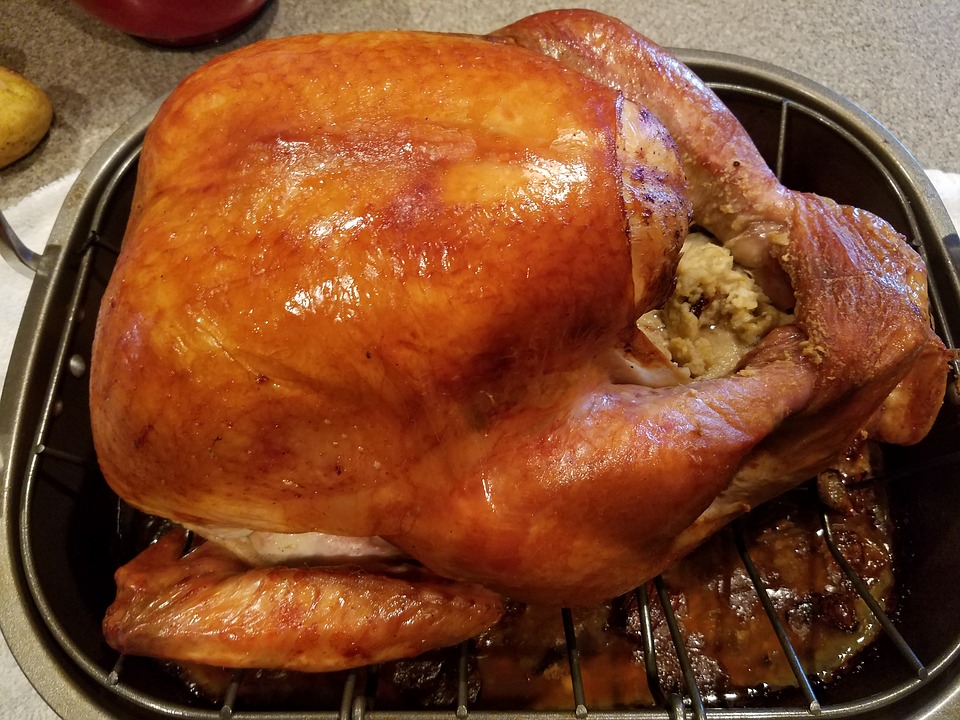
George and Martha Washington, wealthy landowners before the Revolutionary War, served lavish feasts for their guests. Meats included crab, oysters, codfish, turtle soup, Yorkshire pudding, ham, venison, boiled mutton, and turkey with stuffing. Served with these were relishes, vegetables, biscuits, and cornbread.

Then, if the diner had any room for dessert, there were possibly a dozen choices. Tarts, puddings, pies, fruit, cakes, ice cream, and dishes of candy, nuts, and raisins were among the selections.

January 6th was known as Twelfth Night, and was typically marked with a celebration that marked the official end of the Christmas season.

Most of the colonists were from England or had English roots so it isn’t surprising that they enjoyed wassail (spiced wine or ale punch with apples), mince pies, plum puddings, and fruit cake.

Washington had an eggnog recipe that he made for his guests. They loved the potent drink.

Music, dancing, and visiting with friends might last for another week after the feast.

-Sandra Merville Hart

Source

Christmas in America in the 1700’s and 1800’s, World Book, Inc., 2007.


Revolutionary War: Washington Battles Supply Shortage at Valley Forge

The winter of 1777-78 at Valley Forge was rainy and moderate rather than snowy and cold, yet General George Washington’s colonial soldiers still suffered.

They were hungry. Provision shortages prompted Washington to write to the President of Congress, Henry Laurens, three days after their arrival at Valley Forge. His letter, dated December 22, 1777, reported alarming deficiencies in food supplies that, unless solved, must dissolve the army.

Incompetence in the Commissary and Quartermaster Department were partly to blame, though the practice of Purchase Commissaries working on percentages encouraged dishonesty.

William Buchanan served as Commissary General that winter. Washington asked Buchanan to rise to the challenge in a December 28th letter. He asked that at least a 30-day supply be stored near camp. Buchanan’s response wasn’t effective.

Nearby farmers, knowing the army’s great need, charged high prices. Local government passed legislation to fix prices to control this problem.

To supplement the food supply, Washington sent soldiers out to forage.

Members of the Continental Congress visited Valley Forge in mid-January. Washington reported the serious shortage.

In early February, Washington appealed to state governments for aid, who responded by sending droves of cattle to Valley Forge in March. One drove was captured by British soldiers.

The March 2nd appointment of Major General Nathanael Greene to Quartermaster General greatly improved the whole supply system along with the help of a new Commissary General, Colonel Jeremiah Wadsworth.

Greene and Wadsworth worked well together. Their previous commissary experience was a refreshing change and helped turn a bad situation around at Valley Forge.

-Sandra Merville Hart


Sources

“Provision Shortages at Valley Forge,” UShistory.org, 2018/03/20 http://www.ushistory.org/valleyforge/history/provisions.html.


“Ten Facts about Washington and the Revolutionary War,” George Washington’s Mount Vernon, 2018/03/11 http://www.mountvernon.org/george-washington/the-revolutionary-war/ten-facts-about-the-revolutionary-war/.

Revolutionary War: The Fate of Unborn Millions

When the Continental Army drove British troops out of Boston, the English soldiers headed to New York City.

General George Washington knew the importance of the city. He told his troops that “the fate of unborn millions” depended on their courage and on God.

Over the next few weeks, more British troops arrived in New York as the colonial soldiers prepared for battle. The British, under the command of Lieutenant General William Howe, attacked on August 27, 1776. The Continental soldiers fought bravely but were losing the fight.

A heavy storm halted the fighting the next day. It continued until the afternoon of August 29th. Howe decided to postpone the attack for the next day. Washington decided to evacuate while he could. The storm had left behind a thick fog.

Washington, at noon, ordered the quartermaster to impress boats with sails or oars. He needed them by dark.

Oars were wrapped with cloths to muffle the sound. Soldiers loaded horses, supplies, cannons, and ammunition as silently as possible for the first river crossing. Soldiers from a Massachusetts regiment—peacetime fishermen and sailors—served as boat crews.

In the misty fog, the wounded soldiers were transported next and then the rest of the Continental soldiers began to fill the rowboats, canoes, and barges.

Under General Washington’s orders, rearguard kept fires burning to keep the British army from detecting their retreat.

The last troops crossed safely at 6 am.

They had done it. Washington’s plan saved around 9,000 soldiers and most of their horses and supplies. They had slipped away without the enemy’s knowledge.

Even in defeat, Washington proved to be skillful leader.

-Sandra Merville Hart

Sources

Goldstein, Norman. “Escape from New York,” HistoryNet, 2018/03/11 http://www.historynet.com/escape-new-york.htm.

“Ten Facts about Washington and the Revolutionary War,” George Washington’s Mount Vernon, 2018/03/11 http://www.mountvernon.org/george-washington/the-revolutionary-war/ten-facts-about-the-revolutionary-war/.


Revolutionary War: Washington Fights a Smallpox Epidemic

General George Washington had a problem—besides his British enemy. This time it was a silent killer—a disease known as smallpox.

Washington was no stranger to the disease. While in Barbados in November, 1751, he’d suffered through a bout with the disease. After he recovered, he was immune to smallpox.

Variola—the smallpox virus—was brought in by British and German soldiers. The virus caused about 17% of deaths in the Continental Army. The disease also scared off potential recruits.

The practice of inoculations was widespread in Europe. Fearing contamination from the inoculation process, the Continental Congress prohibited army surgeons from doing them. Besides, soldiers would be too ill to fight for about a month after receiving a less-potent form of smallpox.

Yet soldiers were dying. Washington had to do something.

On January 6, 1777, General Washington ordered Dr. William Shippen, Jr. to inoculate all soldiers that came through Philadelphia. He wrote that he feared the disease more than “the Sword of the Enemy.”

Washington then ordered a mass inoculation on February 5, 1777. Though he did this in secret so the enemy wouldn’t know that his soldiers were incapacitated for a time, he did inform Congress of his decision.

Some reports state that deaths from smallpox dropped to 1% in the Continental Army. Isolated infections occurred in the southern campaign but were not the overwhelming problem as had occurred early in the war.

Washington’s decisive actions had saved the army.

-Sandra Merville Hart

Sources

“George Washington and the First Mass Military Inoculation,” The Library of Congress, 2018/03/11 https://www.loc.gov/rr/scitech/GW&smallpoxinoculation.html.

“Ten Facts about Washington and the Revolutionary War,” George Washington’s Mount Vernon, 2018/03/11 http://www.mountvernon.org/george-washington/the-revolutionary-war/ten-facts-about-the-revolutionary-war/.

Thompson, Mary V. “Smallpox,” George Washington’s Mount Vernon, 2018/03/11 http://www.mountvernon.org/digital-encyclopedia/article/smallpox/.


George Washington’s Vision for a National Road

George Washington’s vision for a major road westward likely built over time.

The Ohio Company of Virginia owned a trading post on the Monongahela River, which is now Brownsville, Pennsylvania, in the 1750s. George and his half-brother Lawrence were members of this organization that hired Colonel Thomas Cresap to oversee the blazing of a trail from Cumberland, Maryland, to its trading post in 1752. Cresap hired Delaware Indian Nemacolin who performed the task. The new trail was called Nemacolin’s Path.

The following year, the French occupied Fort Le Boeuf (currently Waterford, Pennyslvania), an area in British territory. Major George Washington, sent by Virginia Governor Robert Dinwiddie to order them to leave, rode his horse over the future National Road. The French ignored the warning.

In 1754, Washington commanded a small army with orders to remove the French from Fort Duquesne (Pittsburgh.) Washington’s small army traveled over ground that would become the National Road. He was ambushed and eventually surrendered.

As aide to British General Edward Braddock, Washington again found himself traveling toward the French at Fort Duquesne in 1755. Braddock ordered 500 axmen to clear a road for his supply wagons and infantry. The army was ambushed again and Braddock was killed.

The road his army blazed, marked by stumps and brush, was called Braddock’s Road. It ends near Pittsburgh. Early pioneers preferred packhorse trails over the rough road.

After the Revolutionary War in 1784, Washington focused on his western holdings. He took the same difficult route westward as he’d taken in 1754. Then he called a meeting at a land agent’s cabin on the Cheat River (currently Morgantown, West Virginia) in September of 1784. He asked for opinions on the best route between the upper Potomac to an Ohio River tributary.

A young surveyor, Albert Gallatin, was present at that meeting. He surprised Washington by agreeing that a passage through the mountains of northwestern Virginia (now West Virginia) was the best route. Washington agreed.

Our first President died in 1799 without seeing his vision for a national road realized, but Gallatin didn’t forget. President Thomas Jefferson selected him to become Secretary of the Treasury. One of Gallatin’s duties was the disposition of western public lands.

Gallatin lived in southwestern Pennsylvania. He approved of a road there and assured Jefferson that this type of road was “of primary importance.”

Congress voted on March 29, 1806, to lay a road from Cumberland, Maryland, to Ohio.

Perhaps Gallatin thought of a long-ago meeting in the Virginia wilderness with a famous Revolutionary War general and future President as the National Road was voted into law.

-Sandra Merville Hart

Sources

Day, Reed B. The Cumberland Road: A History of the National Road, Closson Press, 1996.

Schneider, Norris F. The National Road: Main Street of America, The Ohio Historical Society, 1975.


These Are the Times that Try Men’s Souls

colonial-378730_960_720

Thomas Paine, personal assistant to General Nathanael Greene, scanned the faces of his companions in the Continental Army on a cold day in December, 1776. The soldiers faced difficulties worse than separation from families and harsh winter conditions. The men were disheartened. How could an army one quarter the size of the British forces win freedom?

Paine understood their discouragement. Recently, three thousand Colonial soldiers bravely stood their ground against a foe of thirteen thousand outside the fort at Washington Heights (Manhattan) until the British threatened them with cannons. One hundred forty-nine Colonial soldiers were killed or wounded. Over twenty-eight hundred at the fort surrendered. The Colonial Army also abandoned another fort, Fort Lee, in New Jersey.

military-752464_960_720To make matters worse, General Howe’s British troops pursued General Washington’s retreating army across New Jersey. The soldiers marched through the colony for sixteen days until they reached safety across the Delaware River.

The loss of three thousand soldiers struck the struggling army a difficult blow. New York City and all of New Jersey were under British control. Eleven thousand colonial soldiers gave up and returned home between September and December. Army contracts would expire on December 31st.

Paine remembered the impact of his pamphlet, Common Sense. His words, published earlier that year in January, had been read by thousands. His writing somehow resonated with people in all walks of life.

All thirteen colonies must know of the recent British victories. Paine imagined those at home felt discouragement similar to the soldiers. After he pondered the situation, he sat down to pen these words:

“These are the times that try men’s souls: The summer soldier and the sunshine patriot will, in this crisis, shrink from the service of his country; but he that stands it now, deserves the love and thanks of man and woman. Tyranny, like hell, is not easily conquered; yet we have this consolation with us, that the harder the conflict, the more glorious the triumph. What we obtain too cheap, we esteem too lightly.” 

The American Crisis went to the heart of the problem from these beginning lines. The Pennsylvania Journal published Paine’s work on December 19, 1776.

george-34252_960_720General Washington commanded the pamphlet to be read to his discouraged men. Paine’s stirring words revived hope within their souls at a crucial moment. The results encouraged Washington. His plan for Christmas Day must succeed though he kept the details from his soldiers.

Regiments began assembling at specific crossing points along the Delaware River late in the afternoon of December 25th. Temperatures dropped causing the snow-covered ground to feel even colder.

Washington didn’t want delays because after the troops crossed the icy river, they must march to Trenton, New Jersey for a surprise predawn attack on the Hessian soldiers.

delaware-river-1472266_960_720Unfortunately some soldiers arrived late to their designated areas. Snow, hail, sleet, and rain hindered their crossing. They contended with ice jams on the river. Dark, stormy skies made navigation difficult.

All this affected Washington’s careful timetable. He almost abandoned the plan when faced with a three-hour delay. He trudged on.

Washington’s surprise attack worked. The Continental Army won their first major victory.

Would the results have been same without Paine’s passionate plea to stay the course? With all the obstacles that had to be overcome on that freezing Christmas Day and everything that led up to it, this author doesn’t believe so.

Do our words matter?

You decide.

-Sandra Merville Hart

Sources

“Crossing of the Delaware,” George Washington’s Mount Vernon, 2015/07/27 http://www.mountvernon.org/research-collections/digital-encyclopedia/article/crossing-of-the-delaware/.

“Ft. Washington Captured – Washington Retreats through N.J -1776,” HistoryCentral, 2015/07/27 http://www.historycentral.com/Revolt/Retreatnj.html.

Paine, Thomas. “The Crisis,” USHistory.org 2015/07/24 http://www.ushistory.org/paine/crisis/c-01.htm.

“Thomas Paine,” USHistory.org 2015/07/24 http://www.ushistory.org/paine/.

“Thomas Paine Publishes American Crisis,” History.com, 2015/07/28 http://www.history.com/this-day-in-history/thomas-paine-publishes-american-crisis.