Confederate Generals Hill and Heth Doubt Pettigrew’s Report

Confederate First Lieutenant Louis G. Young, aide to Brigadier General James J. Pettigrew, accompanied his commander on reconnaissance on June 30, 1863. They planned to search Gettysburg for shoes and other army supplies.

Major General Henry Heth, Pettigrew’s Division commander, ordered him not to attack any portion of the Army of the Potomac. If he encountered a home guard, he could drive them away easily.

While on his way to Gettysburg, a spy of General Longstreet’s warned Pettigrew that Brigadier General John Buford’s Federal cavalry division held the town.

Pettigrew sent a message to General Heth requesting instructions. Heth reiterated his previous orders yet expressed doubt that the Army of the Potomac was in the area. Pettigrew withdrew.

He left Young, his aide, and Lieutenant Walter H. Robertson in the rear to watch Buford’s Cavalry, who followed their retreat from a distance.

Young easily watched them follow on the rolling countryside. The two officers hid on ridges where they could see and not be seen until the Union cavalry was 300 to 400 yards away. Then the pair rode into the open. Union troops halted until the Confederate soldiers rode away before following again.

This happened several times. Both sides observed the other without attacking.

Pettigrew reported what he’d seen to Heth and to Lieutenant General A.P. Hill, the corps commander. Neither believed that their enemy was nearby in force.

They called in Young to question him. He verified that the troops he saw were well-trained.

They didn’t believe him either.

The two generals’ disbelief was so emphatic that Young doubted any of the other commanders believed Pettigrew—including General Archer, who led Heth’s Division with his Tennessee Brigade to Gettysburg the following morning, July 1st.

-Sandra Merville Hart

Sources

Gragg, Rod. The Illustrated Gettysburg Reader: An Eyewitness History of The Civil War’s Greatest Battle, Regnery History, 2013.
 

Civil War Union Captain’s Thoughts While Marching to Pennsylvania

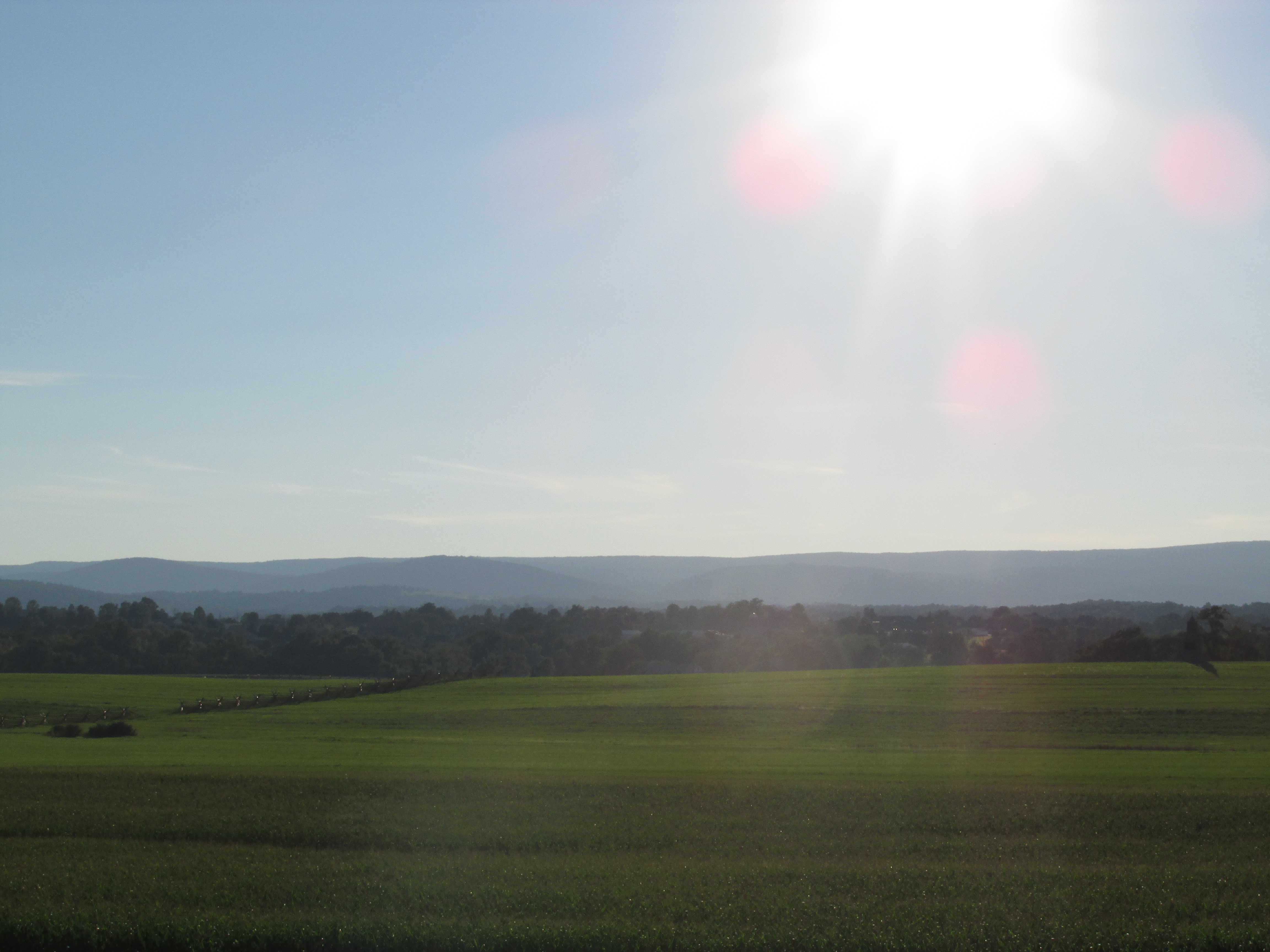
From Observation Tower at Oak Ridge, Gettysburg Battlefield

Confederate General Robert E. Lee began moving his Army of Northern Virginia toward Pennsylvania in June of 1863.

President Abraham Lincoln appointed Major General George Gordon Meade as commander of the Army of the Potomac. Meade issued his first orders on June 28, 1863.

Meade’s army marched north the following rainy morning on muddy roads. Captain Samuel W. Fiske, 14th Connecticut Infantry, wrote of the march across Maryland into Pennsylvania, his account a bit nostalgic.

Fiske didn’t know where his army was heading when he heard the bugle call to strike tents and begin the journey. He and his comrades didn’t know how long it would take to arrive—they had to blindly trust.

Fiske tried to enjoy each hour, always ready for either a skirmish or a picnic. He never knew when he’d be called to picket, bivouac, or retreat.

He reasoned that no other occupation required more faith than soldiering: faith in his own strength; faith in his army’s joint strength; faith in his commanders’ experience and watchfulness; faith in their country’s cause; and faith in God’s care and protection.

Captain Fiske enjoyed Maryland’s beauty after the war-ravaged sights in Virginia. He hated to see war roll over the peaceful countryside yet felt a battle on Northern soil might end the war.

Fiske hoped that Pennsylvania citizens weren’t so afraid that it prevented them from defending their homes. A newspaper article that he read that day told of the “chief burgess” of York looking for someone to surrender to eight to ten miles outside his city. Fiske didn’t believe that leader represented his city well.

When the captain considered his army’s recent losses, he felt he was part of “the unfortunate ‘grand army’” that couldn’t reasonably make big promises. Yet since that army would once again stand in front of Confederates, they deserved their country’s respect and support.

At the time his writing, Fiske and his comrades dealt with fatigue from marching for sixteen days. Though their numbers were depleted by the expiration of service terms, these experienced veterans had become a formidable army.

-Sandra Merville Hart

Sources

Gragg, Rod. The Illustrated Gettysburg Reader: An Eyewitness History of The Civil War’s Greatest Battle, Regnery History, 2013.
 

J.E.B. Stuart’s June 1863 Raid into the North

From Observation Tower at Oak Ridge, Gettysburg Battlefield

Confederate General J.E.B. Stuart left Salem Depot with three brigades on June 25, 1863, at 1 a.m. Brig. General Fitzhugh Lee, Brig. General Wade Hampton, and Colonel John R. Chambliss led the brigades.

Captain John Esten Cooke, Stuart’s chief of ordnance, wrote of his experiences on the raid. Stuart shouted orders to “Ho! for the Valley!” while in the villagers’ hearing. Once out of sight, he changed course to head eastward. They bivouacked under pine trees that night. The following evening, they skirted around Union General Hooker’s rear force in Manassas.

The cavalry passed abandoned cabins and debris near Fairfax Station where they must have found supplies because Captain Cooke laughed to recall that every Southerner wore a white straw hat and snowy cotton gloves. A bale of smoking tobacco or drum of figs rested on the pommel of every soldier’s saddle. They held ginger cakes.

Each cavalry man held aloft a case, shell, or solid shot with fixed cartridge when crossing the Potomac River on June 28th at 3 a.m. to keep the ammunition dry.

As Stuart’s cavalry approached Rockville, Maryland, from the south, a Federal wagon train of nearly 200 wagons entered from the east. The new and freshly painted wagons, each drawn by six sleek mules, stretched out for miles. Stuart’s men chased the fleeing wagons and captured them within sight of Washington D.C. Cooke believed he saw the dome of the Capitol.

Stuart captured Union prisoners, set fire to some of the wagons, and seized the rest of them.

The Southerners reached Brookville that night, where beautiful girls fed them from baskets filled with cakes, meat, and bread. They offered huge pitchers of iced water. Stuart paroled hundreds of the wagon train prisoners at Brookville before riding on.

On June 29th, Stuart’s men arrived at Westminster. They clashed with Union cavalry and chased them along the Baltimore road, causing Baltimore citizens to panic.

They left Westminster and bivouacked in the rain. They reached Pennsylvania the next day.

Stuart’s cavalry scattered Union Brig. General Judson Kilpatrick’s cavalry near Hanover. Kilpatrick rallied and drove the Southerners out of town.

Still traveling with a long wagon train they confiscated, Cooke writes that they “rode, rode, rode” perhaps all night because he does not mention them camping. They paroled more prisoners at Dover, which they reached around sunrise.

On the evening of July 1st, Stuart’s cavalry arrived at the Federal army post of Carlisle. A short assault ended when General Lee ordered Stuart to Gettysburg. He arrived there on the afternoon of July 2nd, the second day of the famous battle.

-Sandra Merville Hart

Sources

Gragg, Rod. The Illustrated Gettysburg Reader: An Eyewitness History of The Civil War’s Greatest Battle, Regnery History, 2013.

“J.E.B. Stuart,” A&E Television Networks, LLC, 2017/05/03 http://www.history.com/topics/american-civil-war/j-e-b-stuart.

“J.E.B. Stuart,” Wikipedia, 2017/05/03 https://en.wikipedia.org/wiki/J._E._B._Stuart.


This Week in History: Greencastle, Pennsylvania and the Gettysburg Campaign

Monday, June 15, 1863

The fall of Martinsburg, Virginia, (now West Virginia) on June 14th encouraged Confederate Lieutenant Hermann Schuricht, Fourteenth Virginia Cavalry. He was happy that the glorious battle ended with the Southerners in possession of the city and several thousand bushels of grain. It was the first Battle of Martinsburg.

Buglers sounded orders to mount their horses around 2 am. By breakfast time Schuricht and his comrades were in Williamsport, Maryland, where the residents kindly set up tables in the streets stocked with meat, bread, and milk. Schuricht and other hungry troops ate quickly before remounting.

They received an enthusiastic welcome from the ladies in Hagerstown, Maryland, at noon. The women gave flowers to the soldiers. The children shouted, “Hurrah for Jeff Davis!”

They rode to Greencastle, Pennsylvania. General Albert G. Jenkins divided his brigade. Schuricht, along with others in the right wing who intimidated locals by waving muskets and pistols, rode his horse over ditches and fences to take the town. Federal cavalry there all escaped except one lieutenant.

The Confederates cut telegraph wires and destroyed the railroad depot in Greencastle.

Their day wasn’t over.

By 11 pm, an exhausted Schuricht entered Chambersburg, Pennsylvania, with his companions. They camped on the eastern outskirts of town.

Confederates occupied Greencastle from mid-June until early July. Federal cavalry led by Captain Ulric Dahlgren rode into the town square on July 2nd. The Union troops captured several Confederate cavalry troops in the square while a bigger battle took place in another part of Pennsylvania.

Gettysburg.  

-Sandra Merville Hart

Sources

Gragg, Rod. The Illustrated Gettysburg Reader, Regnery History, 2013.

“Greencastle, Pennsylvania,” Wikipedia, 2017/05/01 https://en.wikipedia.org/wiki/Greencastle,_Pennsylvania.

Long, E.B with Long, Barbara. The Civil War Day by Day: An Almanac 1861-1865, A Da Capo Paperback, 1971.

Noyalas, J. A. “Martinsburg during the Civil War.” Encyclopedia Virginia. Virginia Foundation for the Humanities, 27 Oct. 2015. Web. 1 May. 2017.