My husband loves chocolate eclairs. He enjoys this treat from a local bakery two or three times a year. I was thrilled to find a no-bake recipe for chocolate éclair cake. I made it for a family Christmas party.
After reading several recipes that used instant vanilla pudding mix, I finally found one that gave an option to prepare the cake using pastry cream. The recipe I followed used whole milk, egg yolks, sugar, cornstarch, salt, and vanilla extract. You can find that here.
I made chocolate buttercream frosting from scratch, or you can use a 16-ounce container of chocolate frosting.
I used a container of whipped topping, but it is easy to make your own, if you prefer.
Because I prepared the pastry cream and frosting from scratch, this whole cake took about an hour to prepare
Ingredients
Pastry cream (link to recipe above)
3 cups whipped topping, thawed
1 16-oz. package Graham crackers
2 cups of chocolate frosting
In a medium mixing bowl, gently fold the whipped topping into the prepared pastry cream until well blended to create a thick, creamy pudding.
Depending on the size of your serving dish, you may not use all of the Graham crackers. I chose a 9×13-inch glass dish and had a few crackers left over.
First layer: Arrange a single layer of Graham crackers on the bottom of the dish. Break apart some crackers if necessary to create a whole layer.
Second layer: Cover the Graham crackers with half of the pudding. Spread evenly.
Third layer: Arrange another layer of Graham crackers over the pudding.
Fourth layer: Cover with Graham crackers with the remaining pudding.
Fifth layer: Top with the final layer of Graham crackers.
Sixth layer: Frost the top layer of Graham crackers with the chocolate icing, taking care not to dislodge them.
Cover the dessert with plastic wrap. Refrigerate for several hours or overnight before serving, as the crackers soften when chilled.
I served this cake at a holiday gathering alongside two other delicious desserts, and it was nearly gone at the end of the evening. My family loved it.
When I was a little girl, my dad insisted that I eat at least one spoonful of black-eyed peas for good luck on New Year’s Day. I didn’t like them. Eating even a spoonful seemed like a high price to pay for good luck in the new year.
Each year in December, I buy black-eyed peas to supplement our New Year’s meal—that is, when the grocery store doesn’t run out of them. That’s happened several times. Apparently, others are looking for the same good luck. I guess I’m just superstitious enough after hearing the saying year after year to worry when I don’t get them. We all need a little luck, after all.
Folks from the southern United States eat black-eyed peas on January 1st. Cornbread is another favorite in that section of the country. Eating green, leafy vegetables, supposed to resemble money, brings prosperity.
Citizens in Spain eat 12 grapes at midnight. Each grape represents one month of the year. If the fifth and sixth grape taste especially bad, May and June might be a little difficult.
Germans, Austrians, and Hungarians are among those who eat pork on New Year’s. Pigs signify progress. Roast pork, pig’s feet, and sausages are a few of the meals prepared.
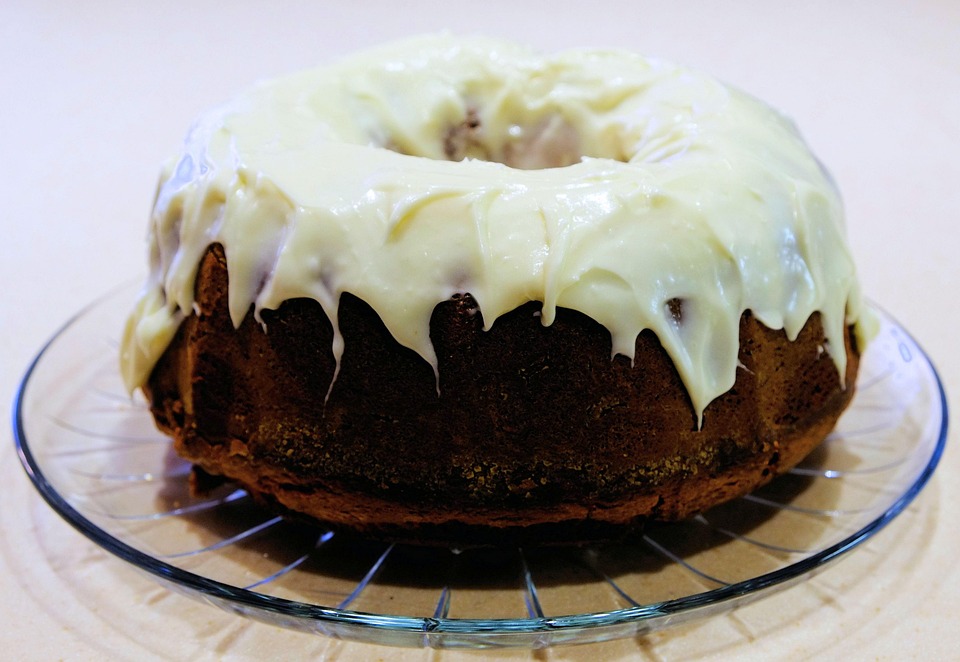
Ring-shaped or round cakes are another tradition. Those who find a tiny treat baked inside will have good luck in the new year.
One of the foods to avoid on New Year’s Day is lobster. Eating these is thought to bring setbacks because they move backwards. Chickens scratch backwards. The superstition here is that eating chicken on January 1st may cause the diner’s thoughts to linger on the past.
It’s fun to look at our habits of celebrating the coming year in our meals. There are a lot of choices, but I think I will continue the tradition of black-eyed peas for our meal.
In the fall, I love to make desserts with seasonal flavors. I had discovered this great pumpkin cheesecake several years ago, but then I forgot about it. Last weekend, I made it for two different gatherings. Both friends and family loved it!
In fact, I asked my nephew if he wanted a piece of cheesecake for another day. When he declined, his wife called in from the living room, “What are you turning down?” She wasn’t about to say no to the dessert…and I was happy to leave two pieces with them.
Ingredients
CRUST:
¾ cup finely chopped walnuts
¾ cup graham cracker crumbs (about 12 squares)
¼ cup sugar
¼ teaspoon ground cinnamon
¼ teaspoon ground ginger
1/8 teaspoon ground cloves
¼ cup butter or margarine, melted
FILLING:
2 packages (8 ounces each) cream cheese, softened
¾ cup sugar
2 eggs
1 cup cooked or canned pumpkin
½ teaspoon ground cinnamon
½ teaspoon pumpkin pie spice
2 tablespoons chopped walnuts
Preheat oven to 350 degrees.
The crust takes the longest to prepare. I chose to finely chop the walnuts and the Graham crackers on a cutting board instead of using a food processor. It took only a few minutes.
In a medium mixing bowl, blend the sugar, cinnamon, ginger, and cloves into the cracker crumbs and walnut before adding melted butter. Mix well.
Pour the crust into an ungreased 10-inch springform pan. Press the crust into place with your fingers on the bottom layer.
Use a mixer to beat the cream cheese and sugar on a medium speed until smooth, which takes about a minute. Add eggs and beat on low speed until it’s blended. Stir in pumpkin, cinnamon, and pumpkin pie spice. Using a low speed, beat the batter until the mixture is combined, about 30 seconds.
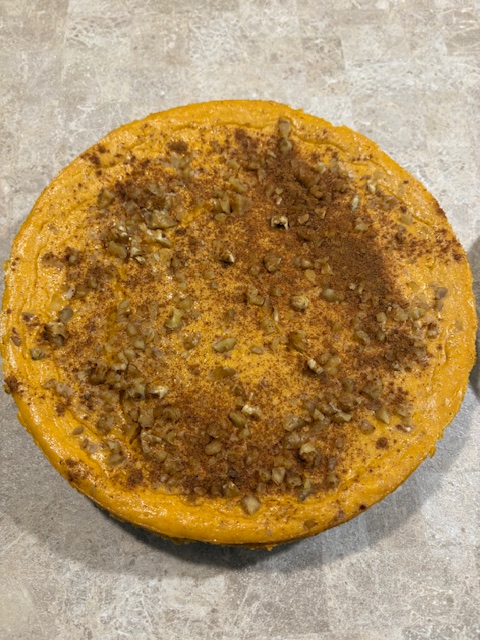
Pour the batter onto the crust. Sprinkle ¼ teaspoon of cinnamon on top along with 2 tablespoons of chopped walnuts.
I typically serve this in the fall when pumpkin is readily available. Everyone gobbles up the delicious dessert whenever I serve it. They enjoy the seasonal flavors in this light, creamy cheesecake. It works well for holiday dinners.
While whipped cream is delicious on this dessert, I’ve noticed that most guests choose not to use it because it’s such a delicious, creamy cheesecake without it.
Enjoy!
Sources
Taste of Home’s Holiday & Celebrations Cookbook 2002, Remain Media Group, Inc., 2002.
A warm welcome to my friend and fellow author, KD Holmberg. She’s here to tell us about the release of her first children’s book, the re-release of her Biblical fiction novel, and share about a delicacy for one of the world’s oldest recipes! Congratulations, KD, and welcome to Historical Nibbles!
KD Holmberg here, author of The Egyptian Princess, A Story of Hagar, and the newly-released What Would Happen? children’s picture book.
What Would Happen? is a colorful, engaging adventure that introduces environmental care in a fun and simple way. Kids giggle with delight as they seek and find the hidden footprint on each page! Perfect for ages 4-8.
The Egyptian Princess was recently re-released with a new cover and offers a fresh take on the 4,000-year-old story of Hagar, Sarah, and Abraham. After learning that, according to Hebrew tradition, Hagar was a princess before Pharaoh—her father—gave her to Sarah, I researched the lives of royal daughters in that era. I discovered that their lives were marked by a unique blend of culture and privilege, including a formal education equal to that of royal sons. Viewing Hagar as an educated, sophisticated young woman rather than a victimized slave provides a compelling new perspective on her story.
One of my favorite characters in The Egyptian Princess is Tamari, a harem busybody who ‘spreads gossip like a farmer spreads manure.’ With a sweet tooth but a sharp tongue, she cares only about herself—until she realizes that her future and Hagar’s may be intertwined.
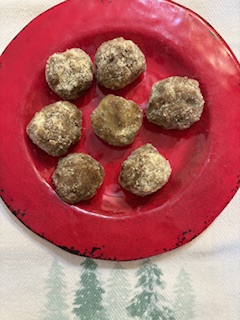
Tamari’s favorite treat is one of the world’s oldest recipes: Tiger Nut Sweets, a delicacy recorded on an Egyptian pot dating back to 1600 BC. Tiger nuts are making a comeback due to their unique nutritional properties, and are now widely available. Despite their name, tiger nuts are not nuts at all but tubers produced by a plant in the sedge family. You can substitute walnuts or pecans to achieve a similar texture and flavor.
Ingredients:
1 cup dried pitted dates
1 tbs cinnamon (or to taste)
2 tbs roughly chopped tiger nuts (or pecans or walnuts)
2 tbs honey (more if needed)
2 tbs finely ground almonds
· In a food processor, grind the dates with splash of water to form a sticky paste.
· Place the honey and almond meal in separate shallow bowls
· Transfer the date paste to a bowl and add the cinnamon (to taste), and chopped tiger nuts (or walnuts or pecans).
· Mix thoroughly with your hands and roll the paste into small balls.
· Coat balls in honey and then almond meal and serve.
Easy peasy, and a potential new Christmas tradition in your home!
May each day of Advent bring you peace, joy, and special blessings. KD Holmberg
My mother made the best pumpkin pie when I was a little girl. Thankfully, she shared her recipe—and her secrets—with me.
I make the pie every year, usually for both Thanksgiving and Christmas. This year, baking the pie again brought back many childhood memories of cooking the festive meal with my mother, grandmother, and sisters. It’s just as delicious now as it was back then!
Ingredients
2 eggs, slightly beaten
1 ½ cups canned pumpkin
¾ cup sugar
½ teaspoon salt
1 teaspoon cinnamon
½ teaspoon ginger
¼ teaspoon ground cloves
1 2/3 cup (13 oz.) Evaporated Milk
1 9-inch unbaked pie shell
Mix eggs, pumpkin, and spices in the order given. I’m never stingy with the cinnamon in this recipe, making it a heaping teaspoon or almost doubling the amount required, just as my mother did.
Another secret she had was adding a teaspoon of Pumpkin Pie Spice. This is a blend of cinnamon, ginger, cloves, nutmeg, and allspice. Though this is completely optional, it rounds out the flavor of the pie.
Stir together and mix the pumpkin with all the spices before adding the last ingredient, a can of evaporated milk. Stir this together until blended and pour into an unbaked pie shell.
Bake in a preheated 425-degree oven for 15 minutes. Reduce the temperature to 350 degrees and continue baking 45 minutes or until a knife inserted in the pie comes out clean. Let it cool before slicing.
May garnish with whipped cream. Most guests prefer a dollop whipped cream with their pie. My husband covers the pie with the sweet topping. 😊
Doubling this recipe makes three 9-inch pies.
My daughter now makes “Grandma’s” pumpkin pie recipe. The torch has been passed!
Hope your family enjoys this pie as much as mine does.
I hosted a party this fall where I served hot apple cider. I searched for my old recipe in vain. I hadn’t made one in several years, so I created a new one.
Simmering the cider on low heat in a crock pot allows the spicy aroma to seep into the home. The aroma welcomes guests and creates an inviting atmosphere.
Ingredients
64 ounces apple cider
¼ cup maple syrup
5 cinnamon sticks
1 teaspoon whole cloves
¼ teaspoon ground nutmeg
1 orange, sliced
Combine the cider and syrup in a crockpot. Add in the cinnamon sticks, cloves, and nutmeg. Stir.
To add a splash of citrus flavor, arrange 6 orange slices over the top. Simmer on low for 2 – 3 hours.
Just before serving, remove the oranges and cinnamon sticks. Strain out the cloves.
The syrup gives a hint of maple while adding a bit of smoothness to the drink.
This comforting, delicious drink brings a warm welcome to family and friends on cold afternoons and evenings.
If you like a little extra cinnamon flavor—as I do!—add another cinnamon stick from the beginning.
I’m happy to welcome fellow author and friend, Susan G. Mathis, back to Historical Nibbles! Today, she is sharing about her newest release and a stew recipe just in time for the fall/winter season. Welcome back, Susan!
by Susan G Mathis
For thousands of Irish immigrants, and for many children of those families, tragedy came early, from disease, accidents, or poverty, leaving the children alone in cities like New York that could be both cruel and full of compassion. Out of this struggle grew the orphanages, institutions that housed destitute and abandoned children—many of them Irish. The Irish community built its own faith-based orphan asylums, places where children could grow up within their faith and culture. Girls were trained in sewing, cooking, and housekeeping—skills that would prepare them for domestic service in upper-class homes.
For many Irish girls, this was their only path to survival and respectability. They entered the Gilded Age world as maids, governesses, or kitchen staff—serving the very families whose wealth defined the era. Yet within that service, they carried the quiet pride and resilience of their heritage.
In the third book of my upcoming series, Fiona King never meant to step into her mother’s shoes—let alone fill them. She arrives at the grand Westminster Park Hotel on Wells Island carrying nothing but her late mother’s tarnished legacy and a box of handwritten Irish recipes, including her Gran’s Irish Beef Stew (below).
She’s given command of the kitchen—a position for the seasoned chef, not an insecure orphan. Overwhelmed by expectations and haunted by whispers of inadequacy, Fiona is desperate to prove herself worthy. But self-doubt is a ruthless enemy, and the pressures of perfection threaten to consume her. Then a surprise ally enters her world.
Brown the beef: Sprinkle about a teaspoon of salt over the beef pieces. Heat the olive oil in a large pot over medium-high heat.
Pat dry the beef with paper towels, add the beef and brown well on both sides
Add garlic, beef stock, water, Guinness, red wine, tomato paste, sugar, thyme, Worcestershire sauce, and bay leaves. Stir to combine.
Bring mixture to a simmer. Reduce heat to the lowest setting, then cover and cook at a bare simmer for 1 hour, stirring occasionally.
Sauté the onions and carrots in melted the butter
Add the vegetables to the beef stew and simmer uncovered until vegetables and beef are very tender, about 40 minutes.
Discard the bay leaves. Remove fat if needed.
Serve hot.
About Irish Rose Orphans’ Christmas:
Get ready to fall in love with seven girls and their unforgettable stories! This heartwarming prequel sets the stage for the upcoming Irish Rose Orphans: A Thousand Islands Gilded Age Series, where seven spirited young women serve the islands’ elite!—author Donna Schlachter
Brooklyn, 1876 At the Irish Rose Orphan Asylum for Girls, seven young women are about to experience a Christmas that will change everything—their last one together before stepping into lives of service among strangers in the Gilded Age. United by trials and an unbreakable bond, they’ve pledged to remain “forever sisters.” But as the season of parting approaches, buried wounds rise to the surface.
Twin sisters Annie and Taryn remain divided by a silent rift. Fiona grapples with the ache of abandonment. Vivian hides her fear of being left behind beneath a cheerful façade. Cassie, ever the want-to-be teacher, tries to steady the group as Isabel and Gloria struggle with the agony of separation.
When Sister Rose invites the girls to prepare their hearts during Advent for a deeper calling, each young woman must face the truth of her past and the hope of her future. A final gift—tin lockets adorned with the Irish Rose—become tokens of hope, courage, and an everlasting sisterhood. This Christmas, seven orphans will discover that no matter where life leads them, love and faith will go with them.
Susan G Mathis is an international award-winning, multi-published author of stories set in the beautiful Thousand Islands, her childhood stomping ground in upstate NY. Susan has been published more than thirty times in full-length novels, novellas, and non-fiction books. She has sixteen in her fiction line including, The Fabric of Hope: An Irish Family Legacy, Christmas Charity, Katelyn’s Choice, Devyn’s Dilemma, Sara’s Surprise, Reagan’s Reward, Colleen’s Confession, Peyton’s Promise,Rachel’s Reunion, Mary’s Moment,A Summer at Thousand Island House, Libby’s Lighthouse, Julia’s Joy, Emma’s Engagement, Madison’s Mission, and Irish Rose Orphans’ Christmas. She is also a winner of more than two dozen book awards, and she’s a published author of two premarital books, two children’s picture books, a dozen stories in compilation books, and hundreds of published articles. Find out more at www.SusanGMathis.com.
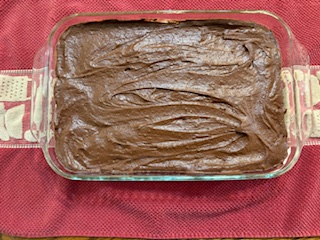
I thought I’d share a few of my favorite recipes around the Christmas holidays. My sister shared this yummy recipe with me when we were teenagers. I’ve made these brownies for my family numerous times.
Ingredients
½ cup butter or margarine
2 ounces unsweetened chocolate
1 cup sugar
2 eggs
1 teaspoon vanilla
¾ cup all-purpose flour
½ cup chopped walnuts (optional)
Preheat oven to 350 degrees.
Melt butter and chocolate in a medium saucepan over medium heat. When melted, remove from heat and let it cool for at least two minutes.
Stir in sugar.
Beat eggs in a separate bowl and then combine them with the chocolate mixture. Stir well. Add pure vanilla extract and stir. Add flour and walnuts, if desired, and mix well.
Prepare an 8×8 baking pan with cooking spray. Pour the batter into the prepared pan and bake for about 20 minutes. Allow brownies to cool and then cut into 16 squares.
Since the entire recipe is made in one saucepan, the cleanup is minimal. It’s almost as quick to prepare as a boxed mix. My sister is a talented cook. I’m so happy that she shared this recipe with me!
I have often used canned cream of chicken soups and bullion in casseroles and crockpot recipes. It never occurred to me to make this from scratch until I watched a chef prepare it on a cooking show.
I tweaked some recipes until I was happy with the results. What a game-changer this has been for me in the past year!
This homemade soup has enhanced the flavor of every dish that I’ve used it in—all of them. I highly recommend it.
The soup takes about 20 minutes to prepare. I usually cook it while making the main dish.
Stock, which is water enriched by the food cooked in it, is an important ingredient in numerous soups. Homemade stock brings full-bodied flavor to recipes. Here’s a recipe for homemade chicken stock: https://sandramervillehart.com/2017/05/15/preparing-chicken-stock/.
Chicken stock can be substituted for the beef stock when preparing chicken-based recipes. Turkey stock (or chicken stock if you can’t find turkey) can be substituted when preparing turkey-based recipes. In the same way, use vegetable stock for cream of celery. (When I next need cream of celery soup, I’ll simmer a celery stalk in the vegetable stock for a few minutes to draw out that flavor.)
Ingredients
½ cup butter
6 tablespoons all-purpose flour
2 cups of beef stock
2 cups of milk
Melt the butter in a medium saucepan. Stir in flour. Once combined, add the stock and milk. Stir until blended. Cook over medium-low heat until thick and creamy, about 15 to 20 minutes, stirring occasionally.
This recipe makes 4 cups of cream soup. If your casserole recipe calls for 1 can of soup, prepare half the recipe.
What a game-changer this has been for me in the past year!
This homemade soup has enhanced the flavor of every dish that I’ve used it in—all of them. Everyone I’ve served it to has noticed the difference. I highly recommend it.
It’s also good when served over rice or as the base for creamy soups. Enjoy!
KD Holmberg, my dear friend and award-winning author, brought an amazing beef brisket to a writing retreat earlier this year. She had baked it ahead of time, and it only required reheating for a hearty and delicious supper. It was such a generous portion that it provided two meals! Not only is KD a talented author, but she is also an amazing cook.
The barbeque sauce she brought was the perfect complement to the beef dish. She graciously permitted me to share both recipes with you.
I’ve been chomping at the bit to make a big meal. When family members came for supper, I jumped at the chance.
4 ½ – 5 lb. beef brisket
1 tablespoon Liquid Smoke
1 teaspoon garlic powder
1 teaspoon onion powder
1 teaspoon celery seed
1 ½ teaspoons salt
2 tablespoons Worcestershire sauce
The brisket needs to marinate overnight or up to 24 hours.
I used a glass 13×9 dish for my 5-pound brisket.
Combine the ingredients in a bowl. Rub the blended marinade over both sides of the brisket. Cover with plastic wrap and refrigerate overnight.
Remove from the fridge at least a few minutes before baking. (I allowed mine to sit out for about an hour. Some recipes suggested allowing the meat to return to room temperature.)
I used a glass 13×9 dish to bake my 5-pound brisket. Aluminum foil was arranged along the bottom and sides, with enough to cover the meat while cooking. Spray lightly with cooking spray.
Bake according to the following schedule:
First two hours at 250 degrees
Second two hours at 275 degrees
Last two hours at 300 degrees
After 6 hours of baking, KD’s recipe called for the brisket to be grilled over medium coals, while slathering with barbeque sauce. My husband is our grill master and he was entertaining guests while I cooked, so I compromised. Instead of grilling, I opened the aluminum foil to allow it to continue baking with the brisket exposed. The purpose of grilling is to achieve a “crust” on the outside and it usually takes 10-15 minutes.
I added another 15 minutes to achieve the fork-tender quality I love. Also, I didn’t slather on the barbeque sauce while it baked because my husband likes plain brisket.
After retrieving it from the oven, I tented the aluminum foil over the top and allowed the meat to rest for 30 minutes before slicing.
Everyone loved the brisket! It was so tender that my husband sliced it a little thicker to keep the slices together. The barbeque sauce drizzled over the slices made for a mouth-watering, delicious main dish.
Pictured above is leftover brisket for our second meal. Everyone was in such a hurry to eat—me included!—from the delicious aromas that I forgot to snap a photo. 😊
Thanks, KD, for sharing your wonderful recipes. She’s an awesome cook, as I’m certain you will agree once you make this dish.



 Sandra Merville Hart