Shirred Eggs Recipe

I have been on a low-carb diet for a few weeks. Since eggs are on the diet, I’ve been looking for new ways to fix them. Shirred eggs are baked so this is a variation from the scrambled eggs and omelets that I’ve been eating.

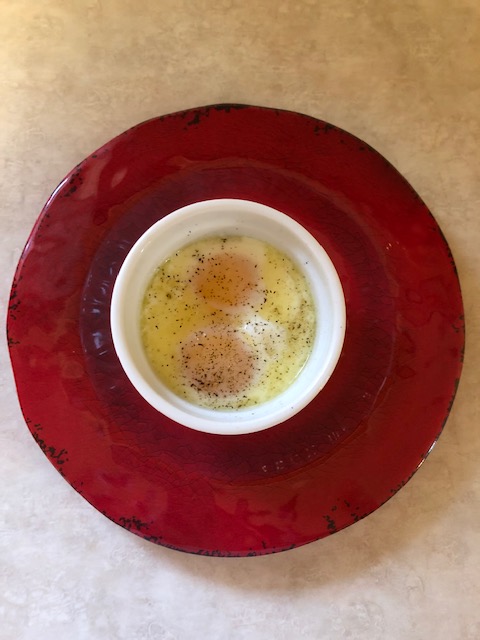
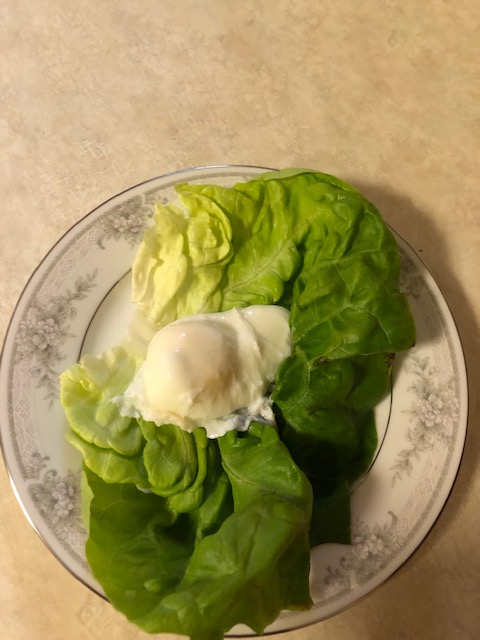
Shirred eggs are baked in a shallow dish (I used ramekins) until just set. The yolks should be runny. Place the ramekin on a baking sheet to make it easier to remove from the oven.

Preheat oven to 400 degrees.

Put 1½ teaspoons butter in the ramekin and place it in the oven to melt the butter. When melted, remove from oven and swirl the butter to coat the dish.

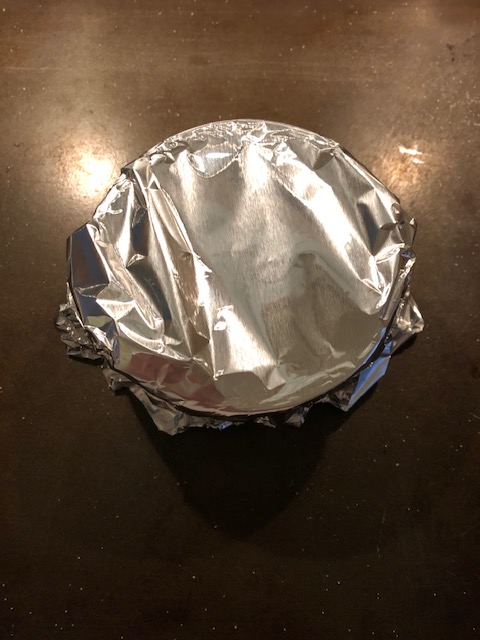
Crack 2 eggs and place them in separate bowls. Then carefully slide the eggs, one at a time, into the buttered ramekin. Cover tightly with foil.

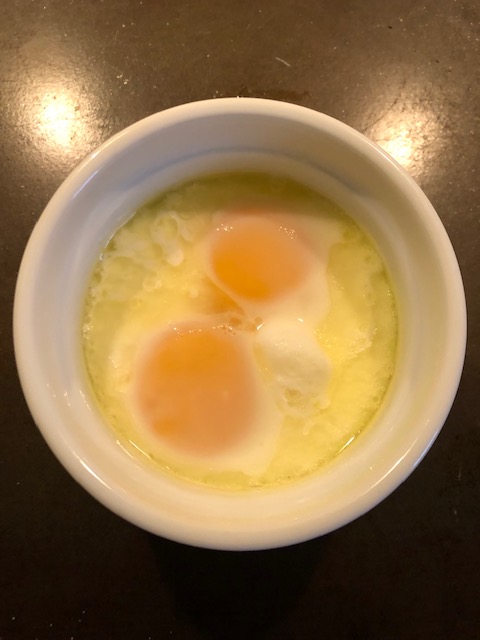
The recipe says to bake for 7 minutes. Mine took almost twice that to bake. Though the eggs should be barely set and the yolks runny, they were still raw at 7 minutes. Try baking 12 – 14 minutes and see what your preferences are.

Salt and pepper to taste.

Delicious! It tasted similar to a soft-boiled egg. Here are a couple of variations to try that are still low-carb:

  • Sprinkle with cheese (cheddar, swiss, etc.) after baking and while still hot.
  • Cook 4 small sausages until done for every 2-egg serving. Drain. Arrange sausages around the egg in the baking dish and bake the eggs.
  • Place 2-3 tablespoons of cooked ham, diced, into the baking dish, cover with 2 eggs, and bake. (Other meats like corned beef and chipped beef can be substituted for the ham.)
  • Shirred Eggs Florentine – Spread 2 tablespoons of chopped, cooked spinach per 2-egg serving on the bottom of the ramekin, cover with the eggs. Then sprinkle on 1 tablespoon of freshly grated Parmesan cheese.

-Sandra Merville Hart

Sources

Revised by Cunningham, Marion and Laber, Jeri. The Fannie Farmer Cookbook, Alfred A Knopf Inc., 1983.


Creme Patissiere Recipe

I’ve been watching a lot of cooking shows recently that have inspired me to try new things. The recipe for crème patissiere is called basic cream filling in The Fannie Farmer Cookbook. Though it’s most commonly used in pies, pastries, and cream puffs, I wanted to use this custard as a layer in a chocolate cake.

Mix together ½ cup of sugar, 3 tablespoons of flour, and 1/8 teaspoon of salt. Set aside.

Heat 1 cup of milk in a heavy saucepan over medium heat until it’s almost ready to boil. Remove from heat.

Stir the milk into the dry ingredients until well-blended.

Pour the mixture back into the saucepan. Using low heat, whisk constantly for 4 – 5 minutes when the custard turns smooth and thick.

Stir in 2 slightly beaten egg yolks and cook a couple more minutes.

Remove from heat. Let it cool, stirring occasionally, and then stir in 2 teaspoons vanilla.

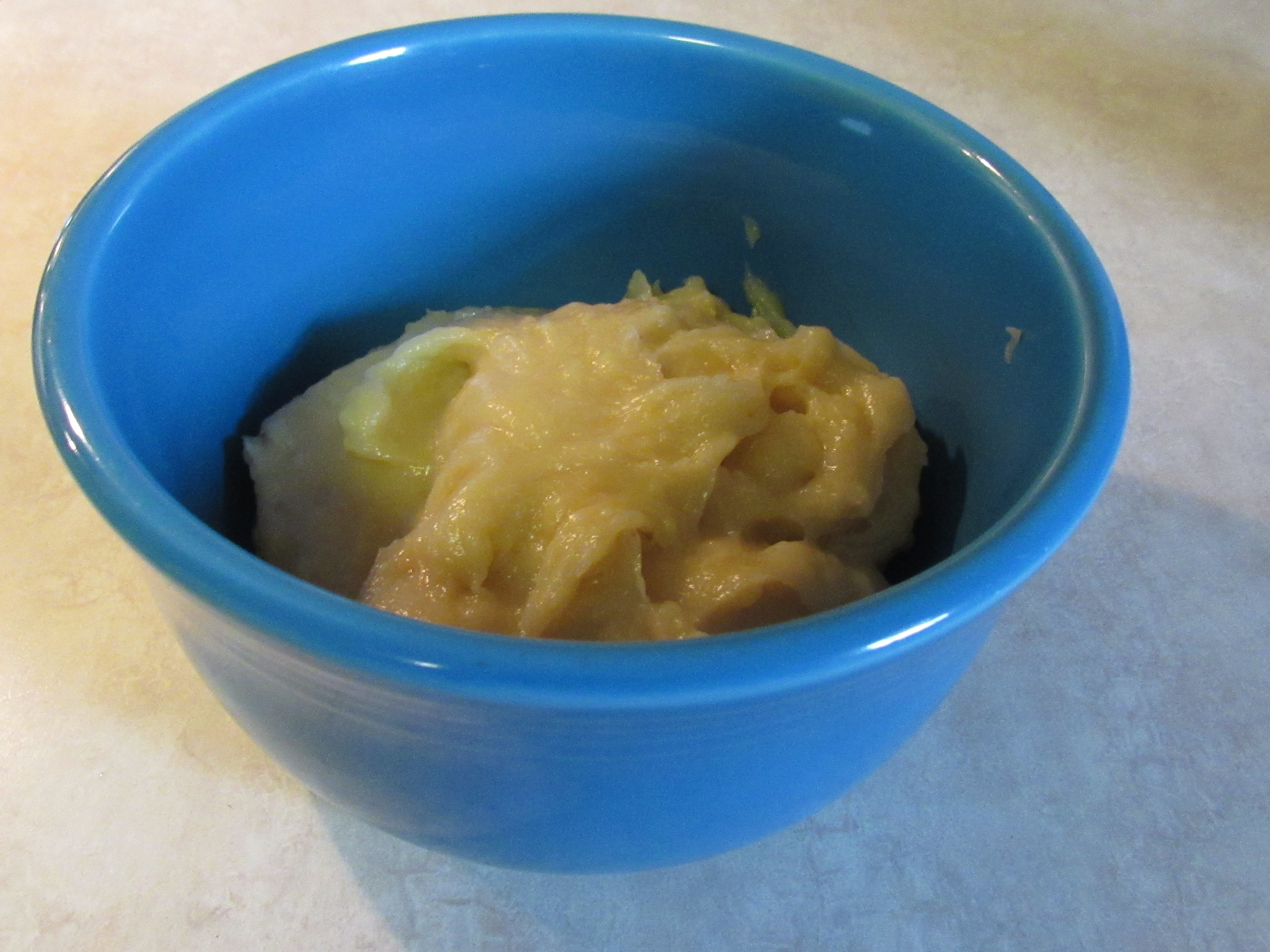
Delicious! Smooth and creamy and thick. As I said, I used it as filling for a chocolate cake. It’s a good flavor but a thicker consistency than a layer of mousse. My husband loved it!

I will definitely make this again—the next time in as a layer in a pie.

-Sandra Merville Hart

Source

Revised by Cunningham, Marion and Laber, Jeri. The Fannie Farmer Cookbook, Alfred A Knopf Inc., 1983.

First Christmas at Columbia Tusculum

Benjamin Stites discovered the future location of Columbia, Ohio, through an unfortunate event. He was on a trading expedition with other traders in Kentucky when some of their horses were stolen. They built a raft and pursued Native Americans across the Ohio River. Stites and his men followed them up the Little Miami River. He returned without the horses, but had found the location of a settlement he wanted to establish.

Stites returned to his Pennsylvania home and eventually purchased 20,000 acres on the Ohio River near the mouth of the Little Miami River.

Twenty-six people traveled the Ohio River in November of 1788. Stites’ group included women and children. At Limestone, Kentucky (modern-day Maysville,) they prepared lumber to build a fort. They resumed their journey, arriving near the mouth of the Little Miami River on November 18th.

Having heard rumors of Native Americans waiting for them, Stites’ party posted sentinels. After singing a hymn and praying, the settlers began building a blockhouse. Three more blockhouses were quickly constructed. Palisades formed a wall around them to create Fort Miami.

They named the settlement Columbia.

Native Americans were friendly at first and visited the blockhouses.

Christmas of 1788 was a warm, pleasant day. The pioneers set up tables outside and invited their Native American neighbors to eat with them. Their guests arrived with their guns, fearing a trap.

Judge Isaac Dunn of Lawrenceburg, Indiana, later recalled that Christmas when he was a boy of six. Potpies, cooked in two ten-gallon kettles, were the main dish.

The settlers had also invited soldiers. Their arrival nearly caused a disaster. The pioneers wanted to live in harmony with their new neighbors and convinced the Native Americans to stay.

A delicious dinner was eaten on the river bank, a day the settlers long remembered. Well-satisfied, the Native Americans left around sunset.

Unfortunately, peace didn’t last. But on that Christmas Day, peace reigned.

-Sandra Merville Hart

Sources

Berten, Jinny Powers. Cincinnati Christmas, Orange Frazer Press, 2011.

“History of Columbia Tusculum,” Columbia Tusculum, 2019/07/29 https://www.columbiatusculum.org/history.

Suess, Jeff. “Christmas Celebrations in Cincinnati over the years,” Cincinnati.com, 2019/04/27 https://www.cincinnati.com/story/news/history/2014/12/11/christmas-celebrations-cincinnati-years/20252307/.

First Children’s Christmas Party at the White House

President John Adams and First Lady Abigail Adams didn’t have the warmest of homes–even if it was at the White House.

Their Pennsylvania Avenue home, built near a swamp, was drafty and cold. Large fires crackled and snapped in thirteen fireplaces to ward off the chill.

In 1800, as Christmas approached the President and First Lady decided to host a children’s Christmas party. Their four-year-old granddaughter, Susanna Boylston Adams, lived with them and they wanted to honor her.

Greenery was hung in the East Room to decorate for the occasion. Government officials and their children were invited to the party.

A small orchestra provided music. Guests munched on cakes and drank punch.

They sang Christmas carols and played games. The party was a great success … with one exception.

One of the children accidentally broke a gift of Susanna’s—a doll dish. Susanna grabbed her friend’s doll and bit off its nose in retaliation.

The President stepped in before the situation got too out of hand.

Christmas parties soon became a tradition at the White House. Occasionally these were children’s parties in those historic early presidencies. Other parties were elegant affairs for adults.

-Sandra Merville Hart

Source

“Background: Winter Holidays at the White House,” White House Historical Association, 2019/11/03 https://www.whitehousehistory.org/press-room/press-releases/background-winter-holidays-at-the-white-house.

Christmas in America in the 1700’s and 1800’s, World Book, Inc., 2007.

“Christmas Traditions at the White House Fact Sheet,” White House Historical Association, 2019/11/03 https://www.whitehousehistory.org/christmas-traditions-at-the-white-house.


Colonial Virginia Christmas Feast

Christmas morning began with a bang in colonial Virginia. Literally. Men fired their muskets. Firecrackers popped and cannons roared in celebration of the day. If none of these noisemakers were at hand, men beat on pots and pans to join the merrymakers.

After church services, the colonists enjoyed a large dinner that might include up to eight courses.

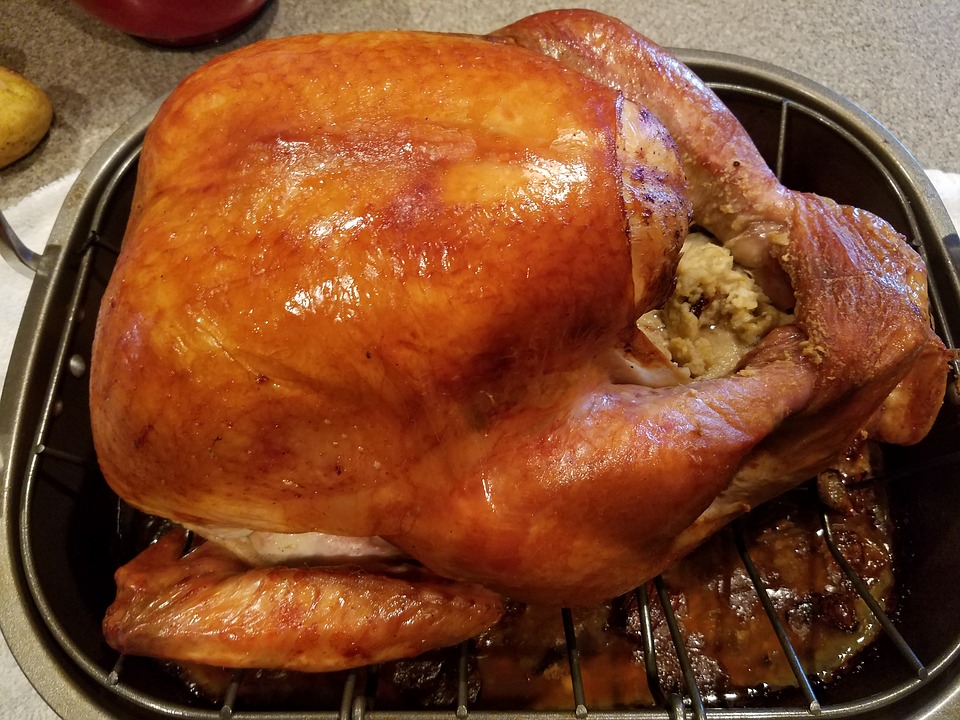
George and Martha Washington, wealthy landowners before the Revolutionary War, served lavish feasts for their guests. Meats included crab, oysters, codfish, turtle soup, Yorkshire pudding, ham, venison, boiled mutton, and turkey with stuffing. Served with these were relishes, vegetables, biscuits, and cornbread.

Then, if the diner had any room for dessert, there were possibly a dozen choices. Tarts, puddings, pies, fruit, cakes, ice cream, and dishes of candy, nuts, and raisins were among the selections.

January 6th was known as Twelfth Night, and was typically marked with a celebration that marked the official end of the Christmas season.

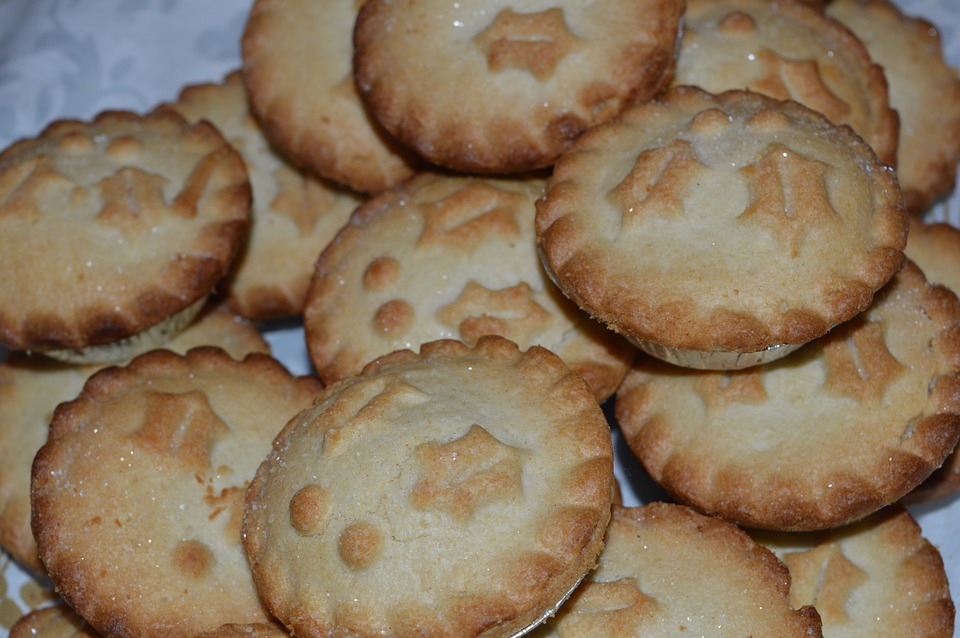
Most of the colonists were from England or had English roots so it isn’t surprising that they enjoyed wassail (spiced wine or ale punch with apples), mince pies, plum puddings, and fruit cake.

Washington had an eggnog recipe that he made for his guests. They loved the potent drink.

Music, dancing, and visiting with friends might last for another week after the feast.

-Sandra Merville Hart

Source

Christmas in America in the 1700’s and 1800’s, World Book, Inc., 2007.


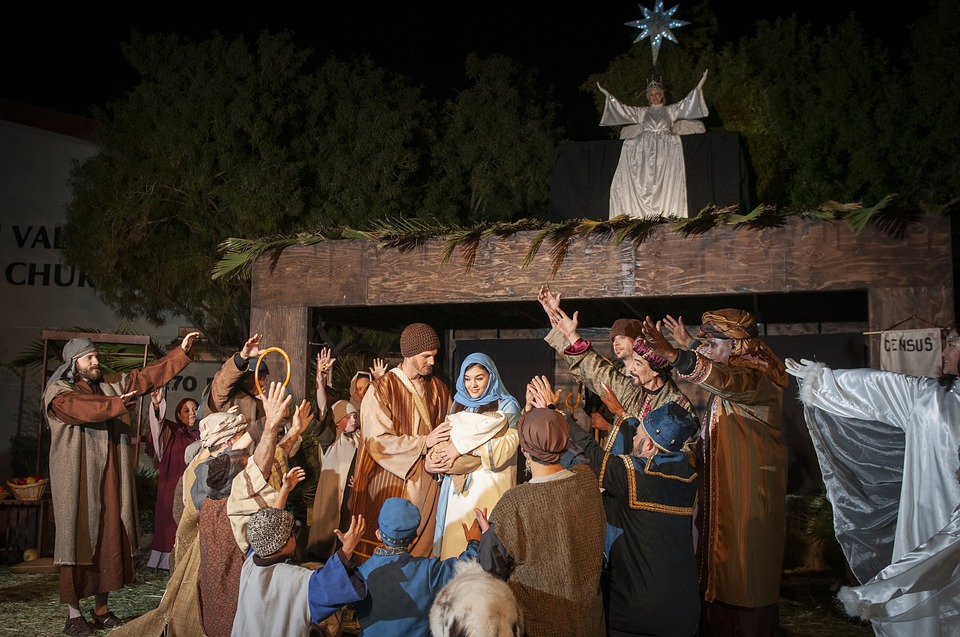
Boar’s Head Festival

In 1340, according to legend, a student at Queen’s College in Oxford, England, read a metal-bound book of Aristotle as he strolled through the forest to Christmas Mass. Wild boars, a menace to society, roamed the woods and one attacked the young man. With no weapons, he rammed his book into boar’s mouth, choking the animal to death. Roasted boar was often served at medieval banquets. A procession carried in the boar’s garnished head into the dining hall that night while carolers sang. This presentation at Christmas became a symbol of Jesus’s triumph over sin.

St. John’s College in Cambridge celebrated the Boar’s Head Festival by 1607. An expanded cast of historical characters, lords, ladies, knights, hunters, and others told of the birth of Jesus. Magi and shepherds were added later.

Mince pie and plum pudding were served at the festival and the Yule Log was lit.

The medieval festival is still celebrated in Europe and the United States. The formal program at Christ Church Cathedral in Cincinnati includes: Orchestral Prelude, Procession of the Beefeaters, The Yule Sprite Comes, The Boar’s Head Procession, The Yule Log, The Waits, The Angel, The Shepherds, The Magi, The World joins the Kings and Shepherds, Recessional, Orchestral Postlude and The Yule Sprite Returns.

During the Boar’s Head Procession, a boar’s head is carried in by knights and others.

There is symbolic meaning to the parts of the medieval service that occurs between Christmas and New Year’s Day. The costumes and processions transport guests back in time and is worth experiencing.

-Sandra Merville Hart

Sources

Berten, Jinny Powers. Cincinnati Christmas, Orange Frazer Press, 2011.

“The Boar’s Head and Yule Log Festival Tradition,” Christ Church Cathedral, 2019/07/29 ttps://cincinnaticathedral.com/boars-head-tradition/.

Primer Pecan Pie

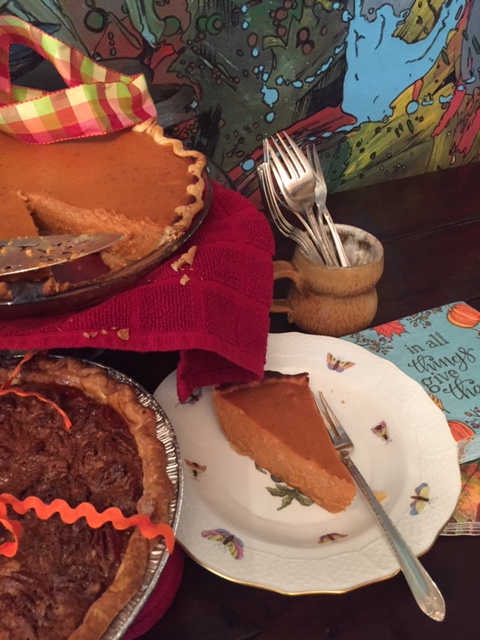
Today’s post has been written by friend and fellow author, Cathy Krafve.  I shared my mom’s pumpkin pie recipe  with her last week so I asked her to share her mother’s pecan recipe with us.😊 Welcome to Historical Nibbles, Cathy!

Dear Sandra and all her reading friends! What a treat to share one of my favorite recipes with you. It makes me so happy to remember about all the ways my mom blessed our family. Thank you for inviting me to share!

Greetings from Texas

I spent many happy hours under pecan trees in my youth, helping my grandmother pick up pecans. As kids we laughed and frolicked like baby squirrels, hoarding the prize of nuts for winter. For my grandmother it was a win-win. She made the family budget go further and she kept three busy grandchildren occupied for a little while!

Of course, Texas’s state tree is the pecan tree and we grow tons of pecans here. Recipes using pecan are a staple in most homes.

Mom’s Primer Pecan Pie

1 Pillsbury Pie Crust

3 eggs, mixed together with a fork in a separate small bowl

1 cup white Karo syrup, mix with eggs

2 Tablespoons flour

¾ cup refined sugar

2 teaspoons melted butter, cooled slightly

dash of salt

1 cup whole pecans

2 teaspoons vanilla

2 teaspoons cinnamon and sugar mix

Preheat oven to 350. Place uncooked piecrust in pie pan. In a large bowl, mix flour and sugar. Add eggs and syrup and stir again. Add butter and salt to mix. Stir in pecans until well coated. Pour into the uncooked piecrust. Bake 30 minutes, then sprinkle cinnamon-sugar on top of the pie. Bake 15-30 more minutes until golden brown and the center rises slightly.

To double (or triple or quadruple), I just set out several bowls and make pie filling in each bowl.  Great recipe to share with neighbors!

My dad always requested Mom’s Pecan Pie instead of a birthday cake. In the last few years, my sister innovated with the genius idea of using glazed pecans, adding another generation’s love to this family-tested holiday favorite! We send our best wishes and prayers for your holidays to be filled with family fellowship, laughter, and happy memories!

-Cathy Krafve

More about Cathy

 Queen of Fun and Coffee Cup Philosopher Cathy Krafve just announced collaborations to publish TWO books in 2020!

How do we create healthy conversations when it really counts? Look for The Well: Drawing Our Authentic Conversations, publisher Elk Lake Publishing, for release in the spring 2020. Need to ramp up communication in your marriage (is that even possible)? The Gentle Art Of Companionship: Communicating Your Way to a Delightful Marriage, CrossRiver Media, is due out in early fall 2020.

Cathy puts a snappy spin on deeply spiritual truths. Her family, affectionately known as Camp Krafve, is devoted to transmitting healthy, joy-affirming ideas. Today, through Fireside Talk Radio, they bring together wise people to share stories of courage, hope, and companionship.

Having learned most stuff the hard way, Cathy writes with a never-met-a-stranger attitude. Like a friend you met for coffee, she passes along practical strategies for creating tender fellowship and a big, beautiful view of communication. Truth with a Texas twang!

 To find Sandra Merville Hart’s interview, blog, and podcast with Cathy for Fireside talk Radio, click here.

 

Molly Tipton’s Roasted Veggies


I asked my friend and fellow author, Rebecca Waters, to share her yummy recipe for roasted veggies. She made it for a recent writers’ meeting—unfortunately, the whole dish was gobbled up at another potluck she attended the previous evening! To make up for it, she agreed to share the recipe with all of us in time for Thanksgiving. Thanks, Rebecca, and welcome back to Historical Nibbles!  

Ingredients:

1  small butternut squash, peeled and cubed

1 small acorn squash, peeled and cubed

1  sweet potato, peeled and cubed

3  Yukon Gold potatoes, cubed

1  red bell pepper, seeded and diced

1  red onion, quartered and separated

¼ C.  olive oil

2 T balsamic vinegar

1 T   chopped fresh thyme

2 T   chopped fresh rosemary

Salt and Pepper


Preheat oven to 475 degrees.

Place chopped thyme and rosemary in a jar. Add olive oil and cover.

Prepare veggies as directed and place in a large bowl.

Add vinegar to jar of oil and herbs. Mix and pour over veggies while stirring to coat vegetables.

Pour veggies into a large roasting pan.

Lightly salt and pepper.

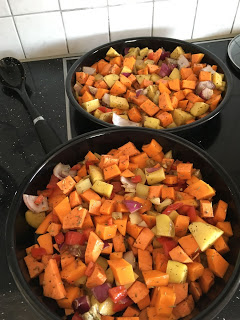
Roast at 475 for 40 minutes, stirring every 10 minutes. Veggies should be tender and lightly browned. Enjoy!

Molly Tipton is the fictional wife, mother, mother-in-law, and grandmother to two. Molly lives in Rebecca Waters’ book Breathing on Her Own. Molly loves to cook and care for her family but her life is turned upside down one February night.

-Rebecca Waters

Here’s the blurb:

An icy road and a sharp turn leave one woman dead, another clinging to life.

Molly Tipton looks forward to a peaceful retirement, but her life suddenly spirals out of control when her oldest daughter is involved in a terrible accident.

While two families grieve, details emerge that shake Molly to her core. As she prepares her daughter for what lies ahead, Molly discovers her oldest child is not the only one injured and forced to deal with past mistakes.

Rebecca Waters identifies with Molly. After raising three daughters, Waters and her husband, Tom, retired to Florida where she began her writing career. Breathing on Her Own is Rebecca’s first novel. Libby’s Cuppa Joe, her second novel, released in March 2019.  Rebecca has published several stories in the popular Chicken Soup for the Soul books as well as three books for writers: Designing a Business Plan for Your Writing, Marketing You 101, and Writing with E’s. To learn more about Rebecca or to read her weekly blog, visit www.WatersWords.com.

Want your own copy of Breathing On Her Own?

Take a trip to beautiful Door County, Wisconsin in Libby’s Cuppa Joe.


Frozen Chocolate Mousse Recipe

I’ve been watching a lot of cooking shows recently that left me craving chocolate. Flipping through The Fannie Farmer Cookbook, I found a recipe for frozen chocolate mousse that is easy and delicious .

Pour 1 cup of cold milk in a heavy saucepan. Sprinkle 1 envelope of gelatin over the milk and let it stand for 5 minutes. This allows the gelatin to soften.

Stir this mixture. Then add 2 ounces unsweetened chocolate and ¾ cup sugar and stir. Cook over medium low heat, stirring constantly, until chocolate is melted and the mixture is blended.

Pour into a bowl and chill until lukewarm.

While that chills a few minutes, whip 2 cups of heavy cream until it forms soft peaks.

Remove the chocolate mixture from the fridge and then gently fold the whipped cream into it. Pour the chocolate mousse into a mold and freeze.

An alternative: I wanted to use part of my mousse as a layer in a cake so I lined a cake pan with parchment paper and poured some inside. This was frozen until ready to put on the cake. (A yummy choice!)

The rest I placed in individual serving ramekins.

Delicious! Smooth and creamy and chocolatey. Everyone who tried this devoured it. This chocolate mousse is a hit!

-Sandra Merville Hart

Sources

Revised by Cunningham, Marion and Laber, Jeri. The Fannie Farmer Cookbook, Alfred A Knopf Inc., 1983.


Meatloaf Recipe

When I was a child, meatloaf was a staple in my home. I don’t know my mom’s recipe so I rarely make it. When I found this recipe in The Fannie Farmer Cookbook, I was excited to try it.

The cookbook offers a few variations of its standard recipe. I chose Meat Loaf with Parsley and Tomato. I chose to remain light (1/2 teaspoon of dried) on the parsley because it called for ¼ cup of minced parsley and I know from past experience that this seasoning packs of lot of flavor.

Preheat oven to 350 degrees.

Chop one onion and set aside. (I didn’t use the whole onion because it was too much for my taste. Instead I used about ¾ of a medium-sized onion.)

Prepare two cups of freshly made bread crumbs or buy them. I like the flavor of Panko bread crumbs, so I used them. (It was a great choice!)

Butter two loaf pans or use cooking spray.

Mix together 2 cups of bread crumbs with the reserved chopped onion. Add 2 pounds of ground beef and mix together. (I find using my hands is easier than a spoon.)

Then stir in 2 slightly beaten eggs, 1 ½ teaspoon salt, ½ teaspoon ground black pepper, ½ teaspoon parsley, ½ teaspoon basil, and ¾ cup tomato sauce. Blend this all together.

Divide it into two and pat it into place in the loaf pans. Pour ¾ cup tomato sauce on the top of the unbaked loaves.

Bake for 45 minutes.

This is a good recipe. I liked the texture. When hot, I tasted the basil and thought about omitting it for the next time. Then I had a cold meatloaf sandwich the next day. Yum! The basil is not as strong in cold meatloaf.

This comforting dish gave me a nostalgic feeling for all those childhood suppers. I hope you enjoy it, too.

-Sandra Merville Hart

Sources

Revised by Cunningham, Marion and Laber, Jeri. The Fannie Farmer Cookbook, Alfred A Knopf Inc., 1983.