Devil in the Dust by Cara Luecht

The author drew me into the 1930s right away. The story starts slowly and builds.

Many have already moved to California to escape the terrible dust that covers everything. The pastor, Peter, and his wife, Lillian, do their best to support the few families left in their Oklahoma town.

Emma’s husband is missing. Was he hurt? Or had he abandoned Emma and her five hungry children?

At 15, Jessie can’t stand to watch her younger siblings get by on so little food. With her father missing, there is no money to buy more food. There has to be something she can do to make things better.

Then a stranger drives a fancy car into town.

This story is told in multiple viewpoints, giving readers a glimpse into how tragedies suffered color your vision when nature itself seems to turn against farming families.

The author did a wonderful job of creating an authentic feel of the Dust Bowl in the 1930s. The characters’ choices and thoughts ring true to the time. This novel robbed me of a few hours of sleep!

Definitely recommend.

-Sandra Merville Hart

LPC Books   Use coupon code SandraMHart for a 20% discount on Lighthouse Publishing books!


Cream of Cucumber Soup Recipe

I found The Fannie Farmer Cookbook, originally published in 1896, in an antique store. Fannie Farmer’s name is still well-known today.

Stock, water enriched by the food cooked in it, is an important ingredient in numerous soups. Homemade stock brings full-bodied flavor to recipes. The recipe for the chicken stock used in this recipe is found  here.

To make this soup, finely chop enough onion to give 3 tablespoons and set aside.

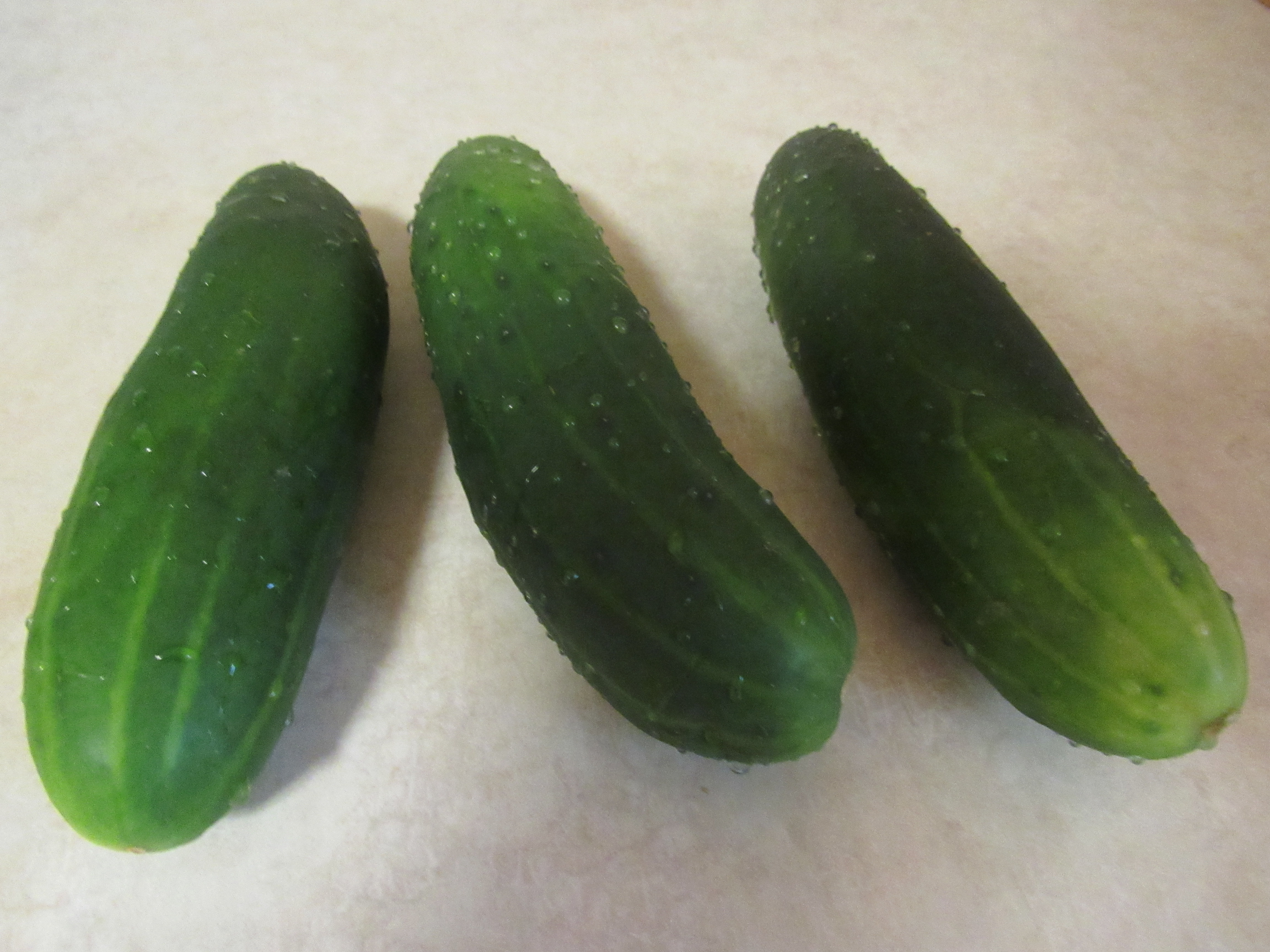
Peel 3 large cucumbers. Remove the seeds and then slice them.

Melt 2 tablespoons of butter in a medium saucepan over low heat. Stir in onion and cucumber. Cook for 10 minutes, stirring frequently.

Stir in 3 tablespoons of flour. Cook about 1 ½ minutes.

Add 3 cups of chicken stock or chicken broth. (I had run out of stock so I used broth instead.) Stir in 1 cup of milk. Turn burner to a medium high heat until soup boils.

Remove from heat. Puree the soup in a blender or food processor. Strain the broth. Rinse the saucepan before returning the strained soup to it.

Beat 2 egg yolks. Stir these into the soup. Add ½ cup light or heavy cream (I used heavy cream) and ½ teaspoon salt or salt to taste. Reheat the soup until hot, stirring frequently. Do not boil.

This is the first time I’ve made this type of soup. There is a light, refreshing taste of cucumber. I thought it tasted delicious and will make it again.

This recipe makes 7 one-cup servings.

-Sandra Merville Hart

Sources

Revised by Cunningham, Marion and Laber, Jeri. The Fannie Farmer Cookbook, Alfred A Knopf Inc., 1983.


Mulled Buttermilk

“Excellent for convalescing patients” was the way a recipe in an 1877 cookbook described mulled buttermilk.

Given the date of the cookbook, wounded soldiers during Civil War probably received this drink in hospitals. As a historical novelist, I’m always interested in learning tidbits from our history. It’s fun to add authentic details such as this one when a story requires it.

Boil a cup of buttermilk over a medium high heat. The consistency of the milk completely changes. The thick, creamy liquid thins to a grainy consistency of water.

Beat one egg yolk. Temper the yolk by stirring in a couple of tablespoons of the hot buttermilk. Add the tempered yolk to the boiling buttermilk. Stir and allow the mixture to return to a boil. I stirred the mixture while cooking.

Pour into a glass and drink. I allowed it to cool slightly before trying it. One sip was enough. I did not like this.

There is a second recipe for mulled buttermilk.

Forgetting the egg yolk, put a heaping tablespoon of flour into a glass. Pour in 1/3 cup of cold buttermilk and stir well. If this is not enough liquid for the flour to assimilate into the liquid after a brisk stir, add more buttermilk—a tablespoon at a time—until it is combined into a thick,  pourable liquid. Set this aside.

When the cup of buttermilk initially boils, add the buttermilk thickening to the saucepan. Return to a boil, cooking an additional minute to make sure the flour is done.

I really liked this second alternative. The thicker beverage tasted better to me.

And it is good for patients. If you lived one hundred fifty years ago, you would have drunk mulled buttermilk when you were sick.

Good luck! I’d love to hear if you try this recipe.

-Sandra Merville Hart

Sources

Compiled from Original Recipes. Buckeye Cookery and Practical Housekeeping, Applewood Books, 1877.


Bran Biscuit Recipe

This is Mrs. L.S. Williston’s yummy recipe for Bran Biscuits. It was found in an 1877 cookbook under “Food for the Sick.”

Mrs. Williston lived in Jamestown, New York. She recommended buying Davis & Taylor’s wheat bran and even provided their street address in Boston. She served these biscuits for breakfast. If any remained, they were toasted to serve for tea or “split for dinner.”

Preheat oven to 425 degrees.

Measure 5 cups of flour in a large mixing bowl and scoop a well in the center.

Scald one cup of wheat bran with one cup of boiling water. When the bran cools, spoon it into the well at the center of the flour.

A “half cup of good yeast” was Mrs. Williston’s next ingredient. As I’ve discovered by making other historical recipes, yeast was a little different 150 years ago. I added 1 tablespoon of yeast on top of the wheat bran, but 2 teaspoons would also be fine.

Add 2 tablespoons of sugar and 1 teaspoon of salt. Add 1 ¾ milk. You may need a little more—just enough to make a soft dough. It will be thicker than batter.

Cover. Place in a warm place and allow it to rise. Mrs. Williston allowed her dough to rise overnight; mine had almost doubled in 1 ½ hours.

Mrs. Williston baked her biscuits in a patty pan or a gem pan—similar to a cupcake/muffin pan. Heat an empty cupcake pan. Then spoon dough into the cupcake holders. (I found it much easier to do this by hand. Tip—rinse your hands in warm water frequently when working with this type of dough.)

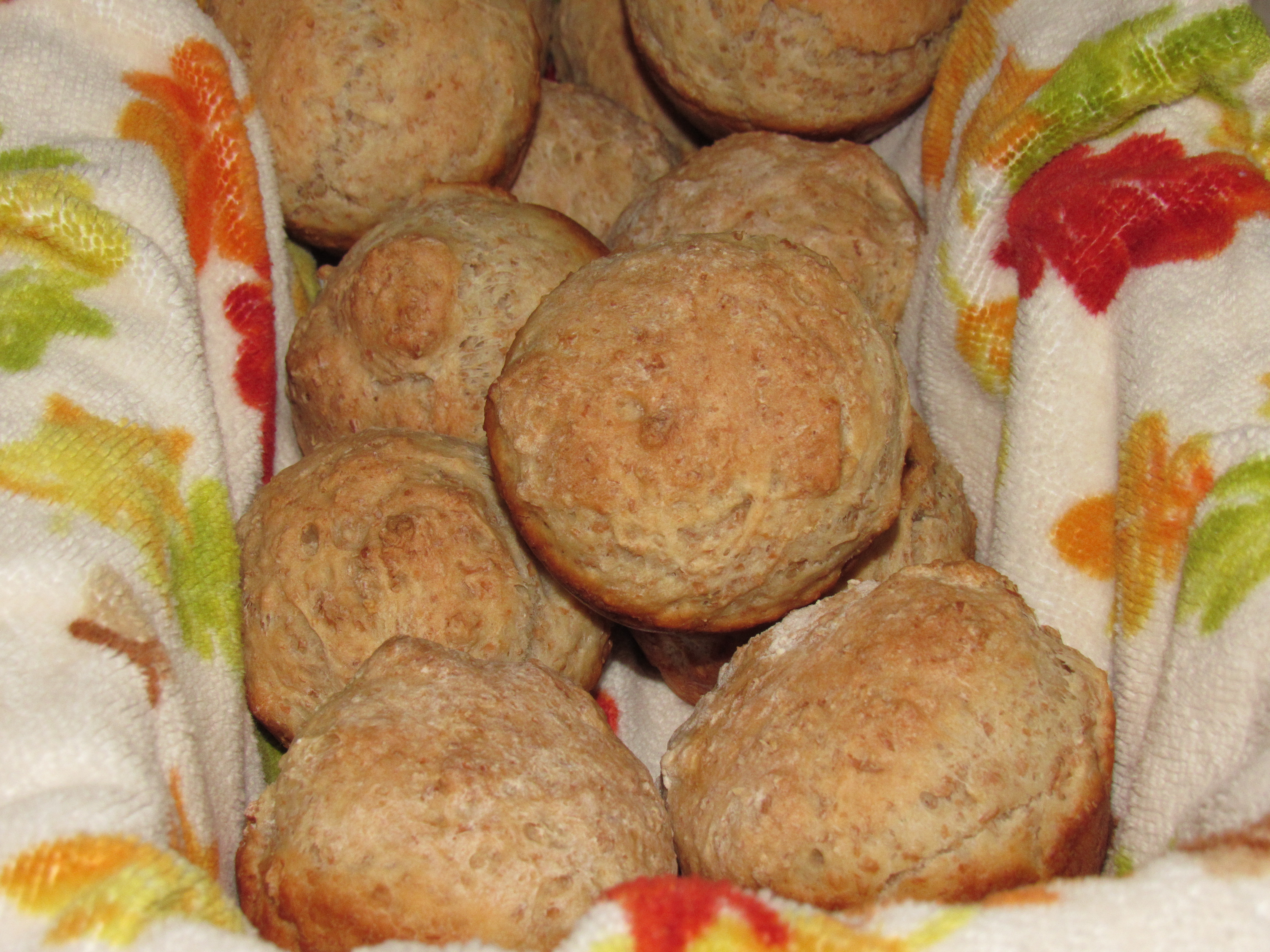
Bake at 425 for 20 to 25 minutes or until lightly browned. Mine baked perfectly at 23 minutes.

I baked a dozen biscuits and put the rest of the dough in a bread pan. The bread dough continued to rise while the biscuits baked.

Bake bread at 425 for about 25 minutes.

The delicious aroma had me eating a biscuit while still pretty warm. Yummy! These were a big hit at my house. I’ll have to make them again.

I’d love to hear if you try this. Enjoy!

-Sandra Merville Hart

Sources

Compiled from Original Recipes. Buckeye Cookery and Practical Housekeeping, Applewood Books, 1877.


Fever Drink Recipe

This recipe for Fever Drink doesn’t say if it treats a fever or if it soothes patients who are running a temperature. It was found in an 1877 cookbook under “Food for the Sick.”

Flax seed is one of the ingredients in this beverage. I don’t know if this was readily available 150 years ago. However, the recipe doesn’t give any ingredient measurements. This makes me believe that cooks knew how to prepare it.

Given the date of the cookbook, I’m guessing Civil War soldiers drank this for fevers whenever it was available. Its use seems to have died out because I couldn’t find anything else about it. I love to bring historical practices to light.

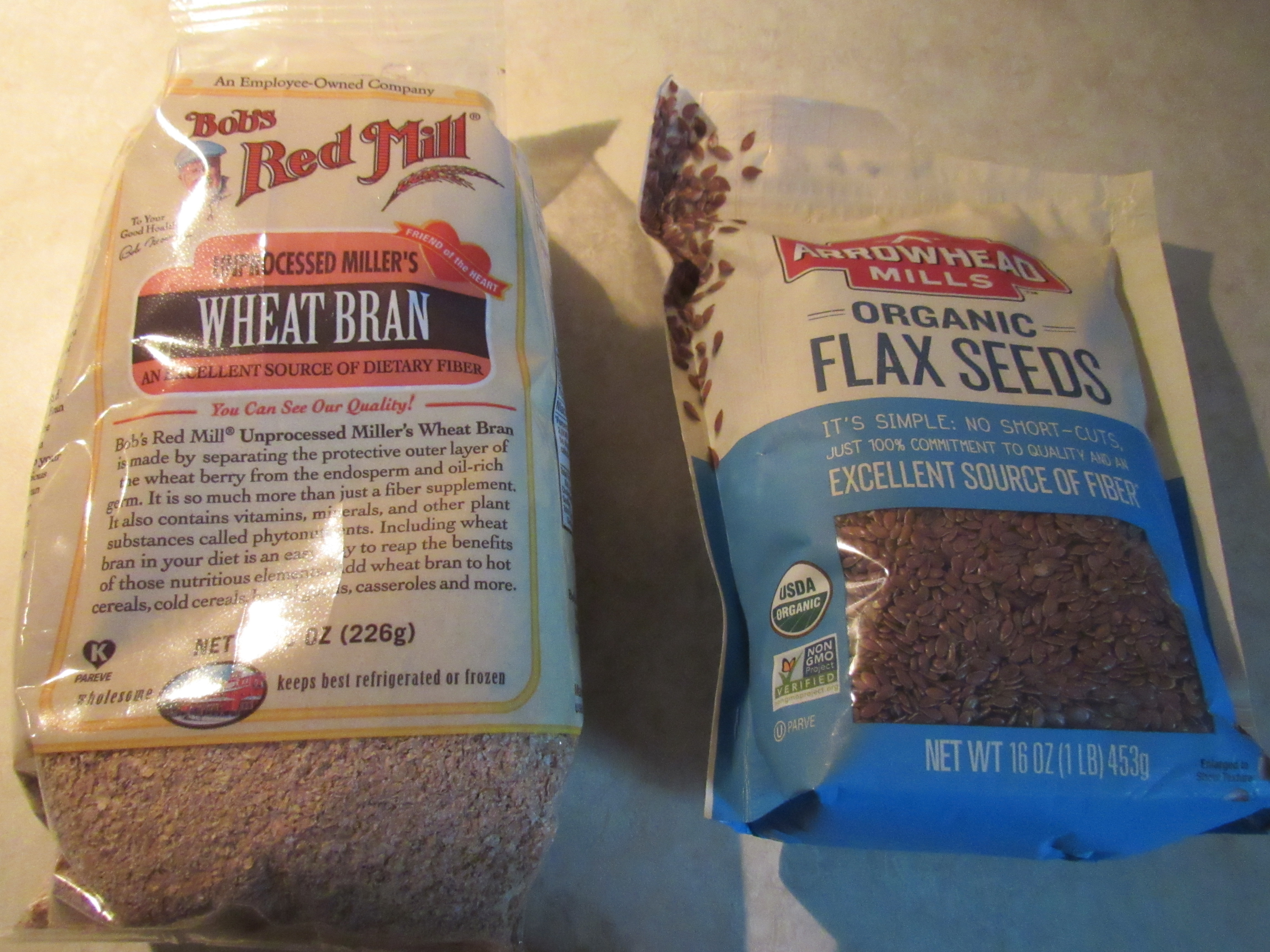
Figuring out the ingredient measurements the first time was a complete guess. The recipe said to add boiling water to flax seeds, so I used ¼ cup of flax seeds with 1 cup of water and set it aside. The seeds were supposed to become “ropy.”

It also said to “pour cold water over wheat bran.” I chose to try ¼ cup of wheat bran and added ¾ cup of cold water to a small saucepan. (Some of you are probably already laughing.)

I brought this to a gentle boil and lowered to a medium heat. It was supposed to boil for 30 minutes. The wheat bran boiled dry in 10 minutes. I added more water, but quickly realized I had used too much wheat bran.

To make matters worse, there was no change in the flax seeds—definitely not ropy.

I started over. This time I tried to figure out the right ratio for only 1 glass of Fever Drink.

I added a cup of boiling water to 1 teaspoon of flax seeds and set aside.

I put 1 tablespoon of wheat bran into a small saucepan with 2 cups of water. I stirred it occasionally and it reduced quite a bit. After 30 minutes, I strained it twice. It made ½ cup of wheat bran broth.

The recipe also called for lemon juice and sugar—lemonade. I added 1 tablespoon of sugar to the juice of 1 lemon. It was the perfect amount.

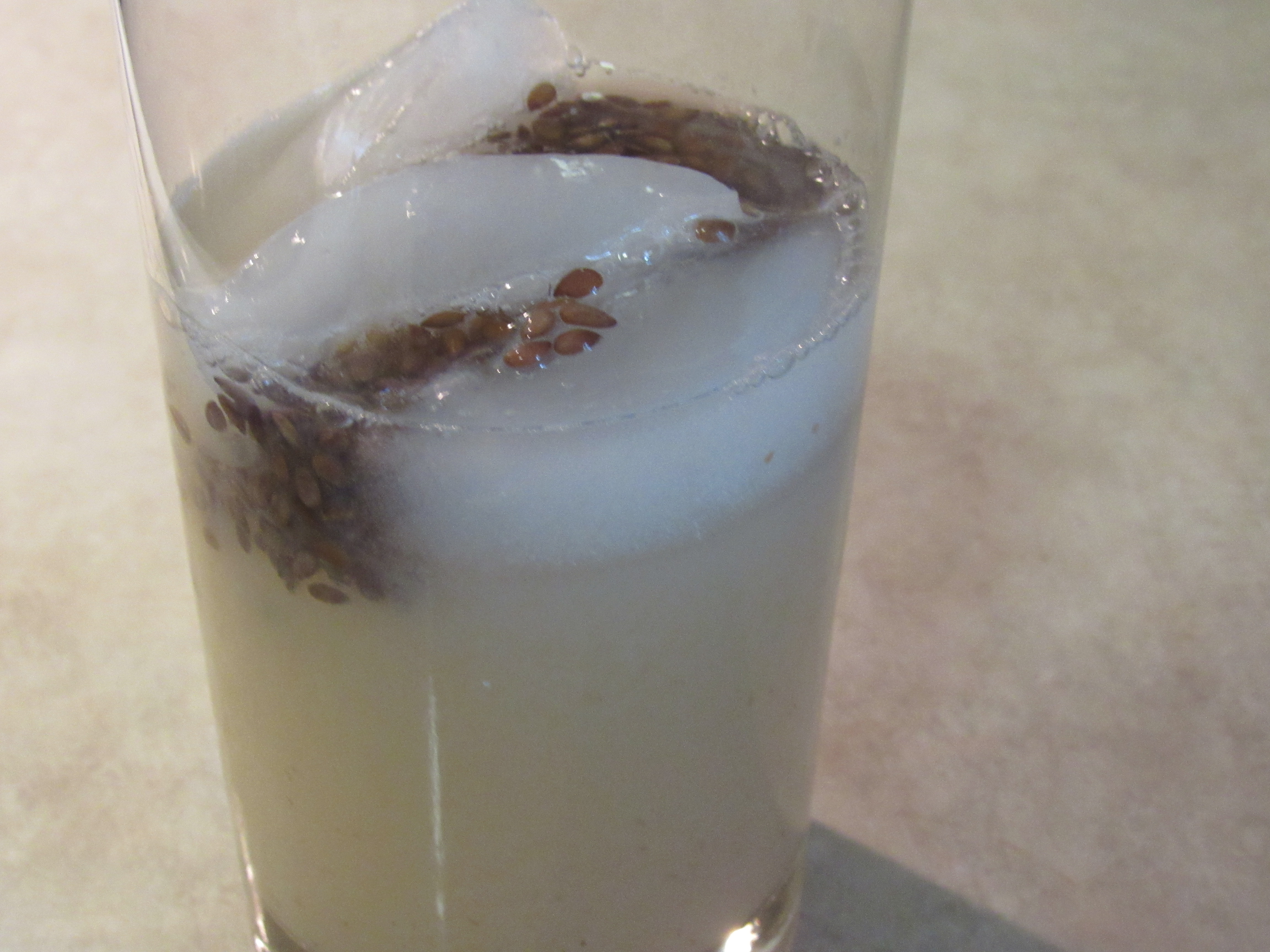
I stirred the lemonade into the wheat bran broth. Though it was probably traditionally served hot, I decided to drink it cold. I added ice to the glass.

The flax seeds softened but never became ropy. I added these to the drink. The bran flavor was equally as strong as the lemon flavor. Lemonade improved the beverage though I can’t say I liked it.

A friend told me that flax seed powder is available. This might be a good alternative for regular flax seeds in this beverage.

The measurements used in the second try—1 tablespoon wheat bran to 1 teaspoon flax seeds—seemed to work well. I don’t know if this is the correct combination they used to ease a feverish patient. Since the 1877 cook didn’t divulge that secret, it remains a guess.

And I didn’t have a fever when I drank the Fever Drink so I can’t say how well it works.

I’d love to hear if you try this. Enjoy!

-Sandra Merville Hart

Sources

Compiled from Original Recipes. Buckeye Cookery and Practical Housekeeping, Applewood Books, 1877.


Crust Coffee Recipe

Not a drop of coffee in this recipe for Crust Coffee!It was found in an 1877 cookbook under “Food for the Sick.”

The ingredients make this an easy recipe for cooks and nurses to give to patients. It was probably given to wounded soldiers during Civil War.

The first ingredient is toasted bread, which was heartier 150 years ago than white bread readily available on grocery store shelves. I made a loaf of white bread in my bread machine and baked it in the oven. This gave me bread slices with denser consistency.

I toasted sliced bread “very brown” under the oven broiler. It felt more authentic than sliding them into a toaster.

I boiled water and poured a couple of tablespoons of it on the toasted bread. (Sounds very unappetizing—I agree. That’s one reason a denser bread is necessary.) Drain the excess.

Stir 1 teaspoon of sugar into 1 tablespoon of heavy cream. Pour the mixture over the bread.

Sprinkle on some nutmeg and enjoy.

It was actually pretty tasty.

I had followed a historical recipe for Baked Milk.  I wanted to try Crust Coffee with baked milk.

I made the Crust Coffee again, exchanging heavy cream for baked milk. Not bad. I liked the familiar flavor of heavy cream better, but the other is also good.

I’ve often given my daughter toast when she was ill. I can definitely understand why this was given to convalescing patients. It seems like a treat with the sugar and nutmeg.

I’d love to hear from you if you try this dish. Enjoy!

-Sandra Merville Hart

Sources

Compiled from Original Recipes. Buckeye Cookery and Practical Housekeeping, Applewood Books, 1877.


Baked Milk

“Weak persons” can drink baked milk, according to a recipe in an 1877 cookbook under “Food for the Sick.”

Nurses probably gave this beverage to wounded soldiers during Civil War. As a historical novelist, I love to add authentic details like this when a story requires it.

Since this was totally new to me, the brief recipe instructions left me wondering. I did an Internet search. According to Wikipedia, room temperature storage for baked milk is safe up to 40 hours.
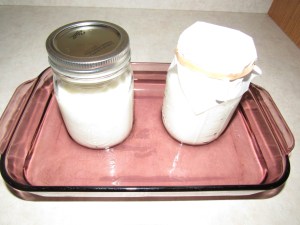
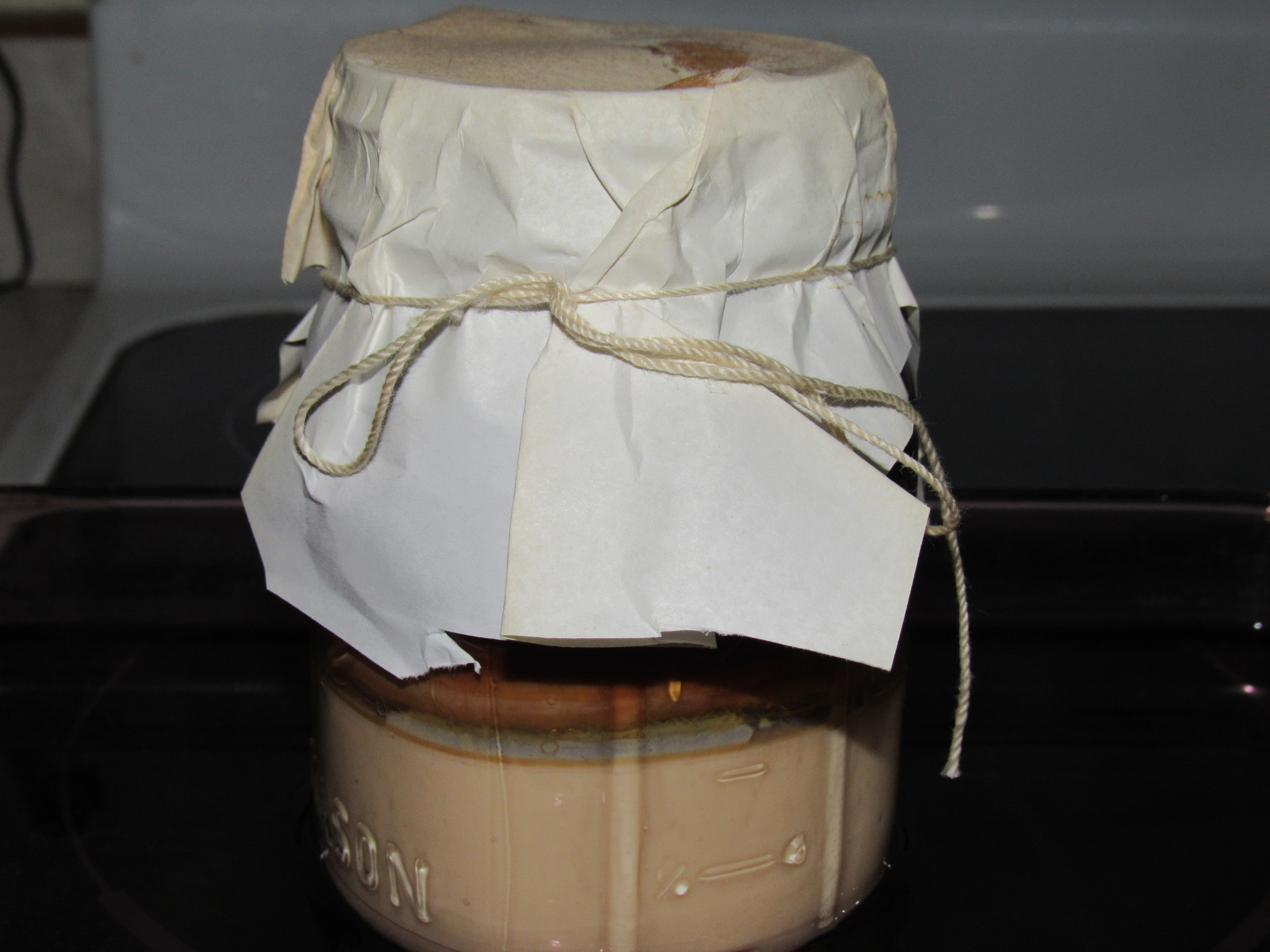
The 1877 recipe called for baking 2 quart jars of milk for 8 to 10 hours. I used 2 pint jars. Early cooks tied writing paper over the mouth of the jars.

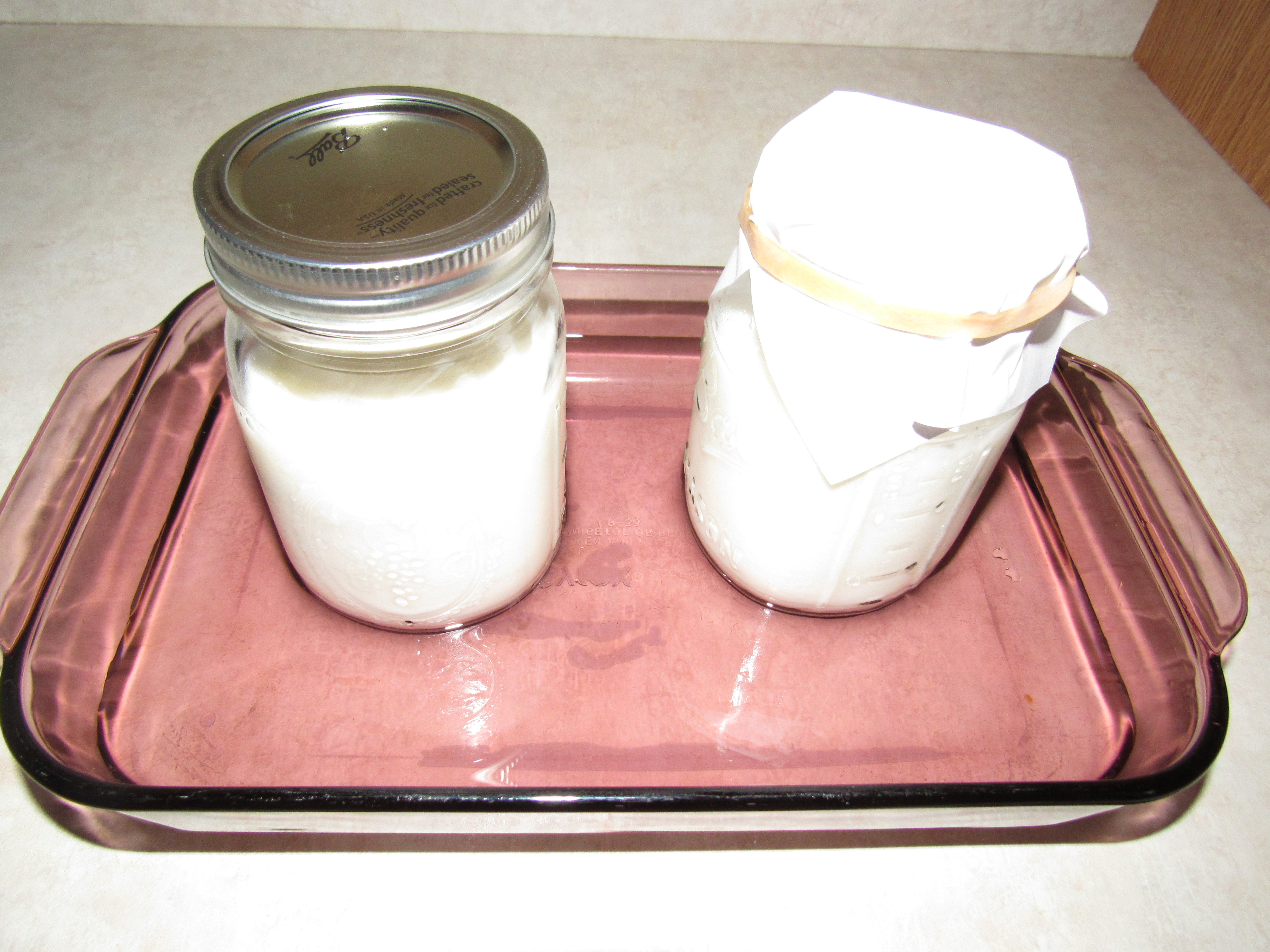
I experimented. One Mason pint jar opening was covered with copier paper fastened by a rubber band. I closed the other with a Mason jar lid.

To allow room for the milk to boil, I added only 1 ½ cups of milk to each jar. These were placed inside a dish with about 2 inches of cold water.
I placed this inside the oven and then turned it on, setting the temperature to 350 degrees.

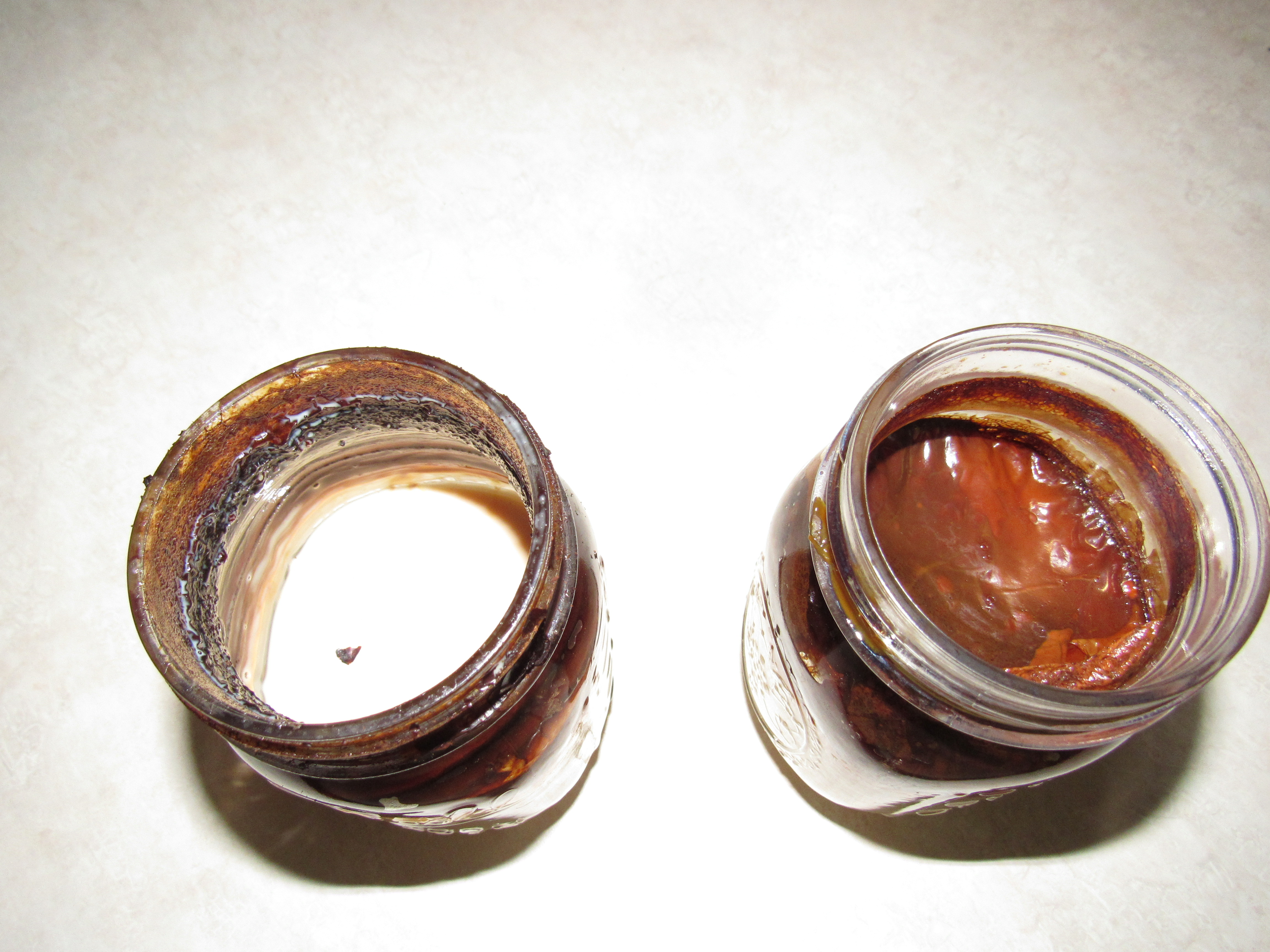
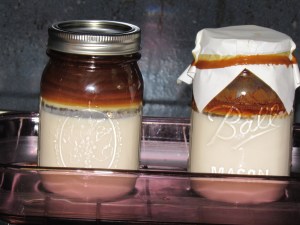
The liquid slowly reduced. A layer of brown grew around the rim. After 4 hours, a burning smell alerted me. They were removed from the oven.
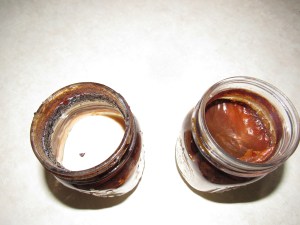
Milk in the lidded jar had burned and tasted burned. I removed a layer of brown crust in the papered jar—missing from the lidded jar—and tasted the now beige liquid. Not bad, but it wasn’t “thick as cream” as the recipe suggested.

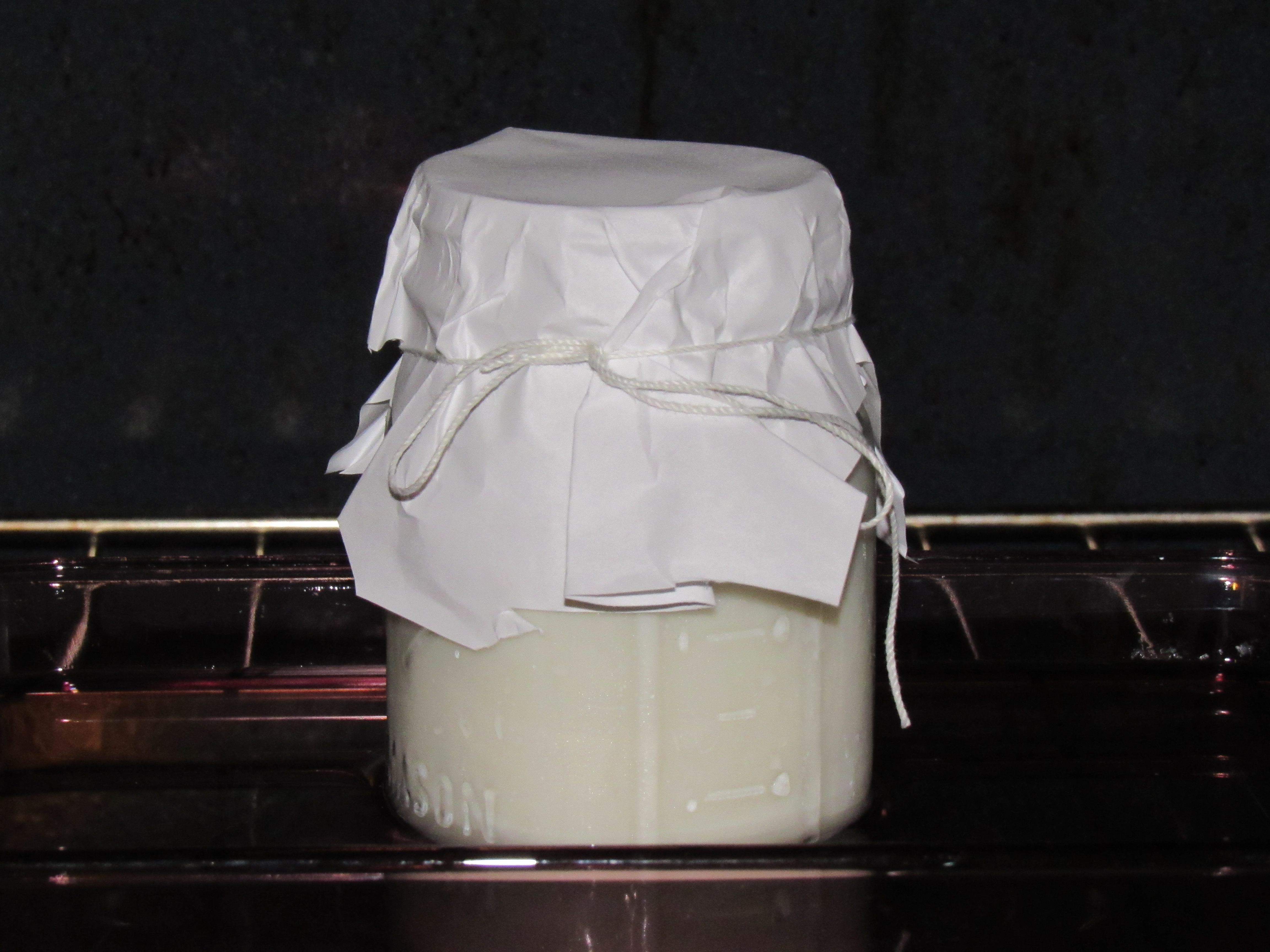
I tried again. I used the same amount of milk—12 ounces—and used another paper covering. This time I tied it on with string. (Not surprisingly, the rubber band melted on the first one. It was quicker to put on, but not the best idea.)

I cooked it for 8 hours in a 350-degree oven. It was baked inside a dish half-filled with water. As the water level receded, it was slowly refilled with water almost boiling hot.

Turn off oven after 8 hours. Allow the jar to cool.

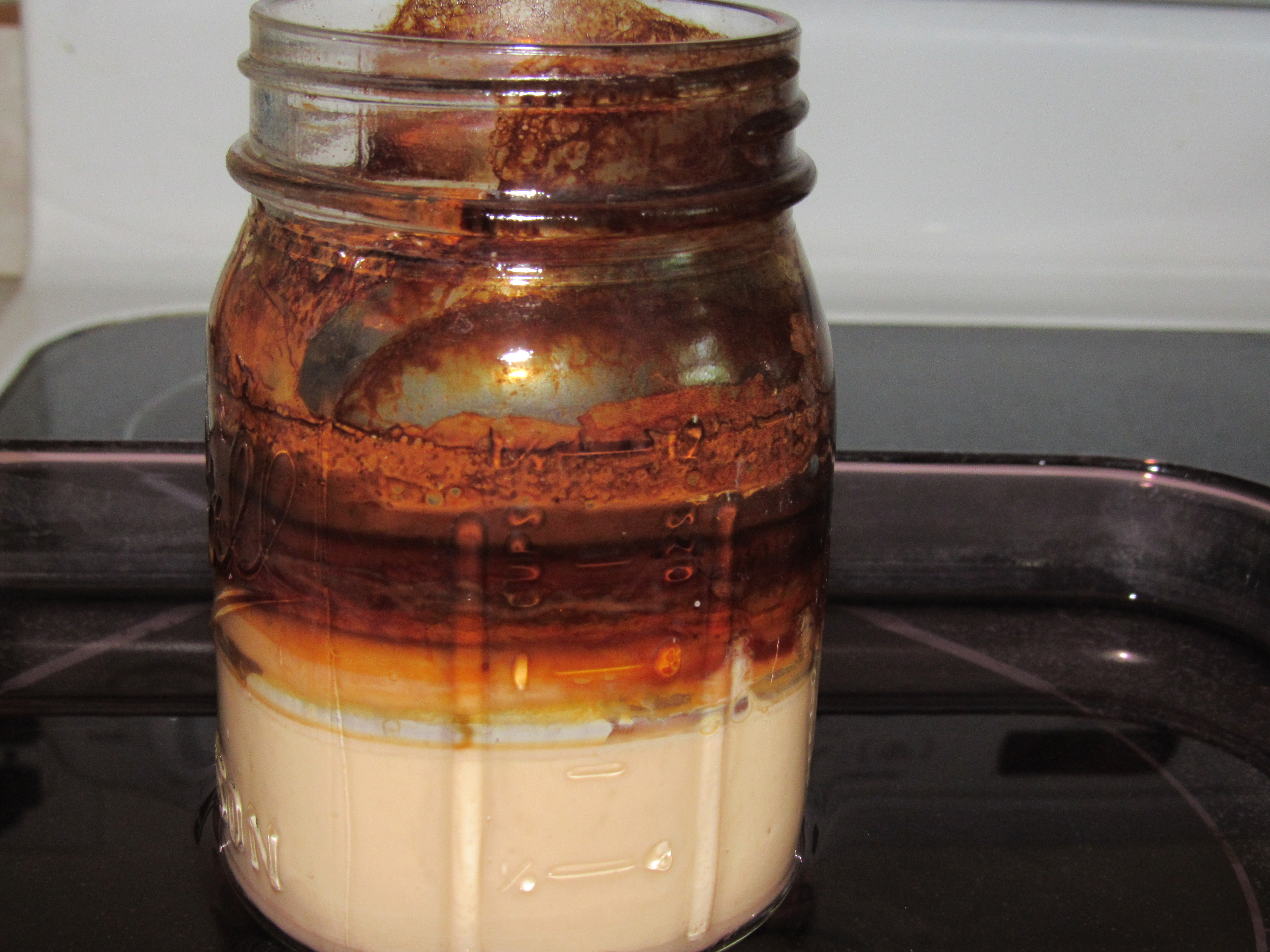
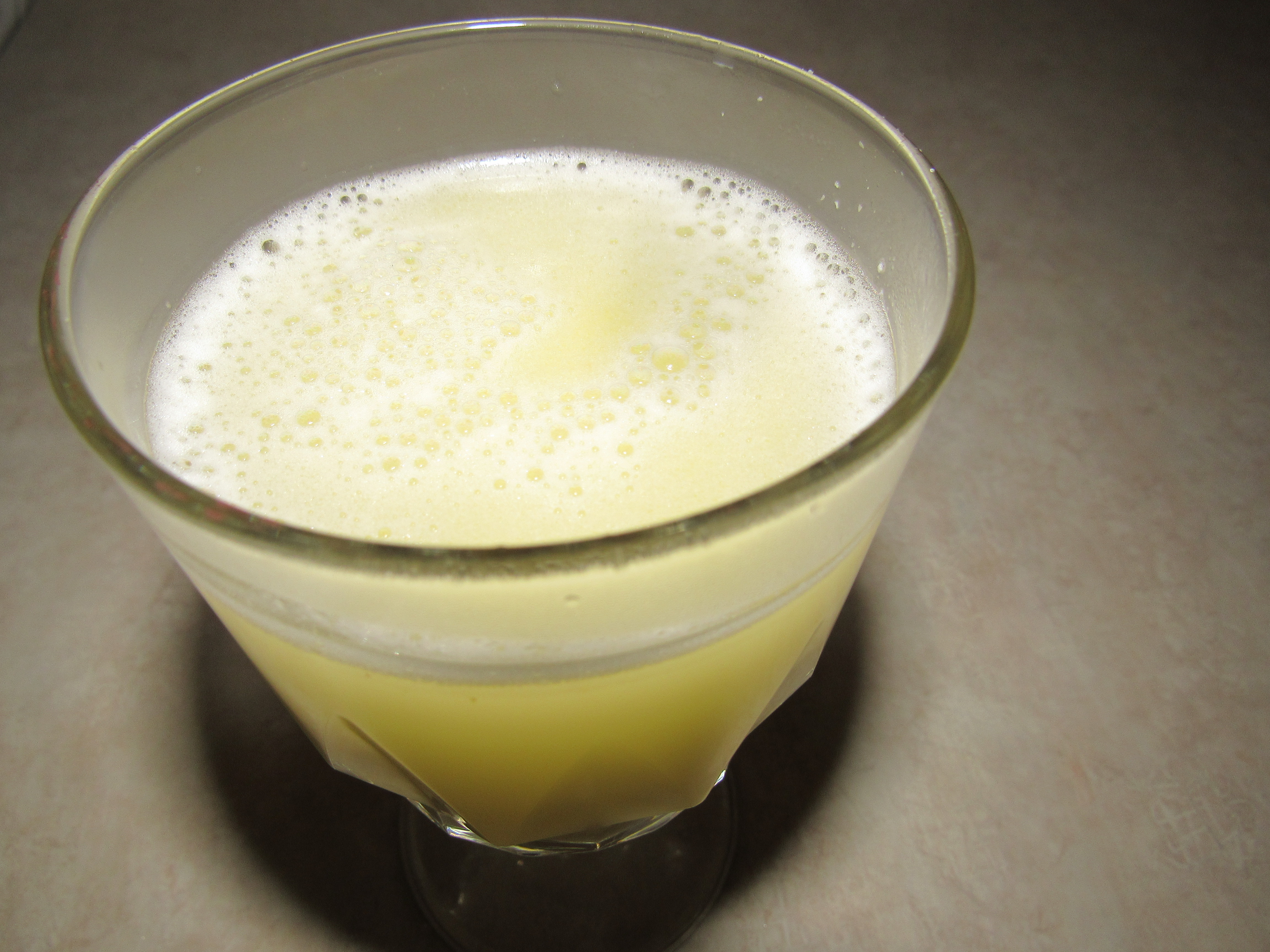
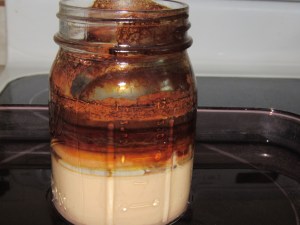
The milk reduced to about half in that time, with the same brown rings and layer as previously. The tan liquid wasn’t as thick as expected, but tasted surprisingly good. I’m not a fan of white milk, but I liked it prepared this way.
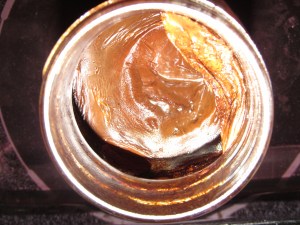
It’s been sitting on my kitchen counter for 40 hours and still looks good. I refrigerated the beverage and liked it even better.

Milk was baked for weak persons. Convalescing patients. I’m not a health professional, but that suggests that baked milk is easier to digest.
I’d love to hear from you if you try this dish. Enjoy!

-Sandra Merville Hart

Sources

“Baked Milk,” Wikipedia, 2017/05/09 https://en.wikipedia.org/wiki/Baked_milk.

Compiled from Original Recipes. Buckeye Cookery and Practical Housekeeping, Applewood Books, 1877.



Buttermilk Stew

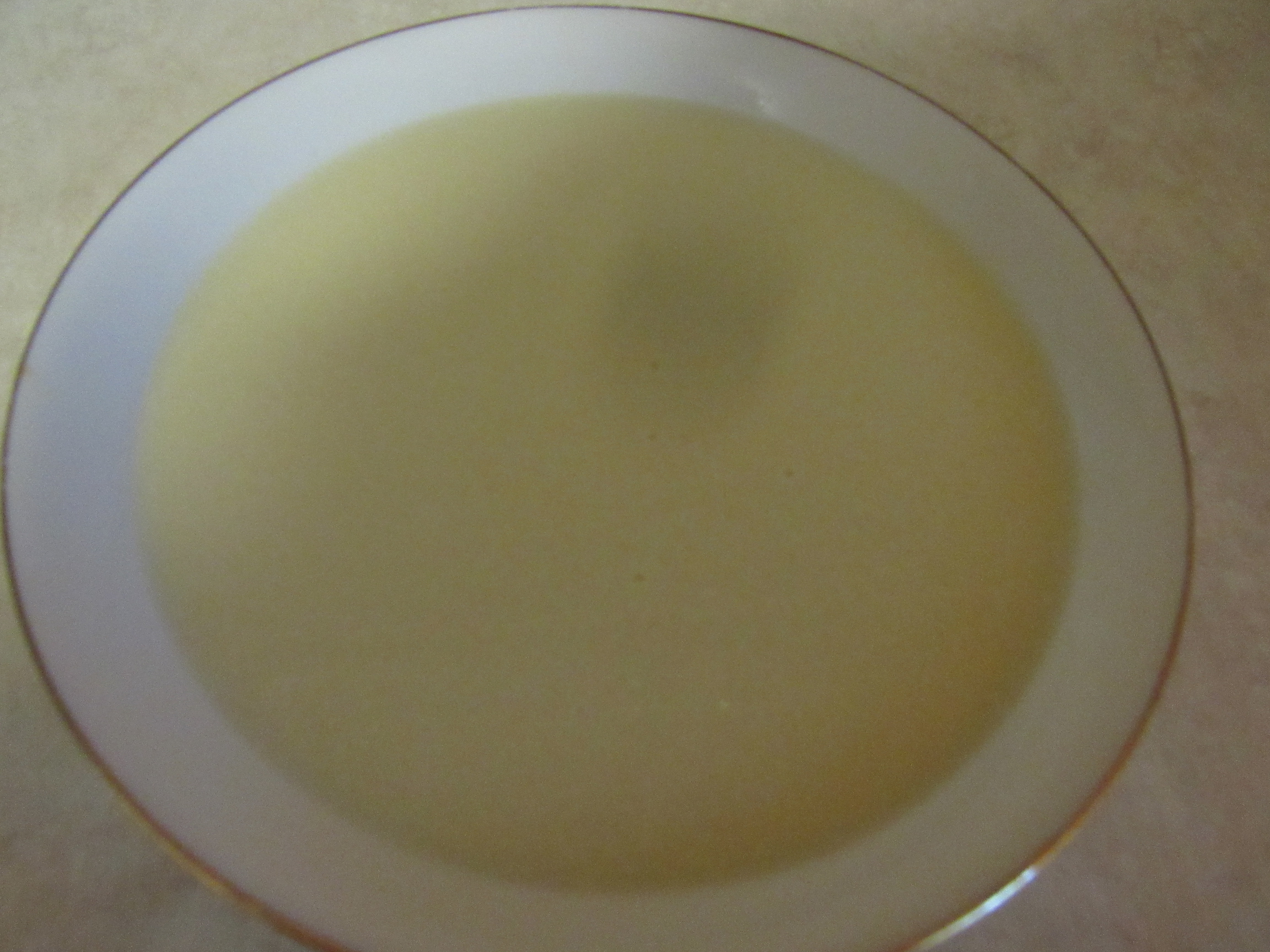
A recipe in an 1877 cookbook for Buttermilk Stew was included in a section titled “Food for the Sick.”

Research involves a lot of reading for historical novelists, but I don’t remember reading about this type of stew. Civil War nurses and cooks likely fed it to wounded soldiers. I love learning about our history. It’s fun to add authentic details like this when a story requires it.

Boil one pint of buttermilk over a medium high heat. I allowed it to boil less than a minute before removing from the heat. The consistency of the milk completely changed. The thick, creamy liquid thinned to a grainy consistency of water.

A “small lump of butter” called for in the original recipe became a tablespoon of butter to this modern cook.

When that melted, I added 2 tablespoons of sugar—a complete guess as the recipe said to “sweeten to taste.” I added more because adding ginger was an option. Ginger has such a strong flavor.

I added ¼ teaspoon ground ginger. Cooks may substitute honey for sugar.

The consistency remained like water as it cooled. It had a very strange flavor. It tasted like buttermilk though different. The sugar overpowered the ginger, so I’d suggest decreasing it to only a tablespoon. Ginger is optional.

After only a couple of sips, I pushed it aside. It wasn’t terrible. I can understand that thinning out the buttermilk made it easier for ailing patients to digest.

Good luck! I’d love to hear if you try this recipe.

-Sandra Merville Hart

Sources

Compiled from Original Recipes. Buckeye Cookery and Practical Housekeeping, Applewood Books, 1877.
Tamarind Water

The Battle of Gettysburg took place in the small Pennsylvania town on July 1-3, 1863. After the fighting stopped, wounded soldiers filled the homes, churches, barns, and courthouse.

There were so many that soldiers from both sides lay in the fields where they were shot until someone found them. Citizens rallied heroically to meet the monumental challenge.

Folks from the U.S. Sanitary Commission and the Christian Commission arrived in Gettysburg to help. They provided supplies for the hospitals and the town’s citizens. A general tent hospital, Camp Letterman, was set up in mid-July to care for Union and Confederate wounded.

One of the Sanitary Commissioners wrote of volunteering at Camp Letterman. He remembered that the wounded arrived to the newly-established hospital thirsty. Volunteers gave them tamarind water from pails. The soldiers loved the “beautiful drink.”

The only recipe I could find for tamarinds in my 1877 cookbook was “Tamarind Whey,” which used milk. The same recipe stated that a tablespoon of tamarinds could be added to water instead of milk.

Being new to tamarinds, I needed a bit more information. I found a recipe for Tamarind Water on the Foot Network site that I followed.

My husband found dried tamarinds at a specialty food store. The outer layer must be peeled off before cooking. The fruit inside is sticky.

I cooked the fruit as directed and let it cool. I drained it first in a colander and then a second time in a wire strainer.

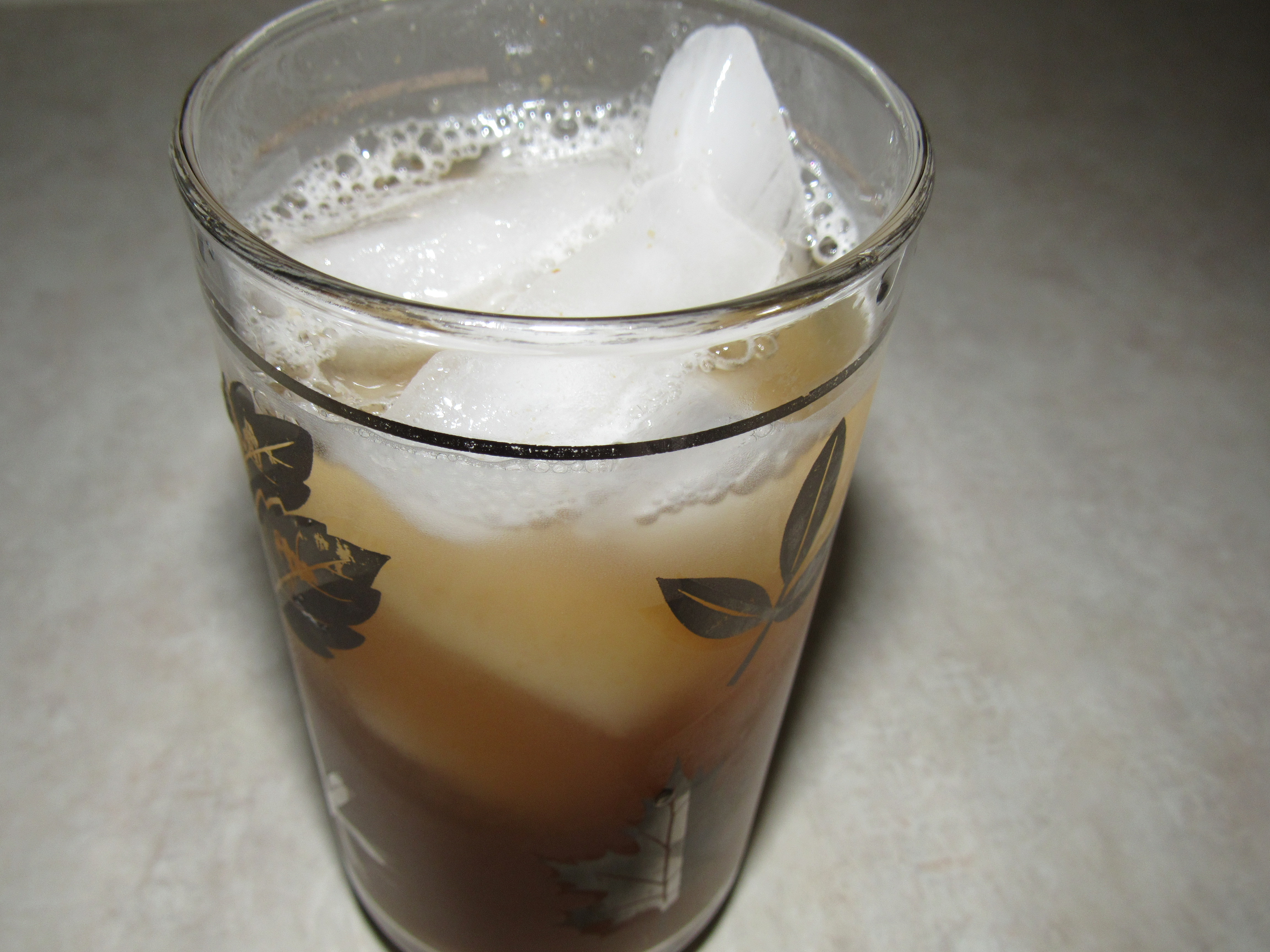
The drink, when iced, resembles the color of iced tea. The unfamiliar flavor was too strong for me. I didn’t really like the beverage.

Using perhaps half the amount of tamarinds would be enough for my taste. A tablespoon for 2 quarts of water—now that I know how to prepare it—might be too weak.

The taste reminds me of a very strong tea. I haven’t tasted anything else that compares to it. Several people tried the drink. One person liked it. He downed the drink, saying that it reminded him of a special blend of tea.

I can well believe that this drink comforted parched Civil War soldiers on a hot summer’s day.

-Sandra Merville Hart

Sources

Compiled from Original Recipes. Buckeye Cookery and Practical Housekeeping, Applewood Books, 1877.


Milliken, Mary Sue & Feniger, Susan. “Tamarind Water,” Food Network, 2017/05/11 http://www.foodnetwork.com/recipes/tamarind-water-recipe.


Sheldon, George. When the Smoke Cleared at Gettysburg, Cumberland House, 2003.


Egg Gruel

A recipe in an 1877 cookbook for Egg Gruel claimed to be good for treating a cold. It was included in a section titled “Food for the Sick.”

As a historical novelist, I’m always interested in learning tidbits from our history. Gruels were given to Civil War soldiers in hospitals.

To make the gruel, take one egg and separate the egg yolk and white. Add a tablespoon of sugar to the egg yolk and beat.

Whisk the egg white separately. As there were no guidelines, I whisked until frothy. This worked well.

Stir a cup of boiling water into the yolk mixture.

Add the egg white. Add any seasoning you desire. I sprinkled salt over the mixture and stirred it once more.

It looked far more appealing than expected but I didn’t taste it. I don’t have a cold at the moment or I might have been tempted.

Good luck! I’d love to hear if you try this recipe.

-Sandra Merville Hart

Sources

Compiled from Original Recipes. Buckeye Cookery and Practical Housekeeping, Applewood Books, 1877.