The La Vale Toll House on the National Road

Work on a National Road near the Potomac River in Cumberland, Maryland, to the Ohio River in Wheeling, Virginia (later became part of the newly created state of West Virginia during the Civil War) in 1811. This section of road was completed in 1818 though the road continued into Ohio after that.

High traffic caused lots of wear and tear on the road, making it difficult to maintain. The federal government turned over the maintenance of the road to the states in the early 1830s. To cover the cost, the states built toll houses to collect tolls.

Maryland built its first toll house, the La Vale Toll House, about six miles from Cumberland around 1833. This toll house is the state’s only one still standing on the National Road (also called Cumberland Road.)

Tollkeepers collected tolls there until the early 1900s. Included in their $200 annual salary were free living quarters.

It’s fun to read the toll rates. For example, horse and riders paid 4 cents for ten miles or 14 cents for thirty-five miles. Travelers paid 8 cents for ten miles or 28 cents for thirty-five miles for every sleigh, sled, chaise, or Dearborn “drawn by one horse or pair of oxen.”

Dearborn wagons contained four wheels generally drawn by a single horse. The vehicle usually had one seat, with top curtains and sometimes side curtains. From 1819 to 1850, truck farmers and peddlers used the affordable Dearborn.

Gateposts are all that remain of a second Maryland toll house outside of Frostburg. This one was located thirteen miles from Cumberland. There’s a nice photo of the toll house on the Baltimore & Ohio Railroad Museum site.

-Sandra Merville Hart

Sources

Day, Reed B. The Cumberland Road: A History of the National Road, Closson Press, 1996.

Dearborn Wagon.” Dictionary of American History.. Encyclopedia.com. 23 Apr. 2017<http://www.encyclopedia.com>.

Edited by Raitz, Karl. A Guide to The National Road, The Johns Hopkins University Press, 1996.

“First Toll Gate House,” The Historical Marker Database, 2017/04/22  http://www.hmdb.org/Marker.asp?Marker=442.

Schneider, Norris F. The National Road: Main Street of America, The Ohio Historical Society, 1975.

“The La Vale Toll House,” The Historical Marker Database, 2017/04/22 http://www.hmdb.org/marker.asp?marker=443.

“The National Road & Toll House near Frostburg, MD,” Baltimore & Ohio Railroad Museum, 2017/04/22 http://www.eduborail.org/nps-1/image-1-nps-1.aspx.


Chicken Gumbo Soup Recipe

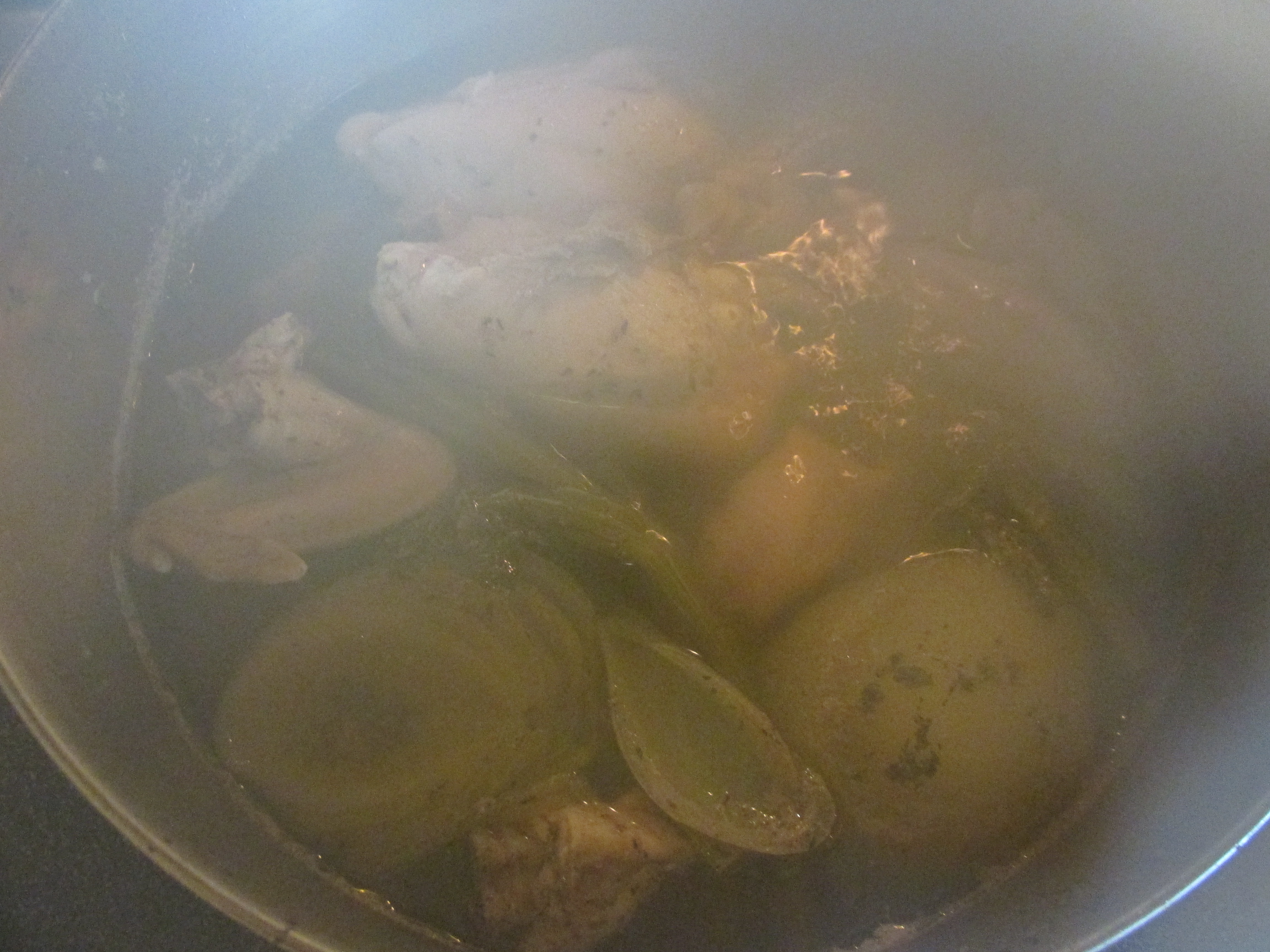
I prepared chicken stock using a recipe found in The Fannie Farmer Cookbook, giving me cooked chicken and chicken stock. I decided to make chicken gumbo soup.

4 cups chicken stock

1 cup okra, frozen or fresh

2 stalks of celery, sliced

½ cup carrots, bite-sized slices

1 can (about 16 ounces) diced tomatoes

½ cup uncooked rice, brown or white

2 cups cubed or shredded chicken

Salt

Pepper

Fresh minced parsley (optional)

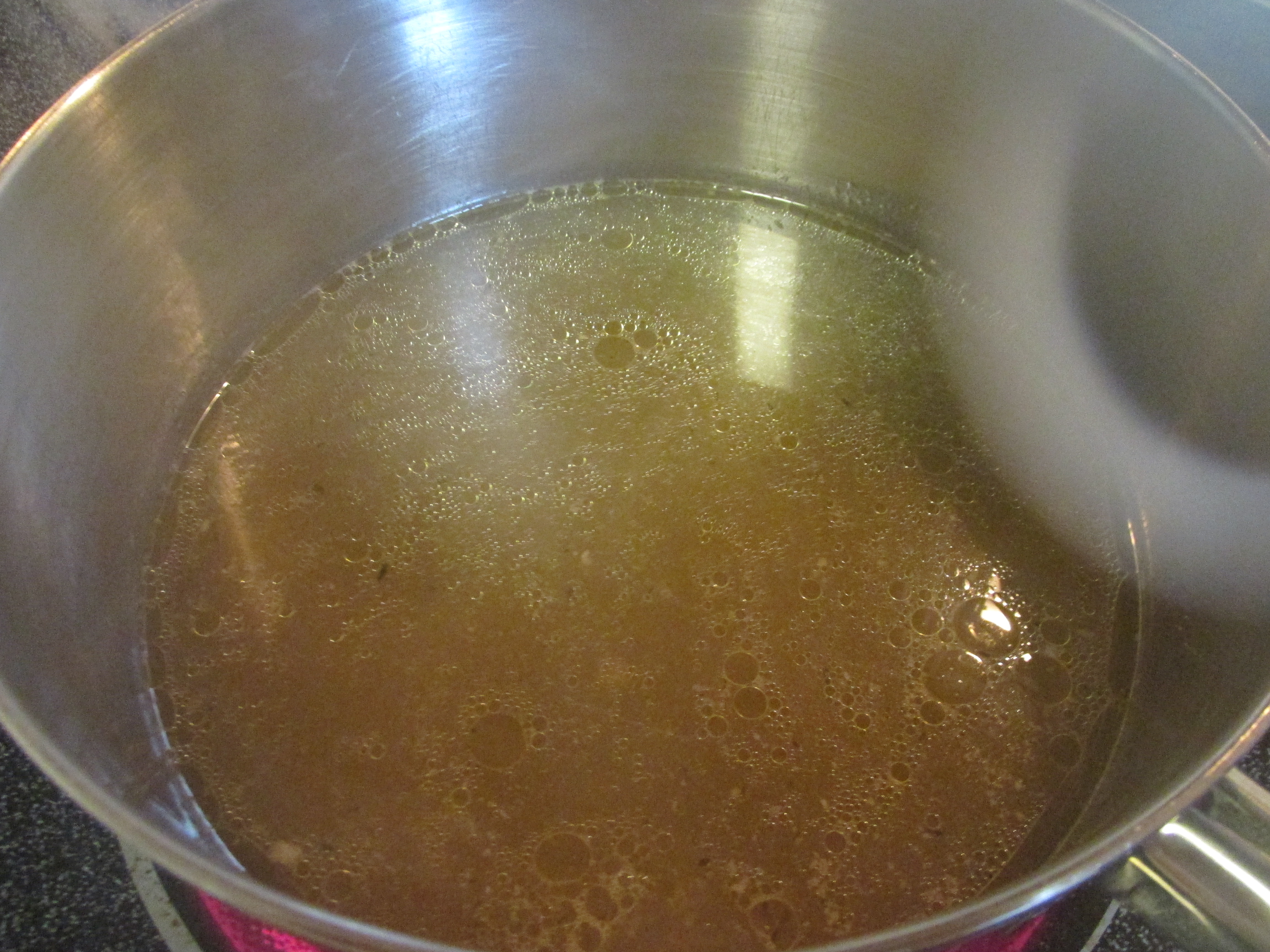
As Fannie warned, my chicken stock gelled in the refrigerator. Also, it had only made about 3 ½ cups of stock. I added enough water to make 4 cups into a large kettle. I warmed this over medium heat until in liquid form again.

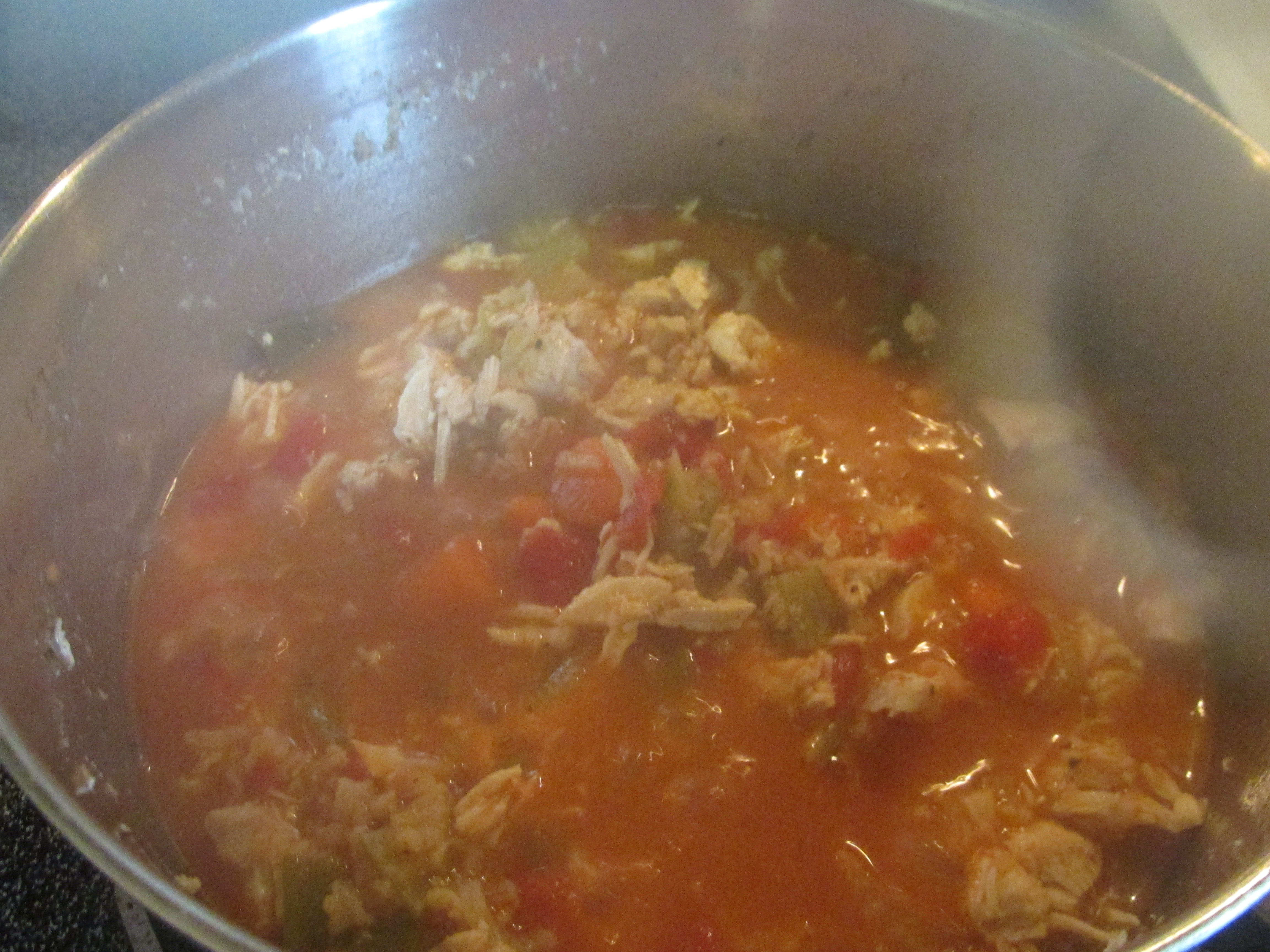
Add okra, celery, carrots, and tomatoes to the warmed stock. Stir in the uncooked rice. Cover and cook on medium heat for thirty minutes, stirring occasionally to keep the soup from sticking.

Reduce heat to low. Add chicken. Salt and pepper to taste. (Since I had not salted my chicken stock, I used a teaspoon of salt—the perfect amount for me.) Cook on low for about ten minutes to heat the chicken.

Garnish with a little minced parsley, if desired.

This made a hearty soup that I found delicious. One bowl is plenty for a meal.  I think an extra cup of stock would have been perfect, so I will use 5 cups of stock next time.

I’d love to hear from you if you try these recipes. Enjoy!

-Sandra Merville Hart

Sources

Revised by Cunningham, Marion and Laber, Jeri. The Fannie Farmer Cookbook, Alfred A Knopf Inc., 1983.


Preparing Chicken Stock

I recently ran across The Fannie Farmer Cookbook in an antique store. This book was originally published in 1896. Fannie Farmer’s name is still well-known today.

Reading Fannie Farmer’s recipe for stock intrigued me. I’ve made chicken broth from chicken but realized that is different from Fannie’s chicken stock.

Instead of making stock using chicken wings, necks, backs, and bones, I decided to use a whole chicken. This gave me boiled chicken to make soup for an easy supper the following day.

A local butcher cut up the chicken for me. Included in the package were the neck, heart, gizzard, and back. I used the legs, breasts, thighs, wings, neck, and back and discarded the rest.

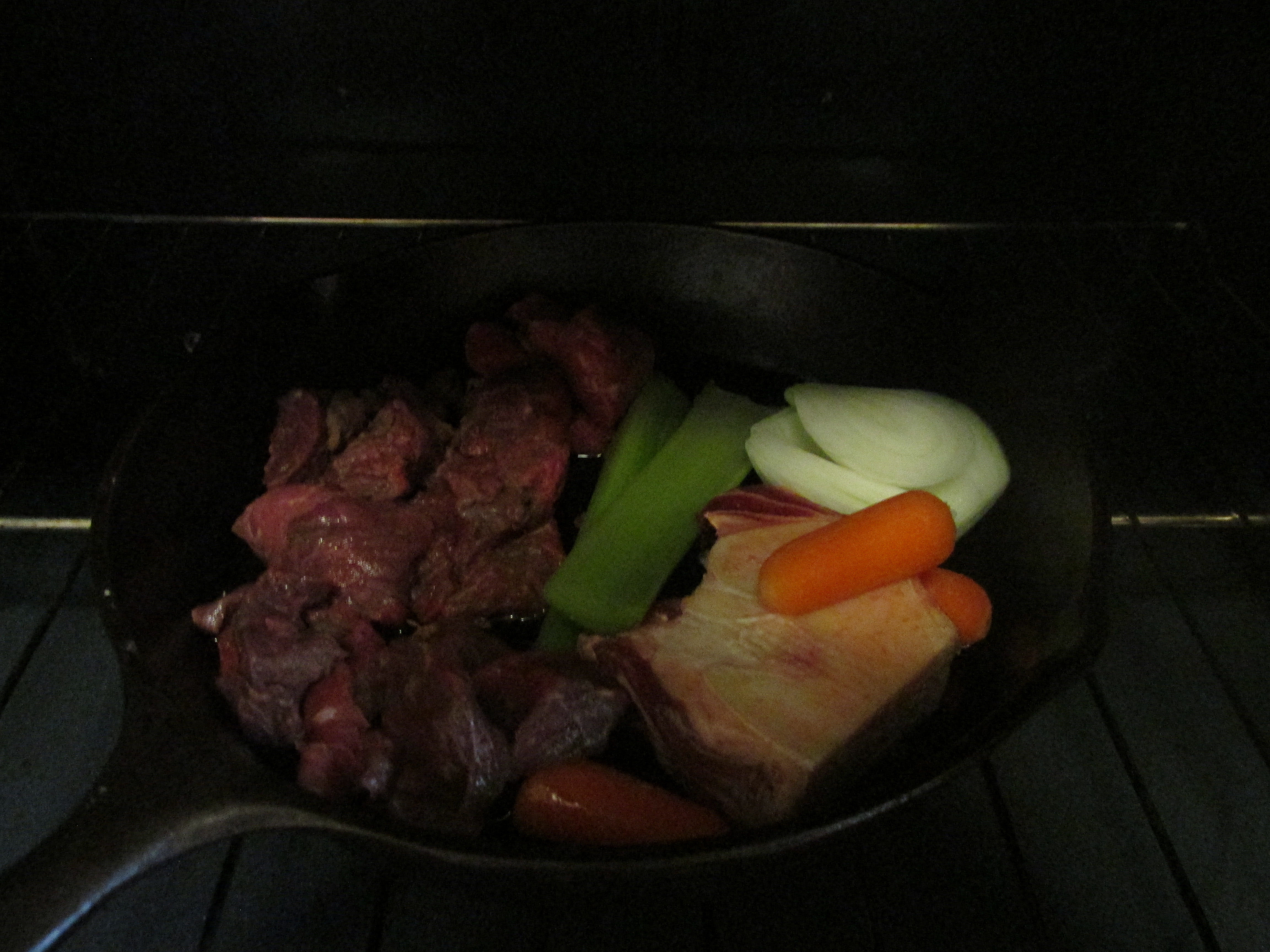
Wash the chicken and put into a large pot, holding out the breasts and wings to be added later. Add eight cups of cold water. Cut one peeled onion in half and place in the pot. Add six baby carrots or peel two carrots and cut them into thirds.

Slice in half three celery stalks, including the leaves. Add a bay leaf, a teaspoon dried thyme, and six crushed peppercorns.

Cook on medium high heat until water begins to boil then reduce to simmer. Since white meat cooks more quickly than dark meat, add breasts and wings after the stock has simmered for twenty minutes.

Cover and simmer until chicken is done. Mine was ready in about an hour. Remove chicken from pot. Debone. Add bones and skin back into the stock and continue simmering.

Refrigerate the chicken for later use in another recipe.

The total simmering time is four to five hours, which includes the time it takes to cook the chicken.

Fannie suggests waiting to add salt until using the stock in a recipe. This allows for salty flavors of other ingredients.

Should you choose to season the stock itself, add salt to taste just before it is done.

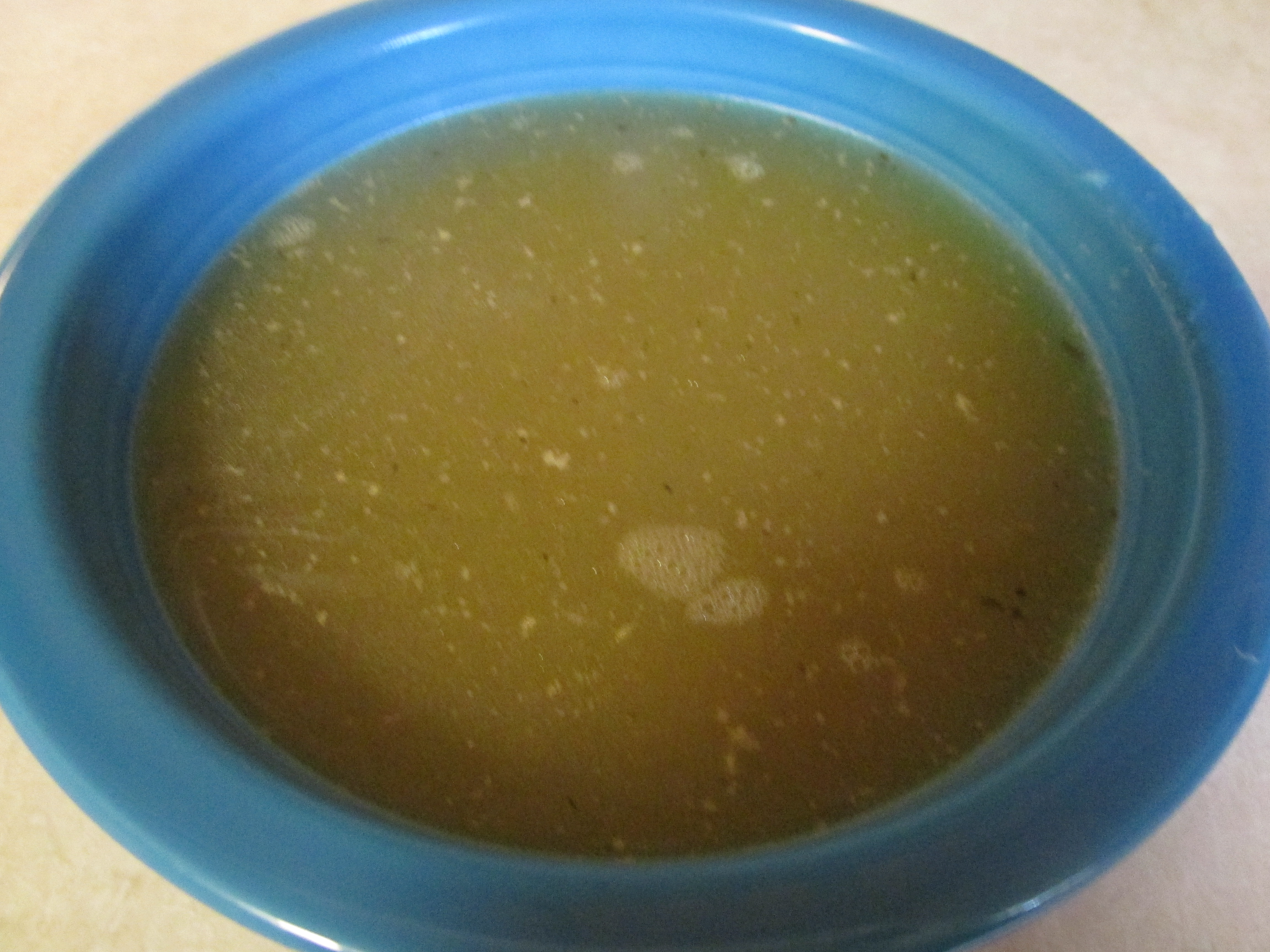
Strain the stock and allow to cool. Refrigerate or freeze until ready to use. Stock made from bones will gel in the refrigerator. When the broth thaws out, skim off the top layer of fat.

This smells and tastes delicious, even without salt. The stock smells so aromatic and appetizing that your family may be hungry for supper a little early.

Enjoy!

-Sandra Merville Hart

Sources

Revised by Cunningham, Marion and Laber, Jeri. The Fannie Farmer Cookbook, Alfred A Knopf Inc., 1983.


Fannie Farmer’s Tips on Preparing Stock for Soups

I recently ran across The Fannie Farmer Cookbook in an antique store. This book was originally published in 1896. Fannie Farmer’s name is still well-known today.

Stock, water enriched by the food cooked in it, is an important ingredient in numerous sauces and soups. Homemade stock brings full-bodied flavor to recipes.

Though stocks may take all afternoon to cook, they are not difficult to prepare. Once the ingredients simmer in a pot, simply check periodically that the stock isn’t cooking too quickly.

Use fresh ingredients. Preparing stock allows cooks to use beef bones, chicken bones, and necks. Onions, parsley, dill, mushroom stems, and celery—including celery tops are foods that go into stock.

Start with cold water as it draws the meat juices into the soup as it comes to a boil. After this initial boil, reduce heat to a simmer.

Partially cover during simmering to maintain the simmer. This reduces the liquid without losing nutrients.

Wait to season with salt until the stock is almost done if you know how you plan to use it. If storing it for later use, do not add salt now because it won’t reduce after being salted. The rule of thumb seems to be to season when you are ready to prepare it for your family.

Strain stock after cooking and set aside to cool, uncovered. It’s best to cool the stock quickly and it can be placed in the refrigerator. Covering the stock while it cools may cause it to sour.

If the stock is stored in the refrigerator, reheat it every three days. Boil for two minutes.

Stock freezes well for future use. One of Fannie’s tips was to freeze the stock in ice trays and then bag the cubes in the freezer—easy to grab a few when needing a small amount!

-Sandra Merville Hart

Sources

Revised by Cunningham, Marion and Laber, Jeri. The Fannie Farmer Cookbook, Alfred A Knopf Inc., 1983.


Macadamized Roads

John Loudoun McAdam, a Scottish inventor, traveled almost 19,000 miles from 1798—1814 to form a method of making roads less susceptible to water.

Stagecoaches and wagons got stuck on muddy roads, adding to the difficulty of traveling. As surveyor general, McAdam devised a way to greatly improve roads and wrote of it in his Remarks on the Present System of Road-Making (1816).

To aid in water drainage, McAdam first recommended that roads be higher than the ground beside it. A layer of large broken stones then covered the road. Smaller stones were then laid over them. A fine layer of gravel was the last component.

This design reduced wear and tear on the road. Water drained to ditches on the side.

His recommendation was a great improvement over traveling on muddy roads. His idea spread to the United States.

Construction started in 1811 on the National Road, which began in Cumberland, Maryland, and wound through Pennsylvania and Virginia into Ohio. McAdam’s principles weren’t yet known.

His methods grew in popularity so that road makers used it on a new section of the National Road between Canton and Zanesville, Ohio, in 1825-1830. They broke stones small enough “to pass through a two-inch ring.”

At a width of twenty feet, the road contained the three layers of stone suggested by McAdam. Each layer was compacted with a cast-iron roller. This created the Macadamized road, making travel easier and safer for the pioneers settling in Ohio and farther west.

-Sandra Merville Hart

Sources

Bellis, Mary. “John Loudon McAdam – The History of Roads and Asphalt,” About.com, 2017/04/20 http://theinventors.org/library/inventors/blJohnMcAdam.htm.

Edited by Raitz, Karl. A Guide to The National Road, The Johns Hopkins University Press, 1996.

“John Loudon McAdam”. Encyclopædia Britannica. Encyclopædia Britannica Online. Encyclopædia Britannica Inc., 2017. Web. 20 Apr. 2017.

McAdam, John Loudoun.” The Oxford Companion to British History. . Encyclopedia.com. 19 Apr. 2017<http://www.encyclopedia.com>.

“Macadam”. Encyclopædia Britannica. Encyclopædia Britannica Online. Encyclopædia Britannica Inc., 2017. Web. 20 Apr. 2017.


Four Tips for Better Soups from Fannie Farmer

I recently ran across The Fannie Farmer Cookbook in an antique store. This book was originally published in 1896. Fannie Farmer’s name is still well-known today.

Hearty soups and stews may be a main course at supper. Soup with a salad or sandwich is considered a nutritious lunch—depending on ingredient choices.

Here are four tips from her cookbook for seasoning soups, freezing soups, incorporating leftovers in soups, and soup garnishes.

Firstly, wait until soup is almost finished cooking to add seasonings as salt intensifies during simmering. The salt content of ingredients varies so it is best to season to taste.

Partially covering the soup while cooking reduces it and intensifies flavor. Nutrients and flavor will be kept by fully covering the pot while simmering.

Secondly, soups freeze well. Make a big pot and freeze leftovers in portion sizes to fit your family’s needs. Soups that have been frozen may require additional seasoning and diluting before serving.

Boil refrigerated soups every third day to prevent spoilage.

Thirdly, don’t be shy about incorporating leftovers from the refrigerator into soup recipes. The type of soup dictates what to use because the ingredients need to work well together. Experience will bring good judgment when it comes to these decisions.

Be careful about adding flavorless leftovers. Those vegetables won’t enhance the soup. If the dish didn’t taste good when first serving it, don’t add it to the soup.

Lastly, garnishes enhance taste. Soups appear more appetizing with fresh herbs such as dill, chives, or parsley sprinkled on top. Freshly grated Parmesan cheese, for example, is a tasty addition.

A spoonful of sour cream or a slice of lemon is another possible garnish. Nuts, chopped eggs, or raw scallions may work well in some soups. Fresh blanched vegetables make a healthy garnish. Consider soup ingredients when choosing a garnish.

Making a pot of soup and experimenting with garnishes, one bowl at a time, may create a whole new dish for your family. This also allows our pickier eaters to eat ungarnished soup if they prefer.

-Sandra Merville Hart

Sources

Revised by Cunningham, Marion and Laber, Jeri. The Fannie Farmer Cookbook, Alfred A Knopf Inc., 1983.

Conestoga Wagons

The first major highway built by the United States federal government was the National Road. Construction began in 1811 on the road also known as the Cumberland Road because it began in Cumberland, Maryland. By August 1, 1818, the road reached to Wheeling at the Ohio River. (Wheeling was then in Virginia but is now part of West Virginia.)

Settlers moving westward quickly utilized the road through Pennsylvania and Virginia to the new state of Ohio. Their wagons toted all their worldly goods to a new land.

Conestoga wagons were first built by Mennonite Germans near the Conestoga River area of Lancaster County, Pennsylvania, in the early to mid-eighteenth century. Skilled craftsman created a unique curved bed, designed to prevent freight from shifting while climbing steep hills. Chains held the back gate in place while traveling.

Early wagon covers were hempen homespun. Canvas was used later. They soaked the canvas in linseed oil to waterproof the fabric. This covering was stretched over several wooden hoops.

The builders took great pride in their work. They painted the wagons blue, trimmed with red.

Built with broad wheels, four to six horses pulled five-ton loads over dangerous Pennsylvania roads. Conestoga wagons hauled products from the eastern states to settlers in Western Pennsylvania and the Ohio Valley and returned with frontier goods like flour, tobacco, coal, and whiskey.

Strong Conestoga horses bred in the Conestoga area of Pennsylvania could pull these loads about twelve miles per day.

Wagoners made their living by hauling freight from the east to the western frontier and back again. These colorful characters made a journey of 250 miles in about three weeks.

Drivers of Conestoga wagons didn’t sit on a bench and hold the horses’ reins. Wagoners rode the left rear horse or walked alongside the horses. When the wagoner tired of walking, he pulled out a lazy board—a wooden board attached to the side of the wagon—and sat on it.

Railroads had slowed the heavy traffic on the National Road by the 1850s. Conestoga wagons were no longer in demand. Wagoners found new ways to make a living.

But what stories they had to tell to their children and grandchildren.

-Sandra Merville Hart

Sources

“Conestoga Wagon,” History.com, 2017/04/19 http://www.history.com/topics/conestoga-wagon.

“Conestoga Wagon,” Smithsonian National Museum of American History, 2017/04/19 http://americanhistory.si.edu/collections/search/object/nmah_842999.

“Conestoga wagon.” The Columbia Encyclopedia, 6th ed.. . Encyclopedia.com. (April 18, 2017). http://www.encyclopedia.com/reference/encyclopedias-almanacs-transcripts-and-maps/conestoga-wagon.

Edited by Raitz, Karl. A Guide to The National Road, The Johns Hopkins University Press, 1996.

“National Road,” Wikipedia, 2017/04/20 https://en.wikipedia.org/wiki/National_Road.

White, Roger B. “Covered Wagons and the American Frontier,” Smithsonian National Museum of American History, 2017/04/19 http://americanhistory.si.edu/blog/2012/10/conestoga-wagons-and-the-american-frontier.html.

Do You Know What I Know? by Becky Melby

Two women with the same name share the same OB/Gyn.

Bethany Schmidt is a single mother in a new relationship with her pastor, Jay Davidson. Bethany is falling in love with Jay but needs to decide whether to accept a new job in another city. She also has a secret to share before the dating relationship grows serious. Will Jay understand?

Elizabeth Schmidt can’t believe it. After all these years, she’s pregnant! At forty-one, she and her husband, James, have given up on having children. She arranges for her doctor’s office to call James with the surprising news.

The call goes to the wrong number.

This begins a whirlwind of misunderstandings for both couples that escalate as Christmas approaches.

I enjoyed reading the twists and turns that all began with one wrong number.

-Sandra Merville Hart