Examples of Forfeits Paid in Old-Fashioned Themed Parties

fairy-1229009_960_720

If you missed my last post about earning forfeits during parties over a century ago, click here. Paying game forfeits was a fun ending to an evening’s entertainment. To give an idea of the types of forfeits, here are a few of the penalties that players suffered.

  1. Laugh in one corner, cry in another, sing in another, and dance in another.
  2. Place one hand where the other hand can’t touch it. (Hint: This will take some thought on the player’s part, but it is accomplished by placing the right hand on the left elbow.)
  3. Bow to the wittiest, kneel to the prettiest, and kiss the one you love best.
  4. Lay a newspaper sheet on the floor. Without leaving it, place two people on it in a way that they can’t touch each other with their hands. (Hint: This one also requires thought. The answer is to put the newspaper half on one side of a door and half on the other. Have two people stand one on either side and they can’t touch each other.)
  5. Make a wallflower of yourself. If the one paying a forfeit is a lady, she must stand with her back against the wall and remain there until she has been kissed twice, once each by two different gentlemen. (She has to invite them to kiss her.) If a man is the wallflower, he stands against the wall until a woman takes compassion on him and releases him from his punishment by kissing him.
  6. Say “Quizzical Quiz, kiss me quick” six times without taking a breath.
  7. Smile without laughing in each corner of the room.
  8. Kiss a book inside and outside without opening it. (Hint: This is another forfeit that requires a bit of thought. The solution is to kiss the book inside the room and outside the room.)
  9. Place a candle somewhere that everyone in the room can see it but you. (Hint: Place the candle on your head.)
  10. Push your friend’s head through a ring. (Hint: Place a ring on your finger and push a friend’s head with the fingertip.)

These are just a sampling of the type of forfeits given for making mistakes in games, intended to spark good-natured laughter and fun.

For other old-fashioned party ideas, read  Evening Amusements for Old Fashioned Themed Parties – Part 1 for food ideas. Part 2  explains the Game of Concert. Part 3  shows two games that allow guests to show their creativity. Read part 4  to find how to play a fun game called “Tip It” or “Hands” that moves quickly.

-Sandra Merville Hart

Source

Planche, Frederick D’Arros. Evening amusements for every one; a collection of mirthful games, parlour pastimes, shadow plays, magic, conjuring, card tricks, chemical surprises, fireworks, forfeits, &c., illus. by George Cruikshank and others, Porter and Coates, ca 1880.
 

Making Soap

soap-1215027_960_720

Recipes used to be called ‘receipts.’ Confederate soldiers were often low on supplies and had to make do with ingredients found nearby.

Confederates published a fun book of recipes in 1863 called Confederate Receipt Book. It contains a variety of recipes for many things needed in an army camp. One of them is a recipe for making soap.

Boil 12 quarts of water and pour it over 5 pounds of “unslacked lime.” Terms and spellings of words changed over 150 years. I looked up unslaked lime, which is a white crystalline oxide.

Set aside the lime and water.

laundry-666487_960_720Boil another 12 quarts of water. Dissolve 5 pounds of washing soda in the boiling water. Baking soda, known as sodium bicarbonate, becomes washing soda by heating it.

Once the soda is dissolved, combine the mixtures together. Let it stand for 12 to 24 hours to allow chemicals to react.

After it sets for a day, carefully pour off all clear liquid without disturbing the sediment.

Add 3 ½ pounds of clarified grease and 3 or 4 ounces of rosin, which is a solid resin from pines.

Boil the whole mixture together for an hour. Pour to cool into pans.

Slice into bars for use.

There is no mention how much soap this recipe makes, but it seems like enough for many soldiers to walk away with a bar of soap.

-Sandra Merville Hart

Sources

A Compilation of Over One Hundred Receipts, Adapted to the Times. Confederate Receipt Book, Applewood Books, 1863.

“How do you turn Baking Soda into Washing Soda,” Reference.com, 2017/02/03  https://www.reference.com/home-garden/turn-baking-soda-washing-soda-9d1fdee9f330c19.

“Rosin,” Wikipedia, 2017/02/03 https://en.wikipedia.org/wiki/Rosin.

“Unslaked Lime,” WordNet Dictionary, 2017/02/03 http://www.webster-dictionary.org/definition/unslaked%20lime.


Paying Forfeits in Old-Fashioned Themed Parties

mother-1599653_960_720

When I hosted an old-fashioned theme party for a few friends during the Christmas season, I chose not to use forfeits because there were so many other things to plan and organize. Paying game forfeits apparently added to the evening’s fun in days gone by, especially for young people.

Guests earned forfeits during games. When a player would leave the game for incorrect responses or for not following the rules, they earned forfeits a century ago.

After the games were finished, “Crying the Forfeits” concluded the evening. Paying penalties for mistakes was both anticipated and dreaded because the crowd decided the forfeit for each individual.

The Director doesn’t earn forfeits so he or she usually takes charge of this, but it may also be run by a participant who doesn’t earn any forfeits.

All who must pay forfeits hide their eyes. The Director holds a piece of paper over each person’s head as the crowd decides the penalty without revealing the person’s name. The Director may ask, “Here’s a lovely thing; what’s to be done with this lovely thing?” to reveal that it is a woman receiving this particular penalty. Perhaps the Director asked about a muscular arm to reveal the player was a man.

When everyone’s forfeit had been decided, players open their eyes and learn their penalty. Each takes turns paying their forfeit.

Read next week’s post to learn some of the forfeits paid. For other old-fashioned party ideas, read  Evening Amusements for Old Fashioned Themed Parties – Part 1 for food ideas. Part 2 explains the Game of Concert. Part 3 shows two games that allow guests to show their creativity. Read Part 4 to find how to play a fun game called “Tip It” or “Hands” that moves quickly.

-Sandra Merville Hart

Source

Planche, Frederick D’Arros. Evening amusements for every one; a collection of mirthful games, parlour pastimes, shadow plays, magic, conjuring, card tricks, chemical surprises, fireworks, forfeits, &c., illus. by George Cruikshank and others, Porter and Coates, ca 1880.

Sage Dressing Recipe

img_0099

A greatly anticipated part of every Christmas and Thanksgiving meal was my grandmother’s sage dressing. Everyone in my family loved this dressing. We wanted to learn how to make it just like her, but my grandmother was not a patient woman. She’d rather do it herself than teach her daughters or granddaughters how to prepare it.

It’s difficult to pass on the art of measuring the right amount of flour, sugar, or salt in your hand, but I persisted in my efforts to learn from the best cook I’ve ever known. To learn her ways, I measured a teaspoon of salt or other spices and put it in her hand so she could tell me if it “was enough” or “not near enough.” In this way, I learned this recipe from her.

Good dressing starts with good cornbread. My grandmother believed that making cornbread with buttermilk made it taste best. When planning to use cornbread for dressing, her advice was to add extra buttermilk for a moister bread. Make it ahead of time or even the night before because you must wait for the turkey to roast before making the dressing.

An 8×8 pan of cornbread makes enough dressing to feed about 15 in my home with leftovers.

(The recipe for cornbread is on the back of the corn meal package. It’s basically corn meal, vegetable oil, and buttermilk. I buy self-rising white corn meal.)

blog-093Once the turkey is out of the oven and cooled enough for you to work with it, gather all the turkey broth. These juices will go into the dressing.

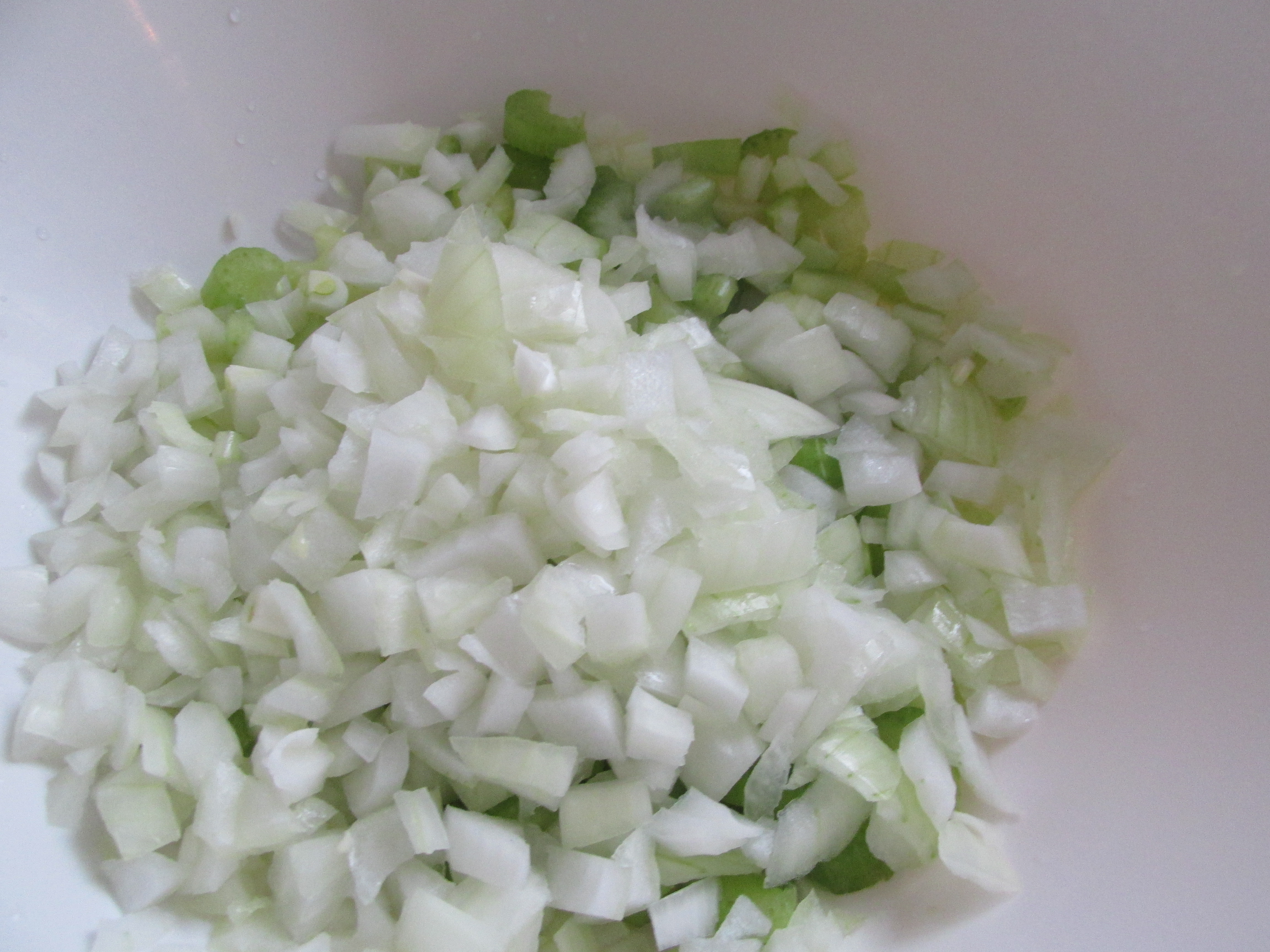
Crumble the baked cornbread into a large mixing bowl. Chop a medium onion and add. Cut four celery stalks into bite-sized pieces and add to the mixture.

img_0084Here’s the tricky part. I use a turkey bag to roast my turkey. Roasting this way usually gives me about 3 cups of juices. Start with about 3 cups of broth from the turkey—if you have that much—and stir. The best dressing is a little moist so it should look a bit runny. If not, add more broth. If it’s still dry after adding all the broth, you can add canned turkey stock or chicken stock. Turkey juices directly from your turkey give it the best flavor.

After this is mixed, add 2 teaspoons of sage or to taste. I usually taste the mixture a couple of times, adding a little at a time to get the perfect amount of sage.

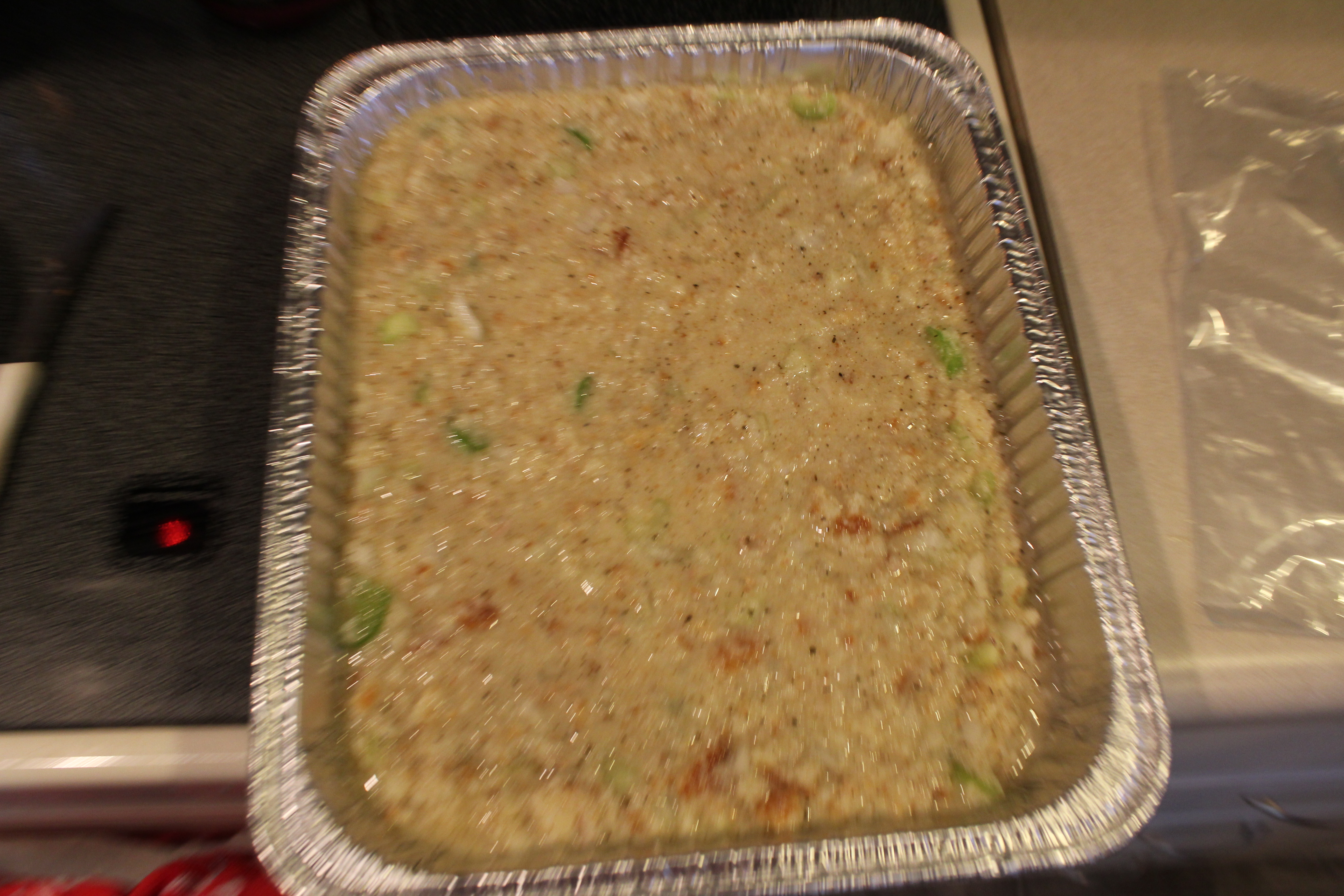
Choose a baking dish larger than the amount of cornbread prepared. For example, if the cornbread fit in a 8×8 pan, bake the dressing in a 13×9 pan. Bake in preheated 425-degree oven for 25-30 minutes or until lightly browned. Serve hot.

Hope your family enjoys this dressing as much as mine does.

-Sandra Merville Hart


Evening Amusements for Old-Fashioned Themed Parties – Part 4

praying-294190_960_720

I wanted to host an old-fashioned theme party for a few friends during the Christmas season. Read  Evening Amusements for Old Fashioned Themed Parties – Part 1 for food ideas. Part 2 explains the Game of Concert. Part 3 shows two games that allow guests to show their creativity.

Today I’m sharing a fun game called “Tip It” or “Hands” that moves quickly.

Tip It or Hands

One person on a team hides a button or a coin in their fisted hand. The object is to fool the opponents and make them lose a team member. If you don’t fool them, the person holding the button is out.

Divide into teams.

One person on each team is designated as the “worker.” The worker chooses whose hand to hide the button in and then calls “hands up.” All members of that team hold up both hands in a fist as if holding the button.

One person from the opposing team sends away all hands he doesn’t think it’s in by touching it and saying “Hands away!” until there are two hands left. Then the player decides which hand holds the button. If he chooses wrong, he’s out of the game. He’s also out of the game if he sends away the hand the holds the button.

Then it is the other team’s turn to hide the button.

The contestants who remain on the winning team earn the prize—or bragging rights.

There was lots of laughter while trying to fool the opposing team.

Next time we will talk about party forfeits. Hope you can join in the fun!

-Sandra Merville Hart

Source

Planche, Frederick D’Arros. Evening amusements for every one; a collection of mirthful games, parlour pastimes, shadow plays, magic, conjuring, card tricks, chemical surprises, fireworks, forfeits, &c., illus. by George Cruikshank and others, Porter and Coates, ca 1880.

Evening Amusements for Old-Fashioned Themed Parties – Part 3

writing-1043622_960_720

I wanted to host an old-fashioned theme party for a few friends during the Christmas season. Read  Evening Amusements for Old Fashioned Themed Parties – Part 1 for food ideas. Part 2 explains the Game of Concert.

Today I’m sharing two fun games. You need only your wit to play these games in a group setting. The games call for guests to think about their answers and also how they will outwit an opponent.

The Game of One Syllable

In this game, players take turns asking the person on their right a question, which can be any number of syllables. Each word of the neighbor’s response must be one syllable; it can be a whole sentence, just every word must be one syllable.

Example: Do you enjoy the winter season?

Answer: Yes, I actually enjoy driving in icy conditions.

Had he stopped at “yes” he would have been fine, but “actually” “enjoy” “driving” “icy” “conditions” get him booted from the game.

If any word of the player’s response contains more than one syllable, that person is out.

The Game of Five Vowels

This game is similar to the Game of One Syllable. The person asks a question to the player on their left and requests the response be given without an “e” (or an a, etc.) Then every word in the response must not contain that vowel.

If the player includes the forbidden vowel, he’s out.

Sound easy? (Hint: Think about asking questions that require an answer using a particular vowel and then forbid that vowel. That sparks everyone’s creativity.)

Guests enjoyed both these games so often played at parties over a century ago.

Next time we will talk about more party games. Hope you can join in the fun!

-Sandra Merville Hart


Source

Planche, Frederick D’Arros. Evening amusements for every one; a collection of mirthful games, parlour pastimes, shadow plays, magic, conjuring, card tricks, chemical surprises, fireworks, forfeits, &c., illus. by George Cruikshank and others, Porter and Coates, ca 1880.


Potato Pudding Recipe

blog-077

I found a recipe for potato pudding in an 1877 cookbook, Buckeye Cookery. I’d never eaten or even heard of this type of pudding and decided to try it.

The recipes in this cookbook generally leave a lot to the imagination, but ingredient measurements were given for this one.

Peel six potatoes, cut into small wedges and then cook them on the stovetop. When they are soft and fork-tender, mash them finely.

Separate 5 eggs and reserve 2 egg whites in another bowl. Beat egg yolks and stir into the potatoes. Add a cup of sugar and ½ cup of butter and stir well.

Beat 3 of the egg whites to a stiff froth. Fold into the potato mixture.

Grate one lemon rind and add this and its lemon juice and stir. Add 2 cups of milk or cream and ½ teaspoon of salt.

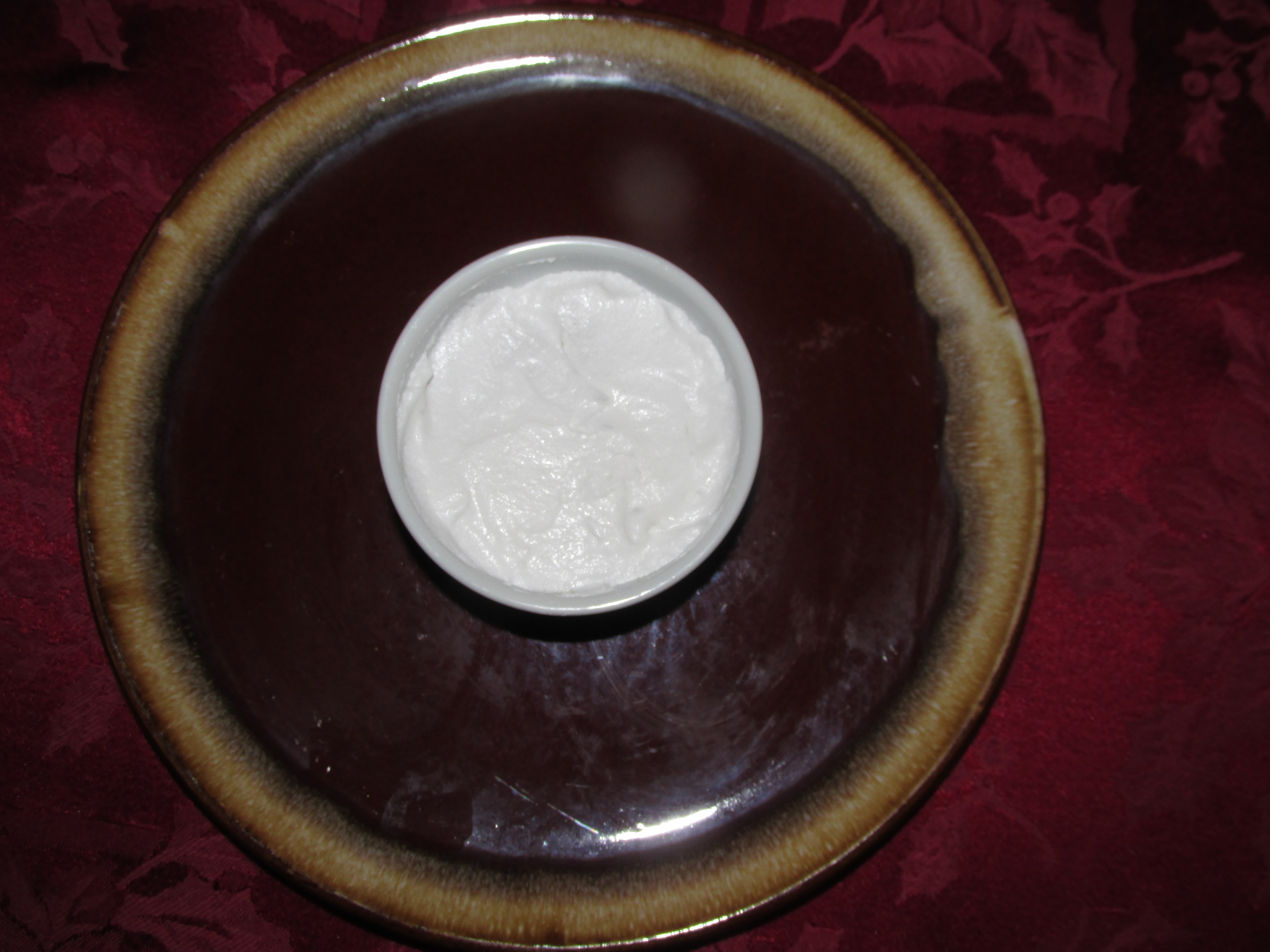
I baked it at 350 degrees for about an hour. Then I whipped the remaining 2 egg whites with 2 tablespoons of sugar until white and fluffy. This was used as icing for the pudding.

blog-069It smelled good but tasted strangely. Lemon and potatoes didn’t get along well together.

I decided to remake this recipe leaving out the lemon altogether. Instead I used cinnamon and nutmeg.

The quantities given made 6 single serving ramekins besides filling a medium baking dish. I chose to cut this down to a third of the quantities suggested.

Using 2 potatoes, 2 eggs, 1/3 cup sugar, 2 tablespoons butter, 2/3 cup milk, ½ teaspoon cinnamon, ¼ teaspoon nutmeg, and ½ teaspoon salt, I omitted the lemon components and followed the recipe above.

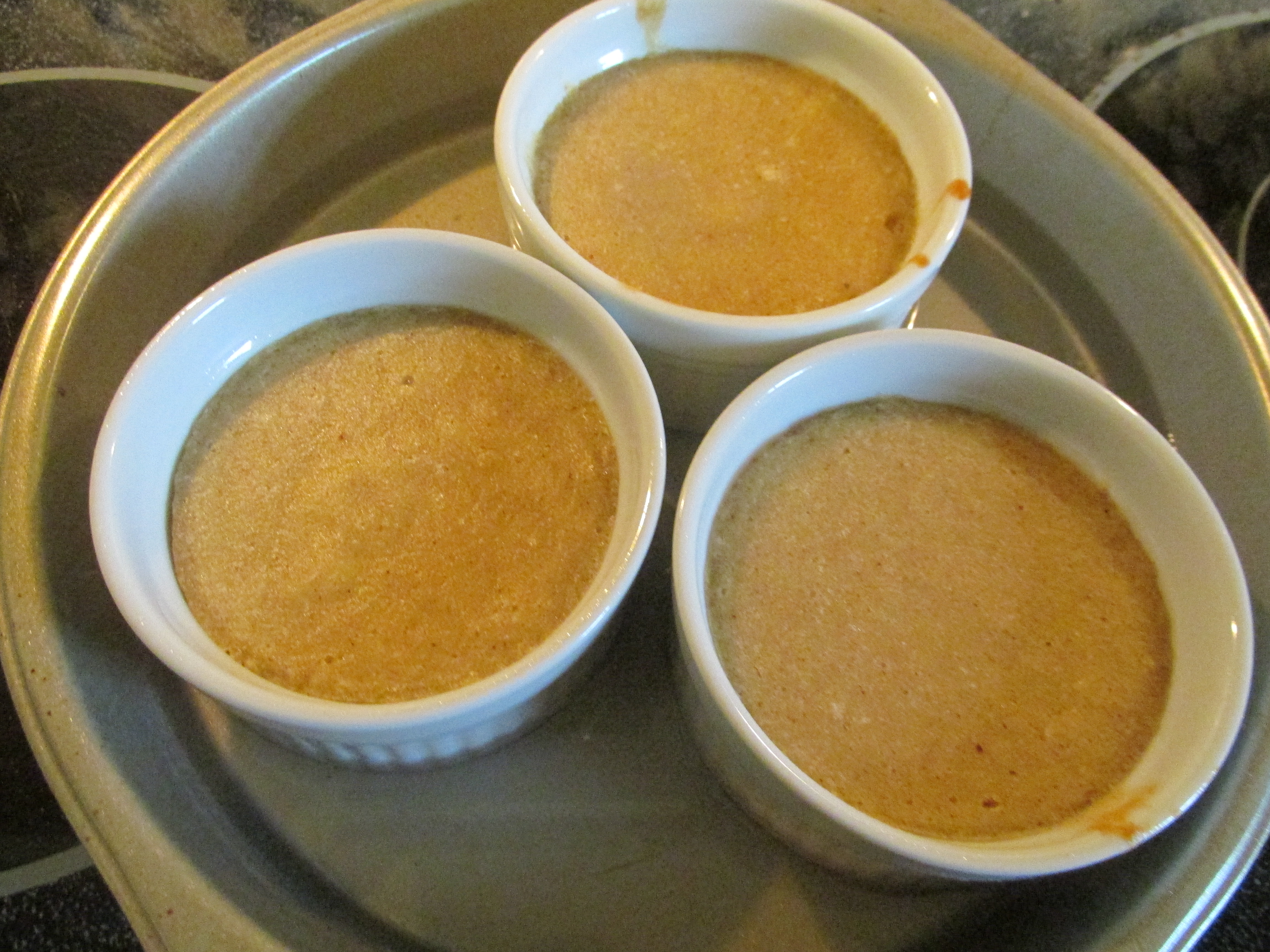
This mixture gave 5 ramekins, which were baked in a larger pan. The ramekins sat in an inch of hot water and baked in a 350-degree oven for 40 minutes. Then I whipped an egg white with a tablespoon of sugar and spread the meringue over the top.

This turned out much better. I refrigerated the pudding. Chilling it improved the flavor.

The original recipe is from 1877 cook, Mrs. Gov. Ingersoll from Connecticut.

-Sandra Merville Hart

Sources

Compiled from Original Recipes. Buckeye Cookery and Practical Housekeeping, Applewood Books, 1877.