Salem Election Cake

img_2422

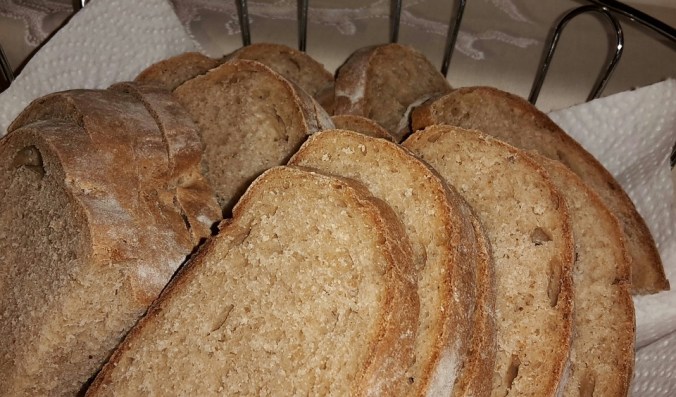
I ran across two recipes for Election Cakes in an 1877 cookbook. Both boasted that the recipes were over 100 years old. A recipe from the Revolutionary War era–what a fun discovery!

Election Day was a festive occasion as early as 1771. Pioneers celebrated the day with parades, balls, religious ceremonies, and food.

Some traveled far to vote. While folks awaited election results, they socialized. The best bakers loved to demonstrate their skills by participating in banquets. Ladies served huge Election Cakes with coffee and cider.

To get an idea of the quantity provided, one recipe called for thirty quarts of flour and fourteen pounds of sugar! Meant to feed a crowd, these cakes originally were a variation of fruitcake and bread.

My cookbook contained two different recipes for these cakes: Salem Election Cake and Old Hartford Election Cake. Wine, brandy, citron, and raisins were a few of the ingredients in the Hartford cake. The Salem recipe looked deceptively simpler so I tried to make this.
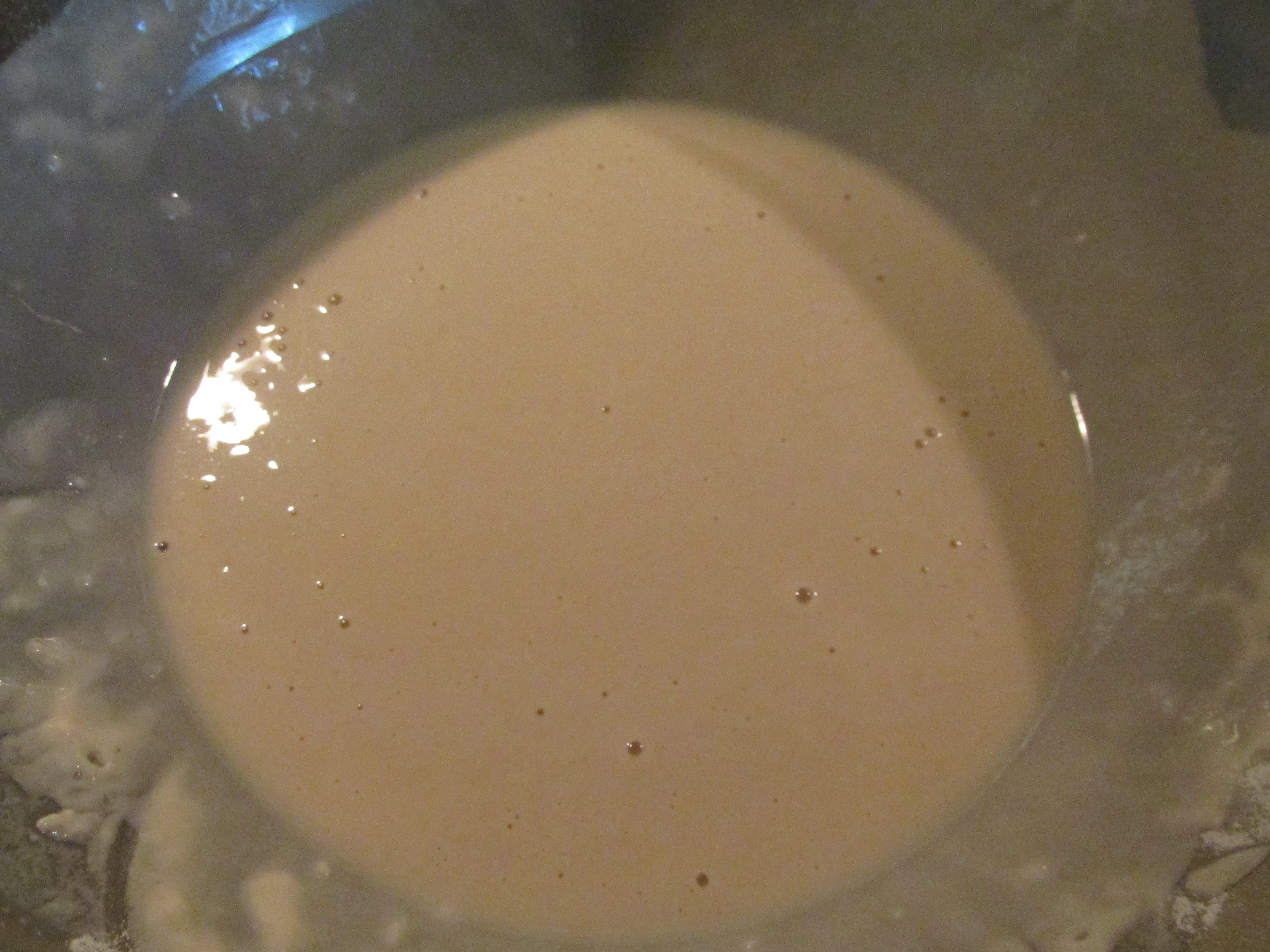
img_2414The original recipe, a simple listing of ingredients without instruction, calls for four pounds of flour—far too much for my needs so I cut that down to two cups.

It also called for a pint of yeast. The Hartford recipe gave measurements for distillery yeast; cooks had to use twice as much of home-brewed yeast. I ended up using far too much for the amount of dough.

My first attempt failed. The second try went better, but the cake failed to rise.
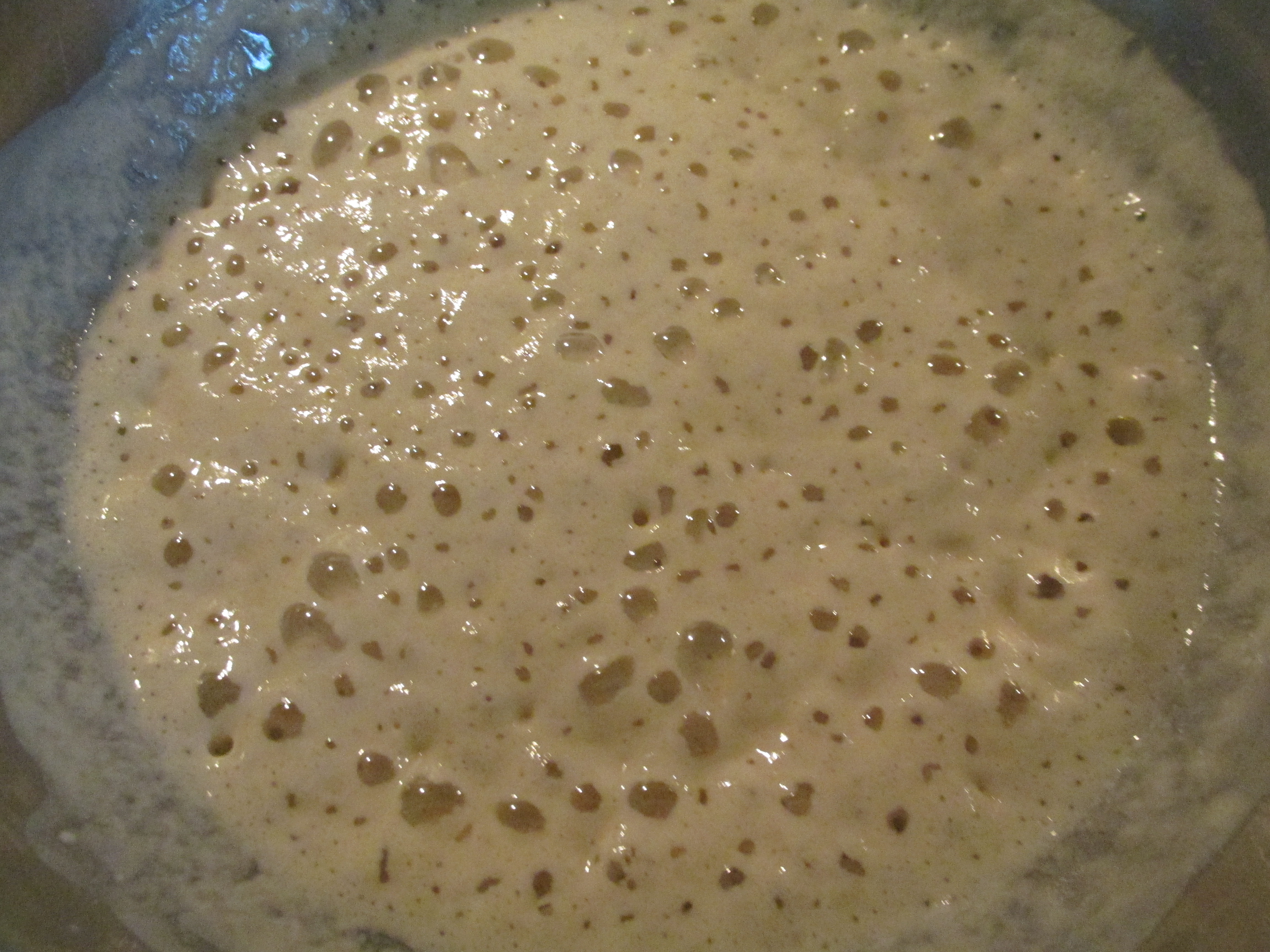
img_2417Then I found a recipe for sponge using our modern yeast on What’s Cooking In America. To ¾ cup warm water, two teaspoons of active dry yeast were added. After stirring, I added ¾ cup all-purpose flour and 1 tablespoon of sugar. This mixture was beaten for 2 minutes. I covered the bowl with plastic wrap and set in a warm place. It was bubbling in about 30 minutes.

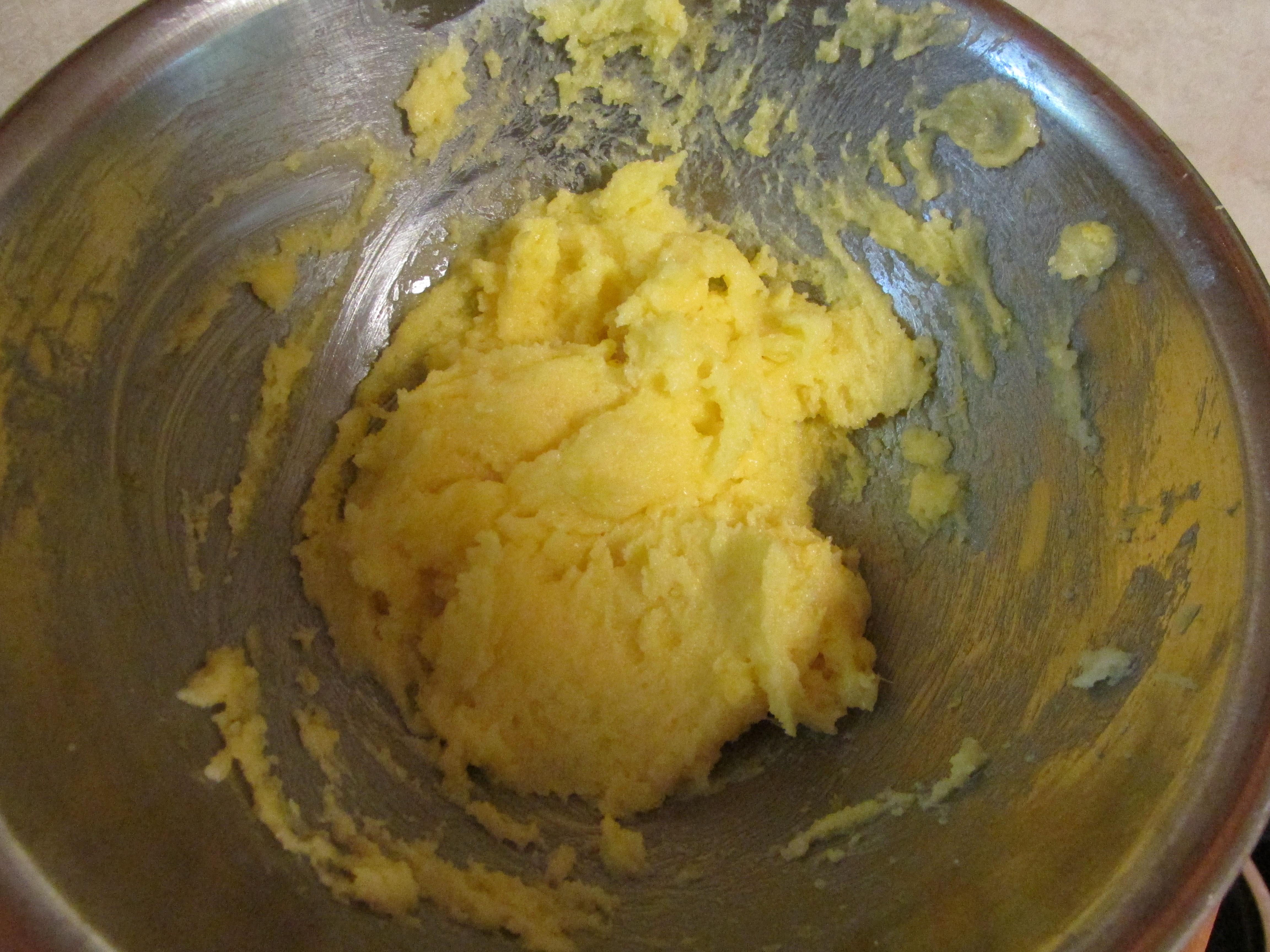
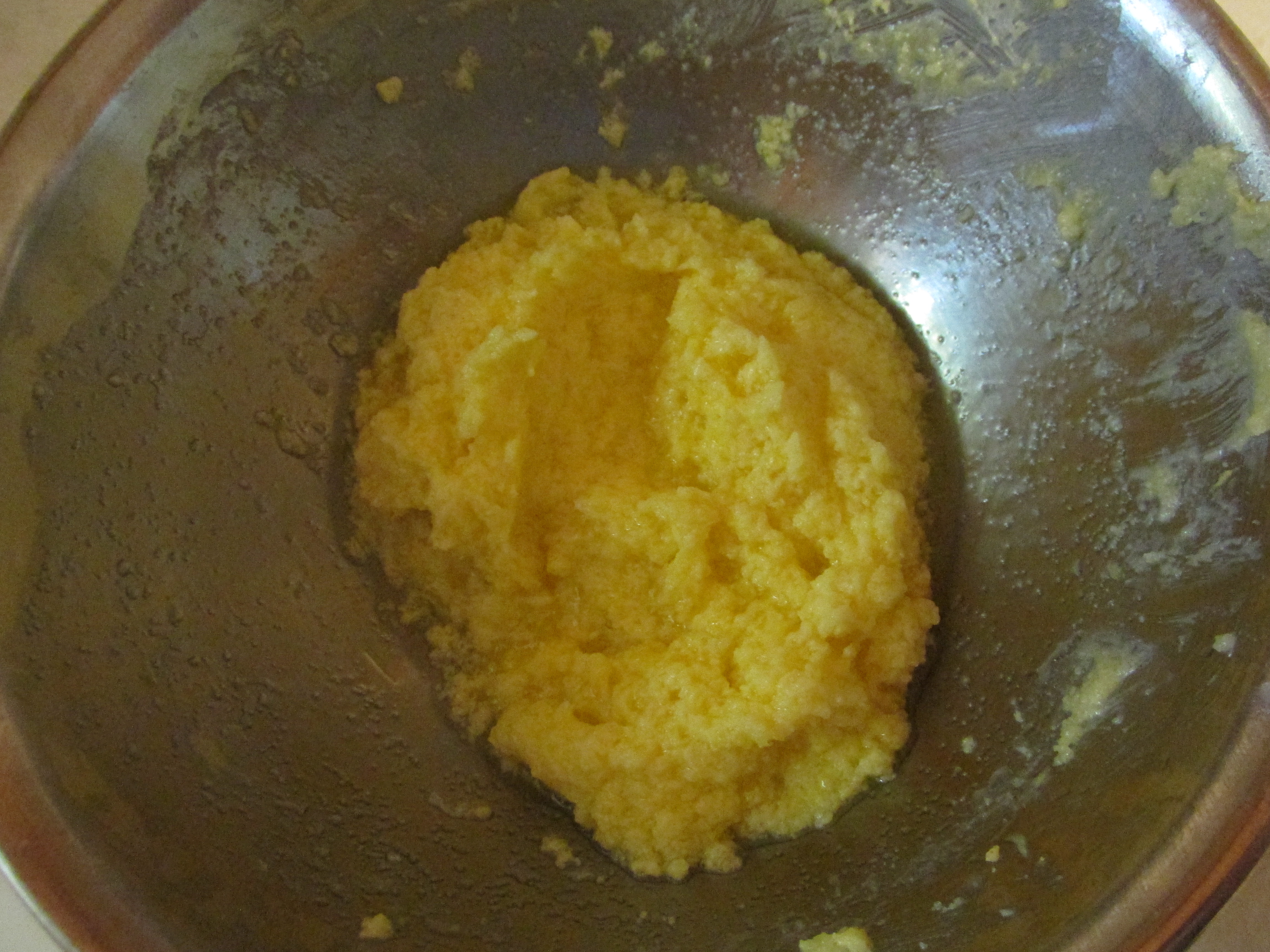
While waiting for the sponge, ¾ cup of sugar was creamed with 4 tablespoons of butter. Two beaten eggs were mixed into the creamed sugar.

The original recipe simply calls for “spice.” This leaves the spices and measurements to the imagination.

In a separate bowl, I combined 2 cups of flour, 2 teaspoons cinnamon, 1 teaspoon nutmeg, ½ teaspoon ground cloves, ½ teaspoon ginger, and 1 teaspoon salt.

Though the cake is described as a fruitcake, there is no mention of adding fruit.

After the sponge reached the bubbling stage, I added it to sugar mixture and stirred it together. Then the dry ingredients were stirred in a little at a time.

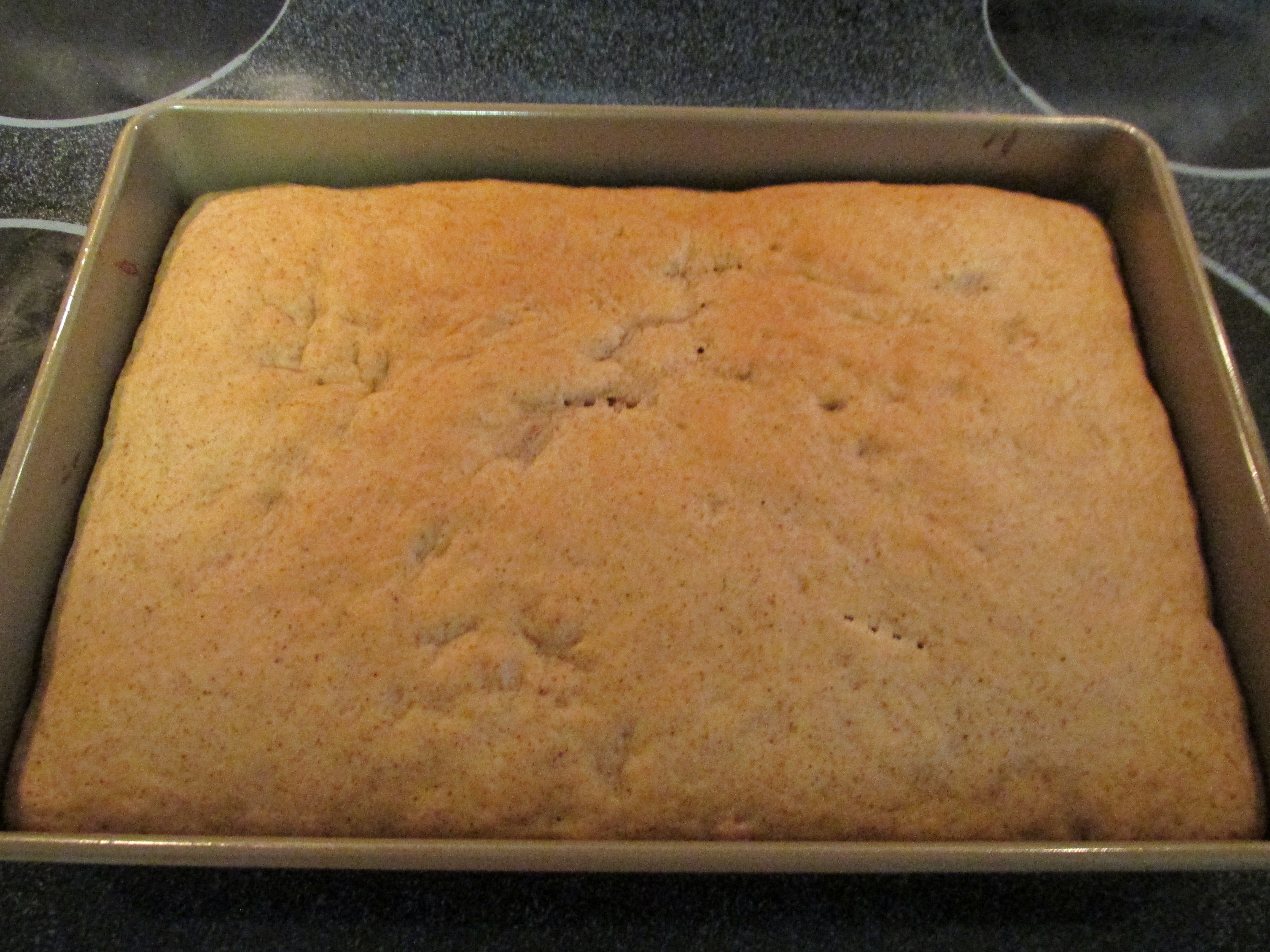
img_2420Place the cake into a pan before the final rise. I used a 13×9 pan. This looked way too large but the cake rises. It was covered with plastic wrap and set on a warm stovetop for three hours. The dough had doubled in size.

The cake baked in a 350-degree oven for twenty minutes. I liked the texture but it wasn’t spicy enough. Plums, raisins, and currants—well floured—were a few of the fruits in some early recipes. Adding one of these may be enough make a more flavorful cake.

Since this is cake/bread, no frosting was suggested in my cookbook. The addition of fruit might be enough.

Election Cakes seem to have gone the way of Election Day parades and balls. The recipe began disappearing from cookbooks around the 1940s.

Enjoy! I’d love to hear if you try this recipe.

-Sandra Merville Hart

Sources

Compiled from Original Recipes. Buckeye Cookery and Practical Housekeeping, Applewood Books, 1877.

“Election Day Cake and History,” What’s Cooking in America, 2016/10/09  https://whatscookingamerica.net/History/Cakes/ElectionCake.htm.

“Salem Dames, Election Cake, and More!” Salem Food Tours, 2016/10/09 http://www.salemfoodtours.com/2012/11/08/salem-dames-election-cake-and-november-news/#.V_rVVeArKM8.

“When Elections were a Piece of Cake,” Connecticuthistory.org, 2016/10/11  http://connecticuthistory.org/when-elections-in-hartford-were-a-piece-of-cake/.
Apple Custard

img_2382

A recipe in an 1877 cookbook for Apple Custard looked delicious. Since I had never made this type of custard, I decided to try it.

Mrs. G.W. Hensel of Quarryville, Pennsylvania, provided this recipe that calls for “mashed stewed apples.”

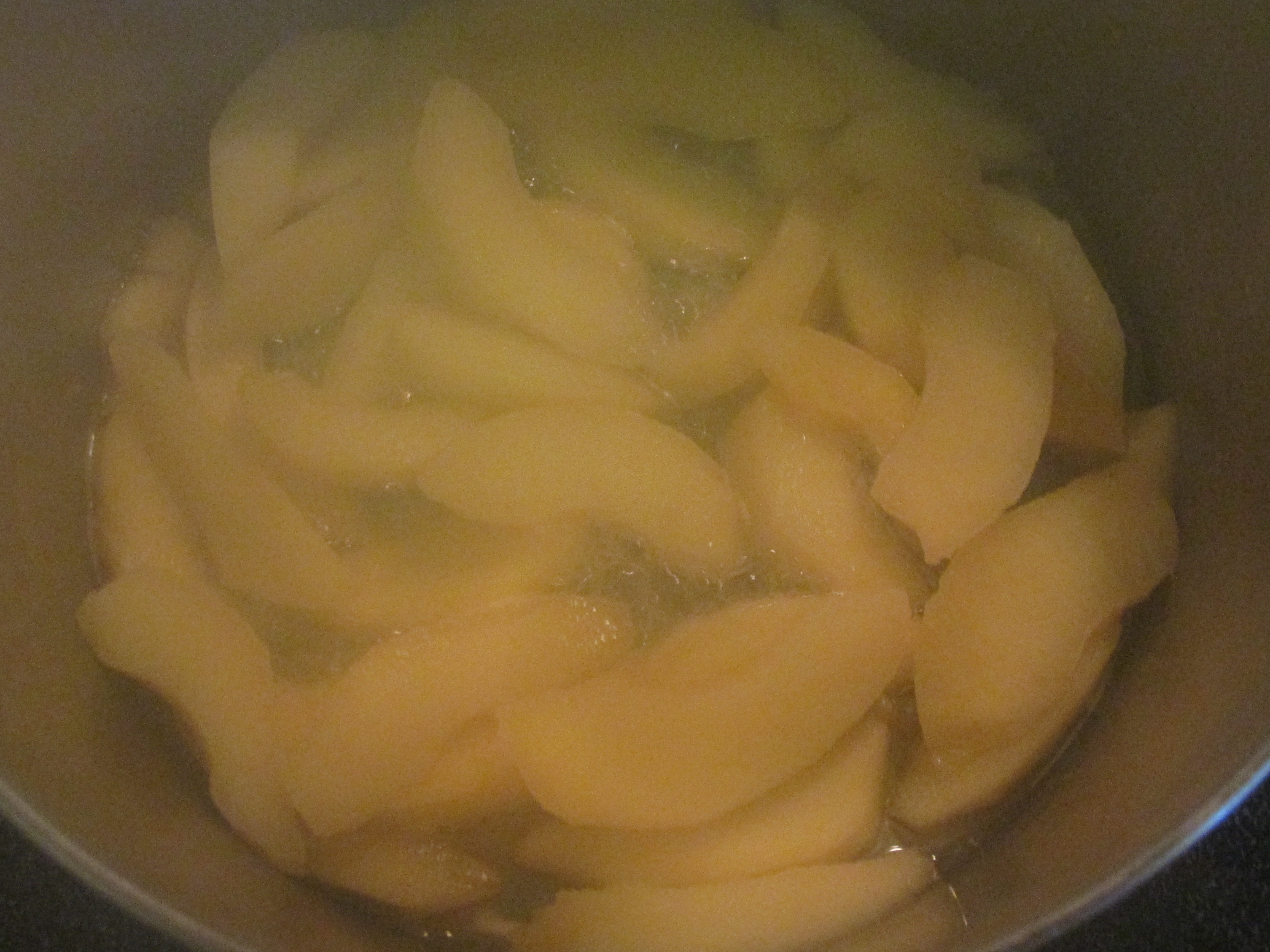
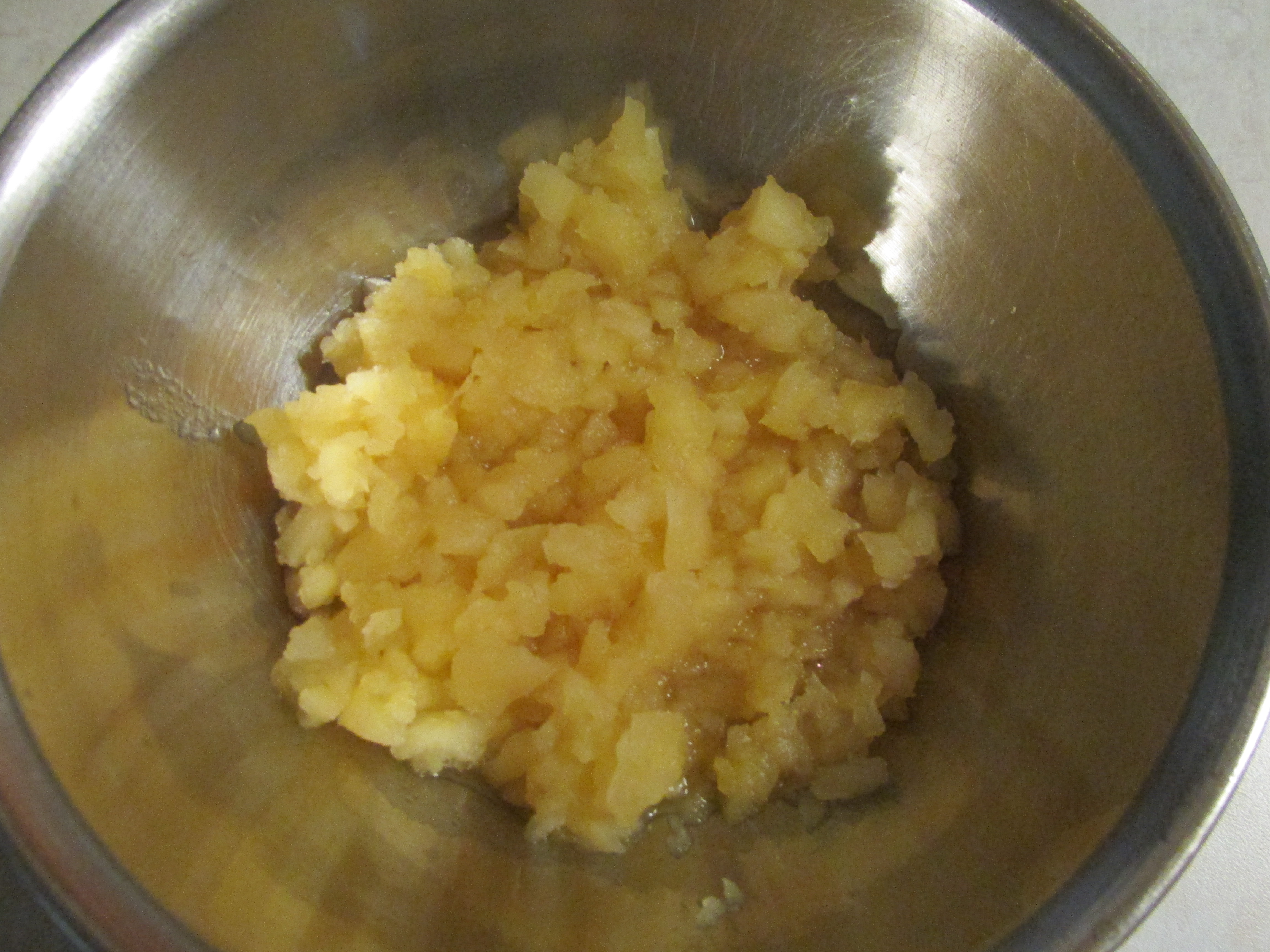
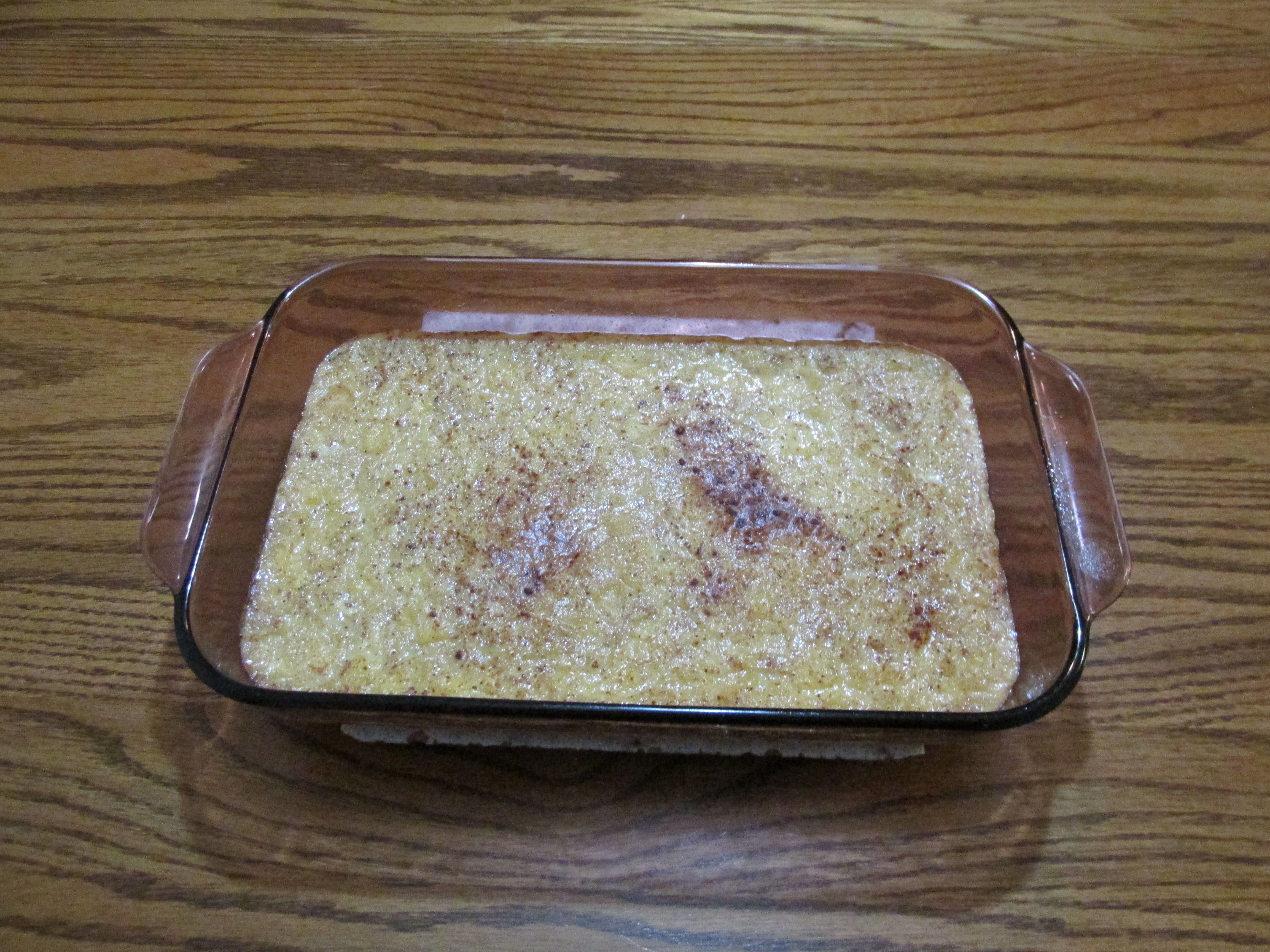
img_2380Eight ounces of apple slices cooked in water over medium heat for about fifty minutes. I replaced water as needed because the apples ran dry a few times. They cooked  until soft enough to mash. I set aside the apples to cool for a few minutes after mashing them.

img_2381Add a half cup of sugar to the apples. Stir in one cup of milk and two beaten eggs. I interpreted a “little nutmeg” as a ½ teaspoon. Though it didn’t call for cinnamon, I added about ¼ teaspoon for a bit of added flavor. Then I sprinkled a little on the top for good measure.

Mrs. Hensel instructed cooks to bake the custard slowly. I set the oven to 300 degrees and hoped that was slow enough.

That temperature seems to work. It was very softly set after 45 minutes of baking. I left the custard in the oven for another 10 minutes when it was a bit firmer. After the custard cooled, I saw that it needed more time in the oven, maybe 30 additional minutes or more.

In addition to a longer baking time, the dessert also needed more apples. Next time I will try twice as many apples to the same ratio of other ingredients to see if the taste and texture improve. This one didn’t work for me.

Good luck! I’d love to hear if you try this recipe.

-Sandra Merville Hart

Sources

Compiled from Original Recipes. Buckeye Cookery and Practical Housekeeping, Applewood Books, 1877.


Lemon Butter

img_2376

A recipe in an 1877 cookbook for Apple Butter called for a barrel of new cider and three bushels of apples. At a loss to make that a workable size for a family, I kept searching and saw a recipe for Lemon Butter.

To my knowledge, I’ve never tasted this or even seen this sold in stores.

I combined ½ cup of sugar with two egg yolks. The zest and juice of one lemon was added to this mixture and placed in a kettle.

I used 4 tablespoons of butter for an amount “the size of two eggs.” In reality, it was probably twice that amount but we modern cooks love to cut down on fat and calories. I hoped it was enough.

img_2364The unmelted butter was added to the kettle. The instructions were to boil the mixture ten minutes so I set the burner to a medium high heat.

Bad idea.

Even with constant stirring, what started out as a pleasant yellow batter quickly scorched. After five minutes of boiling, the contents of the pan more resembled chocolate pudding. Needless to say, the whole mess ended up in the garbage with the pan soaking in the sink.

img_2368My second try saw a couple of changes. The ratio of ingredients was kept exactly the same. This time I creamed the sugar and butter together first. Beaten egg yolks were then added. After that, the zest and juice of one lemon were stirred into the mixture.

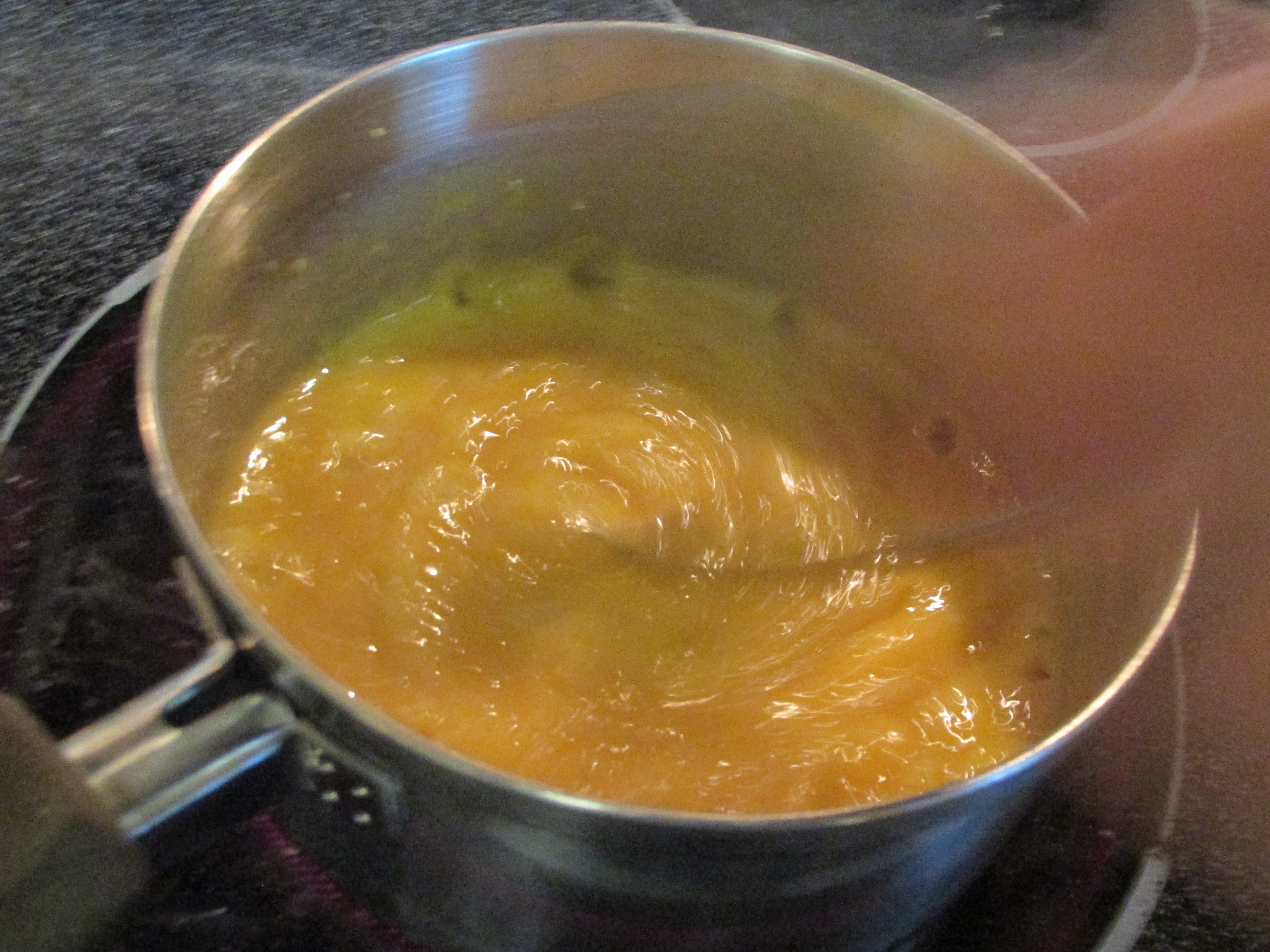
The burner started on a medium heat until the lemon butter began to bubble gently. Stirring constantly, the heat was lowered to maintain gentle simmering every time it started boiling harder. I cooked it for five minutes.

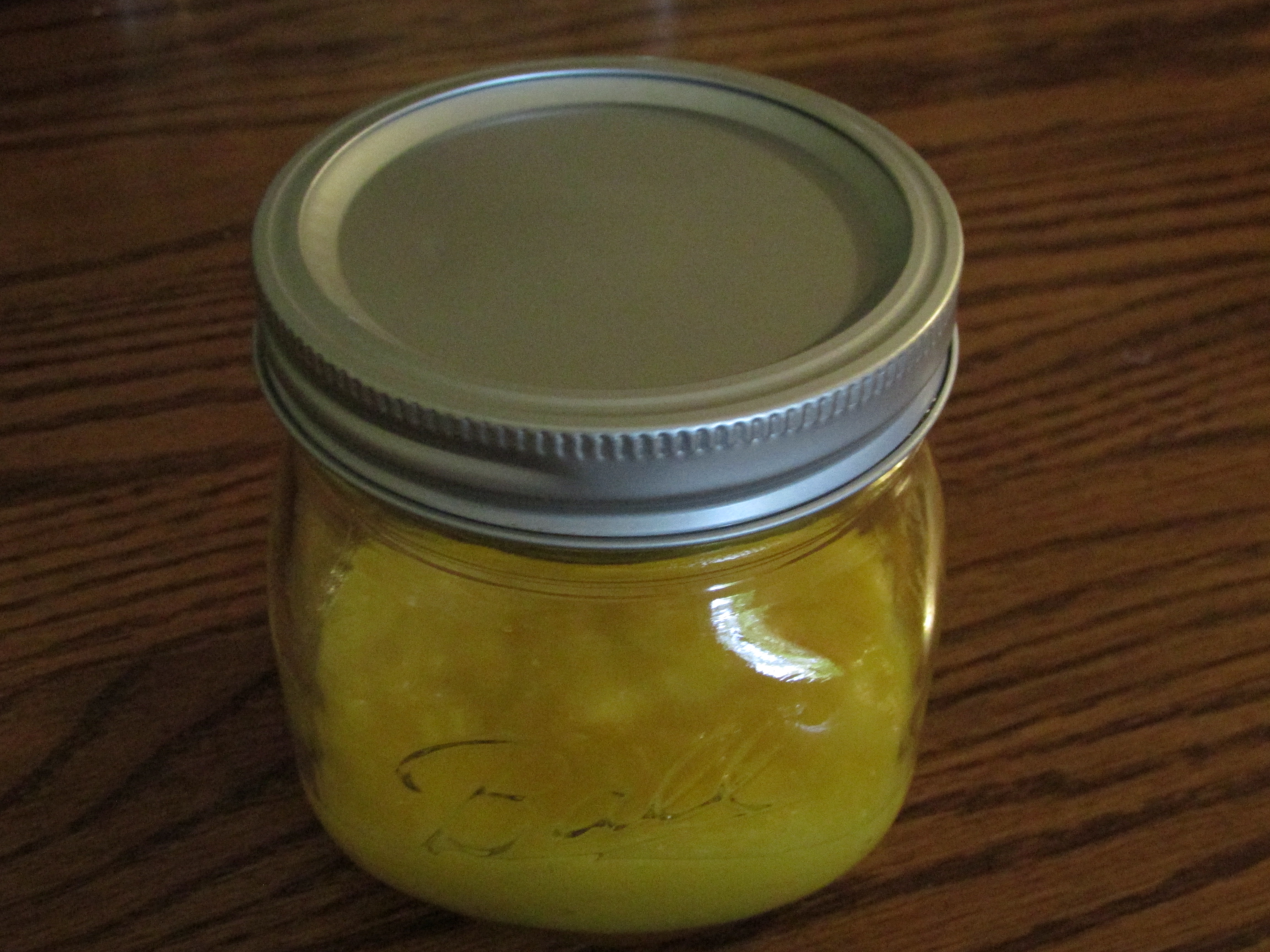
The butter didn’t scorch this time. I poured it into a pint-sized jar as it apparently keeps a long time. As you can see from the photo, it did not make a large quantity. The recipe suggested using lemon butter in tarts; this quantity would make one small tart.

img_2371Though the thick butter tastes delicious, I will double the butter added to the recipe the next time I make it. The lemon juice enhances the flavor yet loosens the batter. The extra butter should improve the consistency.

Good luck! I’d love to hear if you try this recipe.

-Sandra Merville Hart

Sources

Compiled from Original Recipes. Buckeye Cookery and Practical Housekeeping, Applewood Books, 1877.


Early American Recipe for Boston Brown Bread

bread-1206636_960_720

The recipe below is an example of measurements in the 1800s.

Notice that a heaping coffee-cup of corn meal isn’t an exact measurement to modern cooks. Civil War soldiers cooked their supper in tin coffee cups, so it had to be much larger than our normal eight-ounce cup. Knowing soldiers used these cups as a cooking pots makes it likely they held over sixteen ounces.

You may also notice that two cups of sweet milk are required, not two coffee-cups of milk, so they used different measurements that cooks of the time understood.

1 heaping coffee-cup of corn meal

1 heaping coffee-cup of rye meal (rye flour may be used)

1 heaping coffee-cup of Graham meal

2 cups molasses

2 cups sweet milk

1 cup sour milk

1 dessert-spoon soda

1 tea-spoon salt

Sift the three types of meal together well. Add the rest of the ingredients and beat thoroughly. The mixture may appear too thin, but it isn’t. Pour the mixture immediately into a tin form that allows room for the bread to swell and place it in a kettle of cold water. Boil for 4 hours. (In the late 1800s, some homes had cook stoves. Others still cooked meals in the fireplace.)

Don’t allow the water to boil over the tin form and make sure to replenish the water as it boils away.

After the bread has boiled, remove the lid and set it in an open oven for a few moments to dry the top.

Serve it warm with Thanksgiving turkey. The bread may also be used as a pudding and served with a sauce made of thick sour cream, sweetened well, and seasoned with nutmeg.

This recipe calls for Graham meal, cornmeal, and rye flour. Graham flour, a coarse whole wheat flour, is available today, but it’s not clear if Graham meal is the same product. 

Modern recipes often call for flour, whole wheat flour, and cornmeal. Other Brown Bread bakers use whole wheat flour, rye flour, and cornmeal.  

I haven’t tried this recipe yet. I’m not sure what to use for a tin form these days. Some village museums may sell this type of pan. Internet searches suggest springform pans.

Recipes from the 1800s and earlier were written in paragraph form, making them much harder for today’s cooks to decipher, but it’s a lot of fun to try. 

Your comments are welcome!

This recipe is from Mrs. H.S. Stevens, Minneapolis, Minnesota in the referenced source.

-Sandra Merville Hart


Source

Compiled from Original Recipes. Buckeye Cookery and Practical Housekeeping, Applewood Books, 2011.


Welcome to Historical Nibbles!

cooking-ingredients-32089_960_720

I’m so glad you stopped in at Historical Nibbles!

Old recipes are an example of what you’ll find on Historical Nibbles. I own several books of recipes from days gone by that I’ve long desired to try, but have you ever looked at an old recipe? A small teacup of flour or a large spoonful of sugar are not accurate measurements to this modern girl. There’s a lot of trial and error in my future that I’ll share with you.


 I’d also love to learn how to cook over an open fire. My current level of expertise in outdoor cooking is roasting hot dogs or wrapping potatoes with aluminum foil and coaxing them under the embers. There’s a lot to learn.

I’m an author of historical romances so research is a big part of my writing. Fun facts learned during novel research will be shared in the In Our Past articles.

American history is my favorite so watch for tidbits from our history in that same section.

ink-316909_960_720As an author, I love to curl up with a good book at the end of the day. I will share reviews of books I’ve enjoyed.

Please join me each week as we take Historical Nibbles together!

-Sandra Merville Hart