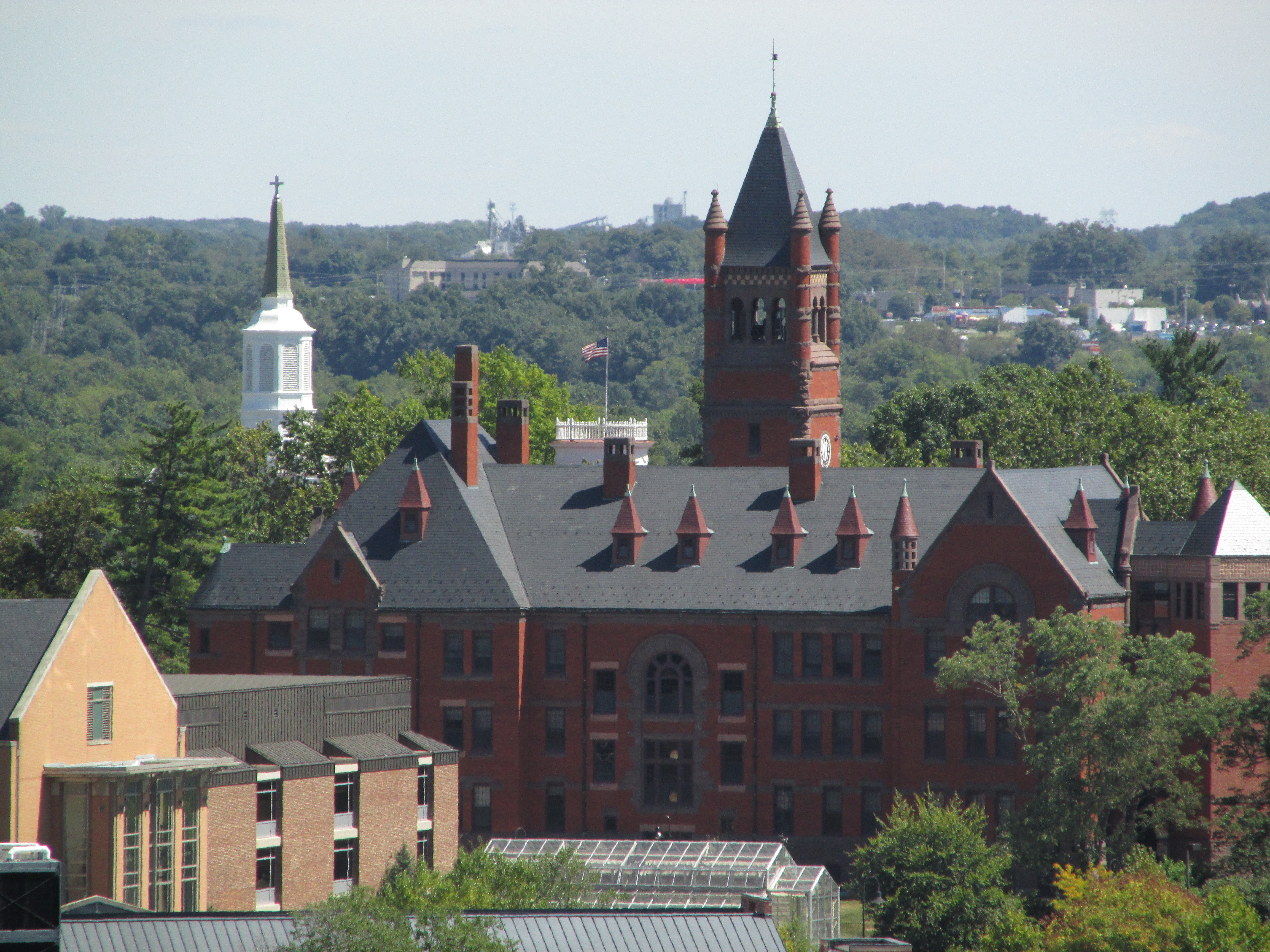
View from Lutheran Seminary cupola, Gettysburg.
By mid-June of 1863, Gettysburg citizens had heard so many rumors of Confederates approaching their town since the war started that many wondered about the truth.
This time it was true. Multiple rumors over the war’s duration were about to become reality.
The Rebels were coming.
Pennsylvania Governor Andrew Curtain’s earlier warning about a possible attack prompted the formation of the 26th Pennsylvania Emergency Infantry Regiment, which some local men joined. They arrived in Gettysburg amidst cheers the morning of June 26, 1863. After townspeople fed them, they marched west toward Cashtown.
Soldiers from Confederate General Jubal Early’s Division captured forty of them. The rest of the 26th Pennsylvania troops fled. They reached Gettysburg with warnings of approaching Confederates and then left town.
Stores closed. Schools dismissed early. Local officials had already left town. Businesses had sent their merchandise away. The banks had sent its money out of Gettysburg.
The 35th Virginia Cavalry arrived about 3 pm. Shouting, cursing, and shooting their guns in the air, they galloped toward the town square. About a half hour later, Early marched in with about 3,000 Georgian troops from General John B. Gordon’s Brigade.
Early’s requisition for supplies to Gettysburg couldn’t be met. David Kendlehart, president of the borough council, told General Early that the stores were open for Confederates to take supplies.
His men, being ordered not to loot, paid Confederate currency and script, which was worthless to Northerners. They searched citizens’ homes for horses, clothes, food, and supplies.
Many black residents had left town. Some who didn’t leave were captured. A few escaped. Townspeople hid others until the soldiers left.
The first Union soldier killed in Gettysburg was George Sandoe, an Adams County resident. He was with a small group of soldiers near Gettysburg when the Southern soldiers approached. He tried to escape with the others and was shot and killed about 2 miles from his home.
With a Confederate flag now waving in the town square, known as town diamond, their regimental bands serenaded the Northerners with Southern tunes like “Dixie,” “Hurrah for the Bonnie Blue Flag,” and “The Stars and Bars.” Some soldiers stayed in the courthouse that night.
The town was under Confederate control.
Sallie Myers Stewart wrote in her diary that she and her father had a conversation with some Confederate soldiers. They stood at their door on West High Street and talked of the war and Southern rights for two hours. She found the men reasonable and interesting.
CONFEDERATES PASS THROUGH GETTYSBURG was the heading on the June 27th edition of Star and Sentinel. They reported that, during the night, the Confederates moved 17 railroad cars about a mile from town and burned them. They cut telegraph wires and tore up tracks. They burned the Rock Creek bridge. They paroled 36 prisoners from the 26th Pennsylvania. By 8 am on June 27th, the Southerners had marched toward York.
That morning, Gettysburg citizens must have heaved a sigh of relief.
But the worst was still on the horizon.
-Sandra Merville Hart
Sources
Creighton, Margaret S. The Colors of Courage: Gettysburg’s Forgotten History, Basic Books, 2005.
“Jubal Early,” Wikipedia.com, 2019/06/14 https://en.wikipedia.org/wiki/Jubal_Early.
Sheldon, George. When the Smoke Cleared at Gettysburg: The Tragic Aftermath of the Bloodiest Battle of the Civil War, Cumberland House, 2003.
Slade, Jim & Alexander, John. Firestorm at Gettysburg, Schiffler Military/Aviation History, 1998.
Thomas, Sarah Sites. The Ties of the Past: The Gettysburg Diaries of Salome Myers Stewart 1854-1922, Thomas Publications, 1996.
 Sandra Merville Hart