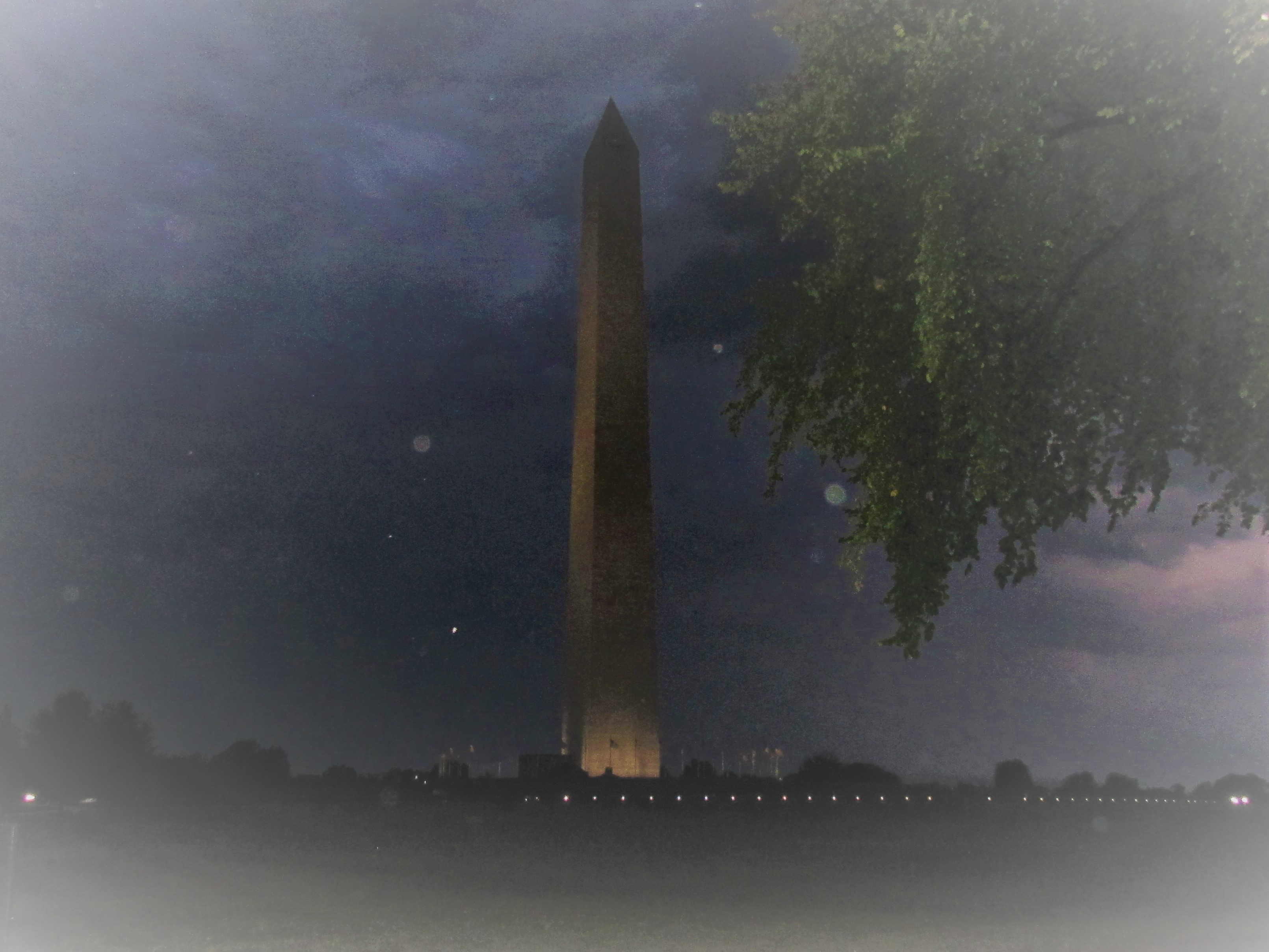
On a recent trip to Washington, DC, I visited the National Mall late on a rainy evening. Though I didn’t go into the Washington Monument, the view at night was spectacular.
Early Americans wanted to build a monument to honor George Washington. Not only had he defeated the British as commander of the Continental Army, he paved the way for future leaders by serving as our first president.
The Washington National Monument Society began asking for donations to the monument in 1833. This private organization collected money and chose Robert Mills’ design in 1845.
On July 4, 1848, construction began with a ceremony to lay the cornerstone. President James K. Polk attended with about 20,000 citizens, including three future presidents—Buchanan, Lincoln, and Johnson.
Problems arose when the Society was taken over by the Know-Nothing Party. Building the monument stopped when the money ran out in 1854.
The nation had more pressing concerns with the Civil War looming and the monument stood idle, about a third completed.
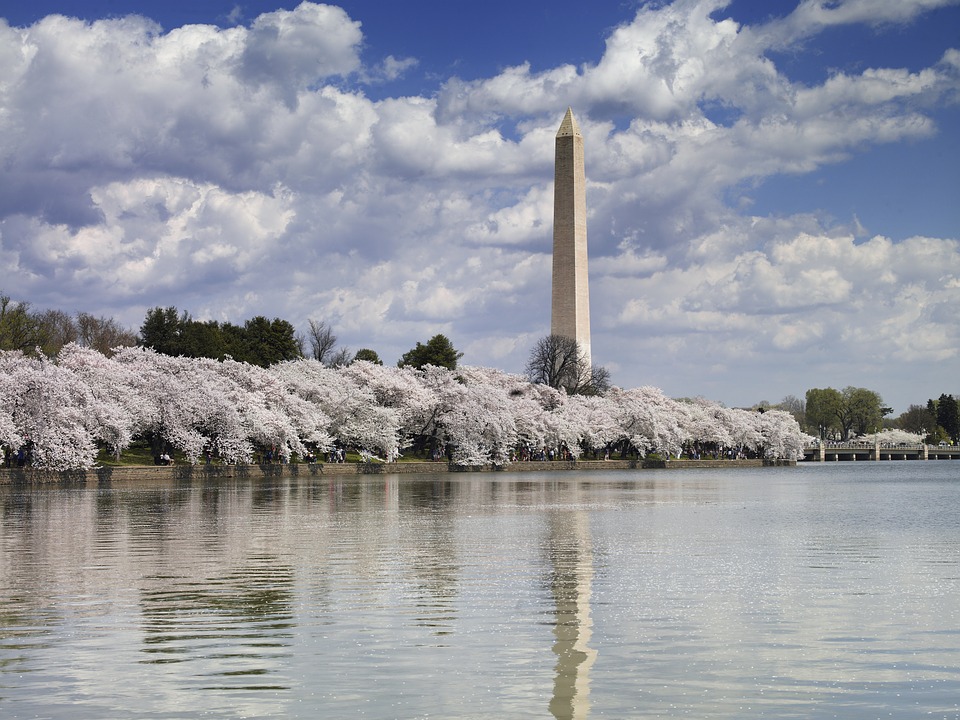 Congress took over the funding of the monument in 1876. After this, Lt. Col. Thomas Lincoln Casey led the Army Corps of Engineers to complete the monument with a few changes to Mills’ original design. He did away with a ring of columns around the monument and adjusted the height from 600 feet to 555 feet. One of the inscriptions on the east face of the aluminum cap topping the Washington Monument is Laus Deo, Latin for “Praise be to God.”
Citizens, groups, cities, states, and other countries donated commemorative stones that are inset into the walls of the building dedicated on February 21, 1885. It was the tallest building in the world at its dedication.
Another fun fact about the monument is that the original elevator took 10-12 minutes to ascend to the top.
-Sandra Merville Hart
Sources
“Guide to Visiting the Soon-to-be Reopened Washington Monument,” Washington DC, 2019/09/05 https://washington.org/dc-guide-to/washington-monument.
“Washington Monument,” NPS, 2019/09/05 https://www.nps.gov/wamo/index.htm.

