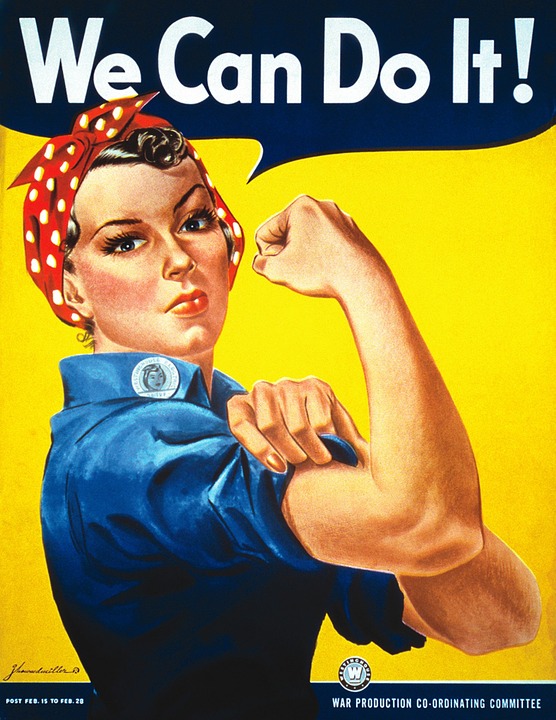
The United States was in a war-time economy during World War II. With many of our men serving our country in Europe and the South Pacific, our women went to work.
There were many items families did without in a wartime economy. Buying the special gift at Christmas was especially difficult.
Rubber was in demand so tires for cars were scarce. Common gifts for children like basketballs, volleyballs, and tennis shoes were unlikely to be under the tree.
Most Americans were limited to four gallons of gas a week, so they didn’t make unnecessary trips. If grandparents and other relatives did not live nearby, you might not see them often.
The local ration board had to issue a written certificate to buy a bicycle.
Metal was needed for tanks, airplanes, and battleships. Citizens couldn’t buy cars, pots and pans, strollers, toy trains, and alarm clocks.
Long distance phone calls were another limitation for Americans, who were encouraged to keep the phone lines open for the soldiers.
A common practice before the war was to purchase goods on account—charging them. During the war, bills were required to be paid within two months. If the bill wasn’t paid on time, the account was frozen.
Popular gifts during the war were ration stamps, which enabled folks to buy particular items. Hats, socks, mittens, and household goods were much-appreciated gifts. Book sales soared. Board games, perfume, and radios were other common presents at Christmas.
 Of course, families missed their husbands, fathers, brothers, and uncles serving across the sea. All other hardships dimmed in comparison.
-Sandra Merville Hart
Sources
Waggoner, Susan. It’s A Wonderful Christmas, Stewart, Tabori & Chang, 2004.
 Sandra Merville Hart