Revolutionary War: Washington Battles Supply Shortage at Valley Forge

The winter of 1777-78 at Valley Forge was rainy and moderate rather than snowy and cold, yet General George Washington’s colonial soldiers still suffered.

They were hungry. Provision shortages prompted Washington to write to the President of Congress, Henry Laurens, three days after their arrival at Valley Forge. His letter, dated December 22, 1777, reported alarming deficiencies in food supplies that, unless solved, must dissolve the army.

Incompetence in the Commissary and Quartermaster Department were partly to blame, though the practice of Purchase Commissaries working on percentages encouraged dishonesty.

William Buchanan served as Commissary General that winter. Washington asked Buchanan to rise to the challenge in a December 28th letter. He asked that at least a 30-day supply be stored near camp. Buchanan’s response wasn’t effective.

Nearby farmers, knowing the army’s great need, charged high prices. Local government passed legislation to fix prices to control this problem.

To supplement the food supply, Washington sent soldiers out to forage.

Members of the Continental Congress visited Valley Forge in mid-January. Washington reported the serious shortage.

In early February, Washington appealed to state governments for aid, who responded by sending droves of cattle to Valley Forge in March. One drove was captured by British soldiers.

The March 2nd appointment of Major General Nathanael Greene to Quartermaster General greatly improved the whole supply system along with the help of a new Commissary General, Colonel Jeremiah Wadsworth.

Greene and Wadsworth worked well together. Their previous commissary experience was a refreshing change and helped turn a bad situation around at Valley Forge.

-Sandra Merville Hart


Sources

“Provision Shortages at Valley Forge,” UShistory.org, 2018/03/20 http://www.ushistory.org/valleyforge/history/provisions.html.


“Ten Facts about Washington and the Revolutionary War,” George Washington’s Mount Vernon, 2018/03/11 http://www.mountvernon.org/george-washington/the-revolutionary-war/ten-facts-about-the-revolutionary-war/.

Revolutionary War: The Fate of Unborn Millions

When the Continental Army drove British troops out of Boston, the English soldiers headed to New York City.

General George Washington knew the importance of the city. He told his troops that “the fate of unborn millions” depended on their courage and on God.

Over the next few weeks, more British troops arrived in New York as the colonial soldiers prepared for battle. The British, under the command of Lieutenant General William Howe, attacked on August 27, 1776. The Continental soldiers fought bravely but were losing the fight.

A heavy storm halted the fighting the next day. It continued until the afternoon of August 29th. Howe decided to postpone the attack for the next day. Washington decided to evacuate while he could. The storm had left behind a thick fog.

Washington, at noon, ordered the quartermaster to impress boats with sails or oars. He needed them by dark.

Oars were wrapped with cloths to muffle the sound. Soldiers loaded horses, supplies, cannons, and ammunition as silently as possible for the first river crossing. Soldiers from a Massachusetts regiment—peacetime fishermen and sailors—served as boat crews.

In the misty fog, the wounded soldiers were transported next and then the rest of the Continental soldiers began to fill the rowboats, canoes, and barges.

Under General Washington’s orders, rearguard kept fires burning to keep the British army from detecting their retreat.

The last troops crossed safely at 6 am.

They had done it. Washington’s plan saved around 9,000 soldiers and most of their horses and supplies. They had slipped away without the enemy’s knowledge.

Even in defeat, Washington proved to be skillful leader.

-Sandra Merville Hart

Sources

Goldstein, Norman. “Escape from New York,” HistoryNet, 2018/03/11 http://www.historynet.com/escape-new-york.htm.

“Ten Facts about Washington and the Revolutionary War,” George Washington’s Mount Vernon, 2018/03/11 http://www.mountvernon.org/george-washington/the-revolutionary-war/ten-facts-about-the-revolutionary-war/.

 

Revolutionary War: Washington Fights a Smallpox Epidemic

General George Washington had a problem—besides his British enemy. This time it was a silent killer—a disease known as smallpox.

Washington was no stranger to the disease. While in Barbados in November, 1751, he’d suffered through a bout with the disease. After he recovered, he was immune to smallpox.

Variola—the smallpox virus—was brought in by British and German soldiers. The virus caused about 17% of deaths in the Continental Army. The disease also scared off potential recruits.

The practice of inoculations was widespread in Europe. Fearing contamination from the inoculation process, the Continental Congress prohibited army surgeons from doing them. Besides, soldiers would be too ill to fight for about a month after receiving a less-potent form of smallpox.

Yet soldiers were dying. Washington had to do something.

On January 6, 1777, General Washington ordered Dr. William Shippen, Jr. to inoculate all soldiers that came through Philadelphia. He wrote that he feared the disease more than “the Sword of the Enemy.”

Washington then ordered a mass inoculation on February 5, 1777. Though he did this in secret so the enemy wouldn’t know that his soldiers were incapacitated for a time, he did inform Congress of his decision.

Some reports state that deaths from smallpox dropped to 1% in the Continental Army. Isolated infections occurred in the southern campaign but were not the overwhelming problem as had occurred early in the war.

Washington’s decisive actions had saved the army.

-Sandra Merville Hart

Sources

“George Washington and the First Mass Military Inoculation,” The Library of Congress, 2018/03/11 https://www.loc.gov/rr/scitech/GW&smallpoxinoculation.html.

“Ten Facts about Washington and the Revolutionary War,” George Washington’s Mount Vernon, 2018/03/11 http://www.mountvernon.org/george-washington/the-revolutionary-war/ten-facts-about-the-revolutionary-war/.

Thompson, Mary V. “Smallpox,” George Washington’s Mount Vernon, 2018/03/11 http://www.mountvernon.org/digital-encyclopedia/article/smallpox/.


Revolutionary War: Battle of Blue Licks

Groups of militiamen came to the aid of Bryan’s Station, Kentucky, upon learning of an attack by British and Indian forces. The Revolutionary War had ended the year before, yet fighting in the frontiers continued.

Lt. Col. Stephen Trigg arrived with 130 men and Lt. Col. Daniel Boone brought around 45 men. They knew Colonel Benjamin Logan was bringing 400 men, but Colonel John Todd, went against fellow officer, Major McGary’s advice, and decided not to wait for them.

These troops, known as Long Knives, pursued the British and Indian forces under British commander William Caldwell’s leadership.

When in retreat, Native Americans hid their trails. Yet these tracks were easily followed, alarming Daniel Boone, who warned his fellow officers of a trap. They dismissed his advice.

Two days later on August 19, 1782, militiamen approached Upper Blue Licks and saw 2 warriors on a hilltop over the Licking River. Boone warned that the crest of the hill—which he knew well—was large enough to hide the retreating army. He advised his fellow officers to wait for Logan’s reinforcements.

Colonel Todd agreed.

Major McGary mounted his horse. Yelling, “Them that ain’t cowards, follow me,” he splashed into the Licking River.

The men followed and then formed into 3 columns on the other side of the river. They climbed the hill on foot. When Todd’s men reached the crest, warriors attacked.

McGary galloped over to Boone with news of a retreat. By then, there was hand-to-hand combat beside the river—where the horses waited.

Boone’s column was now under attack. With men falling around him, he ordered his troops into the dense woods to recross the Licking River further downstream. Boone stayed behind to cover them and ordered his son, Israel, to run.

Israel refused. While stopping to shoot at the enemy, he was shot in the neck. Daniel realized his son was dying. He carried him to a cave before mounting a horse and leading his men across the river.

The militiamen lost about 70 men in a battle that lasted minutes. Kentucky lost prominent leaders when Todd and Trigg both died in battle.

Daniel Boone later called Israel’s death his hardest blow.

-Sandra Merville Hart

Sources

Graves, James. “Battle of Blue Licks,” HistoryNet, 2018/02/25 http://www.historynet.com/battle-of-blue-licks.htm.

“Blue Licks Battlefield History,” Kentucky State Parks, 2018/02/25 http://parks.ky.gov/parks/resortparks/blue_licks/history.aspx.

“Blue Licks Battlefield State Resort Park Historic Pocket Brochure Text,” Kentucky State Parks, 2018/02/25 http://parks.ky.gov/!userfiles/aParkBrochures/pocket-brochures/BlueLickspktbrochtext.pdf.

Revolutionary War: Bryan’s Station, Kentucky

Though the surrender of Lord Charles Cornwallis at Yorktown ended the Revolutionary War in 1781, attacks on frontier outposts continued from Native American tribes led by British commander William Caldwell and Captain Alexander McKee. Sixty  Canadians and 300 Native Americans made up the force.

Another leader of the warrior forces was Simon Girty. He and his brothers, while teenagers, had been captured by the Seneca. Though his goal was to attack Bryan’s Station, Girty arranged a prior attack on Hoy’s Station as a decoy.

Before dawn on August 16, 1782, Caldwell’s forces surrounded a stockade settlement called Bryan’s Station, located on the Elkhorn River. Militiamen (known to tribes as ‘Long Knives’) inside the stockade saw them hiding in the woods and set couriers for reinforcements.

Families inside the stockade needed water, so the Long Knives devised a plan involving the women. The women listened to the plan, prayed together, and then gathered water pails. Chatting together, the ladies left the fort in groups of 2 or 3. They strolled to the river to fill their buckets as if nothing was wrong.

It worked.

Caldwell and Girty, thinking to attack Bryan’s Station after men left to aid those at Hoy Station, left the women alone.

When the militiamen didn’t leave, Girty ordered an attack, which was bravely fought off. Women loaded rifles for the shooters during the attack.

The 44 Long Knives inside Bryan’s Station were reinforced within a few hours with 16 men who entered the stockade under musket fire.

Girty shouted for them to surrender and live or die later. Remembering an earlier battle where settlers were killed as soon as they surrendered, the Long Knives chose to fight.

Girty ordered the crops around the stockade destroyed. Warriors killed livestock and burned outbuildings before leaving.

They’d soon meet again at the Battle of Blue Licks.

-Sandra Merville Hart

Sources

Graves, James. “Battle of Blue Licks,” HistoryNet, 2018/02/25 http://www.historynet.com/battle-of-blue-licks.htm.

“Blue Licks Battlefield History,” Kentucky State Parks, 2018/02/25 http://parks.ky.gov/parks/resortparks/blue_licks/history.aspx.

“Blue Licks Battlefield State Resort Park Historic Pocket Brochure Text,” Kentucky State Parks, 2018/02/25 http://parks.ky.gov/!userfiles/aParkBrochures/pocket-brochures/BlueLickspktbrochtext.pdf.


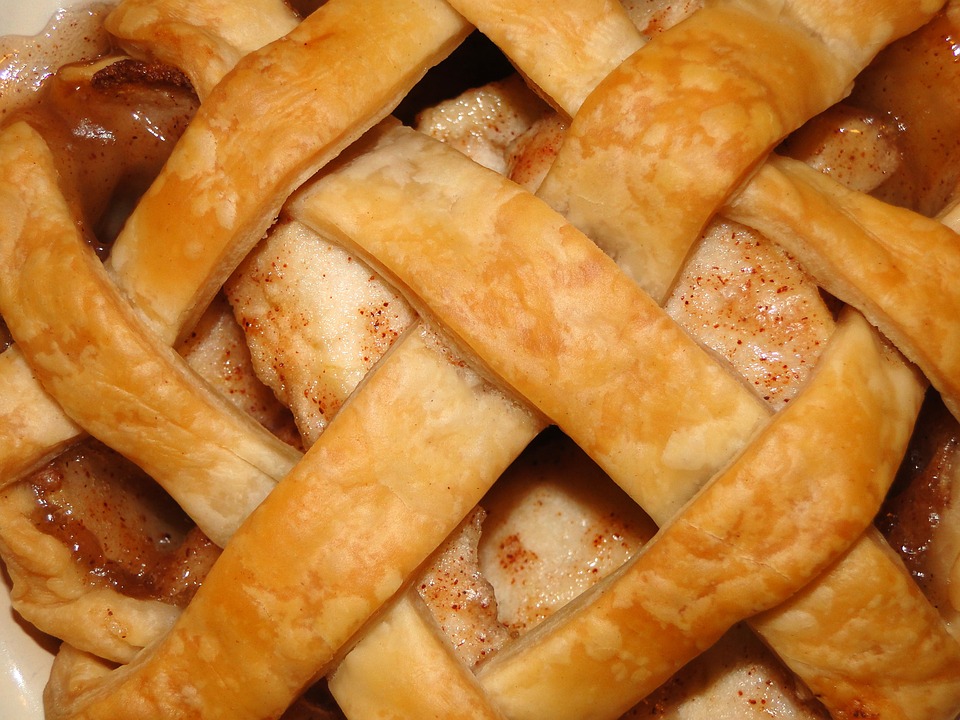
Widow Jones’ Apple Pie


Today’s post is written by fellow author Amber Schamel. This recipe is from her book, Dawn of Liberty. Welcome, Amber!

Sam says: I’ve convinced Mrs. Jones to share with us the recipe for her special apple pie. She prepared this for John Hancock and myself when we fled from the battle of Lexington as told in A Shot at Freedom in the Dawn of Liberty Short Story Collection.

 “What a feast. You have outdone yourself, Madam,” Hancock said with a smile.

“For dessert, I’ve one of my special apple pies in the oven, just for you, John.”

At those words, Hancock’s face split into a huge grin. “Well then, shall we commence?”

 Widow Jones’ Apple Pie

 YIELD: 8 Servings

Ingredients:

2 Pie Crusts

1/2 c. Brown Sugar

3 T. Wheat Flour

1/4 t. Salt

1 1/2 t. Cinnamon Spice

1/2 t. Clove Spice

5 c. Thinly Sliced Apples (Your variety of choice)

6 T. Butter

1 T. Lemon Juice (optional)

Instructions:

Begin by mixing sugar, flour, salt and spices together in a bowl. Next, poke holes in the bottom pie crust with a fork to prevent bubbling. Place apples inside the bottom crust. Sprinkle sugar mix over apples.

Cut the butter into pats and distribute them on top. Sprinkle lemon juice evenly over the pie.

Finish preparation by cutting the second pie crust into strips and weaving it over the top.

Bake at 450 for 5 minutes, then reduce heat to 350 and bake for 30-35 minutes.

Serve warm.

-Amber Schamel

Dawn of Liberty Blurb

Liberty comes with a price. Can a fledgling nation bear the cost?

British forces advance upon a struggling colonial army. The time of decision has come. Declare independence, or give up the fight. The weight of a nation rests on Samuel Adams’ shoulders as he joins the delegates of the Second Continental Congress. Can he raise the cause of Liberty above the fear of the King’s wrath in the hearts of his countrymen?

Three riveting short stories follow Samuel Adams as he struggles through the events surrounding the Declaration of Independence and evokes the Dawn of Liberty.

Amazon

Amber’s Bio:

Amber Schamel writes riveting stories that bring HIStory to life. She has a passion for travel, history, books and her Savior. This combination results in what her readers call “historical fiction at its finest”.  Her title, Dawn of Liberty, was awarded the 2017 CSPA Book of the Year award in Historical Fiction. She lives in Colorado and spends half her time volunteering in the Ozarks. Amber is a proud member of the American Christian Fiction Writers Association. Visit her online at www.AmberSchamel.com/ and download a FREE story by subscribing to her Newsletter!

Connect with Amber on Facebook,  Twitter, Pinterest, and Goodreads. 

These Are the Times that Try Men’s Souls

colonial-378730_960_720

Thomas Paine, personal assistant to General Nathanael Greene, scanned the faces of his companions in the Continental Army on a cold day in December, 1776. The soldiers faced difficulties worse than separation from families and harsh winter conditions. The men were disheartened. How could an army one quarter the size of the British forces win freedom?

Paine understood their discouragement. Recently, three thousand Colonial soldiers bravely stood their ground against a foe of thirteen thousand outside the fort at Washington Heights (Manhattan) until the British threatened them with cannons. One hundred forty-nine Colonial soldiers were killed or wounded. Over twenty-eight hundred at the fort surrendered. The Colonial Army also abandoned another fort, Fort Lee, in New Jersey.

military-752464_960_720To make matters worse, General Howe’s British troops pursued General Washington’s retreating army across New Jersey. The soldiers marched through the colony for sixteen days until they reached safety across the Delaware River.

The loss of three thousand soldiers struck the struggling army a difficult blow. New York City and all of New Jersey were under British control. Eleven thousand colonial soldiers gave up and returned home between September and December. Army contracts would expire on December 31st.

Paine remembered the impact of his pamphlet, Common Sense. His words, published earlier that year in January, had been read by thousands. His writing somehow resonated with people in all walks of life.

All thirteen colonies must know of the recent British victories. Paine imagined those at home felt discouragement similar to the soldiers. After he pondered the situation, he sat down to pen these words:

“These are the times that try men’s souls: The summer soldier and the sunshine patriot will, in this crisis, shrink from the service of his country; but he that stands it now, deserves the love and thanks of man and woman. Tyranny, like hell, is not easily conquered; yet we have this consolation with us, that the harder the conflict, the more glorious the triumph. What we obtain too cheap, we esteem too lightly.” 

The American Crisis went to the heart of the problem from these beginning lines. The Pennsylvania Journal published Paine’s work on December 19, 1776.

george-34252_960_720General Washington commanded the pamphlet to be read to his discouraged men. Paine’s stirring words revived hope within their souls at a crucial moment. The results encouraged Washington. His plan for Christmas Day must succeed though he kept the details from his soldiers.

Regiments began assembling at specific crossing points along the Delaware River late in the afternoon of December 25th. Temperatures dropped causing the snow-covered ground to feel even colder.

Washington didn’t want delays because after the troops crossed the icy river, they must march to Trenton, New Jersey for a surprise predawn attack on the Hessian soldiers.

delaware-river-1472266_960_720Unfortunately some soldiers arrived late to their designated areas. Snow, hail, sleet, and rain hindered their crossing. They contended with ice jams on the river. Dark, stormy skies made navigation difficult.

All this affected Washington’s careful timetable. He almost abandoned the plan when faced with a three-hour delay. He trudged on.

Washington’s surprise attack worked. The Continental Army won their first major victory.

Would the results have been same without Paine’s passionate plea to stay the course? With all the obstacles that had to be overcome on that freezing Christmas Day and everything that led up to it, this author doesn’t believe so.

Do our words matter?

You decide.

-Sandra Merville Hart

Sources

“Crossing of the Delaware,” George Washington’s Mount Vernon, 2015/07/27 http://www.mountvernon.org/research-collections/digital-encyclopedia/article/crossing-of-the-delaware/.

“Ft. Washington Captured – Washington Retreats through N.J -1776,” HistoryCentral, 2015/07/27 http://www.historycentral.com/Revolt/Retreatnj.html.

Paine, Thomas. “The Crisis,” USHistory.org 2015/07/24 http://www.ushistory.org/paine/crisis/c-01.htm.

“Thomas Paine,” USHistory.org 2015/07/24 http://www.ushistory.org/paine/.

“Thomas Paine Publishes American Crisis,” History.com, 2015/07/28 http://www.history.com/this-day-in-history/thomas-paine-publishes-american-crisis.