Sponge is the First Step in Making Good Bread

IMG_1700

Making homemade bread from scratch is a lost art for most of us. I make a variety of fruit breads like banana, pumpkin, cranberry orange, but rely on my bread machine for homemade white bread and rolls.

I’ve always wanted to learn how to make bread from scratch like colonial women did. Writing historical novels increases my desire to place myself in my heroine’s shoes and cook with the same challenges and knowledge she does.

A cookbook from 1877 teaches that the first step in making delicious bread is the sponge.

Sponge was made with flour, yeast, and warm milk or water. Some bakers added mashed potatoes. The cookbook author cautioned these early cooks to consider both the weather and the time of time when preparing the sponge.

In the summer, the sponge shouldn’t be set before eight or nine at night. Thick batter was made with lukewarm liquids. Scalding the milk and allowing it to cool first prevented it from souring.

In the winter, liquids were added at “blood warmth.” The temperature was determined by the baker’s finger and made as warm as the cook could stand. Adding the flour cooled the liquid enough for the yeast. The sponge was stored, covered,  in a warm area to rise.

The author suggested placing a clean, folded blanket over the cover.

A small tea-cup of yeast and three pints of “wetting” made four ordinary loaves. (My guess is that the “wetting” referred to is the flour and milk mixture since yeast was always added last.)

Bakers used this sponge in their bread, but it also worked well on the griddle for breakfast cakes or in muffins.

I’ll have to guess at the measurements, but plan to try this sponge in muffins, pancakes, or fruit breads. I’ll let you how it turns out. If you try the recipe, I’d love to hear about it.

-Sandra Merville Hart


Sources

Compiled from Original Recipes. Buckeye Cookery and Practical Housekeeping, Applewood Books, 2011.

“Lukewarm,” Thesaurus.com, 2015/06/09  http://www.thesaurus.com/browse/lukewarm.


Feeding a Family of Three in 1949

retro-1291745_960_720


According to a magazine article in 1949, a family of three ate well for $10 a week. With that budget, here are a few of the meals this family might consume:

beef liver                                           carrot-bacon-egg sandwiches

creamed hamburger                   vegetable-bean soup

meatloaf                                             scalloped potatoes

potato soup                                       molasses sweet potatoes

green pepper strips                       macaroni and cheese

beef stew                                             mashed potatoes

I know what you’re thinking … in today’s prices we’re already pushing $100 but read on. You haven’t spent the whole $10 yet. Add these delicacies to the menu:

fish                                                          green beans

egg sandwiches                                bean soup

bologna sandwiches                      cabbage salad

prune whip                                         applesauce

eggs au gratin                                   custard

After buying ingredients for a few more side dishes, you’d have enough money left from the original $10 to buy juice and cereal for every breakfast. You’d also enjoy milk, bread, and margarine at every meal. Whether or not this list appeals to you (and who knows what prune whip is!) it’s a lot of variety for the money.

Wouldn’t you love to visit those old corner stores and fruit and vegetable markets with a $10 bill in your purse? Just for one week to go back to a time when everyone in the community knew each other’s name and the store’s competition was another business of the same size two blocks away.

Who knew $10 could go so far?

-Sandra Merville Hart

Source

Rodack, Jaine. Forgotten Recipes, Wimmer Books, 1981.


Summer’s Love by Stu Summers

51C-go4cytL

This romance was a lot of fun to read!

Unexpected twists and turns kept me turning pages long past my bedtime. Summers created believable characters that had me rooting for them. A romantic sailboat journey will transport readers to warm climates with balmy breezes.

Recommend this book and this author. An enjoyable read!

-Review by Sandra Merville Hart

Lighthouse Publishing of the Carolinas     Use coupon code SandraMHart for a 20% discount on Lighthouse Publishing books!


Curing Cast Iron Skillets


IMG_1778


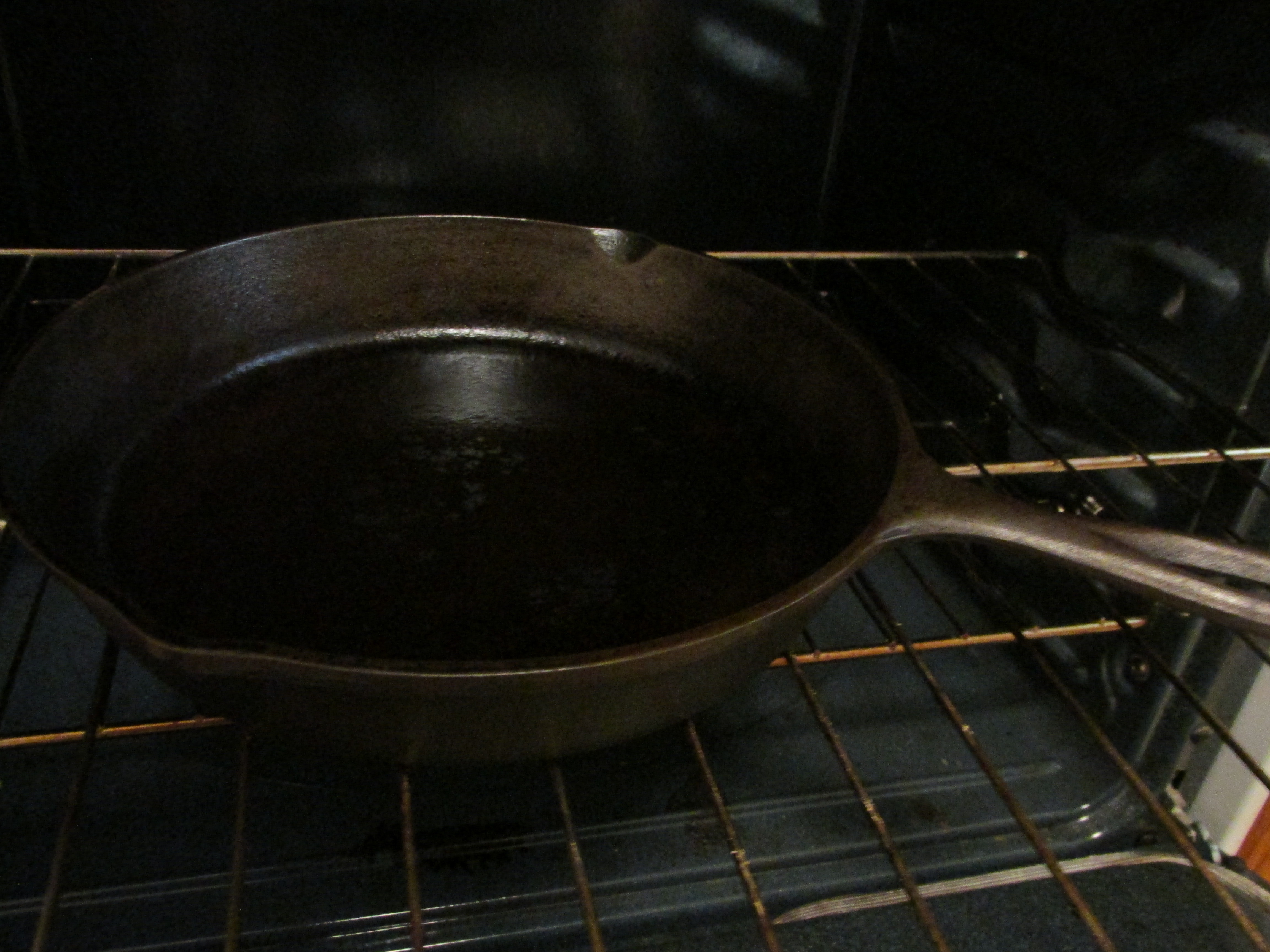
My mom had a cast iron skillet that I loved. It cooked evenly. Pancakes, bacon, and burgers turned out great. I purchased two skillets in the past few years, but neither came close to the quality of my mom’s. One rusted quickly.

My sister told me that I had to “season” the skillet. I found a product to spray oil over cast iron to season it, but somehow didn’t think that was the way my mother and grandmother accomplished the task.

Since I also wanted to purchase a Dutch oven for cooking over an open fire, I searched for a method for curing cast iron.

First, wash the Dutch oven (or skillet) with hot soapy water to remove waxy coating.

Heat your regular oven to 200 degrees with the cast iron pot inside. Keep the lid on your Dutch oven.

Once heated to 200 degrees, pour small amount of oil inside the pan. (Shortening or lard work well, too.) Wearing oven mitts, wipe the whole surface of the Dutch oven or skillet with a clean cotton cloth. Make certain to rub oil into the outside.

Turn up your regular oven to 350 degrees and heat the skillet for an hour. Expect to see smoke. When the hour is up, allow the skillet to cool slowly to avoid cracking or warping.

The Dutch oven or skillet is ready for use.

To clean the skillet, wipe away food with a paper towel before washing it in hot soapy water. Dry it completely. Then apply a light coating of oil inside and outside.

Skillets turn dark brown or black after repeated uses.

This easy method revived my rusted skillet.

Good luck!

-Sandra Merville Hart


Sources

Beattie, Roger L. “Seven secrets of Dutch oven cooking,” Backwoods Home Magazine, Inc., 2016/05/26  http://www.backwoodshome.com/seven-secrets-of-dutch-oven-cooking/.

Collester, J.S. Old-Fashioned Woostove Recipes, Bear Wallow Books, 1988.

Sporting Events in the Early 1800s


horse-444017_960_720

It wasn’t all hard work for the early pioneers. Those living in the country enjoyed sporting activities just as we do today.

Shooting Matches were great fun for early settlers. Participants aimed their rifles at targets hoping to be the most accurate. These matches normally occurred around Christmas and New Year’s Day.

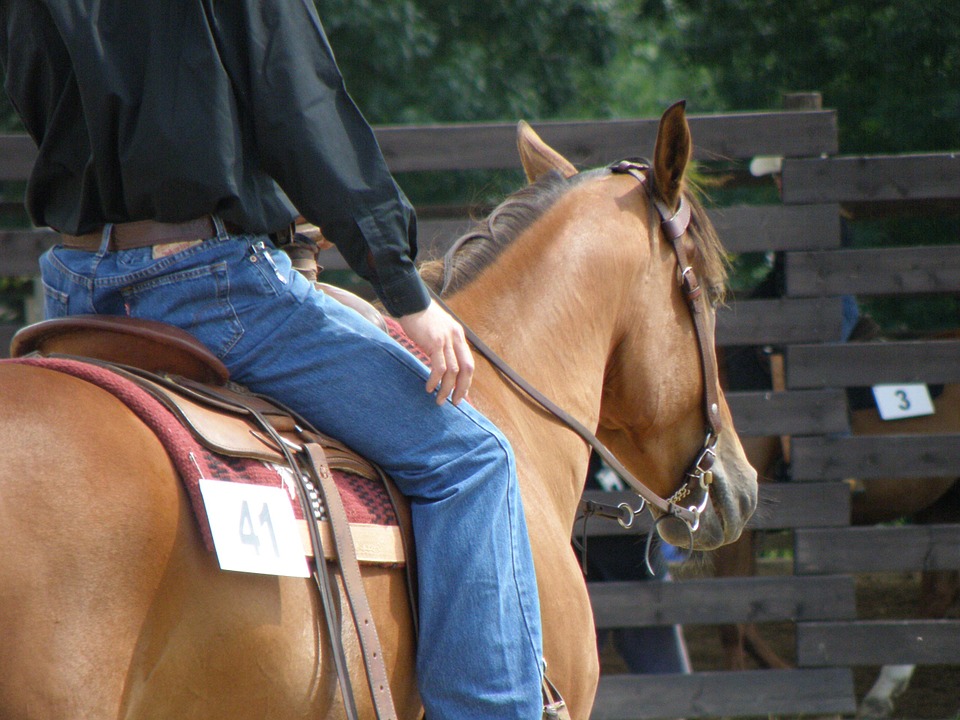
Horse races were always popular events. The races varied in length from a quarter mile or half mile on a straight path.

One, two, and three mile races, called Fairs, happened on circular tracks. The races took place at harvest time. Large crowds attended to watch the best horses in the area compete during the event that lasted three to four days.

Sports were part of most public gatherings. Country folks enjoyed foot races, jumping, wrestling, and pitching quoits (horseshoes.)

Pioneers also loved fishing. Passing a few hours on the riverbank also provided tasty suppers – as long as the fish took the bait!

-Sandra Merville Hart


Sources

“History of The Game of Quoits,” http://www.quoits.com 2015/06/15

http://www.quoits.info/history/history.html.

Welker, Martin. 1830’s Farm Life in Central Ohio, Clapper’s Print, 2005.


Dreaming of a Father’s Love by Sharon Lavy

51jD106eHSL

When Birdie graduates from high school, she wants nothing more than to work in the family business, pursuing her love of horticulture. Although Birdie has never been able to please her father, she desperately craves his praise. However, he has plans to send her to college, downplaying her contribution to his business.

Sara works for Birdie’s father. Raised by German Baptist parents, she loves her family, but wonders about her birth parents. Her mother refuses to discuss the details of her adoption. Could her birth mother be alive? Sara longs for a brother or sister.

Dax has built a successful business in real estate. He and his younger sister, Daisy, had been orphaned at a young age. When his two-year-old sister was adopted without him, he vowed to find her one day. Twenty-two years later, he is still searching.

Surprises and tragic events happen when Birdie agrees to help landscape Dax’s new property in this inspiring novel by Sharon A. Lavy. Set in the early 1970s, this book is an enjoyable read!

-Review by Sandra Merville Hart

Amazon

Dutch Oven Cooking

pot-619785_960_720

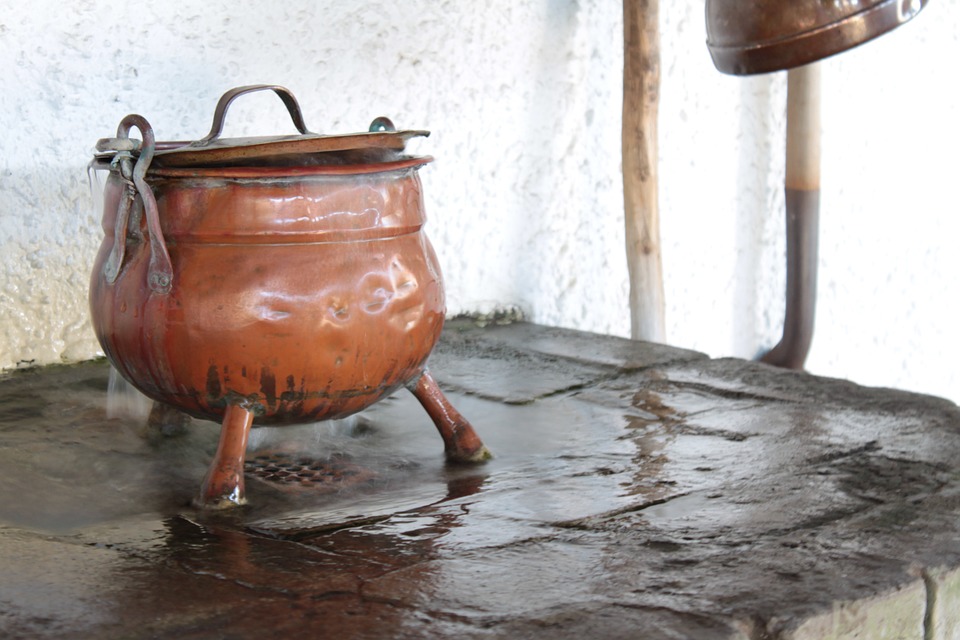
There is a secret to cooking with Dutch ovens over an open fire: properly placed coals control the interior temperature of the oven.

Begin by choosing a Dutch oven with legs for open fire cooking.

Avoid burned or raw sections or dried out foods by using charcoal briquettes or fire coals of that size. Charcoal has the advantage of even burning for longer periods.

Almost all baked goods bake successfully at 350 degrees. Coals must be carefully placed to achieve this temperature.

Consider the diameter of your Dutch oven to find the best number and allow two coals per inch for cooking. You will need the diameter plus two for the lid and two less than the diameter underneath.

For example, fourteen-inch ovens will have 16 coals on the lid (14 + 2) and 12 coals under the oven (14 – 2.)

The placement of the coals is vital to successful cooking. Arrange them in a circle under the oven on the outer rim. Putting them in the middle burns the meal.

It’s also important to arrange the coals evenly around the outer rim of the lid with four coals in the center. Two go on either side of the handle.

This provides and maintains 350 degrees for about two hours.

Adding one coal to the lid and underneath the oven increases the heat to 400.

The size of the oven you buy determines the kind of meal typically cooked inside it. For instance, 8” or 10” Dutch ovens are great for vegetables, desserts, and side dishes. Cook larger roasts, stews, breads, and chicken in 14” ovens.

Happy cooking!

-Sandra Merville Hart

Sources

Beattie, Roger L. “Seven secrets of Dutch oven cooking,” Backwoods Home Magazine, Inc., 2016/05/26  http://www.backwoodshome.com/seven-secrets-of-dutch-oven-cooking/.

“Choosing a Dutch Oven,” Dutchovendude.com, 2016/05/27 http://www.dutchovendude.com/cooking-select-dutch-oven.php.

Wedding Traditions in Early 1800s

bouquet-of-flowers-261231_960_720

As might be expected, pioneer wedding traditions were much simpler than today but there were few old maids and bachelors.

If possible, families provided their daughters with six knives, forks, plates, cups, and saucers, a good bed, bedding, side saddle, teaspoons, tablespoons, teakettle, wash tub, and Dutch oven.

The bride also received her clothes. Her wedding dress was inexpensive. She wore a cap trimmed with ribbons. The groom wore his best suit. Gifts weren’t expected.

Friends and family serenaded the new couple on the wedding night with horns, cow bells, and horse fiddles. Apparently this music was as inharmonious and loud as might be imagined.

The groom invited guests to an Infair the day after the wedding. Wedding guests gathered for a big dinner.

Male guests often raced on horseback to the Infair in a custom called “running for the bottle.” Whoever arrived at the groom’s home first received a whiskey bottle with a red ribbon tied around it. He took it to the party.

If younger siblings married first, the older ones “danced in the hog trough.”

-Sandra Merville Hart


Sources

“Infair,” Wiktionary, 2015/06/15 https://en.wiktionary.org/wiki/infair.

Welker, Martin. 1830’s Farm Life in Central Ohio, Clapper’s Print, 2005.


60 People Who Shaped the Church by Alton Gansky

51AEeQiJ9ML

Excellent book!

Gansky, a master storyteller, has selected sixty people who influenced the church in various ways. Beginning with Peter and ending with Billy Graham, this book is packed with inspirational stories. Gansky provides an overview of each person.

There are names I recognized but didn’t know their story. Other names were new to me. I was especially touched by the lives of John Bunyan, John Newton, and Billy Sunday. The way that Charles Wesley, T.S. Eliot, and C.S. Lewis used their writing skills inspired me. As a writer, this book sparked multiple ideas for articles. I can easily see the same happening for church leaders, educators, and ministers and highly recommend the book for them. Great read for history lovers!

-Review by Sandra Merville Hart


Amazon