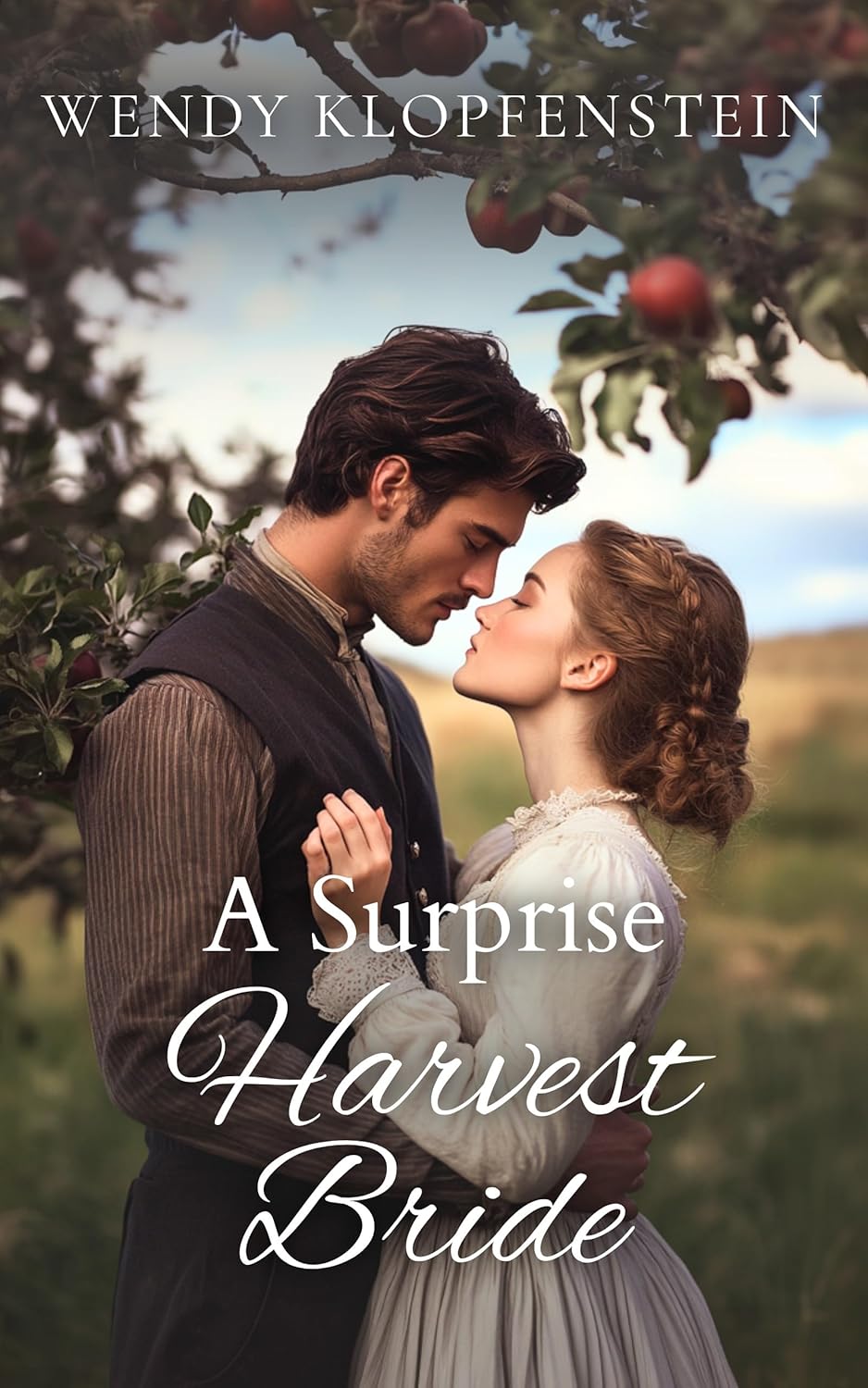
Matthias Bjork searches for his sister in the rugged Wyoming Territory. Both his Viking heritage and family are vital to him, and he hasn’t seen his sister in twenty years.
Opal Boyd’s experiences with men have led her to steer clear of them. That’s why she’s so grateful to have found a job and a home with an older German couple in the Wyoming Territory. Meeting with Matthias, whom her boarding family considers an adopted son, doesn’t change her mind initially, yet the strong man soon captivates her thoughts.
Matthias is equally mesmerized by Opal, yet continues to follow all clues to his sister. Once he finds her, he vows never to live far apart from her again. That promise becomes difficult to keep.
This book was a page-turner for me. The author weaves lots of twists and turns into the story that kept me guessing to the end. Lovable characters touched my heart in this poignant story.
This isn’t the first novel I’ve read by this prolific author, nor will it be the last. Recommended for readers of historical romances.
After the death of her husband, Elizabeth Campbell spends all her money on a train ticket to the Colorado Territory in search of her brother. Upon learning that he’s in California with his new bride, Elizabeth takes a job as a waitress at the hotel her brother built.
In dread of his next job, Landon Cooper stops at a fine hotel for the night. His waitress at the lunch counter captivates him, but he’s not worthy of a good woman—especially after he completes his new job. Still, he can’t forget her. When she enlists his help in decorating the hotel for Christmas, he extends his stay.
Elizabeth’s marriage had not been a good one. It wouldn’t be wise to marry another cowboy, yet Landon stirs her heart. But what secret is he keeping?
The story captivated my attention from the first chapter as believable characters drew me into their plight. The hero’s decision kept me wondering as the story unfolded.
Characters from earlier novels are introduced seamlessly into the story, making me want to read the whole series.
The main reason Macie Newman accepts a job at a ranch in the small town of Hidden Veil is to give Alex, her nine-year-old son, a country setting to heal from witnessing his father drown. Her chef skills might be wasted on Lane Becker and his uncle, but she will do anything to help her traumatized son to heal.
Lane’s focus is on establishing his equine therapy center that will open in a few months. He soon discovers Alex’s trauma. Unfortunately, the boy’s feisty mother tends to be overprotective. Macie doesn’t take it well when he gives her his opinion. Lane’s friendship with both of them grows along with Alex’s interest in the ranch’s horses. Yet Lane can’t allow himself to dream of a relationship with Macie because of lingering guilt due to his brother’s death.
Lovable characters quickly pulled me into their plight. Both the hero and heroine have believable past emotional issues that made me care about their journey, especially as it affected the boy.
I enjoyed the North Carolina small-town setting. Townspeople whom we may see again in future books make me want to continue reading the series.
My husband loves chocolate eclairs. He enjoys this treat from a local bakery two or three times a year. I was thrilled to find a no-bake recipe for chocolate éclair cake. I made it for a family Christmas party.
After reading several recipes that used instant vanilla pudding mix, I finally found one that gave an option to prepare the cake using pastry cream. The recipe I followed used whole milk, egg yolks, sugar, cornstarch, salt, and vanilla extract. You can find that here.
I made chocolate buttercream frosting from scratch, or you can use a 16-ounce container of chocolate frosting.
I used a container of whipped topping, but it is easy to make your own, if you prefer.
Because I prepared the pastry cream and frosting from scratch, this whole cake took about an hour to prepare
Ingredients
Pastry cream (link to recipe above)
3 cups whipped topping, thawed
1 16-oz. package Graham crackers
2 cups of chocolate frosting
In a medium mixing bowl, gently fold the whipped topping into the prepared pastry cream until well blended to create a thick, creamy pudding.
Depending on the size of your serving dish, you may not use all of the Graham crackers. I chose a 9×13-inch glass dish and had a few crackers left over.
First layer: Arrange a single layer of Graham crackers on the bottom of the dish. Break apart some crackers if necessary to create a whole layer.
Second layer: Cover the Graham crackers with half of the pudding. Spread evenly.
Third layer: Arrange another layer of Graham crackers over the pudding.
Fourth layer: Cover with Graham crackers with the remaining pudding.
Fifth layer: Top with the final layer of Graham crackers.
Sixth layer: Frost the top layer of Graham crackers with the chocolate icing, taking care not to dislodge them.
Cover the dessert with plastic wrap. Refrigerate for several hours or overnight before serving, as the crackers soften when chilled.
I served this cake at a holiday gathering alongside two other delicious desserts, and it was nearly gone at the end of the evening. My family loved it.
Epiphany is a word that some Christians use to describe the day that the Magi from the East found Jesus. The meaning of epiphany—a sudden, striking realization.
The Twelve Days of Christmas begin on December 25th, with a celebration of Jesus’ birth, and end on January 6th, which is traditionally celebrated as the day the Magi visited.
In the Middle Ages, Epiphany was also known as Twelfth Night or King’s Day.
In the mid-nineteenth century, Prince Albert and Queen Victoria of England transformed Epiphany into a family occasion that celebrated the Magi’s wonder at finding the Christ child.
In earlier times, the holiday season was celebrated beginning Christmas Eve to the Eve of Epiphany, when families sang songs and took down decorations. They attended church services on the Eve of Epiphany. Aromas from baked or simmered herbs reminded Christians of the Magi’s gifts.
Children left food for the wise men and hay for their camels that night. The food was usually gone the next morning, replaced by gold coins. This gift-giving was gradually replaced by Santa Claus in the United States and Father Christmas in England late in the 1800s.
Children in Germany dress up as Magi on January 6th and follow a child holding a star to find baby Jesus.
Epiphany is called “King’s Day” in parts of Mexico, Puerto Rico, Venezuela, and Argentina. Wise men leave gifts on the Eve of Epiphany. “King’s cake” is often served as part of the meal on Epiphany.
Children fill shoes with barley for the Magi’s livestock in Italy and Spain.
A ship sails into many Spanish seaports on the morning of Epiphany with the Magi on board. These wise men give candy to children lining the sidewalks.
It’s fun to discover the different traditions associated with the 12 Days of Christmas.
Sources
Collins, Ace. Stories Behind the Great Traditions of Christmas, Zondervan, 2003.
Bear Glover shares the ownership of a thriving Texas ranch with his cousin. The ranch is large enough to support his adult siblings and cousins. He loves his job yet he’s lonely. Sammy Benton caught his eye three years and he’s finally worked up the courage to ask her out.
Sammy runs her own shop in addition to raising her sister’s son, Lincoln. Her parents are getting older, requiring her help. Bear’s invitation thrills her. Unfortunately, their date doesn’t go well.
A tornado that wreaks havoc on their community brings them together. Sammy has been raising Lincoln on her own so long. Can she accept help without feeling weak?
This story was a page-turner. Our strong hero was so sweetly awkward about asking Sammy out that he drew me in immediately. Our heroine would do anything to keep from appearing weak.
The Texas community setting invited me in and made me want to stay a while. The families of the main characters were equally lovable, making me eager to read the next story in the series.
When I was a little girl, my dad insisted that I eat at least one spoonful of black-eyed peas for good luck on New Year’s Day. I didn’t like them. Eating even a spoonful seemed like a high price to pay for good luck in the new year.
Each year in December, I buy black-eyed peas to supplement our New Year’s meal—that is, when the grocery store doesn’t run out of them. That’s happened several times. Apparently, others are looking for the same good luck. I guess I’m just superstitious enough after hearing the saying year after year to worry when I don’t get them. We all need a little luck, after all.
Folks from the southern United States eat black-eyed peas on January 1st. Cornbread is another favorite in that section of the country. Eating green, leafy vegetables, supposed to resemble money, brings prosperity.
Citizens in Spain eat 12 grapes at midnight. Each grape represents one month of the year. If the fifth and sixth grape taste especially bad, May and June might be a little difficult.
Germans, Austrians, and Hungarians are among those who eat pork on New Year’s. Pigs signify progress. Roast pork, pig’s feet, and sausages are a few of the meals prepared.
Ring-shaped or round cakes are another tradition. Those who find a tiny treat baked inside will have good luck in the new year.
One of the foods to avoid on New Year’s Day is lobster. Eating these is thought to bring setbacks because they move backwards. Chickens scratch backwards. The superstition here is that eating chicken on January 1st may cause the diner’s thoughts to linger on the past.
It’s fun to look at our habits of celebrating the coming year in our meals. There are a lot of choices, but I think I will continue the tradition of black-eyed peas for our meal.
Lighting Christ’s candle, the fifth white candle in the center of the Advent wreath, was a celebration of Jesus’ birth for early Christians, as it is today.
Prophets foretold of His birth centuries before the event that changed the world.
For unto us a child is born, to us a son is given,
And the government will be on his shoulders.
And he will be called Wonderful Counselor, Mighty God, Everlasting Father, Prince of Peace.
Isaiah 9:6 (NIV)
When it was time, God sent His Son.
But when the time had fully come, God sent his Son, born of a woman, born under law, to redeem those under law, that we might receive the full rights of sons.
Galatians 4:4-5
I’ve often reflected on the multitude of angels praising God for the wondrous gift of His Son, a gift for all people everywhere. The angels must have filled the night sky around the shepherds. Can you imagine the wonder mingled with fear that overcame the shepherds the night that Jesus was born?
And there were shepherds living out in the fields nearby, keeping watch over their flocks at night. An angel of the Lord appeared to them, and the glory of the Lord shone around them, and they were terrified.
But the angel said to them, “Do not be afraid. I bring you good news of great joy that will be for all the people. Today in the town of David a Savior has been born to you; he is Christ the Lord. This will be a sign to you: You will find a baby wrapped in cloths and lying in a manger.”
Suddenly a great company of the heavenly host appeared with the angel, praising God and saying,
“Glory to God in the highest, and on earth peace to men on whom his favor rests.”
Luke 2:8-14 (NIV)
The shepherds had to see the miracle with their own eyes.
When the angels had left them and gone into heaven, the shepherds said to one another, “Let’s go to Bethlehem and see this thing that has happened, which the Lord has told us about.”
So they hurried off and found Mary and Joseph, and the baby, who was lying in a manger. When they had seen him, they spread the word concerning what had been told them about this child, and all who heard it were amazed at what the shepherds said to them.
But Mary treasured up all these things and pondered them in her heart.
The shepherds returned, glorifying and praising God for all the things they had heard and seen, which were just as they had been told.
Luke 2:15-19
Why did God send His Son for us?
“For God so loved the world that he gave his one and only Son, that whoever believes in him shall not perish but have eternal life.”
John 3:16 (NIV)
Wishing you and your loved ones a blessed Christmas.
Prequel to Irish Rose Orphans: A Thousand Islands Gilded Age Series
Brooklyn, New York, 1876
Seven orphans living at The Irish Rose Orphan Asylum for Girls are told a few weeks before Christmas that they’ll be placed in new jobs after Epiphany. None of the girls, ages varying from 16 to 13, feels ready to leave the orphanage, even though things are far from perfect there with Sister Catherine.
Annie, 14, doesn’t want to leave her twin Tayrn with this terrible rift between them, but she doesn’t know how to bridge the gap.
Fiona, the oldest at sixteen, can’t reconcile with the whispers about her mother’s shame. At fourteen, Isabel has always been protective of her younger sister Gloria, and she struggles with their upcoming parting.
Vivian tries to lighten the mood when times get tough to mask her own insecurity. Cassie loves the precision of numbers because the losses in her life have been so difficult.
Each girl invited me into her pain, her struggles, from the first page. This story is told from the viewpoint of each of the girls, allowing readers a deeper connection.
This well-written story is a page-turner. It ended with an epilogue that gives us a glimpse of what happens in later books in the series. I’m hooked!
A great Christmas story! Highly-recommended.
I was given a free copy of the book by the author. A positive review was not required.
These three historical romances by different authors all have something in common—someone in each story either wants a mail-order bride or wants to be one. They have employed the services of Mrs. Mayberry’s Matrimonial Society for Christians of Moral Character in their search.
But sometimes the heart has its own ideas…
I loved the characters in Carrie Turansky’s A Trusting Heart. Annika Bergstrom travels to a Wyoming ranch to marry a widower in need of help raising his young daughter, but Chase Simms is mysteriously absent. Daniel, his brother, wishes their pa had talked to Chase before writing to the mail-order bride. In his brother’s continued absence, Daniel begins to fall for Annika. She can’t help wishing that Chase was more like his brother…
The action in Vickie McDonough’s The Prodigal Groom begins immediately. The main setting is in Cedar Springs, Nevada in 1882. My emotions were engaged early as I wanted Jolie Addams to flee the orphanage where a man the age of a grandfather wanted her to live with him as his maid. Jolie flees to Nevada from Iowa to marry a man she’s never met. She meets Clay Jackson along the way and must face a dangerous situation with him. That event turns her future on its head.
I was delighted when this collection comes full circle in Mrs. Mayberry Meets Her Match by Susan Page Davis. Amelia Mayberry, who has supported herself since her husband’s death by running a matchmaking service, finally has saved enough money to retire. The widow in her early fifties has only one job left—find her husband’s old friend a wife, as she had unsuccessfully tried to do two years before. Lennox Bailey has built a successful business in Sacramento. The widower’s married daughter’s family now includes Lennox’s only grandson. He agrees to a visit from Amelia, but he hopes she will not mention the mail-order bride she’d recommended. It had been a fiasco. Yet Amelia cannot leave a job unfinished…
All of these historical romances are feel-good stories set in the West at Christmas.
I enjoyed this collection of light-hearted, easy-to-read romances. Recommend.