The Civil War on Hatteras Island, North Carolina by Drew Pullen

What a wonderful resource of information about the Civil War on Hatteras Island!

Many folks who visit the island on vacation have little idea about its rich history—and even less about what occurred at this strategic location during the Civil War.

I love the photos and sketches from the 1860s included by the author.

Portions of journals and letters from soldiers on both sides enrich this book’s value as a resource for historians, Civil War enthusiasts, and also for novelists like me who write during that time period.

Well-written. Recommend!

-Sandra Merville Hart

Amazon

Marshmallows


by Sandra Merville Hart

Marshmallow root has been used for at least 2,000 years to soothe respiratory and digestive issues. It’s been used in desserts, beverages, and cosmetics. Most mallows are edible and were a delicacy for Romans. Folks in other European countries boiled it and then fried it in butter and onions.

Marshmallow root (Althaea officinalis) is a flowering plant that grows along rivers and marshes. The root is a brown, fibrous husk. It produces mucilage, a substance similar to sap, that has been used as an herbal medicine to treat coughs, dry mouth, and to soothe skin irritations. It may reduce digestive issues like ulcers.

Dried marshmallow root can be used to make a cup of tea.

The marshmallows that we are used to eating today usually don’t contain marshmallow root and had its beginnings in France about 170 years ago. In 1900, corn syrup, egg whites, and water were heated along with marshmallow root and poured into molds.

I followed the Food Network’s recipe to make marshmallows, a new dish for me. I halved the recipe—a mistake because I used a 13 x 9 pan to rest them in and this made a thin layer of marshmallow. (If you halve the recipe, I suggest using a 8 x 8 pan.)

This mistake turned out to be a good thing.

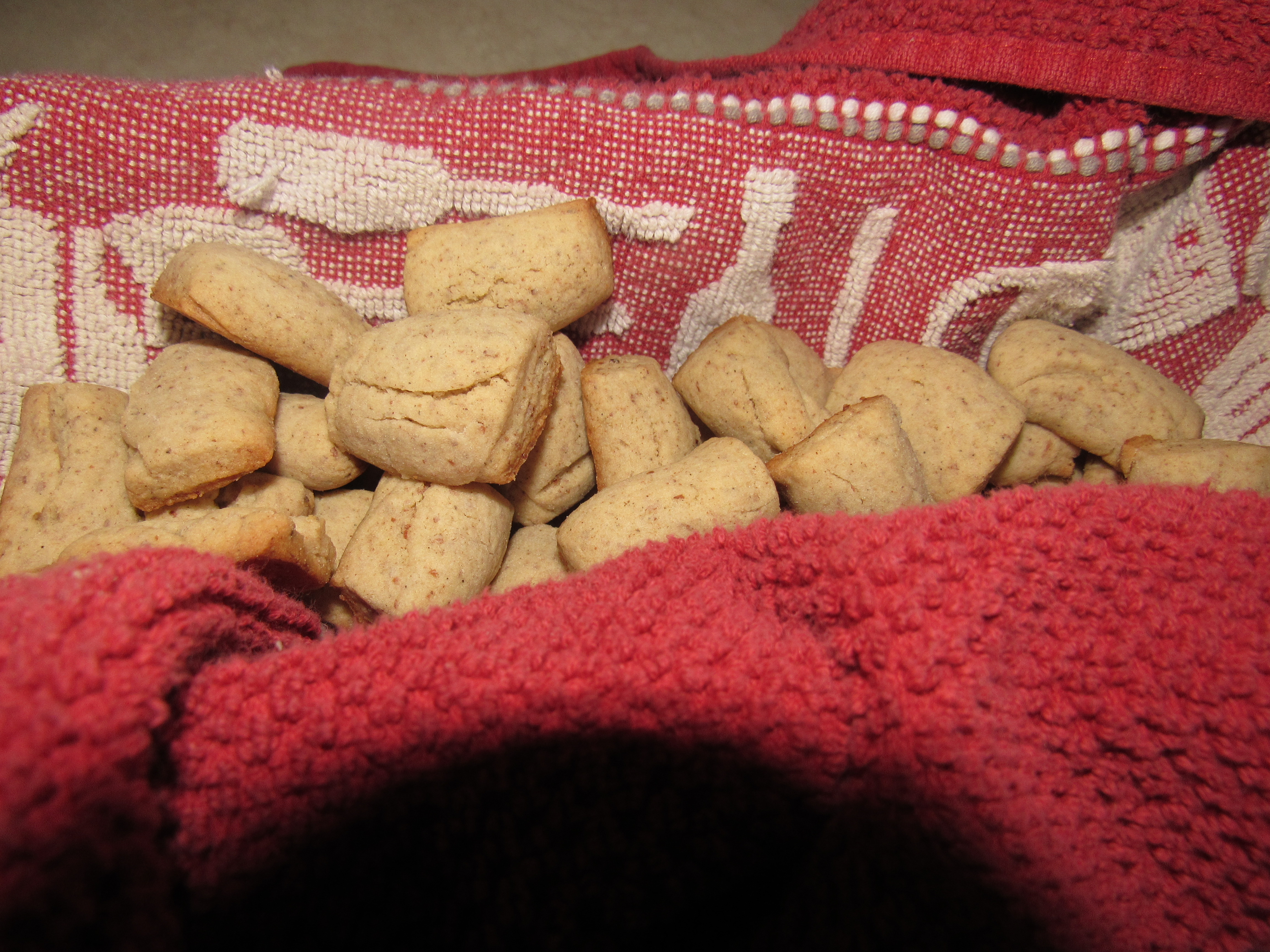
I needed to take a dessert to a family gathering so instead of slicing them into 1-inch squares, I sliced them into cracker-sized shapes for s’mores. It was perfect!

Family members loved this novelty dessert! If you want that “roasted over the fire” gooey taste, then layer a slice on top of a cracker, half of a Hershey’s chocolate bar and microwave for about 5 seconds. I preferred it unmelted (less messy) but everyone else preferred it melted.

Homemade marshmallows have to set for at least 4 hours or overnight so plan accordingly if you want to use them for your next campfire.

Sources

“Althaea (plant),” Wikipedia, 2020/10/12 https://en.wikipedia.org/wiki/Althaea_(plant).

“Homemade Marshmallows,” Food Network, 2020/10/12 https://www.foodnetwork.com/recipes/alton-brown/homemade-marshmallows-recipe-1953933.

“Marshmallow Root,” Mountain Rose Herbs, 2020/10/12 https://mountainroseherbs.com/marshmallow-root.

“What are the Benefits of Marshmallow Root?” MedicalNewsToday, 2020/10/12 https://www.medicalnewstoday.com/articles/324860.

Daughters of Deliverance by Lorry Lutz

Kate Bushnell Series Book 1

This book begins with Kate Bushnell as a teenager. Her father runs a lighthouse that saves countless lives. She wants to follow his example by saving lives as a doctor.

Before Kate completes her medical studies, she has an important conversation with a missionary to China. She is invited to serve their mission as a doctor.

Daughters of Deliverance spans several years. Kate, a devout Christian, feels that God calls her to one task for a time and then changes course.

Her path takes her to the red light district in Chicago where she meets women and young girls living a life from which they long to escape.

This book reads like a biography. A lot of historical figures grace the page of this book so I wasn’t surprised to read the author’s note and read the confirmation that this is biographical fiction.

Inspired by a true story, parts of the story are very tragic and tough to read. It was inspiring to learn about the women and men who worked tirelessly to bring change.

-Sandra Merville Hart

Lighthouse Publishing of the Carolinas

The Widow of Rose Hill by Michelle Shocklee

Book 2 of The Women of Rose Hill Series

The weight of running a plantation after the deaths of her husband and father-in-law is hard enough for Natalie Ellis without Union troops arriving on the doorstep of her Texas plantation. Not only does Colonel Levi Maish bring news that the war has ended, but also that the Confederates lost.

Levi takes pleasure in hearing the plantation owners read the proclamation that frees the slaves. The widow’s beauty and spirit can’t change the joy that spreads throughout the crowd. Though she offers them a job, most of them pack and leave within minutes.

Everything changes in an instant for Natalie and her young son. She adapts and even begins to change her mind about the handsome colonel who seems to want to help.

This honest, gripping story deals with the difficulties faced by Southerners and abolitionist Northerners as well as formerly enslaved people.

Well-written. Poignant. Tragic. Believable characters that pull readers along a difficult journey with them.

I’ll look for more books by this author.

-Sandra Merville Hart

Lighthouse Publishing of the Carolinas

Merle Smith Williams’s Famous Southern Meatloaf

by Sandra Merville Hart

I was so excited that friend and fellow author Debra DuPree Williams shared a recipe from her debut novel, Grave Consequences, that I asked her if I could share another one from her novel. Happily, she agreed.

I’m always happy to find a new recipe for meatloaf. This is her family’s recipe.

Merle Smith Williams’s Famous Southern Meatloaf

1 ½ pounds ground beef (use more if you have a big family)

1 cup cracker crumbs or stale bread broken into pieces (these days, I use canned breadcrumbs)

1 onion, chopped

½ bell pepper, chopped (I use red ones but you may use any or all colors)

½ cup shredded carrots

1 egg, slightly beaten

1 ½ tsp salt

¼ tsp pepper

½ can condensed tomato soup

Water if mixture seems too dry (add slowly, no more than ¼ cup at most)


Debra also included a tip from her dad: add 1 teaspoon baking powder to your meat mixture to keep it from drying out. This also works for hamburger patties. Thanks for the tip, Debra!

Combine all ingredients. Instead of using extra water, Sandra used extra tomato soup for enhanced flavor. Yum! Also, Sandra used Panko bread crumbs.

Form into a loaf and put it into a loaf pan.

Ingredients (for the topping)

½ cup ketchup

¼ cup dark brown sugar

1 tsp prepared mustard (the bright yellow kind)

Combine the above and spread over top of meatloaf.  Bake at 350 degrees for 45 minutes. Yields 8-10 servings.

Sandra’s note: my meatloaf needed an extra 10 minutes, so mine baked just under an hour.

Delicious! There’s a surprising sweet flavor until you remember about the brown sugar in the topping. The meat is moist and packed with vegetables. Shredded carrots are new ingredient for me to add to meatloaf and I liked it as an easy way to get an extra serving of vegetables.

My husband likes plain meats so I don’t often make meatloaf. I gobbled a couple of slices for supper one evening. Then it made a comforting sandwich for lunch 2 days before I froze the rest. That insures more meatloaf sandwiches in the future.

Thanks for allowing me to share this recipe with my Historical Nibbles family, Debra!

Sources

Williams, Debra DuPree. Grave Consequences, Firefly Southern Fiction, 2020.

It’s Show Time!

It’s a pleasure to welcome Ann Tatlock, a dear friend and gifted writer, to Historical Nibbles. Ann’s newest historical novel releases this month—what an amazing book! Read my review. Welcome to Historical Nibbles, Ann!

by Ann Tatlock

Who doesn’t love to be entertained? Most of us like to kick back of an evening and tune into our favorite live-streamed show or the latest movie to hit NetFlix or Hulu. But before the internet age bombarded us with entertainment options, before DVDs and videotapes, before televisions came into our homes and movie theatres came to Main Street, even before radio became popular, there was …Vaudeville!

In those days, stretching from the 1880s to the 1930s, people gathered to watch real live performers sing and dance, perform magic acts or animal acts or comedy routines or short plays, spin plates, juggle knives, recite poetry, do acrobatics. The possibilities were as endless as the talent crowding the theater bill.

Performers who joined Vaudeville troupes traveled specific circuits, some considered small-time, others big-time. The two largest were the Keith Circuit in the East, including the coveted Palace Theater in New York City, and the Orpheum Circuit in the West.

The life of these stage performers was far from glamorous. It was a peripatetic life as they journeyed the circuits, moving from one city to the next, often traveling all night by train to reach the next theater in time for tomorrow’s matinee. Seedy hotels were standard, and home-cooked meals were a rarity.

But hope of success drove them on. Whether they played the smallest house with the three-piece orchestra (a piano, a stool and a piano player) or a large 1,200-seat theater with full orchestra pit, Vaudevillians made sure the show went on because today’s performance might be their lucky break. From small-time, to big-time, to Broadway…that was the dream.

And certainly most of them dreamed of stardom. A few found it. Some went on to become successful on the radio, in the movies and, later, on television. Charlie Chaplin, Bob Hope, Judy Garland, Fred Astaire, George Burns and his wife Gracie Allen—these are just a few of the names from Vaudeville that are remembered today.

For every big star, though, there were many more “fallen stars,” whose lights burned out and whose names were forgotten. But they have stories too, untold yet still significant and often beautiful. It was these forgotten ones who inspired me to write The Names of the Stars.

The Names of the Stars is the story of Annalise Rycroft, a young girl who dreams of stardom even as she fears becoming lost to the “surplus population.” Against a backdrop of Vaudeville and the Spanish flu pandemic, Anna’s life is changed when she has an unexpected encounter with some of the characters from her favorite book, A Christmas Carol. Jacob Marley, Mr. Fezziwig, and Tiny Tim’s unnamed brother all work to assure Anna of God’s great love for every individual, no matter how seemingly insignificant.

Purchase link: Lighthouse Publishing of the Carolinas

Ann Tatlock is an award-winning novelist and children’s book author. In 2013, she founded Heritage Beacon, the historical fiction imprint of LPC/Iron Stream Media, and served as its managing editor for six years. She and her husband have one grown daughter and make their home in North Carolina. Please visit her website at www.anntatlock.com.

The Names of the Stars by Ann Tatlock

Annalise Rycroft’s family makes a hard living in a troupe of Vaudeville acts in 1918. Living in rundown hotels in cities across the United States is the only life the thirteen-year-old remembers. Anna longs for the audience applause known by her mother and uncles. It’s the only appreciation her family knows—yet stage-fright silences Anna’s angelic voice.

She doesn’t remember the father that her mother says she’s better off without. Nor does she have a home. Anna rereads her favorite book—A Christmas Carol by Charles Dickens—and fears she’s one of the “surplus population.”

Mother tells her to ignore nightmares about a baby that plague her. Dreams mean nothing to Mother unless they are of fame.

The author has skillfully woven an intricate, multi-layered story. Twists and turns deepen the web that entangles the characters.

Well-written. Thought-provoking. Honest. Tragic. Filled with surprises—and surprising wisdom.

One of the marks of a truly great story is that it digs its ways into your soul and pushes you to reevaluate. The story stays with you.

This is one of those stories. Highly recommend this book and this author!

-Sandra Merville Hart

Lighthouse Publishing of the Carolinas

A Heart Surrendered by Joy K. Massenburge

Sharonda Peterson is almost engaged to someone who travels constantly for his job at church so she rarely sees him. All she has to do is set the date for their wedding for their engagement to be official. Yet, as her thirtieth birthday approaches, she hesitates. Her heart yearns for Carl, a gifted man who left her behind years ago to pursue a singing career.

Carl is recovering from a difficult surgery that nearly claimed his life. He wants to get right with God … and Sharonda. He takes a job at the church where he tries to make up for past wrongs to her.

Sharonda has spent so many years trying to please her parents—especially her difficult mother—that she resists her heart’s pleading to reunite with Carl, the only man she ever loved.

Honest, with plenty of unexpected twists and turns. I was so into the story that at times I wanted to shake some of the characters when they made bad choices.

The struggles of the main characters tugged at my heart. Secondary characters also wrestle with difficulties. The author skillfully weaves a story where the struggles of the secondary characters enhance the pain of the main characters. Very well done.

Massenburge also beautifully illustrates how the pain of one generation can be passed down to the next … and then the next.

I will look for more books by this author.

-Sandra Merville Hart

Lighthouse Publishing of the Carolinas


Raspberry Frangipane Tart

I’ve been watching The Great British Baking Show and learning a lot about dishes that are new to me. Even more helpful is The Great British Baking Show Masterclass, where talented bakers Paul Hollywood and Mary Berry demonstrate their own recipes.

Mary Berry shared her recipe for a frangipane tart on one of the episodes. I’d never made one so I watched carefully and wrote down all the instructions.

She advised bakers that several fruits would taste delicious in this recipe. Just choose a fresh fruit that’s in season. Though her apricot frangipane tart looked delicious, they weren’t in season when I made the dessert. I chose raspberries instead.

Though it challenged me to convert “grams” to cups, her recipe was pretty easy to follow.

Frangipane takes it name from Marquis Muzio Frangipani, who lived in France. This 16th century Italian nobleman invented an almond scent that was used to add a fragrance to gloves. This somewhat bitter perfume inspired French bakers to create the classic frangipane recipe.

If you’d like to check out one of Mary Berry’s frangipane desserts, here’s the link.

I took this dessert to a family gathering and they were excited to try it. Frangipane was a new dish for everyone and most of them liked it. Some thought that the raspberry jam layer and the fruit of the top greatly enhanced the dessert. I liked it but felt it needed a little more almond flavor. I was very glad I tried it.

Have you ever made this dessert?

-Sandra Merville Hart

Sources

“Frangipane,” Baking Encyclopedia, 2020/07/19 https://www.bakepedia.com/baking-encyclopedia/frangipane/.

Radford Gatlin’s Store Gives a Town a Name


by Sandra Merville Hart

Settlers from the eastern states of North Carolina, South Carolina, and Virginia had lived in the area of Tennessee now known as Gatlinburg almost a half-century before Radford Gatlin arrived.

North Carolinian Radford Gatlin came to White Oak Flats with his wife and a slave woman in 1854. He purchased property around the mouth of Roaring Fork Creek that extended over from what later became known as Burg Hill to Huckleberry Ridge. He built a home and a store on his land.

Gatlin, a shrewd businessman, hauled merchandise from Sevierville on horseback or on his shoulders because there were no wagon roads. He stocked large quantities of coffee, salt, sugar, guns, axes, rifles, and ammunition—items in great demand. Residents at the time recalled the heavy, clear-toned cowbells sold by the store.

A deeply religious man, Gatlin established a church and called it New Hampshire Baptist Gatlinites. About half the folks attended at first. Crowds dwindled as hard feelings arose against the overbearing and antagonistic preacher. The Gatlins were charged with abusing their servant.

Soon he was forbidden to preach at the church. Around this time, his barn burned. He accused Elisha Ogle of setting the fire. Ogle sued. Gatlin lost and had to sell his land to repay money borrowed to defend himself.

Gatlin paid grant fees on a claim of 50,000 acres that extended to the top of the Great Smokies over toward Maryville in 1855, and it was recorded in Sevierville at the county’s courthouse.

Dick Reagan, the postmaster, was one of Gatlin’s friends. In 1856, the post office was in Gatlin’s store and Reagan named it Gatlinburg in his friend’s honor.

Gatlin’s slave fell ill and died. She is buried in a field about twenty feet east of where Ogle Brothers’ Store once stood. Jane Huskie and James Bohannon are also buried there. Both women are in unmarked graves.

Sentiment in the mountains during the 1850s was for the Union while Gatlin was strongly outspoken in support of the Confederacy. As the Civil War approached, Gatlin gave such a bitter speech that masked men severely beat him one night and ordered him to leave.

No valid claims were found for his vast acreage. Some belonged to prior claims and some was even across North Carolina’s state boundary. Destitute, he left Gatlinburg in 1859 or 1860.

Gatlin moved to Fultonville where he started a school. He wrote textbooks–a reader and a speller–that he used there as a teacher. One of the families kept an old receipt from Gatlin for $4, the cost of their son’s quarterly tuition.

Sources:

“8 Huge Moments in Gatlinburg History and Pigeon Forge History,” Timber Tops Cabin Rentals, 2020/08/23 https://www.yourcabin.com/blog/moments-in-gatlinburg-and-pigeon-forge-history/.

“Gatlinburg, Tennessee,” Wikipedia, 2020/08/24 https://en.wikipedia.org/wiki/Gatlinburg,_Tennessee.

Greve, Jeanette S. The Story of Gatlinburg, Premium Press America, 2003.

“Smoky Mountain History: How Did Gatlinburg, Pigeon Forge and Sevierville Get Their Names?” Visit My Smokies, 2020/08/23 https://www.visitmysmokies.com/blog/gatlinburg/smoky-mountain-history-how-cities-got-their-names/.

“The Story of Gatlinburg,” Gatlinburg Convention and Visitors Bureau, 2020/08/23 https://www.gatlinburg.com/the-history-of-gatlinburg/.