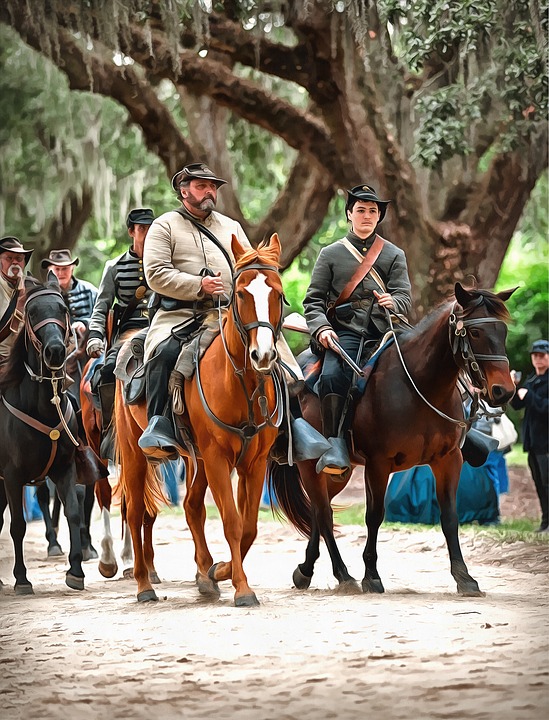
This Week in History: Greencastle, Pennsylvania and the Gettysburg Campaign

Monday, June 15, 1863

The fall of Martinsburg, Virginia, (now West Virginia) on June 14th encouraged Confederate Lieutenant Hermann Schuricht, Fourteenth Virginia Cavalry. He was happy that the glorious battle ended with the Southerners in possession of the city and several thousand bushels of grain. It was the first Battle of Martinsburg.

Buglers sounded orders to mount their horses around 2 am. By breakfast time Schuricht and his comrades were in Williamsport, Maryland, where the residents kindly set up tables in the streets stocked with meat, bread, and milk. Schuricht and other hungry troops ate quickly before remounting.

They received an enthusiastic welcome from the ladies in Hagerstown, Maryland, at noon. The women gave flowers to the soldiers. The children shouted, “Hurrah for Jeff Davis!”

They rode to Greencastle, Pennsylvania. General Albert G. Jenkins divided his brigade. Schuricht, along with others in the right wing who intimidated locals by waving muskets and pistols, rode his horse over ditches and fences to take the town. Federal cavalry there all escaped except one lieutenant.

The Confederates cut telegraph wires and destroyed the railroad depot in Greencastle.

Their day wasn’t over.

By 11 pm, an exhausted Schuricht entered Chambersburg, Pennsylvania, with his companions. They camped on the eastern outskirts of town.

Confederates occupied Greencastle from mid-June until early July. Federal cavalry led by Captain Ulric Dahlgren rode into the town square on July 2nd. The Union troops captured several Confederate cavalry troops in the square while a bigger battle took place in another part of Pennsylvania.

Gettysburg.  

-Sandra Merville Hart

Sources

Gragg, Rod. The Illustrated Gettysburg Reader, Regnery History, 2013.

“Greencastle, Pennsylvania,” Wikipedia, 2017/05/01 https://en.wikipedia.org/wiki/Greencastle,_Pennsylvania.

Long, E.B with Long, Barbara. The Civil War Day by Day: An Almanac 1861-1865, A Da Capo Paperback, 1971.

Noyalas, J. A. “Martinsburg during the Civil War.” Encyclopedia Virginia. Virginia Foundation for the Humanities, 27 Oct. 2015. Web. 1 May. 2017.
This Week In History: Battle of Perryville

landscape-1259711_960_720

Wednesday, October 8, 1862

Confederate General Braxton Bragg led his army into Kentucky, a border state, in the summer of 1862. The largest battle fought in that state happened near Perryville at the Chaplin Hills; therefore, it is called the Battle of Perryville and the Battle of Chaplin Hills.

Buell’s Union troops in the rear didn’t hear cannons and musket fire from the front lines because of an atmospheric phenomenon that masked the noise. Buell didn’t hear the familiar combat sounds that would have prompted him to send in reserve soldiers.

This phenomenon also affected Bragg. Though the Southerners won, being outnumbered more than two-to-one and low on supplies prompted him to retreat.

This ended the Confederate invasion of Kentucky.

-Sandra Merville Hart

Sources

Long, E.B with Long, Barbara. The Civil War Day by Day: An Almanac 1861-1865, A Da Capo Paperback, 1971.

“Perryville,” Civil War Trust, 2016/08/03 http://www.civilwar.org/battlefields/perryville.html.

This Week In History: Civil War Battle of Poplar Springs Church (Peebles’ Farm)

civil-186719_960_720

Thursday, September 29 – October 2, 1864

The Union lines under General Ulysses S. Grant had faced Confederate lines under General Robert E. Lee in trenches around Petersburg, Virginia, since June. The line extended to Richmond 25 miles to the north.

Grant attempted to drive the Southerners from the trenches. Warren’s Fifth Corps led an advance toward Poplar Spring Church with John G. Parke’s Ninth Corps following. Warren attacked successfully at first, but Confederate General A.P. Hill led a strong counterattack that drove Parke’s troops back and prevented territory loss.

The two Union corps then entrenched close to Peebles’ Farm. This newly formed line on Squirrel Level Road forced Confederates to shift positions. Hill brought in two additional divisions to meet the new threat.

Union soldiers attacked unsuccessfully on October 1st. They failed to reach the Southside Railroad, which remained under Confederate control.

-Sandra Merville Hart


Sources

Long, E.B with Long, Barbara. The Civil War Day by Day: An Almanac 1861-1865, A Da Capo Paperback, 1971.

“Battle of Poplar Springs Church (Peebles’ Farm,)” History.com This Day in History, 2016/08/04 http://www.history.com/this-day-in-history/battle-of-poplar-springs-church-peebles-farm.