Civil War Women: Annie Turner Wittenmyer, Diet Kitchen

Annie Turner Wittenmyer, a wealthy widow by the time the Civil War began, threw her efforts into providing hospital supplies needed by Union soldiers. The Iowa resident visited soldiers in army camps.

She established local aid societies throughout Iowa to collect hospital supplies. Her efforts were recognized. She was appointed the leadership of the Iowa State Sanitary Commission in September of 1862.

Annie continued to bring food and blankets to soldiers in army camps, field hospitals, riverboats, and on the battlefields. While there, she saw the food given to soldiers, such as hardtack and greasy bacon, and it distressed her. The men suffered from scurvy and typhoid.

Her brother, David Turner, was in an army hospital in Sedalia, Missouri. While she was with him, David was given fried bacon, bread, and strong coffee. Though she nursed him back to health, the problem of the food given to wounded and sick men remained on her mind.

An idea for a Diet Kitchen at army hospitals came to her in December of 1863. She proposed her idea to Edwin Stanton, Secretary of War, and President Abraham Lincoln.

Receiving charge of kitchens in all Union army hospitals, Annie started in Nashville, Tennessee. She trained female workers to prepare light meals with individual attention to each patient’s needs. By working with each patient’s doctor, the ladies gave nourishing meals.

Over 100 Diet Kitchens, staffed by two trained women, had been established by the end of the Civil War. By then the army’s medical department had generally adopted the Diet Kitchen.

These kitchens offered another way for women to serve.

-Sandra Merville Hart

Sources

“Annie Turner Wittenmyer,” Brittanica.com, 2018/12/28 https://www.britannica.com/biography/Annie-Turner-Wittenmyer.

Longden, Tom. “Annie Wittenmyer,” Des Moines Register, 2018/12/28 https://data.desmoinesregister.com/famous-iowans/annie-wittenmyer.

Williams, Rachel. “The United States Sanitary and Christian Commissions and the Union War Effort,” National Museum of Civil War Medicine, 2018/12/27 http://www.civilwarmed.org/commissions/.
 

United States Sanitary Commission

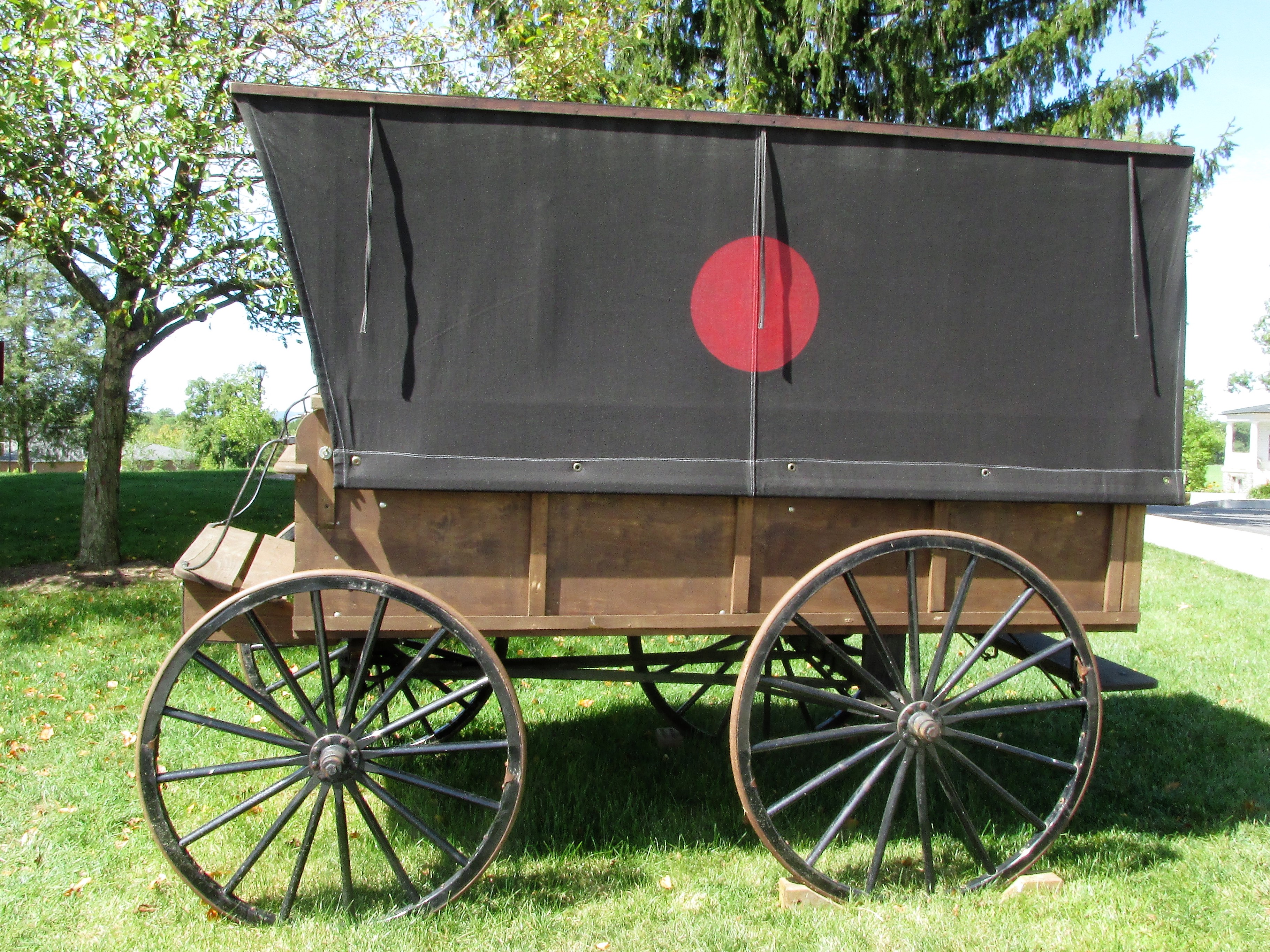
Ambulance outside Lutheran Seminary, Gettysburg.


Authorized by the War Department in June of 1861 to aid Union military, the United States Sanitary Commission supported sick and wounded soldiers. The organization was patterned after the British Sanitary Commission used during the Crimean War.

The Sanitary Commission’s central office was located on Pennsylvania Avenue and 15th Street inside the United States Treasury Building, just east of the Executive Mansion (White House.)

Massachusetts clergyman Henry Whitney Bellows served as the United States Sanitary Commission’s (USSC) only president. Landscape architect Frederick Law Olmsted—the designer of New York City’s Central Park—was the first executive secretary. New York lawyer George Templeton Strong served as treasurer. Their goals included coordinating citizen relief work and advising politicians about recruiting and training medical workers, which included female nurses. USSC was divided into three departments.

The Preventive Service Department improved living conditions for soldiers by inspecting military hospitals and army camps. Concerned with preventing and treating diseases, they also published medical tracts for doctors.

The Department of General Relief relied on citizens’ donations to buy food, clothing, blankets, and medical supplies for wounded soldiers.

The Department of Special Relief aided soldiers returning to civilian life. Families of disabled soldiers also received help.

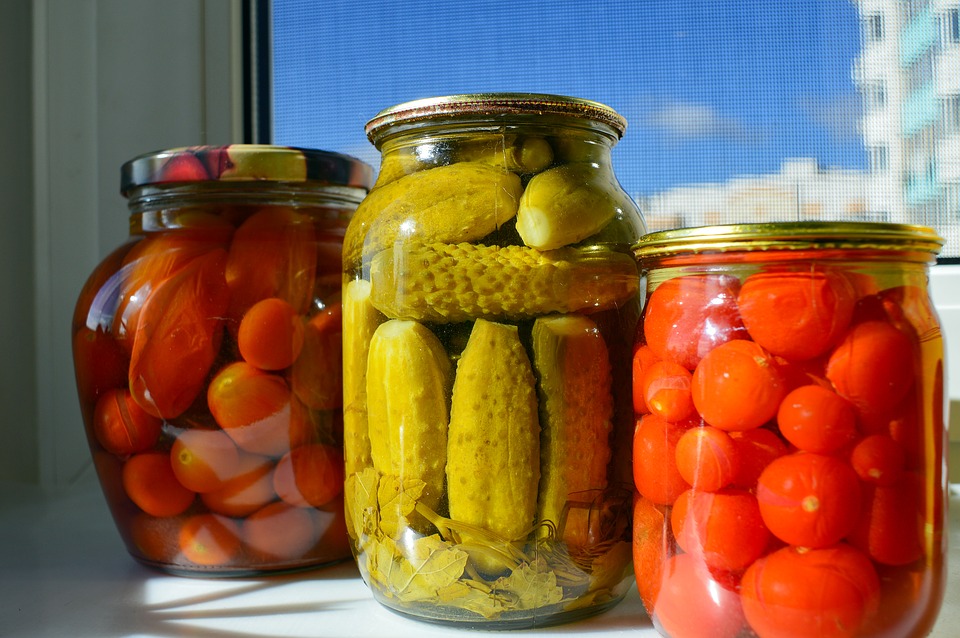
To fight scurvy among the soldiers, USSC encouraged donations of vegetables, including fresh and pickled vegetables.

USSC set up hospitals and staffed them. With the help of local chapters, steamboats were converted to hospital ships. They established soldiers’ homes.

Large cities and local communities held Sanitary Fairs to raise money to aid soldiers through USSC. Through thousands of volunteers, the Commission raised about $25 million (equivalent of over $400 million in 2018.) This impressive amount aided Union soldiers and the Northern cause.

-Sandra Merville Hart

Sources

Moore, Frank. Women of the War, Blue/Gray Books, 1997. (originally published 1866).

Williams, Rachel. “The United States Sanitary and Christian Commissions and the Union War Effort,” National Museum of Civil War Medicine, 2018/12/27 http://www.civilwarmed.org/commissions/.

“United States Sanitary Commission,” Ohio History Central, 2018/12/27, http://www.ohiohistorycentral.org/w/United_States_Sanitary_Commission.

“United States Sanitary Commission,” Wikipedia, 2018/12/27 https://en.wikipedia.org/wiki/United_States_Sanitary_Commission.

Civil War Union Captain’s Thoughts While Marching to Pennsylvania

From Observation Tower at Oak Ridge, Gettysburg Battlefield

Confederate General Robert E. Lee began moving his Army of Northern Virginia toward Pennsylvania in June of 1863.

President Abraham Lincoln appointed Major General George Gordon Meade as commander of the Army of the Potomac. Meade issued his first orders on June 28, 1863.

Meade’s army marched north the following rainy morning on muddy roads. Captain Samuel W. Fiske, 14th Connecticut Infantry, wrote of the march across Maryland into Pennsylvania, his account a bit nostalgic.

Fiske didn’t know where his army was heading when he heard the bugle call to strike tents and begin the journey. He and his comrades didn’t know how long it would take to arrive—they had to blindly trust.

Fiske tried to enjoy each hour, always ready for either a skirmish or a picnic. He never knew when he’d be called to picket, bivouac, or retreat.

He reasoned that no other occupation required more faith than soldiering: faith in his own strength; faith in his army’s joint strength; faith in his commanders’ experience and watchfulness; faith in their country’s cause; and faith in God’s care and protection.

Captain Fiske enjoyed Maryland’s beauty after the war-ravaged sights in Virginia. He hated to see war roll over the peaceful countryside yet felt a battle on Northern soil might end the war.

Fiske hoped that Pennsylvania citizens weren’t so afraid that it prevented them from defending their homes. A newspaper article that he read that day told of the “chief burgess” of York looking for someone to surrender to eight to ten miles outside his city. Fiske didn’t believe that leader represented his city well.

When the captain considered his army’s recent losses, he felt he was part of “the unfortunate ‘grand army’” that couldn’t reasonably make big promises. Yet since that army would once again stand in front of Confederates, they deserved their country’s respect and support.

At the time his writing, Fiske and his comrades dealt with fatigue from marching for sixteen days. Though their numbers were depleted by the expiration of service terms, these experienced veterans had become a formidable army.

-Sandra Merville Hart

Sources

Gragg, Rod. The Illustrated Gettysburg Reader: An Eyewitness History of The Civil War’s Greatest Battle, Regnery History, 2013.


Civil War – Enlisting

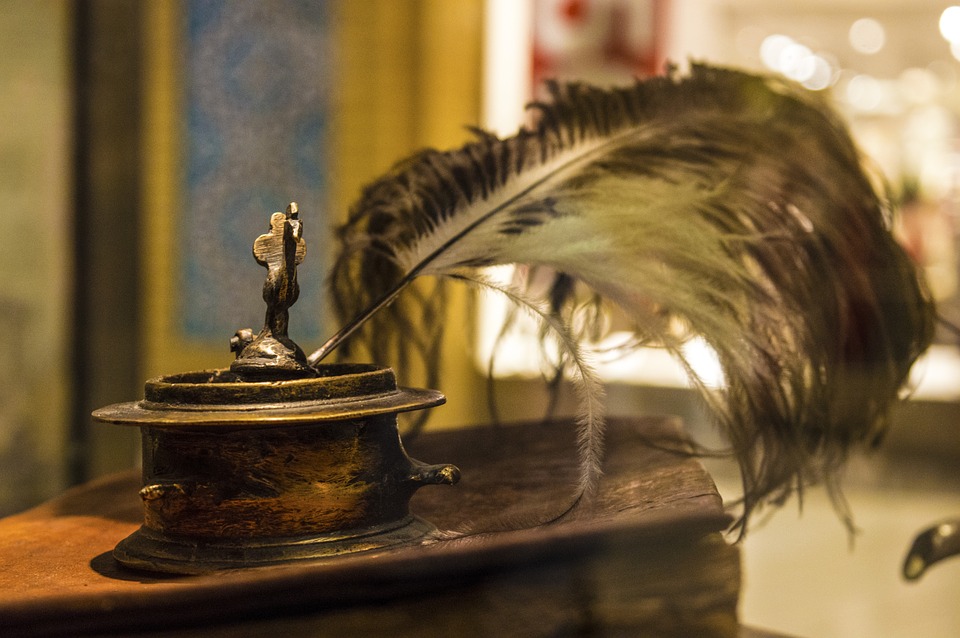
pen-1035081_960_720

President Abraham Lincoln saw early in the war that the three months originally asked of Union soldiers wasn’t long enough and put out a call for three-year volunteers on May 3, 1861. Thousands responded.

The War Department assigned a quota for additional troops to each state in 1862. The states then informed cities and towns how many men each must furnish to meet the quota.

Towns held outdoor war meetings where orators encouraged men to enlist. Musicians performed. Choirs sang “Red, White, and Blue” and “Rallied ’Round the Flag.” Veteran soldiers who fought in 1812 fired up the crowds by saying they’d enlist again if not so old. A woman, waving a handkerchief, said she’d fight if she was a man.

Some man usually offered to enlist if a certain (higher than expected) number of others signed up. John Billings, Union soldier, witnessed one man issuing such a challenge who, when the number was met, crept away without signing as townspeople jeered.

american-flag-1911633_960_720Flags waved. Choirs continued to sing. The patriotic fever-pitch prompted many to sign. Once the first hero signed his name and was led to a platform in front of a cheering crowd, a second man stepped forward. Soon there was a line in front of the enlistment roll.

After signing the roll, recruits submitted to a medical examination to determine fitness to serve. The men, naked, were examined with thumps to the chest and back. They jumped, bent over, and kicked to determine soundness. Teeth and eyesight were checked. A certificate was given when passing the test.

Then he went to the recruiting station to sign the company or regimental roll that he was entering. With his signature, the recruit included his height, complexion, and occupation.

After this, a guard accompanied him to an examining surgeon to determine his soundness to serve.

These soldiers trained in camps for several weeks for new regiments. If they joined an existing regiment, they were usually fighting much sooner.

Before leaving the state, soldiers were mustered into service. Here is the oath of muster:

“I, (name), do solemnly swear that I will bear true allegiance to the United States of America, and that I will serve them honestly and faithfully against all their enemies and opposers whatsoever, and observe and obey the orders of the President of the United States, and the orders of the officers appointed over me according to the rules and articles for the government of the armies of the United States.”

-Sandra Merville Hart

Sources

Billings, John D. Hardtack & Coffee, University of Nebraska Press, 1993.


Soldier’s Letter – Civil War

american-civil-war-316987_960_720

Civil War soldiers loved to receive letters from home. Wives, mothers, and sweethearts also sent care packages to their soldiers. Even if a pie didn’t survive postal delivery intact, men still devoured every edible crumb with a thankful heart.

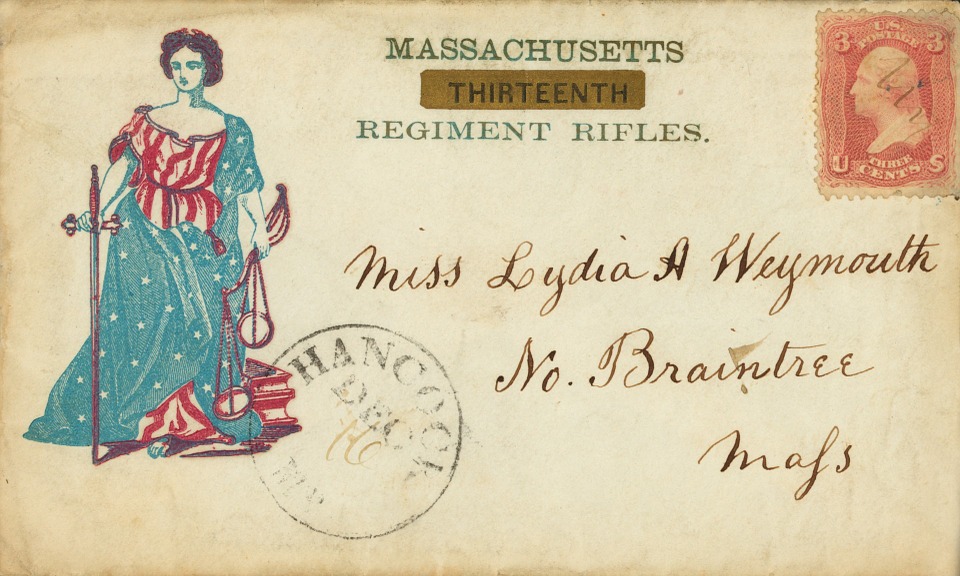
Soldiers purchased envelopes to send their replies back home. One of the fun traditions of the time was that these envelopes were decorated by those who manufactured them.

Flags, patriotic scenes, portraits of Union generals, and army camp scenes were printed on the envelopes, or “covers” as they were also called.

John D. Billings, Union soldier and author of Hardtack and Coffee, wrote of a young man who collected over 7,000 decorated envelopes from the war—each with a unique design.

Some featured specific regiments, listing battles where they fought.

Billings kept a few envelopes from his days in the war. One contained a 34-star border, a star for every state in the Union at the time. An eagle held a shield and a streamer which read, “Love one another.”

Another from his collection showed a drawing of the earth with “United States” printed on it and an American eagle above it. The inscription was “What God has joined, let no man put asunder.”

A third was a sketch of a man with moneybags riding horseback at breakneck speed. The inscription: “Floyd off for the South. All the Seceding States ask is to be let alone.”

One showed President Washington’s portrait with the inscription of “A Southern Man with Union Principles.”

images-1194186_960_720Billings wrote that the designs expressed the feelings of Northerners.

Union soldiers received envelopes from the U.S. Christian Commission with their organization’s stamp and the words “Soldier’s Letter.”

The Postmaster General allowed soldiers to send letters without stamps, representing prepayment, beginning in 1864. They had to write “Soldier’s Letter” on the envelope.

One soldier wrote the following verse for the Postmaster General:

Soldier’s letter, nary red,

       Hardtack and no soft bread,

       Postmaster, please put it through,

       I’ve nary cent, but six months due.”

-Sandra Merville Hart

Sources

“American Civil War Soldier Letters Home,” Americancivilwar.com, 2017/02/08 http://americancivilwar.com/kids_zone/soldiers_letters_civil_war.html.

Billings, John D. Hardtack & Coffee, University of Nebraska Press, 1993.


Civil War: Union Army Rations

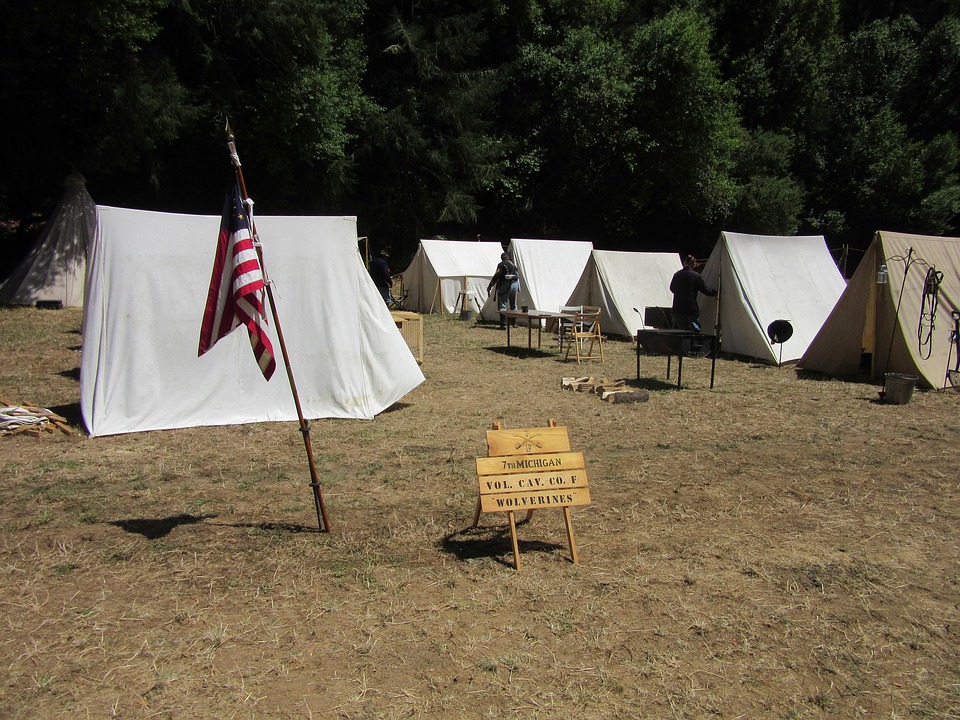
camp-1786750_960_720

John D. Billings was a Union Army soldier. Billings served as a private in the Tenth Massachusetts Battery for three years. He wrote Hardtack & Coffee, a wonderful book originally published in 1887.

These are the normal rations he received as a private:

Salt pork, fresh beef, salt beef

Ham or bacon were rarely issued

Hard bread, soft bread, flour

Potatoes, occasionally an onion

Beans, rice, split pease (peas)

Dried apples, dried peaches

Desiccated vegetables

Sugar, molasses

Coffee, tea

Vinegar

Salt, pepper

Candles, soap

Soldiers didn’t receive all these rations at the same time. Only one meat was issued at a time and that was usually pork. Soldiers received either hard bread, soft bread, or flour. They drew beans or rice or peas.

Soldiers were entitled to the following as a single day’s rations:

12 oz. pork (or bacon) or 20 oz. salt beef or fresh beef;

22 oz. soft bread (or flour) or 16 oz. hard bread or 20 oz. corn meal

For every hundred rations (soldiers received a share of these):

One peck of pease (peas) or beans;

10 pounds of rice or hominy;

10 pounds of green coffee or 8 pounds of roasted ground coffee or 1 ½ pounds of tea

15 pounds of sugar

20 oz. of candles

4 pounds of soap

2 quarts of salt

4 quarts of vinegar

4 oz. of pepper

Half bushel of potatoes when practicable

1 quart of molasses

In addition, desicatted vegetables were also issued. These were large round cakes of compressed vegetables, about two inches thick. They had to be soaked to be edible and even then, there was some doubt about the wisdom of eating it. Soldiers dubbed them “desecrated vegetables.”

According to Abner Small, 16th Maine, none of his comrades could figure out what was in it. Charles E. Davis, 13th Massachusetts, thought it tasted, when cooked, like herb tea.

Pickled cabbage, dried fruits, vegetables, and pickles were sometimes included in rations to prevent scurvy.

According to Billings, these were the rations given to the rank and file soldiers, as privates were sometimes called.

-Sandra Merville Hart

Sources

Billings, John D. Hardtack & Coffee, University of Nebraska Press, 1993.

“Hungry? How about worm castles and desecrated vegetables?” CivilWar.org, 2017/02/08 http://www.civilwar.org/education/pdfs/civil-war-curriculum-food.pdf.


Civil War: Hardtack and Salt Horse

camp-1569046_960_720

John D. Billings, a Union Army soldier, served as a private in the Tenth Massachusetts Battery for three years. He taught school after the war. He also wrote Hardtack & Coffee, a book originally published in 1887.

Billings talks about food rations. As a soldier in the Army of the Potomac, he did not remember being without rations more than a day or so. Wagon trains were often several hours behind when on the march or in battle. Soldiers generally had advance notice of a delay in receiving their rations and ate sparingly of food they still had in their haversack.

The quality of the food left something to be desired. Armies served quantities of stale beef or salted beef (soldiers referred to salted meat as “salt horse”) or unwholesome pork.

Hardtack, a plain flour-and-water biscuit, was often so hard that soldiers couldn’t bite it. A strong fist blow could break them. According to Billings, soaking hardtack didn’t soften it. Instead the soaked cracker eventually turned elastic like gutta-percha, a tough plastic material resembling rubber. Yuck!

Another problem with hardtack is that they were sometimes moldy and wet when privates received them. Billings believed the crackers had been packaged too soon, perhaps still warm from the oven. Hardtack also got damp in wet weather when stacked at railroad depots awaiting trains to take them to army camps. Billings blamed inspectors’ negligence for food, ruined by rain or sleet, reaching the army camps.

It gets worse. You may want to skip the next paragraph.

Hardtack sometimes became infested with weevils and maggots in storage. This problem wasn’t usually enough to keep them from being distributed. Soldiers still drew the infested crackers as rations.

Nine pieces of hardtack were a single ration for some regiments while ten pieces were given in others. It was usually not a problem either way; there was enough for those who wanted a larger number because some soldiers refused to accept them at all.

-Sandra Merville Hart

Sources

Billings, John D. Hardtack & Coffee, University of Nebraska Press, 1993.

“Gutta-Percha,” Merriam-Webster, Incorporated, 2017/02/08 https://www.merriam-webster.com/dictionary/gutta%E2%80%93percha.

“Salt Horse,” Merriam-Webster, Incorporated, 2017/02/08 https://www.merriam-webster.com/dictionary/salt%20horse.