The Secret Language of Fans

by Sandra Merville Hart

Hand fans have been used for about 4,000 years, beginning with the Egyptians. They were used in ancient Greece to shoo flies and to fan the flames while cooking by the 4th century BC. In ancient China, fans were made of silk, bamboo, wood, paper, or feathers.

Folding fans were heavily imported from China to European countries beginning in the 1600s. Some fifteenth-century fans that still survive contain cut-out designs in a lacy pattern. After a while, the fans were painted with leaves, flowers, and scenes commemorating special occasions. The sticks were made of bone, ivory, horn, mother of pearl, tortoise shell, or wood.

It seems that a language was associated with the fans, though it’s unclear how much it was used. When it began, the communication was done with individual letters. This evolved into making gestures in a secret flirtatious language first published by Fanella, a Spanish man. Then Fran Bartholomew wrote them in German.

In 1827, Jean-Pierre Duvelleroy opened a fan-making house in Paris. His fans sparked a wider use of fans at balls. Jean-Pierre gave his London Duvelleroy house to Jules Duvelleroy, his son. Jules published an English version of “The Language of the Fan”.

Here are a few of the codes:

Carrying the fan in the right hand in front of the face: Follow me

Draw the fan across the face: I love you

Place the fan on the left ear: I wish to get rid of you

Touch the fan’s tip with finger: I wish to speak to you

Let the fan rest on right cheek: Yes

Let the fan rest on left cheek: No

Fan slowly: I am married

Fan quickly: I am engaged

Open wide: Wait for me

With little finger extended: Goodbye

Of course, the young man must understand the meaning or the young woman’s efforts are in vain.

Some sources question how much this coded language was used. The best source would be novels written during that time.

Sources:

“Duvelleroy,” Wikipedia, 2025/04/21 https://en.wikipedia.org/wiki/Duvelleroy.

“Hand Fan,” Wikipedia, 2025/04/19 https://en.wikipedia.org/wiki/Hand_fan.

Hawkins, Linda J. The Unspoken Language of Fans & Flowers, Heart to Heart Publishing, 2007.

Luckel, Madeleine. “Why It’s Time to Revisit the Handheld Fan—And Its Secret Language,” Vogue, 2025/04/19 https://www.vogue.com/article/secret-language-of-the-fan-eighteenth-century-fans-de-young-museum.

Sayers, Rachel. “Let the Fan Do the Talking: Flirting in the Victorian Era,” The National Trust for Scotland Foundation USA, 2025/04/19 https://ntsusa.org/fan-victorian-flirting/.

Starp, Alexandra. “The Secret Language of Fans,” Sotheby’s, 2025/04/10 https://www.sothebys.com/en/articles/the-secret-language-of-fans.
How Fashion Changed Dramatically in 1920

1920 Fashion (002)*** Today’s article was written by guest author, Tamera Lynn Kraft. Welcome to Historical Nibbles, Tamera!


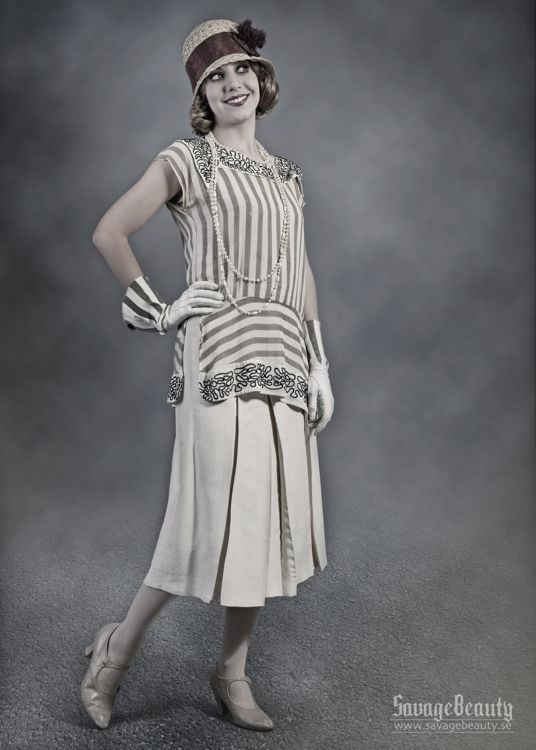
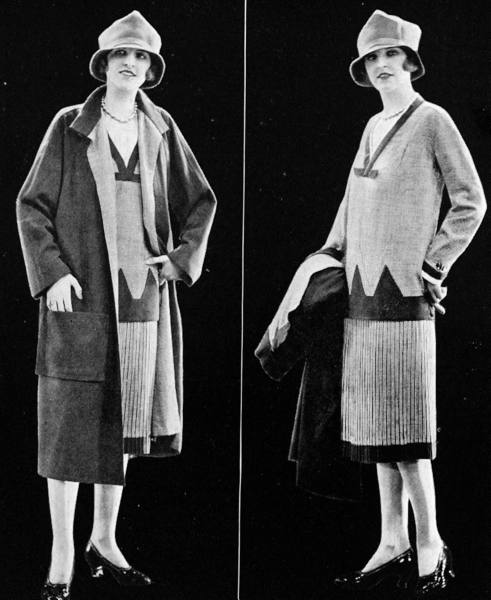
Studying fashion in 1919-1920 for my novella, Resurrection of Hope, was difficult because fashion changed so much in the couple of years leading up to the roaring twenties. Only ten years earlier, women had to contend with bustles and corsets. Hobble skirts that gathered close around the ankles made walking difficult. By the 1915, shirts became full and were just above the ankles. The bustles and corsets that had cursed women for decades were being thrown out. In 1918, straight line dresses were becoming popular, and skirts were actually a few inches above the ankle. The flapper style we know from the roaring 20s was starting to make its appearance.

In 1918, the flapper era started showing up in the cities first. Most women were conservative and wore their skirts a few inches below their knees which was scandalous five years earlier. By 1922, skirts were worn to the knee even in rural areas. The shift or chemise dress with the lowered waistline became popular in 1916 and continued throughout the 1920s. Tailored suits became popular among working women. Most dresses were sleeveless, and women wore sweaters over them on cold days. Jewelry to accessorize the new look became important, and women wore long beaded and pearl necklaces looped around the neck and large bracelets. In the winter, women finished the look with long fur coats.

Kraft 1920 Fashion (002)During World War I, many women had to work outside the home. They started to wear bobbed hair styles because they were easier to take care of. By 1920, the style took off and most women bobbed their hair even in more rural areas and conservative areas of the country. Cloche hats that fit tight around the face were becoming popular and went with the new short hair styles.

In the Victorian era, make-up was considered vulgar, but that changed in the early 1900s. By 1900, women started wearing powder to achieve a pale look. Once that became acceptable, women started wearing makeup to look younger without looking like they were actually wearing makeup. Max Factor opened in 1909 with its first makeup counter and supplied makeup to silent movie actresses. In 1917, Theda Bara started a trend by wearing heavy eye makeup in the movie Cleopatra. Women in the city started wearing make-up to look like the actresses on the silent movie screen. It was a few more years before the average farmwife would be seen in public wearing makeup.

-Tamera Lynn Kraft


ResurrectionOfHopeCoverArt72dpiResurrection of Hope

She thought he was her knight in shining armor, but will a marriage of convenience prove her wrong?

After Vivian’s fiancé dies in the Great War, she thinks her life is over. But Henry, her fiancé’s best friend, comes to the rescue offering a marriage of convenience. He claims he promised his friend he would take care of her. She grows to love him, but she knows it will never work because he never shows any love for her.

Henry adores Vivian and has pledged to take care of her, but he won’t risk their friendship by letting her know. She’s still in love with the man who died in the Great War. He won’t risk heartache by revealing his true emotions.

Amazon

Web1Tamera Lynn Kraft has always loved adventures. She loves to write historical fiction set in the United States because there are so many stories in American history. There are strong elements of faith, romance, suspense and adventure in her stories. She has received 2nd place in the NOCW contest, 3rd place TARA writer’s contest, and is a finalist in the Frasier Writing Contest and has other novellas in print. She’s been married for 37 years to the love of her life, Rick, and has two married adult children and two grandchildren.

You can contact Tamera on her website.