Trail’s End set in Wild Western Town of Abilene, Kansas

Before I ever dreamed I’d pick up a pen again, my family took a vacation to Kansas to visit my brother and his family. We visited Abilene one afternoon. I learned a bit about the history of that wild western town … enough that I wanted to know more.

My sister-in-law has family ties to Abilene—another reason for my fascination. In fact, one of her ancestors was a friend of Wild Bill Hickok, who was marshal of Abilene in 1871, the year after our story. In 1870, Marshal Tom Smith insisted that the cowboys be disarmed. Storekeepers, saloon-keepers, and hotel owners were asked to post a sign and collect the guns of their customers. Marshal Smith knew what he was doing. He made the town a safer place. Sadly, he was killed later that year.

Stuart Henry’s Conquering Our Great American Plains was a great resource for my story. Henry lived in Abilene from 1868-1872 as a boy. I love finding treasures like this author’s book that allow me to take my readers back to 1870 Abilene, Kansas. What a gift.

When my editor approached me about writing a cowboy story set in the West, it did not take long for my imagination to take me back to Abilene. Who’d have guessed that a family vacation that took place before I decided to pursue a writing career would lead to a story?

I hope you enjoy traveling back to the Wild West with me as much as I love taking you there.

Sandra Merville Hart, from the Author’s Note in the book

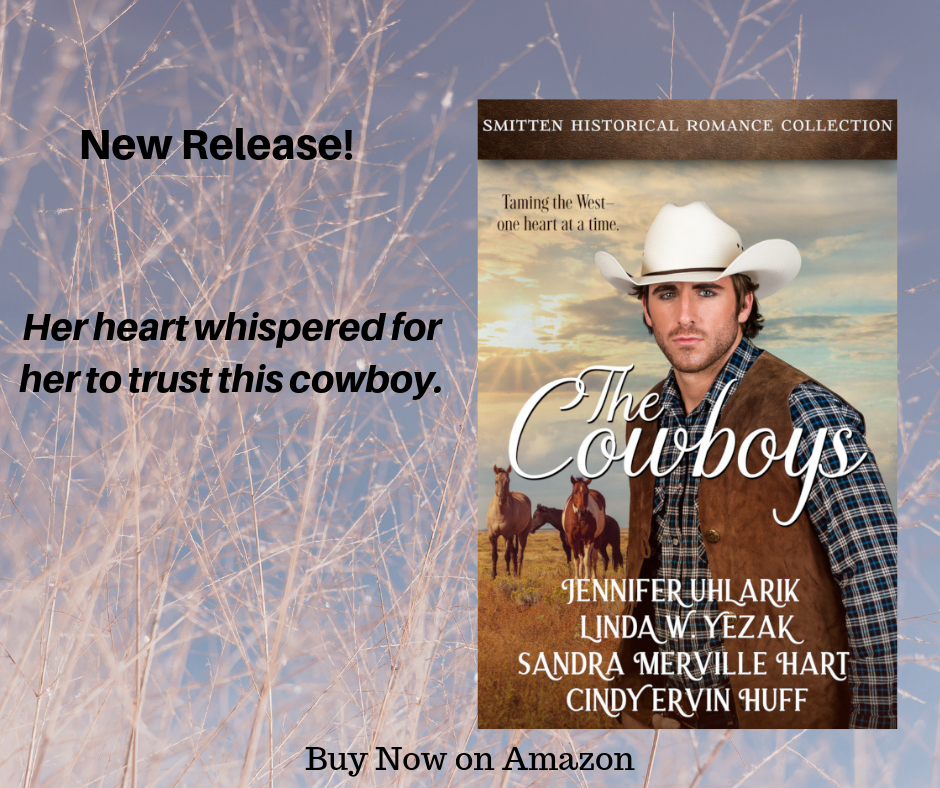
This book is a collection of four novellas by Jennifer Uhlarik, Linda W. Yezak, Sandra Merville Hart, and Cindy Ervin Huff.

Sandra’s story in the collection is called Trail’s End. Here’s a bit about the story:

Trail’s End Blurb

Wade Chadwick has no money until his boss’s cattle sell, so he takes a kitchen job at Abby’s Home Cooking. The beautiful and prickly owner adds spice to his workday. Abby Cox hires the down-and-out cowboy even though the word cowboy leaves a bad taste in her mouth. Just as she’s ready to trust Wade with her heart, money starts to disappear … and so does her brother.


Available on Amazon 

Lighthouse Publishing of the Carolinas  Save money and use coupon code SandraMHart for a 20% discount on Lighthouse Publishing books!
 

The Western Chuckwagon

By Jennifer Uhlarik

Today’s article is from talented author and friend, Jennifer Uhlarik. Jennifer and I have both written a novella in the Smitten collection “The Cowboys.” I’m currently reading Jennifer’s story, Becoming Brave, and it’s a page turner! Welcome to Historical Nibbles, Jennifer!

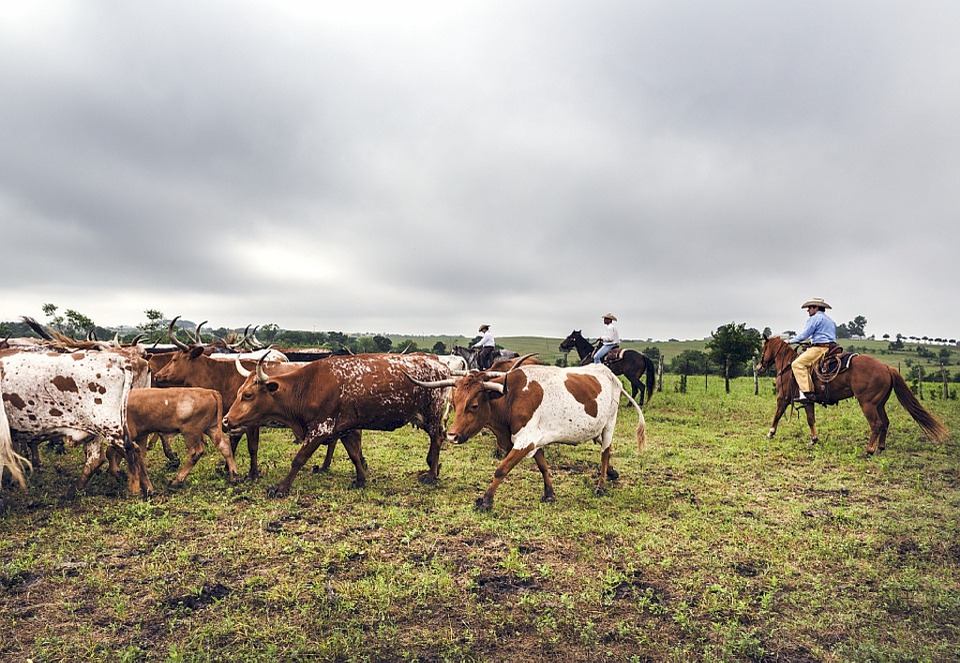
One of the iconic images of the Old West was the cattle drive—cowhands driving a herd of cattle across a thousand miles to the railroad. The work was hot, dirty, and exhausting. The cattle owner wanted to keep his crew healthy and happy on the trail in order to protect the herd, so he promised good pay once the herd was sold, and even better, good food along the way!

In order to feed the crew of ten to twenty men, the outfit’s cook drove a chuckwagon—a mobile kitchen—along with the herd. The chuckwagon was a fairly simple covered wagon with several upgrades. The “chuck box” was a wooden cabinet bolted to the back of the wagon. It had drawers and shelves to hold ingredients, spices, small utensils, and its flat cover folded down to create a workspace for the cook. Beneath the chuck box, a “boot” held the larger items like the cast iron dutch oven and other pieces. A canvas tarpaulin slung under the wagon was called the “possum belly” and held their fuel, typically wood or cow chips, collected along the trail.

The interior of the chuckwagon carried all the staples—bags of flour, salt, sugar, baking powder, baking soda, beans, rice, cornmeal, sourdough, coffee, and syrup. The main meat for meals was beef, though the cowboys would hunt and fish to add variety to their stores. And, of course, sowbelly—a type of salt pork. This was of utmost importance, since everything the cook made was fried in bacon grease.

Most every meal would involve a steak—quickly seared in the fire to seal in the juices, then cooked through more slowly. Add to that beans cooked in a variety of ways, biscuits, stewed fruit or a fruit pie, and coffee to wash it all down. While the meals might not be fancy, they were hearty and filling, and after long hours in the saddle eating trail dust, the men were thankful for the simple yet tasty meals.

The chuckwagon played a very important role in my latest release—Becoming Brave, one of the novellas in The Cowboys. In the story, a young cowhand, Coy Whittaker, stumbles upon the lone survivor of a terrible attack, Aimee Kaplan, and takes her in. He must find a way to transport the poor girl through Indian Territory to safety, all while he and his friends get his boss’s herd to market. Since riding horseback among the cattle was so hot, dusty, and dangerous, Aimee ends up riding in the chuckwagon with the cook much of the way. It was a lot of fun to incorporate a bit about this important part of every cattle drive into the story!


About Jennifer:

After Jennifer Uhlarik raided her big brother’s bookshelf and swiped the only “horse” book she found—a novel by Louis L’Amour, she fell madly in love with the Old West. Soon, she began penning her own stories of daring pioneers who tamed the land. Despite living in the flatlands of West-Central Florida, she continues to write her award-winning, best-selling western fiction with the support of her husband and kids (both the two- and four-legged varieties).

Cover Blurb:

The Cowboys

Taming the west—one heart at a time.

A 4-in-1 novella collection of western romances, including stories from award-winning authors Sandra Merville Hart, Cindy Ervin Huff, Jennifer Uhlarik, and Linda Yezak.

Becoming Brave by Jennifer Uhlarik
When Coy Whittaker stumbles upon a grisly scene littered with bodies, he wants nothing more than to get his boss’s cattle out of Indian Territory. But when a bloodstained Aimee Kaplan draws down on him, his plans—and his heart—screech to a halt.

Amazon