Sandra Merville Hart’s Interview about the Western Theater

Recently, I was invited to interview for The Western Theater in the Civil War website with questions about my inspiration for writing historical novels and the Civil War in the Western Theater. The Battle of Franklin, Tennessee, which was such a tragic loss of life for the Southerners, is also highlighted.

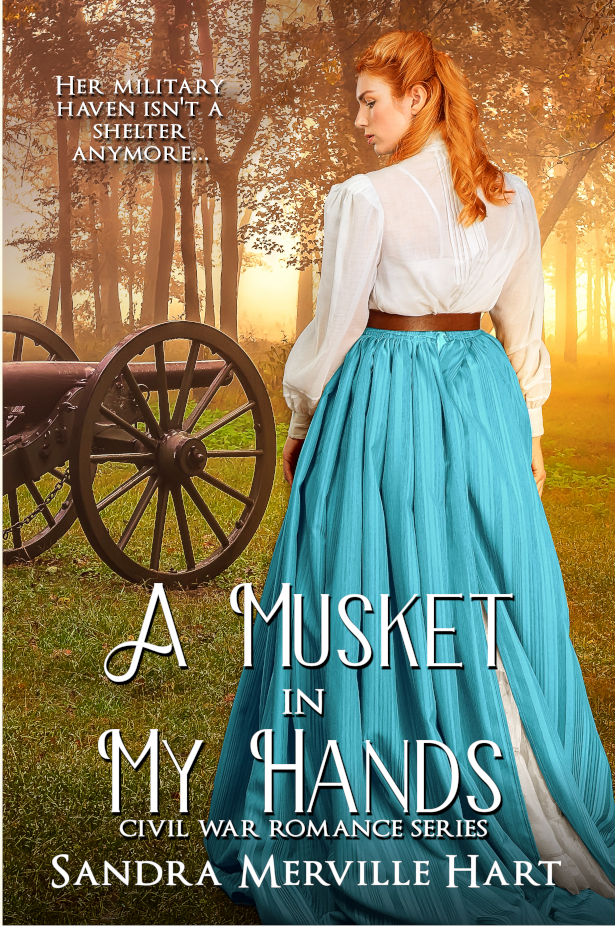
I also answered questions about women disguising themselves as men to pose as Civil War soldiers, an important aspect of  A Musket in My Hands,  which is set in Tennessee, Georgia, Alabama, and Mississippi in 1864.

You can read the interview  here!


Civil War Women: Maria Lewis, Former Slave and Union Soldier

Born around 1846, Maria Lewis lived with her family as slaves in Albemarle County, Virginia. When the 8th New York Cavalry came to the area during the Civil War in October of 1863, she disguised herself as a darkly-tanned white man and joined Company C of that regiment.

Maria mustered in as George Harris, who was a hero in Uncle Tom’s Cabin. In Harriet Beecher Stowe’s novel, Harris escaped slavery by posing as a Spanish gentleman.

Her first intentions were to remain a soldier long enough to travel North to freedom. Perhaps to her surprise, she discovered that she enjoyed army life. She skirmished, scouted, and fought with General Sheridan’s cavalry for the next eighteen months.

They burned houses and mills. They destroyed railroads and bridges.

On March 2, 1865, Maria rode with the cavalry at Waynesboro, Virginia, where five hundred of Confederate General Jubal Early’s soldiers were captured. The 8th New York seized seventeen battle flags before burning a section of the Shenandoah Valley.

Maria was part of the honor guard who presented the captured flags to Secretary of War Edwin Stanton. The soldiers were granted a month’s furlough.

From there Maria went to the family of 2nd Lieutenant Lewis V. Griffin, a comrade from her regiment. She introduced herself as George Harris to his sister, Julia Wilbur, and then confessed her true identity. She wanted to return to “womanly ways & occupations.”

Though surprised to meet a black woman who served as a Union cavalry soldier, Julia wrote in her diary that she helped Maria as she had helped many other freed slaves. Making plans to find her a job, Julia gave her a chemise, petticoat, and hoops.

Julia first wrote of meeting Maria on April 4, 1865. The last time she mentions her is an entry on Sunday, April 23rd. Her sister was giving Maria a lesson, possibly teaching her to read and write.

In my Civil War novel, A Musket in My Hands, two sister have no choice but to disguise themselves as men to muster into the Confederate army in the fall of 1864—just in time for events and long marches to lead them to the tragic Battle of Franklin.

-Sandra Merville Hart


Sources

Cordell, M.R. Courageous Women of the Civil War, Chicago Review Press, 2016.

“Maria Lewis (soldier),” Wikipedia, 2019/04/26 https://en.wikipedia.org/wiki/Maria_Lewis_(soldier).

Monson, Marianne. Women of the Blue & Gray, Thorndike Press, 2018.

Zeinert, Karen. Those Courageous Women of the Civil War, The Millbrook Press, 1998.


Civil War Women: Jennie Hodgers as Albert Cashier

Born in Ireland, Jennie Hodgers emigrated to United States as a girl. At her stepfather’s prompting, she dressed as a boy to find a job. Jennie moved to Illinois after her mother died.

Jennie enlisted in the Union army in August of 1862 under the name Albert D. Cashier. Small in stature. Quiet. Sought privacy when bathing. Kept her coat buttoned to the chin to hide a missing Adam’s apple. Still, other soldiers didn’t notice anything unusual about Private Cashier.

Jennie fought courageously in forty battles, narrowly escaping capture at Vicksburg.

She mustered out with her comrades in the 95th Illinois Infantry on August 17, 1865. Jennie then faced a dilemma. She couldn’t read or write and the jobs available to her as a woman would keep her at poverty. Living as a man, she’d work as a laborer. She later began receiving a military pension.

So she lived as Albert Cashier and eventually began working for Illinois State Senator Ira Lish. In 1911, Senator Lish ran over her with his car. With a badly broken leg, she was taken to a doctor … who discovered her long-held secret.

Jennie implored the doctor for his silence. Unwilling to see the veteran lose her pension, he agreed.

Things might have progressed as normal after that—if Jennie’s leg had healed. When it didn’t, Senator Lish placed her to the Soldiers and Sailors Home, a home in Quincy for male veterans. Staff members there kept Jennie’s secret.

Unfortunately, her mental health declined along with her physical health. In 1914, she entered Watertown State Hospital for the Insane. They discovered her sex and forced her to wear dresses again.

Newspapers printed her secret. A charge of defrauding the government by collecting a pension was investigated. Her comrades came to her defense, testifying to her bravery as a soldier. She kept her pension.

Jennie was buried in her soldier’s uniform with the name “Albert D. J. Cashier, Co. G, 95 Ill. Inf.” on her tombstone.

The executor of her estate, W.J. Singleton, spent nine years after her death tracking down her real name.

In my Civil War novel, A Musket in My Hands, an ultimatum from their father forces two sisters to disguise themselves as men and muster into the Confederate army in the fall of 1864—just in time for events and long marches to lead them to the tragic Battle of Franklin.

-Sandra Merville Hart


Sources

“Albert Cashier,” Wikipedia, 2018/12/10 https://en.wikipedia.org/wiki/Albert_Cashier.

Freedman, Jean R. “Albert Cashier’s Secret,” New York Times, 2018/12/10  https://opinionator.blogs.nytimes.com/2014/01/28/albert-cashiers-secret/.

Massey, Mary Elizabeth. Women in the Civil War, University of Nebraska Press, 1966.


“Jennie Hodgers aka Private Albert Cashier,” National Park Service, 2018/12/10 https://www.nps.gov/articles/jennie-hodgers-aka-private-albert-cashier.htm.


Civil War Women: Sarah Emma Edmonds as Franklin Thompson

At the age of sixteen in 1857, Sarah Emma Edmondson escaped an arranged marriage and an abusive father. She changed her last name to Edmonds. Emigrating to the United States from New Brunswick, she found a job more easily when disguised as a man, Franklin Thompson. When the war began, she lived in Flint, Michigan. Strong Union views led her to enlist in the 2nd Michigan Infantry as a male field nurse named Franklin Flint Thompson.

Emma nursed her comrades at such battles as the Battle of Antietam. She worked as a hospital attendant. She was also a mail carrier for her regiment, a dangerous job that often required horseback rides of over 100 miles.

A recurrence of malaria struck Emma in the spring of 1863. She requested a furlough, which was denied. Since she dare not visit the army’s medical staff for fear of discovery, she left camp in the middle of the night—Frank Thompson became a deserter.

Emma boarded a train to Oberlin, Ohio, where she recovered in a boarding house as Frank. Then she became a female nurse with the United States Christian Commission, where she served until the war ended. She wrote her memoirs in Nurse and Spy in the Union Army, first published in 1864.

There are no official records of Emma acting as spy for the Union army. She seems to have been talented at disguises. While a spy, she pretended to be Charles Mayberry, a Southern sympathizer; Cuff, a black man; and Bridget O’Shea, an Irish peddler.

After the war, Emma applied for a military pension. An Act of Congress finally cleared Franklin Thompson of desertion and she received the pension in 1884.

In 1897, Emma became the only woman admitted into the Grand Army of the Republic.

Emma left home to escape an arranged marriage, much as one of the sisters faced in my Civil War novel,  A Musket in My Hands. Two sisters disguise themselves as men and muster into the Confederate army in the fall of 1864—just in time for events and long marches to lead them toward the tragic Battle of Franklin.

-Sandra Merville Hart

Sources

Abbott, Karen. Liar, Temptress, Soldier, Spy: Four Women Undercover in the Civil War, Harper, 2014.

Blanton, DeAnne and Cook, Lauren M. They Fought Like Demons, Louisiana State University Press, 2002.

Massey, Mary Elizabeth. Women in the Civil War, University of Nebraska Press, 1966.

“Sarah Emma Edmonds,” Civil War Biography, 2018/12/10 https://www.battlefields.org/learn/biographies/sarah-emma-edmonds.

“Sarah Emma Edmonds,” National Park Service, 2018/12/10 https://www.nps.gov/people/sarah-emma-edmonds.htm.


Civil War Women: Malinda Pritchard Blalock as Sam Blalock

Malinda Pritchard Blalock is one of two women known to have fought for both the Confederacy and the Union during the Civil War. She expressed support for secession before the war started but her husband, William “Keith” McKesson Blalock, was pro-Union. Malinda soon shared his views.

The couple, who lived on Grandfather Mountain in North Carolina, feared Keith would be conscripted into the Southern army. To avoid this, he decided to muster into the Confederate army and then desert to join the Union army. He went with friends to the recruitment office and became part of the 26th North Carolina Regiment, Company F.

Sources disagree here as to whether Malinda signed up as his twenty-year-old brother “Sam Blalock” at the same time or if she disguised herself as a man and surprised him on the march.

The document still exists of her registering as “Samuel ‘Sammy’ Blalock” at Lenoir, North Carolina, on March 20, 1862. Her discharge papers have also survived, documenting a female soldier in the Confederate army.

Unfortunately for Keith and “Sam,” their regiment was stationed at Kinston, North Carolina—not in Virginia where it would be easier to desert.

About a month after they enlisted, Keith’s squad was given a night mission to find a particular Northern regiment. Skirmishing broke out and Malinda was shot in the shoulder. The surgeon who removed the bullet also discovered her identity. She was discharged.

Frantic that her secret was out, Keith found a patch of poison oak in the forest. Discarding his clothes, he rolled around in it and then returned to camp. By morning, a red rash covered his skin. Surgeons gave him a medical release. Malinda confessed that she was his wife and they left together.

Once Confederate forces learned that Keith had recovered they ordered him to return to his regiment. The Blalocks fled to Grandfather Mountain, finding other deserters there. They stayed with this group until Confederate troops found them.

The couple escaped to east Tennessee. Malinda pretended to be Sam again when they joined the 10th Michigan Cavalry. She served as Keith’s aide-de-camp.

Malinda, now pregnant, left the regiment to have her baby son in Knoxville. She rejoined her regiment two weeks later.

Keith and Malinda later joined Union Colonel Kirk’s voluntary guerrilla squadrons on scouting and raiding missions in North Carolina.

In my Civil War novel,  A Musket in My Hands, an ultimatum from their father forces two sisters to disguise themselves as men and muster into the Confederate army in the fall of 1864—just in time for events and long marches to lead them to the tragic Battle of Franklin.

-Sandra Merville Hart

Sources

Blanton, DeAnne and Cook, Lauren M. They Fought Like Demons, Louisiana State University Press, 2002.

“Malinda Blalock,” Wikipedia.com, 2018/12/10 https://en.wikipedia.org/wiki/Malinda_Blalock.

“Malinda Pritchard Blalock,” Rootsweb.com, 2018/12/10 http://sites.rootsweb.com/~ncmitche/sam.html.

Silvey, Ania. I’ll Pass for Your Comrade: Women Soldiers in the Civil War, Clarion Books, 2008.

Slappey, Kellie. “Sarah Malinda Pritchard Blalock (1839-1903),” North Carolina History, 2018/12/10 http://northcarolinahistory.org/encyclopedia/sarah-malinda-pritchard-blalock-1839-1903/.


Attitudes Toward Women Civil War Soldiers

Approximately four hundred known cases of women serving as Civil War soldiers on either side–and an unknown number of ladies who slipped away or died without detection– subjected themselves to possible criticism from the general public and their comrades.

Society and the military were critical of women soldiers who didn’t accompany a male relative such as a husband or brother. The general public was not ready for unmarried women on the front lines.

A Southern journalist categorized women in Confederate military camps in three ways: families of officers, laundresses and cooks, and prostitutes. So how did he classify female soldiers, scouts, and nurses?

The wives of officers living in army camps generally maintained the military’s respect. Union General Ulysses S. Grant sometimes had his family in camp.

The motivation of other women’s presence in army camps puzzled the public. There was a tendency to doubt the female soldier’s conduct. Some endured unjust accusations of misbehavior.

There were also female visitors in camp who came to see loved ones. Most parents refused to allow their young, unmarried daughters to visit army camps. They sometimes sneaked in anyway.

Many women simply wanted to be near their men.

Prostitutes followed the camps. Government records show that camp followers numbered in the thousands around army camps. Some bootlegged liquor and acted as spies.

Hundreds of women, including female soldiers, became pregnant in army camps.

The military and the public knew all this. Unfortunately, those experiences affected how men viewed women soldiers.

The women who served as Civil War soldiers endured many obstacles. Public opinion during and after the war was one of them.

In my Civil War novel, A Musket in My Hands, two sisters have no choice but to disguise themselves as men to muster into the Confederate army in the fall of 1864—just in time for events and long marches to lead them to the tragic Battle of Franklin.

-Sandra Merville Hart


Sources

Abbott, Karen. Liar, Temptress, Soldier, Spy: Four Women Undercover in the Civil War, Harper, 2014.

Blanton, DeAnne and Cook, Lauren M. They Fought Like Demons, Louisiana State University Press, 2002.

Massey, Mary Elizabeth. Women in the Civil War, University of Nebraska Press, 1966.

Silvey, Anita. I’ll Pass for Your Comrade: Women Soldiers in the Civil War, Clarion Books, 2008.

Velazquez, Loreta Janeta. The Woman in Battle: The Civil War Narrative of Loreta Velazquez, Cuban Woman & Confederate Soldier, The University of Wisconsin Press, 2003. (Previously published 1876)


Consequences of Discovery for Women Civil War Soldiers

There are about four hundred known cases of women serving as Civil War soldiers on either side. They enlisted for varying reasons. They faced challenges  at every turn. They were discovered in a variety of ways.

The consequences for the women varied. They could be dismissed or imprisoned, depending on the officer’s decision.

Newspaper reporters wrote of Southern women who were arrested while in uniform. Federals captured two female soldiers and imprisoned them.

A female Union soldier was captured after being wounded in battle. She was sent back to Union lines with a note, “As Confederates do not use women in war, this woman, wounded in battle, is returned to you.”

After being imprisoned on Johnson Island, a Confederate officer delivered a baby boy in December of 1864.

A Union major ordered her men in battle. They later discovered her identity and imprisoned her for violating the “regulations of war.”

Loreta Janeta Velazquez disguised herself as Confederate soldier Lieutenant Harry T. Buford. She was arrested when the apparatus of her disguise slipped. She was charged with acting as a spy and then released, but she returned to her soldier disguise. She was later arrested when comrades suspected her of being a woman. Loreta confessed. The mayor fined her $10 and ordered ten days imprisonment. After her release, she reenlisted in a different company, this one in the 21st Louisiana.

Confederate women who were imprisoned as POWs usually were kept there even after their identity became known.

Female soldiers facing a provost marshal received varying degrees of punishment.

Women were sometimes sent to civilian authorities who could order them to serve time in the city jail or the Guard House. Some women were sent to the workhouse while others were released.

One woman was court-martialed.

In my Civil War novel, A Musket in My Hands, two sisters have no choice but to disguise themselves as men to muster into the Confederate army in the fall of 1864—just in time for events and long marches to lead them to the tragic Battle of Franklin.

-Sandra Merville Hart

Sources

Abbott, Karen. Liar, Temptress, Soldier, Spy: Four Women Undercover in the Civil War, Harper, 2014.

Blanton, DeAnne and Cook, Lauren M. They Fought Like Demons, Louisiana State University Press, 2002.

Massey, Mary Elizabeth. Women in the Civil War, University of Nebraska Press, 1966.

Silvey, Anita. I’ll Pass for Your Comrade: Women Soldiers in the Civil War, Clarion Books, 2008.

Velazquez, Loreta Janeta. The Woman in Battle: The Civil War Narrative of Loreta Velazquez, Cuban Woman & Confederate Soldier, The University of Wisconsin Press, 2003. (Previously published 1876)


Ways that Women Civil War Soldiers were Discovered

Women fighting as Civil War soldiers—whatever their reasons—kept their guard up constantly. There are about four hundred known cases of female soldiers fighting on either side. Many others likely joined for a short time and then donned a dress to quit without detection. Still, it was challenging for the women to remember their pretense twenty-four hours a day. Some were discovered.

A Wisconsin woman, Sarah Collins, donned her stockings and shoes the way a woman did and, before her regiment left town, was sent home.

It’s unclear what Mary Burns did, but she was probably recognized even wearing a uniform. She was arrested in Detroit—her company hadn’t left town yet.

“Charles Norton,” a female private in the 141st Pennsylvania Infantry, stole an officer’s boots. When her identity was discovered, she was quickly mustered out.

Two women soldiers got drunk on apple jack while on a foraging expedition. In their drunken state, they fell into a river. Comrades saved them from drowning. Their rescuers were shocked to discover they were women.

Comrades tossed apples to two female soldiers in the 95th Illinois. The women reached for their nonexistent aprons to catch the apples and were immediately discharged.

A female soldier from Rochester, New York, tried to don pants by pulling them over her head.

A pregnant corporal in a New Jersey regiment was promoted to sergeant for her bravery at the Battle of Fredericksburg in December of 1862. She hid her pregnancy by wearing an over-sized coat. On January 19, 1863, she went into labor on picket duty and complained of feeling unwell. Her complaints were ignored until her pain increased. Comrades carried her to a farmhouse where her healthy baby was born. Everyone learned the news but protected her by not mentioning her real name or her alias. Her name is still unknown today.

The most common way of discovery happened when women were wounded.

A girl from Brooklyn wanted to be the second Joan of Arc. Her family, desiring to save her, sent “Emily” to an aunt in Michigan. She ran away and joined the Army of the Cumberland as a drummer. Her identity was discovered when she was mortally wounded on Lookout Mountain.

Mary Owens enlisted with a man she secretly wed during their eighteen months in the army. She was wounded in the battle that took his life.

Malinda Pritchard Blalock, an excellent shooter, enlisted when her husband, Keith, was forced to muster into the 26th North Carolina Infantry. She pretended to be Keith’s brother, Sam. Her identity was discovered when she was wounded.

In my Civil War novel, A Musket in My Hands, two sisters have no choice but to disguise themselves as men to muster into the Confederate army in the fall of 1864—just in time for events and long marches to lead them to the tragic Battle of Franklin.

-Sandra Merville Hart

Sources

Abbott, Karen. Liar, Temptress, Soldier, Spy: Four Women Undercover in the Civil War, Harper, 2014.

Blanton, DeAnne and Cook, Lauren M. They Fought Like Demons, Louisiana State University Press, 2002.

Massey, Mary Elizabeth. Women in the Civil War, University of Nebraska Press, 1966.

Silvey, Anita. I’ll Pass for Your Comrade: Women Soldiers in the Civil War, Clarion Books, 2008.


Challenges Faced by Women Civil War Soldiers

Loreta Janeta Velazquez as Civil War soldier Lieutenant Harry T. Buford

The Civil War kindled patriotic feelings in men and women on both sides of the conflict. Women who desired to serve their country as soldiers had to disguise themselves as men. They also faced challenges in camp life and in marching with men.

The first thing a woman had to do was sew or buy men’s clothing. She’d need trousers, a coat, shoes, and men’s blouses. Padding strategically sewn on undergarments helped mask female curves. Loreta Velazquez, who disguised herself as Confederate Lieutenant Harry T. Buford, used wire net shields to hide her shape.

The women also had to cut their long hair. Short hair and men’s clothing enabled her to pass as a soldier.

As the war progressed, requirements for physical examinations relaxed. The army needed soldiers and didn’t want to find reasons not to accept them. They had to have teeth so they could tear cartridges open. They needed a trigger finger to fire muskets and rifles.

Life in army camps were challenging. Women used the privacy of the woods for nature calls instead of latrines.

Poor nutrition, long marches, intense physical activities, and weight loss might have caused the women’s menstruation to cease, especially during tough campaigns.

Soldiers slept fully clothed, wearing coat and shoes, so this helped the women’s disguise. Bathing was infrequent yet there were men who also preferred privacy when the opportunity for bathing arose.

Women claimed to be younger than they were to explain the lack of whiskers. They kept their coats buttoned all the way to hide the missing Adam’s apple.

They had to remember to talk like a man.

They carried at least thirty pounds of equipment in addition to their haversack (which held their food) and a knapsack (which held clothing and personal belongings.)

And then there were the challenges of battle. The fear. The chaos. Officers shouting orders. When the noise of battle was too loud for soldiers to hear their officers shout orders, buglers and drummers played them. Soldiers had to know what the tunes meant.

No matter the reason for joining, women who served as Civil War soldiers were courageous.

In my Civil War novel, A Musket in My Hands, two sisters have no choice but to disguise themselves as men to muster into the Confederate army in the fall of 1864—just in time for events and long marches to lead them to the tragic Battle of Franklin.

-Sandra Merville Hart

Sources

Blanton, DeAnne. “Women Soldiers of the Civil War,” National Archives, 2018/09/29 https://www.archives.gov/publications/prologue/1993/spring/women-in-the-civil-war-1.html.

Blanton, DeAnne and Cook, Lauren M. They Fought Like Demons, Louisiana State University Press, 2002.

Massey, Mary Elizabeth. Women in the Civil War, University of Nebraska Press, 1966.

Silvey, Anita. I’ll Pass for Your Comrade: Women Soldiers in the Civil War, Clarion Books, 2008.

Velazquez, Loreta Janeta. The Woman in Battle: The Civil War Narrative of Loreta Velazquez, Cuban Woman & Confederate Soldier, The University of Wisconsin Press, 2003. (Previously published 1876)

Reasons Women Fought as Civil War Soldiers

The Civil War brought tough times for civilians as well as soldiers. Neither the Union nor the Confederate armies allowed women to fight as soldiers, leading some women to disguise themselves as men to muster into the army.

There are about four hundred women known to have served as soldiers on either side. Mary Livermore of the U.S. Sanitary Commission wrote in 1888 that she was convinced the number was much higher. Since most were discovered after being a soldier two years or more, Mrs. Livermore believed that some were never detected.

Why did women join the army?

Newspapers printed stories about soldiers involved in gambling, drinking, and other immoral behavior. Some women mustered in to keep an eye on husbands and beaus.

There were women who chose the army as an escape over unbearable family situations. Some women living in poverty joined for the pay. Some sought adventure, love, or excitement. Others wanted to be near a brother, husband, or fiancé.

As the war continued, bonuses offered to new recruits as well as soldier’s pay enticed some women to enlist.

A myriad of reasons, as individual as the women themselves, drove them to don a soldier’s garb and march into danger.

In my Civil War novel,  A Musket in My Hands, two sisters have no choice but to disguise themselves as men to muster into the Confederate army in the fall of 1864—just in time for events and long marches to lead them to the tragic Battle of Franklin.

-Sandra Merville Hart

Sources

Blanton, DeAnne. “Women Soldiers of the Civil War,” National Archives, 2018/09/29 https://www.archives.gov/publications/prologue/1993/spring/women-in-the-civil-war-1.html.

Blanton, DeAnne and Cook, Lauren M. They Fought Like Demons, Louisiana State University Press, 2002.

Massey, Mary Elizabeth. Women in the Civil War, University of Nebraska Press, 1966.

Silvey, Anita. I’ll Pass for Your Comrade: Women Soldiers in the Civil War, Clarion Books, 2008.