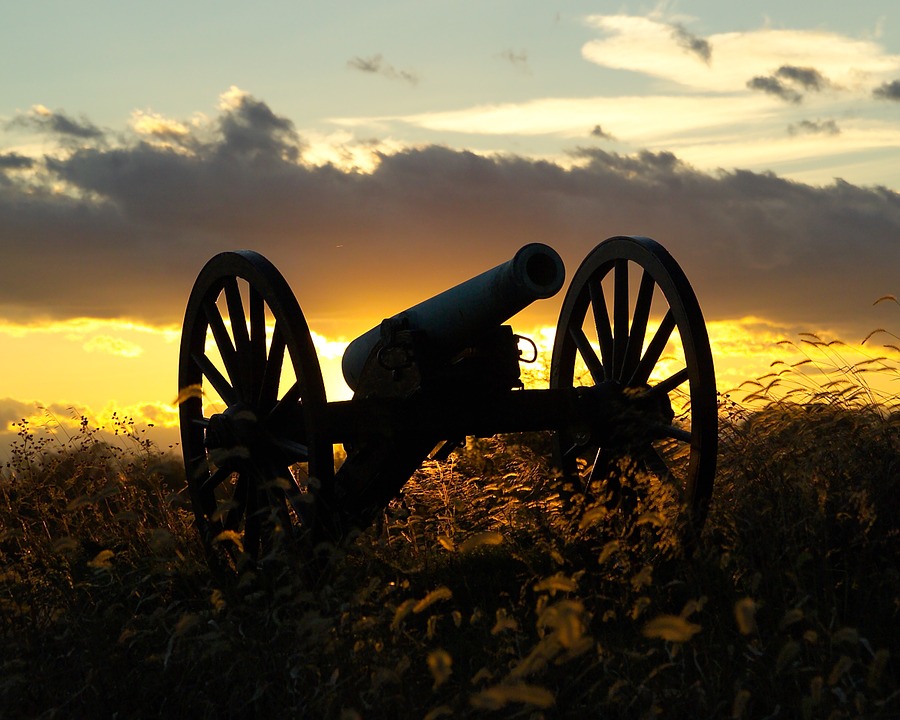
It’s 1861. Before Abraham Lincoln can be sworn in as the new president of the United States of America, Southern states begin leaving the Union.
Everyone is on edge. What will happen next? Then the first shots are fired at Fort Sumter by the Confederates on April 12, 1861.
The Civil War had begun.
Early on, there were women on both sides who wanted to fight in the war as soldiers. Girls who tried to muster into the army by going to recruiting stations were praised by war journalists for their courage.
The Confederate Secretary of War received a letter from a group of over twenty women who offered to organize a volunteer regiment. These ladies from the Shenandoah Valley wanted to join the fight. Their offer was rejected.
Black women—residents of Northern cities like New York and Philadelphia—offered to serve their country as warriors if needed. Their request was refused by local officials.
Soldiers wrote home upon discovering women soldiers in their regiments during the war. Folks were aware of female soldiers fighting in both sides of the conflict.
In 1862, when a Southern woman was found in a Confederate training camp, a Georgia newspaper labeled her a “gallant heroine.”
Reporters and editors praised the patriotism of women soldiers throughout the war. Newspaper articles were reprinted in other cities, spreading the news.
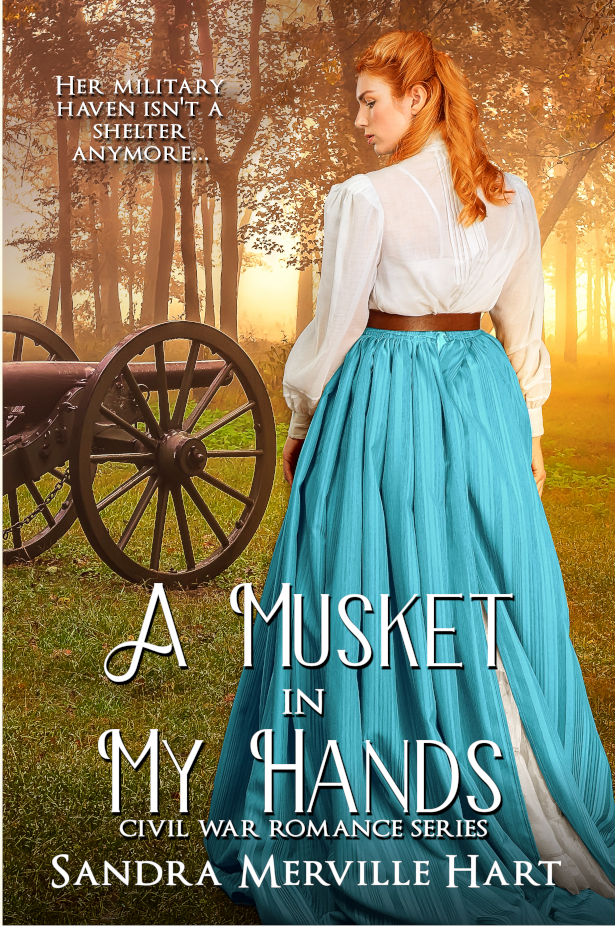 In my Civil War novel, A Musket in My Hands, two sisters have no choice but to disguise themselves as men to muster into the Confederate army in the fall of 1864—just in time for events and long marches to lead them to the tragic Battle of Franklin.
-Sandra Merville Hart
Sources
“Battle of Fort Sumter,” Wikipedia, 2018/09/18 https://en.wikipedia.org/wiki/Battle_of_Fort_Sumter.
Blanton, DeAnne and Cook, Lauren M. They Fought Like Demons, Louisiana State University Press, 2002.
Massey, Mary Elizabeth. Women in the Civil War, University of Nebraska Press, 1966.
Silvey, Anita. I’ll Pass for Your Comrade: Women Soldiers in the Civil War, Clarion Books, 2008.
 Sandra Merville Hart