In March of 1918, the United States had been fighting World War I for almost a year when over 100 soldiers started suffering from fever, chills, and fatigue at Camp Funston in Fort Riley, Kansas. Their diagnosis? Flu. The number grew by five times over the next week.
The spring’s milder bouts of influenza were seen in Europe, Asia, and America and then spread around many parts of the world.
Because of wartime news blackouts, the flu wasn’t initially reported as it should have been. Spain wasn’t under the news blackout. When the disease struck, they reported it. The flu became known as Spanish Flu even though it didn’t originate there.
A second and more serious wave struck in August of 1918. The highest mortality rates were children under 5, adults 20—40, or 65 and older.
Schools and movie theaters closed in some cities due to the contagious nature of the disease. Public gatherings were prohibited. Hoping to avoid overcrowding in subways, the health commissioner of New York City ordered businesses to stagger shifts.
Illness in many workers forced businesses to close.
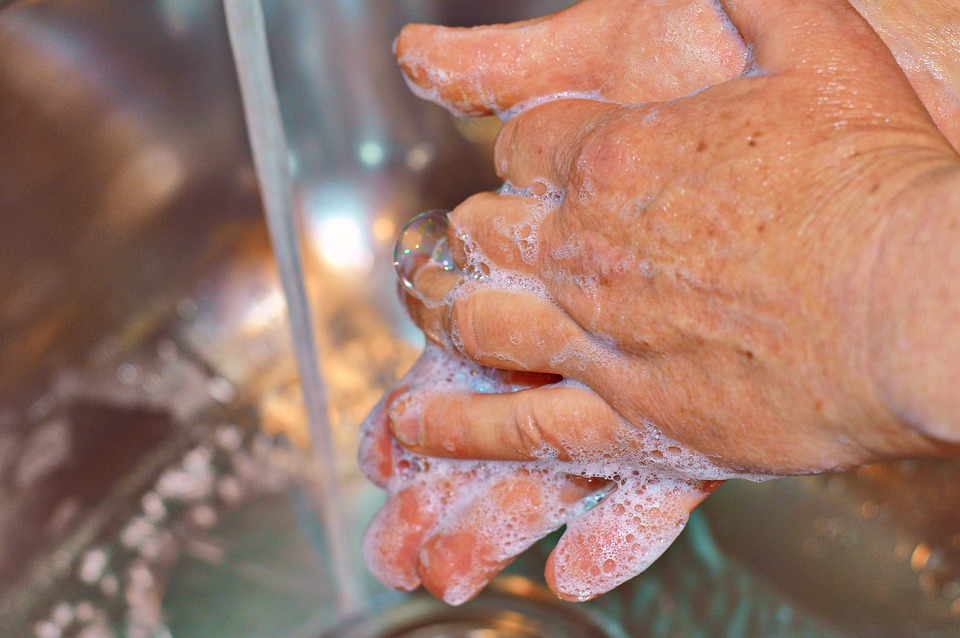
The public was urged to wash their hands when coming home from work, before meals, and when coming inside from the street. They were told to avoid crowds. Wearing masks was encouraged when in public.
These measures seemed to help the cities that followed them early.
Advertisers jumped on the bandwagon. Ads for Lifebouy Soap explained the importance of hand-washing. Some businesses offered no real health benefits yet advertised their products as being recommended for treatments.
With no known cure, doctors gave patients medications they hoped would ease symptoms. Bayer’s 1899 trademark for aspirin expired in 1917. This allowed other companies to produce it. The U.S. Surgeon General had recommended aspirin for the flu. Patients took up to 30 grams a day. Today’s physicians recognize this dosage as toxic—tragically, doctors didn’t know this in 1918. It’s feared that some deaths, originally attributed to the flu, resulted from aspirin poisoning.
There was a shortage of physicians and professional nurses in the fall.
World War I ended in November of 1918. The flu killed more soldiers than battles.
While negotiating the Treaty of Versailles, President Woodrow Wilson collapsed, possibly due to influenza.
January brought a third wave of the pandemic.
When it was finally over in the summer, an estimated 50 million people had died worldwide. Possibly as many as 675,000 of these deaths were in the United States. Because of poor recordkeeping, reports of the actual numbers vary.
-Sandra Merville Hart
Sources
“1918 Pandemic (H1N1 Virus),” Center for Disease Control and Prevention,” 2020/03/28 https://www.cdc.gov/flu/pandemic-resources/1918-pandemic-h1n1.html.
History.com editors. “Spanish Flu,” A & E Television Networks, 2020/03/28 https://www.history.com/topics/world-war-i/1918-flu-pandemic.
“Influenza pandemic of 1918-19,” Encyclopaedia Britannica, 2020/03/28 https://www.britannica.com/print/article/287805.
“’You Must Wash Properly,” Time, 2020/03/28 https://time.com/5810695/spanish-flu-pandemic-coronavirus-ads/.




 Sandra Merville Hart