The Making of Brooms

Today’s post is written by fellow author, Sandra Ardoin. A broom factory figures prominently in her novel, A Reluctant Melody. Welcome, Sandra!

 We all use them, those handy brooms to sweep the dirt from our floors. They’ve been around in one form or another since the dawn of housecleaning. In the early days, it could have been something as simple as a branch or backyard brush—whatever was handy at the time.

Then in 1797 a New Englander by the name of Levi Dickenson decided to make a broom for his wife from sorghum tassels (minus the seeds). Today, we call it broom corn. Like all good inventions, it needed improvement after it fell apart too easily to suit Levi. Even so, his neighbors were impressed and insisted he make them one. This started an industry as he went on to invent a machine with a foot-treadle for ease in filling the orders he received.

In the mid-19th century, the Shakers, who were always an innovative lot, improved Levi’s process, using wire rather than heavy twine to bind the material to the handle. Brooms originally had a round form, but the Shakers employed a vise to flatten the broom and give it shoulders. Then they applied the stitching. They increased the function of their product by also creating the whisk broom.

As the 19th century wore on, small shops across the United States became broom factories and broom corn growth moved to the states we normally think of as being most agricultural. In the first quarter of the 1900s, broom factories began to close. By the end of the 20th century, most of the brooms available to Americans were made outside the U.S.

Though many of the brooms purchased today are made of synthetics, some people continue to craft them the old-fashioned way with the original types of materials—a wooden handle and broom corn—on machines over a hundred years old.

-Sandra Ardoin

BIO:

Sandra Ardoin writes inspirational historical romance. She’s the author of The Yuletide Angel and the award-winning A Reluctant Melody. A wife and mom, she’s also a reader, football fan, NASCAR watcher, garden planter, country music listener, and antique store prowler. Visit her at www.sandraardoin.com and on the Seriously Write blog. Connect with her on Facebook, Twitter, Google+, Goodreads, and Pinterest. Join her email community to receive occasional updates and a free short story.

A Reluctant Melody

A pariah among her peers, Joanna Stewart is all too eager to sell her property and flee the rumors that she sent her late husband to an early grave. But she will let the gossips talk and the walls of her rundown property crumble around her before she’ll allow Kit Barnes back into her life. When a blackmailer threatens to reveal her long-held secret, she must choose between trusting Kit or seeing her best friend trapped in an abusive marriage.

Bury Me with My Pearls by Jane Jenkins Herlong

The full title to the book is Bury Me with My Pearls: Humor with a Spiritual Twist. This title does justice to the stories inside.

For stories from the author’s life burst from the pages. They are “laugh-out-loud” funny. I woke my husband up laughing over the author’s antics long after I should have turned off the lamp and gone to sleep.

Pearls are an image that is woven throughout these devotional thoughts written for women. Southerners will likely feel instant rapport with some of Herlong’s example though this girl with Southern roots had no problem understanding them either.

The author sprinkles plenty of wisdom within her stories. You will laugh. You may cry. You will be blessed.

Definitely recommend this book for women of all ages.

-Sandra Merville Hart

Lighthouse Publishing of the Carolinas Use coupon code SandraMHart for a 20% discount on Lighthouse Publishing books!


Here Comes the Bridal Cake

Today’s post is written by my dear friend and fellow author, Catherine Castle. Her newest novel, A Groom for Mama, just released. She has a fun, witty style of writing that captivates readers. I can’t wait to read this novel. Welcome, Catherine!

If there’s one thing we know about wedding cakes today, it’s that they come in a wide variety of style, flavors and sizes. If you look on the internet you can find wedding cakes ranging from simple two or three layers to towering monstrosities or multi-flavored cakes connected with plastic bridges and even individual cupcakes. But nowhere have I seen a wedding cake that resembles the one the groom broke over his bride’s head in Roman times. In ancient history, and even up to Victorian times, the wedding cake bore little resemblance to the sweet confections of today.

In ancient Rome, the bridal cake was a simple, unsweetened barley loaf. The groom would eat part of the loaf and break the remainder over the bride’s head. This was a symbolic act thought to bring prosperity and good fortune to the couple. Wedding guests would try to eat the crumbs from the cake so they could also share in the good fortune showered down on the bride’s head.

In medieval England, the bridal cake was composed of buns or small cakes. Stories remain from accounts telling of stacking the cakes as high as they would go. If the bride and groom were able to kiss over the tall stack it was thought they would have a life of prosperity.

By the 1660s the story is told of a French chef who was traveling through England and saw the stacked pile of cakes at a wedding. After returning home he devised a method of constructing rounded cakes or buns into a tower form called a Croquembouch. This tiered pile of cakes became the traditional French wedding cake. Today it’s common to place a Croquembouch on top of a more modern layer cake.

From the mid-1700s a Bride’s Pie was introduced at wedding meals.  The pie, which was a meat pie, not a sweetened concoction, was filled with sweetbread, mincemeat, or mutton. Bride’s cakes, which were more like fruitcake than the typical white batter cakes we associate with today’s weddings, might also be eaten.

Groom’s cakes appeared in the 1880s and were typically darker-colored fruitcakes that were much smaller than the bride’s cake. Bride’s cakes, in Colonial times, were very rich creations, often reserved for the wealthy who could afford the ingredients. Because they were so labor intensive to make, the cakes were made weeks ahead of the wedding and soaked in alcohol to preserve them for the wedding date.

In the 1800s bride fruitcakes were still the norm.  Below is a typical recipe for a wedding cake from an 1833 recipe book, courtesy of http://www.foodtimeline.org/foodcakes.html#weddingcake

[1833]
“Wedding Cake

Good common wedding cake may be made thus: Four pounds of flour, three pounds of butter, three pounds of sugar, four pounds of currants, two pounds of raisins, twenty-four eggs, half a pint of brandy, or lemon-brandy, one ounce of mace, and three nutmegs. A little molasses makes it dark colored, which is desirable. Half a pound of citron improves it; but it is not necessary. To be baked two hours and a half, or three hours. After the oven is cleared, it is well to shut the door for eight or ten minutes, to let the violence of the heat subside, before cake or bread is put in. To make icing for your wedding cake, beat the whites of eggs to an entire froth, and to each egg add five teaspoonfuls of sifted loaf sugar, gradually; beat it a great while. Put it on when your cake is hot, or cold, as is most convenient. It will dry in a warm room, as short distance from a gentle fire, or in a warm oven.”
The American Frugal Housewife, Mrs. Child, Boston [1833] (p. 72)

In 1840, Queen Victoria introduced the white-icing tiered cake that we know today as a “wedding cake.”  The cake was iced in ‘royal icing’, which had been invented specifically for the royal wedding cake. Although the cake looked different on the outside, the batter was still the traditional fruitcake of the bride’s cake. The first tiered cakes, including Queen Victoria’s cake, had layers that were not edible. It wasn’t until 1882 when the first tiered cake with all-edible layers appeared at the wedding of Prince Leopold, Duke of Albany. Even today, our English friends choose the traditional fruitcake batter for their wedding cakes. Prince William and Kate’s wedding cake was made with a fruitcake batter, as was his mother’s and his grandmother’s.

Wedding toppers appeared in the 1940s, and by the 1950s, American brides began moving away from the traditional fruitcake of Colonial America. Today, you’ll find wedding cakes in many styles, themes, and flavors. If you can dream it, there will be someone who can make it.

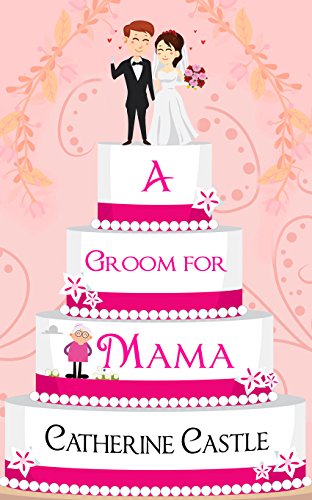
Until I started working on this blog I hadn’t thought much about what kind of cake my characters would have, but I think it would look a lot like the one on my book cover. And Mama would have been sitting on a layer just as she is in the cover. After all, she was Cupid’s helper.

-Catherine Castle

A Groom for Mama –a sweet, romantic comedy by Catherine Castle, from Soul Mate Publishing

 A Groom for Mama Blurb: Beverly Walters is dying, and before she goes she has one wish—to find a groom for her daughter. To get the deed done, Mama enlists the dating service of Jack Somerset, Allison’s former boyfriend.

The last thing corporate-climbing Allison wants is a husband. Furious with Mama’s meddling, and a bit more interested in Jack than she wants to admit, Allison agrees to the scheme as long as Mama promises to search for a cure for her terminal illness.

A cross-country trip from Nevada to Ohio ensues, with a string of disastrous dates along the way, as the trio hunts for treatment and A Groom For Mama.

Buy link: Amazon

 About the Author:

Multi-award-winning author Catherine Castle has been writing all her life. Before beginning her career as a romance writer she worked part-time as a freelance writer. She has over 600 articles and photographs to her credit, under her real name, in the Christian and secular market. Besides writing, Catherine loves traveling with her husband, singing, and attending theatre. In the winter she loves to quilt and has a lot of UFOs (unfinished objects) in her sewing case. In the summer her favorite place to be is in her garden. She’s passionate about gardening and even won a “Best Hillside Garden” award from the local gardening club.

Her debut inspiration romantic suspense, The Nun and the Narc, from Soul Mate Publishing was an ACFW Genesis Finalist, a 2014 EPIC finalist, and the winner of the 2014 Beverly Hills Book Award and the 2014 RONE Award. Her most recent release, A Groom for Mama, is a sweet romantic comedy from Soul Mate Publishing.  Both books are available on Amazon.

Contact links:

Catherine’s website

Catherine’s blog

Catherine’s Amazon author page

Catherine’s Goodreads

Twitter    @AuthorCCastle

Facebook

Stitches Thru Time

SMP authors blog site


Civil War Southern General Hospitals

Around 1,000 Southern women nursed ill or wounded Confederate soldiers during the Civil War, most of them working in their own towns and neighborhoods.

These resourceful women started wayside hospitals near railroad depots to care for ailing or wounding soldiers. The Confederacy soon took over all military hospitals.

Seeing the benefit of women serving in hospitals, the Confederacy passed laws to designate women in positions at military hospitals.

Two matrons were given oversight of the hospital’s food and medicine, each woman earning $40/month. Two assistant matrons laundered patients’ bedding and clothing for $35/month. Two ward matrons served each ward by feeding, administering medications, and bathing patients. Earning $30/month, ward matrons also assisted in letter writing. Nurses received $25/month.

There were 13 general hospitals in North Carolina by war’s end. Fairgrounds Hospital in Raleigh was the first general hospital established in the state, but it later became known as General Hospital #7, with a total of 3 in Raleigh.

Other cities/towns with general hospitals were Kittrell Springs, Fayetteville, Salisbury, Greensboro, Charlotte, Wilmington, Goldsboro, and Wilson.

Pettigrew Hospital (General Hospital #13) in Raleigh was specifically built as a hospital, the only one in North Carolina with this distinction. It had 400 beds, a bathhouse, guardhouse, dispensary, laundry, and stable.

Pastors often announced when several cars of wounded were expected at churches and then gave the congregation an intermission so that those who wanted to leave and prepare food for the soldiers could do so.

-Sandra Merville Hart

Sources

Downey, Tom. “Wayside Hospitals,” South Carolina Encyclopedia, 2017/07/04 http://www.scencyclopedia.org/sce/entries/wayside-hospitals/.

“North Carolina Nursing History,” Appalachian State University, 2017/07/04, https://nursinghistory.appstate.edu/civil-war-and-reconstruction-1861-1876.


Devil in the Dust by Cara Luecht

The author drew me into the 1930s right away. The story starts slowly and builds.

Many have already moved to California to escape the terrible dust that covers everything. The pastor, Peter, and his wife, Lillian, do their best to support the few families left in their Oklahoma town.

Emma’s husband is missing. Was he hurt? Or had he abandoned Emma and her five hungry children?

At 15, Jessie can’t stand to watch her younger siblings get by on so little food. With her father missing, there is no money to buy more food. There has to be something she can do to make things better.

Then a stranger drives a fancy car into town.

This story is told in multiple viewpoints, giving readers a glimpse into how tragedies suffered color your vision when nature itself seems to turn against farming families.

The author did a wonderful job of creating an authentic feel of the Dust Bowl in the 1930s. The characters’ choices and thoughts ring true to the time. This novel robbed me of a few hours of sleep!

Definitely recommend.

-Sandra Merville Hart

LPC Books   Use coupon code SandraMHart for a 20% discount on Lighthouse Publishing books!


Cream of Cucumber Soup Recipe

I found The Fannie Farmer Cookbook, originally published in 1896, in an antique store. Fannie Farmer’s name is still well-known today.

Stock, water enriched by the food cooked in it, is an important ingredient in numerous soups. Homemade stock brings full-bodied flavor to recipes. The recipe for the chicken stock used in this recipe is found  here.

To make this soup, finely chop enough onion to give 3 tablespoons and set aside.

Peel 3 large cucumbers. Remove the seeds and then slice them.

Melt 2 tablespoons of butter in a medium saucepan over low heat. Stir in onion and cucumber. Cook for 10 minutes, stirring frequently.

Stir in 3 tablespoons of flour. Cook about 1 ½ minutes.

Add 3 cups of chicken stock or chicken broth. (I had run out of stock so I used broth instead.) Stir in 1 cup of milk. Turn burner to a medium high heat until soup boils.

Remove from heat. Puree the soup in a blender or food processor. Strain the broth. Rinse the saucepan before returning the strained soup to it.

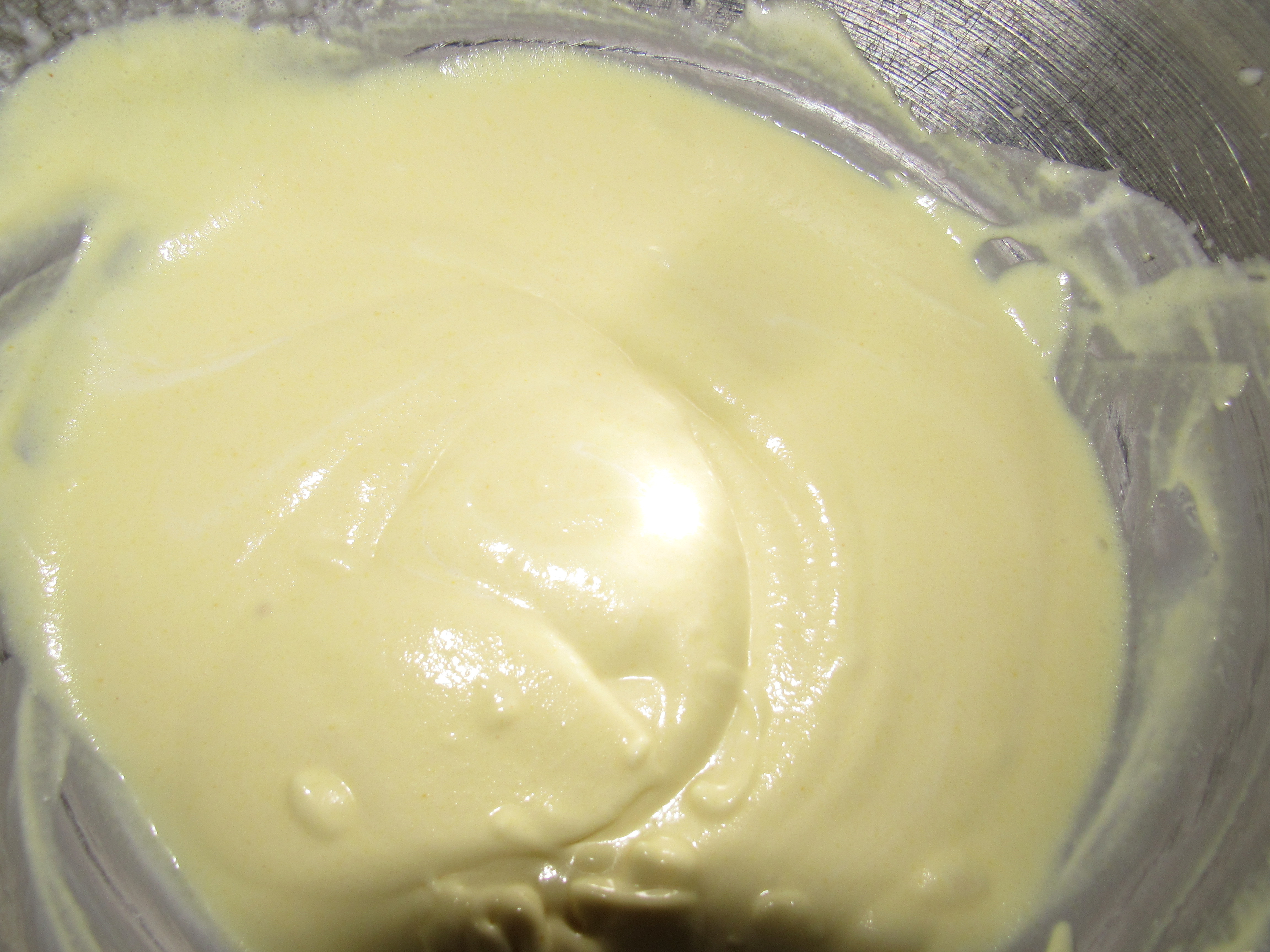
Beat 2 egg yolks. Stir these into the soup. Add ½ cup light or heavy cream (I used heavy cream) and ½ teaspoon salt or salt to taste. Reheat the soup until hot, stirring frequently. Do not boil.

This is the first time I’ve made this type of soup. There is a light, refreshing taste of cucumber. I thought it tasted delicious and will make it again.

This recipe makes 7 one-cup servings.

-Sandra Merville Hart

Sources

Revised by Cunningham, Marion and Laber, Jeri. The Fannie Farmer Cookbook, Alfred A Knopf Inc., 1983.


Civil War Wayside Hospitals

Casualties began soon after the Civil War started on April 12, 1861. Southern women established wayside hospitals as small field hospitals to give water, food, shoes, clothing, medicine and bandages to wounded soldiers.

Large buildings—schools, churches, barns—near railroad depots were used to treat the sick and wounded. If the soldier was too ill to continue on his journey, he remained at the wayside hospital until his condition improved enough for him to go home, or to a larger general hospital, or he died.

Women living in North Carolina, at great personal sacrifice, established and served at wayside hospitals in the railroad towns of Charlotte, Fayetteville, Weldon, Greensboro, Tarboro, Wilmington, Goldsboro, Salisbury, and High Point.

Most wayside hospitals offered meals and some nursing. Surgeons worked at larger hospitals with beds for overnight stays.

The Barbee Hotel in High Point was changed into a wayside hospital on September 1, 1863. 5,795 soldiers received care in that village before the hospital closed in May of 1865.

South Carolina’s first wayside hospital opened in Charleston in November of 1861. Raleigh, Orangeburg, Greenville, Sumter, and Florence also had these types of hospitals. Columbia Wayside Hospital, located at the South Carolina Railroad Depot, served about 75,000 soldiers, becoming the largest wayside hospital in the state.

Southern nurses often didn’t have the required medicines on hand to treat the soldiers. They fell back on homemade remedies, such as using jimson weed for fever or blackberry root for dysentery.

-Sandra Merville Hart

Sources

Downey, Tom. “Wayside Hospitals,” South Carolina Encyclopedia, 2017/07/04 http://www.scencyclopedia.org/sce/entries/wayside-hospitals/.

“North Carolina Nursing History,” Appalachian State University, 2017/07/04, https://nursinghistory.appstate.edu/civil-war-and-reconstruction-1861-1876.

Savage, Douglas J. Women in the Civil War, Chelsea House Publishers, 2000.


Writing with E’s by Rebecca Waters

This book was written specifically for writers.

Waters has packed this handbook with helpful writing tips for new writers. Experienced authors will also benefit from useful editing tips to prepare those manuscripts for submission.

The author includes several writing exercises that are beneficial to new writers. Sometimes it’s difficult to figure out what to write about when new the craft. Waters provides excellent exercises engineered for practicing and honing writing skills.

Excellent, practical book that will be especially useful for new writers. Recommend!

-Sandra Merville Hart

Amazon

Mulled Buttermilk

“Excellent for convalescing patients” was the way a recipe in an 1877 cookbook described mulled buttermilk.

Given the date of the cookbook, wounded soldiers during Civil War probably received this drink in hospitals. As a historical novelist, I’m always interested in learning tidbits from our history. It’s fun to add authentic details such as this one when a story requires it.

Boil a cup of buttermilk over a medium high heat. The consistency of the milk completely changes. The thick, creamy liquid thins to a grainy consistency of water.

Beat one egg yolk. Temper the yolk by stirring in a couple of tablespoons of the hot buttermilk. Add the tempered yolk to the boiling buttermilk. Stir and allow the mixture to return to a boil. I stirred the mixture while cooking.

Pour into a glass and drink. I allowed it to cool slightly before trying it. One sip was enough. I did not like this.

There is a second recipe for mulled buttermilk.

Forgetting the egg yolk, put a heaping tablespoon of flour into a glass. Pour in 1/3 cup of cold buttermilk and stir well. If this is not enough liquid for the flour to assimilate into the liquid after a brisk stir, add more buttermilk—a tablespoon at a time—until it is combined into a thick,  pourable liquid. Set this aside.

When the cup of buttermilk initially boils, add the buttermilk thickening to the saucepan. Return to a boil, cooking an additional minute to make sure the flour is done.

I really liked this second alternative. The thicker beverage tasted better to me.

And it is good for patients. If you lived one hundred fifty years ago, you would have drunk mulled buttermilk when you were sick.

Good luck! I’d love to hear if you try this recipe.

-Sandra Merville Hart
Sources

Compiled from Original Recipes. Buckeye Cookery and Practical Housekeeping, Applewood Books, 1877.