Baking Contests and Snickerdoodles

Today’s post was written by fellow author, Kathleen Rouser. She is providing the Snickerdoodle recipe from her novel, Secrets and Wishes. Welcome to Historical Nibbles, Kathleen!

Increasing the vanilla in her favorite snickerdoodle recipe while adding toasted chopped pecans to the dough and the cinnamon sugar made for the delightful crunch and a nutty taste, which had won her second place in the recipe contest. (From Maggie’s musings in Secrets and Wishes.)

There’s nothing more all-American than baking competitions. So many old-fashioned books and movies portray a baking contest at a county fair or a church picnic. The real-life Pillsbury Bake-Off began in 1949. Cookbook collections for charity go back farther than that. I was also inspired by the mention of a story contest sponsored by the fictional Rollings Reliable Baking Powder in the Anne of Green Gables book series by Lucy M. Montgomery.

So why not combine some great traditions to come up with the Silver Leaf Flour Company’s “Don’t Rest on Your Laurels” baking contest in 1901? Maggie Galloway wins second-place for her pecan snickerdoodles, earning her a pin to be presented by the Midwest Regional Director, Giles Prescott and her original recipe would be published in their national cookbook. Maggie seems born to bake.

Just the name ‘snickerdoodles’ is fun! It conjures up images of sitting by a warm oven while scents of cinnamon sugar waft through the air in a cozy kitchen. Some of the earliest documented mentions of snickerdoodles were found in cookbooks from late 1800s.

There’s some debate as to where the name ‘snickerdoodle’ originated. Some think that it’s derived from a Dutch or German word meaning ‘snail-shaped’ while others believe the name came from New England where it’s inhabitants liked whimsical names for cookies. Either way, Maggie is quite sure God gave her the spark of creativity to add vanilla and nuts to a beloved treat enabling her to place in the contest.

Maggie Galloway’s Pecan Snickerdoodles

½ cup butter, softened

1 cup sugar

¼ teaspoon baking soda

1/4 teaspoon cream of tartar

1 egg

1 teaspoon pure vanilla extract

1 ¼ cup flour

½ cup chopped toasted pecans

Cinnamon sugar mixture:

2 tablespoons sugar

1 tablespoon finely chopped toasted pecans

1 teaspoon ground cinnamon

Preheat oven to 375 degrees F and lightly grease cookie sheet.

Beat butter until creamy. Add 1 cup sugar, baking soda, and cream of tartar, mixing well.

Beat egg and vanilla into the mixture. Slowly add flour and chopped pecans to the mixture.

Set dough in the refrigerator (or the icebox in Maggie’s day) for at least a half an hour to make it easier to handle.

While you’re waiting, mix the cinnamon sugar ingredients together with the 1 tablespoon finely chopped pecans.

When the dough is ready, roll into small balls and roll in cinnamon sugar/nut mixture.

Place a couple of inches apart on the cookie sheet and bake for 9-11 minutes, only until slightly golden brown along the edges. Yield is approximately two dozen cookies.

-Kathleen Rouser

About Secrets and Wishes:

More than fists fly after a fight between Philip and Zeke. When their widowed parents, Maggie Galloway and Thomas Harper meet, they begin a prickly acquaintance. Independent Maggie has placed in a national baking contest and wants to open a bakery to provide a future for her and Philip. Grieving and disorganized Thomas seeks to bring up his unruly brood in Stone Creek, and grow his pharmacy business in peace. After he becomes gravely ill, Maggie is enlisted to nurse him back to health, and takes his children in hand. She eventually helps Thomas organize his shop. As friendship blossoms so does love. They team up to defeat a charlatan who’s dangerous elixir brings tragedy to Stone Creek. Humiliating circumstances, brought about by the former beau who brings Maggie’s baking prize from the flour company, force Maggie to consider leaving town. Thomas wants to offer her an alternative, but is he too late to declare his love to the angel of mercy who has captured his heart?

Where to find Secrets and Wishes on Amazon: http://tinyurl.com/y757a5b2

Bio:

Kathleen Rouser is the award-winning author of Rumors and Promises, her first novel about the people of fictional Stone Creek, Michigan, and the novella, The Pocket Watch. She is a longtime member of American Christian Fiction Writers. Kathleen has loved making up stories since she was a little girl and wanted to be a writer before she could even read. She longs to create characters who resonate with readers and realize the need for a transforming Savior in their everyday lives. She lives in Michigan with her hero and husband of nearly 36 years, and the sassy tail-less cat who found a home in their empty nest. Connect with Kathleen on her website, on Facebook, and on Twitter @KathleenRouser.

Civil War Confederate Soldiers’ Homes

Soldiers’ Homes were established for Civil War veterans who could no longer care for themselves. A few states provided separate homes for Union and Confederate veterans. The federal government didn’t provide funds for the Confederate soldiers. This obligation fell on the states.

Confederate veteran Jefferson Manly Falkner founded what became known as the Alabama Confederate Soldiers Home in 1901. Falkner wanted to provide a home for veterans and their wives. Widows were allowed to live there after 1915.

Falkner donated 80 acres in the summer resort area of Mountain Creek where between 650 to 800 people found a home. The home’s last veteran died in 1934. Five widows remained until October of 1939 when the home closed.

Atlanta’s Confederate Soldiers’ Home, built in 1890, was also known as the Old Soldiers’ Home. Henry W. Grady raised funds for the home at 410 East Confederate Avenue through subscriptions until it finally opened in 1900. Fire destroyed the building in 1901, but it was rebuilt on the same location a year later. The home’s last veteran died in 1941.

The old Kentucky Confederate Home was the former Villa Ridge Inn just outside the Pewee Valley Confederate Cemetery. There was a hospital, entertainment, and religious services. There was housing for 350 veterans and a total of 700 former Confederate soldiers eventually called it home.

There were a few prerequisites to living at the Kentucky home. Besides being a former Confederate soldier, residents had to be mentally stable, a resident of the state for at least 6 months, and not an alcoholic.

-Sandra Merville Hart

Sources

“Alabama Confederate Soldiers Home,” Wikipedia, 2017/07/04 https://en.wikipedia.org/wiki/Alabama_Confederate_Soldiers_Home.

“Confederate Soldiers’ Home,” Wikipedia, 2017/07/04 https://en.wikipedia.org/wiki/Confederate_Soldiers%27_Home.

“Old Soldiers’ Home,” Wikipedia, 2017/07/04 https://en.wikipedia.org/wiki/Old_soldiers%27_home.

“Peewee Valley Confederate Cemetery,” Wikipedia, 2017/07/04 https://en.wikipedia.org/wiki/Pewee_Valley_Confederate_Cemetery.


Grace’s Pictures by Cindy Thomson

Part of Ellis Island Series

Grace McCaffery emigrates to America in 1900. Her stepfather, a policeman—or peeler as they are called in Ireland, paid for her passage to New York City, but she resents leaving her mother at his mercy. Grace plans to save money to send for her mother—when she is able to get a job.

Owen McNulty has rejected his parents’ desires to follow in his wealthy father’s footsteps. His desire is to serve his city as a policeman. The corruption among some on the police force create problems for him.

Owen meets the lovely Grace soon after her arrival, but she won’t accept his help.

Grace vows not trust any peeler.

This historical fiction novel shows the struggles of Irish immigrants at the turn of the last century. I didn’t know much about this part of American history and learned a great deal. The author did a wonderful job on her research to bring their difficulties and the corruption in the police departments to light.

The characters are multi-layered, believable, and likeable. The well-written story drew me in immediately and I kept turning pages.

Great novel! I will look for more by this author.

-Review by Sandra Merville Hart

Christianbook.com

New Mexican Culture Cuisine

Today’s post is written by fellow author, Norma Gail. Her novel, Land of My Dreams, is set mainly in Scotland, but also in New Mexico—two locations dear to her heart. She lives in New Mexico and shares two yummy recipes with us from her home state. I can’t wait to try these. Welcome back to Historical Nibbles, Norma!

For those who live there, New Mexico is a bit of heaven. Admitted as the 47th state in 1912, it is a high-altitude land of arid, sun-kissed deserts and spectacular, forested mountain peaks under crystalline, azure skies.

Unique in culture, the Navajo, Apache, and Pueblo peoples of Native American origin were its only inhabitants prior to the early 1540’s. Subsequently claimed by Spain, Mexico, and partially by the Republic of Texas, portions became a US territory in 1848 through the Treaty of Guadalupe Hidalgo with the rest acquired by the Gadsden Purchase of 1853.

This conglomeration of cultures created a culture and cuisine unique in the world. Beans and corn are staples, with the locals fiercely defending the state’s largest agricultural crop of red and green chiles as the best in the world. True New Mexicans are notorious chile snobs.

Below, you will find two of my personal favorite recipes, primarily from Native American influence.

-Norma Gail

Posolé

(pō-sō-lāy)

(A traditional stew of hominy, meat, and chile)

1-2 lb. pkg posolé (hominy)

4 dried chile peppers (red)

4 cans (12-16 oz.) of green chilies (frozen can be substituted)

Juice of one lime

2 lbs. of lean pork, cut in ¾” cubes

1 lb. lean beef (optional)

1 medium onion, diced

3 cloves of garlic

2 tbsp of salt

1 tsp of black pepper

1-16 oz. can of stewed tomatoes, diced

½ tsp celery salt

2 tsp cumin

Rinse posolé in cold water. Place in a large stockpot and cover with at least 2 quarts of water. Simmer 1-2 hours, until posolé kernels pop.

Brown meat and onions until onions are tender. Place all ingredients in a large crockpot or stockpot on stove, cover with water, and simmer 6-8 hours, covered, adding water as necessary. Flavor is enhanced by cooking a day early, refrigerating overnight, and reheating.

Serves 8-10. This will freeze well, though chili tends to become hotter over time.

Sopapillas

(So-pă-pē-yas)

1 ¼ cup scalded milk

4 cups of flour

1 ½ tsp salt

1 tsp baking powder

1 tbsp sugar

1 tbsp shortening

1 pkg dry yeast

¼ cup warm water

Scald milk and cool to room temperature.

Combine dry ingredients and cut in shortening. Dissolve yeast in warm water and add to the cooled milk.

Make a well in the center of the dry ingredients, add liquids and work into a dough.

Knead dough 15-20 times and set aside approximately 10 minutes.

Roll dough to ¼ inch thickness or thinner. Cut in squares or triangles.

Deep fry in melted shortening at 420° until golden-brown. Fry only a few at a time so oil stays hot. If the oil is hot enough, they will puff almost immediately. Puffing is enhanced by bouncing gently in oil during frying. Turn to brown both sides evenly.


Author bio:

Norma Gail’s contemporary Christian romance, Land of My Dreams, set in Scotland and her home state of New Mexico, won of the 2016 Bookvana Religious Fiction Award.

A Bible study leader for over 21 years, you can connect through her blog, or on Facebook, Twitter, Pinterest, Instagram, Goodreads, or Amazon.


Civil War Post-War Home of Confederate President Jefferson Davis

Widow Sarah Dorsey invited former Confederate President Jefferson Davis to stay at Beauvoir, her 608-acre cotton plantation in Biloxi, Mississippi. She provided a cottage for Davis to live in with his wife, Varina, and their daughter, Winnie.

Sarah, a novelist and author of biography of Louisiana Governor Henry Watkins Allen, aided Davis in writing his memoir. She organized notes and took dictation. Davis’s book, The Rise and Fall of the Confederate Government, published in 1881, two years after Sarah died.

Sarah willed her plantation to Davis and his daughter, Winnie.

The Davis family moved into the main house after the inheritance, where Davis lived until his dead in 1889. Varina wrote Jefferson Davis: A Memoir (1890) and then moved to New York City with her daughter in 1891.

After Winnie died in 1898, Varina owned Beauvoir. She sold a large portion to the Mississippi Division of the Sons of Confederate Veterans. It was to be a home for Confederate veterans and widows and then as a memorial to Davis.

The Sons of Confederate Veterans built a hospital, 12 barracks, and a chapel. About 2,500 veterans and their families lived there from 1903 to 1957.

Today this site is a Confederate Soldier Museum. Visitors will also see the former Confederate Veterans’ Home, cottage plantation home, the Jefferson Davis Presidential Library and Museum, historic Confederate cemetery with a Tomb of the Unknown Confederate Soldier.

-Sandra Merville Hart

Sources

“Beauvoir (Biloxi, Mississippi,)” Wikipedia, 2017/07/04

https://en.wikipedia.org/wiki/Beauvoir_(Biloxi,_Mississippi).


Cowboy Competition by Becca Whitham

Nia Lindley is gun-shy about men since making a couple of poor choices. Though she longs to find a good man to marry, she focuses on helping her father run their successful Texas ranch.

Toby Lane lives in the shadow of his father’s mistakes. Unfortunately, those sins cast a long shadow and Toby finds himself looking for another job. Again.

An advertisement for a foreman catches his interest. The Double L Cattle Ranch will hold a Cowboy Competition to find the best candidate for the job.

The Double L Ranch—should Toby risk returning?

I thought the author did a great job piquing the reader’s interest about Toby’s past. It added a bit of mystery to the story.

I loved learning about the cowboy competitions. I didn’t know these were held in the Old West to search for the best employee.

I enjoyed this novella, part of The Cowboy’s Bride Collection published by Barbour.

-Sandra Merville Hart

Christianbook.com

Creole Soup

I recently ran across The Fannie Farmer Cookbook in an antique store. This book was originally published in 1896.

Stock, water enriched by the food cooked in it, is an important ingredient in numerous soups. Homemade stock brings full-bodied flavor to recipes. The recipe for the beef stock used in this recipe is found here.

This recipe calls for 2 tablespoons of bacon fat. My husband sacrificed (😊) and fried some bacon to provide this for my soup.

To make this soup, chop enough onion for 2 tablespoons. Finely chop a green pepper to provide 2 tablespoons. Peel and chop tomatoes for 1 cup required for the soup.

Melt 2 tablespoons of bacon fat in a large saucepan. Stir in onion and green pepper. Cook on a medium low heat for 5 minutes, stirring occasionally.

Stir in 2 tablespoons of flour and cook for 2 minutes. Stir in tomatoes and 3 cups of beef stock or beef broth. (I used beef stock.) Heat this to gently bubbling. Then lower heat to simmer for 15 minutes.

Strain soup and then return the broth to the saucepan. Add ½ teaspoon of ground pepper, 1 tablespoon of prepared horseradish, and ½ teaspoon of vinegar. Add 1 teaspoon of salt or salt to taste.

I’ve never tasted Creole Soup before—I loved it! This is a delicious, tangy soup.

Serve hot. This recipe makes 3 one-cup servings.

-Sandra Merville Hart

Sources

Revised by Cunningham, Marion and Laber, Jeri. The Fannie Farmer Cookbook, Alfred A Knopf Inc., 1983.


Tuckaleechee Caverns

Tuckaleechee Caverns earns its title of “The Greatest Sight Under the Smokies.” This treasure is found in Townsend, Tennessee, only a few miles from Pigeon Forge and Gatlinburg in the Smokies.

My dad was from that area and I remembered him talking about Tuckaleechee Caverns. He said that it was a “whole different world down in the caves” and planned to take us but never made it. Remembering this, my husband and I took our daughter there and were very impressed.

With millions of formations seen throughout the tour, the cave also boasts of a Big Room which is greater than 400 feet long, 300 feet across, 150 feet deep. The highest ceilings in Kentucky’s Mammoth Cave, for comparison, are around 120 feet.

The cave also has a sparkling, clear stream running through it that leads to a double waterfall. Silver Falls is a beautiful surprise in this underground adventure. The falls has a 210-foot drop–the tallest subterranean waterfall in the Eastern United States.

Cherokee Indians, according to legend, knew of the caverns long before the white man discovered them in the mid-1800s.

Before local residents knew about the cave, they discovered breezes around a sink hole. Women toted their sewing and their children there during the heat of summer to enjoy the refreshing air.

The caves were found when sawmill workers watched water flow into the sink hole after heavy rains.

Two friends, W.E. “Bill” Vananda and Harry Myers, played in the caverns as boys. They pretended to be Tom Sawyer as they explored the cave carrying “homemade lamps—pop bottles filled with kerosene.”

While in college the men decided to open the cave as tourist attraction. It required hard work to prepare for tourists. The friends toted tons of cement, sand, and gravel to the cave so visitors would have steps and easy passageways to view the sights. Vananda and Myers opened the cave in 1953.

For those fearing that the wildfires of 2016 destroyed Tuckaleechee Caverns and the rest of the sights at Gatlinburg, put your fears to rest. Less than 10% of the park burned. My husband and I traveled there with family earlier this month. We filled a week with endless activity in the Smokies, Gatlinburg, Pigeon Forge, and Tuckaleechee Caverns. We hated to leave! There is plenty to see and folks who need to rebuild are coming back even stronger.

The mountains are beautiful any time of the year but especially so in the summer and fall.

-Sandra Merville Hart

Sources

“Tuckaleechee Caverns,” Tuckaleechee Caverns, 2017/09/16 http://www.tuckaleecheecaverns.com/.


Bounce, Don’t Break by Penny Hunt

The full title to the book is Bounce, Don’t Break: Stories, reflections, and words of encouragement during times of change. 

We all have them—times when life slams us in the heart and we are bent double. If you are in the midst of difficult times, this book is filled with encouragement for right where you are.

Readers don’t have to come from military backgrounds to glean wisdom from this book, but military families will feel an immediate connection with the many examples shared.

God cares for the birds but doesn’t plop worms into their mouths. That’s a paraphrase of one of the author’s pearls of wisdom.

Practical advice for getting through hard days fill this book as the author shares stories that tug at the heart.

This book is geared toward women. Military families will be blessed by the author’s understanding of being uprooted with little warning or to watch your loved one leave for war.

Those who haven’t experienced it will receive a better understanding of struggles faced by military families. Recommended!

-Sandra Merville Hart

Lighthouse Publishing of the Carolinas       Use coupon code SandraMHart for a 20% discount on Lighthouse Publishing books!


Cornmeal Gruel Recipe

This is Dr. Davenport’s recipe, found in an 1877 cookbook under “Food for the Sick.”

Dr. Davenport, Milford Center, Ohio, used this recipe thirty years earlier. He shared this “old and very valuable recipe” with 1877 cooks. Gruels were often given to sick or wounded Civil War soldiers.

Boil 3 pints of water.

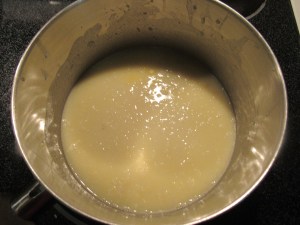
Stir 2 tablespoons of cold water into 2 tablespoons of cornmeal. Add to the boiling water with a pinch of salt.

Reduce to medium heat and cook for 20 minutes.

Remove from heat. Let it settle. If the patient is very sick, pour off the water on top and serve this way. The broth is grainy and a bit thicker than might be expected.

It tasted okay.

If this broth will be given to a convalescing patient, toast a piece of bread. They ate hearty breads 150 years ago, so buy a dense bread such as Italian bread. I made my own. I baked some delicious  Bran bread  and toasted two slices for this gruel.

Pour the broth into a bowl. Add 2 tablespoons of light or heavy cream, 2 teaspoons of sugar, ½ teaspoon of cinnamon, and 1/8 teaspoon of ginger. Nutmeg can be substituted for the ginger. Stir well.

Break the toast into pieces and add to the gruel.

Eat immediately.

The broth has a pleasant, sweet taste. I’m not a cereal lover, but broths with bread added have a little in common with cereals.

Dr. Davenport found these to be a nourishing meal for those on a laxative diet. Hmm. Maybe just eat this in moderation.

I’d love to hear if you try this. Enjoy!

-Sandra Merville Hart
Sources

Compiled from Original Recipes. Buckeye Cookery and Practical Housekeeping, Applewood Books, 1877.