Love’s Sweet Storm by Miralee Ferrell

Addie Patrick can’t continue to live off charity after the death of her parents. She answers an ad for a mail-order bride. Mr. Tolliver, who wants help with his store, agrees to marry her. Addie heads to Southern Colorado.

A terrible snowstorm strands Addie with rancher, Grant Hollister, on her way to Mr. Tolliver. Besides looking like an angel, Addie impresses Grant with her presence of mind in a crisis. Could she be the one he’s waited for?

His disappointment to find her already betrothed is mirrored in Addie’s heart. She’s already made a commitment. She will stand behind her promise.

The story captured my interest from the first page. I enjoyed this historical romance.

This novella is part of The Cowboy’s Bride Collection published by Barbour.

-Sandra Merville Hart

Christianbook.com

New Civil War Novel Releasing in July

Sandra’s newest novel, A Rebel in My House, is a Civil War romance set in Gettysburg during the famous 1863 battle. This novel releases on July 15th!

When the cannons roar beside Sarah Hubbard’s home outside of Gettysburg, she despairs of escaping the war that’s come to Pennsylvania. A wounded Confederate soldier on her doorstep leaves her with a heart-wrenching decision.

Separated from his regiment and with a bullet in his back, Jesse Mitchell needs help. He seeks refuge at a house beside Willoughby Run. His future lies in the hands of a woman whose sympathies lay with the North.

Jesse has promised his sister-in-law he’d bring his brother home from the war. Sarah has promised her sister that she’d stay clear of the enemy. Can the two keep their promises amid a war bent on tearing their country apart?


Click here to receive the special pre-order price!


Cheese Soup

I found this recipe in The Fannie Farmer Cookbook, originally published in 1896. Fannie Farmer’s name is still well-known today.

Stock, water enriched by the food cooked in it, is an important ingredient in numerous soups. Homemade stock brings full-bodied flavor to soups and sauces. The recipe for the beef stock used in this recipe is found  here.

To make this soup, finely chop enough onion to give 1 tablespoon.

Melt 1 tablespoon of butter over medium heat. Add the onion to the melted butter, cooking until the onion is limp. Stir in 1 tablespoon of flour. The recipe said to stir and cook this for 3 minutes, but mine started to brown after about 90 seconds. I’d suggest cooking this about 1 ½ minutes.

Slowly add 1 cup of beef stock (or 1 cup of beef bouillon or beef broth) and 2 cups of milk. Stirring frequently, heat until it boils.

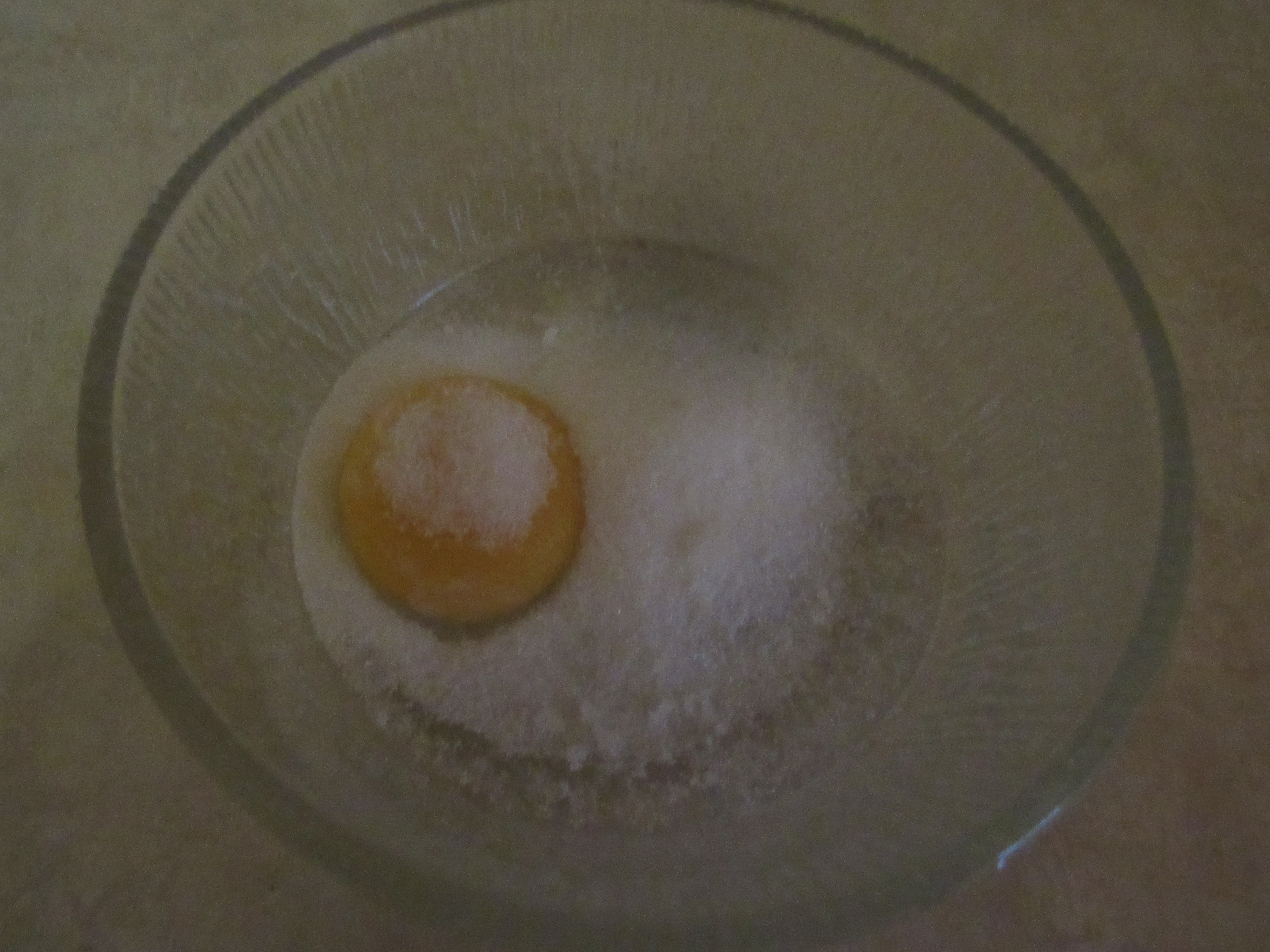
Turn off the heat and stir in ¾ cup shredded cheddar cheese. To achieve a creamier consistency, I added 2 slices of American cheese.

The recipe then calls for 2 teaspoons of paprika. I tasted the soup without it and enjoyed the flavor. Then I added paprika, which gave the soup a bit of zing that I also liked. Try it both ways to see which you prefer.

Garnish with shredded cheddar cheese and a sprinkle of paprika. The color of the soup made me think it wasn’t going to taste “cheesy” enough, but it did. I liked it.

This recipe makes 3 one-cup servings. Enjoy!

-Sandra Merville Hart

Sources

Revised by Cunningham, Marion and Laber, Jeri. The Fannie Farmer Cookbook, Alfred A Knopf Inc., 1983.


This Week in History: Civil War Battle of Brandy Station, Virginia

Tuesday, June 9, 1863

Confederate General Robert E. Lee decided to fight the battle above the Mason-Dixon. He began marching his army west from Fredericksburg toward Culpeper Court House. Lee wanted the protection of the Shenandoah Valley and asked General J.E.B. Stuart to mask the army’s movements with his cavalry.

Stuart had about 9,500 cavalry troops at Brandy Station—a small crossroads between the Rappahannock River and Culpeper—on June 8, 1863. Lee ordered Stuart to lead a raid across the river on June 9th to create a diversion.

Federal General Joseph Hooker, having guessed Stuart’s plan, deployed his cavalry under General Alfred Pleasonton to attack on June 9th. His men surprised Confederate pickets at Beverly’s Ford at 4:30 am and chased them back to their camp near St. James Church on the road to Brandy Station.

Confederates suffered until their artillery was ready to fire on Union troops at the church. Union General Buford ordered his troops to charge. They were repulsed.

In the meantime, Union General David Gregg brought his cavalry behind Stuart’s men with Fleetwood Hill blocking them. Union artillery fired on Fleetwood Hill, startling Stuart but he rallied in time to fight the Union’s charge.

After almost five hours of hard fighting, Pleasonton received reports of Confederate reinforcements and withdrew at 5 pm. Union casualties totaled 866 with 81 killed. Confederate casualties were 523.

The infantry used to joke, “Whoever saw a dead cavalryman?”

The fierce battle at Brandy Station ended that.

The Union cavalry was respected after the battle.

And the battle hid the Confederate march northward.

-Sandra Merville Hart


Sources

“Brandy Station,” Civil War Trust, 2017/05/01, http://www.civilwar.org/battlefields/brandy-station.html?tab=facts.

Long, E.B with Long, Barbara. The Civil War Day by Day: An Almanac 1861-1865, A Da Capo Paperback, 1971.


Mattie’s Pledge by Jan Drexler

This novel took me on a journey into the 1840s.

Mattie Schock’s family is traveling with several other Amish family from Brothers Valley, Pennsylvania, to Indiana. She hasn’t seen Jacob Yoder since they were children and looks forward to getting to know him again.

Jacob never forgot Mattie and their friendship deepens. He soon begins to dream of her as his wife on the new farm he will build in Indiana.

Mattie dreams of settling further west and fears she’d be bored living in one location for the rest of her life. The Englishman who keeps turning up at odd places promises her new adventures in Oregon. He’s exciting and dangerous.

But the danger is more real than Mattie realizes.

I love novels that transport me to another time and place. This story did that for me. I enjoyed this story.

-Sandra Merville Hart

Christianbook.com


Cabbage and Beet Soup

I recently ran across The Fannie Farmer Cookbook in an antique store. This book was originally published in 1896.

Stock, water enriched by the food cooked in it, is an important ingredient in numerous soups. Homemade stock brings full-bodied flavor to recipes. The recipe for the beef stock used in this recipe is found  here.

To make this soup, peel and dice 2 cups of raw beets. The beet juice briefly stained my hands, my counter, and my cutting board, but it washed off easily with dishwashing liquid.

Chop 1 onion. Coarsely chop 2 cups of cabbage. Place all three ingredients in a pot with 4 cups of beef stock or 4 cups of beef bouillon. (I used two cups of each, which worked very well. You may also use beef broth in place of the beef stock.)

Bring this to a boil. Lower the heat to simmer the soup for about 30 minutes. Cook a little longer if the beets are not tender. Replace liquid that evaporates during cooking with additional water or beef stock.

Remove from the heat. Add freshly ground pepper to taste and 2 tablespoons of cider vinegar. Salt to taste. (I added ½ teaspoon of salt and thought that was the perfect amount.)

When serving, you may add a teaspoon of sour cream to garnish. I tasted the soup with and without the sour cream. If there is no sour cream, another tablespoon of vinegar is needed. When I ate the soup with the sour cream, all the ingredients worked well together.

This is a delicious soup that I will make again.

-Sandra Merville Hart

Sources

Revised by Cunningham, Marion and Laber, Jeri. The Fannie Farmer Cookbook, Alfred A Knopf Inc., 1983.


Searight’s Tollhouse on the National Road

The National Road, a federal road, stretched from Cumberland, Maryland, into Ohio by 1831. The heavily trafficked road required maintenance that the federal government wanted to turn over to the states.

Pennsylvania adopted an act to build six toll gates along the National Road—also known as the Cumberland Road—in the Commonwealth.

Built in 1835, Searight’s Tollhouse is one of Pennsylvania’s two remaining toll houses on the National Road. It is five miles northwest of Uniontown.

William Searight was one of the wealthiest men in the area at the time. Searight’s Tavern stood at the junction of Searight’s Crossroads. He owned a general store, wagon shop, blacksmith shop, and a livery stable in addition to running the post office.

Political connections helped Searight to become the Commonwealth’s Commissioner of the Cumberland Road in 1842. Searight bore the responsibility for all operations and received $730 per year.

Pennsylvania’s other toll house still standing is the Petersburg Toll House. Located in Addison, it was the first toll gate after crossing into the Commonwealth. The toll keeper’s annual salary was $200 with free housing.

Toll rates in Pennsylvania were collected for all types of vehicles—chariots, stages, phaetons, chaises, coaches, coachees, carts, wagons, and carriages. Drovers of sheep paid a rate of 6 cents for every score (20).

Anyone who refused or neglected to pay their toll received a fine of $3.

Pennsylvania collected tolls to maintain the road from 1835 to 1905.

-Sandra Merville Hart

Sources

Day, Reed B. The Cumberland Road: A History of the National Road, Closson Press, 1996.

Edited by Raitz, Karl. A Guide to The National Road, The Johns Hopkins University Press, 1996.

“National Road Sculpture Tour,” National Road PA, 2017/04/22 http://nationalroadpa.org/touch-of-history/.

Schneider, Norris F. The National Road: Main Street of America, The Ohio Historical Society, 1975.

“Searight’s Tollhouse Historical Marker,” Exporepahistory.com, 2017/04/22 http://explorepahistory.com/hmarker.php?markerId=1-A-F2.

“Searights Tollhouse, National Road,” Wikipedia, 2017/04/24  https://en.wikipedia.org/wiki/Searights_Tollhouse,_National_Road.


The Gilded Curse by Marilyn Turk

9781938499111-jpgThe death of Lexie’s brother at Pearl Harbor is the last straw for her mother and she dies shortly after.

A telegram from a childhood friend, Russell Thompson, draws Lexie back to the Jekyll Island and the vacation home she, as the last surviving family member, can no longer afford. The home, Destiny, has fallen into disrepair and must be sold.

Lexie slips back into her friendship with her brother’s friend, Russell, but her property makes her feel uneasy—even fearful. Rumors say that Destiny is haunted, though unlocked doors and smashed furniture inside suggest someone living does the haunting.

Is she in danger?

I enjoyed this historical romance, especially learning about the fear Americans faced after the bombing of Pearl Harbor.

-Sandra Merville Hart

Lighthouse Publishing of the Carolinas – Use coupon code SandraMHart for a 20% discount on Lighthouse Publishing books!

Preparing Beef Stock

I recently ran across The Fannie Farmer Cookbook in an antique store. This book was originally published in 1896.

Fannie’s advised that making beef stock from bones without meat lacks flavor. Use marrow bones from the butcher if available. Request that these be cut into two-inch pieces.

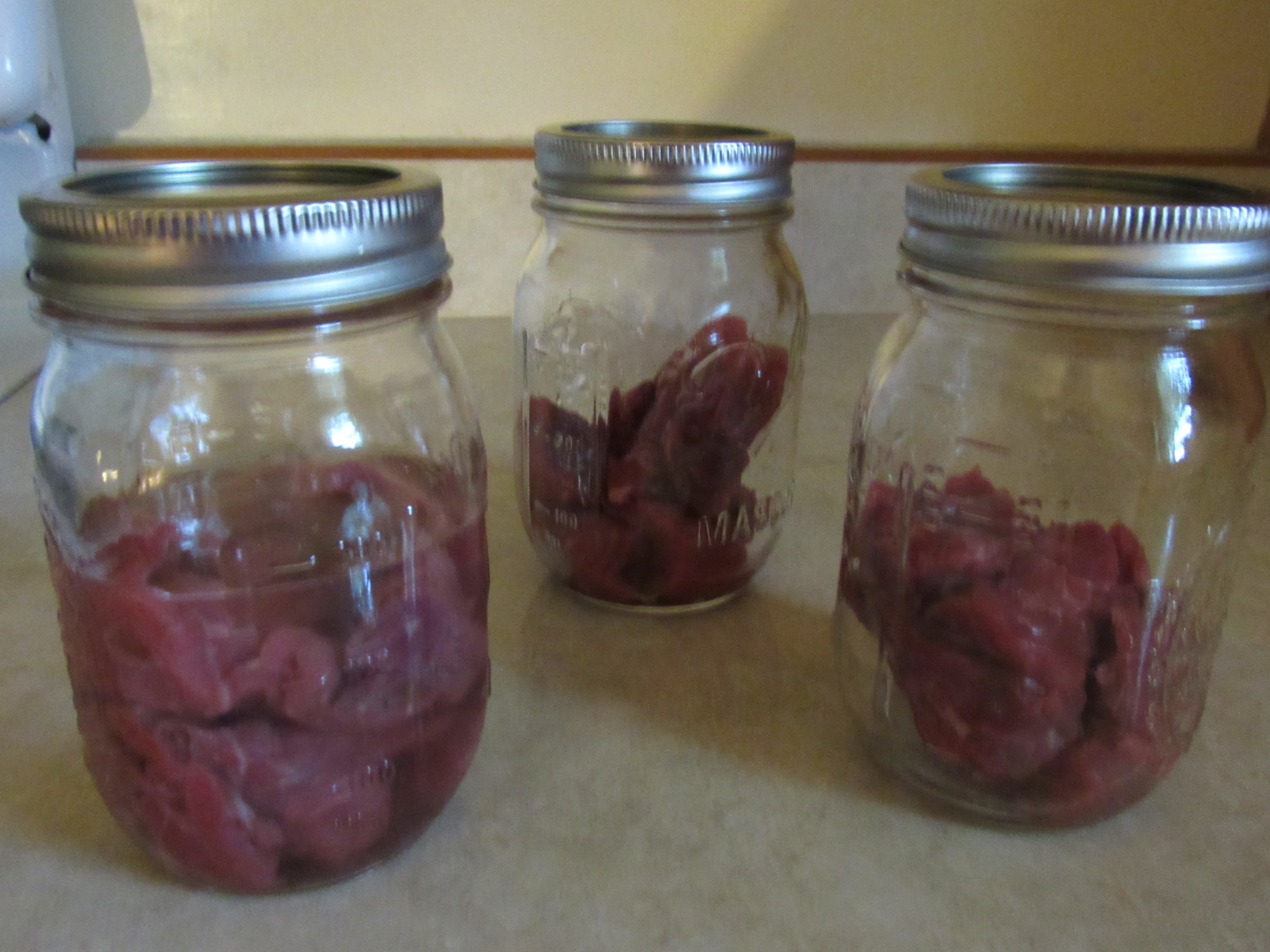
My local butcher didn’t have any marrow bones on hand, so he cut another bone into three chunks about the size of my palm. They weighed less than two pounds—the recipe called for two and half pounds with an equal amount of lean stew beef. I took what they had and purchased two and half pounds of stew beef.

Preheat oven to 450 degrees to brown meat, bones, and vegetables. According to Fannie, browning all these ingredients before cooking adds flavor and color to the stock.

The recipe calls for 3 sliced onions. Having already made chicken stock, I knew that vegetables are discarded at the end as they are limp from the cooking process. I decided to save time and cut the onions in halves. Three celery stalks were cut in half. I set aside the onions, celery, and nine baby carrots.

Fannie suggested using a roasting pan to brown the meat and vegetables in the preheated oven. In hindsight, that would be quicker because everything will fit at once. I used a cast iron skillet where all the ingredients didn’t fit. It took three different browning sessions to cook everything.

Heat 2 tablespoons of shortening or oil in the roasting pan or skillet. Add the bones and stew beef. Stir and turn these frequently. Add the celery, carrots, and onions after 10 minutes. Stir the vegetables and watch so that they don’t scorch. When the meat is browned, remove everything from the oven.

Carefully transfer meat, vegetables, and bones to a stock pot or large kettle.

Add a cup of boiling water to the roasting pan and stir to get all the scrapings off the pan. Then add this to the stock pot.

Add 1 teaspoon of dried thyme, a bay leaf, 2 sprigs of parsley, and 6 crushed peppercorns to the pot. Add 4 quarts of cold water.

Cook on medium high heat until water begins to boil then reduce to simmer. Partially cover and simmer for 2 ½ hours. If you plan to use the stew beef in another recipe, remove it now and refrigerate for later use. I used a slotted spoon to take out the beef and scalded my hands a couple of times, so be careful.

Continue simmering for another 1 ½ to 2 ½ hours. The total simmering time is four to five hours.

Fannie suggests waiting to add salt until using the stock in a recipe. This allows for salty flavors of other ingredients.

Should you choose to season the stock itself, add salt to taste just before it is done.

Strain the stock and allow to cool, uncovered. Refrigerate or freeze until ready to use.

I don’t generally use a lot of onion in my recipes. I will only use one onion the next time I make beef stock, but I wanted to try Fannie’s recipe her way.

This stock is very aromatic while cooking. I will let you know how I use the stock and the beef in a future recipe and I’d love to hear from you, too!

-Sandra Merville Hart

Sources

Revised by Cunningham, Marion and Laber, Jeri. The Fannie Farmer Cookbook, Alfred A Knopf Inc., 1983.


The La Vale Toll House on the National Road

Work on a National Road near the Potomac River in Cumberland, Maryland, to the Ohio River in Wheeling, Virginia (later became part of the newly created state of West Virginia during the Civil War) in 1811. This section of road was completed in 1818 though the road continued into Ohio after that.

High traffic caused lots of wear and tear on the road, making it difficult to maintain. The federal government turned over the maintenance of the road to the states in the early 1830s. To cover the cost, the states built toll houses to collect tolls.

Maryland built its first toll house, the La Vale Toll House, about six miles from Cumberland around 1833. This toll house is the state’s only one still standing on the National Road (also called Cumberland Road.)

Tollkeepers collected tolls there until the early 1900s. Included in their $200 annual salary were free living quarters.

It’s fun to read the toll rates. For example, horse and riders paid 4 cents for ten miles or 14 cents for thirty-five miles. Travelers paid 8 cents for ten miles or 28 cents for thirty-five miles for every sleigh, sled, chaise, or Dearborn “drawn by one horse or pair of oxen.”

Dearborn wagons contained four wheels generally drawn by a single horse. The vehicle usually had one seat, with top curtains and sometimes side curtains. From 1819 to 1850, truck farmers and peddlers used the affordable Dearborn.

Gateposts are all that remain of a second Maryland toll house outside of Frostburg. This one was located thirteen miles from Cumberland. There’s a nice photo of the toll house on the Baltimore & Ohio Railroad Museum site.

-Sandra Merville Hart

Sources

Day, Reed B. The Cumberland Road: A History of the National Road, Closson Press, 1996.

Dearborn Wagon.” Dictionary of American History.. Encyclopedia.com. 23 Apr. 2017<http://www.encyclopedia.com>.

Edited by Raitz, Karl. A Guide to The National Road, The Johns Hopkins University Press, 1996.

“First Toll Gate House,” The Historical Marker Database, 2017/04/22  http://www.hmdb.org/Marker.asp?Marker=442.

Schneider, Norris F. The National Road: Main Street of America, The Ohio Historical Society, 1975.

“The La Vale Toll House,” The Historical Marker Database, 2017/04/22 http://www.hmdb.org/marker.asp?marker=443.

“The National Road & Toll House near Frostburg, MD,” Baltimore & Ohio Railroad Museum, 2017/04/22 http://www.eduborail.org/nps-1/image-1-nps-1.aspx.