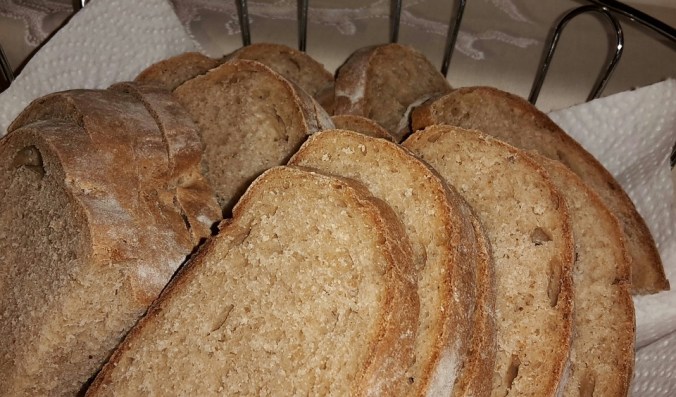
The recipe below is an example of measurements in the 1800s.
Notice that a heaping coffee-cup of corn meal isn’t an exact measurement to modern cooks. Civil War soldiers cooked their supper in tin coffee cups, so it had to be much larger than our normal eight-ounce cup. Knowing soldiers used these cups as a cooking pots makes it likely they held over sixteen ounces.
You may also notice that two cups of sweet milk are required, not two coffee-cups of milk, so they used different measurements that cooks of the time understood.
1 heaping coffee-cup of corn meal
1 heaping coffee-cup of rye meal (rye flour may be used)
1 heaping coffee-cup of Graham meal
2 cups molasses
2 cups sweet milk
1 cup sour milk
1 dessert-spoon soda
1 tea-spoon salt
Sift the three types of meal together well. Add the rest of the ingredients and beat thoroughly. The mixture may appear too thin, but it isn’t. Pour the mixture immediately into a tin form that allows room for the bread to swell and place it in a kettle of cold water. Boil for 4 hours. (In the late 1800s, some homes had cook stoves. Others still cooked meals in the fireplace.)
Don’t allow the water to boil over the tin form and make sure to replenish the water as it boils away.
After the bread has boiled, remove the lid and set it in an open oven for a few moments to dry the top.
Serve it warm with Thanksgiving turkey. The bread may also be used as a pudding and served with a sauce made of thick sour cream, sweetened well, and seasoned with nutmeg.
This recipe calls for Graham meal, cornmeal, and rye flour. Graham flour, a coarse whole wheat flour, is available today, but it’s not clear if Graham meal is the same product.
Modern recipes often call for flour, whole wheat flour, and cornmeal. Other Brown Bread bakers use whole wheat flour, rye flour, and cornmeal.
I haven’t tried this recipe yet. I’m not sure what to use for a tin form these days. Some village museums may sell this type of pan. Internet searches suggest springform pans.
Recipes from the 1800s and earlier were written in paragraph form, making them much harder for today’s cooks to decipher, but it’s a lot of fun to try.
Your comments are welcome!
This recipe is from Mrs. H.S. Stevens, Minneapolis, Minnesota in the referenced source.
-Sandra Merville Hart
Source
Compiled from Original Recipes. Buckeye Cookery and Practical Housekeeping, Applewood Books, 2011.


 Sandra Merville Hart