Making Hot Chocolate from Scratch the Old-Fashioned Way

hot-chocolate-1058197_960_720

The authors of an 1877 cookbook wrote instructions for preparing hot chocolate. There is no mention of adding sugar so it seems they drank unsweetened hot chocolate. I’m sure this was healthier but doesn’t sound tasty.

Here’s the recipe:

Dissolve six tablespoons of scraped chocolate or three tablespoons of scraped chocolate and three tablespoons of cocoa in a quart of boiling water. Bring the chocolate mixture to a hard boil for fifteen minutes.

Add one quart of milk. Heat to scalding, then serve while hot. This serves six.

I decided to make hot chocolate the old-fashioned way.

I used Baker’s Unsweetened Baking Chocolate, boiled in water for fifteen minutes, stirring occasionally. The water thickened to a thin gravy consistency and may have been much thicker had it boiled longer.

I added milk and heated the mixture to scalding, stirring frequently to prevent it from sticking to the pot.

The drink looked very tempting. Though I don’t even like unsweetened tea, I tried it. In my opinion, hot chocolate tastes better with sugar. I added a teaspoon of sugar. Much better but not sweet enough for my taste.

I ended up adding two and a half teaspoons of sugar to my mug of hot chocolate.

I think this would be a fun activity with your children or at a fall party when the weather cools. It will be fun to see how much sugar/sweetener that each person requires for the perfect cup of hot chocolate.

-Sandra Merville Hart


Sources

Compiled from Original Recipes. Buckeye Cookery and Practical Housekeeping, Applewood Books, 2011.

 

Militia Forces in Early 1800s

colonial-378730_960_720


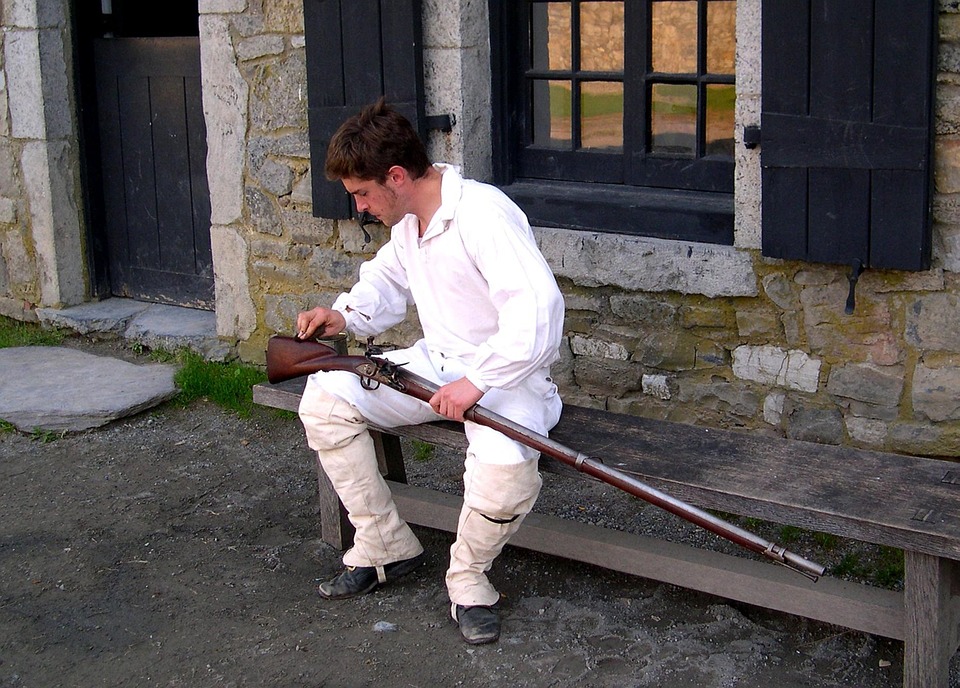
The law made every male between 18 and 45 part of the Militia of the day. This was usually one regiment plus officers for each county.

Law required every company meet once a year for drills. After this, the entire regiment met for a one day drill at the county seat or some other designated location.

In addition, one or more rifle regiments had company meetings. These men were required to wear uniforms. The rifle regiments and commissioned officers met at the county seat for “Officer’s Muster,” a two-day drill.

All the rifle regiments were required to meet annually for a regimental drill. These Military displays drew large crowds as a pleasant change from the daily routine. It was considered a general holiday.

Usually held in the fall, these “big musters” brought opportunities for horse races, foot races, and wrestling matches.

-Sandra Merville Hart


Sources

Welker, Martin. 1830’s Farm Life in Central Ohio, Clapper’s Print, 2005.


Once Beyond a Time by Ann Tatlock

51QJr40Ym5L

This intricately-woven story about a family in turmoil and a house with a secret quickly captivated and held my interest until the end!

The novel’s journey takes us to a magical place where the unimaginable becomes possible.

I’m not surprised the book won a Christy Award. Loved it! Highly recommend this book and this author.

– Review by Sandra Merville Hart


Lighthouse Publishing of the Carolinas  Use coupon code SandraMHart for a 20% discount on Lighthouse Publishing books!


Making Coffee from Scratch the Old-Fashioned Way

coffee-744157_960_720

The authors of an 1877 cookbook wrote instructions for preparing coffee. I’m sure the recipe was easily understood by women of their era, but I had to read it several times.

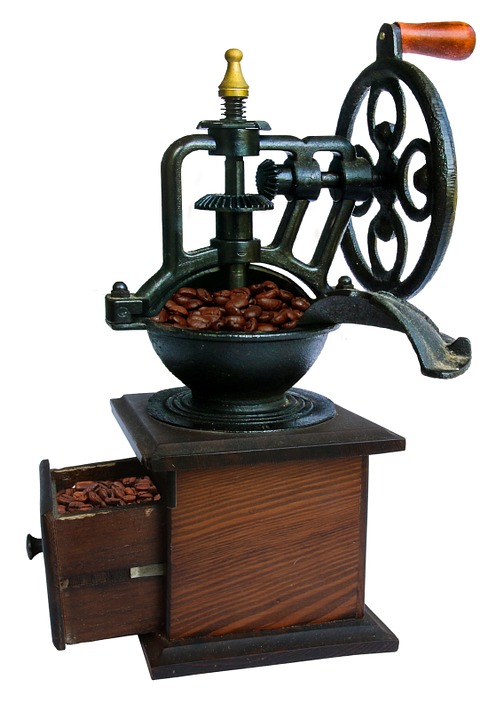
Grind roasted coffee beans. Many people owned coffee grinders similar to the one in the photo. Turning the crank grinds the roasted beans. The grounds are collected in the drawer beneath the grinder. Some grinders attached to the wall.

Allow one heaping tablespoon of ground coffee per person and “one for the pot.” Mix the grounds with an egg (part or all of the egg) with enough cold water to moisten it thoroughly.

Boil a pint of water per person less one pint. For example, if ten people are drinking coffee, use nine pints. (If you find this confusing, read the original recipe!)

Place the prepared coffee grounds into “a well-scalded coffee-boiler.” (This may refer to a coffee pot that has been rinsed in hot water, but that’s just a guess.) Then add half the boiling water to the coffee pot.

Stop up the “nose” or spout with a rolled-up cloth to lock in the flavor. Boil for five minutes “rather fast,” stirring as the mixture boils up. Then simmer for ten to fifteen minutes.

Add the remaining boiled water to the coffee when time to serve.

The cookbook authors advise that boiling coffee a long time makes it strong but isn’t as flavorful as when following the above instructions.

Any coffee drinkers care to give this a try?

-Sandra Merville Hart

Sources

Compiled from Original Recipes. Buckeye Cookery and Practical Housekeeping, Applewood Books, 2011.
 

Sugar Making in the Early 1800s

maple-syrup-1169896_960_720

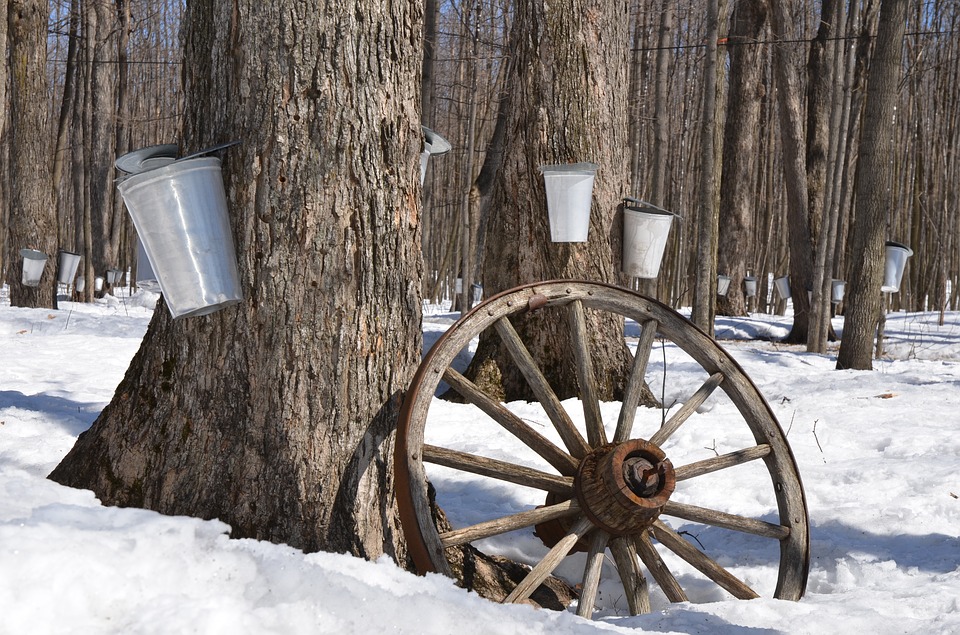
Maple or sugar trees provided sugar for early pioneers in the early 1800s. Log huts called Sugar Camps held either two big logs or a crude furnace of stones where they set iron kettles to boil sugar water.

The opportunity to chat with neighbors was part of the fun of making sugar. Neighborhood camps were usually built near each other to allow friends to socialize during the long process.

Pioneers used a gouge to tap trees in the winter. The ideal time for collecting sap varies with the part of the country, but was best when sunny days were above 40 degrees with frosty nights. A spile — a wooden peg used as a spigot — driven into the hole allowed sap to run into a wooden trough.

Gallons of collected sap boiled for hours. The process often continued all night. Children played while the sap boiled down.

Sap made a waxy form of sugar before it granulated and was often eaten in that way. The sap also made molasses.

Maple sugar and molasses, along with winter honey, sweetened pies and cakes in the days when families made most of their food.

Many areas still offer the experience of tapping trees, boiling sap, and tasting freshly-made maple syrup. Check for these opportunities in your area in the mid-winter.


-Sandra Merville Hart


Sources

“Maple Sugaring: Making Granulated Maple Sugar,” Back Yard Chickens 2015/06/10  http://www.backyardchickens.com/t/148932/maple-sugaring-making-granulated-maple-sugar.

“Frequently Asked Questions about Maple…,” Cedarvale Maple Syrup Company 2015/06/10 http://cedarvalemaple.com/faq.

Welker, Martin. 1830’s Farm Life in Central Ohio, Clapper’s Print, 2005.


Hearts that Survive by Yvonne Lehman

51blzzFWxwL

This novel about the Titanic is an intricately-woven story about two women. It begins before the tragic event and shows us what happens during the tragedy.

I was immediately drawn into the story and got by on less sleep until finishing it! Though you may know the history of Titanic’s voyage, you’ll find many surprises as you read. I especially loved the attention to historical details that were effortlessly woven into the story. Definitely recommend this novel by a very talented author!

-Review by Sandra Merville Hart

Amazon

Roasting Coffee Beans the Old-Fashioned Way

coffee-642164_960_720

The authors of an 1877 cookbook urged readers to buy raw coffee grains or small amounts of freshly roasted beans. They preferred Mocha and Java or a mix of the two flavors.

Wash raw coffee beans. They can be dried using a moderate oven (probably about 350 degrees) and then increase temperature to roast them quickly, stirring often. The beans are ready when tender, brittle, and a rich dark brown color.

To test doneness, press one bean with your thumb; it will crumble if done.

Coffee beans can also be roasted on a stove burner but make sure to stir constantly.

Add a lump of butter to the hot, roasted beans or let them cool and stir in a beaten egg. This clarifies the coffee beans.

Clarifying coffee was a new term for this modern girl. A little research showed that clarifying liquids removed sediments. Egg whites are most commonly used. After simmering a few minutes, the beans are strained.

This was probably a common task in the 1800s so it didn’t require explanation. I’m guessing early cooks used egg whites to simmer the beans and then strained them before storing in a tightly-closed tin.

The authors cautioned them to only grind quantities needed to retain the fresh flavor.

Next time we will learn how they made coffee.

Stay tuned!

-Sandra Merville Hart


Sources

Compiled from Original Recipes. Buckeye Cookery and Practical Housekeeping, Applewood Books, 2011.


Country Life in the 1830s

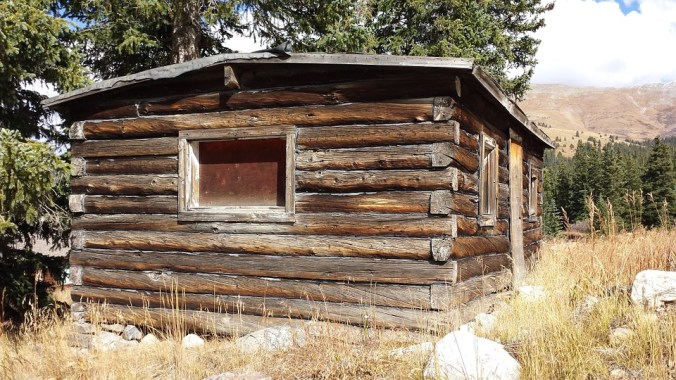
log-house-1045230_960_720Most country homes in the 1830s were log cabins covered with clapboards. The cabins contained two rooms, a garret (loft) used as a sleeping area, and a wide fireplace at one end. Mud and sticks formed the outside chimney.

 

Families spent most of their time around the family hearth in front of a blazing fire that warmed the cabin. Families read books, drank cider, talked, and told stories around the comforting warmth of this fire. They also entertained company there in the light of a lard lamp.


Log barns and stables were not large. Owners marked the ears of their livestock that ran outdoors year-round. Cows and hogs roamed the woods in the summer. Cows wore bells to help find them easily at milking time.


Women baked and cooked at the fireplace. There were no cooking stoves. An iron pot hung on a crane over the fire to boil dinners. Mush, a thick porridge, was a common meal cooked this way. Children often filled tin cups with mush for an evening meal.


Fire was very important in these homes. They didn’t use coal for heating in those days nor did they use lucifer matches for lighting. When the fire died out, someone walked to the nearest neighbor to “borrow fire” or used steel and flint to start a new one.


-Sandra Merville Hart


Sources


“The History of Matches,” About.com Inventors 2015/06/10  http://inventors.about.com/library/inventors/blmatch.htm.


“Clapboard,” Dictionary.com 2015/06/10 http://dictionary.reference.com/browse/clapboard.


“Lard Lamps,” Old Time Lamp Shop, 2015/06/10  http://collectlamps.com/lard%20lamps.html.


Welker, Martin. 1830’s Farm Life in Central Ohio, Clapper’s Print, 2005.


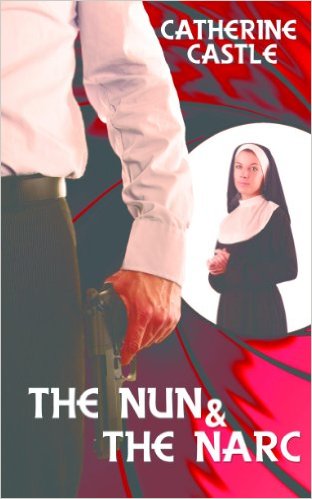
The Nun and the Narc by Catherine Castle

41hAYa++51L._SX310_BO1,204,203,200_


This suspenseful novel holds the element of danger, romance, and the comical quirks of an almost-ready-to-take-her-vows nun. The action begins immediately. The man who falls in love with the lovable nun-to-be faces danger with her at every turn. The characters are believable and the story held my attention from beginning to end.

The author does a wonderful job weaving suspense and comedy. I thoroughly enjoyed reading this romantic suspense. Great book!

-Review by Sandra Merville Hart

Link to Amazon

Join me today at Beach Reads Bonanza!

Sandra Merville Hart


I’m participating in a multi-author, multi-day Facebook event that will be fun for all.

There will be prizes and one huge giveaway where attendees can earn entries just by participating. There will be many ways to enter for the event-long giveaway, one of them as simple as following this blog!

I’d love you to join me at Beach Reads Bonanza Facebook event today at 1 pm Central. Since my novella is a Civil War romance, we will talk about fun facts from that time, battlefields we’ve visited, and any old family stories from your history. There’s lots to talk about.

Hope to see you there!

Beach Reads Bonanza Facebook Event