Dutch Oven Cooking

pot-619785_960_720

There is a secret to cooking with Dutch ovens over an open fire: properly placed coals control the interior temperature of the oven.

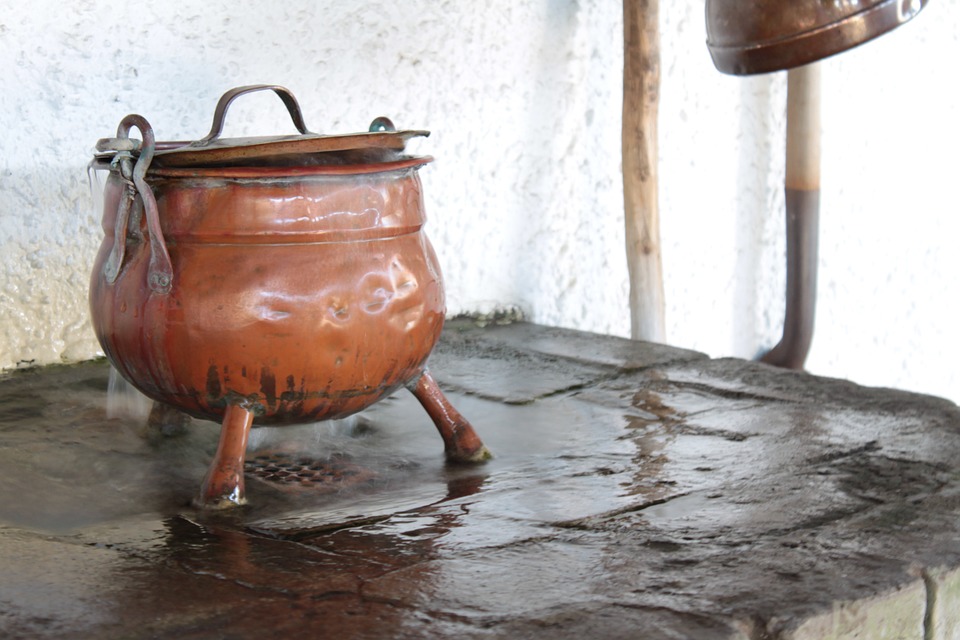
Begin by choosing a Dutch oven with legs for open fire cooking.

Avoid burned or raw sections or dried out foods by using charcoal briquettes or fire coals of that size. Charcoal has the advantage of even burning for longer periods.

Almost all baked goods bake successfully at 350 degrees. Coals must be carefully placed to achieve this temperature.

Consider the diameter of your Dutch oven to find the best number and allow two coals per inch for cooking. You will need the diameter plus two for the lid and two less than the diameter underneath.

For example, fourteen-inch ovens will have 16 coals on the lid (14 + 2) and 12 coals under the oven (14 – 2.)

The placement of the coals is vital to successful cooking. Arrange them in a circle under the oven on the outer rim. Putting them in the middle burns the meal.

It’s also important to arrange the coals evenly around the outer rim of the lid with four coals in the center. Two go on either side of the handle.

This provides and maintains 350 degrees for about two hours.

Adding one coal to the lid and underneath the oven increases the heat to 400.

The size of the oven you buy determines the kind of meal typically cooked inside it. For instance, 8” or 10” Dutch ovens are great for vegetables, desserts, and side dishes. Cook larger roasts, stews, breads, and chicken in 14” ovens.

Happy cooking!

-Sandra Merville Hart

Sources

Beattie, Roger L. “Seven secrets of Dutch oven cooking,” Backwoods Home Magazine, Inc., 2016/05/26  http://www.backwoodshome.com/seven-secrets-of-dutch-oven-cooking/.

“Choosing a Dutch Oven,” Dutchovendude.com, 2016/05/27 http://www.dutchovendude.com/cooking-select-dutch-oven.php.

Wedding Traditions in Early 1800s

bouquet-of-flowers-261231_960_720

As might be expected, pioneer wedding traditions were much simpler than today but there were few old maids and bachelors.

If possible, families provided their daughters with six knives, forks, plates, cups, and saucers, a good bed, bedding, side saddle, teaspoons, tablespoons, teakettle, wash tub, and Dutch oven.

The bride also received her clothes. Her wedding dress was inexpensive. She wore a cap trimmed with ribbons. The groom wore his best suit. Gifts weren’t expected.

Friends and family serenaded the new couple on the wedding night with horns, cow bells, and horse fiddles. Apparently this music was as inharmonious and loud as might be imagined.

The groom invited guests to an Infair the day after the wedding. Wedding guests gathered for a big dinner.

Male guests often raced on horseback to the Infair in a custom called “running for the bottle.” Whoever arrived at the groom’s home first received a whiskey bottle with a red ribbon tied around it. He took it to the party.

If younger siblings married first, the older ones “danced in the hog trough.”

-Sandra Merville Hart


Sources

“Infair,” Wiktionary, 2015/06/15 https://en.wiktionary.org/wiki/infair.

Welker, Martin. 1830’s Farm Life in Central Ohio, Clapper’s Print, 2005.


60 People Who Shaped the Church by Alton Gansky

51AEeQiJ9ML

Excellent book!

Gansky, a master storyteller, has selected sixty people who influenced the church in various ways. Beginning with Peter and ending with Billy Graham, this book is packed with inspirational stories. Gansky provides an overview of each person.

There are names I recognized but didn’t know their story. Other names were new to me. I was especially touched by the lives of John Bunyan, John Newton, and Billy Sunday. The way that Charles Wesley, T.S. Eliot, and C.S. Lewis used their writing skills inspired me. As a writer, this book sparked multiple ideas for articles. I can easily see the same happening for church leaders, educators, and ministers and highly recommend the book for them. Great read for history lovers!

-Review by Sandra Merville Hart


Amazon

Advantages of Cooking on an Old-Fashioned Wood Stove

old-744300_960_720

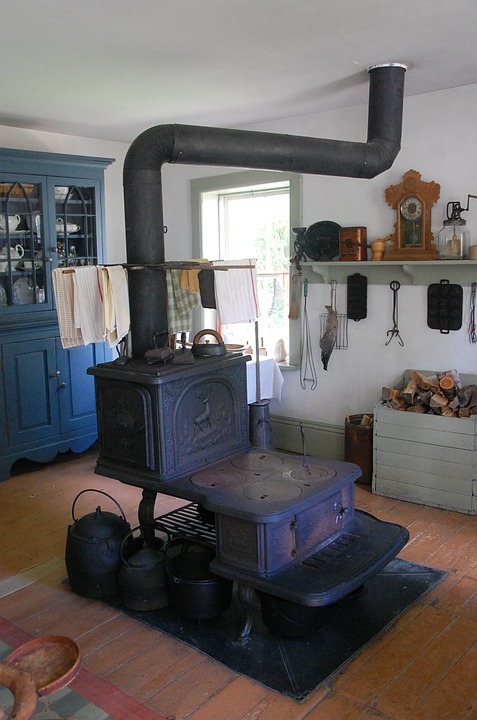
On a visit to a pioneer village, one of the cooks dressed in period costume boasted that she could cook any recipe on her wood stove except foods packaged for the microwave.

That intrigued me.

The author of Old-Fashioned Woodstove Recipes makes the same claim and lists some advantages of using this type of stove.

The first advantage: wood stoves are more economical than electric stoves, especially for slow-cooking stews, soups, and pot roasts.

Cooking over wood enhances the flavor. I definitely agree with this second advantage. When my husband adds mesquite wood chips to our charcoal grill, burgers taste much more appetizing.

The aroma of food cooked on wood burning stoves also increases the anticipation of a meal.

This type of stove adds warmth to the home in cold winter months. Hang damp clothes nearby to dry them.

Heat water in the stove’s water reservoir to supply hot water. It may supply enough to turn off electric water heaters for a few hours and save money on electricity. The reservoir also adds moisture to the air, acting as a humidifier.

Enhancing the taste of meals is the biggest advantage for me. I don’t own a woodstove, but I’d love to learn to cook on one.

How about you?

-Sandra Merville Hart

Sources

Collester, J.S. Old-Fashioned Woostove Recipes, Bear Wallow Books, 1988.


School in the Early 1800s

school-543041_960_720

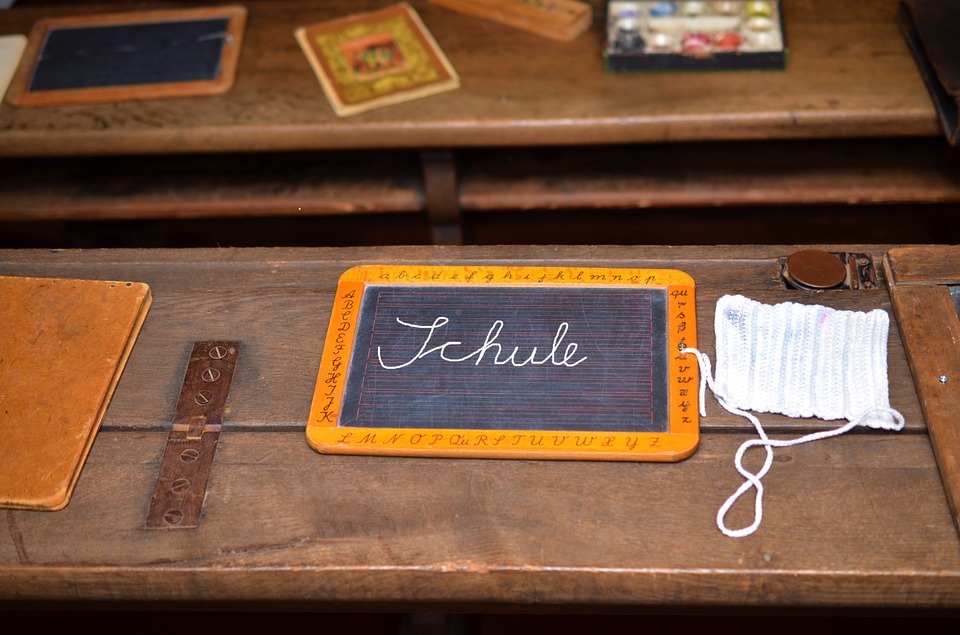
Attending school in the early 1800s was a privilege because every community didn’t have one. In those days, children went to subscription schools where parents paid the teacher a certain amount for each child. Parents also provided wood for the fireplace.

Families usually took turns boarding the teacher, or “master” as he might be called. The young scholars liked this arrangement as it gave them extra time with their teacher. Country schools didn’t hire women.

Boys and girls learned the three R’s together — “reading and ‘riting and ‘rithmetic,” better known as reading, writing, and math. They also played blind man’s bluff and ran races at recess. Cat and corner ball were two of the ball games they enjoyed.

School usually lasted four months during the fall and winter and then students were done for the year.

The master quizzed students on spelling daily where he gave the words aloud for the class to spell. Neighborhood schools competed periodically throughout the winter so the best spellers from each school could go toe to toe.

The schools were usually log cabins with a puncheon floor, clapboard roof and door, and greased paper in the windows. One wide fireplace took up one side of the school. The clay and wood chimney was built on the outside.

Split log benches with the flat side facing upward and round stick legs served as seats. Students used wide split slabs along one side of the room for writing tables.

-Sandra Merville Hart


Sources

“Clapboard,” Dictionary.com 2015/06/15 http://dictionary.reference.com/browse/clapboard.

“Puncheon floor room,” Historic New England, 2015/06/09  http://www.historicnewengland.org/historic-properties/homes/gilman-garrison-house/photographic-tour/puncheonfloor-web.jpg/view.

Welker, Martin. 1830’s Farm Life in Central Ohio, Clapper’s Print, 2005.


A Little Bit of Charm by Mary Ellis

61XH7obOEuL

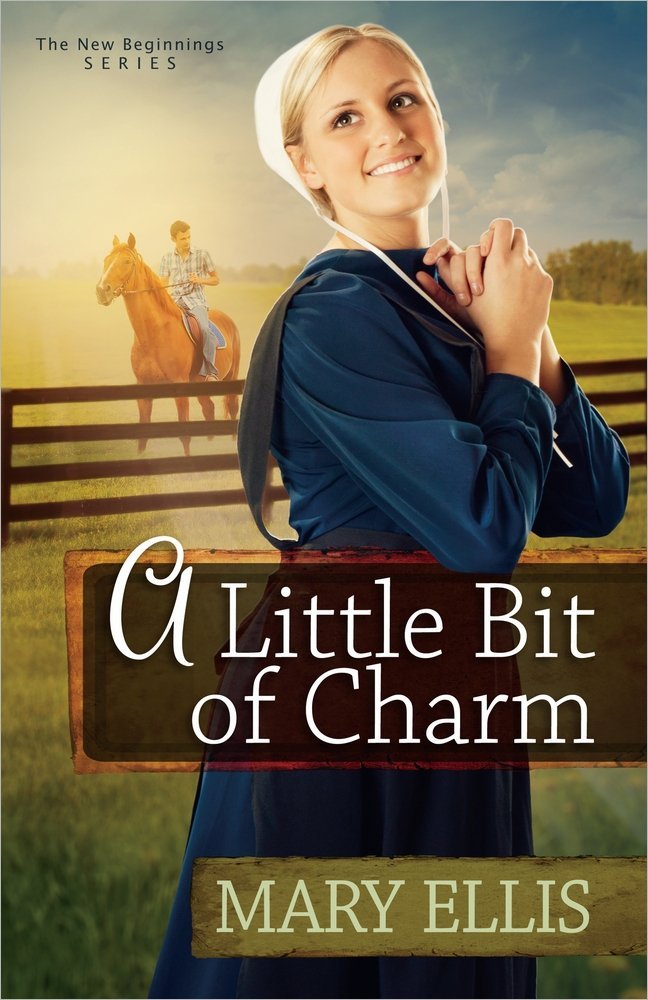
A Little Bit of Charm (The New Beginnings Series)

This story of Rachel, an Amish woman, quickly captured my attention. I love novels where I can learn new things as a natural part of the story and now have a greater appreciation for the Amish way of life and the work involved in horse stables.

A forbidden interest in a Baptist thoroughbred owner doesn’t stop Rachel’s heart from complicating the matter. A wonderful story with lovable, believable characters!

-Review by Sandra Merville Hart

Amazon

Choosing the Right Type of Wood for Cooking on Old-Fashioned Wood Stove

open-fire-885860_960_720

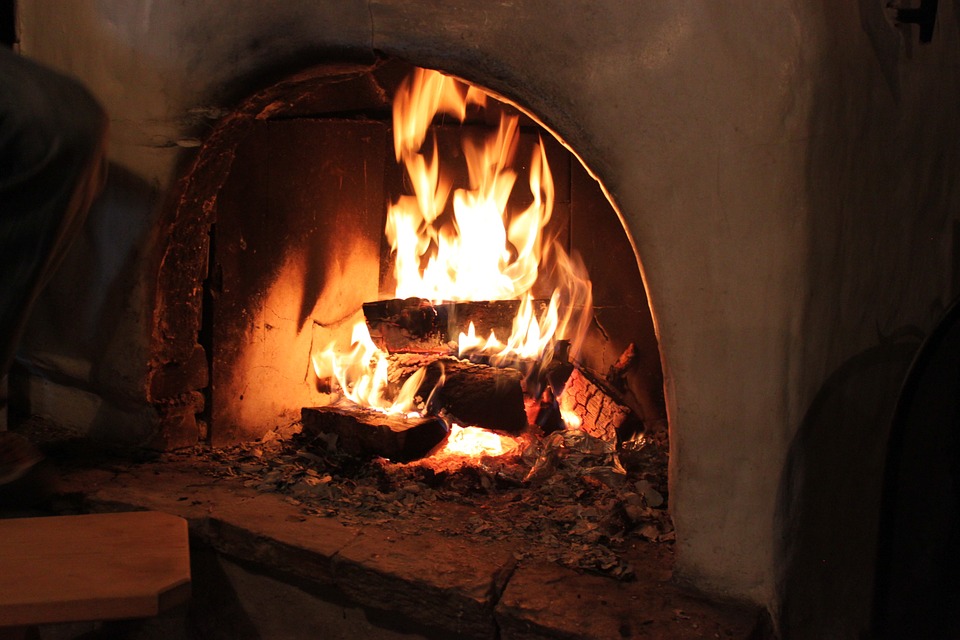
Old-fashioned wood burning stoves cook all types of meals. Fry chicken, bake a cake, or simmer a beef stew for hours. According to the author of Old-Fashioned Woodstove Recipes, there are some secrets to on the road to success that our ancestors understood very well.

Cooking on a Woodstove requires learning how to build and maintain different kinds of fire.

Old recipes often reference cooking something in a “moderate” oven or over a quick, hot fire. This was a bigger clue to the cook than I imagined.

For example, grilled cheese, bacon, or French toast require a quick, hot fire, a fire that ignites quickly. To create this type of fire, cooks selected birch, pine, or sassafras wood. The temperature increases rapidly to a peak and then dies.

Hickory, dogwood, black locust, white oak, red oak, and fruit woods creates hot slow-burning coals that burn steadily. Maintain baking temperature by using one of these woods to avoid refueling during baking. Adding more wood lowers the temperature causing the cake to fall or the bread not to rise.

Make fires for baking, simmering, or stewing an hour ahead to allow oven to reach the required temperature. Adjust the draft and damper to find the perfect heat. This appears to be a trial-and-error process until the cook learns the individual peculiarities of a particular stove.

Add trivets or racks to the stove burners (cooking lids) to decrease the heat under a kettle. More than one trivet can be used. Bricks also work well.

-Sandra Merville Hart

Sources

Collester, J.S. Old-Fashioned Woostove Recipes, Bear Wallow Books, 1988.

Religious Meetings in the Early 1800s

church-729250_960_720


Villages and neighborhoods contained well-attended churches of various denominations. Church meetings were not held as often as today.

A general custom of the day was that women sat on one side with men on the other.

The Methodists had a circuit system for ministers. Each minister was assigned to a particular circuit of churches that he traveled to on horseback. He stayed with a church member living near the location of the preaching.

Single preachers received one hundred dollars per year. Married ministers received one hundred dollars for himself, one hundred dollars for his wife, and fifty dollars for each of his children. This likely encouraged matrimony!

Camp meetings lasted a week. Thousands traveled from miles around to attend services held in a shady grove near a public road.

The most eloquent preachers spoke at camp meetings during the day and evening. Log huts were built for families traveling too far to return home each day. The minister stood on quickly erected platforms.

Powerful sermons touched listeners at these festive occasions. People gathered to worship and sing but also to spend time with old friends and meet new ones. Many converts emerged from this week with sincere faith.

These meetings not only educated those attending about God’s love and forgiveness, but also exerted moral influence over the country.

Night meetings lit by lamp and torches illuminated the woods. The preaching and congregational singing inspired true worship that remained with those experiencing it.

-Sandra Merville Hart


Sources

“Camp Meeting,” New World Encyclopedia, 2015/06/15 http://www.newworldencyclopedia.org/entry/Camp_meeting.

Welker, Martin. 1830’s Farm Life in Central Ohio, Clapper’s Print, 2005.


Dead Man’s Hand by Eddie Jones

51uzF9ETcGL

Dead Man’s Hand: The Caden Chronicles,

When teenager Nick Caden visits Deadwood Canyon Ghost Town on vacation, he has no idea the adventures that await him. He witnesses the murder of Billy the Kid. He reports it to the sheriff. When they don’t find the body, the sheriff doesn’t believe him. Nick meets a girl named Annie Oakley who tries to help him find Billy the Kid.

Encounters with Wyatt Earp and Jesse James as well shootouts and bank robberies staged for the vacationer’s enjoyment will keep teenaged boys – and girls – on the edge of their seat as Nick and Annie face danger from the killer.

-Reviewed by Sandra Merville Hart

Amazon