The Confederate State of Richmond by Emory M. Thomas

Review by Sandra Merville Hart

A Biography of the Capital

This nonfiction book reports on events that took place in the Confederate capital of Richmond, Virginia, during the Civil War (1861-1865).

Thomas arranged the book in mostly chronological order, which makes it an easy read.

Filled with interesting details about important leaders and events, this book also includes charts, maps, and, places, and Richmond businesses. The author even included military buildings, hospitals, newspapers, businesses, owners’ names, and the street location—a treasure for historical authors!

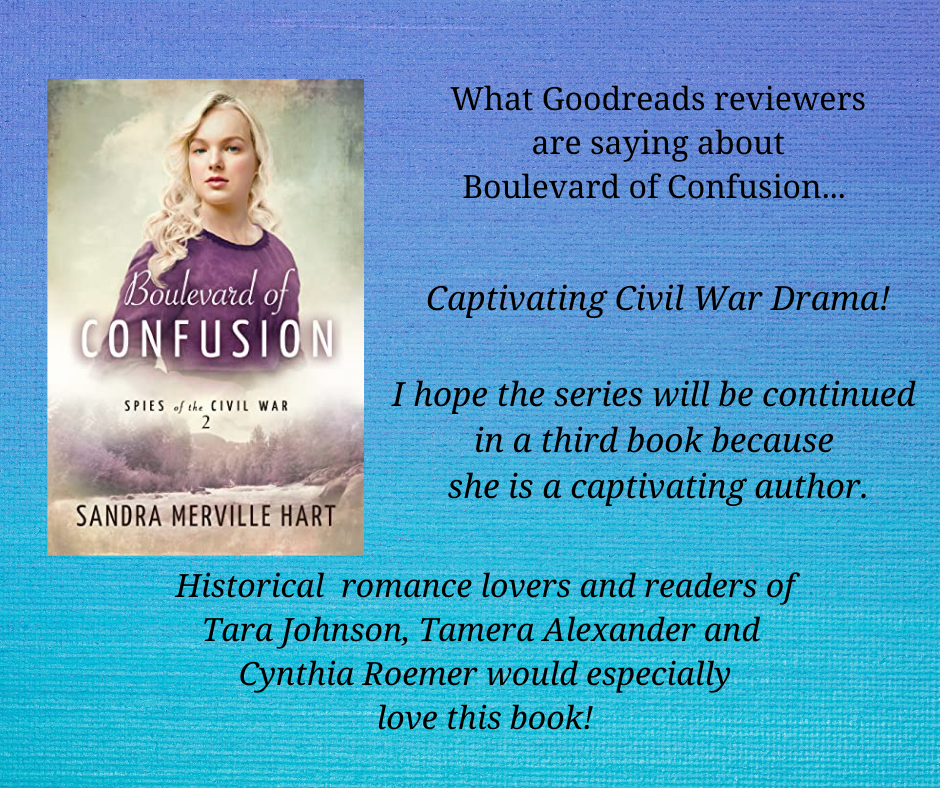
In fact, I bought this book for research purposes. My “Spies of the Civil War” series has two books set in Richmond in 1862—Boulevard of Confusion, Book 2 and Byway to Danger, Book 3. I took lots of notes and highlighted passages. The book enriched my understanding of what Richmond citizens faced during the war.

Recommended for anyone interested in learning about the Civil War in Richmond, Civil War research, and history lovers.


Amazon

The Chamomile by Susan F. Craft

Review by Sandra Merville Hart

Book 1 in “Women of the American Revolutions” Series

Lilyan Cameron’s loyalties belong to the colonies during the Revolutionary War. Her brother Andrew fights for the militia, but when he is captured by the British and held prisoner in deplorable conditions on one of their ships, Lilyan doesn’t know where to turn for help.

Captain Nicholas Xanthakos also fights for the militia. He and others plan how they can save Andrew and those captured with him. He enlists Lilyan to help. She doesn’t need much persuasion—she’ll do anything to save her brother.

There’s a lot of action and adventure in this story. It also shows how the colonists lived and made their living. Some of the detail, while fascinating, tends to slow the action.

The story beautifully demonstrates the courage of many men and women, whether they fought for the militia or not.

Multiple twists and turns in the story made this a page-turner for me. Tragedy, heartache, and difficulties escalate as the story unfolds. I felt that the initial relationship between Lilyan and Nicholas moved quickly for the time period.

As a history buff, the book snagged my interest. I look forward to reading the next book in the series.

LPC buy link

Author’s Inspiration for Avenue of Betrayal

by Sandra Merville Hart

I’m often asked where ideas for my stories originate. That answer varies because inspiration comes from unexpected sources. Searching for inspiration seems to make it more elusive. Story ideas usually happen when I’m doing something unrelated to my books, like visiting a museum or historical home while on vacation.

Ideas for this series stemmed from research for a “Civil War Women” series of articles I wrote for my blog. There are many women from the North and South featured in that series—and many more that deserve recognition. What surprised me was the number of known female spies from both sides. It’s likely that many others either didn’t seek praise after the war or feared retribution and never revealed their activities.

Rose Greenhow, a Confederate spy living in Washington DC (Washington City, as it was called at that time) in 1861, created an impressive spy network. Coded messages were sent on a “Secret Line.” Several couriers in a chain passed on messages in common places such as docks, taverns, and farmhouses.

Rose’s spy network from Boston to New Orleans was the largest in the war—48 women and 2 men.

Allan Pinkerton, head of Lincoln’s Intelligence Service, was tasked with finding Confederate spies and he placed Greenhow under surveillance.

She was arrested in August of 1861.

Though the series is about a fictional family, there are actual historical spies who touch the stories. Rose is one of them.

Avenue of Betrayal is set in Washington City (Washington DC) in 1861, where a surprising number of Confederate sympathizers and spies lived.

Through both real and fictional characters, this series will highlight activities spies were involved in and some of the motives behind their decisions.

I invite you to read Avenue of Betrayal and the rest of the series that will soon follow. I’d love to know what you think!

Back Cover Blurb for Avenue of Betrayal

Betrayed by her brother and the man she loves …

whom can she trust when tragedy strikes?

Soldiers are pouring into Washington City every day and have begun drilling in preparation for a battle with the Confederacy. Annie Swanson worries for her brother, whom she’s just discovered is a Confederate officer in his new home state of North Carolina. Even as Annie battles feelings of betrayal toward the big brother she’s always adored, her wealthy banker father swears her and her sister to secrecy about her brother’s actions. How could he forsake their mother’s abolitionist teachings?

Sergeant-Major John Finn camps within a mile of the Swansons’ mansion where his West Point pal once lived. Sweet Annie captured his heart at Will’s wedding last year and he looks forward to reestablishing their relationship—until he’s asked to spy on her father.

To prove her father’s loyalty to the Union, John agrees to spy on the Swanson family, though Annie must never know. Then the war strikes a blow that threatens to destroy them all—including the love that’s grown between them against all odds.

Available on Amazon and other retailers.

Transcontinental Railroad

by Sandra Merville Hart

Asa Whitney, a New York merchant, planted the idea of a transcontinental railroad when he petitioned Congress for federal funding of a sixty-mile strip in 1845, but it wasn’t until Theodore D. Judah caught the vision that things began to happen. Judah believed the Donner Pass was the perfect area for the railroad to pass through the Sierra Nevada mountains, and, as the engineer of the Sacramento Valley Railroad, he wanted to build it.

He brought Leland Stanford, Charles Crocker, Collis P. Huntington, and Mark Hopkins in on the project, leading to the establishment of Central Pacific Railroad Company of California.

Congress passed the first Pacific Railway Act on July 1, 1862. It stated the Union Pacific was to start in Omaha, Nebraska, and build toward the west. The Central Pacific started in Sacramento, California, and built toward the east to meet them roughly halfway.

The second Pacific Railway Act (July 2, 1864) doubled the land grants to 12,800 acres for every mile of track built. They also received $48,000 in government bonds for each mile. This increased the competition between the two companies.

The Civil War hampered Union Pacific’s efforts to build. Though they began in December of 1863, little was accomplished for the remaining two years of the war.

The western team began about a month before. Sadly, the man who had laid so much groundwork for the project didn’t see it to completion. Judah died of yellow fever in November of 1863, shortly after Central Pacific pounded the first spikes.  

The Sierra Nevada mountains slowed Central Pacific’s progress. They hired Chinese workers for this grueling task. Nine tunnels were blasted the mountains in order for the track to be laid.

Once the war ended, the Union Pacific made progress westward across the prairie. Civil War veterans and Irish immigrants had to cope with attacks from Native Americans. Cheyenne, Sioux, and Arapahoe were among the attacking tribes.

Union Pacific workers had their own difficulties to contend with—the Rockies. Even with these obstacles, the group from the east was in Wyoming in the summer of 1867, and had laid almost four times the miles of track as the western team.

Once Central Pacific made it to the other side of the Sierra Mountains in June, they made significant progress.

The competition was on now. Unfortunately, the workmanship suffered and some the sections were later rebuilt.

In March of 1869, President Ulysses S. Grant told the two companies to agree on a meeting point. They chose Promontory, Utah. A symbolic gold spike was driven in a special “Golden Spike Ceremony” on May 10, 1869. It linked both railroads, marking the completion of the Transcontinental Railroad.

The hero in my novel, Avenue of Betrayal, Book 1 of my “Spies of the Civil War” series, dreams of participating in building the Transcontinental Railroad. The fictional Union officer hopes that the war doesn’t last so long that he misses his opportunity. As you read in this article, Civil War veterans were used to build the railroad after the war ended. I was thrilled to use such an important part of our history in the story.


Sources

“Central Pacific Railroad,” Encyclopaedia Britannica, 2022/02/22 https://www.britannica.com/topic/Central-Pacific-Railroad.

History.com Editors. “Transcontinental Railroad,” History.com, 2022/02/22 https://www.history.com/topics/inventions/transcontinental-railroad.

“Pacific Railway Acts,” Encyclopaedia Britannica, 2022/02/22 https://www.britannica.com/event/Pacific-Railway-Acts.

“The Transcontinental Railroad,” Library of Congress, 2022/02/26 https://www.loc.gov/collections/railroad-maps-1828-to-1900/articles-and-essays/history-of-railroads-and-maps/the-transcontinental-railroad/.

“Transcontinental Railroad,” History.net, 2020/06/19 https://www.historynet.com/transcontinental-railroad.

“Union Pacific Railroad Company, Encyclopaedia Britannica, 2022/02/22 https://www.britannica.com/topic/Central-Pacific-Railroad.

Medium Well Done by Eddie Jones

by Sandra Merville Hart

The Caden Chronicles

Book 6

I’ve read other books in this series so I settled in to try solve the mystery along with fifteen-year-old Nick.

The story begins with Nick witnessing a séance in a cemetery. He can hear the words used to “awaken” a spirit but I don’t know the meaning of those words.

Nick doesn’t believe in ghosts and figures his friend brought him here to see a staged performance. Then his friend disappears right afterward and it appears she died in a hit and run but no one can find her body.

This isn’t the first time Nick has found himself in the middle of a murder investigation and readers of the series hope it isn’t the last.

Jones has written the book to appeal to middle-grade and teen readers, both boys and girls. There is plenty of mystery, adventure, and danger to hold their interest. I like that the seeming supernatural portions of the story are explained at the end. If parents are worried about that aspect, I’d suggest reading it first.

I enjoy stories that invite me to try to figure out “whodunit” and this one did.

Amazon

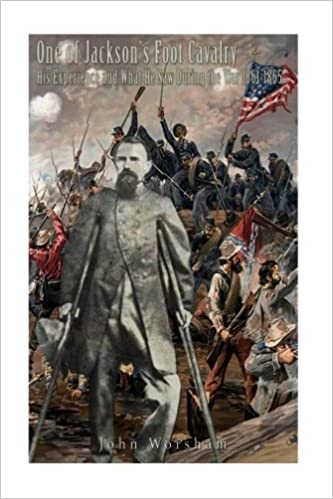
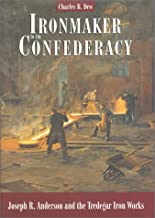
One of Jackson’s Foot Cavalry by John H. Worsham

by Sandra Merville Hart

His Experience and What he saw

During the War 1861-1865

I discovered this book while researching to write my “Spies of the Civil War” series. The second and third book in the series are set in Richmond, Virginia, in 1862. I was searching for a Virginia regiment with a large number of Confederate soldiers from Richmond that stayed in that state for battles fought in the first half of 1862.

I was thrilled to find this book written by a Confederate soldier in Company F of the Twenty-first Virginia Infantry. Worsham gives detailed accounts of battles and where they camped. He provides names of the men who were elected as officers.

The author was proud to be a soldier in General “Stonewall” Jackson’s division of the Second Corps.

This is a well-written, detailed account of what the Confederate soldiers endured during the war. It was published in 1912. I’m grateful for soldier accounts such as these and used some of the details provided–such as camp locations and how the soldiers felt–in Boulevard of Confusion, Book 2.

A great book for readers who enjoy American history, soldier autobiographies, and the Civil War.

19th Century Advice for Organizing Closet Space

by Sandra Merville Hart

Arranging closet space seems to have been as challenging in the post-Civil War as it is for many people today. This 19th century advisor didn’t feel that lack of time excused a cluttered closet. Instead, the author felt that organization was the answer. Putting a system in place and then maintaining it actually lessens the amount of time it takes to clean. Also, you won’t spend hours looking for items if everything is in its place.

It’s important to note that many homes in the 1800s didn’t have closets. Folks stored their clothing in armoires, chests, and hung them on hooks. I’ve visited many old houses where there were no closets in the bedrooms, even in wealthier homes. Having this storage space built into bedrooms is a definite convenience.

Our 19th century had plenty of advise about organizing a closet that also applies to armoires.

If shelves aren’t already installed in closets, install them. (This seems to be something that our homebuilders agree on because most modern closets already have them.)

Put in plenty of hooks to hang clothing. (This has largely been replaced by closet rods and hangers.) The author suggested arranging clothes by type to make them easier to find.

Hanging too many items close together makes them difficult to find. It can also wrinkle the clothing. Allow ample room for clothes so they don’t lose their shape in the closet.

Don’t toss clothing in the closet floor. Hang the items to keep them nice.

Don’t place boots and shoes on the closet floor. Make shoe pockets out of calico fabric to store shoes.

Never keep anything on the closet floor to prevent stepping on them.

Never toss items into the closet to keep them out of sight because “hiding dirtiness does not cure it.”

There is timely advice in these tips from the 1870s. Now, I have some closets that need my attention. 😊

Sources

Compiled from Original Recipes. Buckeye Cookery and Practical Housekeeping, Applewood Books, 1877.

Laying the Groundwork for the Transcontinental Railroad

by Sandra Merville Hart

Asa Whitney, a New York merchant, wanted a railroad that stretched from the Atlantic to the Pacific. His goal was to make trade with China easier after returning from a trip to China in 1844.

In 1845, Whitney petitioned Congress for federal funding of a sixty-mile strip and proposed that land be granted as wages for workers. He didn’t give up when his request was denied. In 1849 he published Project for a Railroad, which outlined possible routes. Congress didn’t accept his ideas, but their interest was growing.

Whitney continued to talk about his dream and the public noticed. A transcontinental railroad brought many benefits. Train travel for passengers was faster and safer than stagecoaches and wagon trains. Mail delivery would be accomplished more quickly. Goods from the east could reach western customers in a timely manner. There were many merits to building it.

Others made proposals but Congressmen didn’t agree on the eastern terminus. Secretary of War Jefferson Davis sent four men to lead the exploration of potential routes for the transcontinental railroad. They learned that any of them worked. The least expensive was the route along the 32nd parallel.

Because routes along the South didn’t please Northern Congressmen and vice versa, debates continued.

Whitney stopped lobbying for the railroad in 1851, but a new champion came along in 1860. Theodore D. Judah believed the Donner Pass was the perfect area for the railroad to navigate through the Sierra Nevada mountains. As the engineer of the Sacramento Valley Railroad, he wanted to build the new railroad.

He brought Leland Stanford, Charles Crocker, Collis P. Huntington, and Mark Hopkins in on the project, leading to the establishment of Central Pacific Railroad Company of California.

Judah traveled to Washington City (as Washington DC was then called) where he talked with Congress. President Abraham Lincoln backed the idea and the first Pacific Railway Act went into effect on July 1, 1862. It stated the Union Pacific was to start in Omaha, Nebraska, and build toward the west. The Central Pacific started in Sacramento, California, and built toward the east to meet them roughly halfway.

It was a long journey of many years and several key people to make the decisions laying the groundwork for the Transcontinental Railroad, not the least of whom were Asa Whitney and Theodore Judah.

The hero in my novel, Avenue of Betrayal, Book 1 of my “Spies of the Civil War” series, dreams of participating in building the Transcontinental Railroad. The fictional Union officer hopes that the war doesn’t last so long that he misses his opportunity. I was thrilled to use such an important part of our history in the story.  

Sources

“Asa Whitney,” Wikipedia, 2022/02/26 https://en.wikipedia.org/wiki/Asa_Whitney.

History.com Editors. “Transcontinental Railroad,” History.com, 2022/02/22 https://www.history.com/topics/inventions/transcontinental-railroad.

“Pacific Railway Acts,” Encyclopaedia Britannica, 2022/02/22 https://www.britannica.com/event/Pacific-Railway-Acts.

“The Beginnings of American Railroads and Mapping,” Library of Congress, 2022/02/26 https://www.loc.gov/collections/railroad-maps-1828-to-1900/articles-and-essays/history-of-railroads-and-maps/the-beginnings-of-american-railroads-and-mapping/.

“The Transcontinental Railroad,” Library of Congress, 2022/02/26 https://www.loc.gov/collections/railroad-maps-1828-to-1900/articles-and-essays/history-of-railroads-and-maps/the-transcontinental-railroad/.

“Transcontinental Railroad,” History.net, 2020/06/19 https://www.historynet.com/transcontinental-railroad.

Abigail’s Peace by Pegg Thomas

by Sandra Merville Hart

Forts of Refuge Series

Book Three

This third book in the series was a page turner for me!

Abigail Aldridge steals away from her brother’s Boston home and catches a schooner to Fort Niagara where her uncle is stationed. Though Uncle Cornelius loves her, he’s not happy to see her because he fears for her safety. It’s 1763, and Pontiac has gathered tribes together to attack other British forts. Abigail feels the bare chests of the fort’s Seneca scouts is scandalous. She fears them.

Koyen finds the wide, brightly-colored dresses the British women wear ridiculous. However, when Abigail befriends his sisters, she captures his attention. Koyen, a Seneca warrior, is torn by his job as a scout for soldiers at Fort Niagara. Part of him wants to join Pontiac’s fight and drive the British forts from Seneca land. The other part doesn’t want to do anything to place Abigail in jeopardy.

Courageous characters touched me with their bravery. Thomas has woven a multi-layered story amidst actual historical events. Real-life people enhance the authenticity of the story. I love learning history as a natural part of a fictional novel.

Thomas has delivered another well-written story with a swoon-worthy hero. I couldn’t put it down!

I will look for more books by this author!

Amazon

The Unwelcome Wagon by Michelle Levigne

Reviewed by Sandra Merville Hart

Book & Mug Mysteries

Book One

This first book in the series snagged my attention from the beginning! I love when a small-town cast of believable—mostly lovable—characters collide in a cozy mystery. Of course, I tried to figure out the mystery along with characters. 😊

Saundra Bailey, the new children’s librarian in Cadburn, Ohio, loves her new apartment and job, but doesn’t feel safe. A stranger attempts to get into her apartment and later tries to snatch her purse. The danger escalates from there. Who can she trust?

Kai Shane, owner of the Book & Mug, has been in town a few years and still isn’t welcomed by the “royal” family. He and his cousins, Eden and Troy, are on their own mission to find their family who put them with a foster family and never came back.

Saundra captures Kai’s attention right away. He’s concerned about her safety—and the break-in’s at his own building.  

The author does a wonderful job of building a cast of believable characters. I was so pulled into the story that I wanted to study the documents myself!  

This is not the first book I’ve read by this talented author. Levigne has delivered a well-written cozy mystery that captivated me and kept me turning pages. It’s filled with twists and I couldn’t put it down!

I can’t wait to read the next book in the series!

Amazon