19th Century Advice for Table Manners

by Sandra Merville Hart

Good table manners are perhaps not as important to some these days as they were a century ago, but they still matter. As the 19th century advisor points out, good manners are a “kind consideration” of the feelings of others and all began for sound reasons. Most of this advice is still followed today.

Remove gloves after sitting at the table. Lay them in your lap beneath the napkin.

Food goes to the mouth—not the other way around.

Chew quietly with closed lips.

Cut food with a knife but eat with a fork.

If a fork can’t hold the food, use a spoon.

Don’t lean your arms on the table or sit too far back.

It’s good for your health to eat slowly—and it’s considered good manners.

Bread should be broken, not cut. Don’t crumble it into soup or gravy.

It’s considered bad manners to mix food on the plate.

Eat fish with a fork.

Cut game or chicken, but don’t hold it with the bones in your fingers.

Hold oranges with a fork and peel them without breaking the inner skin.

Don’t cut pastry with a knife. Break it apart and eat with a fork.

Bread and butter is a dish for dessert. (Surprising!)

Never help yourself to anything on the table using your own utensils.

Never pick your teeth at the table.

When eating a cherry-stone or other substances removed from the mouth, pass them into a napkin held to your lips and then return it to the plate.

Try to ignore accidental spills.

When done with your meal, place your fork and knife side by side on the plate with the handles to the right.

Most of these tips from the 1870s have stood the test of time. As an author of historical novels, tips like these enhance my understanding of the time period.

Sources

Compiled from Original Recipes. Buckeye Cookery and Practical Housekeeping, Applewood Books, 1877.

Civil War in Washington DC: The Willard Hotel

by Sandra Merville Hart

City Hotel, located at 1401 Pennsylvania NW in Washington DC, was expanded after Henry Willard leased it in 1847. He soon brought his brother, Joseph, into to the business and changed the name to Willard Hotel. They built a six-floor hotel on the southwest corner of 14th and F Streets. The brothers purchased a Presbyterian Church on F Street and converted it to a meeting hall with an auditorium called Willard Hall.

Henry went the extra mile to make his hotel successful. He greeted hotel guests as they stepped out of the stage. He was at the Central Market before dawn to select the highest quality of products available to serve for in his hotel’s dining rooms. Henry donned a white apron to carve meats at the dining table.

By the Civil War, the hotel was a center of activity for the bustling capital then known as Washington City. Luxurious gentlemen’s and ladies’ dining rooms could accommodate 2,500 diners daily. Elegant parlors invited guests to linger after a meal before retiring to their rooms.

The hotel also boasted of a 150-foot ballroom, where it hosted lavish events like the Napier Ball, given as a farewell on February 17, 1859, to the British Ambassador Lord Francis Napier and Lady Anne Napier. Eighteen hundred guests paid an expensive price of $10 each to attend. The ball’s success boosted the hotel’s prestige.

Willard’s boasted another honor—both Franklin Pierce and Abraham Lincoln stayed at their hotel before their presidential inaugurations.  

After the war began, Union regiments poured into the city for further training and the hotel lobby became a common meeting place for Union officers to make their reports.

One of these regiments, the 11th New York Infantry, was made up of firemen under Colonel Elmer F. Ellsworth. The entire regiment wore red shirts, gray breeches, gray jackets, and red caps, so they stood out in a crowd.

On May 9, 1861, the Willard brothers had cause to be grateful for Ellsworth’s Zouves when fire engulfed Samuel Owen’s tailor shop, which adjoined their hotel. With equipment borrowed from local firehouses, Ellsworth’s men helped the Washington Fire Department extinguish the blaze. His entire regiment was eventually called to fight the fire and Ellsworth, using the fire chief’s trumpet, took command until the crisis ended.

Henry Willard was so pleased with the results that he invited them all to breakfast. Undoubtedly, the situation would have been much worse without so many capable firefighters.

Union soldiers training for the Civil War battlefields faced a familiar battle that day.  

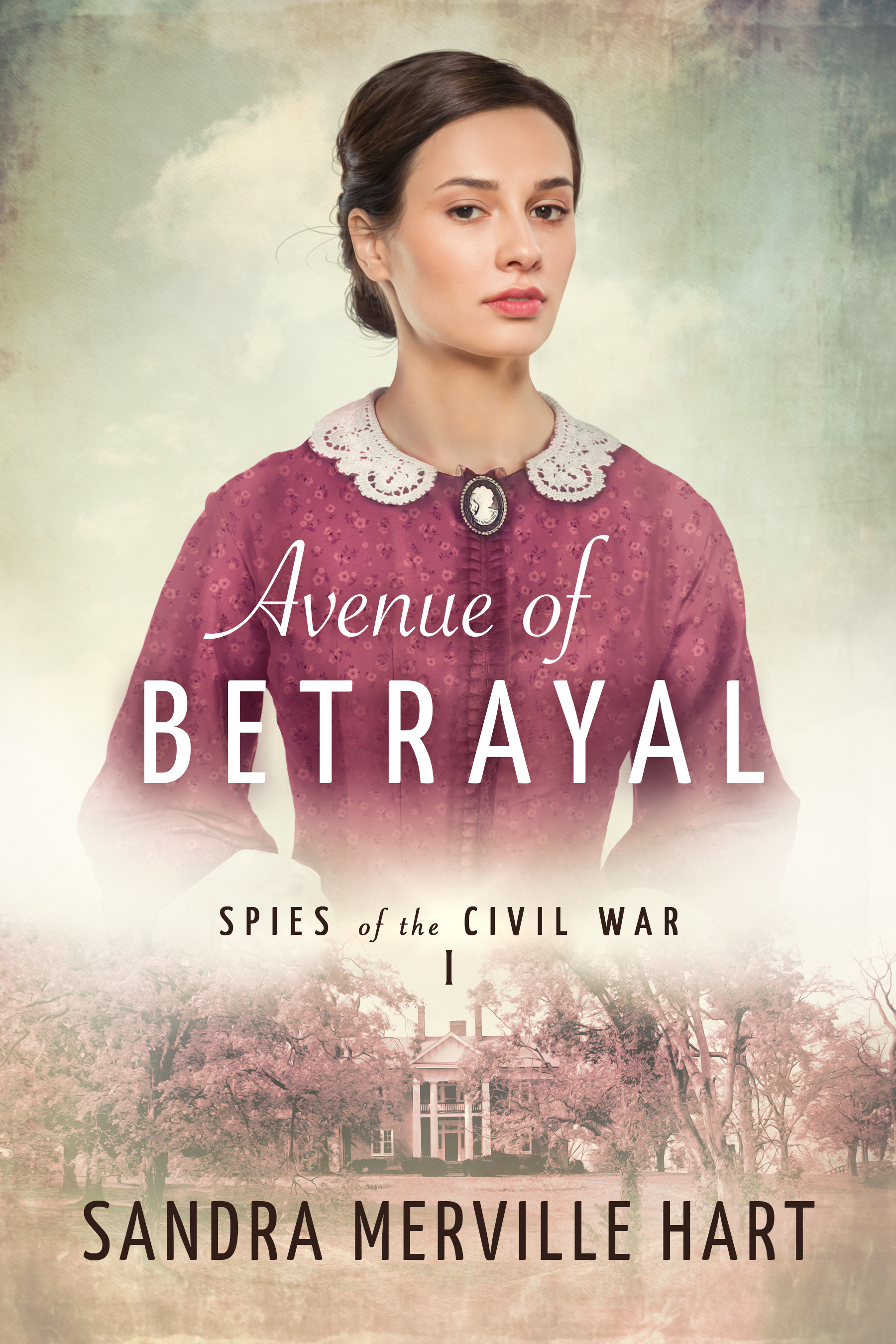
There is a scene at the Willard Hotel when characters in my novel, Avenue of Betrayal, Book 1 of my “Spies of the Civil War” series, dine there. I was thrilled to use such an important location in the story.  

Sources

“11th New York Infantry Regiment,” Wikipedia, 2022/02/25 https://en.wikipedia.org/wiki/11th_New_York_Infantry_Regiment.

“A Ball at Willard’s,” White House Historical Association, 2022/02/25 https://www.whitehousehistory.org/photos/a-ball-at-willards.

Epstein, Daniel Mark. Lincoln and Whitman: Parallel Lives in Civil War Washington, Ballantine Books, 2004.

Selected by Dennett, Tyler. Lincoln and the Civil War In the Diaries and Letters of John Hay, Dodd, Mead & Company, 1939.

“The Willard Hotel,” White House History, 2020/06/11 https://www.whitehousehistory.org/the-willard-hotel.

“The Willard Hotel in the 19th Century,” Streets of Washington, 2020/06/11 http://www.streetsofwashington.com/2012/07/the-willard-hotel-in-19th-century.html.

Waller, Douglas. Lincoln’s Spies, Simon & Schuster, 2019.

“Willard Hotel,” National Park Service, 2020/06/11 https://www.nps.gov/nr/travel/wash/dc36.htm.

“Willard InterContinental Washington,” Wikipedia, 2020/06/11 https://en.wikipedia.org/wiki/Willard_InterContinental_Washington.

Maggie’s Strength by Pegg Thomas

Review by Sandra Merville Hart

This second book in the series snagged my attention from the first page!

At age eleven, Maggie Kerr is captured in an attack on Fort McCord by warriors of the Huron tribe while screaming for her family. Her mother promises that someone will rescue her. As the years pass, resentment builds that her father never comes for her. She learns to trust no one. Seven years later, her owner promises to give her in marriage to Tree Sleeper, a cruel warrior. She escapes and heads to Fort Detroit.   

Baptiste Geroux, a French farmer living near Fort Detroit, is friends with the Ottawa who leave him in peace because he gives them a portion of his crop. He knows there is trouble brewing between tribes under the leadership of Pontiac and the British, but figures he’ll be safe enough. He discovers the British woman dressed in Huron clothing on his land and takes her to the safety of the fort.

At least, both he and Maggie figure she will be safe at the fort. But Baptiste doesn’t understand the ruthlessness of Tree Sleeper.  

Believable characters touched my heart with their hardships. Maggie struggles with resentment that her father never rescued her and near hatred for harsh treatment from some of her captors. I loved so many of these characters by learning their struggles.  

Thomas has delivered another well-written, heart-wrenching story that is steeped in historical details. Action-packed and filled with twists, I couldn’t put it down!

I can’t wait to read the next book in the series!

Amazon

The Irish Ninth in Bivouac and Battle by Michael H. MacNamara

Review by Sandra Merville Hart

The Virginia and Maryland Campaigns

Captain Michael H. MacNamara wrote about the Ninth Massachusetts and published it after the Civil War. He (and others) affectionately refer to this regiment as the “Irish Ninth,” who were known for their bravery and courage.

I loved the rich details of everyday life for the regiment. The author took us through the initial training and then on their journey to drill in Washington DC (then more commonly called Washington City) where they joined thousands of Union soldiers.

The city was a sea of white tents covering the fields in and around the capital. The author painted vivid pictures of camp life, building a fort, and battles.

Pride in his comrades is on nearly every page. He reports on their shenanigans that made the tedium of camp life away from home more bearable.

I was thrilled to find this book. Captain MacNamara showed the fields near a wealthy banker’s mansion where the regiment camped in Washington City. In fact, the book was so helpful to me in my research that I used this regiment in my Civil War novel, Avenue of Betrayal. I even included a scene with Captain MacNamara, the historical figure, to thank him for writing this wonderful account.

I loved this well-written book. Recommended for readers who love to learn about the Civil War and American history.

19th Century Advice for Hosting a Meal

by Sandra Merville Hart

Most of the dinners I host are for family and friends so it was fun to read the following advice from the 1870s. Much of this is sound advice for today’s dinner parties.

Warm the plates in winter but don’t let them get hot.

It’s considered vulgar to overload a guest’s plate or to insist on second helpings.

Don’t offer too many dishes for the meal. It makes a coarse display. The author suggests soup, fish with one vegetable, a roast with one or two vegetables, a salad and cheese, and dessert as a sensible meal.

Sauces and jellies aren’t side dishes. Serve them on the dinner plate.

Invite congenial (friendly) folks to your parties.

Never overcrowd your dining table.

Novel dishes are a fun addition at parties, but NEVER experiment on your guests by serving a dish you’ve made for the first time. (Wise advice.)

Pour water from the right side and serve everything else from the left.

The hostess continues to eat until all the guests finish.

Use individual salt dishes at breakfast. (Salt and pepper shakers weren’t commonly used until the 1920s.) Serve salt in a cruet with a dish and spoon, set on each end of the table at dinner to give “less of a hotel air.”

Serve fruit after pudding and pies.

Coffee is served last. Place cream and sugar in the cup before pouring the coffee. If guests like milk in their coffee, serve it scalding hot.

When serving hot tea, pour the tea into the cup before adding cream and sugar.

Some of these hosting tips from the 1870s have stood the test of time while others—like the individual salt dishes—have changed. As an author of historical novels, these tips enhance my understanding of the time period.

Sources

Compiled from Original Recipes. Buckeye Cookery and Practical Housekeeping, Applewood Books, 1877.
Civil War in Washington DC: The Willard Hotel and President Lincoln’s Inauguration

by Sandra Merville Hart

By 1860, the Willard Hotel, located at 1401 Pennsylvania NW, was a center of activity in the bustling capital then known as Washington City.

The South began seceding after Abraham Lincoln won the presidential election. He had to travel from Illinois to Washington City for his inauguration.

Allan Pinkerton, head of Pinkerton National Detective Agency, learned of assassination plots for president-elect Lincoln’s life in Baltimore. He feared that he would be killed. Though Lincoln was reluctant to believe his life was in danger, he agreed to Pinkerton’s alternate travel plans. It meant that his family would come later. Ward Hill Lamon was Lincoln’s bodyguard.

Unfortunately, secrecy was required to ensure Lincoln’s safety. That meant he arrived at dawn in Washington City without the fanfare that normally accompanies such an event.

The president-elect was ushered into the less-crowded ladies’ entrance to Willard Hotel on 14th Street where one of the Willard brothers met him on February 23, 1861.

Many people ridiculed Lincoln for sneaking into the city and he soon regretted his decision.

Mary and the boys arrived and the family stayed in a comfortable second-floor suite.

Henry Willard learned that Lincoln had forgotten to pack his bedroom slippers and talked to his wife. She offered him a colorful pair that she recently knitted for her grandfather. Lincoln borrowed them for the remainder of his stay.

Mary Todd Lincoln didn’t receive the same warm welcome from the Washington society ladies at the hotel. They seemed to dislike her from the beginning.

Abraham Lincoln stayed at Willard Hotel for ten days. Then his Inauguration Day arrived. On March 4, 1861, over 25,000 people gathered at the Capitol to witness the swearing in of the sixteenth president.

No one could have foreseen the turmoil of the next four years on that cloudy, blustery day.

The Willard Hotel is steeped in history. There is a scene at this hotel in my novel, Avenue of Betrayal, Book 1 of my “Spies of the Civil War” series, where the characters dine there. I was thrilled to use such an important location as part of the story.  

Sources

Epstein, Daniel Mark. Lincoln and Whitman: Parallel Lives in Civil War Washington, Ballantine Books, 2004.

Selected by Dennett, Tyler. Lincoln and the Civil War In the Diaries and Letters of John Hay, Dodd, Mead & Company, 1939.

“The Willard Hotel,” White House History, 2020/06/11 https://www.whitehousehistory.org/the-willard-hotel.

“The Willard Hotel in the 19th Century,” Streets of Washington, 2020/06/11 http://www.streetsofwashington.com/2012/07/the-willard-hotel-in-19th-century.html.

Waller, Douglas. Lincoln’s Spies, Simon & Schuster, 2019.

Mr. Lincoln’s Forts by Benjamin Franklin Cooling III & Walton H. Owen II

by Sandra Merville Hart

A Guide to the Civil War Defenses of Washington

What a great resource about the Civil War forts that once protected Washington DC!

I was researching Avenue of Betrayal, Book 1 of my “Spies of the Civil Series” and having difficulty finding significant details about the forts built during the war when I found this treasure.

The book contains drawings, sketches, old photos, and maps to provide readers, history buffs, and researchers with a deeper understanding.

The authors give an overview of why the forts were needed as well as those responsible for designing and building them.

Details are included for each fort that made up the defenses around Washington DC.

Recommended for Civil War research and for lovers of American history.

Connecting with Christ Edited by Yolonda Tonette Sanders

52 Weekly Devotionals to Nurture Spiritual Growth

I wanted to let you know about this devotional book but I also contributed devotions to the collection so I’m not writing a review of it.

The book is divided into themes, such as Renewal, Revival, Rest, and Provision. Devotions in those sections deal with those themes.

Each devotion begins with a scripture reference and personal reflections from the author. It ends with a prayer. There is room to for readers to pen their own thoughts as part of their own study.

Readers may recognize some of the devotional authors in this collection such as DiAnn Mills, Yolonda Tonette Sanders, Cindy Thomson, Obieray Rogers, Chelsea C. Elliott, Sandra Merville Hart, and Leslie J. Sherrod.

I’m grateful to be part of such a thought-provoking collection.

-Sandra Merville Hart

Lemon Snaps Recipe

by Sandra Merville Hart

A character in Book 1 of my “Spies of the Civil War” series, Avenue of Betrayal, bakes lemon cookies in the story. This talented cook earns the praise of soldiers far from home when she serves these delicious lemon cookies at parties. I’m sharing a recipe that’s over a century and a half old to show the way Rebecca, my character, prepared them in the novel.

The original 1877 baker who shared this cookie recipe is Mrs. E. L. C. of Springfield.

Ingredients

½ teaspoon baking soda

1 cup sugar

10 tablespoons butter

2 lemons

½ teaspoon lemon extract

1 ½ cups all-purpose flour

Dissolve ½ teaspoon of baking soda into 2 teaspoons of hot water. Set aside.

Cream together 1 cup of sugar and 10 tablespoons of butter. Stir in the prepared baking soda.

Mrs. C. simply said to flavor with lemon. I added the zest of 2 lemons, the juice of 1 lemon, and ½ teaspoon of lemon extract to the batter.

Mrs. C. was another one who advised adding “flour enough to roll thin.” I used 1 ½ cups of flour, blending into the wet ingredients a little at a time.

Lightly flour the counter and rolling pin and then roll out the batter. Cut into desired shapes.

Spray a baking sheet with cooking spray or line with parchment paper. The cookies flatten while baking so allow room between them. Bake cookies at 350 degrees about 9 – 11 minutes.

Delicious! Wonderful lemony flavor really came through. Guests loved the texture and flavor. If you like lemony desserts, this is the cookie for you.

Though the original baker left out a few important details, I’m happy to say that I only had to make this recipe once—and the cookies were a hit!  

I’d definitely make these again.

I’d love to hear if you try it.

Sources

Compiled from Original Recipes. Buckeye Cookery and Practical Housekeeping, Applewood Books, 1877.

Civil War Songs Stirred Patriotic Feelings

by Sandra Merville Hart

The American Civil War (1861—1865) inspired many songs. In fact, “The First Gun is Fired! May God Protect the Right!” was published three days after the firing on Fort Sumter, the official beginning of the war. George F. Root composed that song and over thirty others about the war.

Not all the songs popular during the war were written in that turbulent period. Also, different words were often written for the same tune. For example, the tune for “Maryland, My Maryland!” was the same as the Christmas song “O Tannenbaum.”

War songs often dealt with topics on the minds of soldiers, such as home, sweethearts, family, battles, battlefield deaths, faith, survival, and heroes. “The Drummer Boy of Shiloh,” “Just Before the Battle, Mother,” “The Girl I Left Behind Me,” and “Comrades, I Am Dying!” are examples of these.

Songs that particularly struck a chord with citizens dealt with patriotic themes, missing a family member, and grief for those who weren’t coming home, of which “Battle Hymn of the Republic” and “The Vacant Chair (or We Shall Meet but We Shall Miss Him)” are poignant examples.

“God Save the South,” “Dixie,” “The Bonnie Blue Flag,” “All Quiet Along the Potomac Tonight,” and “Maryland, My Maryland!” were sung in the South.

“Battle Cry of Freedom,” “Battle Hymn of the Republic,” “The Grant Pill,” and “The Children of the Battle Field” were among those sung in the North.

Union and Confederate armies heard each other’s bands playing on the eve of the Battle of Stones River. A musical rivalry ensued where Union and Confederate bands took turns playing songs that supported their own side. When bands played “Home! Sweet Home!”, both sides sang together. One can only imagine how mutual yearning for their families swelled their voices into the night sky.  

This song bound both sides together for an unforgettable moment.

Some of these tunes are examples of what the characters in my novel, Avenue of Betrayal, Book 1 of my “Spies of the Civil War” series, enjoyed at regimental band concerts in the story. My hope is that these scenes transport readers back when such concerts were an oasis during those turbulent war days, as well as show that not everyone in the city was loyal to the Union.  

Sources

(Introduction by) Crawford, Richard. The Civil War Songbook, Dover Publications, Inc., 1977.

“Music of the American Civil War,” Wikipedia, 2022/02/01 ttps://en.wikipedia.org/wiki/Music_of_the_American_Civil_War.