Civil War Bands and Music

by Sandra Merville Hart

Music was very important to both soldiers and citizens during the Civil War.

Bugles and drums were used to convey orders on the battlefield because they could be heard over the din of battle. Regimental bands played on long marches to entertain the troops and keep their spirits up.

Fiddles, banjos, fifes, and guitars were also popular instruments in regimental bands that played before and during battles to bolster the soldiers’ spirits.

When opposing sides camped near each other before battles, they were often close enough to hear each other’s bands playing. Union and Confederate bands took turns playing songs that supported their own side. This happened on the eve of the Battle of Stones River. When bands played “Home! Sweet Home!” both sides sang together. One can only imagine how their voices stirred the hearts of every listener as they joined together in song, all bound by mutual yearning for their families.  

On the Homefront, Civil War songs ignited patriotic feelings in citizens.

After the war began, Union soldiers traveled with their regiments to Washington DC, commonly called Washington City at that time, for training. The noise level escalated with the city’s expanding population as troops camped on every available field.

One of the benefits of all the regiments in the Union capital was the music. Bands gave concerts for the enjoyment of citizens. For instance, the United States Marine Band played in the White House garden on Saturday afternoons. Citizens flocked to concerts such as these and sang along with such songs as “Yankee Doodle” and “Columbia, the Gem of the Ocean.”

The characters in my novel, Avenue of Betrayal, Book 1 of my “Spies of the Civil War” series, enjoy band concerts in the story. My hope is that these scenes transport readers back to concerts on the White House Garden in 1861, and also show that not everyone in the city was loyal to the Union.  

Sources

(Introduction by) Crawford, Richard. The Civil War Songbook, Dover Publications, Inc., 1977.

“Music of the American Civil War,” Wikipedia, 2022/02/01 ttps://en.wikipedia.org/wiki/Music_of_the_American_Civil_War.

Nolan, Jeannette Covert. Spy for the Confederacy: Rose O’Neal Greenhow, Julian Messner, Inc., 1960.

Grasshopper Weather

by Sandra Merville Hart

I recently read On the Banks of Plum Creek by Laura Ingalls Wilder. Her family moved to Minnesota when she was seven and first stayed in a sod house built into the creek bank. The details of everyday life in the 1870s fascinated me.

The Ingalls family was very poor. They had moved into the sod house too late to plant crops so finances were tight. Laura’s pa put all his hopes on next year’s crop, which promised to be a bountiful one. She dreamed of having all the things they’d done without and eating candy daily.

There was no snow by Thanksgiving of that year. Days were still warm though the nights were chilly. No rain. No more frost. Pa learned that the old-timers called it “grasshopper weather” but no one explained what that meant.

An unusually dry, hot, sunny summer followed. Plump wheat promised a beautiful crop. Pa planned to pay for the farmhouse he’d borrowed the money to build with the bountiful wheat.

Sunshine dimmed at lunchtime a couple of days before the planned harvest. A coming storm blackened the sky. No, not a normal storm. What was it?

Glittering thin snowflake-like matter blocked the sun. No wind. Then brown grasshoppers dropped to the ground, falling on Laura’s head and arms like hail. When she beat at them, they clung to her skin.

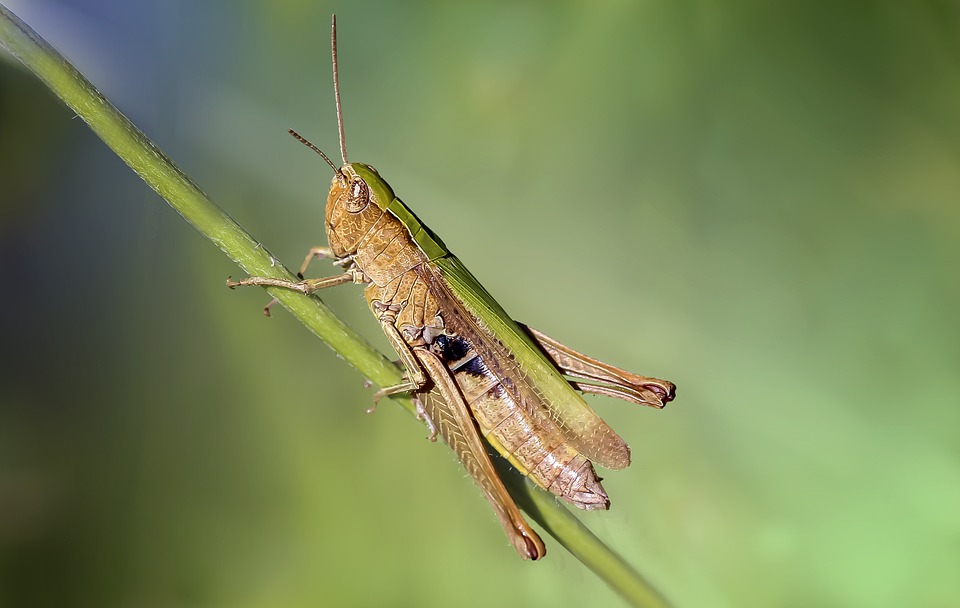
Grasshoppers by the millions ate the wheat crop, prairie grasses, leaves, cornstalks, and every vegetable in the garden. Though all windows were shut, brown grasshoppers came inside the house each time someone entered it.

Laura’s family endured a nightmare.

It’s estimated that one trillion Rocky Mountain locusts descended on the Great Plains in 1874, covering an area around 2,000,000 square miles and causing much devastation.

When large groups of grasshoppers swarm, they’re called locusts. In one day, these swarms can fly as far as 100 miles.

Locusts returned in smaller numbers some years but became extinct early in the 1900s. The arrival of farmers who plowed the prairie grass to grow crops changed the habitat, which many experts believe caused the extinction.   

Sources

“Grasshoppers in On the Banks of Plum Creek.” Study.com, 12 April 2017, study.com/academy/lesson/grasshoppers-in-on-the-banks-of-plum-creek.html.

Nuwer, Rachel. “When Weather Changes, Grasshopper Turns Locust,” The New York Times, 2021/09/29 https://www.nytimes.com/2013/04/09/science/when-weather-changes-grasshopper-turns-locust.html.

Wheeler, John. “Weather Talk: Grasshopper plagues are gone with the wind,” AGWEEK, 2021/09/29 https://www.agweek.com/news/weather/4324688-weather-talk-grasshopper-plagues-are-gone-wind.

Wilder, Laura Ingalls. On the Banks of Plum Creek, HarperTrophy, 1971.

Confederate Spy Rose Greenhow Influences Characters in Avenue of Betrayal

by Sandra Merville Hart

Avenue of Betrayal, Book 1 of my new “Spies of the Civil War” series, releases on February 8, 2022. Here’s a bit of historical background for the story.

Though the series is about a fictional family, there are actual historical spies who touch the stories.

Avenue of Betrayal is set in Washington City (Washington DC) in 1861, where a surprising number of Confederate sympathizers and spies live.

Perhaps the most famous female Confederate spy who lived in Washington DC when the Civil War began was Rose O’Neal Greenhow. When many other Southerner sympathizers left, the widow remained with her eight-year-old daughter, Rose. Colonel Thomas Jordan asked Rose to be an agent shortly before leaving the city to fight for the South. Spying to uncover troop movements and government communications appealed to her. She agreed to send messages based on a cipher he provided.

Coded messages were sent on a “Secret Line,” which involved several couriers in a chain that passed on messages in common places such as docks, taverns, and farmhouses.

Rose’s spy network from Boston to New Orleans was the largest in the war—48 women and 2 men. She learned battle plans for Bull Run and passed this vital information to Confederate General Beauregard. The First Battle of Bull Run was a Confederate victory.

Several other messages about Washington’s defenses and troop information were sent from Rose to Beauregard. Thomas A. Scott, Assistant Secretary of War, asked Allan Pinkerton, head of Lincoln’s Intelligence Service, to find Confederate spies and put Greenhow under surveillance.

About a month after the First Battle of Bull Run, Pinkerton discovered incriminating evidence. The home was searched. Rose and her daughter were placed under arrest at her home. Because she managed to get other secret messages out, they were moved to Washington’s Old Capitol prison. The Federals decided to send her South.

On June 4, 1862, she arrived in Richmond, where she was taken to the best hotel. Confederate President Jefferson Davis called on her the next day, saying, “But for you there would have been no battle of Bull Run.” Rose wrote that his words made up for all she’d endured.

Rose’s real-life story influences the fictional characters in Avenue of Betrayal.

Sources

Monson, Marianne. Women of the Blue & Gray, Thorndike Press, 2018.

Winkler, H. Donald. Stealing Secrets, Cumberland House, 2010.

Zeinert, Karen. Those Courageous Women of the Civil War, The Millbrook Press, 1998.

Ten Christmas Songs that Mention a Manger

by Sandra Merville Hart

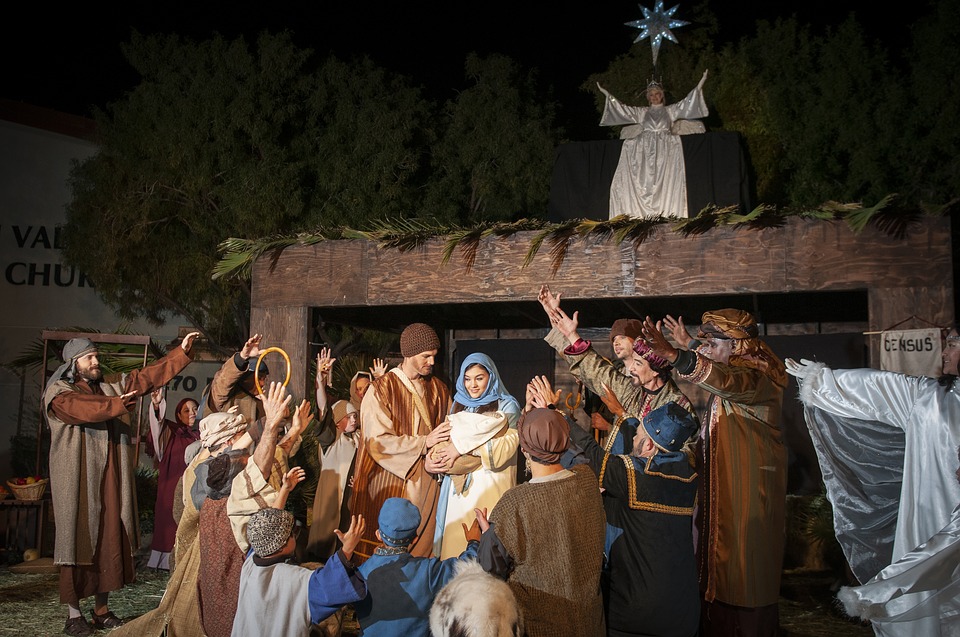
So Joseph also went up from the town of Nazareth in Galilee to Judea, to Bethlehem the town of David, because he belonged to the house and line of David. He went there to register with Mary, who was pledged to be married to him and was expecting a child.

While they were there, the time came for the baby to be born, and she gave birth to her firstborn, a son. She wrapped him in cloths and placed him in a manger, because there was no room for them in the inn. (Luke 1:4-7)

The manger—a trough for horses and cattle to eat from—was the first bed for Jesus because there was no room at the inn.

Here’s a list of ten traditional Christmas songs that mention a manger:

  • “Away in a Manger”
  • “Angels We Have Heard on High” – See him in a manger laid
  • “Good Christian Men Rejoice” – And he is in the manger now  
  • “Angels and Shepherds” – Lo he is lying, born in a manger
  • “Gentle Mary Laid Her Child” – Gentle Mary laid her child lowly in a manger
  • “O Come, All Ye Faithful” – Child, for us sinners poor and in the manger
  • “While Shepherds Watch Their Flocks” – and in a manger laid
  • “Mary’s Boy Child” – and in a manger cold and dark
  • “O Holy Night” – The King of Kings lay thus lowly manger
  • “Fum, Fum, Fum” In a manger poor and lowly

Can you think of others?

Merry Christmas!

https://www.amazon.com/Sandra-Merville-Hart/e/B00OBSJ3PU/

Sources

“Christmas Lyrics,” Mikeleal.com,  2021/10/04 http://www.mikeleal.com/christmas/songs.html.

Ten Christmas Songs that Mention Angels

by Sandra Merville Hart

Angels played an important part in the birth of Jesus.

The angel Gabriel appeared to Mary to let her know she’d bear the Son of God. His name was to be Jesus. (Luke 1:26-38)

An angel appeared to shepherds the night Jesus was born, telling them the “good news of great joy that will be for all the people.” Then many other angels joined them and sang praises to God. (Luke 2:8-14)

Here’s a list of ten traditional Christmas songs that mention angels:

  • “Angels We Have Heard on High”
  • “Angels From the Realms of Glory”
  • “Angels and Shepherds”  
  • “The First Noel” – The First Noel, the angel did say
  • “Gentle Mary Laid Her Child” – Angels sang about His birth
  • “O Little Town of Bethlehem” – The angels keep their watch of wondering love
  • “God Rest ye Merry Gentlemen” – “Fear not, then,” said the angel
  • “Mary’s Boy Child” – Hark, now hear the angels sing, a king was born today
  • “O Holy Night” – Oh, hear the angel voices!
  • “Hark! the Herald Angels Sing”

Can you think of others?

Merry Christmas!

https://www.amazon.com/Sandra-Merville-Hart/e/B00OBSJ3PU/

Ten Christmas Songs About Santa

by Sandra Merville Hart

Stores often play Christmas music to get shoppers in the holiday spirit. It works for me! Listening to holiday music while shopping puts me into the mood to buy gifts. 😊  

Here’s a list of ten traditional Christmas songs that mention Santa Claus or St. Nicholas:

  • “Must be Santa”
  • “Jolly Old Saint Nicholas”  
  • “Here Comes Santa Claus”   
  • “Nuttin’ for Christmas” – I won’t be seeing Santa Claus
  • “I Want a Hippopotamus for Christmas” – I don’t think Santa Claus will mind, do you?
  • “The Night Before Christmas” – In the hope that Saint Nicholas soon would be there
  • “Rudolph the Red-Nosed Reindeer” – Santa came to say
  • “Silver Bells” – This is Santa’s big scene
  • “I Saw Mommy Kissing Santa Claus”
  • “Up on the Housetop” Out jumps good old Santa Claus

Can you think of others?

Merry Christmas!

https://www.amazon.com/Sandra-Merville-Hart/e/B00OBSJ3PU/

Sources

“Christmas Lyrics,” Mikeleal.com,  2021/10/04 http://www.mikeleal.com/christmas/songs.html.

Excerpt from A Musket in My Hands by Sandra Merville Hart

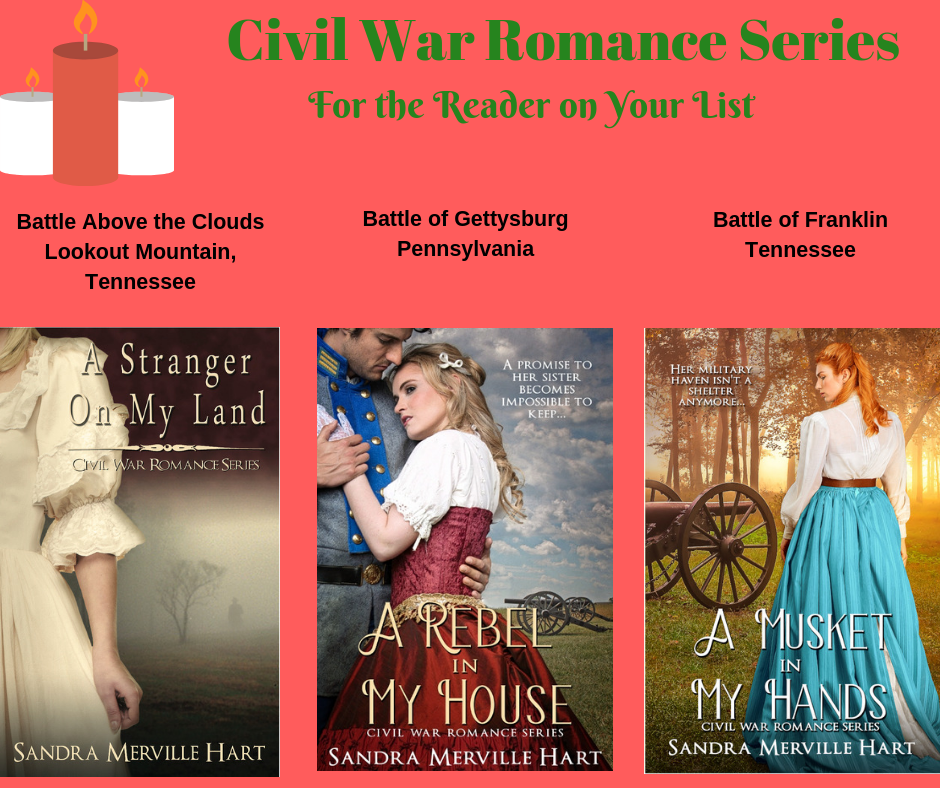
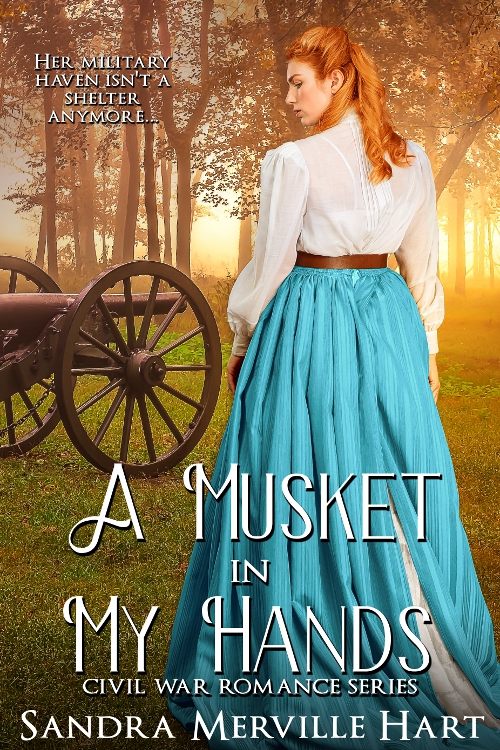
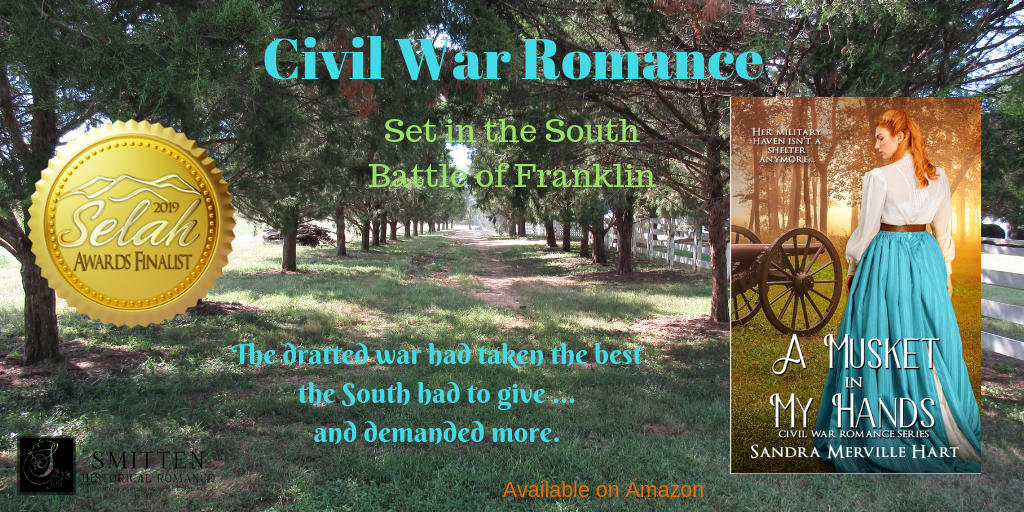
My third Civil War romance, A Musket in My Handsfollows two sisters as they disguise themselves as soldiers and join the men they love in Hood’s Confederate Army of Tennessee—just in time for the war to grow progressively difficult for Southern soldiers.

While the War Between the States rages, Callie Jennings reels from her pa’s ultimatum that she must marry his friend, a man older than him. Her heart belongs to her soldier hero, Zach Pearson, but Pa won’t change his mind. Callie has no place to go. Then her sister, Louisa, proposes a shocking alternative.

Zach still hears his pa’s scornful word—quitter. He’s determined to make something of himself as a soldier. He’ll serve the Confederacy until they win the war. If they win the war.

Times are tough and getting tougher for the South in the fall of 1864 when Callie and Louisa, disguised as soldiers, muster into the Confederate army. Louisa keeps an eye on her soldier fiancé, Nate. Callie is thrilled to be near Zach again though he seems more interested in being a soldier. Shooting anyone, especially former countrymen, is out of the question.

Tough marches lead them to the Battle of Franklin. How can anyone survive?
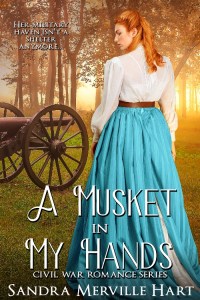
 

Excerpt for A Musket in My Hands  :


August 1864, just outside Cageville, Tennessee

CHAPTER ONE

Clopping in the yard drew Callie Jennings’ hand to her throat.

She rushed to the window and lifted the curtain. A moment of relief washed over her. It wasn’t Yankees looking for food again, thank the Lord. Pa had returned. He never said much about being a ranger, one of those irregulars who participated in guerrilla warfare for the Confederate States of America. The irregulars cut telegraph wire, pulled up railroad tracks, and worse—so some of the townsfolk said. His mood—and his drinking—depended on the success of their last mission. Would he be the even-tempered pa of her childhood today, or the drink-induced stranger she barely recognized?

Porter Jennings rode his horse into the barn and disappeared from sight. Callie dropped the curtain and hurried to the stove. Frying a batch of corn cakes didn’t take long, thank goodness. Pa would have a hot meal waiting when he got done brushing down Midnight. Must have been a hard night’s riding to take nigh onto noon to get back.

She didn’t like the Yankees all over Tennessee any better than Pa, but she’d heard rumblings about the irregulars catching one or two of the enemies alone and hanging them on a tree. That didn’t set well with her. It didn’t seem fair, though she kept those thoughts to herself. He wanted to protect his daughters and, being past the draft age of forty-four, this seemed his only choice.

Her shoulders rose and fell with her sigh as lard melted in the skillet. She patted three generous portions of corn batter onto the skillet as the door slammed open.

She cringed.

“Why ain’t you working at Mrs. Hobson’s today?” Pa tossed his wide-brimmed hat onto a wall hook. “Ezra Culpepper said she has an order.”

She glanced at Pa’s clenched jaw. His friend knew the town’s gossip almost before it happened. “She does. Mrs. Robbins needs a dress. That job won’t pay enough for Mrs. Hobson to hire me to help.”

“That ain’t good enough.” The gray streaks in Pa’s auburn hair were as wide as the calloused fingers he ran through it. “You need to pull your weight around here.”

“Hardly anyone hereabouts has money to pay for seamstress work.” Her cheeks burned hotter than the sizzling cakes warranted. Not pull her weight around the house? She was the one who cooked and cleaned and tended the vegetable garden, for all the good that did. Yankees passing through got most of the crop. “She hasn’t needed me regularly for two years.”

“When the Yanks took over Tennessee.” He pounded a fist into his hand.

“The same year Mr. Hobson died at Shiloh.”

His brown eyes shifted toward the back window where his cornfields used to be. “Another widow left to raise her children without a pa.”

Callie caught her breath as worry for another soldier arose, one she prayed for daily. Best think about that later, when she was alone.

Pa’s neck turned scarlet. Time to give him something else to think about. “Are you hungry?” Her stomach rumbled at the appetizing smell. She turned a corn cake with a spatula too quickly. Oil splattered the stove.

“Yep. Starved.” He pulled a chair away from a rectangular table in the middle of the large front room and sat. “Pity Jeb Booth can’t use both you and your sister at the Mercantile. Louisa’s job puts food on the table.”

Such as it was. They’d all grown accustomed to getting by on less since the Northern invasion. Callie rubbed her sleeve against her forehead. More than August heat stifled the air in the clapboard home. “Here it is.” She placed a plate with two corn cakes and a cup of water in front of him. “We’ll have fried tomatoes from the garden for supper tonight.” She retrieved her plate with a single cake from the narrow table next to the stove.

“I’ll drink whiskey.” Pa started eating without saying grace.

This early in the day? Callie swallowed and plonked her plate back on the side table. Ma would be turning over in her grave at the sight of hard liquor in the house. About a lot of things, in fact.

Callie hated Pa’s angry mood when he drank.


A Musket in My Hands Endorsements

Two sisters disguise themselves as men to muster into the Confederate army in the fall of 1864—just in time for things to go badly for Southern soldiers at the Battle of Franklin, Tennessee.


2019 Serious Writer Medal Fiction Winner

2019 Selah Awards Finalist


Callie Jennings reels from her pa’s ultimatum that she marry his friend, a man older than him. Her heart belongs to her soldier, Zach Pearson. With no place to hide, her sister, Louisa, proposes a shocking alternative.

 Zach still hears his pa’s scornful word—quitter. He’s determined to serve the Confederacy until they win the war. If they win the war.   

 Callie and Louisa disguise themselves as soldiers and muster into the Confederate army. Tough times are getting tougher for their Confederacy. With a battle looming, Callie’s military haven isn’t a shelter anymore.

As the anniversary of the Battle of Franklin approaches, I’d like to share the endorsements for my book,  A Musket in My Hands:


I don’t always read Civil War novels, because I’m not into graphic battle scenes. Sandra Merville Hart’s A Musket in My Hands is a wonderful book. The characters grab your heart right from the beginning and they take you through a unique story line right into battles, where I followed willingly. The book isn’t battle-driven. It’s character driven, and the reader becomes intimately acquainted with these people who had to face things they never dreamed about happening. This is my favorite Civil War novel. I highly recommend it.

Lena Nelson Dooley – bestselling, multiple-award-winning author, Great Lakes Lighthouse Brides

Through A Musket in My Hands, Sandra Merville Hart brings to life the last months of the Confederacy as experienced by two Tennessee sisters who become soldiers for the South. Detailed research contributes to the realism in a tale of courage and strength during a tumultuous time in America’s history. I was moved by the despair and deprivation yet inspired by the characters’ resolve. A captivating read for historical fiction fans!

Sandra Ardoin – author of the award-winning historical romance A Reluctant Melody

Sandra Hart, author of the acclaimed A Stranger on My Land and A Rebel in My House has done it again with her third and best novel to date, A Musket in My Hands. In this brilliant historical fiction, Sandra has sat against the backdrop of Confederate General John Bell Hood’s Tennessee Campaign a study of the little known but genuine phenomenon of women masquerading as men to serve and fight in the opposing armies of the Civil War. An excellent and well-researched read, this is one of the first books I’ve read to put a touchingly human face on the horrendously bloody Battle of Franklin.

Kevin Spencer – Historian—ON THIS DAY in North Carolina History

What would make two sisters escape the only home they’ve ever known to join the Confederate Army disguised as men? Prompted by both love and fear, Callie and Louisa are caught up in the War Between the States in a way they never imagined. It soon becomes a nightmare they couldn’t possibly foresee.

In A Musket in My Hands, author Sandra Merville Hart has penned a thrilling, well-researched novel set in the latter months of the Civil War. Her characters are believable, likeable, and, at times, frustrating in their decisions. But readers will find themselves rooting for the protagonists and anxiously awaiting resolution, not just on the battlefield, but in the battleground of their souls.

Inspiring and exciting, this novel will capture your heart as well as speed up your heartbeat. A historical romance well worth the read!

Elaine Marie Cooper – Author of Saratoga Letters

A Musket in My Hands shines with Sandra Hart’s talent for historical romance. Vivid historical details highlight the romance and adventure, excitement and heartache of those desperate to survive the Civil War, while an endearing collage of characters evaluates their own allegiances to God, country, and their fellow man.

Carrie Del Pizzo – Del Pizzo’s Pen Editing


Tornadoes

Cindy Ervin Huff, fellow author in “The Cowboys,” shares some background for her new historical romance book release. Welcome back to Historical Nibbles, Cindy!

by Cindy Ervin Huff

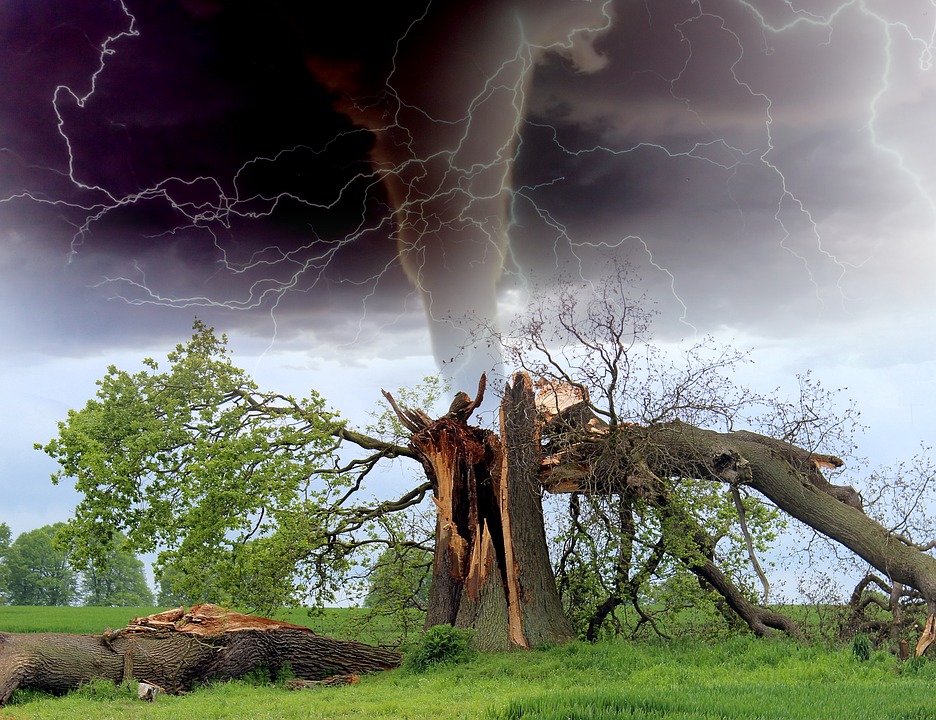
Tornadoes are a force to be feared. And even more so in the 1800s, when there was no way to predict when they might come. It was so feared that the word “Tornado” wasn’t permitted to be used when reporting the news. 

Westward expansion into the Great Plains brought about the need to study tornadoes. The frequency of the whirlwinds and the intensity of its power had to be understood to keep the burgeoning communities safe.

A twister can rip a path of destruction through a farm, change course at any moment. It may take one home in a neighborhood and leave the rest or flatten an entire community. There is a report of a home in 1870s Kansas being destroyed but an oil lamp remained lit resting under a nearby tree.

Another tale was of a train ticket booth being ripped away to land in a field. Although the building was badly damaged, the window was untouched.

I was amazed to discover that until Doppler radar was adapted for use in tracking weather in 1974, predictions were hit or miss. When 149 tornadoes dubbed the Super Outbreak touch down in a 24-hour period on April 3 – 4,1974, it called for a more accurate way to measure the winds that made up tornadoes. 

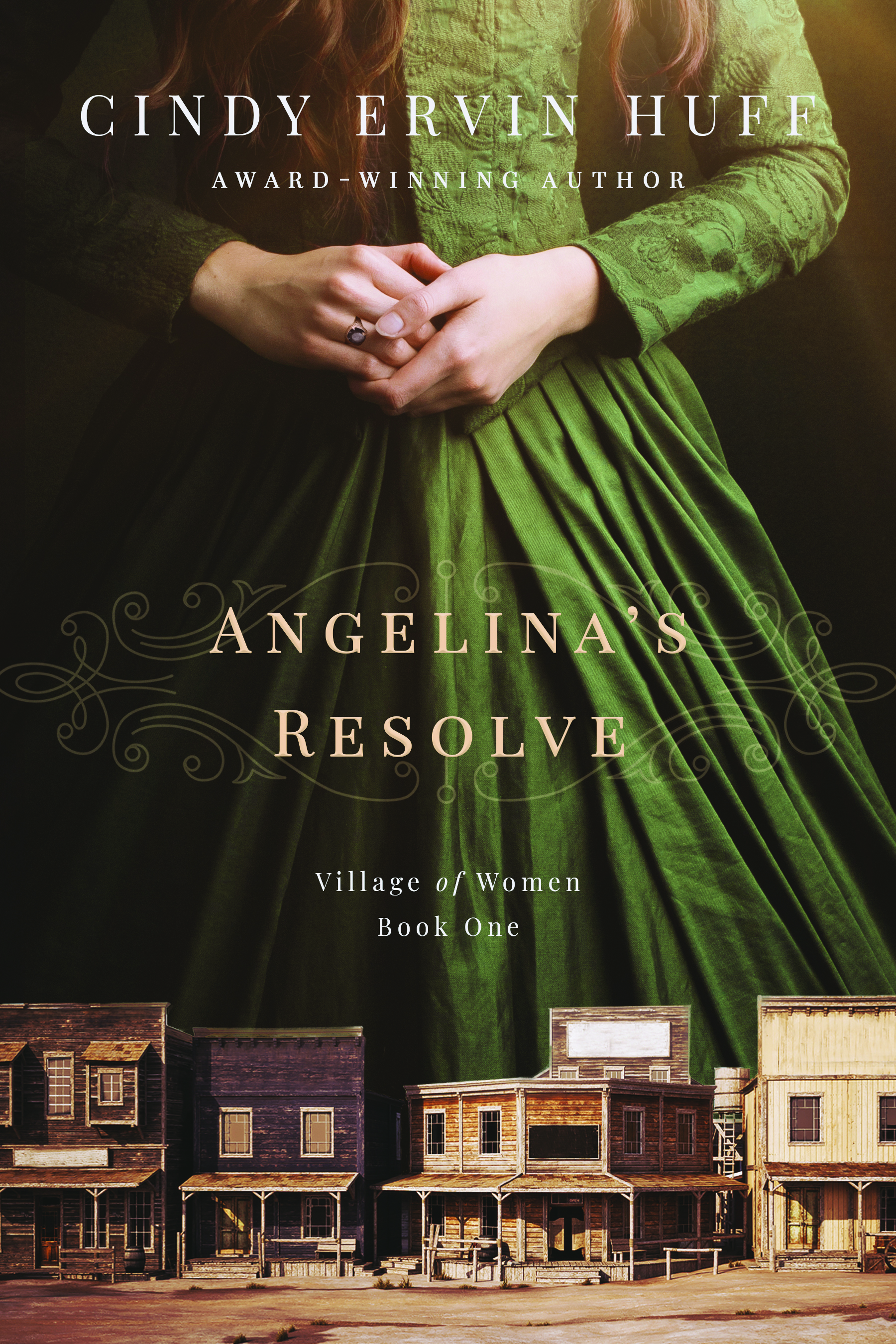
The setting of my latest novel—Angelina’s Resolve, Book #1 in the “Village of Women” series—is in Kansas. Twisters are still a real threat in that state. It is part of what is called Tornado Alley, and Angelina, Edward, and the people of Resolve, Kansas are not immune from its fury.

One had to have a bit of iron in their veins to uproot and move to a new area, not knowing what obstacles would stand before them. Tornadoes and other natural disasters could make or break a homesteader and even a new town.

About Cindy

Cindy Ervin Huff is an Award-winning author of Historical and Contemporary Romance. She loves infusing hope into her stories of broken people. She’s addicted to reading and chocolate. Her idea of a vacation is visiting historical sites and an ideal date with her hubby of almost fifty years would be a live theater performance. Visit her on her website or on Facebook.

Angelina’s Resolve

Architect Angelina DuBois is determined to prove her worth in a male-dominated profession by building a town run by women, where everyone is equal, and temperance is in the by-laws. Contractor Edward Pritchard must guard his heart as he works with the beautiful, strong-willed yet naïve Angelina. He appreciates her ability as an architect, but she frustrates him at every turn with her leadership style. When the project is completed, will it open doors for more work or make him a laughingstock? Can two strong-will people appreciate their differences and embrace their attraction as they work together on to build their town?

Announcing an Upcoming Civil War Book Release!

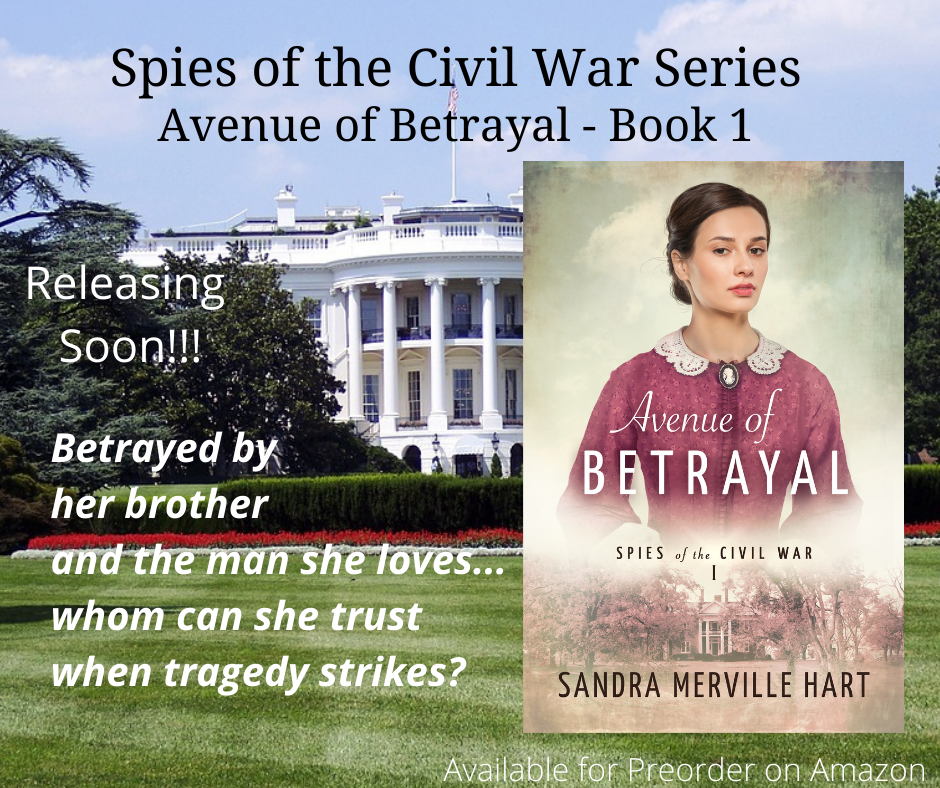
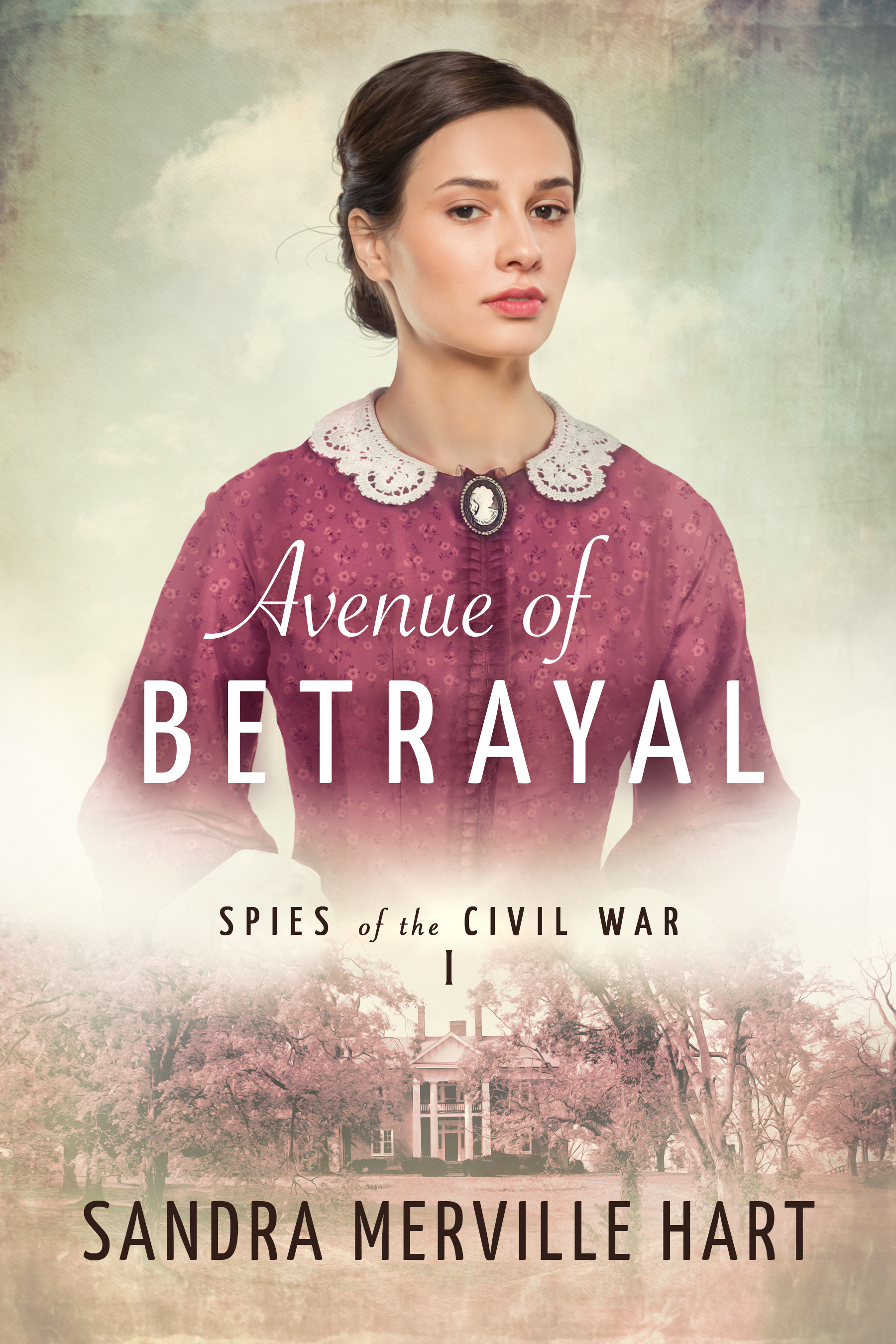
I’m thrilled to announce that Avenue of Betrayal, Book 1 of my new “Spies of the Civil War” series will release February 8, 2022! Not only that, it’s already on preorder!

Though the series is about a fictional family, there are actual historical spies who touch the stories.

Avenue of Betrayal is set in Washington City (Washington DC) in 1861, where a surprising number of Confederate sympathizers and spies live.

Here’s a bit about the book:

Betrayed by her brother and the man she loves …

whom can she trust when tragedy strikes?

Soldiers are pouring into Washington City every day and have begun drilling in preparation for a battle with the Confederacy. Annie Swanson worries for her brother, whom she’s just discovered is a Confederate officer in his new home state of North Carolina. Even as Annie battles feelings of betrayal toward the big brother she’s always adored, her wealthy banker father swears her and her sister to secrecy about her brother’s actions. How could he forsake their mother’s abolitionist teachings?

Sergeant-Major John Finn camps within a mile of the Swansons’ mansion where his West Point pal once lived. Sweet Annie captured his heart at Will’s wedding last year and he looks forward to reestablishing their relationship—until he’s asked to spy on her father.

To prove her father’s loyalty to the Union, John agrees to spy on the Swanson family, though Annie must never know. Then the war strikes a blow that threatens to destroy them all—including the love that’s grown between them against all odds.

Preorder your copy today on Amazon and other retailers.