Announcing Not One but Two New Book Series!

by Sandra Merville Hart

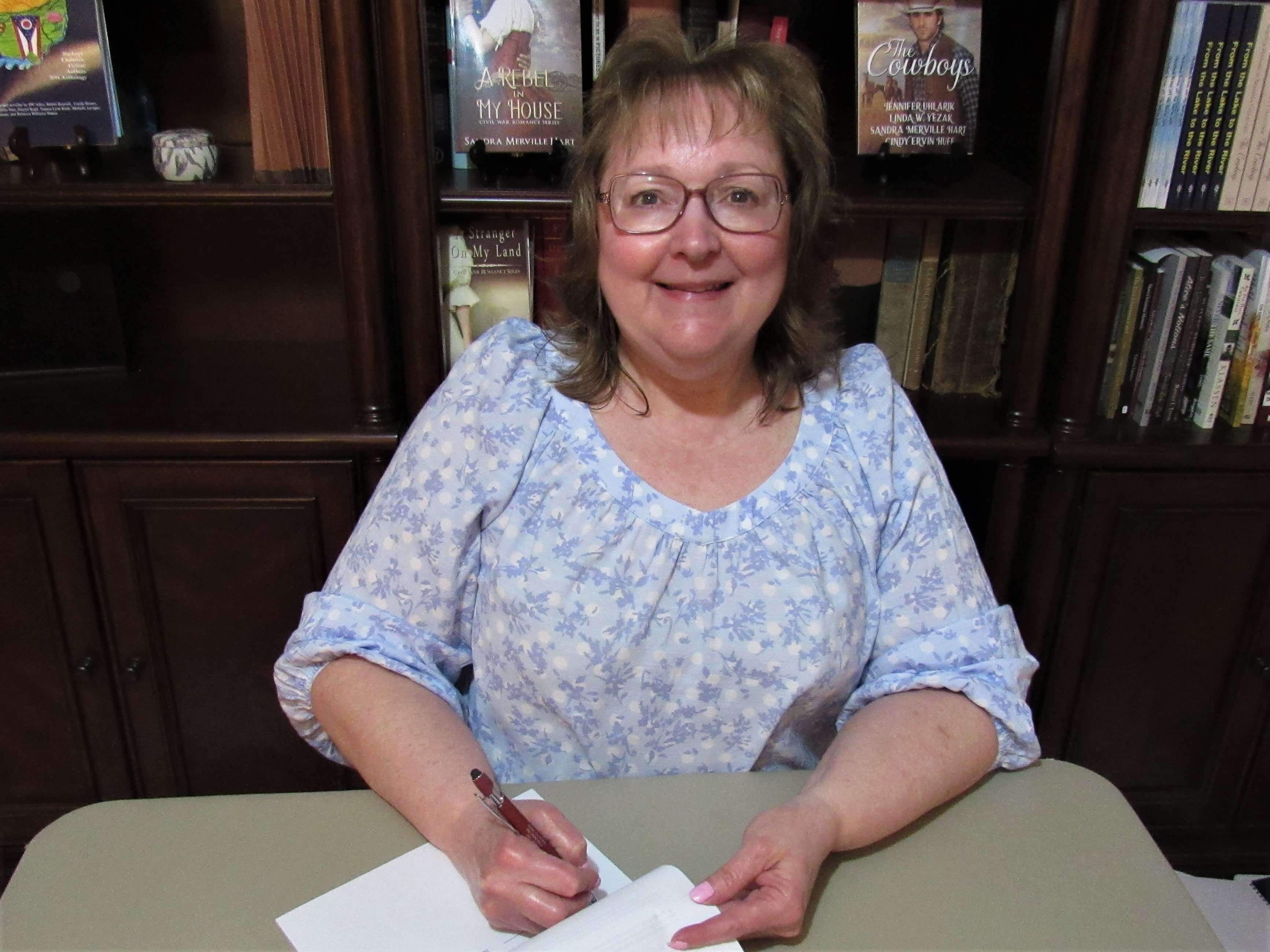
I am thrilled to announce that I have signed 2 three-book series contracts with Wild Heart Books! You read that right—2 contracts for 2 different series for a total of 6 books!

The first series is a Civil War Spy series. Avenue of Betrayal is the first book and is set in Washington DC (still commonly known as Washington City in the 1860s.) The whole series deals with the spying that happened during the war. Book 2, Boulevard of Confusion, and Book 3, Byway to Danger, are set in Richmond, Virginia, the Confederate capital. Spying went on in that city as well.

The Civil War series will be released first. I’ll share more about release dates as I learn them. Book 1 of this series is written and will soon be delivered to the editor. I’m currently writing the second book and need to squeeze in another research trip now that museums are open.

The second series begins with Book 1, In Ginny’s Shadow. It’s a marriage of convenience story set in three Ohio locations. Most stories lose their intensity in your imagination after you’ve written it. This one never left me so I am excited that it found a home. There are turbulent days for two characters from In Ginny’s Shadow in Book 2 as they attend college in Cincinnati in 1883-84. Then Book 3 follows one of these characters on a train to the West where the adventure starts on the trip. More about these later.

Thanks for joining me on this publishing adventure! I’ll update you when I learn more about release dates.

First Telegraphed Message from a Hot Air Balloon Happened During the Civil War

by Sandra Merville Hart

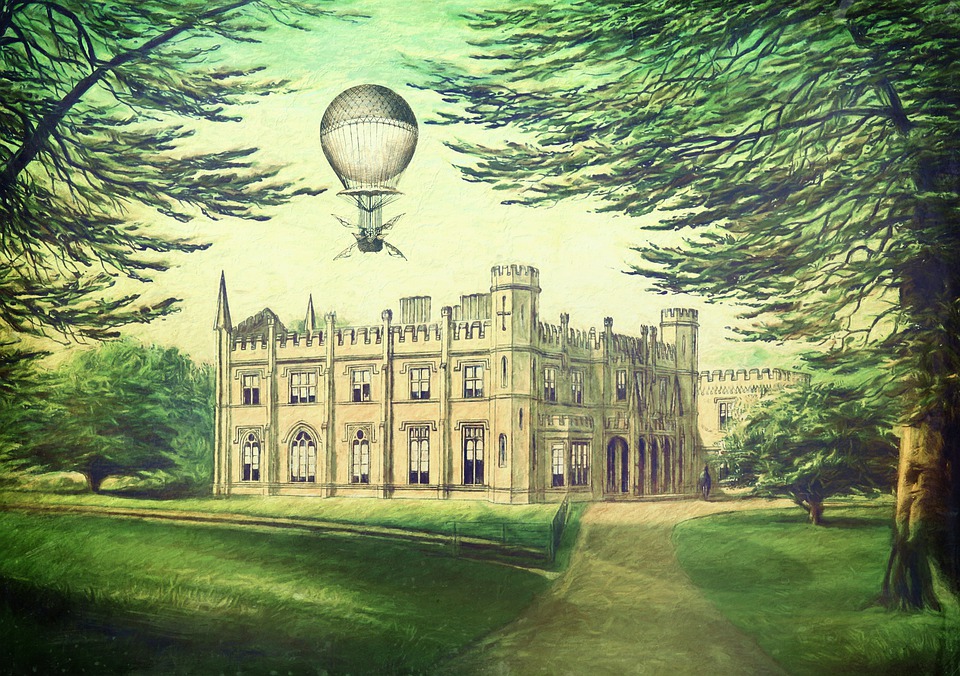
Aeronaut Thaddeus Lowe’s test flight on April 19, 1861, from Cincinnati didn’t go as planned. Instead of landing in the Chesapeake Bay area, winds took his balloon south to South Carolina. He was arrested as a possible spy. He was released after being recognized by a local citizen. What started out as a catastrophe ended with Lowe and his balloon on a northbound train to Cincinnati.

Lowe was now determined that he and his balloons would serve the Union army. He took his balloon Enterprise to Washington D.C.

The Columbia Armory occupied the area where the National Air and Space Museum now stand. It was on this spot, in sight of the White House where President Abraham Lincoln lived, that Lowe launched the Enterprise with American Telegraph Company representatives on June 17, 1861.

They ascended to a height of 500 feet. Lowe telegraphed a message to President Lincoln from the air that he could see 50 miles from his position.

President Lincoln met with Lowe that evening in the White House. Though Lowe wasn’t the only aeronaut hoping to serve the army, he had convinced Lincoln that reconnaissance from the balloon would help his generals. Lowe became the chief aeronaut in the U.S. Army Balloon Corps.

Several Federal officers ascended in these balloons, including John Reynolds, Joe Hooker, George McClellan, Fitz John Porter, Baldy Smith, John Sedgwick, and George Custer.

Sources

“Civil War Ballooning,” American Battlefield Trust, 2021/02/05 https://www.battlefields.org/learn/articles/civil-war-ballooning.

“Civil War Ballooning,” Smithsonian National Space & Air Museum, 2021/02/05 https://airandspace.si.edu/learn/highlighted-topics-/flight/civil-war-ballooning.

Clifford, Command Sergeant Major James, USA-Ret. “Balloon Operations in the Peninsula Campaign,” The Army Historical Foundation, 2021/02/05 https://armyhistory.org/balloon-operations-in-the-peninsula-campaign/.

Fanton, Ben. “Gas Balloons: View from Above the Civil War Battlefield,” History.net, 2021/02/05 https://www.historynet.com/gas-balloons-view-from-above-the-civil-war-battlefield.htm.

Gould, Kevin. “Balloon Corps,” Encyclopaedia Britannica, 2021/02/05 https://www.britannica.com/topic/Balloon-Corps.

Mortimer, Gavin. Double Death: The True Story of Pryce Lewis, the Civil War’s Most Daring Spy, Walker & Company, 2010.

“Thaddeus S.C. Lowe,” Wikipedia, 2021/02/05  https://en.wikipedia.org/wiki/Thaddeus_S._C._Lowe.

Civil War Silk Dress Balloon

by Sandra Merville Hart

The U.S. Balloon Corps began in the summer of 1861. Aeronaut Thaddeus Lowe and members of his corps made numerous balloon flights to discover Confederate troop movements from the air.

Confederate General James Longstreet wrote that their army longed for a balloon to use in observations but didn’t have the money.

Captain Langdon Cheves* bought silk in Savannah and Charleston in lengths of 40 feet. This fabric, normally used for women’s dresses, was sewn together and then varnished. Because various colors were used, the balloon made from the silk was beautiful. The balloon’s official name was Gazelle.

The “Silk Dress Balloon,” as it came to be called, was sent to Richmond. Confederates were unable to get pure hydrogen gas. Instead, ordinary illuminating gas from Richmond Gas Works—the same type that lit gas lamps—filled the balloon.

It was moved, full of air, to the battlefield by train. The colorful Silk Dress Balloon was first used by the Confederates at the Battle of Gaines Mill. General Edward Porter Alexander ascended several times to observe the fighting from two miles away. Actual troops were difficult to see yet rising smoke showed him where to direct Slocum’s Division to reinforce Porter’s troops. Night ascensions showed enemy campfires for estimates of troop numbers.

Inability to fill the balloon in the field hampered their efforts. Gas from the Gas Works limited flights to 6-7 hours. They didn’t use Lowe’s three captured portable gas generators.

Confederates were happy enough with the results to take the balloon onto the Teaser, an armed tug boat. When necessary, the balloon was sailed along the James River to Richmond for refilling. On July 3, 1862, the U.S.S. Maratanza captured the Teaser on the James River. The balloon went to Thaddeus Lowe, who cut the fabric for souvenirs.

Another balloon was made in Savannah by Charles Cevor, a balloonist. It was used for the next year in the Charleston and Savannah area until the Second Battle of Charleston Harbor, when it was lost in the summer of 1863.

The Confederates didn’t try again. By then, the U.S. Balloon Corps had dissolved.

A rumor has survived from the war. In 1886, General Longstreet wrote in an article published in Century magazine. He said that a request was made that the ladies donate their silk dresses to make the balloon. It paints a lovely picture of sacrifice that Southern women made throughout the war—and they did sacrifice abundantly—but this particular one doesn’t appear to be factual. Articles that mention Longstreet’s quote also write about the forty-foot lengths of silk purchased by Cheves to make the balloon.

*One source gives the name of Dr. Edward Cheves instead of Langdon Cheves.


Sources

“Civil War Ballooning,” American Battlefield Trust, 2021/02/05 https://www.battlefields.org/learn/articles/civil-war-ballooning.

Clifford, Command Sergeant Major James, USA-Ret. “Balloon Operations in the Peninsula Campaign,” The Army Historical Foundation, 2021/02/05 https://armyhistory.org/balloon-operations-in-the-peninsula-campaign/.


Fanton, Ben. “Gas Balloons: View from Above the Civil War Battlefield,” History.net, 2021/02/05 https://www.historynet.com/gas-balloons-view-from-above-the-civil-war-battlefield.htm.

Paone, Thomas. “The Most Fashionable Balloon of the Civil War,” Smithsonian National Air and Space Museum, 2021/02/08 https://airandspace.si.edu/stories/editorial/most-fashionable-balloon-civil-war.

Civil War U.S. Balloon Corps

by Sandra Merville Hart

On June 17, 1861, Aeronaut Thaddeus Lowe’s balloon flight from the Columbia Armory (current location of the National Air and Space Museum) snagged the attention of President Abraham Lincoln when he received a telegraphed message from Lowe—from the balloon in flight at a height of 500 feet!

Lowe’s balloon was tethered to the White House lawn that evening while the two met. Lincoln supported the use of balloons in surveilling Confederate troops from the air.

Lowe became the chief aeronaut in the U.S. Army Balloon Corps. The War Department built military balloons for the corps. The first one was ready in August.

Union and Intrepid could carry 5 people and were the largest balloons used by the Union army. United States and Constitution held 3 people. A couple, Eagle and Excelsior, were manned by one person. The larger balloons had room for telegraphers, an important advantage.

Lowe became a member of Major General George B. McClellan’s staff. In September of 1861, Lowe directed artillery fire from his balloon at Falls Church, Virginia.

The U.S. Balloon Corps had several members: Corporal James Starkweather, Privates William A. Hodges, Albert Trunbull, W.H. Welch, Francis Barrington, Robert Wardell, James F. Case, George W. Fisher, John H. Hall, and Lawrence M. Chickey. Civilians also worked in the corps. Among these were Aeronauts James Allen, John La Mountain, and John Wise, who was considered the “Father of American Aeronautics.” Lowe also hired his father Clovis.

Balloons were used at Washington D.C., Seven Days’ Battle, the Peninsular Campaign, Battle of Seven Pines, and Fort Monroe in Virginia, to name a few.

Also, La Mountain made a tethered balloon ascent on August 3, 1861. It is significant to history because it was launched from the steam-powered gunboat Fanny. There are scholars who believe this first flight to be a precursor of the aircraft carrier.

Confederates shot at the ascended balloons. Fortunately, none were shot down. Their height usually kept them out of range. That didn’t prevent the Southerners from shooting. In fact, Lowe earned the dubious title of “the most shot-at man in the war.”

Several Federal officers ascended in these balloons, including John Reynolds, Joe Hooker, George McClellan, Fitz John Porter, Baldy Smith, John Sedgwick, and George Custer.

Unfortunately, problems with aeronauts receiving pay from the army led to resignations. Conservative generals preferred intelligence from spies, scouts, prisoners, and deserters. Vague reports from aeronauts frustrated field commanders. To top it off, Lowe didn’t get along with his staff supervisor Captain Cyrus B. Comstock and resigned on May 7, 1863.

James and Ezra Allen were then the last members of the U.S. Balloon Corps. They reported Confederate movement from Fredericksburg toward the Blue Ridge Mountains as they marched toward Gettysburg in June. The Balloon Corps ceased to exist in the summer of 1863.
Sources

“Civil War Ballooning,” American Battlefield Trust, 2021/02/05 https://www.battlefields.org/learn/articles/civil-war-ballooning.

“Civil War Ballooning,” Smithsonian National Space & Air Museum, 2021/02/05 https://airandspace.si.edu/learn/highlighted-topics-/flight/civil-war-ballooning.

Clifford, Command Sergeant Major James, USA-Ret. “Balloon Operations in the Peninsula Campaign,” The Army Historical Foundation, 2021/02/05 https://armyhistory.org/balloon-operations-in-the-peninsula-campaign/.

Fanton, Ben. “Gas Balloons: View from Above the Civil War Battlefield,” History.net, 2021/02/05 https://www.historynet.com/gas-balloons-view-from-above-the-civil-war-battlefield.htm.

Gould, Kevin. “Balloon Corps,” Encyclopaedia Britannica, 2021/02/05 https://www.britannica.com/topic/Balloon-Corps.

Mortimer, Gavin. Double Death: The True Story of Pryce Lewis, the Civil War’s Most Daring Spy, Walker & Company, 2010.

“Thaddeus S.C. Lowe,” Wikipedia, 2021/02/05  https://en.wikipedia.org/wiki/Thaddeus_S._C._Lowe.

Ohio’s Greatest Natural Disaster Inspires My Story–Surprised by Love

by Sandra Merville Hart

A school event for my daughter took us to Troy, Ohio. The quaint city captivated me from the first visit. It felt like something ought to happen there—and that was before I was writing!

A few years later, an opportunity arose to join fellow Ohio authors in a novella collection set in Ohio locations. My mind raced back to Troy. What could I write about? My husband and I drove there on a mission of discovery.

At the Museum of Troy History I learned about a terrible flood in 1913 that displaced many Troy citizens and even claimed lives of a few. The way the townspeople rallied together to meet the tragedy inspired me and led to the writing of this story.

We walked around the town square, visiting shops. Around About Books is a treasure. I’ve since participated in booksigning events there so this has become a special place to me.

We ate at a lovely diner, K’s Hamburger Shop, a place that has been on Troy’s Main Street since 1935. My story is set in 1913 so it wasn’t there during the flood, but the whole place gave me a feeling of historic nostalgia.

My imagination soared from my research. The first draft of the novella, Surprised by Love, was written in two weeks! That remains the record for me.

Researching The Flood of 1913—Ohio’s greatest natural disaster—and personal visits to Troy inspired this story of love and courage.

I hope you will read this story and all the others set in Ohio locations in “From the Lake to the River. Here’s a blurb for my historical romance, Surprised by Love:

Lottie’s feelings for an old school crush blossom again during the worst flood her town has endured in years.

Lottie shoulders the burden for her siblings after their mother’s death. Her seventeen-year-old brother’s disobedience troubles her, especially since she also cares for the boarders in their home. When the flooding river invades not only the town of Troy but also her home, Lottie and her family need to be rescued.

Desperate circumstances throw Lottie and Joe, her schoolgirl crush, together. Can tragedy unite the couple to make her long-buried dream of winning his love come true?

Amazon

Experimental Balloon Flight from Cincinnati Ends Badly During Civil War

by Sandra Merville Hart

Before the Civil War started, Thaddeus S.C. Lowe dreamed of flying his hot air balloon on a transatlantic flight. A successful test flight from Philadelphia to New Jersey was made on June 28, 1860. Three months later on September 7th, wind ripped open his balloon, the Great Western, when Lowe attempted a transatlantic flight.

Joseph Henry, secretary of the Smithsonian Institution, suggested a second test over land.

Lowe planned a night flight from Cincinnati, Ohio, to the Chesapeake Bay area on Enterprise, a new balloon. He left Cincinnati the night of April 19-20, 1861. Fort Sumter had been fired on a week earlier, marking the beginning of the Civil War.

Winds unfortunately carried him South. Lowe tried to land near the border between North Carolina and South Carolina. Armed men ordered him to take off again, which he did.

His second landing was even worse. Folks in South Carolina didn’t trust him. They placed his deflated balloon in a wagon and escorted both to Unionville, SC. A local newspaper editor knew of the aeronaut. He wrote a letter of introduction for Lowe to take to leaders in Columbia.

The letter didn’t help. Lowe was arrested. He stayed in jail until government officials released him.

On April 26, 1861, Lowe rode a train back to Cincinnati with his balloon. He reflected on troop movements he’d observed from his flight. It sparked a new idea.

He put his transatlantic flight dream to rest. Serving his country by observing the Confederate army from the air became his goal.

Sources

Fanton, Ben. “Gas Balloons: View From Above the Civil War Battlefield,” History.net, 2021/02/05 https://www.historynet.com/gas-balloons-view-from-above-the-civil-war-battlefield.htm.

Gould, Kevin. “Balloon Corps,” Encyclopaedia Britannica, 2021/02/05 https://www.britannica.com/topic/Balloon-Corps.

“Thaddeus S.C. Lowe,” Wikipedia, 2021/02/05  https://en.wikipedia.org/wiki/Thaddeus_S._C._Lowe.
 

Civil War Women: Rebecca Littlepage Thwarts a General

by Sandra Merville Hart

Confederate General Henry Wise replaced Colonel Christopher Tompkins as commander of the Kanawha forces. Marching from Richmond, he arrived in Kanawha County on June 26, 1861. Wise soon stayed in Kanawha House Hotel’s best room.

Fort Sumter had been fired upon two and half months earlier.

The small Virginia town of Charleston was of strategic importance to Wise. He decided to claim a stone mansion surrounded by a thousand acres of farmland as his headquarters.

He should have run the idea by the lady of the house, Mrs. Rebecca Littlepage.

Confederate troops camped near a farm owned by the Littlepage family. Soldiers used the farm’s grain, sugar, bacon, molasses, and horses.

Wise strode to the home and told Mrs. Littlepage he intended to take her mansion as his headquarters. The spunky woman refused to release her home. The general threatened to blow the house down.

He returned with artillery. A crowd followed. Rebecca stood on the front step with her children around her. Wise told her to leave. She refused.

The general ordered his soldiers-some of them family friends—to fire upon the house. The men refused his command. Wise left that day.

Instead of taking over the home, his soldiers camped on the family’s property. Fort Fife, a one-hundred-square foot fort, was built on a hill overlooking the stone mansion. The location gave wonderful views of the Kanawha Turnpike, its junction with the road to Parkersburg, and the James River.

Adam Littlepage, Rebecca’s husband, became the quartermaster officer of the 21st Virginia. He died in a duel and never returned to the stone mansion home that his wife fought so bravely to preserve.

Sources

Egnatoff, Daniel et. al. “Littlepage Mansion-Charleston Civil War Trail.” Clio: Your Guide to History. September 19, 2019. Accessed February 1, 2021. https://theclio.com/entry/4901.

Mortimer, Gavin. Double Death: The True Story of Pryce Lewis, the Civil War’s Most Daring Spy, Walker & Company, 2010.


Euphemia Goldsborough, Confederate Nurse at Gettysburg

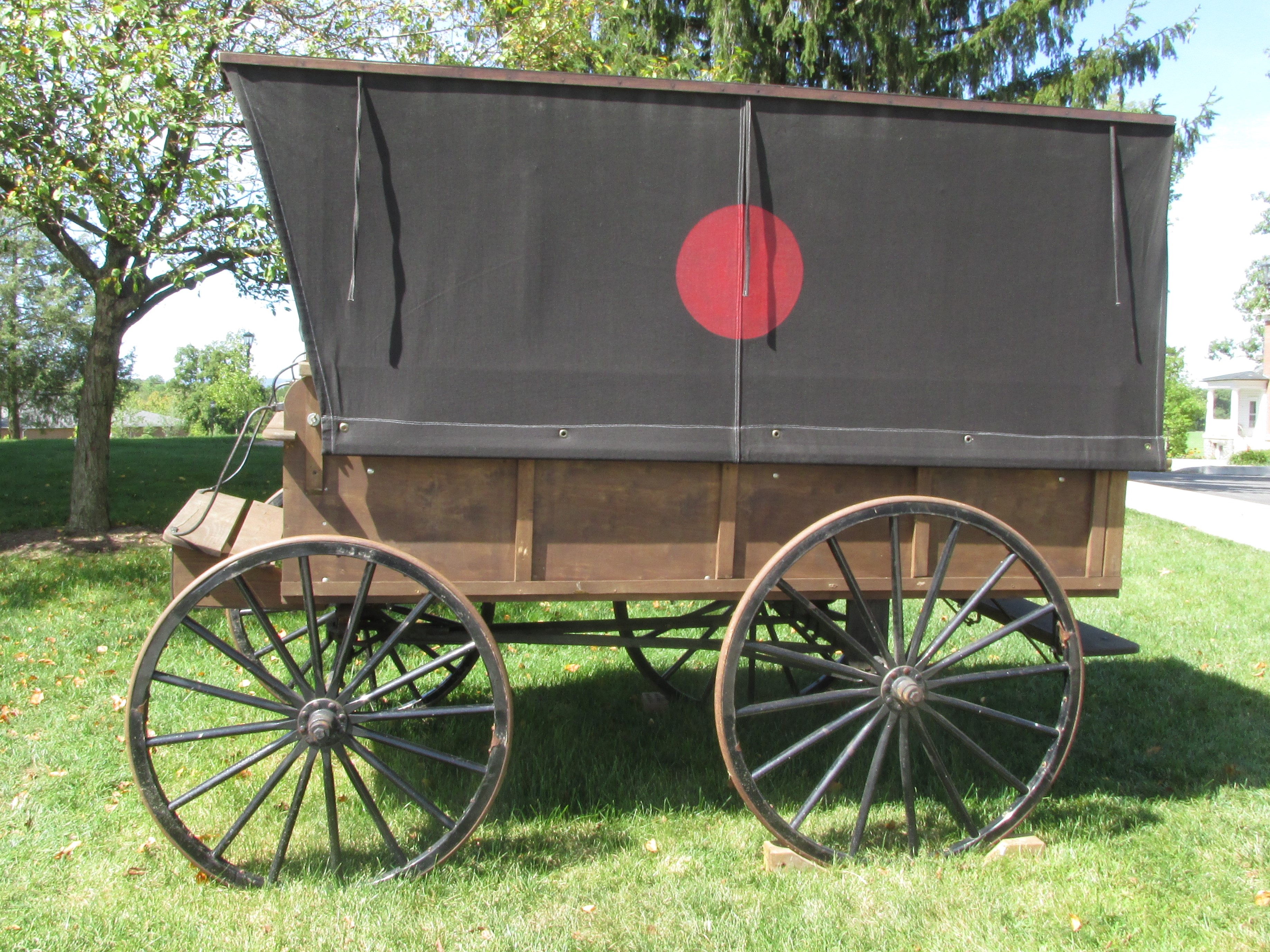
Ambulance outside Lutheran Seminary, Gettysburg.

by Sandra Merville Hart

Euphemia Goldsborough learned of the terrible battle at Gettysburg that took place July 1-3, 1863, and wanted to help nurse the wounded.

She lived in Baltimore, Maryland, and it wasn’t an easy place for a Southern sympathizer to live in 1863. Citizens leaving the city were required to take an oath of allegiance to the Union before a pass would be issued.

General Robert E. Schenck, who commanded the Middle Department and VIII Corps in Baltimore, declared martial law in Baltimore on June 29, 1863. The next day he made it mandatory for anyone leaving the city to have a pass signed by the provost marshal.

Union and Confederate wounded were brought to Baltimore after the battle. Anyone visiting the hospitals had to be completely loyal to the Union. Another order, passed on July 10th, stated that no Confederate soldiers could be entertained in homes or any place other than his assigned hospital.

Under those circumstances, Euphemia’s devotion to the South didn’t allow her to nurse wounded soldiers in Baltimore. She decided to go to Gettysburg.

It’s unclear how she and dozens of other women accomplished leaving Baltimore because the railroads had suspended travel. She also needed a pass—after taking an oath of allegiance—to leave by boat on the Patuxent, Potomac, or West River. Perhaps she disguised herself or hid with the supply wagons headed to the battlefield.

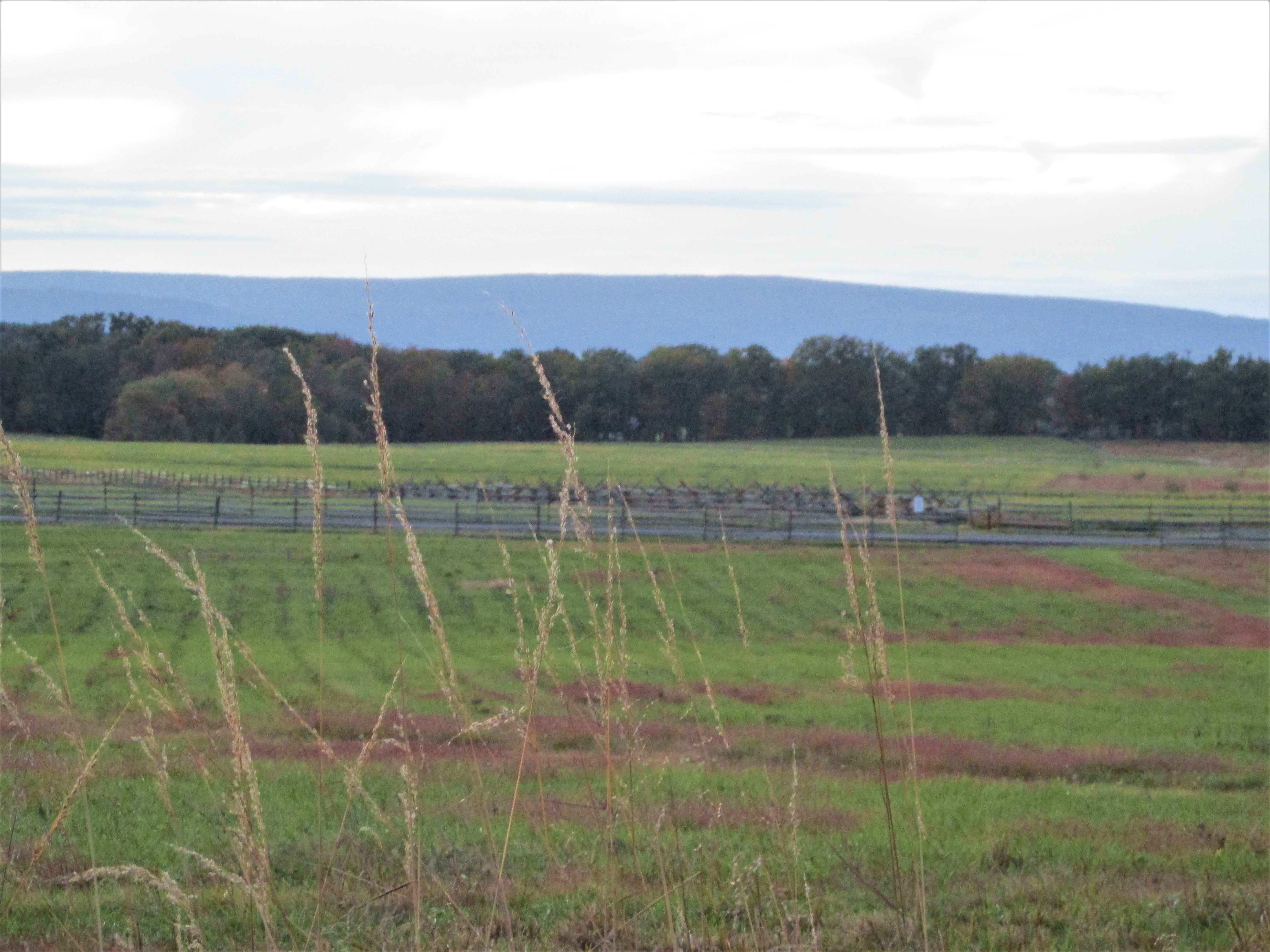
Valley where Pickett led a charge, Gettysburg Battlefield

Regardless of how she got there, she was a nurse at the temporary hospital at Pennsylvania College Hospital by July 18th. Wounded soldiers, some missing limbs, lay on bare floors without pillows.

Colonel Waller T. Patton, 7th Virginia, was one of the wounded there. An artillery shell ripped part of his jaw away during Pickett’s Charge on July 3rd. To aid his breathing, the unconscious man had to be propped up to have any chance to live. Unfortunately, there was no way to prop him.

Euphemia volunteered. She sat on the floor with her legs stretched out in front of her. Surgeons placed his back against hers. Fearing her slightest movement might cause the officer to suffocate, she fought the numbness that soon set in. All through the long night, she sat motionless in the candlelight.

Despite heroic efforts to save him, Colonel Waller T. Patton died on July 21st. His obituary in Richmond’s Daily Enquirer mentioned that he’d been tenderly nursed by a Baltimore woman. Perhaps the article was speaking of Euphemia. When she met the officer’s family in Richmond a few months later, they offered her the hospitality of their home while she was in their city. She thanked them but refused the gracious offer.

Civil War nurses made many sacrifices for their heroic patients. Gettysburg wounded were soon moved to Camp Letterman, a large tent hospital outside town where Euphemia had one hundred patients—fifty Union and fifty Confederate soldiers. She kept hospital books that were autographed by some of her patients. She also had letters and poems from them.

WWII General George S. Patton is a name many recognize. Colonel Waller T. Patton was his great-uncle.

Sources

Conklin, E.F. Exile to Sweet Dixie: The Story of Euphemia Goldsborough Confederate Nurse and Smuggler, Thomas Publications, 1998.

“Waller T. Patton,” Wikipedia, 2021/01/28 https://en.wikipedia.org/wiki/Waller_T._Patton.

Wilson, Laurel. “A Gun with a Story: Waller Patton’s Civil War Pistol,” Gettysburg Compiler, 2021/01/28 https://gettysburgcompiler.org/2017/05/10/a-gun-with-a-story-waller-pattons-civil-war-pistol/.


Children’s Authors and Illustrators Week

by Sandra Merville Hart

Children’s Authors and Illustrators Week is February 1-7 in 2021. It’s an annual event held in the first week of February.

Authors and illustrators of children’s books from Children’s Authors Network (CAN!) tell stories and teach writing workshops at schools, libraries, and children’s shelters.

They hope to instill a love of books in the young readers.

As a novelist myself, I love this idea! I remember the first time I entered a library with my third-grade class. It thrilled me to see all those bookshelves lined with books in my elementary school’s library. Then I learned that students could check out two books to read and return them in two weeks—what a privilege! I didn’t know where to start. Thankfully, the librarian had suggestions.

If you have a young reader in your life and don’t know where to turn for wholesome, fun stories for them, here are a few suggestions:

Junie B. Jones Series by Barbara Park

Berenstain Bears Series by Jan Berenstain and Mike Berenstain

Otis the Tractor Series by Loren Long

Charlotte’s Web by E.B. Long

Magic Treehouse Series by Mary Pope Osborne

Chronicles of Narnia Series by C.S. Lewis

Little House on the Prairie Series by Laura Ingalls Wilder

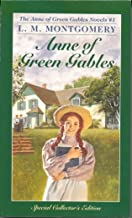
Anne of Green Gables Series by L.M. Montgomery

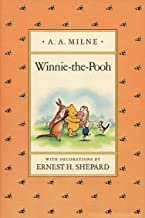
Winnie the Pooh by A.A. Milne

Island of the Blue Dolphins by Scott O’Dell

Trixie Beldon Series by Julie Campbell

Taxi Dog by Debra Barracca

My Friend Flicka by Mary O’Hara

My Friend Bear by Jez Alborough

 Over the River by Derek Anderson

 Bridge to Terabithia by Katherine Paterson and Donna Diamond

The Wish Giver by Bill Brittain and Andrew Glass

 Behind the Attic Wall by Sylvia Cassedy


Authors of children’s books:

Tasha Tudor

Max Lucado

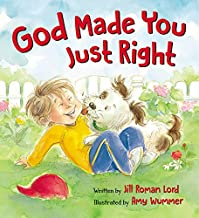
Jill Roman Lord

Beverly Lewis

Dandi Daley Mackall

Michelle Medlock Adams

Kathie Lee Gifford

Burton Cole

Eddie Jones (geared to middle-grade boys)

Clyde Robert Bulla

Graeme Base

Roald Dahl

Parents, it’s a good idea to keep a watchful eye on what your children are reading. There may be inappropriate language or topics in books, even those found in the children’s section of the library.

I hope you find some gems for your child!

Sources

“Celebrate Children’s Authors and Illustrators Week,” Read Write Think, 2020/12/14, http://www.readwritethink.org/classroom-resources/calendar-activities/celebrate-children-authors-illustrators-20675.htmlC.


“Children’s Authors and Illustrators Week,” childrensauthorsnetwork!, 2020/12/14, https://www.childrensauthorsnetwork.com/childrens-authors-and-illustrators-week.html.


Winnie the Pooh Day

by Sandra Merville Hart

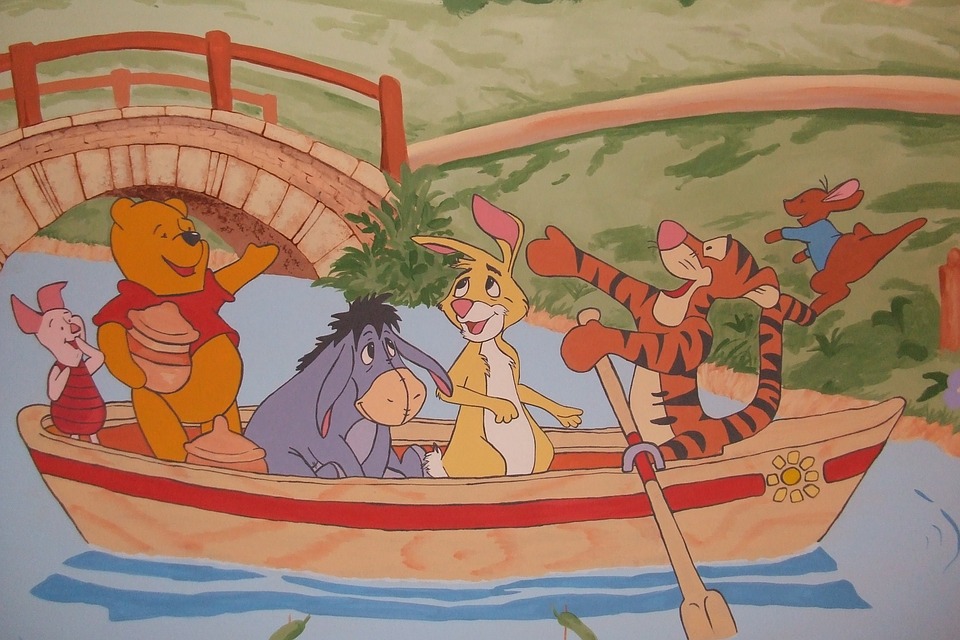
Of all the characters in children’s books I’ve read, Alan Alexander Milne’s Winnie the Pooh may be my favorite. This character was based on the author’s son’s teddy bear. In fact, the boy’s collection also included a tiger, a donkey, a piglet, and two kangaroos. Christopher Robin, his son, is the boy in the stories. Owl and Rabbit lived only in Milne’s imagination … and now in ours.

Even the story’s setting is real—the Hundred Acre Wood is patterned after the Ashdown Forest near Milne’s East Sussex home. Milne walked through the woods with Christopher. E.H. Shepard, the books’ illustrator, used Ashdown Forest as inspiration for his drawings.

Readers sense the love and wisdom within the pages of Winnie-the-Pooh and The House at Pooh Corner from a “Bear of Very Little Brain.” Christopher Robin is a sweet, compassionate boy with unending patience for the scrapes in which his best friend Winnie the Pooh finds himself.

Poor Eeyore is always gloomy yet lovable. Piglet is often afraid. Roo is always ready to play. Tigger is full of enthusiasm that grates on Rabbit’s nerves. All of them rely on the wisdom of Owl, who is perhaps not as wise as he thinks.

Milne created a lovable cast of everyday characters that live on today. Though he wrote humorous stories, plays, screenplays, poems, and a detective novel, it is his stories for children that have endured.

Yet Milne stopped writing children’s stories as his son, who had been an inspiration for them. grew older. The fame of the real Christopher Robin appalled his father. It was far more publicity than he desired for his young son.

A.A. Milne’s amazingly successful Winnie the Pooh made it difficult to write in other genres. He simply wanted to write whatever he wanted. That door closed.

Upon his death, the family received rights to his Pooh books as well as the Westminster School, the Royal Literary Fund, and the Garrick Club. Over the years, the beneficiaries eventually sold their interest to Disney Corporation.

The Hollywood Walk of Fame gave a star to Winnie the Pooh in 2006, an honor that Milne likely never imagined.

January 18th is known as Winnie the Pooh Day as a celebration of A.A. Milne’s birthday on that day in 1882.

Sources

“A.A. Milne,” Wikipedia, 2020/12/14, https://en.wikipedia.org/wiki/A._A._Milne.

“A.A. Milne: 5 Facts About ‘Winnie-the-Pooh’ Author,” Biography, 2020/12/14 https://www.biography.com/news/winnie-the-pooh-author-biography-facts.

“Winnie the Pooh,” Encyclopaedia Britannica, 2020/12/14 https://www.britannica.com/topic/Winnie-the-Pooh-childrens-stories-by-Milne.