Experimental Balloon Flight from Cincinnati Ends Badly During Civil War

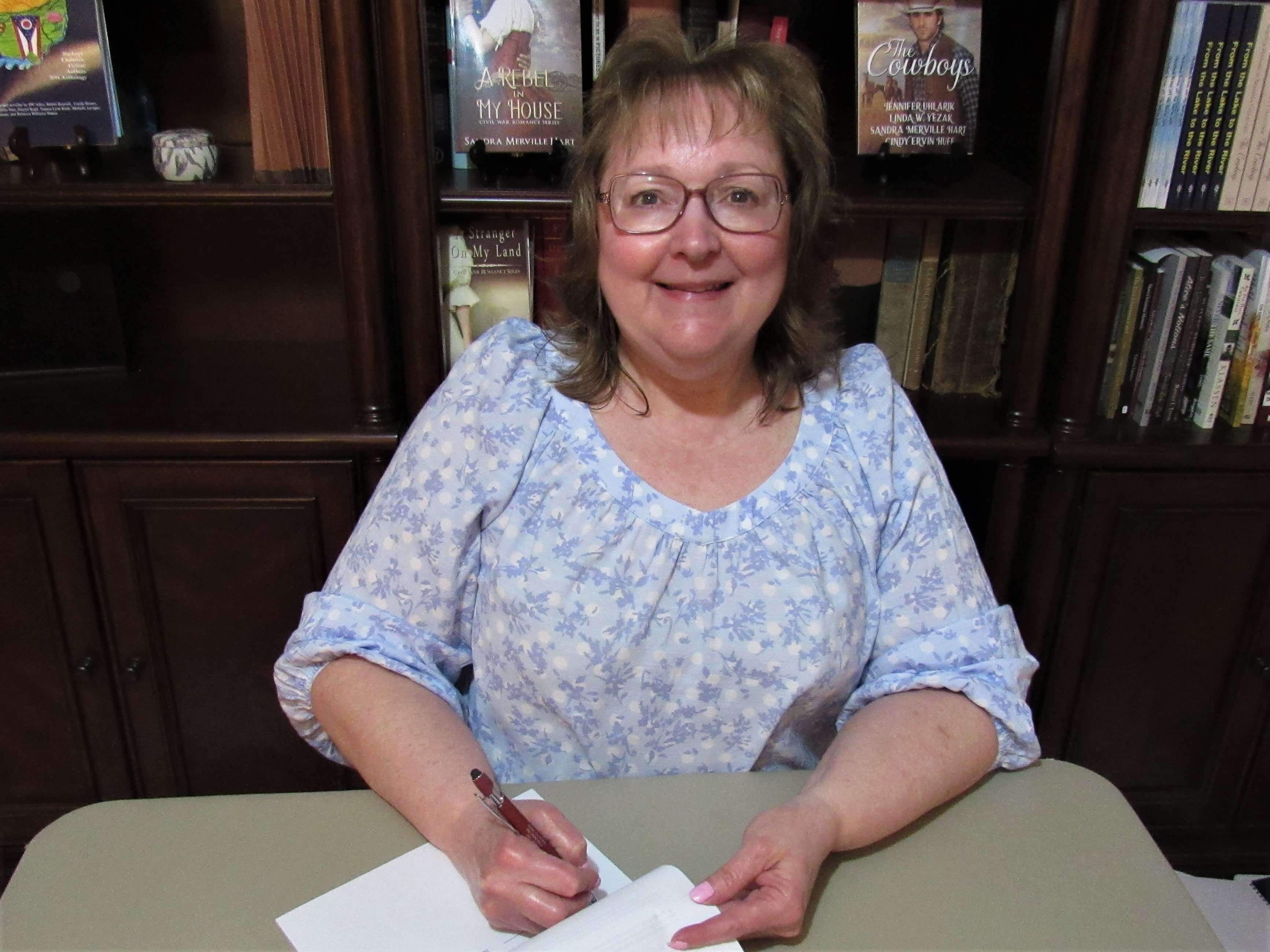
by Sandra Merville Hart

Before the Civil War started, Thaddeus S.C. Lowe dreamed of flying his hot air balloon on a transatlantic flight. A successful test flight from Philadelphia to New Jersey was made on June 28, 1860. Three months later on September 7th, wind ripped open his balloon, the Great Western, when Lowe attempted a transatlantic flight.

Joseph Henry, secretary of the Smithsonian Institution, suggested a second test over land.

Lowe planned a night flight from Cincinnati, Ohio, to the Chesapeake Bay area on Enterprise, a new balloon. He left Cincinnati the night of April 19-20, 1861. Fort Sumter had been fired on a week earlier, marking the beginning of the Civil War.

Winds unfortunately carried him South. Lowe tried to land near the border between North Carolina and South Carolina. Armed men ordered him to take off again, which he did.

His second landing was even worse. Folks in South Carolina didn’t trust him. They placed his deflated balloon in a wagon and escorted both to Unionville, SC. A local newspaper editor knew of the aeronaut. He wrote a letter of introduction for Lowe to take to leaders in Columbia.

The letter didn’t help. Lowe was arrested. He stayed in jail until government officials released him.

On April 26, 1861, Lowe rode a train back to Cincinnati with his balloon. He reflected on troop movements he’d observed from his flight. It sparked a new idea.

He put his transatlantic flight dream to rest. Serving his country by observing the Confederate army from the air became his goal.

Sources

Fanton, Ben. “Gas Balloons: View From Above the Civil War Battlefield,” History.net, 2021/02/05 https://www.historynet.com/gas-balloons-view-from-above-the-civil-war-battlefield.htm.

Gould, Kevin. “Balloon Corps,” Encyclopaedia Britannica, 2021/02/05 https://www.britannica.com/topic/Balloon-Corps.

“Thaddeus S.C. Lowe,” Wikipedia, 2021/02/05  https://en.wikipedia.org/wiki/Thaddeus_S._C._Lowe.


Civil War Women: Rebecca Littlepage Thwarts a General

by Sandra Merville Hart

Confederate General Henry Wise replaced Colonel Christopher Tompkins as commander of the Kanawha forces. Marching from Richmond, he arrived in Kanawha County on June 26, 1861. Wise soon stayed in Kanawha House Hotel’s best room.

Fort Sumter had been fired upon two and half months earlier.

The small Virginia town of Charleston was of strategic importance to Wise. He decided to claim a stone mansion surrounded by a thousand acres of farmland as his headquarters.

He should have run the idea by the lady of the house, Mrs. Rebecca Littlepage.

Confederate troops camped near a farm owned by the Littlepage family. Soldiers used the farm’s grain, sugar, bacon, molasses, and horses.

Wise strode to the home and told Mrs. Littlepage he intended to take her mansion as his headquarters. The spunky woman refused to release her home. The general threatened to blow the house down.

He returned with artillery. A crowd followed. Rebecca stood on the front step with her children around her. Wise told her to leave. She refused.

The general ordered his soldiers-some of them family friends—to fire upon the house. The men refused his command. Wise left that day.

Instead of taking over the home, his soldiers camped on the family’s property. Fort Fife, a one-hundred-square foot fort, was built on a hill overlooking the stone mansion. The location gave wonderful views of the Kanawha Turnpike, its junction with the road to Parkersburg, and the James River.

Adam Littlepage, Rebecca’s husband, became the quartermaster officer of the 21st Virginia. He died in a duel and never returned to the stone mansion home that his wife fought so bravely to preserve.

Sources

Egnatoff, Daniel et. al. “Littlepage Mansion-Charleston Civil War Trail.” Clio: Your Guide to History. September 19, 2019. Accessed February 1, 2021. https://theclio.com/entry/4901.

Mortimer, Gavin. Double Death: The True Story of Pryce Lewis, the Civil War’s Most Daring Spy, Walker & Company, 2010.


Euphemia Goldsborough, Confederate Nurse at Gettysburg

Ambulance outside Lutheran Seminary, Gettysburg.

by Sandra Merville Hart

Euphemia Goldsborough learned of the terrible battle at Gettysburg that took place July 1-3, 1863, and wanted to help nurse the wounded.

She lived in Baltimore, Maryland, and it wasn’t an easy place for a Southern sympathizer to live in 1863. Citizens leaving the city were required to take an oath of allegiance to the Union before a pass would be issued.

General Robert E. Schenck, who commanded the Middle Department and VIII Corps in Baltimore, declared martial law in Baltimore on June 29, 1863. The next day he made it mandatory for anyone leaving the city to have a pass signed by the provost marshal.

Union and Confederate wounded were brought to Baltimore after the battle. Anyone visiting the hospitals had to be completely loyal to the Union. Another order, passed on July 10th, stated that no Confederate soldiers could be entertained in homes or any place other than his assigned hospital.

Under those circumstances, Euphemia’s devotion to the South didn’t allow her to nurse wounded soldiers in Baltimore. She decided to go to Gettysburg.

It’s unclear how she and dozens of other women accomplished leaving Baltimore because the railroads had suspended travel. She also needed a pass—after taking an oath of allegiance—to leave by boat on the Patuxent, Potomac, or West River. Perhaps she disguised herself or hid with the supply wagons headed to the battlefield.

Valley where Pickett led a charge, Gettysburg Battlefield

Regardless of how she got there, she was a nurse at the temporary hospital at Pennsylvania College Hospital by July 18th. Wounded soldiers, some missing limbs, lay on bare floors without pillows.

Colonel Waller T. Patton, 7th Virginia, was one of the wounded there. An artillery shell ripped part of his jaw away during Pickett’s Charge on July 3rd. To aid his breathing, the unconscious man had to be propped up to have any chance to live. Unfortunately, there was no way to prop him.

Euphemia volunteered. She sat on the floor with her legs stretched out in front of her. Surgeons placed his back against hers. Fearing her slightest movement might cause the officer to suffocate, she fought the numbness that soon set in. All through the long night, she sat motionless in the candlelight.

Despite heroic efforts to save him, Colonel Waller T. Patton died on July 21st. His obituary in Richmond’s Daily Enquirer mentioned that he’d been tenderly nursed by a Baltimore woman. Perhaps the article was speaking of Euphemia. When she met the officer’s family in Richmond a few months later, they offered her the hospitality of their home while she was in their city. She thanked them but refused the gracious offer.

Civil War nurses made many sacrifices for their heroic patients. Gettysburg wounded were soon moved to Camp Letterman, a large tent hospital outside town where Euphemia had one hundred patients—fifty Union and fifty Confederate soldiers. She kept hospital books that were autographed by some of her patients. She also had letters and poems from them.

WWII General George S. Patton is a name many recognize. Colonel Waller T. Patton was his great-uncle.

Sources

Conklin, E.F. Exile to Sweet Dixie: The Story of Euphemia Goldsborough Confederate Nurse and Smuggler, Thomas Publications, 1998.

“Waller T. Patton,” Wikipedia, 2021/01/28 https://en.wikipedia.org/wiki/Waller_T._Patton.

Wilson, Laurel. “A Gun with a Story: Waller Patton’s Civil War Pistol,” Gettysburg Compiler, 2021/01/28 https://gettysburgcompiler.org/2017/05/10/a-gun-with-a-story-waller-pattons-civil-war-pistol/.


Children’s Authors and Illustrators Week

by Sandra Merville Hart

Children’s Authors and Illustrators Week is February 1-7 in 2021. It’s an annual event held in the first week of February.

Authors and illustrators of children’s books from Children’s Authors Network (CAN!) tell stories and teach writing workshops at schools, libraries, and children’s shelters.

They hope to instill a love of books in the young readers.

As a novelist myself, I love this idea! I remember the first time I entered a library with my third-grade class. It thrilled me to see all those bookshelves lined with books in my elementary school’s library. Then I learned that students could check out two books to read and return them in two weeks—what a privilege! I didn’t know where to start. Thankfully, the librarian had suggestions.

If you have a young reader in your life and don’t know where to turn for wholesome, fun stories for them, here are a few suggestions:

Junie B. Jones Series by Barbara Park

Berenstain Bears Series by Jan Berenstain and Mike Berenstain

Otis the Tractor Series by Loren Long

Charlotte’s Web by E.B. Long

Magic Treehouse Series by Mary Pope Osborne

Chronicles of Narnia Series by C.S. Lewis

Little House on the Prairie Series by Laura Ingalls Wilder

Anne of Green Gables Series by L.M. Montgomery

Winnie the Pooh by A.A. Milne

Island of the Blue Dolphins by Scott O’Dell

Trixie Beldon Series by Julie Campbell

Taxi Dog by Debra Barracca

My Friend Flicka by Mary O’Hara

My Friend Bear by Jez Alborough

 Over the River by Derek Anderson

 Bridge to Terabithia by Katherine Paterson and Donna Diamond

The Wish Giver by Bill Brittain and Andrew Glass

 Behind the Attic Wall by Sylvia Cassedy


Authors of children’s books:

Tasha Tudor

Max Lucado

Jill Roman Lord

Beverly Lewis

Dandi Daley Mackall

Michelle Medlock Adams

Kathie Lee Gifford

Burton Cole

Eddie Jones (geared to middle-grade boys)

Clyde Robert Bulla

Graeme Base

Roald Dahl

Parents, it’s a good idea to keep a watchful eye on what your children are reading. There may be inappropriate language or topics in books, even those found in the children’s section of the library.

I hope you find some gems for your child!

Sources

“Celebrate Children’s Authors and Illustrators Week,” Read Write Think, 2020/12/14, http://www.readwritethink.org/classroom-resources/calendar-activities/celebrate-children-authors-illustrators-20675.htmlC.


“Children’s Authors and Illustrators Week,” childrensauthorsnetwork!, 2020/12/14, https://www.childrensauthorsnetwork.com/childrens-authors-and-illustrators-week.html.


Winnie the Pooh Day

by Sandra Merville Hart

Of all the characters in children’s books I’ve read, Alan Alexander Milne’s Winnie the Pooh may be my favorite. This character was based on the author’s son’s teddy bear. In fact, the boy’s collection also included a tiger, a donkey, a piglet, and two kangaroos. Christopher Robin, his son, is the boy in the stories. Owl and Rabbit lived only in Milne’s imagination … and now in ours.

Even the story’s setting is real—the Hundred Acre Wood is patterned after the Ashdown Forest near Milne’s East Sussex home. Milne walked through the woods with Christopher. E.H. Shepard, the books’ illustrator, used Ashdown Forest as inspiration for his drawings.

Readers sense the love and wisdom within the pages of Winnie-the-Pooh and The House at Pooh Corner from a “Bear of Very Little Brain.” Christopher Robin is a sweet, compassionate boy with unending patience for the scrapes in which his best friend Winnie the Pooh finds himself.

Poor Eeyore is always gloomy yet lovable. Piglet is often afraid. Roo is always ready to play. Tigger is full of enthusiasm that grates on Rabbit’s nerves. All of them rely on the wisdom of Owl, who is perhaps not as wise as he thinks.

Milne created a lovable cast of everyday characters that live on today. Though he wrote humorous stories, plays, screenplays, poems, and a detective novel, it is his stories for children that have endured.

Yet Milne stopped writing children’s stories as his son, who had been an inspiration for them. grew older. The fame of the real Christopher Robin appalled his father. It was far more publicity than he desired for his young son.

A.A. Milne’s amazingly successful Winnie the Pooh made it difficult to write in other genres. He simply wanted to write whatever he wanted. That door closed.

Upon his death, the family received rights to his Pooh books as well as the Westminster School, the Royal Literary Fund, and the Garrick Club. Over the years, the beneficiaries eventually sold their interest to Disney Corporation.

The Hollywood Walk of Fame gave a star to Winnie the Pooh in 2006, an honor that Milne likely never imagined.

January 18th is known as Winnie the Pooh Day as a celebration of A.A. Milne’s birthday on that day in 1882.

Sources

“A.A. Milne,” Wikipedia, 2020/12/14, https://en.wikipedia.org/wiki/A._A._Milne.

“A.A. Milne: 5 Facts About ‘Winnie-the-Pooh’ Author,” Biography, 2020/12/14 https://www.biography.com/news/winnie-the-pooh-author-biography-facts.

“Winnie the Pooh,” Encyclopaedia Britannica, 2020/12/14 https://www.britannica.com/topic/Winnie-the-Pooh-childrens-stories-by-Milne.


Last Confederate Surrender

by Sandra Merville Hart

Most people believe the Civil War ended when Confederate General Robert E. Lee surrendered his Army of Northern Virginia to Union General Ulysses S. Grant at Appomattox on April 9, 1865. Not exactly. There were several other Confederate armies that had to surrender.

Rather than surrender, Colonel John S. Mosby, leader of “Mosby’s Raiders,” disbanded his cavalry troops on April 21, 1865.

General Joseph E. Johnston’s Army of Tennessee surrendered at the Bennett Place to Union General Sherman with the final agreement signed on April 26, 1865.

Lieutenant General Richard Taylor surrendered his  Department of Alabama, Mississippi, and East Louisiana to Union Major General Edward Canby at Citronville, Alabama, on May 4, 1865.

Major General Dabney Maury surrendered his  Confederate District of the Gulf  to Union Major General Edward Canby at Citronville, Alabama, on May 4, 1865.

Brig. General M. Jeff Thompson surrendered his  Sub-District of Northwest Arkansas at two Arkansas locations, Wittsburg and Jacksonport, on May 11, 1865.

Brig. General William T. Wofford surrendered his Department of North Georgia    to Union Brigadier General Henry M. Judah in Kingston, Georgia, on May 12, 1865.

Lieutenant General Edmund Kirby Smith, commander of Trans-Mississippi Department, signed a surrender aboard the USS Fort Jackson just outside Galveston Harbor on June 2, 1865.

Cherokee General Stand Watie surrendered his First Indian Brigade at Doaksville on June 23, 1865.

After General Lee’s surrender, the other Confederate armies soon followed.

Yet the last surrender may surprise you, for this one didn’t even take place in the United States.

The CSS Shenandoah was purchased in England for the Confederate States Navy in 1864. Formerly the Sea King, the ship was converted to a warship in the Atlantic Ocean near the Spanish coast. Confederate Lt. James Iredell Waddell commanded the ship.

Waddell renamed the ship CSS Shenandoah. It required at least 150 men to sail and operate the warship. When he left the coast of Spain, he had only recruited 43 men for his crew. Since the ship’s task was to disrupt Union shipping, Waddell and his officers decided to increase its crew from the capture of Union ships.

They sailed toward the Cape of Good Hope and then toward Melbourne, Australia, successfully capturing Union ships, cargo, and crews. Some ships were burned or sunk and others were ransomed. The officers and crew of CSS Shenandoah had been quite successful in pursuing Union merchant ships when they had to stop for repairs on January 25, 1865, in Melbourne, Australia.

The crew grew from captured crew members just as Waddell had hoped.

After repairs were completed, Waddell sailed the Pacific Ocean in search of the American whaling fleet and captured ships near the equator in April. The CSS Shenandoah had set sail for the Bering Sea when General Robert E. Lee surrendered at Appomattox on April 9, 1865, though Waddell, being in the middle of the ocean, was unaware of this first of several surrenders. He continued his pursuit of Union merchant ships.

Upon reaching the Bering Sea on June 21st, the CSS Shenandoah captured two whalers the next day. Captain Francis Smith of the William Thompson informed Waddell that the war had ended. Waddell didn’t believe him and burned both the William Thompson and the Euphrates as Union ships.

If the war had ended as Captain Smith claimed, future capture of Union ships risked a charge of piracy. Unconvinced, Waddell continued his mission.

Thirty-eight ships had been captured or destroyed by the CSS Shenandoah when Waddell learned of the war’s end from a source he trusted. The crew of the Barracouta, a British ship, gave him the news on August 2, 1865.

Hoping to escape being charged with piracy and hung, Waddell sailed for Liverpool, England. The 9,000-mile voyage took three months. The ship’s crew, fearing capture if it replenished supplies at a port, never stopped. Union ships pursued the CSS Shenandoah the whole journey.

Waddell surrendered in Liverpool to the HMS Donegal on November 6, 1865. It was the final surrender of the Civil War.

Sources

History.com Editors. “CSS Shenandoah learns the war is over,” A&E Television Networks, 2020/12/28 https://www.history.com/this-day-in-history/css-shenandoah-learns-the-war-is-over.

Marcello, Paul J. “Shenandoah 1864-1865,” Naval History and Heritage Command, 2020/12/28 https://www.history.navy.mil/research/histories/ship-histories/confederate_ships/shenandoah.html.

Plante, Trevor K. “Ending the Bloodshed,” Prologue Magazine National Archives, 2021/01/04 https://www.archives.gov/publications/prologue/2015/spring/cw-surrenders.html.


A Christmas Tradition: Yule Logs

by Sandra Merville Hart

The custom of burning logs around the time of the winter solstice dates back to 5000 BC in Egypt and the time of Moses.

“Yule” logs were first used around winter solstice by the Vikings in an outdoor celebration of longer days that were coming. They brought the celebration to Britain when they invaded them.

The custom of burning yule logs moved inside homes in the fourth century.

By 1066, most British communities celebrated the custom, which continued for the next 700 years. Late winter or early spring was the time to cut a yule log from their land or a friend’s land for the next year’s celebration. The large log that had to burn for the 12 twelve days of Christmas was dragged home and set to dry.

Spices, wine, and rum were periodically rubbed into the log. When burning, the spices gave a pleasant perfume-like aroma to remind everyone of the gifts of the Magi.

It was brought into the home on Christmas Eve. After the church bells rang that day, it was lit from a piece of last year’s yule log. Folks considered it a bad sign if the log didn’t light on the first attempt.

After the fire started, the family symbolically burned the year’s misfortunes by tossing sprigs of holly into the hearth. The Christmas story was told. The family played games and sang songs before eating a meal prepared over the yule log’s fire.

For the remainder of the 12 days of Christmas, the women tended the fire because it was considered bad luck for it to die out early. A small piece of the yule log was then saved to ignite the next year’s fire.

Centuries passed. As huge hearths became a thing of the past, the yule logs were only required to burn 12 hours.

The French replaced the traditional yule log with a buche de Noel. This log-shaped cake was served after Christmas Eve’s midnight mass.

So, yule logs are usually a sweet treat these days.

It’s fun to learn the surprising history behind this modern holiday tradition.


Sources

Collins, Ace. Stories Behind the Great Traditions of Christmas, Zondervan, 2003.

“Yule Log,” Wikipedia, 2020/11/13 https://en.wikipedia.org/wiki/Yule_log.


A Christmas Tradition: Christmas Stockings

by Sandra Merville Hart

Modern Christmas stockings are large enough to hold fruit and small gifts, but this tradition had humble beginnings.

Hundreds of years ago, poor children often had only one pair of stockings (socks) so they washed them each night and hung them by the fireplace to dry. The next morning, they donned warm, dry stockings.

A priest named Nicholas ministered to families in his town of Patara and the whole area of what’s now known as Turkey in the fourth century. Nicholas, a wealthy man who became an archbishop while still in his twenties, had a generous heart for poor families, especially children.

Metaphrastes, a Christian author who lived in the tenth century, wrote that Nicholas learned of a poor widower while traveling outside his parish. He and his three teenaged daughters were starving to death. The father considered selling one of them into slavery to provide dowries for the others so at least two could marry, but he couldn’t do it.

The desperate father prayed for help. That night, some one opened a window, dropped a gold coin in the oldest daughter’s stocking, and quietly left.

The widower thanked God for the miracle. The coin was used to provide a dowry for his daughter and she was married. Then a gold coin was found in the next daughter’s stocking one morning. She was soon married. Later, the same thing happened for the youngest daughter. It always happened when Nicholas was nearby.

Adults and children in the region began checking their stockings daily. Nicholas traveled often to perform his duties and was known for his generosity.

It was around 350 when Nicholas died on December 6th. It became known as St. Nicholas’s Day. Children hung their stockings the night before hoping to find a treat the next morning. Often, they found one.

Stockings were associated with St. Nicholas’s Day for centuries. Then a poem by Clement Clarke Moore called “A Visit from Saint Nicholas” was published in 1823. It later became known as “’Twas the Night Before Christmas” and changed the date the stockings were hung to Christmas Eve.

Traditional gifts in stockings are symbolic. Oranges symbolize Nicholas’s gift of gold to the widower and his daughters. Apples are for health. Walnuts are for good luck.

It’s fun to learn the surprising history behind this modern holiday tradition.

Sources

Collins, Ace. Stories Behind the Great Traditions of Christmas, Zondervan, 2003.

Spivack, Emily. “The Legend of the Christmas Stocking,” Smithsonian Magazine, 2020/11/13 https://www.smithsonianmag.com/arts-culture/the-legend-of-the-christmas-stocking-160854441/.


A Christmas Tradition: Christmas Trees

by Sandra Merville Hart

About a thousand years ago, people living in what is now Scandinavia were captivated by the way evergreen trees survived their harsh winters. They chopped down the trees and took them into their homes in the hopes they’d bring strength to survive the winter season.

The French and Germans hung evergreen trees upside down from the ceiling in the twelfth century, a practice that continued for about 200 years.

In December, fir trees, called “paradise trees,” were placed outside Catholic churches during medieval times in Europe’s Baltic region. Apples were hung on its branches for a play about Adam and Eve.

Fir trees were displayed on the ground in homes instead of hung from the ceiling by late in the 16th century.

Martin Luther, after a walk in the forest on a moonlit night, is generally credited with placing the first lit candles on a Christmas tree. To him the evergreen tree represented God’s everlasting love for us. The hope that the birth of Jesus brought into the world was symbolized by the candles or lights on the tree.

Americans of German descent living in Pennsylvania in the 1820s are said to have brought the tradition of Christmas trees to the United States to stay. It took the marriage of Prince Albert of Germany to Queen Victoria of England for the tradition to really take hold in the United States.

Toys, candy, popcorn, and candles decorated those Victorian trees.

It was easy for those living in rural areas to chop down an evergreen tree for their home. Those in cities had a tougher challenge. In 1851, Mark Carr recognized the need. He filled a large horse-drawn carriage with evergreens and sold them in a vacant lot in New York City.

Lots like that one can be found in cities and towns today. An estimated 81% of homes display an artificial tree, but there’s something about the traditional sight and smell of a real tree that keeps others buying them year after year.

Sources

“Christmas Trees,” Encyclopaedia Britannica, 2020/11/12 https://www.britannica.com/print/article/115737.

Collins, Ace. Stories Behind the Great Traditions of Christmas, Zondervan, 2003.

Kennedy, Lesley. “How 25 Christmas Traditions Got Their Start,” History, 2020/11/12

https://www.history.com/news/christmas-traditions-history.

Cyber Monday Sale!!!

40% Off Plus FREE Standard Shipping at ShopLPC.com with Coupon Code CYBERMONDAY40

Yes, this includes my books!

A Musket in My Hands

Two sisters have no choice but to join the men they love and muster into the Confederate army and in the fall of 1864—in time for things to go very badly for Southerners at the Battle of Franklin. This book is 2019 Serious Writer Medal Fiction Winner and a 2019 Selah Award Finalist.


ShopLPC

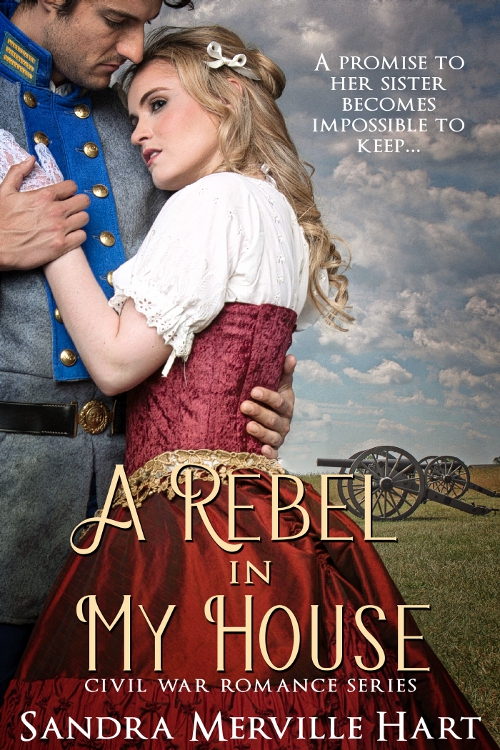
A Rebel in My House

A wounded Confederate soldier on the first day of battle leaves a Gettysburg seamstress with a heart-wrenching decision. Both have made promises. Some promises are impossible to keep. This book won the 2018 Illumination Silver Award and second place in 2018 Faith, Hope and Love Readers’ Choice Award. 

ShopLPC

A Stranger in My House

A young woman finds a wounded Union soldier outside her Tennessee home in this 2015 IRCA Finalist and Christian Small Publishing Book of the Year 2016 Finalist.

ShopLPC

The Cowboys

Taming the West … one heart at a time

Hart’s novella, Trail’s End, in “Smitten Novella Collection: The Cowboys” is set in the wild cattle town of Abilene, Kansas, in 1870.

ShopLPC


Mt. Zion Ridge Press is also having a Cyber Monday Sale!

From November 30 – December 2, all books are 10% off with the coupon code CYBER

Yes, this includes my books!

Christmas Fiction Off the Beaten Path

Not This Year in “Christmas Fiction Off the Beaten Path,” is Sandra Hart’s heartwarming, nostalgic story of a hardworking family man facing difficult times at Christmas.

Mt. Zion Ridge Press

From the Lake to the River

A collection of stories set in Ohio by Ohio authors

Everyday citizens become heroes in Sandra Hart’s Surprised by Love novella in “From the Lake to the River,” set during the 1913 flood in Troy, Ohio.

Mt. Zion Ridge Press