James Connolly – First Modern Olympics Champion

by Sandra Merville Hart

In 393 A.D., the Romans ended the classic Greek Olympic games that had been held every four years. Different countries held informal Olympics on a local level in the 1600s. Sweden, Greece, and England held some local Olympic games in the 1800s.

Olympic games became an international event in 1896, when the first modern Olympic games began.

James Connolly, who grew up in Boston as the son of Irish immigrants, was a student at Harvard when he learned of the Olympic Games. The twenty-seven-year-old requested a leave of absence to attend the games in Athens. The school refused his request.

Determined to be there, Connolly withdrew from Harvard.

He joined nine other Americans on a steamer bound for Italy. His wallet was stolen in Naples and he almost missed his train ride across Italy. After another boat ride, they boarded a train to Athens.

The American athletes believed they’d a few days rest from their long journey. The Opening Ceremony of the Games of the I Olympiad started on April 6, 1896—the day they arrived in Athens.

In fact, Connolly competed in his first event a few hours later. What is now known as the triple jump was then called “the hop, step, and jump,” and it was the first event. His jump was 44 feet 11 ¾ inches—he won first place.

He also competed in the high jump (second place) and the long jump (third place.)

Even more important, James Connolly became the first Olympic champion in the 1896 games—and the first in 1,527 years. Quite an achievement!

Sources

“1896 Summer Olympics,” Wikipedia, 2021/07/23 https://en.wikipedia.org/wiki/1896_Summer_Olympics.

“About the Games,” Olympic Channel Services, 2021/07 25 https://olympics.com/en/olympic-games/athens-1896.

History.com Editors. “10 Things You May not Know about the First Modern Olympics,” A&E Television Networks, 2021/07/23 https://www.history.com/news/10-things-you-may-not-know-about-the-first-olympics.

“James Connolly,” United States Olympic & Paralympic Museum, 2021/07/25 https://usopm.org/james-connolly/.

Civil War Hospital Trains

by Sandra Merville Hart

Civil War soldiers wounded on the battlefield were first treated at tent hospitals or in local buildings. With a combined total dead and wounded at Gettysburg for both armies at over 40,000, wounded soldiers filled the courthouse, churches, homes, barns, and every available public building.

The overworked, exhausted surgeons at Gettysburg couldn’t keep up with the demand. As soon as a patient was able to survive a trip, he traveled by hospital train to a city hospital.

A typical Civil War era hospital train contained between 5 to 10 hospital cars and a passenger car for wounded soldiers able to sit. Additionally, there was a surgeon’s car for the medical staff, a kitchen car for the nourishing food provided to wounded, and a box car for supplies.

The outside car panels had “U.S. Hospital Train” painted in large letters. A yellow flag flew on the slow-moving engine. Three red lanterns hung under the engine headlight at night. Ten-car trains carried up to 200 patients.

Injured soldiers were carried on stretchers to a hospital car. Four India rubber rings hooked onto wooden posts to support the stretcher. There were 3 tiers of stretchers stacked in a 50-foot hospital car. A nice period sketch of these cars may be found at http://www.sonofthesouth.net/leefoundation/civil-war/1864/february/hospital-train.htm.

Early in the war, a surgeon noticed the agony that sick and wounded soldiers suffered from the locomotive jostling over tracks. He suggested the above design for hospital cars, greatly increasing patients’ comfort while traveling to the general hospitals in the cities.

A Rebel in My House Book Blurb:

When the cannons roar beside Sarah Hubbard’s home outside of Gettysburg, she despairs of escaping the war that’s come to Pennsylvania. A wounded Confederate soldier on her doorstep leaves her with a heart-wrenching decision.

Separated from his unit and with a bullet in his back, Jesse Mitchell needs help. He seeks refuge at a house beside Willoughby Run. His future lies in the hands of a woman whose sympathies lay with the North.

Jesse has promised his sister-in-law he’d bring his brother home from the war. Sarah has promised her sister that she’d stay clear of the enemy. Can the two keep their promises amid a war bent on tearing their country apart?

A promise to her sister becomes impossible to keep …

Amazon

Book Trailer

Sources

Compiled by the editors of Combined Books. The Civil War Book of Lists, Da Capo Press, 1994.

“Hospital Trains,” Son of the South, 2021/03/23 http://www.sonofthesouth.net/leefoundation/civil-war/1864/february/hospital-train.htm.

Wilbur, M.D., C. Keith. Civil War Medicine 1861 – 1865, C. Keith Wilbur, 1998.


A Surprising Cemetery

Fellow author and friend Shelia Stovall shares about a family cemetery with us today. Welcome back to Historical Nibbles, Shelia!

by Shelia Stovall

Thank you for inviting me to share a story that might interest genealogists. Judy, my mother-in-law, loved genealogy. One of my deepest regrets is that I didn’t record her family stories. She said her ancestor received a land grant for our property for serving in the Revolutionary War. Unfortunately, we have no documentation to prove this because the Simpson County, Kentucky Courthouse burned in May of 1882.

A couple of years ago, my husband visited our neighbor’s farm and discovered a cemetery, hidden in a grove of trees, about five hundred yards from our property line.

We’d never crossed the fence line and had no idea the cemetery existed. Later, my husband took me to his find. Judy grew up on our farm, and I am sure she knew the cemetery existed but failed to mention it. Perhaps it is something she took for granted that we knew.

Simple stones mark many gravesites, and others are very ornate. Sadly, the cemetery needs attention. One tombstone identifies the grave of the Revolutionary War soldier, William Lowe. I couldn’t help but wonder if this might mark the resting place of my husband’s relative who received the land grant. We’d never heard anyone mention the last name of “Lowe” in the family history. The surname of Johns, Peden, and Snider are the familiar family names. 

We scanned Judy’s many scrapbooks in search of her genealogy work. Ready to give up, I put away the albums,but my father-in-law said, “Let’s look inside her desk.” The first folder I pulled out was labeled, “For Evan Leslie’s D.A.R.” (Evan Leslie is my daughter.) It seemed Judy knew that someday, someone would be interested. It took mere seconds to locate the name I hoped to see, William Lowe.  

I am thankful Judy took such care to document her family ancestry. We’ll never be able to prove the farm has been in my husband’s family since the land grants, but I feel confident the trails I walk with my grandchildren are the same as their ancestors from ten generations back.

To me, the most special place is by a tiny stream that branches into Drake’s Creek. I need this quiet place where no one speaks to me but God.

We are blessed by our inheritance, but a better inheritance awaits us because we are to be co-heirs with Jesus Christ. “And since we are his children, we are his heirs. In fact, together with Christ, we are heirs of God’s glory. But if we are to share his glory, we must also share his suffering.” Romans 8:17.

My prayer is that you too will share in this glorious inheritance.

To learn more about me and my books, subscribe to my blog.

Readers can download three free novellas from my website under the media tab and be introduced to my make-believe communities of Weldon and Sassy Creek. My novel, Every Window Filled with Light, can be purchased from Amazon or Barnes & Noble.

About Shelia

Shelia Stovall is the director of a small-town library in southern Kentucky, where only strangers mention her last name, and the children call her Miss Shelia.  

Shelia and her husband Michael live on a farm, and she enjoys taking daily rambles to the creek with their three dogs. Spending time with family, especially her grandchildren, is her all-time favorite thing. The only hobby Shelia loves more than reading uplifting stories of hope is writing them. Connect with Shelia on her blog.

Every Window Filled with Light

Welcome to Weldon, Kentucky, where the only things the locals love more than fried pies are gossip and match-making.

Librarian Emma Baker, a young and childless widow, believes her dream to build a family is over. It’s been two years since a student accidentally stabbed Emma’s husband to death, and her grief has stifled any interest in romance—until she meets Pastor Luke Davis. But when Emma learns Luke is counseling her husband’s killer fresh out of jail, her temper gets in the way.

Meanwhile, Emma discovers twelve-year-old Harley, abandoned by her drug-addict mother, hiding in the library, and takes the girl in as her foster mom. Then a young mother is made homeless by an apartment fire, and Emma opens her home again. One person and one prayer at a time, Emma begins to discover hope.


An Excerpt from A Rebel in My House

by Sandra Merville Hart

Excerpt from A Rebel In My House:

Friday, June 26, 1863

Two miles outside Gettysburg, Pennsylvania

Running feet on the dirt road outside quickened Sarah Hubbard’s heartbeat. Her fingers stiffened on her sewing machine and her back straightened.

Were they coming? Every conversation these days centered on the Confederate soldiers crossing into southern Pennsylvania.

“Miz Hubbard. Miz Hubbard, please let us in!”

Not soldiers but friends. Sarah’s body sagged at Elsie Craig’s voice, but why did she yell? Sarah dropped the gingham dress she’d been sewing and ran to throw open the front door. Alarmed at the fear lining Elsie’s dark face and eyes as she clutched the hand of her four-year-old daughter, Mae, Sarah scanned the horizon for Confederate soldiers. “Hurry inside.”

Elsie needed no second bidding. She guided Mae over the threshold and closed the door. “Miz Hubbard, you gotta hide us.” Her tall, thin body leaned against the door. “The Rebs are in town gathering up all the colored folks they can find. Someone said they’ll be taking them south as slaves and that they’re warning folks not to hide us.”

Sarah gasped. “Why do such a terrible thing?”

“Don’t make sense, does it? Some of us have lived in Gettysburg for years. Others like me have always been free, but it don’t seem to matter to the Southern army.” A long loaf of bread peeked out among jars and clothing in a well-laden basket Elsie set on the rug. She dropped to her knees and wrapped her arms around her trembling child. “I had to leave my house and most of my possessions, but I’ve got the most important thing right here.” She looked up at Sarah as she patted Mae’s shoulder. “Last week my Sam left for Pine Hill, the settlement up near Biglerville. With it being two miles off the main road to Carlisle, the Rebs won’t find him there. Sam never expected the army to come after women and children or he’d never have left us. I miss him something fierce. We’ll go to him when the soldiers get out of town.”

Tears etched tracks in a smudge on Mae’s cheek, tugging at Sarah’s heart as much as Elsie’s wide eyes and trembling hands. Sarah rushed to an open window and pushed aside the curtain a few inches. The Pennsylvania governor, Andrew Curtin, had declared a state of emergency two weeks earlier and called for local militia. Where was their help?

Book Blurb:

When the cannons roar beside Sarah Hubbard’s home outside of Gettysburg, she despairs of escaping the war that’s come to Pennsylvania. A wounded Confederate soldier on her doorstep leaves her with a heart-wrenching decision.

Separated from his unit and with a bullet in his back, Jesse Mitchell needs help. He seeks refuge at a house beside Willoughby Run. His future lies in the hands of a woman whose sympathies lay with the North.

Jesse has promised his sister-in-law he’d bring his brother home from the war. Sarah has promised her sister that she’d stay clear of the enemy. Can the two keep their promises amid a war bent on tearing their country apart?

Amazon

Book Trailer

What Story Awaited Me in Gettysburg?

by Sandra Merville Hart

Something drew me yet again to Gettysburg. I had visited this battlefield before, but this time I knew there was a story waiting for me. I only had an inkling of an idea when I left my home that fall day—a Confederate soldier needs help from a Gettysburg seamstress. Not much to go on, is it? Sometimes novel ideas grow slowly and sometimes you know the whole story within an hour. A Rebel In My House swelled in my imagination as I explored Gettysburg.

My husband and I walked the battlefields. Ideas stirred when I found Tennessee troops with the brigade who began the fighting on the first day. Nothing solidified so I kept digging. I visited the museums. I discovered fascinating history at the Lutheran Theological Seminary at the Gettysburg Seminary Ridge Museum. Surely my story touched this place. Yet no ideas came. I trudged on.

I spent hours at the Gettysburg Museum and Visitor Center, Gettysburg Museum of History, Gettysburg Railroad Station, General Lee’s Headquarters Museum, and The David Wills House where President Lincoln stayed. I learned captivating facts at the Jennie Wade House, Shriver House Museum, and “The Women of Gettysburg Tour,” an evening walking tour.

Ideas strengthened. My husband and I walked the town’s streets around the “Diamond” or the town square where the women and children suffered through a nightmare. Then we spent another afternoon and evening at the battlefield.

Three Tennessee regiments fought the beginning battle on July 1st. They didn’t fight again until they joined in Pickett’s Charge.

The sun sank low on the horizon as I stood alone on Cemetery Ridge. The expansive field crossed by Pickett’s Charge on July 3, 1863, captured my imagination. Though the land is peaceful once more, it still tells a story. My imagination soared while the sun disappeared.

I had to tell what the townspeople endured. What if a Gettysburg woman fell in love with a Confederate soldier? What if they both made promises to loved ones? Some promises are impossible to keep …

I reluctantly left the ridge because I had a story to write.

Book Blurb:

When the cannons roar beside Sarah Hubbard’s home outside of Gettysburg, she despairs of escaping the war that’s come to Pennsylvania. A wounded Confederate soldier on her doorstep leaves her with a heart-wrenching decision.

Separated from his unit and with a bullet in his back, Jesse Mitchell needs help. He seeks refuge at a house beside Willoughby Run. His future lies in the hands of a woman whose sympathies lay with the North.

Jesse has promised his sister-in-law he’d bring his brother home from the war. Sarah has promised her sister that she’d stay clear of the enemy. Can the two keep their promises amid a war bent on tearing their country apart?

Amazon

Announcing Not One but Two New Book Series!

by Sandra Merville Hart

I am thrilled to announce that I have signed 2 three-book series contracts with Wild Heart Books! You read that right—2 contracts for 2 different series for a total of 6 books!

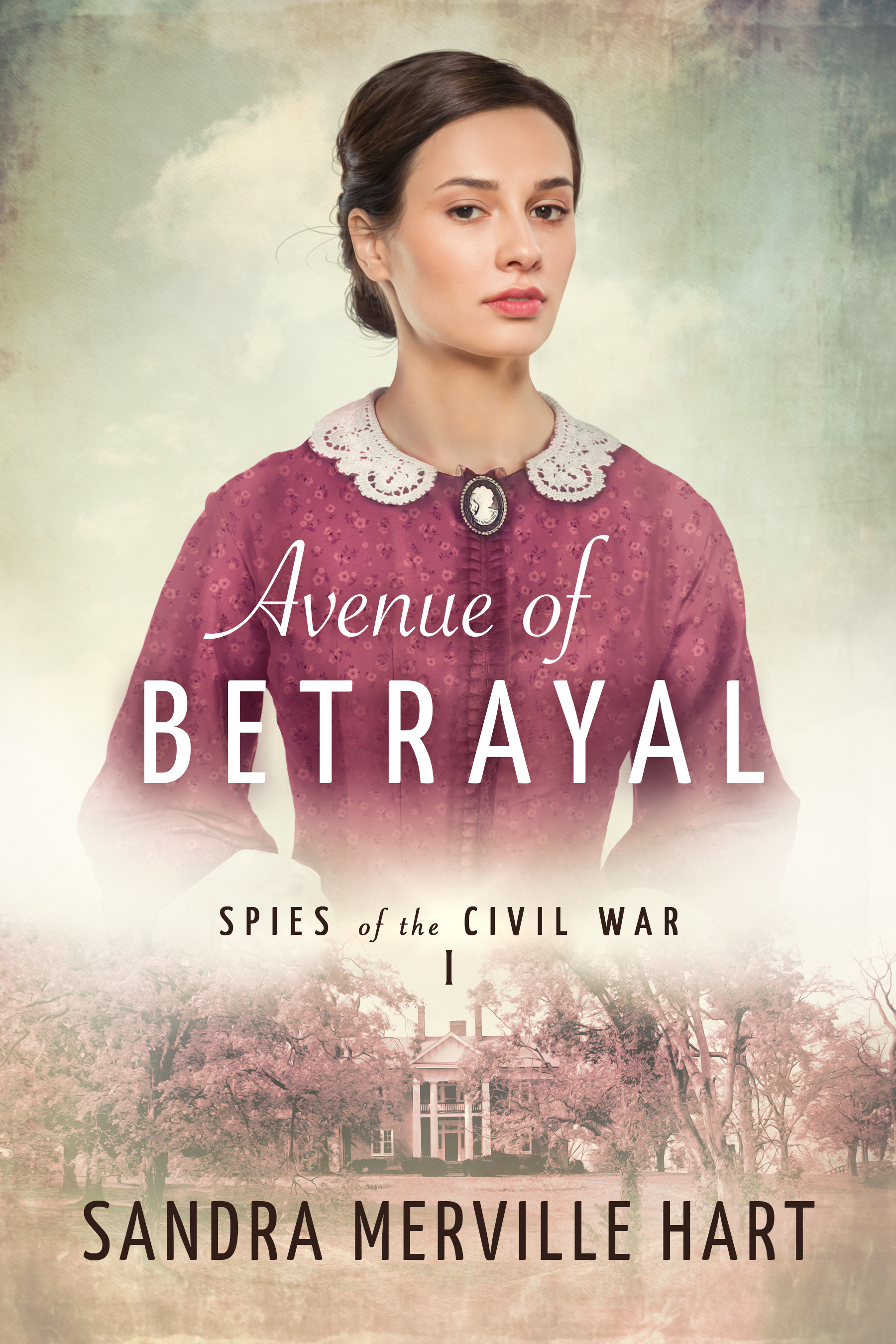
The first series is a Civil War Spy series. Avenue of Betrayal is the first book and is set in Washington DC (still commonly known as Washington City in the 1860s.) The whole series deals with the spying that happened during the war. Book 2, Boulevard of Confusion, and Book 3, Byway to Danger, are set in Richmond, Virginia, the Confederate capital. Spying went on in that city as well.

The Civil War series will be released first. I’ll share more about release dates as I learn them. Book 1 of this series is written and will soon be delivered to the editor. I’m currently writing the second book and need to squeeze in another research trip now that museums are open.

The second series begins with Book 1, In Ginny’s Shadow. It’s a marriage of convenience story set in three Ohio locations. Most stories lose their intensity in your imagination after you’ve written it. This one never left me so I am excited that it found a home. There are turbulent days for two characters from In Ginny’s Shadow in Book 2 as they attend college in Cincinnati in 1883-84. Then Book 3 follows one of these characters on a train to the West where the adventure starts on the trip. More about these later.

Thanks for joining me on this publishing adventure! I’ll update you when I learn more about release dates.

First Telegraphed Message from a Hot Air Balloon Happened During the Civil War

by Sandra Merville Hart

Aeronaut Thaddeus Lowe’s test flight on April 19, 1861, from Cincinnati didn’t go as planned. Instead of landing in the Chesapeake Bay area, winds took his balloon south to South Carolina. He was arrested as a possible spy. He was released after being recognized by a local citizen. What started out as a catastrophe ended with Lowe and his balloon on a northbound train to Cincinnati.

Lowe was now determined that he and his balloons would serve the Union army. He took his balloon Enterprise to Washington D.C.

The Columbia Armory occupied the area where the National Air and Space Museum now stand. It was on this spot, in sight of the White House where President Abraham Lincoln lived, that Lowe launched the Enterprise with American Telegraph Company representatives on June 17, 1861.

They ascended to a height of 500 feet. Lowe telegraphed a message to President Lincoln from the air that he could see 50 miles from his position.

President Lincoln met with Lowe that evening in the White House. Though Lowe wasn’t the only aeronaut hoping to serve the army, he had convinced Lincoln that reconnaissance from the balloon would help his generals. Lowe became the chief aeronaut in the U.S. Army Balloon Corps.

Several Federal officers ascended in these balloons, including John Reynolds, Joe Hooker, George McClellan, Fitz John Porter, Baldy Smith, John Sedgwick, and George Custer.

Sources

“Civil War Ballooning,” American Battlefield Trust, 2021/02/05 https://www.battlefields.org/learn/articles/civil-war-ballooning.

“Civil War Ballooning,” Smithsonian National Space & Air Museum, 2021/02/05 https://airandspace.si.edu/learn/highlighted-topics-/flight/civil-war-ballooning.

Clifford, Command Sergeant Major James, USA-Ret. “Balloon Operations in the Peninsula Campaign,” The Army Historical Foundation, 2021/02/05 https://armyhistory.org/balloon-operations-in-the-peninsula-campaign/.

Fanton, Ben. “Gas Balloons: View from Above the Civil War Battlefield,” History.net, 2021/02/05 https://www.historynet.com/gas-balloons-view-from-above-the-civil-war-battlefield.htm.

Gould, Kevin. “Balloon Corps,” Encyclopaedia Britannica, 2021/02/05 https://www.britannica.com/topic/Balloon-Corps.

Mortimer, Gavin. Double Death: The True Story of Pryce Lewis, the Civil War’s Most Daring Spy, Walker & Company, 2010.

“Thaddeus S.C. Lowe,” Wikipedia, 2021/02/05  https://en.wikipedia.org/wiki/Thaddeus_S._C._Lowe.

Civil War Silk Dress Balloon

by Sandra Merville Hart

The U.S. Balloon Corps began in the summer of 1861. Aeronaut Thaddeus Lowe and members of his corps made numerous balloon flights to discover Confederate troop movements from the air.

Confederate General James Longstreet wrote that their army longed for a balloon to use in observations but didn’t have the money.

Captain Langdon Cheves* bought silk in Savannah and Charleston in lengths of 40 feet. This fabric, normally used for women’s dresses, was sewn together and then varnished. Because various colors were used, the balloon made from the silk was beautiful. The balloon’s official name was Gazelle.

The “Silk Dress Balloon,” as it came to be called, was sent to Richmond. Confederates were unable to get pure hydrogen gas. Instead, ordinary illuminating gas from Richmond Gas Works—the same type that lit gas lamps—filled the balloon.

It was moved, full of air, to the battlefield by train. The colorful Silk Dress Balloon was first used by the Confederates at the Battle of Gaines Mill. General Edward Porter Alexander ascended several times to observe the fighting from two miles away. Actual troops were difficult to see yet rising smoke showed him where to direct Slocum’s Division to reinforce Porter’s troops. Night ascensions showed enemy campfires for estimates of troop numbers.

Inability to fill the balloon in the field hampered their efforts. Gas from the Gas Works limited flights to 6-7 hours. They didn’t use Lowe’s three captured portable gas generators.

Confederates were happy enough with the results to take the balloon onto the Teaser, an armed tug boat. When necessary, the balloon was sailed along the James River to Richmond for refilling. On July 3, 1862, the U.S.S. Maratanza captured the Teaser on the James River. The balloon went to Thaddeus Lowe, who cut the fabric for souvenirs.

Another balloon was made in Savannah by Charles Cevor, a balloonist. It was used for the next year in the Charleston and Savannah area until the Second Battle of Charleston Harbor, when it was lost in the summer of 1863.

The Confederates didn’t try again. By then, the U.S. Balloon Corps had dissolved.

A rumor has survived from the war. In 1886, General Longstreet wrote in an article published in Century magazine. He said that a request was made that the ladies donate their silk dresses to make the balloon. It paints a lovely picture of sacrifice that Southern women made throughout the war—and they did sacrifice abundantly—but this particular one doesn’t appear to be factual. Articles that mention Longstreet’s quote also write about the forty-foot lengths of silk purchased by Cheves to make the balloon.

*One source gives the name of Dr. Edward Cheves instead of Langdon Cheves.


Sources

“Civil War Ballooning,” American Battlefield Trust, 2021/02/05 https://www.battlefields.org/learn/articles/civil-war-ballooning.

Clifford, Command Sergeant Major James, USA-Ret. “Balloon Operations in the Peninsula Campaign,” The Army Historical Foundation, 2021/02/05 https://armyhistory.org/balloon-operations-in-the-peninsula-campaign/.


Fanton, Ben. “Gas Balloons: View from Above the Civil War Battlefield,” History.net, 2021/02/05 https://www.historynet.com/gas-balloons-view-from-above-the-civil-war-battlefield.htm.

Paone, Thomas. “The Most Fashionable Balloon of the Civil War,” Smithsonian National Air and Space Museum, 2021/02/08 https://airandspace.si.edu/stories/editorial/most-fashionable-balloon-civil-war.

Civil War U.S. Balloon Corps

by Sandra Merville Hart

On June 17, 1861, Aeronaut Thaddeus Lowe’s balloon flight from the Columbia Armory (current location of the National Air and Space Museum) snagged the attention of President Abraham Lincoln when he received a telegraphed message from Lowe—from the balloon in flight at a height of 500 feet!

Lowe’s balloon was tethered to the White House lawn that evening while the two met. Lincoln supported the use of balloons in surveilling Confederate troops from the air.

Lowe became the chief aeronaut in the U.S. Army Balloon Corps. The War Department built military balloons for the corps. The first one was ready in August.

Union and Intrepid could carry 5 people and were the largest balloons used by the Union army. United States and Constitution held 3 people. A couple, Eagle and Excelsior, were manned by one person. The larger balloons had room for telegraphers, an important advantage.

Lowe became a member of Major General George B. McClellan’s staff. In September of 1861, Lowe directed artillery fire from his balloon at Falls Church, Virginia.

The U.S. Balloon Corps had several members: Corporal James Starkweather, Privates William A. Hodges, Albert Trunbull, W.H. Welch, Francis Barrington, Robert Wardell, James F. Case, George W. Fisher, John H. Hall, and Lawrence M. Chickey. Civilians also worked in the corps. Among these were Aeronauts James Allen, John La Mountain, and John Wise, who was considered the “Father of American Aeronautics.” Lowe also hired his father Clovis.

Balloons were used at Washington D.C., Seven Days’ Battle, the Peninsular Campaign, Battle of Seven Pines, and Fort Monroe in Virginia, to name a few.

Also, La Mountain made a tethered balloon ascent on August 3, 1861. It is significant to history because it was launched from the steam-powered gunboat Fanny. There are scholars who believe this first flight to be a precursor of the aircraft carrier.

Confederates shot at the ascended balloons. Fortunately, none were shot down. Their height usually kept them out of range. That didn’t prevent the Southerners from shooting. In fact, Lowe earned the dubious title of “the most shot-at man in the war.”

Several Federal officers ascended in these balloons, including John Reynolds, Joe Hooker, George McClellan, Fitz John Porter, Baldy Smith, John Sedgwick, and George Custer.

Unfortunately, problems with aeronauts receiving pay from the army led to resignations. Conservative generals preferred intelligence from spies, scouts, prisoners, and deserters. Vague reports from aeronauts frustrated field commanders. To top it off, Lowe didn’t get along with his staff supervisor Captain Cyrus B. Comstock and resigned on May 7, 1863.

James and Ezra Allen were then the last members of the U.S. Balloon Corps. They reported Confederate movement from Fredericksburg toward the Blue Ridge Mountains as they marched toward Gettysburg in June. The Balloon Corps ceased to exist in the summer of 1863.

Sources

“Civil War Ballooning,” American Battlefield Trust, 2021/02/05 https://www.battlefields.org/learn/articles/civil-war-ballooning.

“Civil War Ballooning,” Smithsonian National Space & Air Museum, 2021/02/05 https://airandspace.si.edu/learn/highlighted-topics-/flight/civil-war-ballooning.

Clifford, Command Sergeant Major James, USA-Ret. “Balloon Operations in the Peninsula Campaign,” The Army Historical Foundation, 2021/02/05 https://armyhistory.org/balloon-operations-in-the-peninsula-campaign/.

Fanton, Ben. “Gas Balloons: View from Above the Civil War Battlefield,” History.net, 2021/02/05 https://www.historynet.com/gas-balloons-view-from-above-the-civil-war-battlefield.htm.

Gould, Kevin. “Balloon Corps,” Encyclopaedia Britannica, 2021/02/05 https://www.britannica.com/topic/Balloon-Corps.

Mortimer, Gavin. Double Death: The True Story of Pryce Lewis, the Civil War’s Most Daring Spy, Walker & Company, 2010.

“Thaddeus S.C. Lowe,” Wikipedia, 2021/02/05  https://en.wikipedia.org/wiki/Thaddeus_S._C._Lowe.

Ohio’s Greatest Natural Disaster Inspires My Story–Surprised by Love

by Sandra Merville Hart

A school event for my daughter took us to Troy, Ohio. The quaint city captivated me from the first visit. It felt like something ought to happen there—and that was before I was writing!

A few years later, an opportunity arose to join fellow Ohio authors in a novella collection set in Ohio locations. My mind raced back to Troy. What could I write about? My husband and I drove there on a mission of discovery.

At the Museum of Troy History I learned about a terrible flood in 1913 that displaced many Troy citizens and even claimed lives of a few. The way the townspeople rallied together to meet the tragedy inspired me and led to the writing of this story.

We walked around the town square, visiting shops. Around About Books is a treasure. I’ve since participated in booksigning events there so this has become a special place to me.

We ate at a lovely diner, K’s Hamburger Shop, a place that has been on Troy’s Main Street since 1935. My story is set in 1913 so it wasn’t there during the flood, but the whole place gave me a feeling of historic nostalgia.

My imagination soared from my research. The first draft of the novella, Surprised by Love, was written in two weeks! That remains the record for me.

Researching The Flood of 1913—Ohio’s greatest natural disaster—and personal visits to Troy inspired this story of love and courage.

I hope you will read this story and all the others set in Ohio locations in “From the Lake to the River. Here’s a blurb for my historical romance, Surprised by Love:

Lottie’s feelings for an old school crush blossom again during the worst flood her town has endured in years.

Lottie shoulders the burden for her siblings after their mother’s death. Her seventeen-year-old brother’s disobedience troubles her, especially since she also cares for the boarders in their home. When the flooding river invades not only the town of Troy but also her home, Lottie and her family need to be rescued.

Desperate circumstances throw Lottie and Joe, her schoolgirl crush, together. Can tragedy unite the couple to make her long-buried dream of winning his love come true?

Amazon