World War II Memorial

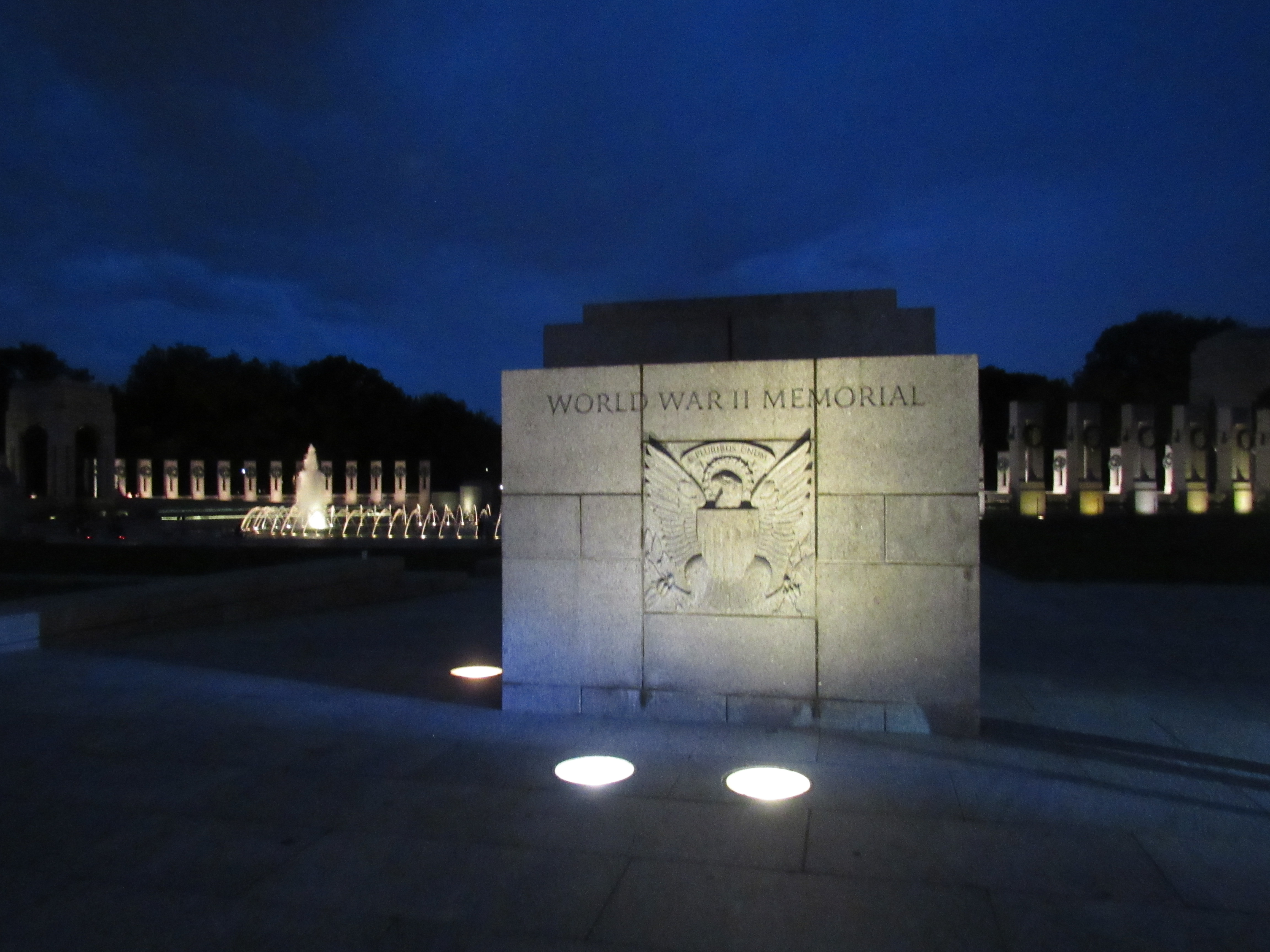
On a recent trip to Washington, DC, I visited the National Mall late one rainy evening. I think that my favorite memorial was the World War II Memorial, which I’d somehow missed on an earlier trip. The beauty of the fountains and the soothing sounds of the water splashing into the pool drew me in immediately.
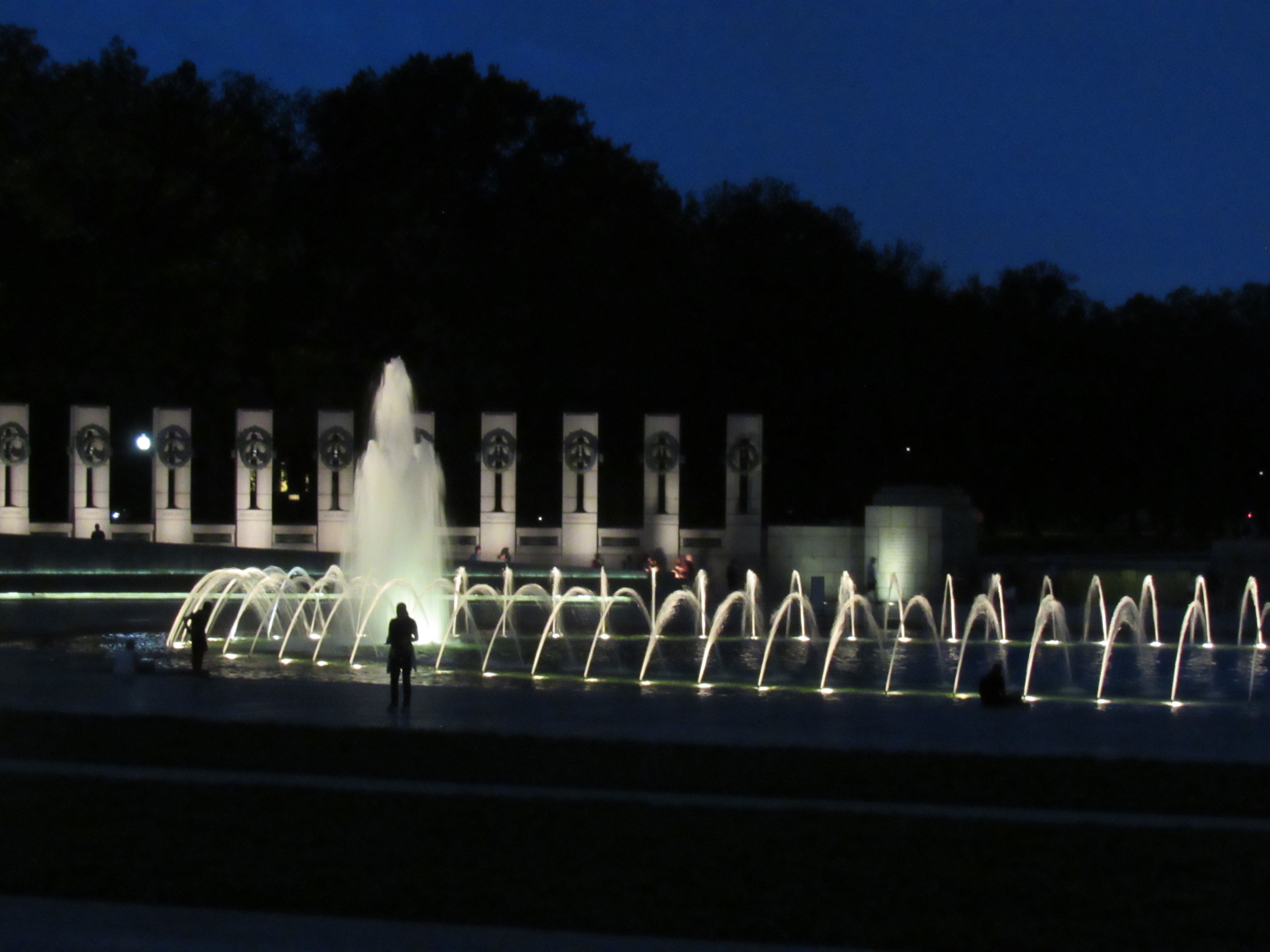
The memorial designed by Friedrich St. Florian opened on April 29, 2004. The official dedication, May 27 – 30, 2004, was a celebration filled with reunions for World War II veterans.
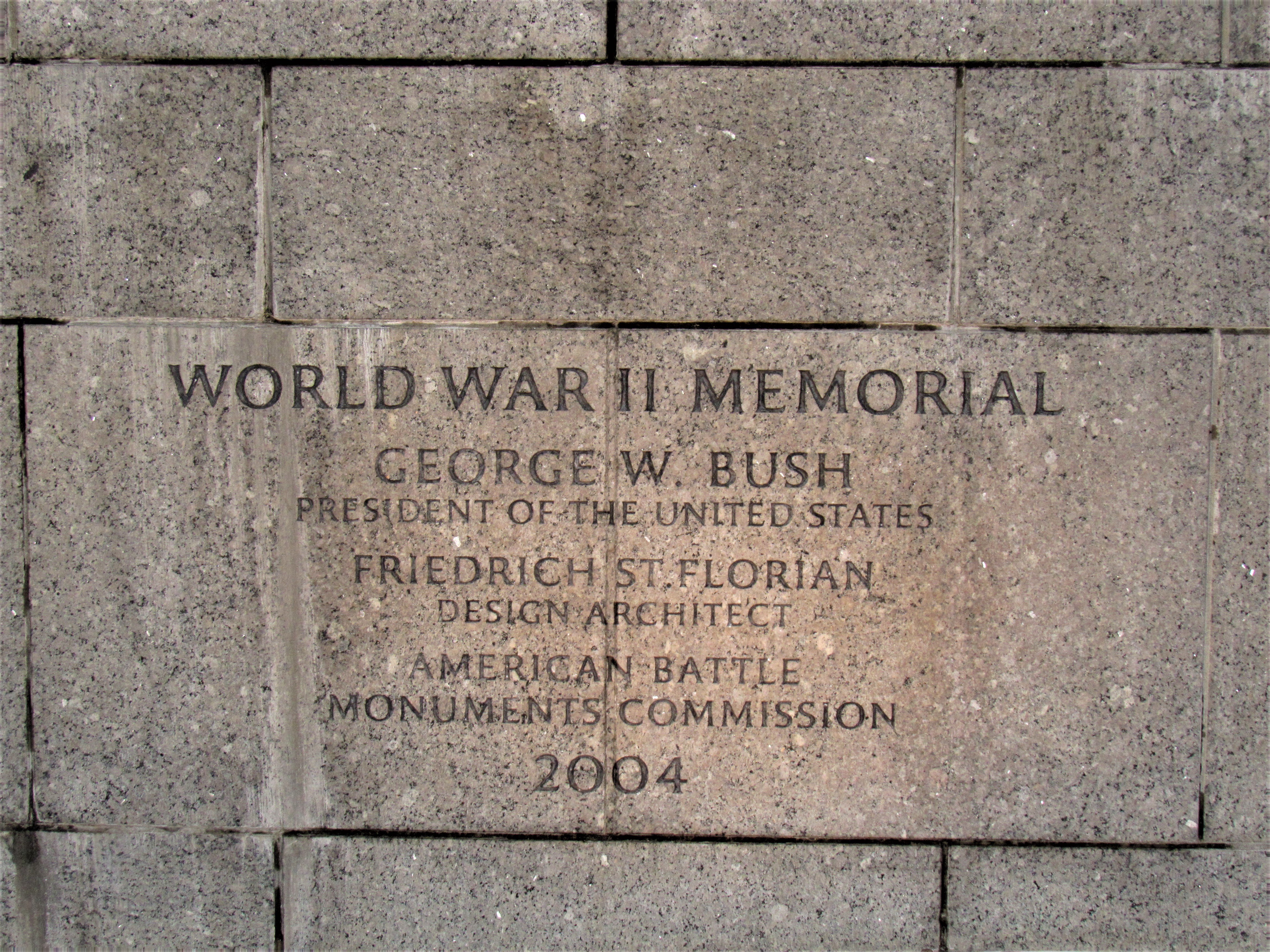


Citizens and veterans alike enjoyed big band music from that era. Family activities, a display of military equipment, and a Wartime Stories Tent were among the activities enjoyed by about 315,000 over the four-day celebration. President George W. Bush spoke at the formal dedication.

The spacious memorial is adjacent to the Reflecting Pool. The Lincoln Memorial can be clearly seen from the fountains inside the memorial.
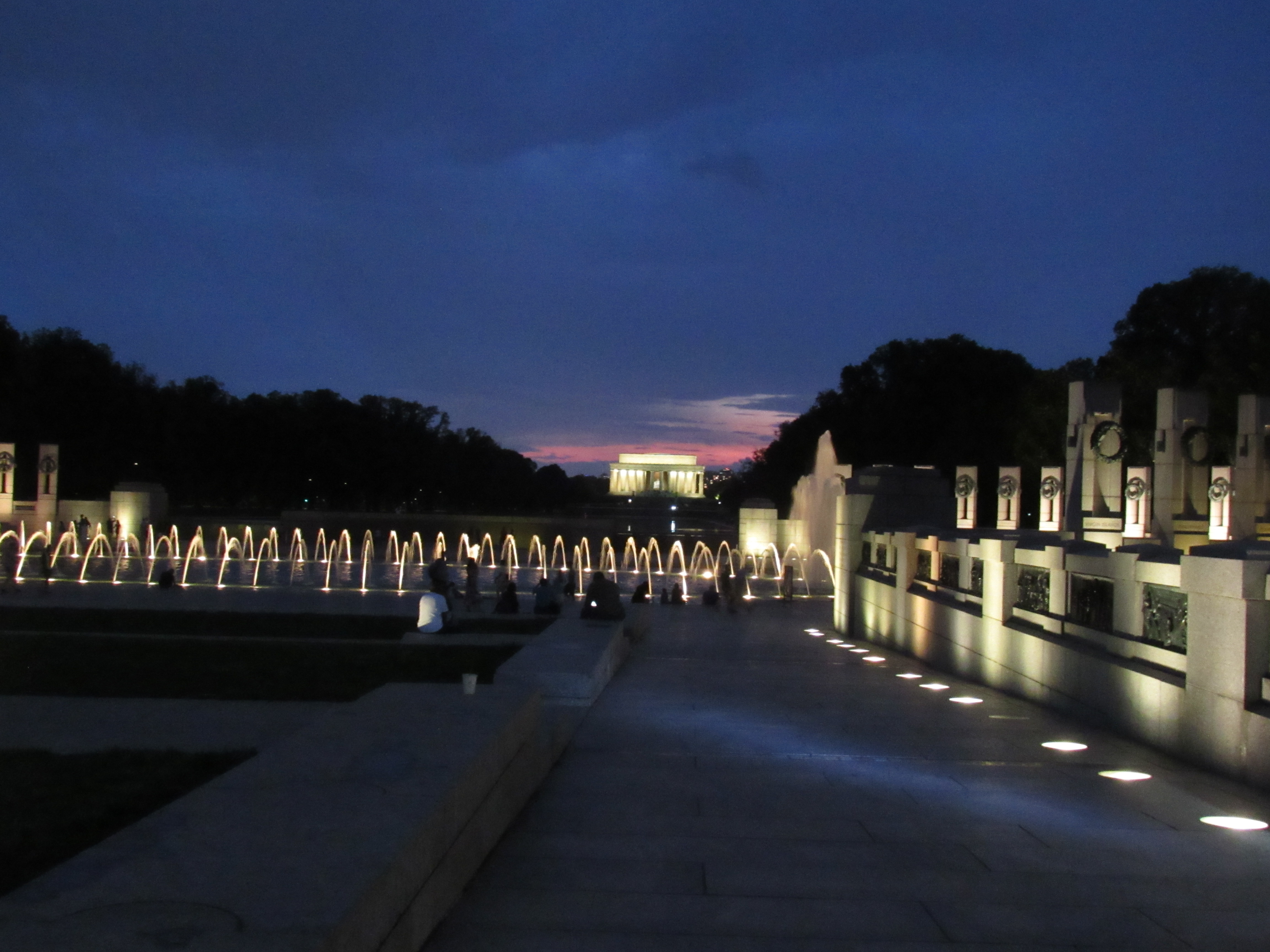
World War II Memorial honors the sixteen million who served in the Armed Forces of the United States of America.

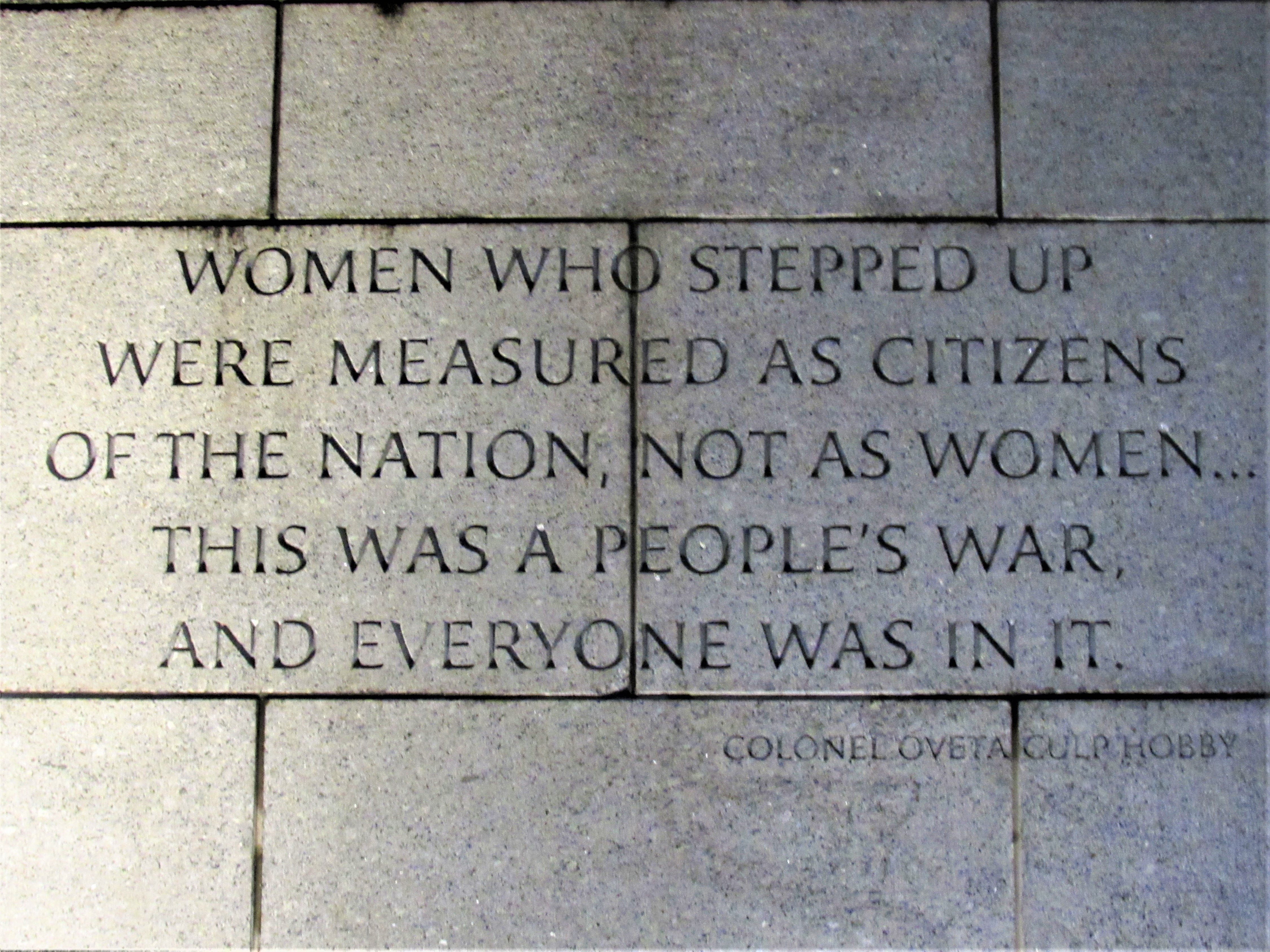
Also honored are millions of citizens on the home front, who sacrificed throughout the war to support our troops. They bought War Bonds. They endured rationing of many common staples like sugar, butter, coal, gasoline, and shoes. Quotes etched on the walls honor their sacrifice.
Four thousand golden stars on a curved Freedom Wall serve as a memorial to the 405,399 Americans who died in the war. Each star represents 100 deaths by our American military. In front of the wall is a granite engraving: “Here we mark the price of freedom.”

-Sandra Merville Hart

Sources


Murray, Lorraine. “National World War II Memorial, Encyclopaedia Britannica, 2019/10/22

https://www.britannica.com/topic/National-World-War-II-Memorial.

“National WWII Memorial,” National WWII Memorial Washington D.C., 2019/10/22

https://www.wwiimemorial.com.

“World War II Memorial,” National Park Service, 2019/10/22
https://www.nps.gov/wwii/index.htm.

Civil War Women: Clara Judd, Confederate Spy

Clara Judd, a Northerner, had moved to Winchester, Tennessee, in 1859 with her husband and eight children. He and one of their children was killed in an accident two years later. The widow found jobs at a government factory for her older sons.

Union armies controlled Winchester five times during the first two years of the Civil War (1861-1862) and Clara hosted them. A Union officer warned her that they’d been ordered to destroy her crops “except enough to last six weeks” and that she should leave.

Losing her possessions probably embittered her toward the Union soldiers.

She eventually ended up leaving her children with her sister in Louisville. Obtaining Union passes to travel to Atlanta to visit her son and Louisville to visit her youngest children enabled Clara to learn troop movements and other military information for the Confederacy.

Confederate Brig. Gen. John Hunt Morgan, while planning his famous raid, contacted Clara in December of 1862. He asked her to discover Union troop locations and strength of those controlling the railroad. She agreed.

While traveling north, she was stopped in Murfreesboro and had to wait three days for a pass to Nashville. Unable to find transportation, she walked.

Delos Thurman Blythe, a Northern counterespionage agent posing as Southern paroled prisoner, offered her a ride in his buggy. Blythe’s pass into Nashville was accepted but not Clara’s. He overheard a Confederate soldier giving her information about getting through Union lines and became suspicious.

Clara received a pass to visit her children and then told Blythe everything. He promised to help her.

His pretense of loyalty to the South had worked. He reported her to Union authorities yet advised them to give her the passes she requested.

They traveled north by train. Clara, from her window, asked folks at each station about troops in the area. In Louisville, Blythe escorted her in all her errands and took her to dinner. She fell in love with him. Meanwhile, Blythe asked the authorities to arrest him and Clara in Mitchelsville, Tennessee.

On their return trip, military police arrested them in Mitchelsville. Goods and drugs for the Confederate army were found in her bags—quinine, nitrate of silver, and morphine.

Placed under guard in a Nashville hotel shortly before Christmas, Clara told her captors that Blythe was innocent. She didn’t know that he had already been released or that loving her had been an act.

Charged with espionage, she went to prison in Alton, Illinois for about eight months before being paroled due to poor health.

-Sandra Merville Hart


Sources

McCurry, Stephanie. “Clara Judd and the Laws of War,” HistoryNet, 2019/08/16 https://www.historynet.com/clara-judd-laws-war.htm.

Winkler, H. Donald. Stealing Secrets, Cumberland House, 2010.


Washington Monument

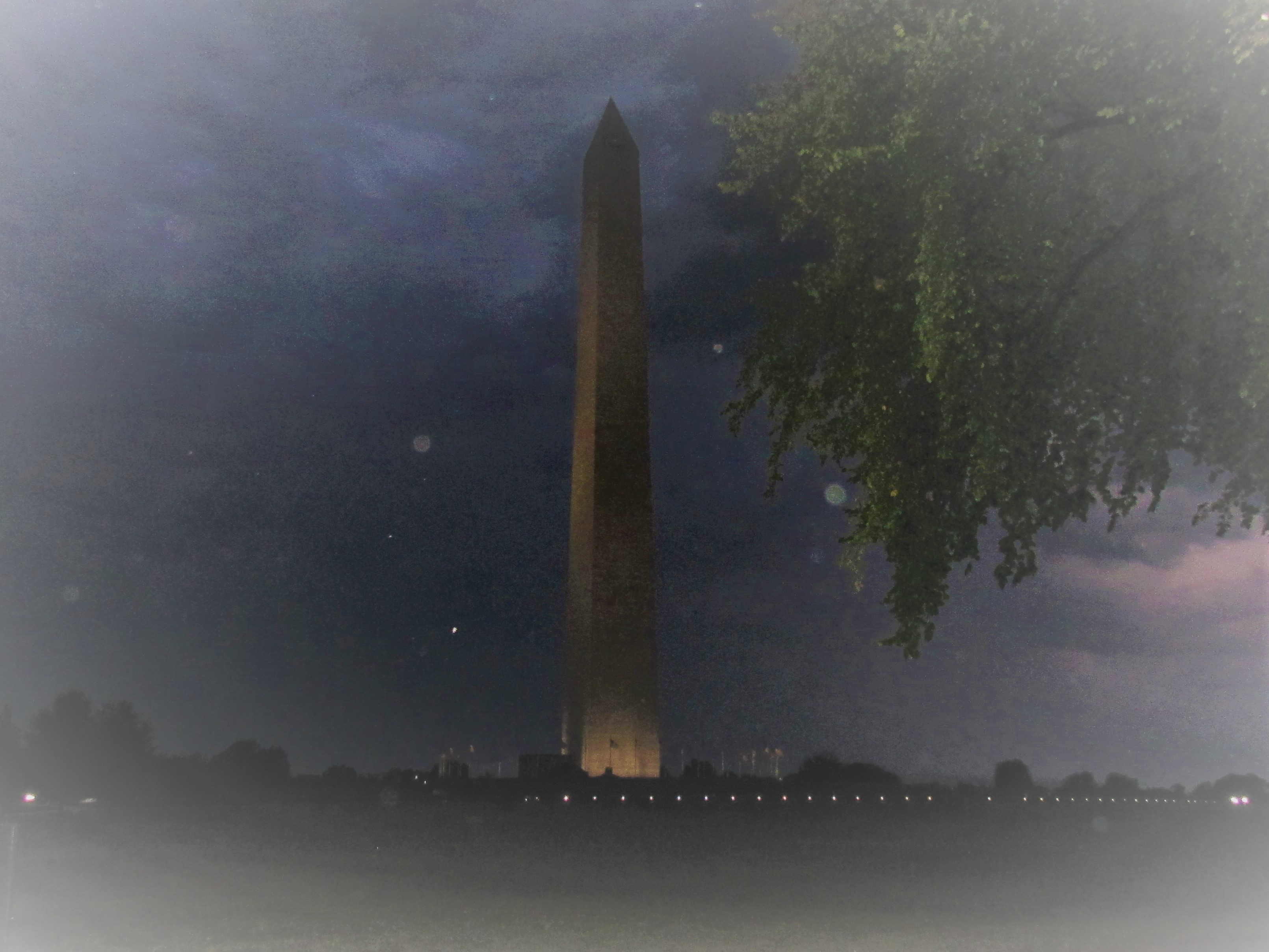
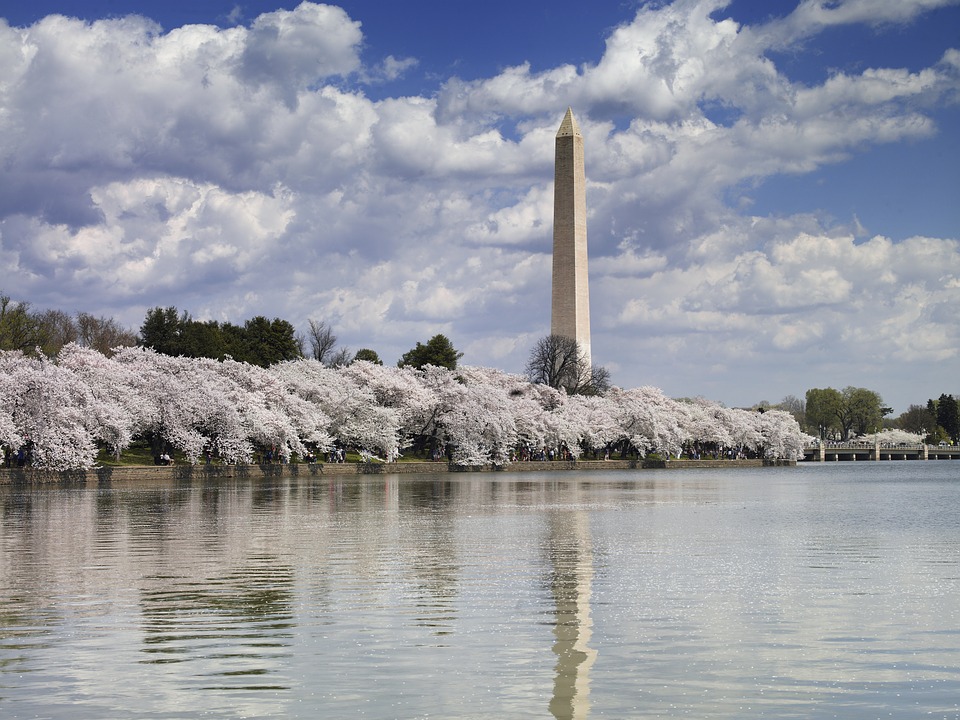
On a recent trip to Washington, DC, I visited the National Mall late on a rainy evening. Though I didn’t go into the Washington Monument, the view at night was spectacular.

Early Americans wanted to build a monument to honor George Washington. Not only had he defeated the British as commander of the Continental Army, he paved the way for future leaders by serving as our first president.

The Washington National Monument Society began asking for donations to the monument in 1833. This private organization collected money and chose Robert Mills’ design in 1845.

On July 4, 1848, construction began with a ceremony to lay the cornerstone. President James K. Polk attended with about 20,000 citizens, including three future presidents—Buchanan, Lincoln, and Johnson.

Problems arose when the Society was taken over by the Know-Nothing Party. Building the monument stopped when the money ran out in 1854.

The nation had more pressing concerns with the Civil War looming and the monument stood idle, about a third completed.

Congress took over the funding of the monument in 1876. After this, Lt. Col. Thomas Lincoln Casey led the Army Corps of Engineers to complete the monument with a few changes to Mills’ original design. He did away with a ring of columns around the monument and adjusted the height from 600 feet to 555 feet. One of the inscriptions on the east face of the aluminum cap topping the Washington Monument is Laus Deo, Latin for “Praise be to God.”

Citizens, groups, cities, states, and other countries donated commemorative stones that are inset into the walls of the building dedicated on February 21, 1885. It was the tallest building in the world at its dedication.

Another fun fact about the monument is that the original elevator took 10-12 minutes to ascend to the top.

-Sandra Merville Hart

Sources

“Guide to Visiting the Soon-to-be Reopened Washington Monument,” Washington DC, 2019/09/05 https://washington.org/dc-guide-to/washington-monument.

“Washington Monument,” NPS, 2019/09/05 https://www.nps.gov/wamo/index.htm.


Announcing New Christmas Book Release!

I’m thrilled to announce my newest book release! This collection of Christmas stories is called “Christmas Fiction Off the Beaten Path” and contains stories with an unexpected twist.

I’ve always wanted to be in a Christmas collection. The story that I’ve written for the collection, Not This Year, is very close to my heart.

Here is the back blurb:

Not your Granny’s Christmas stories …

Step off the beaten path and enjoy six stories that look beyond the expected, the traditional, the tried-and-true.

Inspired by the song, Mary Did You Know?— a mother’s memories of events leading up to and following that one holy night. MARY, DID YOU KNOW?

A young woman seeking her own identity searches for the man who tried to kill her and her mother on Christmas Eve twenty years before. A ROSE FROM THE ASHES

Princess, tower, sorceress, dragon, brave knight, clever peasant — combine these ingredients into a Christmas-time story that isn’t quite what you’d expect. RETURN TO CALLIDORA

Anticipating tough financial times, the decision not to buy or exchange presents leads to some painful and surprising revelations for a hardworking man and his family. NOT THIS YEAR

Years ago, a gunman and a store full of hostages learned some important lessons about faith and pain and what really matters in life — and the echoes from that day continue to the present. THOSE WHO STAYED

A community of refugees, a brutal winter, a doorway to another world — a touch of magic creating holiday joy for others leads to a Christmas wish fulfilled. CRYSTAL CHRISTMAS

Pick up your copy today on Amazon!

Korean War Veterans Memorial

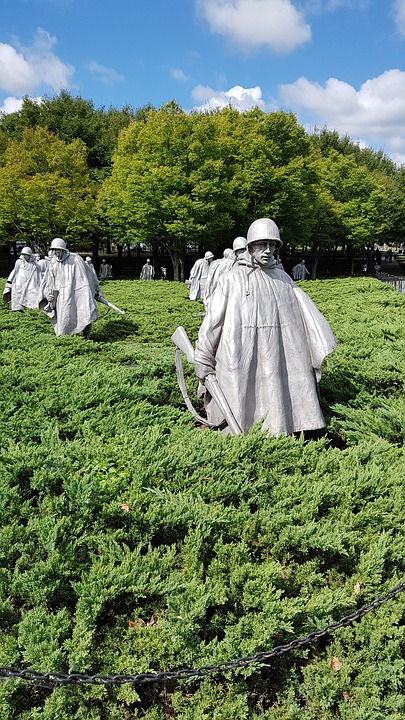
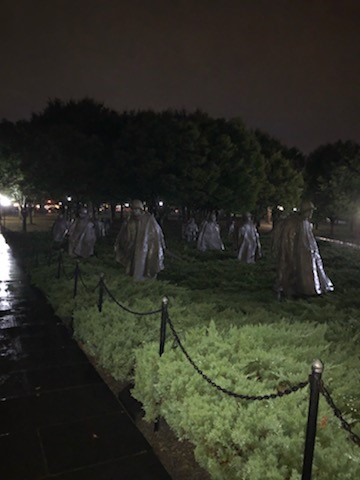
On a recent trip to Washington, DC, I visited the Korean War Veterans Memorial. It was a dark, rainy evening for my first view of these rugged American soldiers wearing ponchos. The soldiers in the field face different directions so one of the statues is looking at you from any of three sides. When I returned home, I discovered more about this memorial located on the National Mall.

American served in the Korean War from June 25, 1950 to July 27, 1953. Of 5.8 million who served, 54,246 Americans died, 8,200 went missing in action, and 103,284 were wounded.

The Korean War Veterans Memorial, dedicated on July 27, 1995, honors Army, Marine Corps, Navy, Air Force, and Coast Guard on a Mural Wall.

The United Nations Wall honors the 22 nations that sent troops to Korea.

A Pool of Remembrances offers a reflective place to sit.

Most impressive are the 19 seven-foot tall statues standing among juniper bushes and separated by granite strips that symbolize Korea’s rice paddies. Each represents duties filled by the Army, Air Force, Marine Corps, and Navy. Above the Lead Scout is a Dedication Stone with the saying:

     Our Nation honors her sons and daughters

     who answered the call to defend a country

     they never knew and a people they never met

-Sandra Merville Hart

Sources

“Korean War Memorial,” American Battle Monuments Commission, 2019/09/05 https://www.abmc.gov/about-us/history/korean-war-memorial.

“Korean War Veterans Memorial,” Washington DC, 2019/09/05 https://washington.org/find-dc-listings/korean-war-veterans-memorial.

“The Korean War Veterans Memorial,” The Korean War Veterans Memorial, 2019/09/05 http://www.koreanwarvetsmemorial.org/the-memorial/.


Iwo Jima Memorial

The World War II Battle of Iwo Jima between the U.S. Marines and the Imperial Army of Japan lasted five weeks, beginning in February of 1945. The Japanese under General Tadamichi Kuribayashi had camouflaged their artillery and at first caused significant casualties for the Marines under the command of Holland M. “Howlin’ Mad” Smith.

Over the next few days, about 70,000 U.S. Marines soon outnumbered the 21,000 Japanese forces. The battle eventually claimed the lives of nearly 7,000 Marines. The losses for the Japanese were far greater—only about 200 survived the battle.

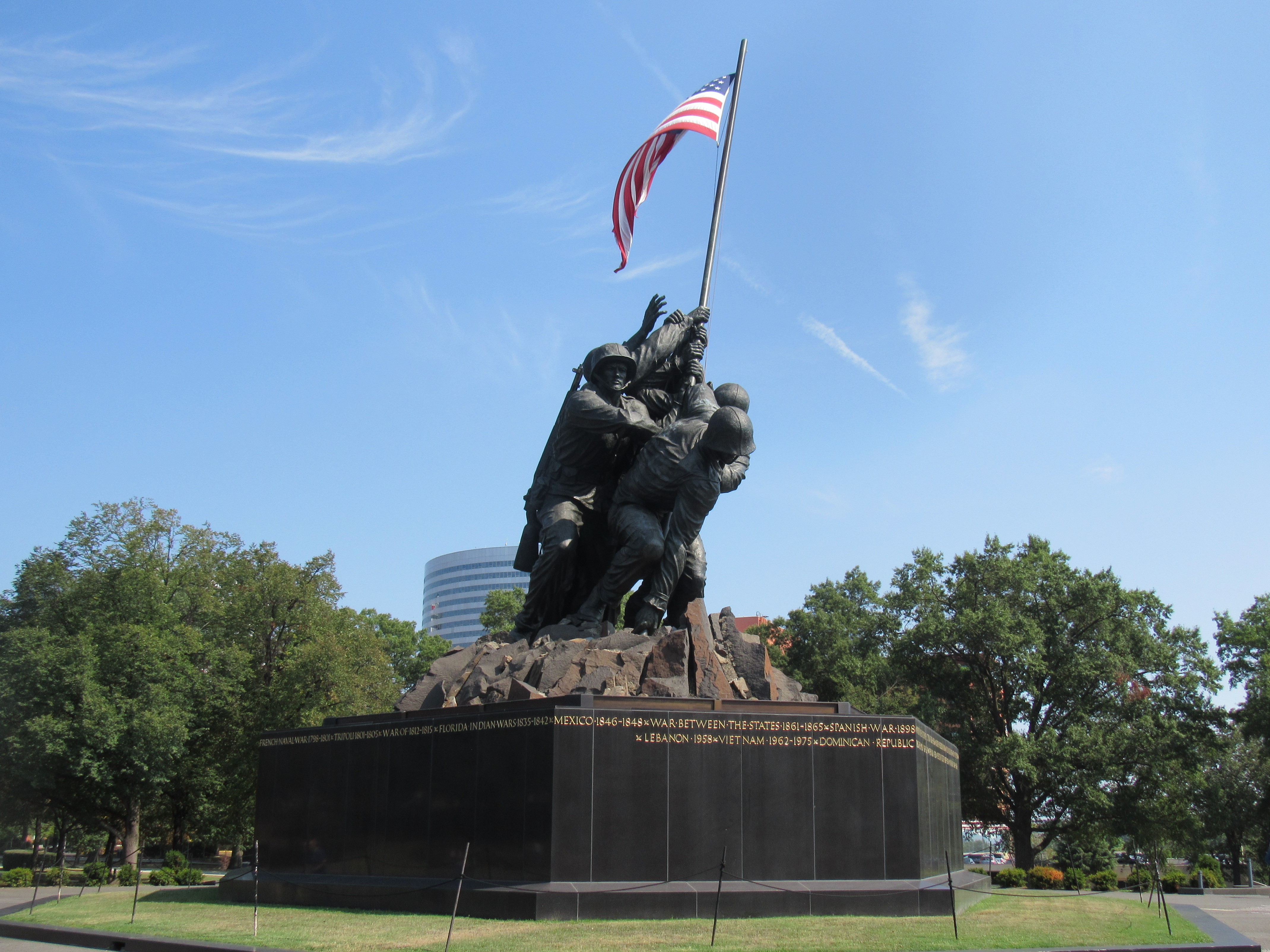
Marines of the 28th Regiment, 5th Division, were ordered to capture Iwo Jima’s Mount Suribachi. About 10:30 am, a U.S. flag was raised on February 23, 1945—four days after the battle began. A larger flag was raised that afternoon. The afternoon flag raising was the image taken for the iconic photograph by Joseph Rosenthal, Associated Press.

The photo inspired Sculptor Felix W. de Weldon to make a life size image that three of the six flag raisers—Ira Hayes, Rene Gagnon, and John Bradley—posed for. Sadly, the others were killed.

The Marine Corps War Memorial, also called Iwo Jima Memorial, was dedicated by President Dwight D. Eisenhower on November 10, 1954.

Because there were two actual historic flag raisings that day, doubt arose regarding the identity of one man in the photo. The Marines conducted an investigation. They discovered that though John Bradley had been one of the six men who raised the first flag, Private First Class Harold Schultz actually replaced him in the second flag raising.

The six flag raisers in the iconic photo are: Corporal Harlon Block, Private First Class Rene Gagnon, Private First Class Ira Hayes, Private First Class Harold Schultz, Private First Class Franklin Sousley, and Sergeant Michael Strank.

-Sandra Merville Hart

Sources

“History of the Marine Corps War Memorial,” NPS.gov, 2019/09/05 https://www.nps.gov/gwmp/learn/historyculture/usmcwarmemorial.htm.

History.com editors. “Iwo Jima,” History, 2019/09/05 https://www.history.com/topics/world-war-ii/battle-of-iwo-jima.

“USMC Statement on Iwo Jima Flag Raisers,” Marines, 2019/09/05 https://www.marines.mil/News/News-Display/Article/810457/usmc-statement-on-iwo-jima-flagraisers.


Pentagon Memorial

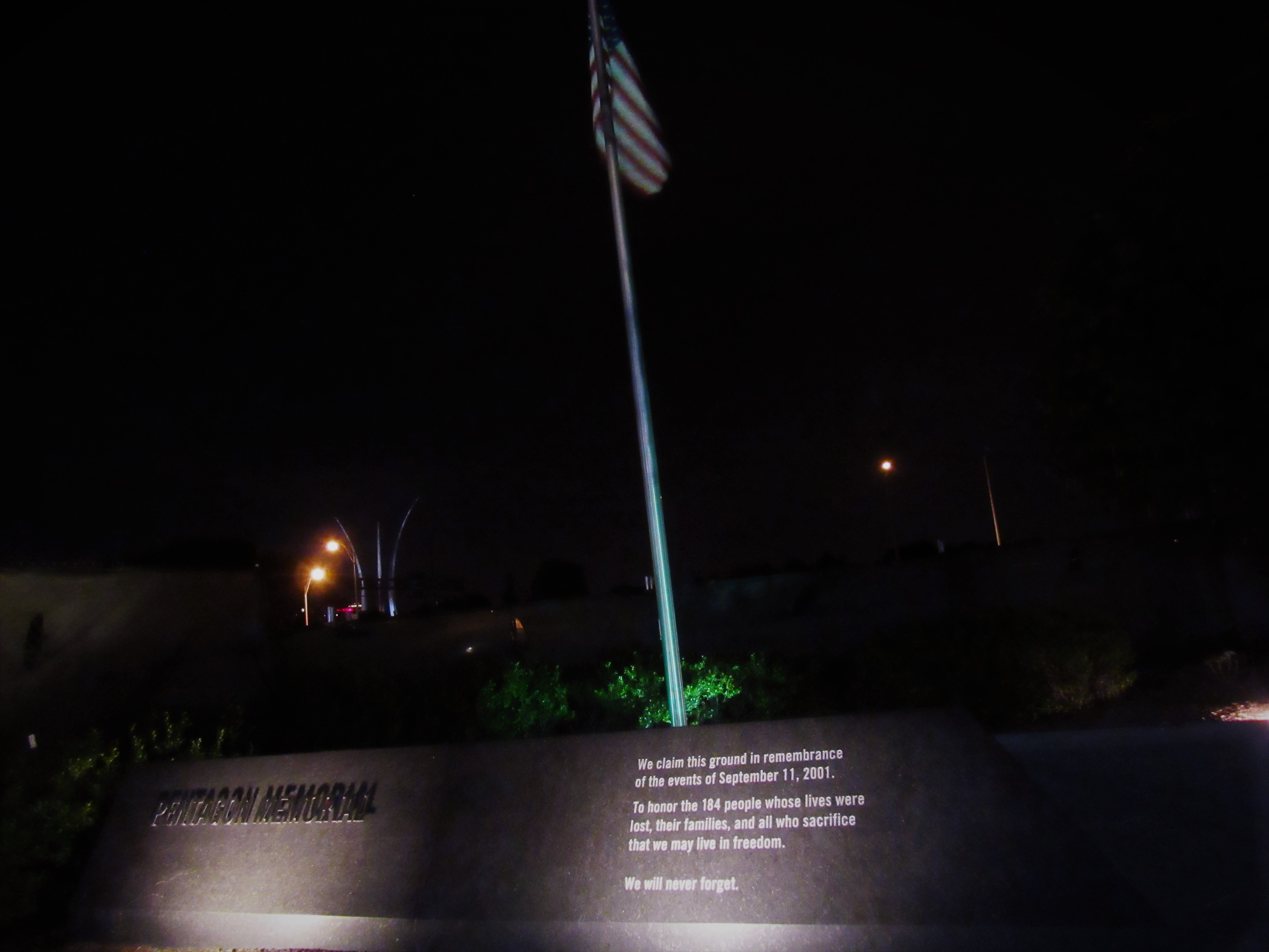
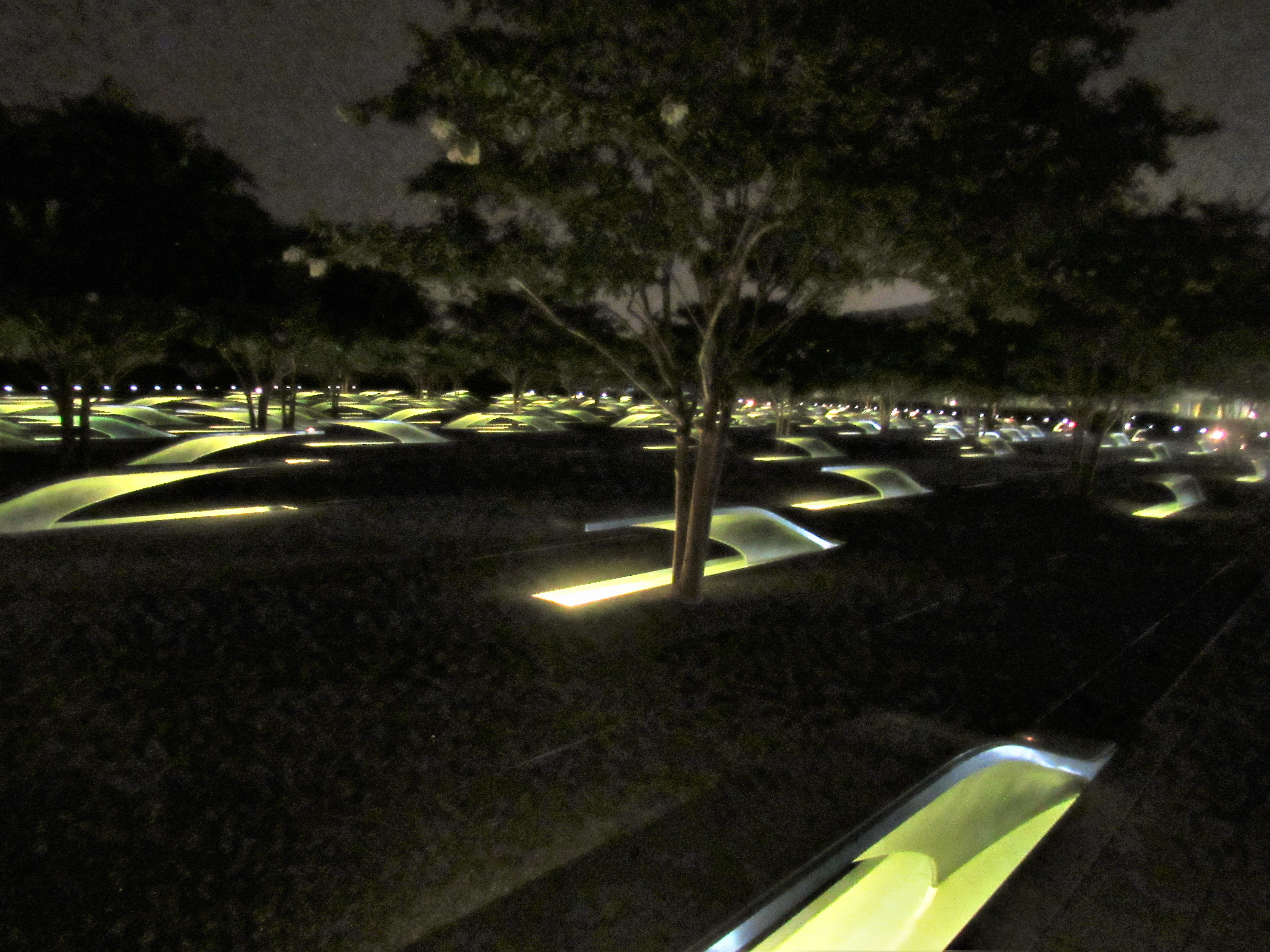
On a recent trip to Washington, DC, I visited the Pentagon Memorial. It was late in the evening and there were only a handful of visitors at the memorial. As I looked at the benches—184 of them—with lighted pools of water flowing underneath, I was struck once again by the tragedy of September 11, 2001.

No American alive that day can forget its horror. Four commercial airplanes were hijacked in coordinated attacks on specific targets and tragic loss of innocent lives resulted.

Five hijackers boarded American Airlines Flight 77 to Los Angeles from Dulles International Airport that sunny morning. The flight, delayed 10 minutes, departed at 8:20 am with 58 passengers and a crew of 6. What the crew didn’t know was that armed hijackers were among the passengers.

While flying over eastern Kentucky, hijackers took control of the plane, possibly between 8:51 and 8:54 am. It’s believed that one of them piloted the plane. None of the radio messages sent to the pilot after that time were answered.

It crashed into the Pentagon at 9:37 am, bringing a tragic end to 184 innocent lives.

The Pentagon Memorial, in remembrance of those who died there, opened on September 11, 2008. Architects Julie Beckman and Keith Kaseman along with engineer Buro Happold designed the memorial in a timeline, from the youngest victim (Dana Falkenberg at 3) to the oldest victim (John D. Yamnicky at 71), both on Flight 77.

Victims’ names have been placed on cantilevered benches with pools of flowing water underneath, which are lit at night. The designers put a lot of thought into the placement of the benches. Visitors read the names of those who perished in the Pentagon with that building behind it. Names face the sky where the plane approached for those from Flight 77.

Beautiful Crepe Myrtles, 85 of them, will eventually grow to height of 30 feet, giving shade to the Memorial in future years.

The Age Wall starts at a height of 3 inches for the youngest victim and builds to 71 inches for the oldest.

It’s a beautiful, well-designed unique memorial.

May we never forget.

-Sandra Merville Hart

Sources

“Pentagon Memorial,” The National 9/11, 2019/09/05 https://pentagonmemorial.org/.

“Pentagon Memorial,” National Geographic, 2019/09/05 https://www.nationalgeographic.org/media/pentagon-memorial/.


Civil War Women: Rose O’Neal Greenhow, Confederate Spy

Rose O’Neal Greenhow lived in Washington D.C. when the Civil War began. When many other Southerners left, the widow remained with her eight-year-old daughter, Rose. Union Colonel Thomas Jordan had decided to resign the U.S. Army and fight for the South. Before he left the city, he asked Rose to be an agent. Spying to uncover troop movements and government communications gave her a significant way to serve the South. She agreed to send messages based on a cipher he provided.

Coded messages were sent on a “Secret Line,” which involved several couriers in a chain that passed on messages in common places such as docks, taverns, and farmhouses.

Rose’s spy network from Boston to New Orleans was the largest in the war—48 women and 2 men. She learned battle plans for Bull Run and passed this vital information to Confederate General Beauregard, leading to a Confederate victory at the First Battle of Bull Run.

Several other messages about Washington’s defenses and troop information were sent from Rose to Beauregard. Thomas A. Scott, Assistant Secretary of War, asked Allan Pinkerton, head of Lincoln’s Intelligence Service, to find Confederate spies and put Greenhow under surveillance.

About a month after the Battle of Bull Run, Pinkerton discovered incriminating evidence. The home was searched. Rose and her daughter were placed under arrest at her home. Because she still managed to get other secret messages out, they were moved to Washington’s Old Capitol prison. The Federals then decided to send her South.

On June 4, 1862, she arrived in Richmond, where she was taken to the best hotel. Confederate President Jefferson Davis called her the next day, saying, “But for you there would have been no battle of Bull Run.” Rose wrote that his words made up for all she’d endured.

The following year President Davis sent her to Europe. She took letters from him to France and England. She received money from them to aid the South.

In October 1, 1864, Rose returned on the Condor, a blockade runner. Unfortunately, the USS Niphon, a Union gunboat, came close to the Condor’s position on Cape Fear River. While Confederate soldiers from nearby Fort Fisher fired on the Union gunboat, Rose asked the captain for a lifeboat for herself and two other Confederate agents. Two hundred yards of rough waters were between the boat and the shore. Despite his initial refusal, she finally convinced the captain to provide a boat.

A powerful wave overturned the lifeboat. They swam for shore. Unfortunately, Rose had a bag of gold sovereigns tied around her waist underneath a heavy silk dress. Though she was a good swimmer, she drowned due to the extra weight while her companions made it to safety.

Her body washed ashore the next day. A Confederate soldier found the bag of gold and took it. A search party later found the body. When the soldier discovered Rose’s identity, he returned the sovereigns.

She was buried in Oakdale Cemetery in Wilmington with full military honors.

-Sandra Merville Hart

Sources

Monson, Marianne. Women of the Blue & Gray, Thorndike Press, 2018.

Winkler, H. Donald. Stealing Secrets, Cumberland House, 2010.

Zeinert, Karen. Those Courageous Women of the Civil War, The Millbrook Press, 1998.


Civil War Women: Mary Carroll, Missouri Confederate Supporter


Teenager Mary Carroll lived with her mother, sister, and brother, Dennis, in Pilot Grove, Missouri, at the beginning of the Civil War.

Although “Bleeding Missouri” had been a slave state in 1861, it voted to remain in the Union. Despite this, the state’s governor—a Southern supporter—offered guns and cannons to Confederate President Jefferson Davis. Union soldiers then seized the armory and the state’s capital to set up a Union government, creating great turmoil. Union troops arrested Missouri residents without charges. They took their horses and food.

Dennis Carroll was arrested in August of 1862 for trying to join the Confederate army. In March of 1863, he was released from an Alton, Illinois Federal prison.

Learning of Union plans to arrest a group of Missouri men intending to muster into the Confederate army, Mary rode through hard rain to warn them and lead them to safety.

In May of 1863, Dennis and a friend helped Confederate sympathizers raid a Federal militiaman’s home. After the Union man shot one of them, some set the home on fire. Though Dennis didn’t help set the fire, he was arrested, taken to Boonville, and sentenced to be shot to death.

Mary, 17, boarded with a family in Boonville to be near her younger brother. She sneaked a crowbar into him, at his request, with his lunch. His breakout attempt that night was unsuccessful.

Giving up meant her brother would die.  She then set to work on making a key patterned like the jail door key. After several attempts, she made an iron key. It took days.

In the meantime, the Federal government ordered all Cooper county women to take an oath of allegiance. Mary complied, after making sure that nothing she was doing to save her brother violated that oath.

She gave the key to her brother. Unfortunately, it was too short.

A young Union soldier proposed marriage to Mary. She agreed—if he helped her brother break out of prison. He let her see the jail key and she made an impression of it on a book. He took it from her, but didn’t know she’d made another impression. She then created another key.

Meanwhile, the men awaiting execution tied leather around an earlier key out of desperation. The bits of leather made the key fit and they broke out of jail.

Suspicion immediately went to Mary, who was arrested during the search for the fugitives. In a letter to her mother, she asked which key Dennis used to escape. Union soldiers found her letter. She was interrogated by General Dodge and Colonel Catherwood.

The colonel remembered Mary’s question about helping her brother before taking the oath—it saved her.

Released and back at home, her relief didn’t last. Dennis was apprehended and killed by Union soldiers. They forced Mary’s family from their home.

After the war, Mary married a Confederate soldier, Thomas Brooks, and had six children. She wrote of her experiences in The Secret of the Key and Crowbar.

-Sandra Merville Hart

Sources

Cordell, M.R. Courageous Women of the Civil War, Chicago Review Press, 2016.


Trail’s End set in Wild Western Town of Abilene, Kansas

Before I ever dreamed I’d pick up a pen again, my family took a vacation to Kansas to visit my brother and his family. We visited Abilene one afternoon. I learned a bit about the history of that wild western town … enough that I wanted to know more.

My sister-in-law has family ties to Abilene—another reason for my fascination. In fact, one of her ancestors was a friend of Wild Bill Hickok, who was marshal of Abilene in 1871, the year after our story. In 1870, Marshal Tom Smith insisted that the cowboys be disarmed. Storekeepers, saloon-keepers, and hotel owners were asked to post a sign and collect the guns of their customers. Marshal Smith knew what he was doing. He made the town a safer place. Sadly, he was killed later that year.

Stuart Henry’s Conquering Our Great American Plains was a great resource for my story. Henry lived in Abilene from 1868-1872 as a boy. I love finding treasures like this author’s book that allow me to take my readers back to 1870 Abilene, Kansas. What a gift.

When my editor approached me about writing a cowboy story set in the West, it did not take long for my imagination to take me back to Abilene. Who’d have guessed that a family vacation that took place before I decided to pursue a writing career would lead to a story?

I hope you enjoy traveling back to the Wild West with me as much as I love taking you there.

Sandra Merville Hart, from the Author’s Note in the book

This book is a collection of four novellas by Jennifer Uhlarik, Linda W. Yezak, Sandra Merville Hart, and Cindy Ervin Huff.

Sandra’s story in the collection is called Trail’s End. Here’s a bit about the story:

Trail’s End Blurb

Wade Chadwick has no money until his boss’s cattle sell, so he takes a kitchen job at Abby’s Home Cooking. The beautiful and prickly owner adds spice to his workday. Abby Cox hires the down-and-out cowboy even though the word cowboy leaves a bad taste in her mouth. Just as she’s ready to trust Wade with her heart, money starts to disappear … and so does her brother.


Available on Amazon 

Lighthouse Publishing of the Carolinas  Save money and use coupon code SandraMHart for a 20% discount on Lighthouse Publishing books!