Ten Songs that Mention Snow


by Sandra Merville Hart

It’s that time of year again. Shops play Christmas tunes as background music to get customers in the mood for shopping.

These songs help to set the mood for me. There are several songs that mention snow—not my favorite. But I do love snowy scenes on Christmas cards. And I love watching it snow when everyone I love is safe at home, so snowy Christmas songs still work for me.

Here’s a list of ten traditional Christmas songs that mention snow:

  • “Silver Bells” – Hear the snow crunch
  • “It’s Beginning to Look a Lot like Christmas” – The sturdy kind that doesn’t mind the snow
  • “Let it Snow”
  • “I’ll Be Home for Christmas” – Please have snow and mistletoe
  • “Winter Wonderland” – In the lane, snow is glistening
  • “Jingle Bells” – Dashing through the snow
  • “Frosty the Snowman”
  • “Over the River and through the Woods” – Through white and drifted snow
  • “Sleigh Ride” – Outside the snow is falling
  • “White Christmas” – To hear sleigh bells in the snow

Can you think of others?


https://www.amazon.com/Sandra-Merville-Hart/e/B00OBSJ3PU/

Ten Christmas Songs that Mention Reindeer

by Sandra Merville Hart

Many of us grew up watching Christmas specials like Rudolph, the Red-Nosed Reindeer and Santa Claus is Coming to Town. And who could forget The Santa Clause movies? I look forward to watching them every year.

It’s that time of year again. I thought it would be fun to search for songs that mention reindeer. I didn’t have any trouble finding them. Here’s my list:

  • “Up on the Housetop” – Up on the housetop, reindeer pause
  • “Rudolph, the Red-Nosed Reindeer”
  • “Grandma Got Run Over by a Reindeer”
  • “Run Rudolph Run”
  • “Here Comes Santa Claus” – Vixen and Blitzen and all his reindeer
  • “The Christmas Song” – to see if reindeer really know how to fly
  • “The Night Before Christmas” – eight tiny reindeer
  • “This is That Time of the Year” – To Dasher, Dancer, Blitzen, Prancer
  • “Must be Santa” – Eight little reindeer pull his sleigh
  • “Little Saint Nick” – Run run reindeer

Can you think of others?

Merry Christmas!

https://www.amazon.com/Sandra-Merville-Hart/e/B00OBSJ3PU/

Ten Christmas Songs that Mention Bells

by Sandra Merville Hart

Traditionally, most churches had bells that rang to let folks nearby know of an important event. On Christmas, bells were rung to remember the birth of Jesus.

Here’s a list of ten traditional Christmas songs that mention bells:

  • “Silver Bells”
  • “Jingle Bells”
  • “Jingle Bell Rock”
  • “Carol of the Bells”
  • “I Heard the Bells on Christmas Day”
  • “Sleigh Ride” – Just hear those sleigh bells jingle-ing
  • “Ding Dong Merrily on High” – In heav’n the bells are ringing
  • “Caroling, Caroling” – Christmas bells are ringing
  • “Here Comes Santa Claus” – Bells are ringing
  • “White Christmas” – To hear sleigh bells in the snow

Can you think of others?

Merry Christmas!

Sources

“Christmas Bells,” The Merry Syndicate,  18/11/02 http://www.noelnoelnoel.com/trad/bells.html.


https://www.amazon.com/Sandra-Merville-Hart/e/B00OBSJ3PU/

WWII Gave Job Opportunities to Women

Today’s post was written by fellow author, Linda Shenton Matchett. Welcome to Historical Nibbles, Linda!

When I was growing up, my folks didn’t believe in “girl jobs” and “boy jobs.” Hence, my brothers learned how to cook, wash dishes, and do laundry, and my sister and I learned how to mow the yard and shovel the driveway among other chores. That philosophy is decidedly different from the cultural norms prior to WWII.

Then war came, and men began to leave the workforce in droves. Support for women to seek volunteer and employment opportunities began at the highest level. In one of his fireside chats, President Roosevelt said, “There need no longer be any debate as to the place of women in the business life of this nation. The enlarging war effort calls for the services of every qualified and able-bodied person, man or woman.”

Unfortunately, for the first eighteen months of the war, organizations and employers struggled to go against deep-seated traditions and concepts making them reluctant to hire women. As a result, there were “boy jobs” and “girl jobs.” One of the organizations where a young lady could work or volunteer without recrimination was the United Service Organization (USO). Founded in 1941 by combining the Salvation Army, YMCA, YWCA, National Catholic Community Services, National Travelers Aid Association, and the National Jewish Welfare Board, the USO had over 3,000 clubs worldwide at its height (there are only 160 day).

Despite ties to the military, the USO is not part of the government, but rather a private nonprofit organization. Therefore, fundraising was necessary to finance its operation. Thomas Dewey (FDR’s opponent in the 1944 election) and Prescott Bush (Grandfather of former President George W. Bush) spearheaded the campaign, and more than thirty-three million dollars was raised. Activities were countless: from billiards and boxing to dancing and darts. Services ranged from sewing on insignias to writing letters on behalf of the men. Candy, gum, newspapers, and other items were available for purchase.

Strict rules ensured the clubs were safe places for the junior hostesses-unmarried women typically in their mid-twenties. Senior hostesses acted as chaperones, and the younger hostesses couldn’t dance with the same man more than twice. Soldiers, sailors, and airmen could smoke at the club, but no was liquor served. In addition, formal attire was required of the girls, and the wearing of slacks was forbidden.

For more information about this worthwhile organization, visit http://www.uso.org.

-Linda Shenton Matchett


Blurb: Murder of Convenience

May 1942: Geneva Alexander flees Philadelphia and joins the USO to escape the engagement her parents have arranged for her, only to wind up as the number one suspect in her betrothed’s murder investigation. Diagnosed with Retinitis Pigmentosa, she must find the real killer before she loses her sight…or is convicted for a crime she didn’t commit.

Set in the early days of America’s entry into WWII and featuring cameo appearances from Hollywood stars, Murder of Convenience is a tribute to the individuals who served on the home front, especially those who did so in spite of personal difficulties, reminding us that service always comes as a result of sacrifice. Betrayal, blackmail, and a barrage of unanswered questions… Murder of Convenience is the first in the exciting new “Women of Courage” series.


Linda’s Bio:

Linda Shenton Matchett is an author, speaker, and history geek. Born in Baltimore, Maryland a stone’s throw from Fort McHenry, Linda has lived in historical places most of her life. A member of ACFW, RWA, and Sisters in Crime, she is also a volunteer docent at the Wright Museum of WWII and a Trustee for the Wolfeboro Public Library. Connect with Linda on her blog. 

Sign up for her newsletter newsletter and receive a free short story, Love’s Bloom!

Amazon


Attitudes Toward Women Civil War Soldiers

Approximately four hundred known cases of women serving as Civil War soldiers on either side–and an unknown number of ladies who slipped away or died without detection– subjected themselves to possible criticism from the general public and their comrades.

Society and the military were critical of women soldiers who didn’t accompany a male relative such as a husband or brother. The general public was not ready for unmarried women on the front lines.

A Southern journalist categorized women in Confederate military camps in three ways: families of officers, laundresses and cooks, and prostitutes. So how did he classify female soldiers, scouts, and nurses?

The wives of officers living in army camps generally maintained the military’s respect. Union General Ulysses S. Grant sometimes had his family in camp.

The motivation of other women’s presence in army camps puzzled the public. There was a tendency to doubt the female soldier’s conduct. Some endured unjust accusations of misbehavior.

There were also female visitors in camp who came to see loved ones. Most parents refused to allow their young, unmarried daughters to visit army camps. They sometimes sneaked in anyway.

Many women simply wanted to be near their men.

Prostitutes followed the camps. Government records show that camp followers numbered in the thousands around army camps. Some bootlegged liquor and acted as spies.

Hundreds of women, including female soldiers, became pregnant in army camps.

The military and the public knew all this. Unfortunately, those experiences affected how men viewed women soldiers.

The women who served as Civil War soldiers endured many obstacles. Public opinion during and after the war was one of them.

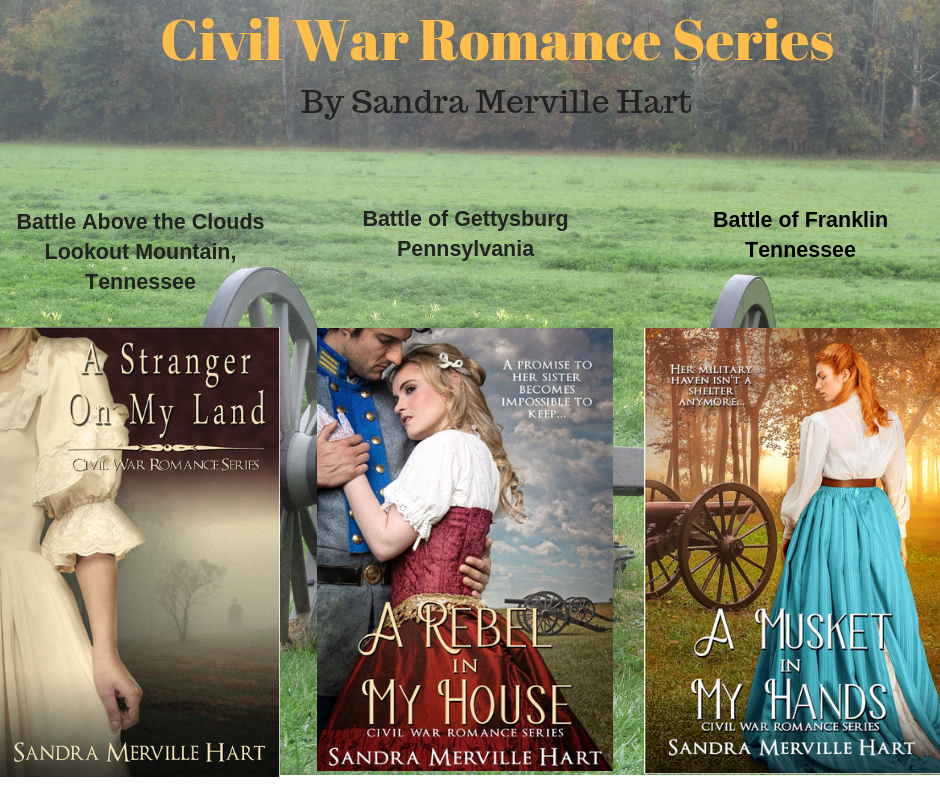
In my Civil War novel, A Musket in My Hands, two sisters have no choice but to disguise themselves as men to muster into the Confederate army in the fall of 1864—just in time for events and long marches to lead them to the tragic Battle of Franklin.

-Sandra Merville Hart


Sources

Abbott, Karen. Liar, Temptress, Soldier, Spy: Four Women Undercover in the Civil War, Harper, 2014.

Blanton, DeAnne and Cook, Lauren M. They Fought Like Demons, Louisiana State University Press, 2002.

Massey, Mary Elizabeth. Women in the Civil War, University of Nebraska Press, 1966.

Silvey, Anita. I’ll Pass for Your Comrade: Women Soldiers in the Civil War, Clarion Books, 2008.

Velazquez, Loreta Janeta. The Woman in Battle: The Civil War Narrative of Loreta Velazquez, Cuban Woman & Confederate Soldier, The University of Wisconsin Press, 2003. (Previously published 1876)


Consequences of Discovery for Women Civil War Soldiers

There are about four hundred known cases of women serving as Civil War soldiers on either side. They enlisted for varying reasons. They faced challenges  at every turn. They were discovered in a variety of ways.

The consequences for the women varied. They could be dismissed or imprisoned, depending on the officer’s decision.

Newspaper reporters wrote of Southern women who were arrested while in uniform. Federals captured two female soldiers and imprisoned them.

A female Union soldier was captured after being wounded in battle. She was sent back to Union lines with a note, “As Confederates do not use women in war, this woman, wounded in battle, is returned to you.”

After being imprisoned on Johnson Island, a Confederate officer delivered a baby boy in December of 1864.

A Union major ordered her men in battle. They later discovered her identity and imprisoned her for violating the “regulations of war.”

Loreta Janeta Velazquez disguised herself as Confederate soldier Lieutenant Harry T. Buford. She was arrested when the apparatus of her disguise slipped. She was charged with acting as a spy and then released, but she returned to her soldier disguise. She was later arrested when comrades suspected her of being a woman. Loreta confessed. The mayor fined her $10 and ordered ten days imprisonment. After her release, she reenlisted in a different company, this one in the 21st Louisiana.

Confederate women who were imprisoned as POWs usually were kept there even after their identity became known.

Female soldiers facing a provost marshal received varying degrees of punishment.

Women were sometimes sent to civilian authorities who could order them to serve time in the city jail or the Guard House. Some women were sent to the workhouse while others were released.

One woman was court-martialed.

In my Civil War novel, A Musket in My Hands, two sisters have no choice but to disguise themselves as men to muster into the Confederate army in the fall of 1864—just in time for events and long marches to lead them to the tragic Battle of Franklin.

-Sandra Merville Hart

Sources

Abbott, Karen. Liar, Temptress, Soldier, Spy: Four Women Undercover in the Civil War, Harper, 2014.

Blanton, DeAnne and Cook, Lauren M. They Fought Like Demons, Louisiana State University Press, 2002.

Massey, Mary Elizabeth. Women in the Civil War, University of Nebraska Press, 1966.

Silvey, Anita. I’ll Pass for Your Comrade: Women Soldiers in the Civil War, Clarion Books, 2008.

Velazquez, Loreta Janeta. The Woman in Battle: The Civil War Narrative of Loreta Velazquez, Cuban Woman & Confederate Soldier, The University of Wisconsin Press, 2003. (Previously published 1876)


Civil War Romance Novel Releasing Today!

Releasing Today!!!

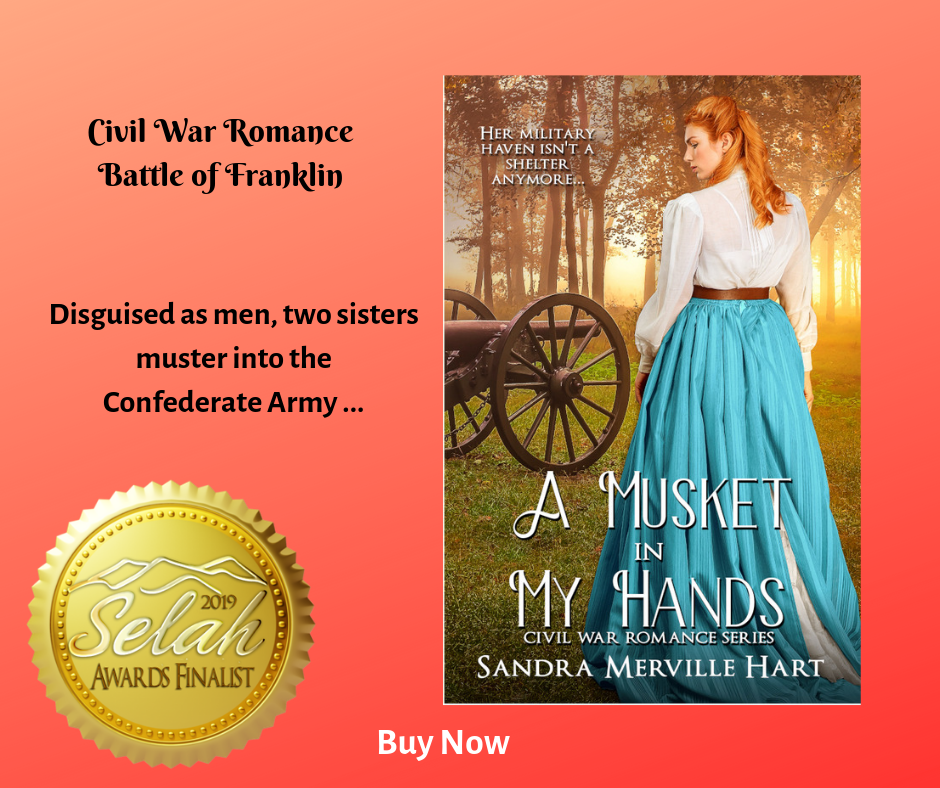
Sandra Merville Hart’s third Civil War romance, A Musket in My Handsfollows two sisters as they disguise themselves as soldiers and join the men they love in the Confederate army—just in time for the war to grow progressively difficult for Southern soldiers.

Tough marches lead them to the Battle of Franklin. How can anyone survive?

There are about four hundred known cases of women serving as Civil War soldiers on either side. What are some reasons that women chose to fight? What challenges  did they face? They feared discovery and rightly so.

Find out what two sisters faced on their dangerous journey leading to a fearsome battle, the Battle of Franklin, in A Musket in My Hands.

Back Cover Blurb

Can I count on you in times of great need?”

 Callie Jennings reels from her pa’s decision that she must marry his friend, a man older than him. Her heart belongs to her soldier hero, Zach Pearson, but Pa won’t change his mind. Callie has no place to hide. Then her sister, Louisa, proposes a shocking alternative.

Zach still hears his pa’s scornful word—quitter. He’s determined to make something of himself as a soldier. He’ll serve the Confederacy until they win the war. If they win the war.

Callie and Louisa disguise themselves as soldiers and muster into the Confederate army in the fall of 1864. Times are tough and getting tougher for their Confederacy. For Callie, shooting anyone, especially former countrymen, is out of the question—until truth and love and honor come together on the battlefield.

Available on Amazon

Endorsements for A Musket in My Hands:

I don’t always read Civil War novels, because I’m not into graphic battle scenes. Sandra Merville Hart’s A Musket in My Hands is a wonderful book. The characters grab your heart right from the beginning and they take you through a unique story line right into battles, where I followed willingly. The book isn’t battle-driven. It’s character driven, and the reader becomes intimately acquainted with these people who had to face things they never dreamed about happening. This is my favorite Civil War novel. I highly recommend it.

Lena Nelson Dooley – bestselling, multiple-award-winning author of Great Lakes Lighthouse Brides. 

Sandra Hart, author of the acclaimed A Stranger on My Land and A Rebel in My House has done it again with her third and best novel to date, A Musket in My Hands.  In this brilliant historical fiction, Sandra has sat against the backdrop of Confederate General John Bell Hood’s Tennessee Campaign a study of the little known but genuine phenomenon of women masquerading as men to serve and fight in the opposing armies of the Civil War.  An excellent and well-researched read, this is one of the first books I’ve read to put a touchingly human face on the horrendously bloody Battle of Franklin. 

Kevin Spencer – author of “ON THIS DAY in North Carolina History”

A Musket in My Hands shines with Sandra Hart’s talent for historical romance. Vivid historical details highlight the romance and adventure, excitement and heartache of those desperate to survive the Civil War, while an endearing collage of characters evaluates their own allegiances to God, country, and their fellow man.”

Carrie Del Pizzo – Del Pizzo’s Pen Editing “Words have value … use them well”

What would make two sisters escape the only home they’ve ever known to join the Confederate Army, disguised as men? Prompted by both love and fear, Callie and Louisa are caught up in the War between the States in a way they never imagined. It soon became a nightmare they couldn’t possibly foresee.

In “A Musket in my Hands,” author Sandra Merville Hart has penned a thrilling, well-researched novel set in the latter months of the Civil War. Her characters are believable, likeable, and, at times, frustrating in their decisions. But readers will find themselves rooting for the protagonists and anxiously awaiting resolution, not just in the fighting field, but in the battleground of their souls.

Inspiring and exciting, this novel will capture your heart as well as speed up your heartbeat. A historical romance well worth the read!

Elaine Marie Cooper – Author,  Saratoga Letters

Through A Musket in My Hands, Sandra Merville Hart brings to life the last months of the Confederacy as experienced by two Tennessee sisters who become soldiers for the South. Detailed research contributes to the realism in a tale of courage and strength during a tumultuous time in America’s history. I was moved by the despair and deprivation yet inspired by the characters’ resolve. A captivating read for historical fiction fans!

Sandra Ardoin – author of the award-winning historical romance A Reluctant Melody


Civil War Romance Novel Releasing Next Week!

R E L E A S I N G   N O V E M B E R   8 t h ! ! !

Sandra Merville Hart’s newest Civil War romance, A Musket in My Hands , follows two sisters as they disguise themselves as soldiers and join the men they love in the Confederate army—just in time for the war to grow progressively difficult for Southern soldiers. Tough marches lead them to the Battle of Franklin. How can anyone survive?

Can I count on you in times of great need?”

 Callie Jennings reels from her pa’s decision that she must marry his friend, a man older than him. Her heart belongs to her soldier hero, Zach Pearson, but Pa won’t change his mind. Callie has no place to hide. Then her sister, Louisa, proposes a shocking alternative.

Zach still hears his pa’s scornful word—quitter. He’s determined to make something of himself as a soldier. He’ll serve the Confederacy until they win the war. If they win the war.

Callie and Louisa disguise themselves as soldiers and muster into the Confederate army in the fall of 1864. Times are tough and getting tougher for their Confederacy. For Callie, shooting anyone, especially former countrymen, is out of the question—until truth and love and honor come together on the battlefield.

So thrilled that A Musket in My Hands received such a glowing endorsement from Civil War historian, Kevin Spencer:

Sandra Hart, author of the acclaimed A Stranger on My Land and A Rebel in My House has done it again with her third and best novel to date, A Musket in My Hands.  In this brilliant historical fiction, Sandra has sat against the backdrop of Confederate General John Bell Hood’s Tennessee Campaign a study of the little known but genuine phenomenon of women masquerading as men to serve and fight in the opposing armies of the Civil War.  An excellent and well-researched read, this is one of the first books I’ve read to put a touchingly human face on the horrendously bloody Battle of Franklin. 

-Kevin Spencer – author of “ON THIS DAY in North Carolina History”

Buy today on Amazon  for preorder prices!


Ways that Women Civil War Soldiers were Discovered

Women fighting as Civil War soldiers—whatever their reasons—kept their guard up constantly. There are about four hundred known cases of female soldiers fighting on either side. Many others likely joined for a short time and then donned a dress to quit without detection. Still, it was challenging for the women to remember their pretense twenty-four hours a day. Some were discovered.

A Wisconsin woman, Sarah Collins, donned her stockings and shoes the way a woman did and, before her regiment left town, was sent home.

It’s unclear what Mary Burns did, but she was probably recognized even wearing a uniform. She was arrested in Detroit—her company hadn’t left town yet.

“Charles Norton,” a female private in the 141st Pennsylvania Infantry, stole an officer’s boots. When her identity was discovered, she was quickly mustered out.

Two women soldiers got drunk on apple jack while on a foraging expedition. In their drunken state, they fell into a river. Comrades saved them from drowning. Their rescuers were shocked to discover they were women.

Comrades tossed apples to two female soldiers in the 95th Illinois. The women reached for their nonexistent aprons to catch the apples and were immediately discharged.

A female soldier from Rochester, New York, tried to don pants by pulling them over her head.

A pregnant corporal in a New Jersey regiment was promoted to sergeant for her bravery at the Battle of Fredericksburg in December of 1862. She hid her pregnancy by wearing an over-sized coat. On January 19, 1863, she went into labor on picket duty and complained of feeling unwell. Her complaints were ignored until her pain increased. Comrades carried her to a farmhouse where her healthy baby was born. Everyone learned the news but protected her by not mentioning her real name or her alias. Her name is still unknown today.

The most common way of discovery happened when women were wounded.

A girl from Brooklyn wanted to be the second Joan of Arc. Her family, desiring to save her, sent “Emily” to an aunt in Michigan. She ran away and joined the Army of the Cumberland as a drummer. Her identity was discovered when she was mortally wounded on Lookout Mountain.

Mary Owens enlisted with a man she secretly wed during their eighteen months in the army. She was wounded in the battle that took his life.

Malinda Pritchard Blalock, an excellent shooter, enlisted when her husband, Keith, was forced to muster into the 26th North Carolina Infantry. She pretended to be Keith’s brother, Sam. Her identity was discovered when she was wounded.

In my Civil War novel, A Musket in My Hands, two sisters have no choice but to disguise themselves as men to muster into the Confederate army in the fall of 1864—just in time for events and long marches to lead them to the tragic Battle of Franklin.

-Sandra Merville Hart

Sources

Abbott, Karen. Liar, Temptress, Soldier, Spy: Four Women Undercover in the Civil War, Harper, 2014.

Blanton, DeAnne and Cook, Lauren M. They Fought Like Demons, Louisiana State University Press, 2002.

Massey, Mary Elizabeth. Women in the Civil War, University of Nebraska Press, 1966.

Silvey, Anita. I’ll Pass for Your Comrade: Women Soldiers in the Civil War, Clarion Books, 2008.