Civil War Novel Releasing in Two Weeks!

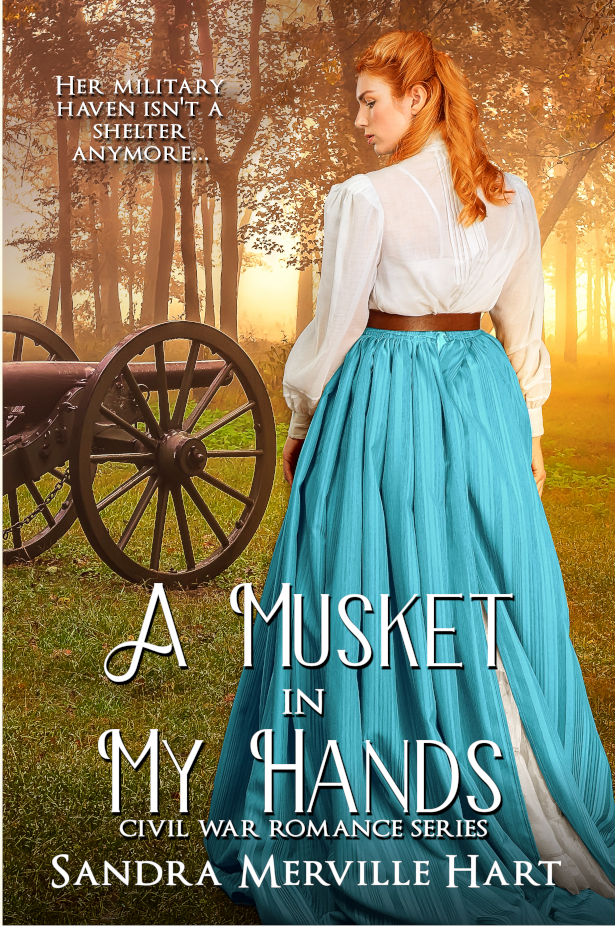
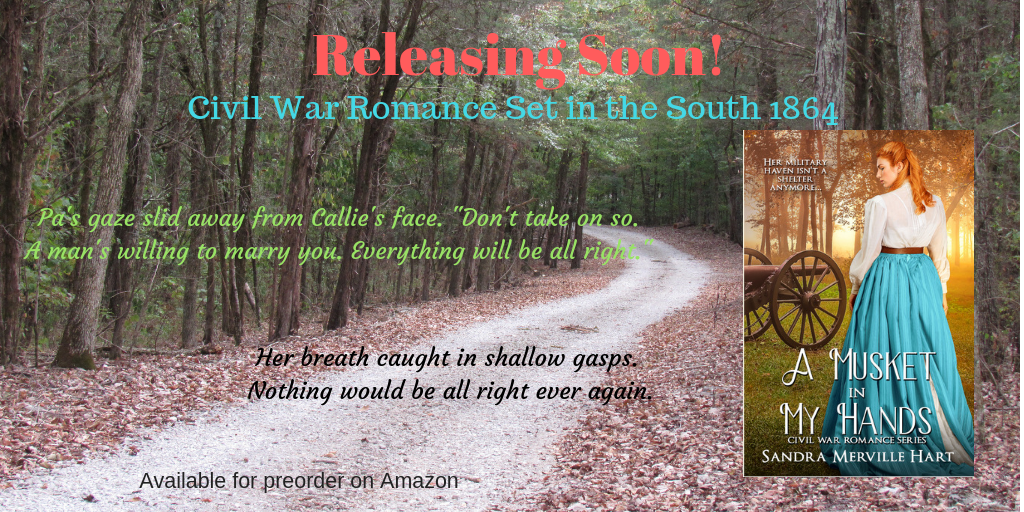
Sandra’s third Civil War romance, A Musket in My Hands, follows two sisters as they disguise themselves as soldiers and join the men they love in the Confederate army–just in time for the war to grow progressively difficult for Southern soldiers. Tough marches lead them to the Battle of Franklin. How can anyone survive? 

This novel releases on November 8, 2018!

So honored to receive the following endorsement from such a well-known and  talented author:

I don’t always read Civil War novels, because I’m not into graphic battle scenes. Sandra Merville Hart’s A Musket in My Hands is a wonderful book. The characters grab your heart right from the beginning and they take you through a unique story line right into battles, where I followed willingly. The book isn’t battle-driven. It’s character driven, and the reader becomes intimately acquainted with these people who had to face things they never dreamed about happening. This is my favorite Civil War novel. I highly recommend it.

Lena Nelson Dooley – bestselling, multiple-award-winning author of 12 Gifts of Christmas, Esther’s Temptation, and Great Lakes Lighthouse Brides.

Available for preorder on Amazon – buy today for prerelease prices!


Challenges Faced by Women Civil War Soldiers

Loreta Janeta Velazquez as Civil War soldier Lieutenant Harry T. Buford

The Civil War kindled patriotic feelings in men and women on both sides of the conflict. Women who desired to serve their country as soldiers had to disguise themselves as men. They also faced challenges in camp life and in marching with men.

The first thing a woman had to do was sew or buy men’s clothing. She’d need trousers, a coat, shoes, and men’s blouses. Padding strategically sewn on undergarments helped mask female curves. Loreta Velazquez, who disguised herself as Confederate Lieutenant Harry T. Buford, used wire net shields to hide her shape.

The women also had to cut their long hair. Short hair and men’s clothing enabled her to pass as a soldier.

As the war progressed, requirements for physical examinations relaxed. The army needed soldiers and didn’t want to find reasons not to accept them. They had to have teeth so they could tear cartridges open. They needed a trigger finger to fire muskets and rifles.

Life in army camps were challenging. Women used the privacy of the woods for nature calls instead of latrines.

Poor nutrition, long marches, intense physical activities, and weight loss might have caused the women’s menstruation to cease, especially during tough campaigns.

Soldiers slept fully clothed, wearing coat and shoes, so this helped the women’s disguise. Bathing was infrequent yet there were men who also preferred privacy when the opportunity for bathing arose.

Women claimed to be younger than they were to explain the lack of whiskers. They kept their coats buttoned all the way to hide the missing Adam’s apple.

They had to remember to talk like a man.

They carried at least thirty pounds of equipment in addition to their haversack (which held their food) and a knapsack (which held clothing and personal belongings.)

And then there were the challenges of battle. The fear. The chaos. Officers shouting orders. When the noise of battle was too loud for soldiers to hear their officers shout orders, buglers and drummers played them. Soldiers had to know what the tunes meant.

No matter the reason for joining, women who served as Civil War soldiers were courageous.

In my Civil War novel, A Musket in My Hands, two sisters have no choice but to disguise themselves as men to muster into the Confederate army in the fall of 1864—just in time for events and long marches to lead them to the tragic Battle of Franklin.

-Sandra Merville Hart

Sources

Blanton, DeAnne. “Women Soldiers of the Civil War,” National Archives, 2018/09/29 https://www.archives.gov/publications/prologue/1993/spring/women-in-the-civil-war-1.html.

Blanton, DeAnne and Cook, Lauren M. They Fought Like Demons, Louisiana State University Press, 2002.

Massey, Mary Elizabeth. Women in the Civil War, University of Nebraska Press, 1966.

Silvey, Anita. I’ll Pass for Your Comrade: Women Soldiers in the Civil War, Clarion Books, 2008.

Velazquez, Loreta Janeta. The Woman in Battle: The Civil War Narrative of Loreta Velazquez, Cuban Woman & Confederate Soldier, The University of Wisconsin Press, 2003. (Previously published 1876)

Lighthouses in the Great Lakes

Today’s post was written by fellow writer, editor, and friend, Pegg Thomas. Welcome back to Historical Nibbles, Pegg! 

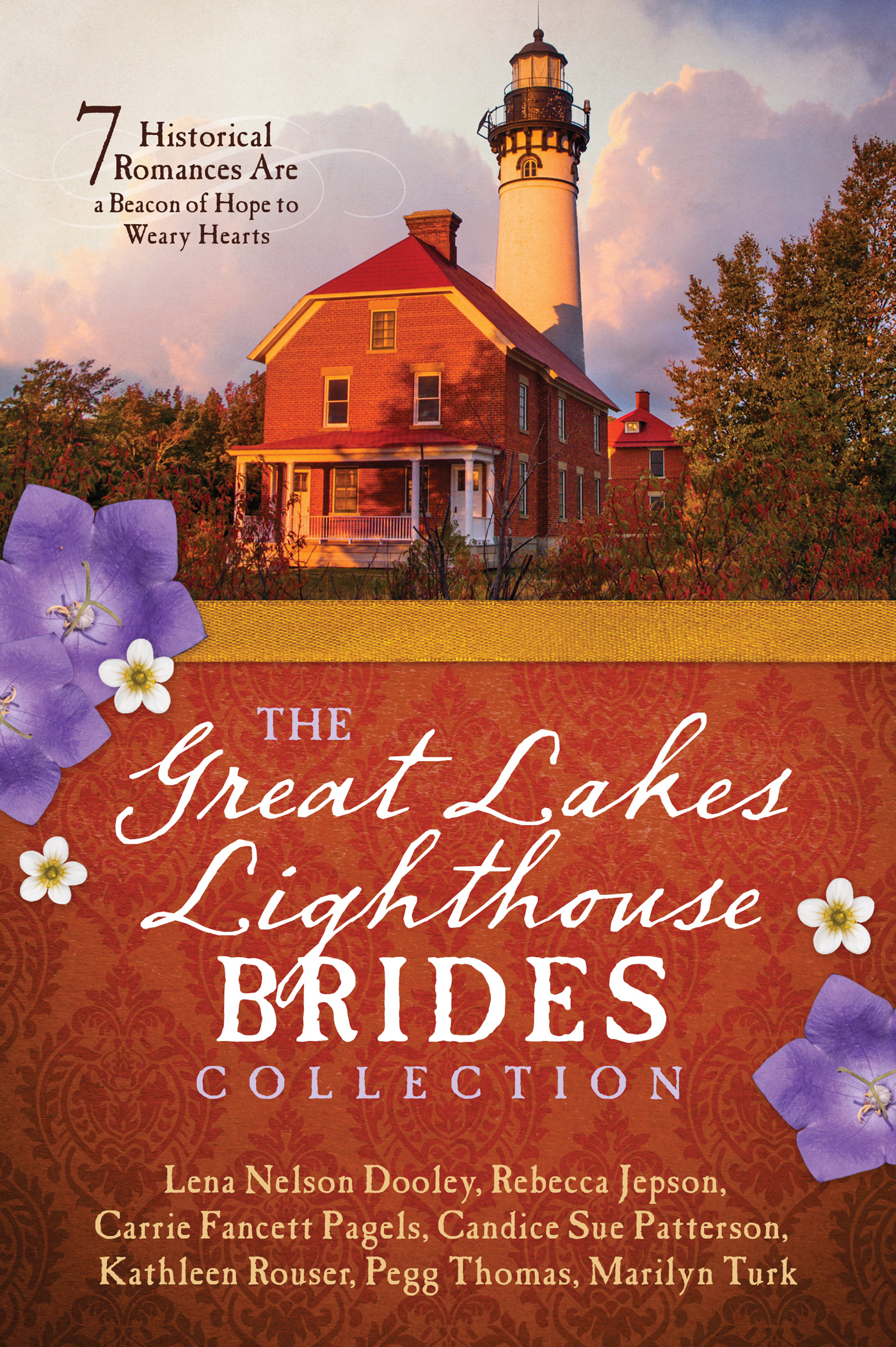
The Great Lakes Lighthouse Brides collection was my baby from the start. I wanted to offer Barbour Publishing a collection that showcased our beautiful Great Lakes and honored the memory of the men and women who pioneered this area.

Lighthouses—and the men and women who manned them—were essential to both bringing people and supplies into this vast wilderness and shipping valuable resources out to a growing nation. The Great Lakes are awe-inspiring in many ways, inland seas of fresh water teeming with fish and surrounded by dazzling sand dunes and towering forests. They were also treacherous. Violent storms, hidden shoals, and thick fogs made travel by boat dangerous. The lighthouses, often situated in remote, isolated areas, were literally the saving grace for many a crew.

Lighthouse keepers and their families had to be self-sufficient and hardy people. Often days of travel away from the nearest town, they had to raise, hunt, or catch much of their own food. Most did not winter at the lighthouse, but some did. Those also had to preserve enough to see them through the long, dark months of the year.

Aside from keeping the lights burning, lighthouse keepers also assisted in rescue missions, with or without the help of a life-saving station. Many heroic stories have survived through the years of men and women who risked their own lives to save those wrecked on the lakes.

The rest of the growing nation desperately needed the raw materials of iron, copper, and other metals of this area. Steel mills back east needed it to turn out hundreds of thousands of rails the country needed for the railway system that was spanning from coast to coast. The lumber was needed for building cities and homes. The area I currently live in was lumbered off in 1871 and 1872 to rebuild Chicago after the great fire.

I’m proud to be a part of this collection that shares these historical romances inspired by the people who pioneered our northern shores.

-Pegg Thomas

Amazon

Blurb:

Anna’s dream of running the lighthouse was difficult enough to achieve, but then a Russian stowaway was left on the island, and that complicated everything.

About Pegg:

Pegg Thomas lives on a hobby farm in Northern Michigan with Michael, her husband of *mumble* years. A life-long history geek, she writes “History with a Touch of Humor.” When not working or writing, Pegg can be found in her barn, her garden, her kitchen, or sitting at her spinning wheel creating yarn to turn into her signature wool shawls.

Pegg’s blog

Reasons Women Fought as Civil War Soldiers

The Civil War brought tough times for civilians as well as soldiers. Neither the Union nor the Confederate armies allowed women to fight as soldiers, leading some women to disguise themselves as men to muster into the army.

There are about four hundred women known to have served as soldiers on either side. Mary Livermore of the U.S. Sanitary Commission wrote in 1888 that she was convinced the number was much higher. Since most were discovered after being a soldier two years or more, Mrs. Livermore believed that some were never detected.

Why did women join the army?

Newspapers printed stories about soldiers involved in gambling, drinking, and other immoral behavior. Some women mustered in to keep an eye on husbands and beaus.

There were women who chose the army as an escape over unbearable family situations. Some women living in poverty joined for the pay. Some sought adventure, love, or excitement. Others wanted to be near a brother, husband, or fiancé.

As the war continued, bonuses offered to new recruits as well as soldier’s pay enticed some women to enlist.

A myriad of reasons, as individual as the women themselves, drove them to don a soldier’s garb and march into danger.

In my Civil War novel,  A Musket in My Hands, two sisters have no choice but to disguise themselves as men to muster into the Confederate army in the fall of 1864—just in time for events and long marches to lead them to the tragic Battle of Franklin.

-Sandra Merville Hart

Sources

Blanton, DeAnne. “Women Soldiers of the Civil War,” National Archives, 2018/09/29 https://www.archives.gov/publications/prologue/1993/spring/women-in-the-civil-war-1.html.

Blanton, DeAnne and Cook, Lauren M. They Fought Like Demons, Louisiana State University Press, 2002.

Massey, Mary Elizabeth. Women in the Civil War, University of Nebraska Press, 1966.

Silvey, Anita. I’ll Pass for Your Comrade: Women Soldiers in the Civil War, Clarion Books, 2008.


Women Wanted to Enlist as Civil War Soldiers?

It’s 1861. Before Abraham Lincoln can be sworn in as the new president of the United States of America, Southern states begin leaving the Union.

Everyone is on edge. What will happen next? Then the first shots are fired at Fort Sumter by the Confederates on April 12, 1861.

The Civil War had begun.

Early on, there were women on both sides who wanted to fight in the war as soldiers. Girls who tried to muster into the army by going to recruiting stations were praised by war journalists for their courage.

The Confederate Secretary of War received a letter from a group of over twenty women who offered to organize a volunteer regiment. These ladies from the Shenandoah Valley wanted to join the fight. Their offer was rejected.

Black women—residents of Northern cities like New York and Philadelphia—offered to serve their country as warriors if needed. Their request was refused by local officials.

Soldiers wrote home upon discovering women soldiers in their regiments during the war. Folks were aware of female soldiers fighting in both sides of the conflict.

In 1862, when a Southern woman was found in a Confederate training camp, a Georgia newspaper labeled her a “gallant heroine.”

Reporters and editors praised the patriotism of women soldiers throughout the war. Newspaper articles were reprinted in other cities, spreading the news.

In my Civil War novel, A Musket in My Hands, two sisters have no choice but to disguise themselves as men to muster into the Confederate army in the fall of 1864—just in time for events and long marches to lead them to the tragic Battle of Franklin.

-Sandra Merville Hart

Sources

“Battle of Fort Sumter,” Wikipedia, 2018/09/18 https://en.wikipedia.org/wiki/Battle_of_Fort_Sumter.

Blanton, DeAnne and Cook, Lauren M. They Fought Like Demons, Louisiana State University Press, 2002.

Massey, Mary Elizabeth. Women in the Civil War, University of Nebraska Press, 1966.

Silvey, Anita. I’ll Pass for Your Comrade: Women Soldiers in the Civil War, Clarion Books, 2008.


Announcing Sandra Merville Hart’s next Civil War Romance Release!

Releasing November 8th!

Two sisters disguise themselves as men to muster into the Confederate army in the fall of 1864 to join the men they love. But the situation grows desperate for Hood’s Army of Tennessee at the Battle of Franklin.


“Can I count on you in times of great need?”

 Callie Jennings reels from her pa’s decision that she must marry his friend, a man older than him. Her heart belongs to her soldier hero, Zach Pearson, but Pa won’t change his mind. Callie has no place to hide. Then her sister, Louisa, proposes a shocking alternative.

Zach still hears his pa’s scornful word—quitter. He’s determined to make something of himself as a soldier. He’ll serve the Confederacy until they win the war. If they win the war.

Callie and Louisa disguise themselves as soldiers and muster into the Confederate army in the fall of 1864. Times are tough and getting tougher for their Confederacy. For Callie, shooting anyone, especially former countrymen, is out of the question—until truth and love and honor come together on the battlefield.

Endorsement for A Musket in My Hands:

 I don’t always read Civil War novels, because I’m not into graphic battle scenes. Sandra Merville Hart’s A Musket in My Hands is a wonderful book. The characters grab your heart right from the beginning and they take you through a unique story line right into battles, where I followed willingly. The book isn’t battle-driven. It’s character driven, and the reader becomes intimately acquainted with these people who had to face things they never dreamed about happening. This is my favorite Civil War novel. I highly recommend it.

Lena Nelson Dooley – bestselling, multiple-award-winning author of Great Lakes Lighthouse Brides.

A Musket in My Hands releases November 8th by Smitten Historical Romance, an imprint of Lighthouse Publishing of the Carolinas!

Available for Preorder on Amazon!

Draining Ohio’s Swamps

Today’s post is written by fellow author Bettie Boswell. Welcome to Historical Nibbles, Bettie!

 The stories in the anthology, From the Lake to the River, are all set in Ohio. Ohio is an Iroquois word for the beautiful river that outlines two sides of the state. Ohio also means ‘good morning’ in Japanese. When I designed the cover art for the book I was inspired by both the state symbol, incorporating that good morning sun with golden fields of grain, and a map featuring Lake Erie and the many rivers that cross the great state of Ohio.

My story, Fred’s Gift, is set near a fictional Northwest Ohio farm where many fields of golden grain are harvested every year. The story is contemporary, but before there could be any farming in Northwest Ohio’s Great Black Swamp, settlers had to change the land.

Some of the first settlers in nearby Firelands, Ohio, were people whose homes back east were destroyed by fire during the Revolutionary War. Many soldiers traversed the swamp during the war of 1812 with their horses bogging down in muddy places like Devil’s Hole Road, near Bowling Green, Ohio. They experienced the swampy conditions but also noticed the rich soil, so they returned after the war. They made corduroy roads by laying log after log on the ground to prevent wagons from sinking. Deep ditches were dug to drain the land. They laid drainage tiles under fields so water would drain into the ditches. Those ditches still exist today and prevent major flooding from covering the area.

-Bettie Boswell


Fred’s Gift is a short contemporary romance. When Dawn learns that her father Fred is dying, she hurries to his side full of guilt for neglecting him over the last year. The year has been an adjustment to widowhood and being a single mother. Fred’s parting gift of love and forgiveness may involve more than just an inheritance.


Bettie’s Inspiration

Fred’s Gift was inspired by my father, who did leave me a portion of his farm. My dad was a proud veteran of WW2 and an avid genealogist. His historical records and tales are providing inspiration for future stories. My husband and I met before my father retired. We are enjoying a long marriage and are currently loving having grandchildren, so this story is not biographical.

About Bettie:

Bettie Boswell is an author, illustrator, and composer for both Christian and children’s markets. She holds a B.S. in Church Music from Cincinnati Bible College and a Masters in Elementary Education from East Tennessee State University. She lives in Bowling Green, Ohio.

Her numerous musicals have been performed at schools, churches, and two community theater events. When she isn’t writing, drawing or composing, she keeps busy with her day job teaching elementary music in Sylvania, Ohio.


From the Stage to the Page

Today’s post is written by fellow author and friend, Sharyn Kopf. Welcome to Historical Nibbles, Sharyn!

Two weeks before I moved to Bellefontaine, Ohio, in 2013, I saw a notice that the local theatre was holding auditions for Our Town. I couldn’t resist. I love being in a show. During the audition, I told the director I would be interested in a humorous part. She must have liked my interpretation because she cast me as the comedy relief, Mrs. Soames, and a star was born.

Ha! Not really,* but a story was. Because it was in rehearsing that play that I first stepped into the Holland Theatre, a unique structure built by Schine Enterprises in downtown Bellefontaine in 1931. The Schine family was responsible for constructing about 150 theatres in six states, but the Holland is the only one with a Dutch-style atmosphere.

Theatre architecture was at its peak in the 1920s, and many were built with an eye toward atmosphere, designed to resemble anything from an Italian piazza to a Grecian ruin to a Moorish courtyard. Theatre-goers would enjoy performances amidst Corinthian columns and loosely draped Roman statuettes with come-hither eyes. The majority of these theatres favored a Spanish or Italian fashion.

Which is why the Holland stands out with its 17th-century Dutch cityscape. If you’re not caught up in what’s on the stage, you can cast your gaze on almost life-sized timber-framed facades with softly lit windows next to two windmills that turn beneath a ceiling covered in twinkling stars.

The building screams, “Story!” and not just when you’re watching a play. I loved the historic charm from the moment I walked through one of the three sets of double doors at the entrance. But it was the romance oozing from the brick and wood and stone and dripping from the two-story red curtains that appealed to me most. Though much of the restoration has been done, it’s still an old theatre … an ideal setting for a love story and, perhaps, a haunting. All of which led me to create Stephie Graham, a lonely graphic designer who’s directing The Rainmaker at the Holland … and is distressed to find herself falling for her leading man, Andy Tremont.

But I had to bring a touch of the theatre’s history into it and did so by introducing Juniper Remington, a young girl who sang from her broken heart on the same stage 80 years before … and now may be a forlorn ghost trying to keep Stephie and Andy apart.

Or is she?

After all, the theatre is a place where magical things happen and happy endings bring the audience to its feet. And who doesn’t love being a part of that?!

-Sharyn Kopf

*Though I did win a Holland Windmill Productions Award for best supporting actress!

Amazon

Sharyn’s bio:

Sharyn Kopf didn’t find her voice until she found a way to turn grief into hope. For her, that meant realizing it was okay to be sad about her singleness. In doing so, she was finally able to move past her grief and find hope in God.

It also meant writing about the heartaches and hopes in being an older single woman. She published her first novel, Spinstered, in 2014, and a companion nonfiction version titled Spinstered: Surviving Singleness After 40 in 2015. The sequel to the novel, Inconceived, released in September 2016 and, one year later, she finished the series with Altared. Her current project is a novel about a lonely girl with a knack for matchmaking.

Besides writing and speaking, Sharyn is a freelance ghostwriter, editor and marketing professional. In her spare time, she enjoys goofing off with her nieces and nephews, making—and eating!—the best fudge ever, taking long hikes through the woods, and playing the piano.

American Square Dancing


Today’s post is written by fellow author and friend, Rebecca Waters. Welcome back to Historical Nibbles, Rebecca!

 American square dancing has its roots in 16th century England and France. The “quadrille” was completed using intricate, memorized patterns. Many of the names of today’s square dance moves, such as allemande, promenade, and dos-a-dos reflect French influence.

American square dancing is linked with the settling of America and western expansion. Instead of memorizing dances, settlers opted for a leader to call out moves in sequence. Square dancing on wagon trains and in early settlements allowed men and women to engage in a socially acceptable activity. Some moves such as “take a little peek and trade the wave” or  “courtesy turn,” were considered flirtatious but safe ways to mingle with the opposite sex.

While some dances were set to music, certain groups considered the fiddle and other instruments tools of the devil. In this case, dance moves were prompted in rhythm and rhyme by a “caller.” These were known as patter calls.

Square dancing waned in the early 1900’s but made a comeback after World War II. The event surged after President Ronald Reagan named square dancing America’s official folk dance in 1982.

-Rebecca Waters


Courtesy Turn, a story about unexpectedly finding a second chance at love in a contemporary novella set in Cincinnati, Ohio, is one of nine stories in the newly released anthology, From the Lake to the River.


When Lori’s husband died of cancer, part of Lori died with him. It’s been 5 years now. Lori and her husband always enjoyed square dancing. Is that where she should start? Is it possible for Lori to find purpose and joy in her life or will she be forever dependent on her son and his family?


Amazon


Book Releasing Today!

My newest book releases today!

Nine Ohio authors have written novellas/short stories in Ohio settings in From the Lake to the River: Buckeye Christian Fiction Authors 2018 Anthology . What fun to be part of this anthology!

My novella in the collection, Surprised by Love, is set during the 1913 Great Miami River Flood in Troy, Ohio.


Here’s a blurb about my story:

Lottie’s feelings for an old school crush blossom again during the worst flood her town has endured in years.

Lottie shoulders the burden for her siblings after their mother’s death. Her seventeen-year-old brother’s disobedience troubles her, especially since she also cares for the boarders in their home. When the flooding river invades not only the town of Troy but also her home, Lottie and her family need to be rescued. 

Desperate circumstances throw Lottie and Joe, her schoolgirl crush, together. Can tragedy unite the couple to make her long-buried dream of winning his love come true?

And there are eight other stories in the anthology!

“Whether you like romance, young adult, women’s fiction, a touch of mystery or danger, some humor, some holiday cheer, a second chance at love, set in Ohio’s colorful history or the present–there’s something for nearly everyone in this collection.”-per the Editor at Mt. Zion Ridge Press, Publisher.

The collection From the Lake to the River is available on Amazon!