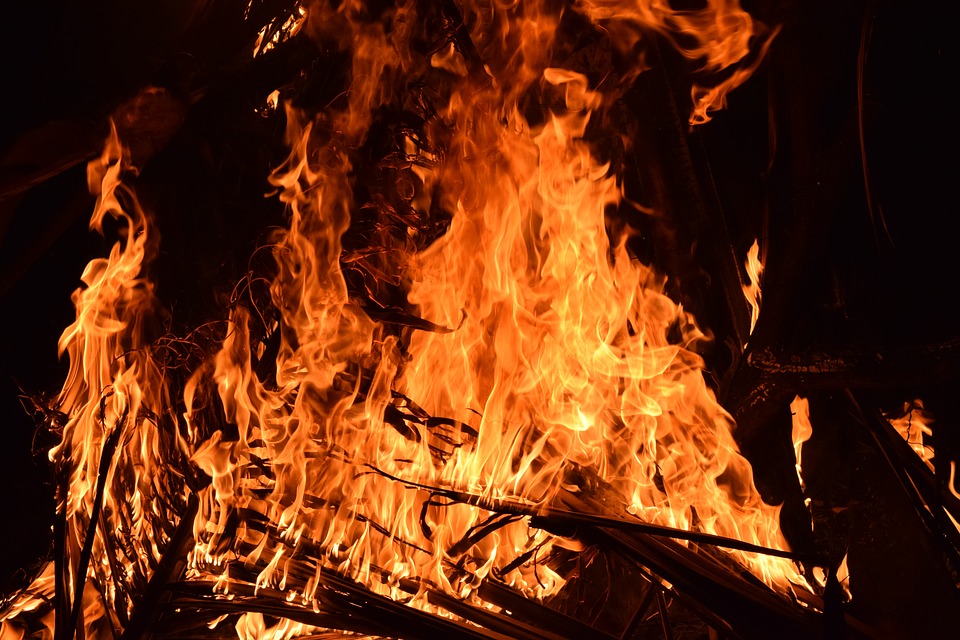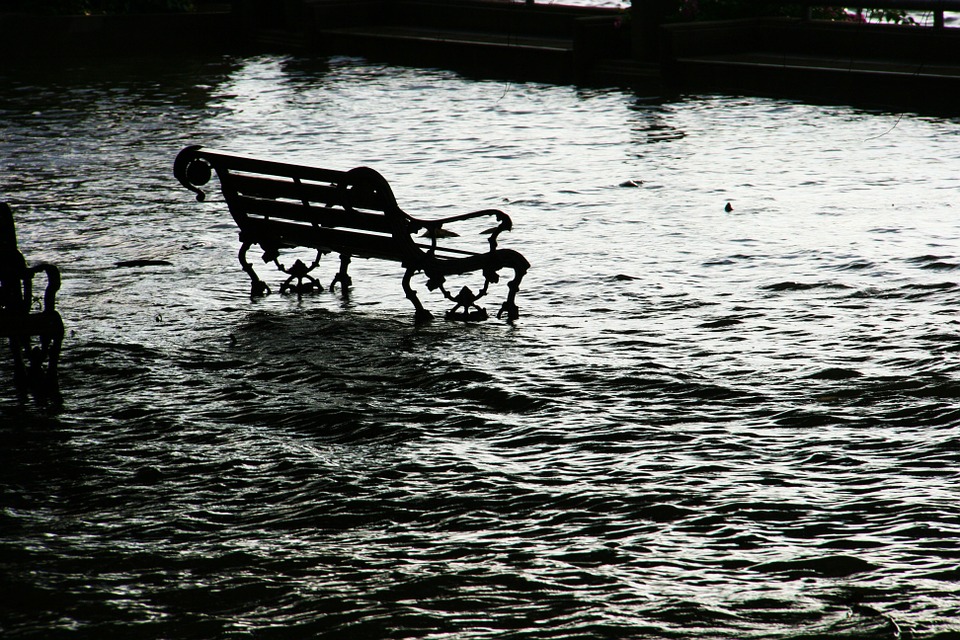
The Troy Flood of 1913

Troy citizens couldn’t foresee the terrible flood coming their way as they traveled to church on the stormy Easter morning of March 23, 1913.

The day before had a been an unseasonably beautiful day. The small Ohio city, set on the banks of the Great Miami River with the Miami and Erie Canal running through it, manufactured transportation equipment, food machines, and distilled beverages.

While the river rose, the canal overflowed on Sunday night. Men, carrying lanterns, walked between the two waterways to monitor water levels.

Water often seeped into cellars during hard rains and citizens weren’t too concerned at first. When ankle-deep water became waist high in twenty minutes, folks became alarmed.

Relentless rain flooded houses, driving people from their homes. Some were trapped. Sheriff Louis Paul directed rescues made by boats. Men with boats rowed to their neighbors’ aid. Folks outside of Troy came to help.

Some men were released from prison in order to help. “Sailor Jack” and Otto “Slim” Sedan became heroes during the flood.

Houses came loose from their foundations. One man rode down the river on his roof.

Animals weren’t safe either. Three chickens perched on a chicken house as it floated down Race Street.

Temporary hospitals and public shelters were set up for those displaced by the flood.

The Flood of 1913 is Ohio’s greatest natural disaster. The worst flooding occurred along the Great Miami River. Statewide, at least 428 people lost their lives.

Troy and nearby Dayton received 9.7 inches of rain in five days.

-Sandra Merville Hart


Sources

“1913 Ohio Statewide Flood,” Ohio History Central, 2018/02/22 http://www.ohiohistorycentral.org/w/1913_Ohio_Statewide_Flood.

Troy Historical Society. Images of America: Troy and the Great Flood of 1913, Arcadia Publishing, 2012.
The Great Peshtigo Fire

The summer of 1871 had been a dry season. Loggers in the sawmill town of Peshtigo,  were careful about fires, mindful of the vast forest surrounding them.

One of the largest factories of wood products in the country was in Peshtigo, Wisconsin. Most of the town’s buildings were made of wood.

New settlers to the area cleared farmland by the “slash and burn” method, increasing chances of a forest fire.

The Chicago and Northwestern Railway was being extended. Workers cut down trees and burned them to clear the land. Sometimes the brush was left by the tracks. Steam engine sparks sometimes ignited the dried stacks of wood.

Small fires had broken out recently, causing folks in Peshtigo to stockpile a large water supply.

No one knows what sparked the fire in the dense forest on October 7th. The flames spread to the nearby village of Sugar Bush where it killed everyone.

High winds whipped the blaze, now 200-feet high, toward Peshtigo, which it reached on October 8th. The citizens had no warning.

Folks jumped in the nearby river where several drowned. Two hundred people died in a tavern. A mass grave held close to 350 bodies so badly burned that they couldn’t be identified.

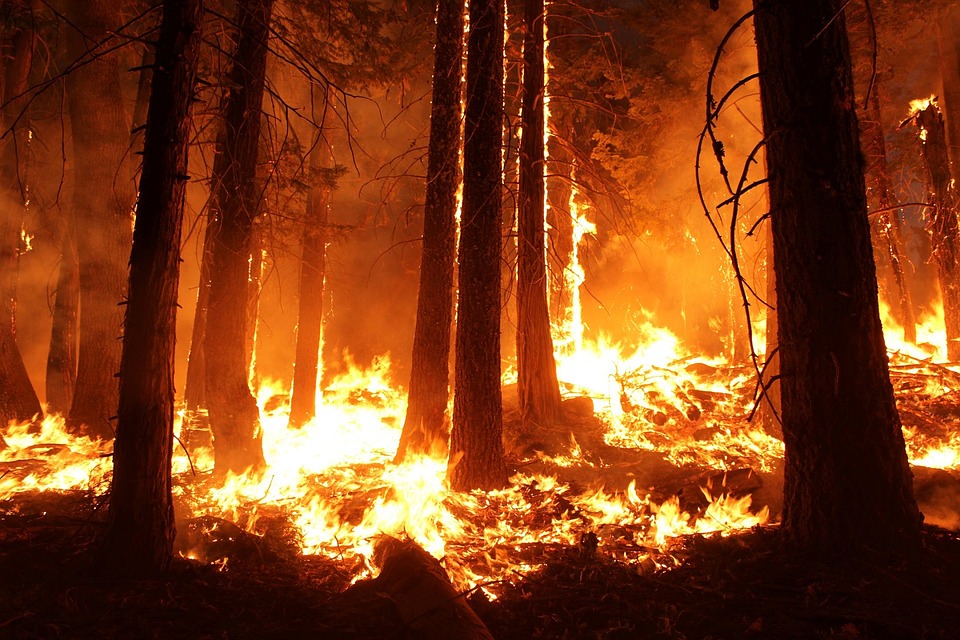
The mile-high flames were five miles wide. Fire spread through the forest at 90 to 100 mph, hot enough to turn sand into glass.

Called the most devastating fire in our history, it destroyed 1,500,000 acres of timber. When the flames were finally extinguished, an estimated 2,200 people lay dead. The blaze destroyed 12 pioneer towns.

Newspapers barely covered this story because the Great Chicago Fire happened around the same time.

-Sandra Merville Hart

Sources

Biondich, Sarah. “The Great Peshtigo Fire,” Shepherd Express, 2018/01/08 https://shepherdexpress.com/aroun-milwaukee/great-peshtigo-fire.

“Great Peshtigo Fire,” United States History, 2018/01/08 http://www.u-s-history.com/pages/h2113.html.

History.com Staff. “Massive Fire Burns in Wisconsin,” History.com, 2018/01/08 http://www.history.com/this-day-in-history/massive-fire-burns-in-wisconsin.


Black Sunday Dust Storm: April 14, 1935

Severe drought conditions struck the Southern Great Plains starting in 1930. Overfarmed and overgrazed land in several states began to blow away in the drought. Nineteen states became part of the dust bowl. Worst hit were Kansas, Texas, Oklahoma, New Mexico, Arkansas, and Nevada.

Winds whipped dust over the plains, darkening the sky for days. Thick dust covered everything and even got inside well-sealed homes. Many residents suffered chest pains and difficult breathing from “dust pneumonia.”

Folks called the dreaded dust storms “black blizzards.” These storms reached Washington DC and the East Coast, blotting out the sun and the Statue of Liberty. It even coated ships on the Atlantic Ocean with a fine layer of dust.

The worst storm came on April 14, 1935. The Sunday morning started off with clear skies. Winds died down. Folks ventured to church, hoping for rain to replenish the baked earth.

Instead, a Canadian cold front clashed with warm air in the Dakotas. The temperature fell 30 degrees. Frenzied winds created a dust cloud hundreds of miles wide and thousands of feet high. The dust storm headed to Colorado, Kansas, Oklahoma, and Texas.

Skies turned black. Folks sheltered in homes, barns, and fire stations. People caught out driving hid in their cars. “You couldn’t see your hand before your face,” recalled folksinger, Woody Guthrie.

Scary conditions convinced some the end of the world was at hand. The worst conditions were in the Texas and Oklahoma panhandles where a massive dust wall resembled a tsunami on land. Winds reached 60 MPH.

Reporters who wrote about the storm on Black Sunday referred to the southwest as a Dust Bowl for the first time.

For many residents, this storm was the last straw. They packed up and headed to California.

The drought lasted until 1939 when the rains finally returned, but not before 400,000 folks moved from the Great Plains.

-Sandra Merville Hart


Sources

“Dust Bowl,” Library of Congress, 2018/01/08 http://www.loc.gov/teachers/classroommaterials/presentationsandactivities/presentations/timeline/depwwii/dustbowl/.

History.com Staff. “Dust Bowl,” History.com, 2018/01/08 http://www.history.com/topics/dust-bowl.

History.com Staff. “Remembering Black Sunday, 80 Years Later,” History.com, 2018/01/08 http://www.history.com/news/remembering-black-sunday-80-years-later.

“The Black Sunday Dust Storm of April 14, 1935,” National Weather Service, 2018/01/08 https://www.weather.gov/oun/events-19350414.


The Johnstown Flood of 1889

In late May of 1889, days of heavy rain struck the river valley in central Pennsylvania. Residents in Johnstown, a thriving city on the Little Conemaugh River, were no strangers to flooding. When riders shouted desperate warnings of a flood’s approach, most citizens in the Pennsylvania simply moved their family and valuables to the second floor.

Yet this was no normal flood.

South Fork Dam at Lake Conemaugh, 14 miles upstream, was maintained by South Fork Fishing and Hunting Club. The eight-year-old dam needed repairs that heavy rains only worsened. Repair efforts in late May failed to halt the disintegration.

On May 31st, swollen late waters overflowed the dam’s walls around 1:00 pm. Riders rode furiously downriver to warn residents. The dam washed away at 3:10 pm, drowning workers who struggled to fix it.

Twenty million tons of water deluged small communities near the dam, picking up trees, houses, railroad cars, and people—some still alive—on its rush toward Johnston.

The flood reached the city in ten minutes, crushing or drowning 2,000 citizens. Survivors washed downstream with the dead. Some survivors held onto debris entangled 40 feet high at the city’s Stone Bridge that caught fire. The flames killed about 80 people.

A horrified telegraph worker counted 63 bodies float past his office in 20 minutes.

The tragedy claimed 2,209 lives. A waterspout was originally blamed for the dam’s collapse, but the South Fork Fishing Club President later admitted that the problem was in the dam’s weakness.

Volunteers pitched tents in the city to help survivors and bury the dead. Clara Barton and the American Red Cross were among the volunteers. A week after the catastrophe, 13 or 14 people were found living in a single room of a house. Many survivors kept their windows tightly closed against the odor of decaying bodies.

Johnstown residents rebuilt their city. They celebrated their citizens’ resilience on the flood’s 100th anniversary.

-Sandra Merville Hart

Sources

History.com Staff. “May 31, 1889: The Johnstown Flood,” History.com, 2018/01/08 http://www.history.com/this-day-in-history/the-johnstown-flood-2.


“Hundreds of Lives Lost: A Waterspout’s Dreadful Work in Pennsylvania,” Johnstownpa.com, 2018/01/08 https://www.johnstownpa.com/History/hist30.html.


The Great Natchez Tornado of 1840

May 7th began as a sultry, overcast day with a dusty haze. A continual rumble of thunder started at nine in the morning and lasted until one in the afternoon along the Mississippi River between Natchez and Vidalia.

The river teemed with activity. Boatmen on steamboats and 120 flatboats—large rafts that floated goods down to New Orleans—were at work that fateful Thursday in 1840.

The townspeople went about their business as black clouds, some swirling, caused “no particular alarm.” The sky grew so dark as they ate lunch that residents lit candles.

Driving rain fell. The tornado followed the river, uprooting massive trees. People heard the devastation for miles.

Homes, stores, and businesses on either side of the river in Vidalia and Natchez were destroyed. Crews and passengers on the river endured the worst of the storm.

The tornado whipped the river into massive waves that tossed boats and men into the air. Reports were that the water rose 10 to 15 feet. Even experienced swimmers couldn’t swim the raging waters.

An estimated 200 people from the flatboats drowned. One hundred sixteen flatboats sank. The steamboat Prairie sank while another steamboat, Hinds, floated to Baton Rouge with 51 dead aboard.

Twelve Natchez city blocks were completely destroyed, a loss that included two churches, a theater, hotels, and the town square.

Killing 317 people and injuring 109, the Great Natchez Tornado of 1840 is recognized as the second worst in the history of the United States.

-Sandra Merville Hart

Sources

Hyde, James. “The Natchez, Mississippi Tornado of 1840,” U.S. Tornadoes, 2018/01/07 http://www.ustornadoes.com/2017/05/07/natchez-ms-tornado-1840/.

Nelson, Stanley. “The Great Natchez Tornado of 1840,” Natchez.ms.us, 2018/01/07 http://www.natchez.ms.us/ArchiveCenter/ViewFile/Item/128.


A Rebel in My House Receives 2018 Illumination Silver Award!

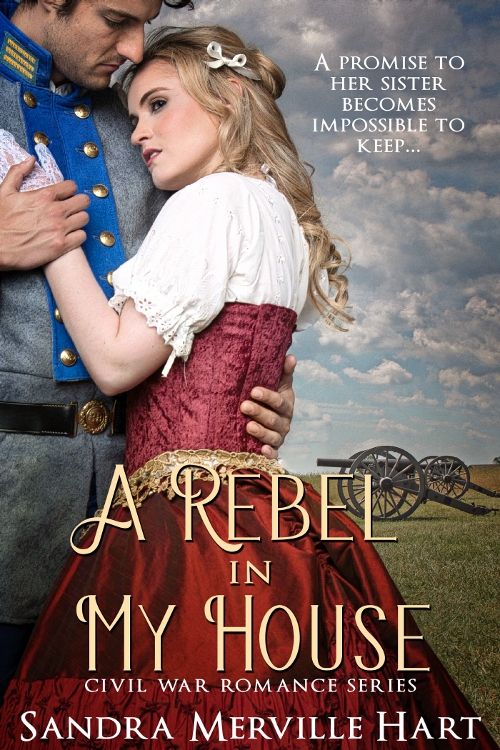
A Rebel in My House, my Civil War romance set during the historic Battle of Gettysburg, has received 2018 Illumination Silver Award in the Inspirational/ Romance Fiction category!

The Illumination Awards “are designed to honor and bring increased recognition to the year’s best new titles written and published with a Christian worldview.” Click here to see the entire list of gold, silver and bronze winners. So thrilled that my novel is included with those from such talented authors!


Great Miami Hurricane of 1926

New residents moved to Miami, Florida, in the 1920s. The newcomers knew little about the hurricane dangers to a beach-side city.  Many were drawn to Miami by a real-estate boom that collapsed. Citizens lost their homes as businesses closed their doors.

A Weather Bureau Office had been established in Miami under the leadership of Richard Gray since 1911.

Ships first reported a storm in the central tropical Atlantic to the Weather Bureau on September 11, 1926. During this time period, storm warnings came from Washington DC. Storm warnings—one step below hurricane—were issued at noon on September 17th.

Gray raised hurricane warnings at 11 pm that night. Few people owned a radio to hear the broadcasted message. Forceful winds drove ocean waves onto the shore. A seven-year-old girl remembered seeing the ocean’s waves in her backyard.

The sixty-mile wide hurricane came ashore at 2 am and lashed at the city of Miami until 6 am. Folks, thinking that the storm had passed, came out of their homes to inspect the damage. Some staying on Miami Beach and barrier islands packed up their cars and crossed bridges to the mainland.

Gray, horrified, realized new residents didn’t understand they were in the eye of the storm. He ran onto the crowded streets, shouting warnings that the worst was yet to come.

The lull lasted only about 35 minutes. Many of the approximately 100 Miami victims, killed by flying debris or drowning, were those who came outside in the eye.

Foster Stearns witnessed waves wash over the new Venetian Causeway. The ocean washed over a car speeding back to the mainland. Instantly the car and its passengers were lost.

The hurricane swept inland to Lake Okeechobee, causing a levee to give way near Moore Haven, a town of 900 on the lake’s shore. The actual number of drowning victims in Moore Haven is unknown, though it may be as many as 300. The town was under water for 8 weeks.

The U.S. Weather Bureau in Miami described the hurricane as “probably the most destructive hurricane to strike the United States.”

-Sandra Merville Hart

Sources

Cribb, Betsy and Phillips, Lauren. “10 Most Disastrous Hurricanes in U.S. History, Coastal Living, 2018/01/07

https://www.coastalliving.com/worst-hurricanes-united-states-history#charley-2.

“Great Miami Hurricane of 1926,” National Weather Service, 2018/01/07 https://www.weather.gov/mfl/miami_hurricane.

McIver, Stuart. “1926 Miami: The Blow that Broke the Boom,” Sun-Sentinel, 2018/01/07  http://www.sun-sentinel.com/news/sfl-1926-hurricane-story.html.

Great White Hurricane of 1888

Heavy snow and wind gusts as high as 85 miles per hour brought whiteout conditions to New York City at midnight on Sunday, March 11, 1888.

Snow drifts had reached the second story of buildings in some areas, yet folks in that city braved the snow on Monday morning to get to work. Many of the elevated trains were blocked by snow drifts, stranding about 15,000 people.

Most city residents who made it to work or school left early—then had a treacherous journey back home.

Railroads and streetcars shut down. Roads were impassible. Train passengers were stuck for days. Two hundred ships wrecked because of the storm.

Telegraph wires fell. Gas lines and water lines—all above-ground—froze.

The storms historic three-day snowfall reached 55 inches in Troy, New York. Snow and high winds affected all those living along the Atlantic coast. About 25% of Americans lived from Washington D.C. to Maine, the area affected by the storm.

Stores ran out of fresh meat, canned meat, and salt meat. Scarce food was sometimes sold to the highest bidder, not to loyal regular customers.

Over 400 people died as a result of this Great White Hurricane—200 were in New York City.

Mark Twain, the beloved author, was stranded at a New York hotel. P.T. Barnum, also stuck at a hotel, entertained other folks likewise stranded at Madison Square Gardens.

-Sandra Merville Hart

Sources

History.com Staff. “Major Blizzards in U.S. History,” History.com, 2018/01/07

http://www.history.com/news/history-lists/major-blizzards-in-u-s-history.

History.com Staff. “March 11, 1888: Great Blizzard of ’88 hits East Coast,” History.com, 2018/01/07

http://www.history.com/this-day-in-history/great-blizzard-of-88-hits-east-coast.

“Surprising Stories: The Great White Hurricane of 1888,” New England Historical Society, 2018/01/07

http://www.newenglandhistoricalsociety.com/great-white-hurricane-of-1888/.


Civil War General Lee Sends a Frightening Message


Confederate President Jefferson Davis and his family lived in the executive mansion in Richmond, Virginia. Citizens grew accustomed to hearing artillery fire in nearby Petersburg after months of fighting. With General Robert E. Lee in command, they felt safe.

Confederate President Jefferson Davis didn’t feel quite as secure. By the morning of April 2, 1865, he had already sent his family away from the city.

Still, when Davis received a message during church services on Sunday morning, April 2, color drained from his face. He immediately exited the church, leaving the congregation to wonder what momentous event had occurred to warrant his haste.

The telegram was from General Lee. He advised Davis to leave Richmond that night.

Davis issued orders to evacuate the Confederate government, though citizens were not given notice for hours. However, the sight of official documents burning in front of government buildings warned of terrible events.

Citizens learned that the government was evacuating at 4 pm. Officials and other prominent citizens abandoned the city rapidly. They exited by train. They rode out on horseback, carts, and carriages. They boarded canal barges and boats to avoid the Union soldiers.

Davis arranged to leave by train at 8:30 pm yet continued to hope it wouldn’t be necessary. He and three cabinet members delayed leaving until 11 pm. Confederate soldiers crossed the river on pontoon boats.

Chaos reigned in Richmond. City officials ordered men to destroy kegs and bottles of liquor from saloons and warehouses. They poured them into street drains, attracting crowds. Folks scooped up whiskey in boots and hats to gulp it down.

Richmond’s military commander, Lieutenant General Richard Ewell, stayed behind with a few soldiers to burn the city’s supplies of cotton, tobacco, and food. These were set afire inside buildings with the fire department nearby to keep it under control.

The stocks of meat, coffee, and other staples enraged starving citizens. They grabbed the food and then began looting stores. Fires blazed out of control. Arsenals on ships exploded.

Fires still burned the next morning when Union cavalry arrived.

-Sandra Merville Hart

Source

“Reaction to the Fall of Richmond,” Civil War Trust, 2017/10/29 https://www.civilwar.org/learn/articles/reaction-fall-richmond.


12 Christmas Songs Children Love

by Sandra Merville Hart

I start listening to Christmas music in November. Christmas carols put me in the mood for holiday baking, decorating, and shopping.

Children love to sing. They may sing in school and church programs around the holidays. There are so many Christmas songs that children love that I had difficulty narrowing it down to twelve. Hope this list includes some of your favorites.

12)  “Mary’s Boy Child”

11)  “Frosty the Snowman”

10)  “Christmas Time is Here”

9)   “Twelve Days of Christmas”

8)   “Jingle Bell Rock”

7)   “Jingle Bells”

6)   “Do You Hear What I Hear?”

5)   “Holly Jolly Christmas”

4)   “Silent Night”

3)   “Deck the Halls”

2)   “Little Drummer Boy”

1)   “Santa Claus is Coming to Town”

What is your favorite Christmas song?


https://www.amazon.com/Sandra-Merville-Hart/e/B00OBSJ3PU/