Banana Cream Filling

by Sandra Merville Hart

I had several bananas that I needed to use and found a banana cake recipe in The Fannie Farmer Cookbook. It suggested filling this cake with banana cream filling. I’m sharing the cake recipe separately. The filling only takes a few minutes to make and it’s delicious!

Mash 1 banana and beat it. (I used a hand mixer.) Add 2 tablespoons of lemon juice. One fresh lemon provided enough juice for this recipe. Set aside.    

Mix together ½ cup of sugar, 3 tablespoons of flour, and 1/8 teaspoon of salt. Set aside.

Heat 1 cup of milk in a heavy saucepan over medium heat until it’s almost ready to boil. Remove from heat.

Stir the milk into the dry ingredients until well-blended.

Pour the mixture back into the saucepan. Using low heat, whisk constantly for 4 – 5 minutes until the custard turns smooth and thick.

Stir in 2 slightly beaten egg yolks and cook a couple more minutes.

Remove from heat. Let it cool, stirring occasionally, and then stir in the reserved banana mixture.

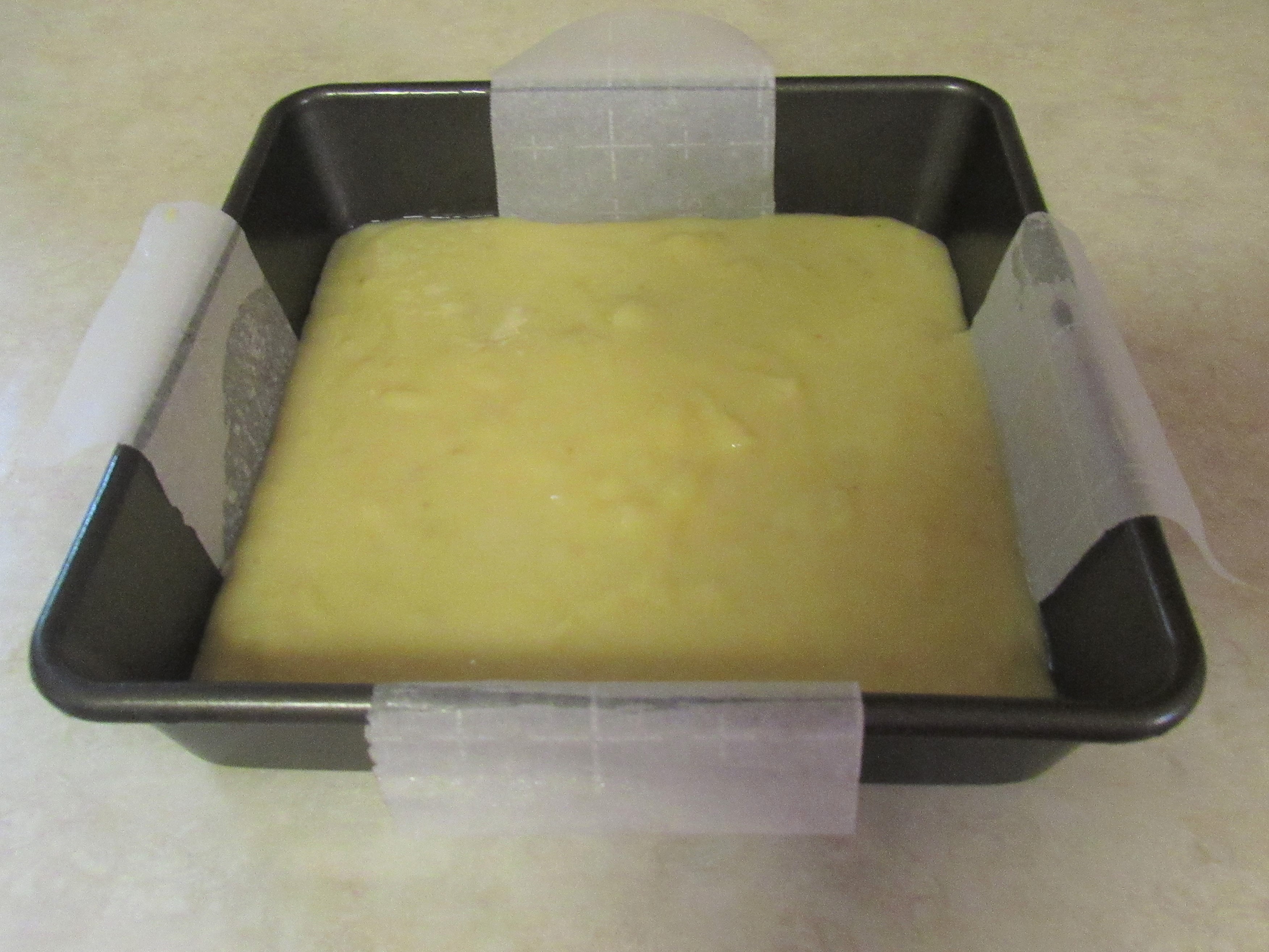
Delicious! Smooth and creamy and thick. The flavor reminded me of banana pudding. As I said, I used it as filling for banana cake. I poured it into the cake pan to set so that it was the right size. I froze it initially to set it and make it easier to add as a cake filling.

This is a creamy filling and has a nice banana flavor. My husband loved it!

I will definitely make this again.

Source

Revised by Cunningham, Marion and Laber, Jeri. The Fannie Farmer Cookbook, Alfred A Knopf Inc., 1983.

Portsmouth Frosting

by Sandra Merville Hart

I baked a banana cake from a recipe in The Fannie Farmer Cookbook. It suggested icing the cake with Portsmouth Frosting. It’s a quick, easy frosting that will taste delicious on many types of cakes.

Melt 4 tablespoons of butter. Set aside to cool.

Whip ¼ cup heavy whipping cream in a mixer for a minute or two until it thickens and begins to form soft peaks. (I used a hand mixer.) Add 1 teaspoon of vanilla or rum. (I chose vanilla.) Gently stir in the melted butter.

While using the mixer, add 3 cups of confectioners’ sugar a little at a time, beating the mixture until it is thick and creamy.

I frosted a banana cake with this icing. It wasn’t quite enough to frost the entire cake and I made a second batch.     

This is a delicious frosting with a light, smooth, and creamy consistency. It takes between 5 – 10 minutes to prepare and I had all the ingredients in my fridge or pantry. Recommend!

I will definitely make this again.

Source

Revised by Cunningham, Marion and Laber, Jeri. The Fannie Farmer Cookbook, Alfred A Knopf Inc., 1983.

Cottage Cheese Griddlecakes

by Sandra Merville Hart

I happened to notice this recipe for cottage cheese griddlecakes (pancakes) in The Fannie Farmer Cookbook while preparing another dish. I did a double-take. Yes, this pancake recipe has cottage cheese as the main ingredient. It was too different—I had to try it.

Place 1 cup of cottage cheese in a sieve. (I used a colander.) Press the cottage cheese down to start removing the moisture. Let it stand in the sieve for an hour over a bowl to allow it to dry.

Beat 3 eggs well in a medium-sized mixing bowl. Add the cottage cheese, 2 tablespoons melted butter, ¼ cup of flour, and ¼ teaspoon of salt. Stir together just enough to blend the ingredients.

Add pats of butter to your griddle or skillet and allow it to melt on a medium heat. (A cast iron skillet worked best for me.) Pour ¼ cup of batter onto the hot skillet.

These griddlecakes are delicate. Wait slightly longer to turn than you would a normal pancake or they will fall apart. Then turn them gently.

What’s immediately noticeable is the difference in texture so your first pancake might be too done or not done enough as you figure it out. I let them cook a minute and then started to work the spatula around the edges to prepare it for turning.

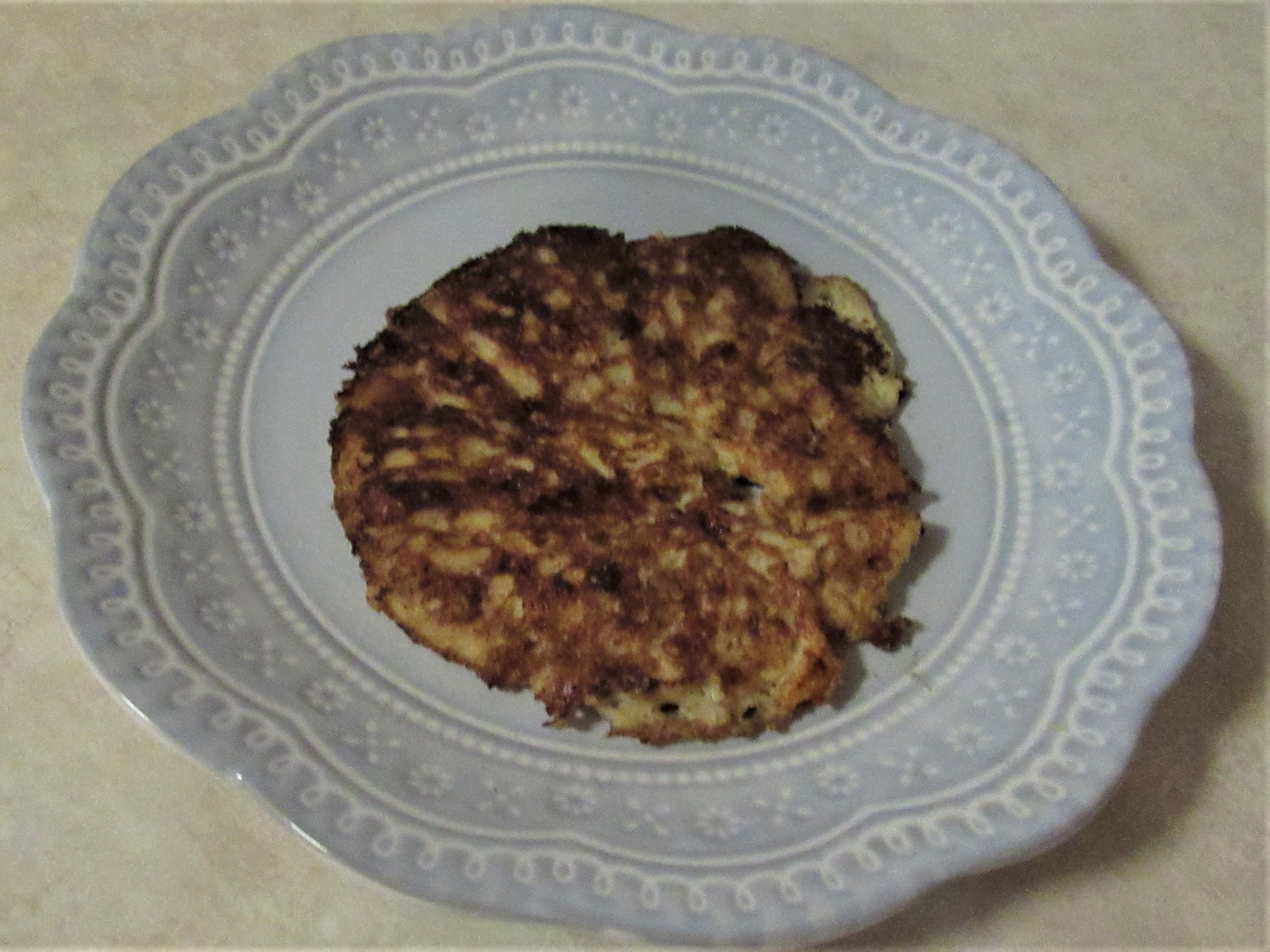
Surprisingly good! In fact, they reminded me more of a potato pancake with the soft center than a regular pancake. Actually, the taste and texture is about halfway between breakfast pancakes and potato pancakes. They aren’t sweet and require no syrup. Two were a filling, satisfying meal.

I noticed that these were Keto except for the flour so I made them again. This time I substituted the flour for almond flour. I liked these even better with the hint of almond flavor—and they are low carb!

I love to find easy recipes for items normally stocked in the fridge and pantry. I’ll make this again when I want a low-carb pancake.

Let me know what you think!

Sources

Revised by Cunningham, Marion and Laber, Jeri. The Fannie Farmer Cookbook, Alfred A Knopf Inc., 1983.

Blueberry Griddlecakes

by Sandra Merville Hart

My preschool grandchildren love to cook with me so I often search for easy recipes to involve them. This recipe for griddlecakes (pancakes) from The Fannie Farmer Cookbook fit this criteria. So with a few messy adventures along the way, the three of us made blueberry pancakes.

Wash ½ cup of blueberries and set on paper towels or a cloth towel to drain.

Sift 1 cup of flour in a separate bowl. Mix in 2 teaspoons baking powder, 2 tablespoons sugar, and ½ teaspoon of salt and set aside.

In another mixing bowl, stir together ½ – ¾ cup milk (you’ll add more if needed for the right consistency as you combine all the ingredients later,) 1 slightly beaten egg, and 2 tablespoons melted butter.

Add the flour mixture all at once to the wet ingredients. Add more milk, a little at time, to achieve the desired consistency.

Fold in ½ cup reserved blueberries. (I doubled the recipe and poured half the batter into a separate bowl and then added the berries to only one of the batters. This way we had plain pancakes for family members who preferred that over blueberry pancakes.)

Spray your griddle or skillet with cooking spray, or use enough vegetable oil to barely coat the bottom. Heat to a moderate heat. Two tablespoons of batter make a small pancake. Use a ¼ cup of batter for larger pancakes.

Cook the pancakes on one side until the top is full of bubbles and then turn with a spatula to brown the other side.

You can keep them in a 200-degree (Fahrenheit) oven so they stay warm until all the griddlecakes are cooked.

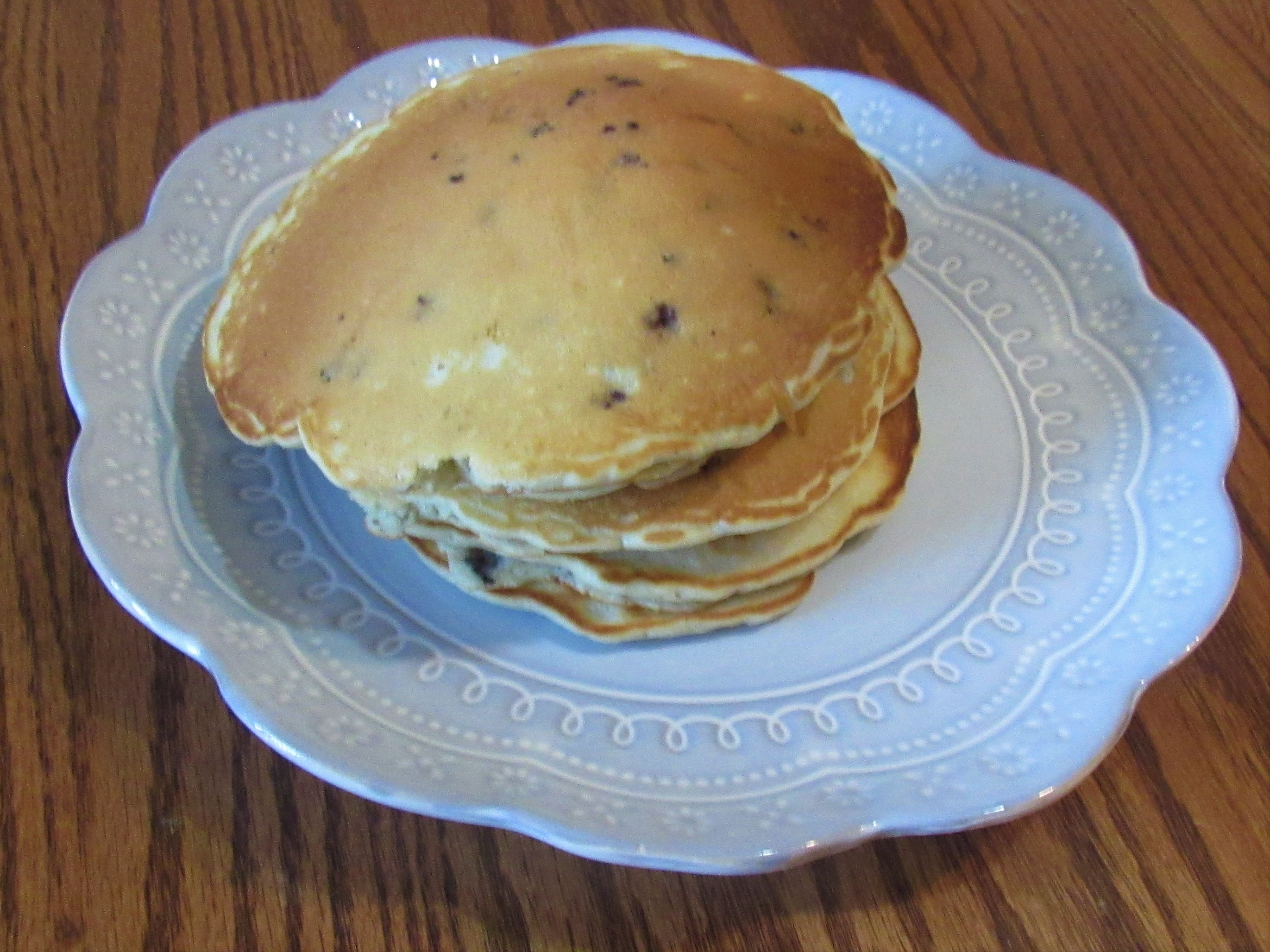
We actually served these with bacon for a fun brunch meal with the children. It was a big hit. Both children cleaned their plate and ate every bite of pancake! I can’t often say that about them. 😊

I think that perhaps another tablespoon of sugar would have enhanced the flavor of the blueberry pancakes. Perhaps another ¼ cup of berries—or a heaping ½ cup—wouldn’t be a bad idea either. Though it was a tasty meal, it seems I am always looking for ways to improve new dishes I try.

Making pancakes from scratch is nearly as easy as using a boxed mixture—and you probably have the ingredients in your pantry.

This is a good and easy recipe if you’d like to try it.

Sources

Revised by Cunningham, Marion and Laber, Jeri. The Fannie Farmer Cookbook, Alfred A Knopf Inc., 1983.

Asparagus Salad

by Sandra Merville Hart

I had about a pound of asparagus in my fridge so I checked my 1877 cookbook, Buckeye Cookery and Practical Housekeeping, for recipe ideas. The one that snagged my attention was for asparagus salad. It was almost time for supper and this quick and easy recipe sounded delicious.

Mrs. Lewis Brown, an 1877 cook, provided this recipe. She gave no measurements.

Wash the asparagus and set on paper towels or a cloth towel to drain. Slice off the bottom third of each asparagus spear to remove those tough, fibrous section.

Boil water to blanch the vegetables. Add a teaspoon of salt to the water.

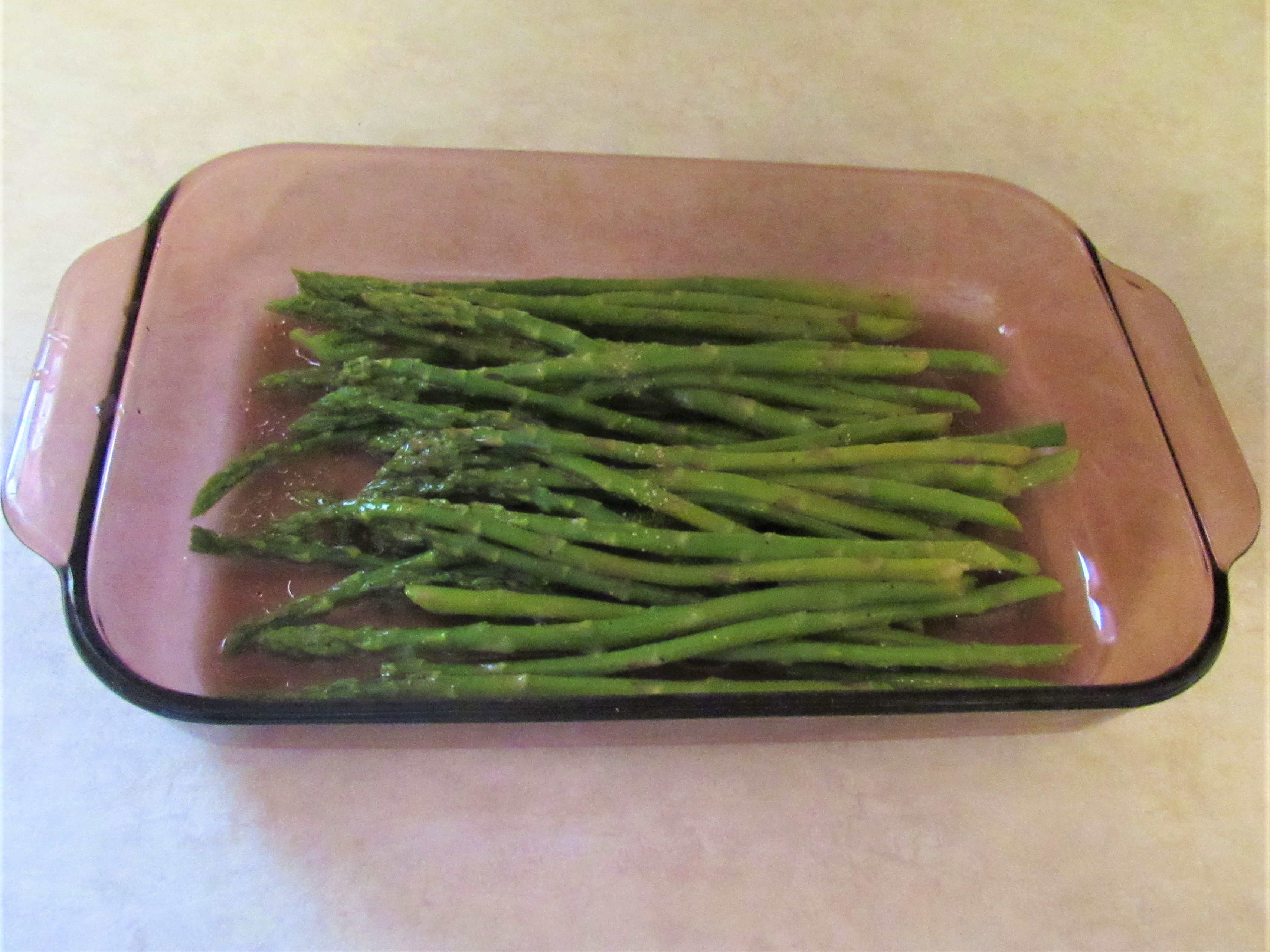
Place the asparagus in the boiling water. Cover and cook for 2 – 3 minutes for desired tenderness. I cooked them for 3 minutes.

Remove the vegetables from the water immediately. Add ¼ teaspoon pepper, ½ teaspoon salt, and 3 tablespoons of apple cider vinegar. Mrs. Brown suggested using strong cider vinegar. I had raw apple cider vinegar on hand and used that.

Once the asparagus has cooled, place it in a serving dish. Whisk 3 tablespoons of olive oil with the vinegar that the vegetables marinated in and pour over the top. (Mrs. Brown’s recipe says that you can replace the olive oil with melted butter—your choice.)

As mentioned, Mrs. Brown provided no measurements so I guessed at quantities. I used a 1:1 ratio for vinegar and olive oil. Next time I will reduce the oil to 2 tablespoons to allow a stronger vinegar taste.

I really enjoyed this salad. The vinegar flavor enhanced the dish with a nice snap. The olive oil added a smooth texture.

It could have used a bit of crunch. Next time I will toast some almonds and sprinkle them on top of the salad.

A quick and easy summer salad!

Sources

Compiled from Original Recipes. Buckeye Cookery and Practical Housekeeping, Applewood Books, 1877.

Ann’s Southern Fried Blackberry Pie

Fellow author and friend Shelia Stovall shares a family recipe from her novel with us today. Welcome to Historical Nibbles, Shelia!

by Shelia Stovall

Thank you, Sandra, for the opportunity to share my recipe for Southern Fried Blackberry pies. 

According to Wikipedia, fried pies were known as “Crab Lanterns” in the American South. This term dates back to at least 1770. It may originate from crabapple pies that had slits for ventilation, thus resembling a lantern.

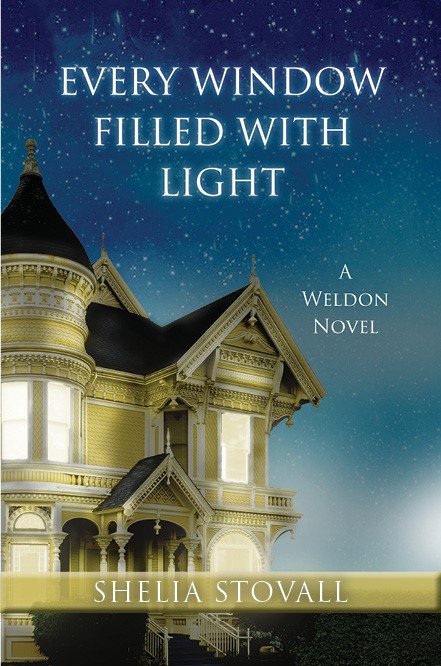
In my book, Every Window Filled with Light, Mrs. Dot, the owner of Dot’s Deluxe Diner, features a different flavor of fried fruit pie each week. The idea to do this in my novel came to me while I waited in line at Habegger’s Amish Market. My mouth watered as I stared at their fried pie display. In Every Window Filled with Light, blackberry is Pastor Bob’s favorite fried pie. So, I’m sharing my mom’s recipe for Southern Fried Blackberry Pies. I’m sure she never bought a blackberry in her life. We picked wild blackberries in late June.

Mama made her pie crusts with lard, but I buy pie crusts. It needs to be at room temperature or the crust might crack.

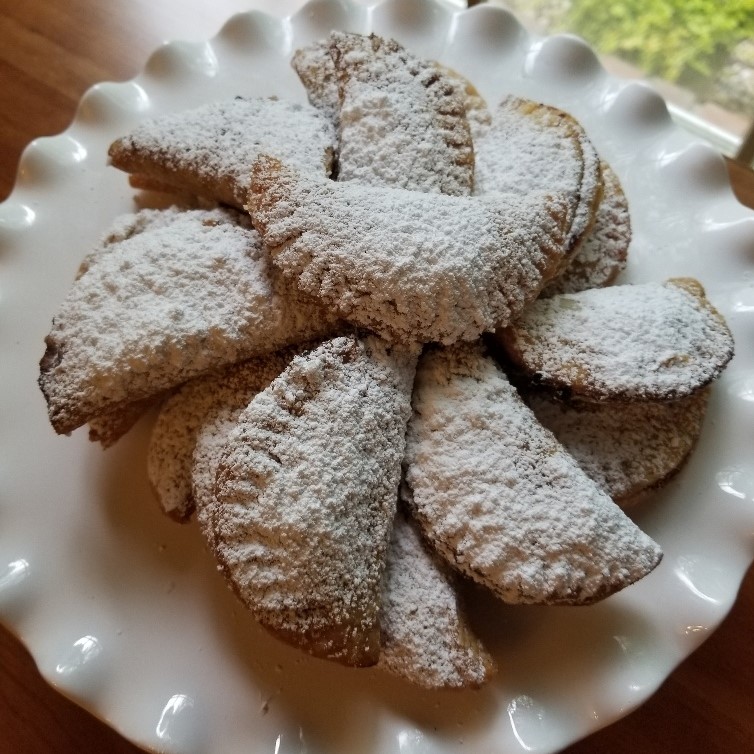
I sprinkle powdered sugar on my cooled pies to hide flaws while mom served them plain.

Ann’s Southern Fried Blackberry Pie

Ingredients:

  • 3 cups blackberries
  • 1 teaspoon lemon juice
  • ¾ cup brown sugar
  • 2 tablespoons salted butter
  • ¼ cup water (to dissolve corn starch)
  • 1 tablespoon corn starch
  • Vegetable oil
  • Sifted powdered sugar
  • 1 box rolled pie crust from the refrigerated section of your grocery.

Filling:

  • Combine blackberries, lemon juice, brown sugar, melted butter. Mash berries, bring the mixture to a boil, and then stir in dissolved corn starch and simmer until thickened. (About 5 minutes.) Set aside until completely cool. (About an hour.) It’s okay to store in the refrigerator overnight.
  • Unroll the pie crust on waxed paper.
  • Cut into 3 ½ inch circles with cookie cutter or glass.
  • Place 1 teaspoon of cooled blackberry mixture in the center of each circle. Moisten edges of pastry; fold in half, making sure edges are even. Press pastry edges together firmly with a fork dipped in flour.
  • Heat 1 to 2 inches of oil in a skillet to 375° (I prefer an iron skillet). Cook 4 to 5 pies at a time until golden brown on both sides, turning once. (About 2 minutes on each side.)
  • Drain well on a wire rack on a cookie sheet for at least 15 minutes and then sprinkle with powdered sugar.

Depending on the size of your pies, this recipe will make about 12 – 14 pies. You will have about a cup of filling left. I usually refrigerate this and use it on toast. Yummy!

I believe there’s a fruit for every season of life. I hope you’ll try my recipe and let me know what you think.

22 But the fruit of the Spirit is love, joy, peace, patience, kindness, goodness, faithfulness, 23 gentleness, self-control; against such things there is no law. Galatians 5:22-23 ESV.

About Shelia:

Shelia Stovall is the director of a small-town library in southern Kentucky, where only strangers mention her last name, and the children call her Miss Shelia.

Missionary travels are taking her to Africa—again. She’s the self-proclaimed worst missionary ever, but is glad God continues to send her.

Shelia and her husband Michael live on a farm. Spending time with family, especially her grandchildren, is her all-time favorite thing. The only hobby Shelia loves more than reading uplifting stories of hope is writing them.  

Connect with Shelia on her blog.

Every Window Filled with Light

Welcome to Weldon, Kentucky, where the only things the locals love more than fried pies are gossip and match-making.

Librarian Emma Baker, a young and childless widow, believes her dream to build a family is over. It’s been two years since a student accidentally stabbed Emma’s husband to death, and her grief has stifled any interest in romance—until she meets Pastor Luke Davis. But when Emma learns Luke is counseling her husband’s killer fresh out of jail, her temper gets in the way.

Meanwhile, Emma discovers twelve-year-old Harley, abandoned by her drug-addict mother, hiding in the library, and takes the girl in as her foster mom. Then a young mother is made homeless by an apartment fire, and Emma opens her home again. One person and one prayer at a time, Emma begins to discover hope.

https://www.amazon.com/Every-Window-Filled-Light-Weldon/dp/1649491697/


Fannie Farmer’s Chocolate Bread Pudding

I bought The Fannie Farmer Cookbook, originally published in 1896. I’ve always loved bread pudding AND chocolate desserts. I couldn’t resist trying it.

The recipe calls for homemade bread crumbs. Since I make banana bread often, I wondered how this would taste in this bread pudding. First, I made my banana bread. Using 3 bananas enhances the fruit flavor of the bread.

Preheat oven to 325 degrees.

Chop homemade bread (I used banana bread as an experiment) until you have 2 cups of crumbs.

Melt ¼ cup of butter and set aside.

Heat 4 cups of milk to scalding.

Spray or butter a 1 ½ or 2-quart baking dish and set aside.

Break 2 ounces of unsweetened chocolate into small pieces and melt them in the milk. Stir until the mixture is smooth.

Add the bread crumbs and stir until mixed. Set aside until it cools to lukewarm.

Then add the butter, 1/3 cup sugar, ¼ teaspoon salt, 1 teaspoon vanilla, and 2 slightly beaten eggs. Mix well.

Pour the mixture into the prepared dish and bake at 325 degrees for about 50 minutes or until set.

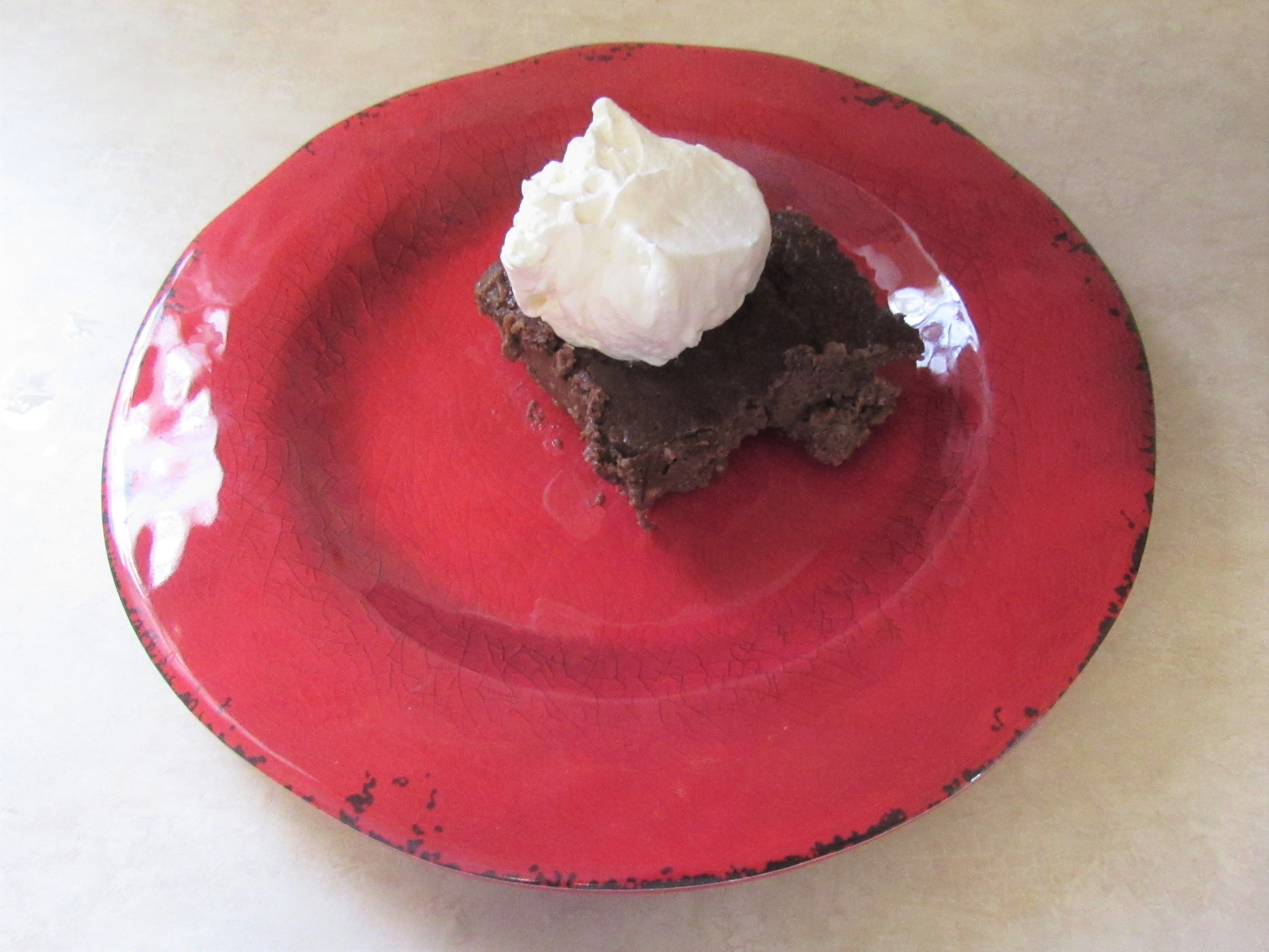
Serve it chilled with whipped cream. (If you have heavy whipping cream on hand, make you own whipped cream. You can’t beat the fresh, creamy flavor!)

I tried this without whipped cream. It’s a moist pudding. This was enough chocolate for this chocolate lover, but it overpowered the banana flavor. Whipped cream definitely enhanced this delicious dessert.

The banana bread added to the moist quality of the pudding but not to the flavor. I will use homemade white bread next time.

I’d love to hear if you try this recipe.

-Sandra Merville Hart

Sources

Revised by Cunningham, Marion and Laber, Jeri. The Fannie Farmer Cookbook, Alfred A Knopf Inc., 1983.


Fannie Farmer’s Lemon Pudding

I bought The Fannie Farmer Cookbook, originally published in 1896. I wanted a lemon dessert and found a recipe for lemon pudding in this book.

What appealed to me about this “old favorite” was its claim of “soft lemony custard on the bottom and sponge cake texture on top.”

Preheat oven to 350 degrees.

Separate 3 eggs and set aside.

Beat 2 tablespoons of butter until soft. Stir in 7/8 cup sugar a bit at a time, until the butter and sugar are blended. Add egg yolks one at a time and stir before adding the next yolk.

Stir in 1 cup of milk and 1 ½ tablespoons of all-purpose flour. Add the zest of 1 lemon and 1/3 cup lemon juice—1 large lemon provided enough juice for this recipe.

Beat the mix. The recipe said that the mixture will look curdled, which mine didn’t. I blended the butter and sugar completely—perhaps that made a difference. Set this mixture aside.

Using a mixer, beat the egg whites until they are at soft peaks. Fold this gently into the batter.

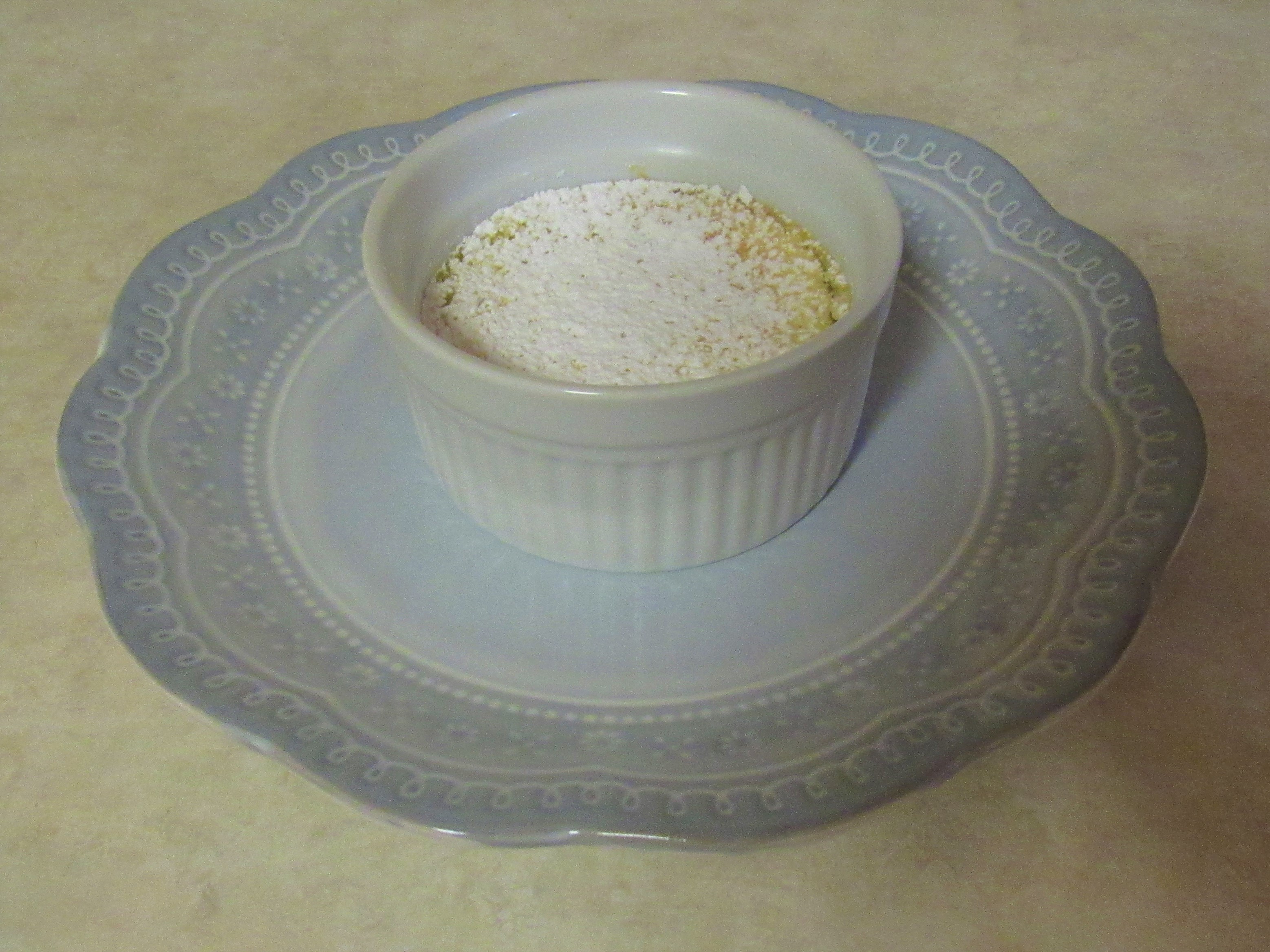
You can use a 1 ½ quart baking dish or ramekins for individual servings as I did. (Mine made 7 servings.) Prepare with cooking spray and spoon into the dish(es). Set in a pan and pour hot water around the dish until it is halfway up the side.

Bake in preheated oven at 350. If using 1 large dish, bake 50-60 minutes or until very lightly browned. Individual dishes take less time, about 30-35 minutes. When it was cool, I sprinkled powdered sugar over the top. Serve cool or cold.

Delicious! Both my husband and I thought that the lemony flavor of the dish was plenty. The two different textures—custard on the bottom and sponge cake on top—made it a unique dessert. We loved it!

I will make this again.

-Sandra Merville Hart

Sources

Revised by Cunningham, Marion and Laber, Jeri. The Fannie Farmer Cookbook, Alfred A Knopf Inc., 1983.


Civil War Food Prices Escalate in Richmond

by Sandra Merville Hart

The Confederate Capitol was officially transferred to Richmond, Virginia, on May 21, 1861. Confederate President Jefferson Davis moved there with his family.

Richmond’s prewar population of 38,000 swelled to 100,000 by 1865. This caused food shortages as the war continued.

By early 1862, the cost of food had risen. Bacon was 25 cents a pound. Butter was up to 50 cents a pound. Beef had risen from 13 to 30 cents a pound for poor quality meat. Fish, even shad or rockfish, was expensive.

Folks paid $1.50 for a pound of coffee. At that price, ladies used roasted rye or roasted corn as substitutes for coffee. Some used dried willow leaves to replace tea.

As the war continued, some residents resorted to “Dutch treats,” when entertaining guests at dinner parties. Guests attending such dinners provided delicacies like brandied peaches, sardines, or French prunes for the meal.

Oriental’s Bill of Fare dated Monday, December 21, 1863, shows a variety of choices. This Richmond restaurant boasted of “Game of All Kinds (In Season)” and “Meals Furnished at All Hours.”

Here are a few of their menu items and prices:

Soups: Beef, Chicken, Vegetable, Clam, Oyster, Terrapin, Turtle, Mock Turtle—$1 each

       Fowls: Roast Turkey, Roast Goose, Roast Ducks, Roast Chicken—$3 per plate

       Fish: Shad, Perch, Herring, Crabs and Lobsters—$3 per plate

       Meats: Roast Beef, Roast Mutton, Roast Lamb, Roast Veal—$3 each

      Steaks: Beefsteaks, Pork Steaks, Mutton Chops, Veal Cutlets, Venison Steaks—$3 each

       Sundries: Ham and eggs, Poached eggs, Scrambled eggs, Fried eggs, Omelets—$3 each

       Oysters: Fried oysters, Scalloped oysters, Raw oysters—$3 each

       Birds: Partridge, Robin, Snipe, Woodcock–$3 per pair

       Vegetables (many choices marked as unavailable): Irish Potatoes, Sweet Potatoes, Cabbage, Lettuce, Onions, Celery—50 cents

      Non-alcoholic beverage choices were Pure coffee—$2.50, Pure tea—$2, Fresh milk—50 cents.

     Wines: Champagne, Madeira, Claret, Port

     Liquors: French Brandy, Apply Brandy, Peach Brandy, Rye Whiskey

     Malt Liquors: Ale, Porter

Even Fine Havana Cigars were on the menu. It’s difficult to read the prices for the alcoholic drinks and determine if it was sold by the bottle or glass. For instance, champagne has $40 marked by it in pen.

In contrast, Corinthian Hall’s Bill of Fare, from March 28, 1864, shows price increases in only three months. These are grouped by price:

     $7.50—Ham and Eggs, Tenderloin Steak, Beefsteak and Onions, Oyster Fried, Oyster Boiled, Oyster Scalloped

       $5—Veal Cutlets, Mutton Chops, Boiled Ham, Fish, Omelet-herb

       $2—Potatoes cream, Potatoes fried, Celery, Toast, Butter

       $4—Coffee per cup

These old menus give us a glimpse back into history—what a treasure!

Sources

“Richmond in the Midst of the Civil War,” Virginia Museum of History & Culture, 2021/02/04 https://www.virginiahistory.org/collections-and-resources/virginia-history-explorer/richmond-midst-civil-war.

Mortimer, Gavin. Double Death: The True Story of Pryce Lewis, the Civil War’s Most Daring Spy, Walker & Company, 2010.
Feeding the Sick and Wounded in Civil War Richmond

by Sandra Merville Hart

The Confederate Capitol was officially transferred to Richmond, Virginia, on May 21, 1861. Confederate President Jefferson Davis moved there with his family.

The city with a prewar population of 38,000 swelled to 100,000 by 1865.

Soldiers were part of that number, including sick and wounded at over thirty hospitals. The largest of these was Chimbarazo—included in its 120 buildings was a bakery. Winder Hospital had 98 buildings with a farm.

One of the smaller hospitals was Mississippi Hospital No. 7 at Howard’s Grove. The surgeon in charge was William J. Moore in 1862. A patient’s diet could be restricted to “full,” “half,’ or “light” by the doctors. I found a copy of the Bill of Fare for this hospital in 1862.

Choices in a Full Diet included:

Soups: Beef, Chicken, Oyster

       Fish: Perch, Trout, Cat Fish*

       Roasts: Beef, Mutton, Pork, Chicken, Duck

       Boiled: Beef

       Fricassee (stewed or fried meat served in a thick white sauce): Mutton Chops, Beefsteak*, Chicken, Pork Chops, Sausage, Venison, Quail, Eggs

       Vegetables: Irish Potatoes, Sweet Potatoes, Cabbages, Onions, Beets, Carrots, Celery

Choices in a Half Diet included:

Soups: Beef, Chicken, Oyster

       Fish: Perch, Trout, Cat Fish*

       Boiled: Chicken, Eggs

       Vegetables: Irish Potatoes, Sweet Potatoes, Onions

Choices in a Light Diet included:

Butter Toast, Milk Toast, Dry Toast, Roast Apples, Oyster Soup, Beef Tea, Rice Pudding, Rice Boiled, Custard Pudding, Molasses, Soft Boiled Eggs

       Breads: Biscuit, Rolls, Egg Bread, Corn Bread*, Baker’s Bread, Family Bread

Beverage choices were coffee, chocolate, green & black tea, milk.

Surgeons could order extras for patients:

Blanc Mange*, Wine Whey, Calve’s* Feet, Arrow Root Pudding, Oranges, Apples

Food shortages due to the swelled population affected Richmond as the war continued. It’s likely that a later menu wouldn’t contain these same choices.   

*Spelling from 1862 menu

Sources

“10 Facts Richmond Virginia,” American Battlefield Trust, 2021/02/04 https://www.battlefields.org/learn/articles/10-facts-richmond-virginia.

“Richmond in the Midst of the Civil War,” Virginia Museum of History & Culture, 2021/02/04 https://www.virginiahistory.org/collections-and-resources/virginia-history-explorer/richmond-midst-civil-war.

Mortimer, Gavin. Double Death: The True Story of Pryce Lewis, the Civil War’s Most Daring Spy, Walker & Company, 2010.