Last Confederate Surrender

by Sandra Merville Hart

Most people believe the Civil War ended when Confederate General Robert E. Lee surrendered his Army of Northern Virginia to Union General Ulysses S. Grant at Appomattox on April 9, 1865. Not exactly. There were several other Confederate armies that had to surrender.

Rather than surrender, Colonel John S. Mosby, leader of “Mosby’s Raiders,” disbanded his cavalry troops on April 21, 1865.

General Joseph E. Johnston’s Army of Tennessee surrendered at the Bennett Place to Union General Sherman with the final agreement signed on April 26, 1865.

Lieutenant General Richard Taylor surrendered his  Department of Alabama, Mississippi, and East Louisiana to Union Major General Edward Canby at Citronville, Alabama, on May 4, 1865.

Major General Dabney Maury surrendered his  Confederate District of the Gulf  to Union Major General Edward Canby at Citronville, Alabama, on May 4, 1865.

Brig. General M. Jeff Thompson surrendered his  Sub-District of Northwest Arkansas at two Arkansas locations, Wittsburg and Jacksonport, on May 11, 1865.

Brig. General William T. Wofford surrendered his Department of North Georgia    to Union Brigadier General Henry M. Judah in Kingston, Georgia, on May 12, 1865.

Lieutenant General Edmund Kirby Smith, commander of Trans-Mississippi Department, signed a surrender aboard the USS Fort Jackson just outside Galveston Harbor on June 2, 1865.

Cherokee General Stand Watie surrendered his First Indian Brigade at Doaksville on June 23, 1865.

After General Lee’s surrender, the other Confederate armies soon followed.

Yet the last surrender may surprise you, for this one didn’t even take place in the United States.

The CSS Shenandoah was purchased in England for the Confederate States Navy in 1864. Formerly the Sea King, the ship was converted to a warship in the Atlantic Ocean near the Spanish coast. Confederate Lt. James Iredell Waddell commanded the ship.

Waddell renamed the ship CSS Shenandoah. It required at least 150 men to sail and operate the warship. When he left the coast of Spain, he had only recruited 43 men for his crew. Since the ship’s task was to disrupt Union shipping, Waddell and his officers decided to increase its crew from the capture of Union ships.

They sailed toward the Cape of Good Hope and then toward Melbourne, Australia, successfully capturing Union ships, cargo, and crews. Some ships were burned or sunk and others were ransomed. The officers and crew of CSS Shenandoah had been quite successful in pursuing Union merchant ships when they had to stop for repairs on January 25, 1865, in Melbourne, Australia.

The crew grew from captured crew members just as Waddell had hoped.

After repairs were completed, Waddell sailed the Pacific Ocean in search of the American whaling fleet and captured ships near the equator in April. The CSS Shenandoah had set sail for the Bering Sea when General Robert E. Lee surrendered at Appomattox on April 9, 1865, though Waddell, being in the middle of the ocean, was unaware of this first of several surrenders. He continued his pursuit of Union merchant ships.

Upon reaching the Bering Sea on June 21st, the CSS Shenandoah captured two whalers the next day. Captain Francis Smith of the William Thompson informed Waddell that the war had ended. Waddell didn’t believe him and burned both the William Thompson and the Euphrates as Union ships.

If the war had ended as Captain Smith claimed, future capture of Union ships risked a charge of piracy. Unconvinced, Waddell continued his mission.

Thirty-eight ships had been captured or destroyed by the CSS Shenandoah when Waddell learned of the war’s end from a source he trusted. The crew of the Barracouta, a British ship, gave him the news on August 2, 1865.

Hoping to escape being charged with piracy and hung, Waddell sailed for Liverpool, England. The 9,000-mile voyage took three months. The ship’s crew, fearing capture if it replenished supplies at a port, never stopped. Union ships pursued the CSS Shenandoah the whole journey.

Waddell surrendered in Liverpool to the HMS Donegal on November 6, 1865. It was the final surrender of the Civil War.

Sources

History.com Editors. “CSS Shenandoah learns the war is over,” A&E Television Networks, 2020/12/28 https://www.history.com/this-day-in-history/css-shenandoah-learns-the-war-is-over.

Marcello, Paul J. “Shenandoah 1864-1865,” Naval History and Heritage Command, 2020/12/28 https://www.history.navy.mil/research/histories/ship-histories/confederate_ships/shenandoah.html.

Plante, Trevor K. “Ending the Bloodshed,” Prologue Magazine National Archives, 2021/01/04 https://www.archives.gov/publications/prologue/2015/spring/cw-surrenders.html.


Traces by Denise Weimer

Kate Carson has been invited to compete in a reality TV show where she and a partner will evade the show’s hunters for days. Her company, which recently installed a surveillance camera in Atlanta, encourages her to participate for the publicity. A breakup with her boyfriend prompts her agreement. Also, her brother will be her partner. First, she has some information about shady dealings at her job for a reporter friend to investigate.

Alex Mitchell works at the same company but he barely knows her when the reality show pairs them up to go on the run together. The ex-military man is determined to win the prize money and has little patience for Kate’s decision to back out before the game begins.

But the greatest danger they face isn’t from the game …

This fast-paced story kept me turning pages. The characters were likeable but Kate’s refusal to see the mounting danger frustrated me. Her choices escalate the danger.

Suspenseful! The growing romance along with plenty of twists and turns held my interest. This one cost me some sleep as I had to stay up late to find out what happened.

I’ll look for more books by this author.

-Sandra Merville Hart

Lighthouse Publishing of the Carolinas

A Christmas Tradition: Yule Logs

by Sandra Merville Hart

The custom of burning logs around the time of the winter solstice dates back to 5000 BC in Egypt and the time of Moses.

“Yule” logs were first used around winter solstice by the Vikings in an outdoor celebration of longer days that were coming. They brought the celebration to Britain when they invaded them.

The custom of burning yule logs moved inside homes in the fourth century.

By 1066, most British communities celebrated the custom, which continued for the next 700 years. Late winter or early spring was the time to cut a yule log from their land or a friend’s land for the next year’s celebration. The large log that had to burn for the 12 twelve days of Christmas was dragged home and set to dry.

Spices, wine, and rum were periodically rubbed into the log. When burning, the spices gave a pleasant perfume-like aroma to remind everyone of the gifts of the Magi.

It was brought into the home on Christmas Eve. After the church bells rang that day, it was lit from a piece of last year’s yule log. Folks considered it a bad sign if the log didn’t light on the first attempt.

After the fire started, the family symbolically burned the year’s misfortunes by tossing sprigs of holly into the hearth. The Christmas story was told. The family played games and sang songs before eating a meal prepared over the yule log’s fire.

For the remainder of the 12 days of Christmas, the women tended the fire because it was considered bad luck for it to die out early. A small piece of the yule log was then saved to ignite the next year’s fire.

Centuries passed. As huge hearths became a thing of the past, the yule logs were only required to burn 12 hours.

The French replaced the traditional yule log with a buche de Noel. This log-shaped cake was served after Christmas Eve’s midnight mass.

So, yule logs are usually a sweet treat these days.

It’s fun to learn the surprising history behind this modern holiday tradition.


Sources

Collins, Ace. Stories Behind the Great Traditions of Christmas, Zondervan, 2003.

“Yule Log,” Wikipedia, 2020/11/13 https://en.wikipedia.org/wiki/Yule_log.


Death of an Imposter by Deborah Sprinkle

Bernie Santos never expected to begin a murder investigation her first week as detective. After all, this was the quiet community of Pleasant Valley. Nor did she expect to meet a handsome doctor. Bad things seem to happen around him. Is it a coincidence?

Dr. Daniel O’Leary comes to town to help his aunt with autopsies—at least that’s his story. He’s really an undercover FBI agent working on a case. He doesn’t expect to fall in love with the police detective who suspects him.

This story grabbed my attention and held on. Suspenseful. Fast-paced. Action-packed. Real, believable characters. I had no idea of the killer’s identity until just before the detectives discovered it.

This book was a page turner for me. I recommend this book to those who love action-packed romantic suspense novels.

I’ll look for more books by this author!

-Sandra Merville Hart

Amazon

New Year’s Day Dinners in the 1870s

by Sandra Merville Hart

My dad always wanted black-eyed peas as a side dish on New Year’s Day. He said that it brought good luck into the new year. I’ve carried on this tradition for my family.

Looking for ideas for meals to serve on the first day of the year?

Here are some suggestions for New Year’s Day from an 1870s cookbook.

Suggestions for meat dishes:

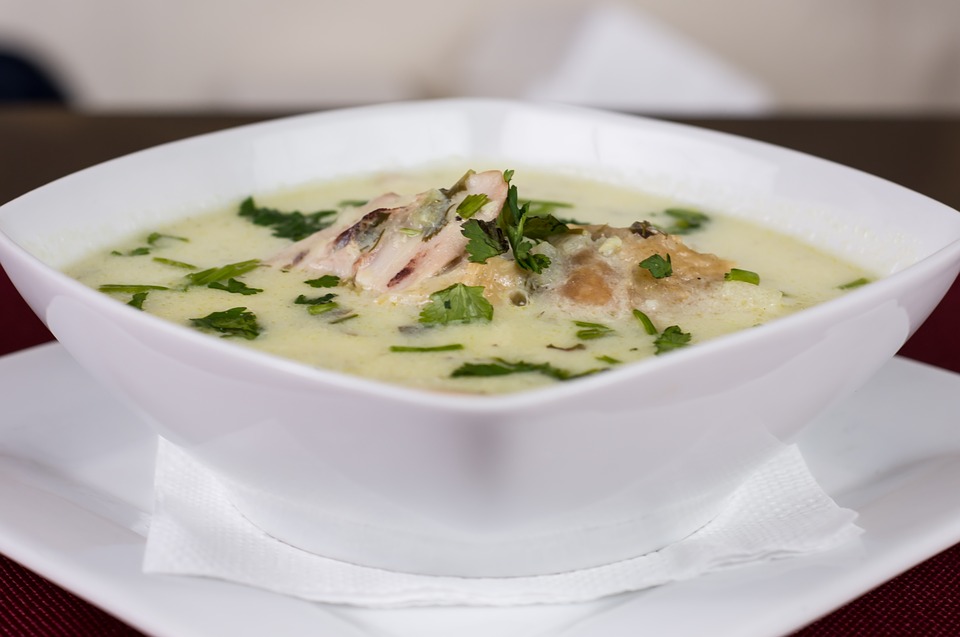
Raw oysters, mock turtle soup;

Boiled turkey with oyster sauce;

roast haunch of venison, currant jelly;

deviled crabs;

cold sliced ham

There were plenty of side-dishes:

Beets, stuffed cabbage, potato souffle, baked turnips, lima beans, dried corn, canned pease (peas);

Indian bread, French rolls, biscuits, rye bread;

Chicken salad;

Celery, cold slaw garnished with fried oysters, pickled walnuts, variety of pickles;

Plums, peaches, sweet pickled cucumbers, gooseberries, spiced currants

There were lots of dessert choices:

English plum pudding, Bohemian cream; Orange souffle,

Pies—mince, potato, and chess;

Cakes—black, Phil Sheridan, pyramid pound;

Oranges, figs, nuts, raisins

Beverage choices were coffee, tea, and chocolate.

If you are wondering what to serve for New Year’s Day dinner, there are plenty of choices here!

Sources

Compiled from Original Recipes. Buckeye Cookery and Practical Housekeeping, Applewood Books, 1877.


A Joyful Christmas

What a nice collection—all six historical stories are set during Christmas. They all have a “feel good” ending, which I really like. I read all six stories in a weekend so my interest was captured and held throughout for almost all of them.

Of course, I have my favorites. An Irish Bride for Christmas by Vickie McDonough tugged at my heart. Jackson’s niece is kept from him and Larkin believes the lies told about him.

Christmas Service by Erica Vetsch was a touching story with a great ending.

Under His Wings by Liz Tolsma had characters that readers will love—and one they definitely won’t.

A Star in the Night by Liz Johnson and Shelter in the Storm by Carrie Turansky were page turners for me. Not only were they set during the Civil War, but also the same location as one of my novels—the area of Franklin, Tennessee.

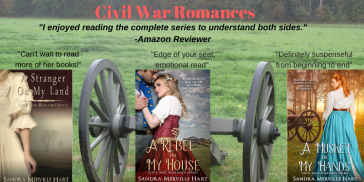
A portion of my Civil War romance, A Musket in My Hands, takes place a year later. The tragic Battle of Franklin happened on November 30, 1864, and is an important part of my story.

-Sandra Merville Hart

Christianbook.com

Peppernuts

by Sandra Merville Hart

I recently found that Christmas dinner in the 1870s included lots of desserts. One of them was a cookie called peppernuts. This Danish cookie is also known as Pfeffernusse. To my knowledge, I’ve never eaten or even seen this cookie and decided to try it.

There are no nuts or pepper or spices in the 1870s by Mrs. Emma G. Rea, so I imagined the cookie earned its name from being small-sized. I found a modern recipe that contained ground almonds and several spices—cardamom, cinnamon, ground cloves, allspice, and nutmeg. I decided to make both recipes and compare.

For the 1870s recipe, combine 1 cup of sugar with ½ cup butter until completely blended. Stir in 2 beaten eggs and 2 tablespoons of milk.

Mrs. Rea’s recipe then calls for “flour enough to roll.” There’s a lot of guesswork with these historical recipes. I started out with 1 cup of flour and mixed in 1 teaspoon of baking powder with it. Then I added a ¼ cup of flour at a time until it was just “enough to roll,” about 1 ¾ cups in total.

I chilled the dough for about 30 minutes.

I used a method from the modern recipe that suggested rolling the dough into half-inch ropes and slicing into half-inch pieces. This was quick and easy.

Bake at 375 degrees 8 – 10 minutes or until lightly brown.

The cookies flattened out in the baking, so I’ll increase the flour next time I bake them to 2 cups.

These cookies were delicious! What an easy cookie recipe with ingredients usually kept on hand. The cookies reminded me of vanilla wafers, even though there is no vanilla in them. Family who tried them went back for more again and again.

I then made the modern recipe that used ground almonds and several spices. Delicious! I chilled this dough about 30 minutes the same as the first recipe. These cookies use more flour and retained their shape in the oven.

My husband prefers the old-fashioned recipe. They are so different that it didn’t seem like the same cookie to me. I liked them both.

Sources

Compiled from Original Recipes. Buckeye Cookery and Practical Housekeeping, Applewood Books, 1877.

Ojakangas, Beatrice. “Peppernuts, Food Network, 2020/11/23 https://www.foodnetwork.com/recipes/peppernuts-recipe-1955898.

Christmas at Carnton by Tamera Alexander

Aletta Prescott struggles to make ends meet for her young son. She just lost her husband in this War Between the States as well as her job. Her baby is due in a couple of months and there’s no money to pay the mortgage. She prays for help.

Captain Jack Winston, a sharpshooter in the Confederate army, is recovering from battle wounds. His eyes aren’t healing as fast as he’d like. He yearns to get back to the battles but instead his colonel assigns him the task of assisting the Women’s Relief Society in Franklin, Tennessee.

Aletta feels fortunate to land a temporary position at the Carnton Plantation but she thinks the captain could better serve his country on the battlefield.

I really liked this story. It was a page turner for me. The characters were lovable and real. The struggles of the wives left back home while their husbands were at war tugged at my heart.

Part of the reason it snagged my interest was the setting—Franklin, Tennessee, in 1863. A portion of my Civil War romance,  A Musket in My Hands, takes place a year later. The tragic Battle of Franklin happened on November 30, 1864, and is an important part of my story.

-Sandra Merville Hart

Christianbook.com

A Christmas Tradition: Christmas Stockings

by Sandra Merville Hart

Modern Christmas stockings are large enough to hold fruit and small gifts, but this tradition had humble beginnings.

Hundreds of years ago, poor children often had only one pair of stockings (socks) so they washed them each night and hung them by the fireplace to dry. The next morning, they donned warm, dry stockings.

A priest named Nicholas ministered to families in his town of Patara and the whole area of what’s now known as Turkey in the fourth century. Nicholas, a wealthy man who became an archbishop while still in his twenties, had a generous heart for poor families, especially children.

Metaphrastes, a Christian author who lived in the tenth century, wrote that Nicholas learned of a poor widower while traveling outside his parish. He and his three teenaged daughters were starving to death. The father considered selling one of them into slavery to provide dowries for the others so at least two could marry, but he couldn’t do it.

The desperate father prayed for help. That night, some one opened a window, dropped a gold coin in the oldest daughter’s stocking, and quietly left.

The widower thanked God for the miracle. The coin was used to provide a dowry for his daughter and she was married. Then a gold coin was found in the next daughter’s stocking one morning. She was soon married. Later, the same thing happened for the youngest daughter. It always happened when Nicholas was nearby.

Adults and children in the region began checking their stockings daily. Nicholas traveled often to perform his duties and was known for his generosity.

It was around 350 when Nicholas died on December 6th. It became known as St. Nicholas’s Day. Children hung their stockings the night before hoping to find a treat the next morning. Often, they found one.

Stockings were associated with St. Nicholas’s Day for centuries. Then a poem by Clement Clarke Moore called “A Visit from Saint Nicholas” was published in 1823. It later became known as “’Twas the Night Before Christmas” and changed the date the stockings were hung to Christmas Eve.

Traditional gifts in stockings are symbolic. Oranges symbolize Nicholas’s gift of gold to the widower and his daughters. Apples are for health. Walnuts are for good luck.

It’s fun to learn the surprising history behind this modern holiday tradition.

Sources

Collins, Ace. Stories Behind the Great Traditions of Christmas, Zondervan, 2003.

Spivack, Emily. “The Legend of the Christmas Stocking,” Smithsonian Magazine, 2020/11/13 https://www.smithsonianmag.com/arts-culture/the-legend-of-the-christmas-stocking-160854441/.


For the Love of Emma by Starr Ayers

A packet of love letters found among the possessions of the author’s deceased mother sparked this wonderful time slip story.

In 1938, it’s love at first sight for Noah, a medic at Fort Bragg. Emma works as a waitress at Rainbow Restaurant and he goes there often in hopes of talking with her. Emma likes how he stands up for her and a courtship soon begins.

For a time, they must communicate through letters. Those letters from Noah are found by Emma’s daughters after her death in 2011. The contemporary side of this story with the sisters is just as intriguing as the historical aspect as readers receive clues about events.

Nostalgic. Mysterious. Ayers’ skillful weaving of the 1930s realistic characters living in the brink of World War II with the contemporary story snagged my interest from the first chapter.

The characters are believable and likeable. There is more than one man worthy of a good woman in this story. The intrigue of finding out what happened to their romance made this a page turner for me.

I can’t wait to read the second book in the series! Definitely recommend.

-Sandra Merville Hart

Amazon