Pita Bread Recipe

Today’s post is by fellow author, Patricia Meredith. We both have stories in Christmas Fiction off the Beaten Path, a collection of inspirational Christmas stories. Sandra’s nostalgic story is about a hard-working family  man in a difficult place called “Not This Year.” Patricia’s story was inspired by the song “Mary, Did You Know?” Welcome to Historical Nibbles, Patricia!

 by Patricia Meredith

Joseph was working late again, so it was just me and Jesus. I cut up his lamb into small pieces, praying that maybe this time hed eat the meat without complaint.

Like most children Id known, he hadnt yet acquired a taste” for meat, but it seemed to me the only thing he had acquired a taste for was bread. Bread for every meal. My hands were growing sore with all the kneading.

You cannot live on bread alone!” I cried when he refused once again to touch anything else before him.

His lips puckered and his eyes widened, and then he shoved in another fistful of bread.

I shook my head. At least he was growing.

                                   — “Mary, Did You Know?” by Patricia Meredith

Like Mary, I love baking bread. One of my favorites is a simple Pita Bread recipe that makes a delicious, chewy bread perfect for wrapping around fresh vegetables and hummus. It’s cooked in a cast-iron skillet, which means if you cook it over an open fire, you get that nice outdoor smell and flavor added to the food, reminiscent of the way Mary might have cooked it in her home.

INGREDIENTS:

1 cup warm water

1 packet (2 ¼ tsp) active dry yeast

2 ½- 3 cups all-purpose flour

2 tsp salt

1 tablespoon olive oil (+1-2 T olive oil for cooking)

DIRECTIONS:

Mix the water and yeast and let stand for about five minutes. Add salt, olive oil, and 2 ½ cups of flour. Mix until combined and then knead with more flour for about 5-7 minutes. The dough should be smooth and elastic. Try to be sparing with the extra flour—less is better.

Run a little olive oil into a clean bowl, roll the dough in the oil, and then let the dough rest in the bowl, covered, until it’s doubled (about 1 hour).

Turn the dough out and divide it into smaller pieces. Depending on how thick you like your pita, you can usually get about 12-16 out of the risen dough. Using a floured rolling pin, roll each piece into a flat circle.

Heat a cast-iron skillet over medium heat. Drizzle oil in the pan. Lay a pita on the skillet and bake 1-2 minutes, until the bubbles start to form, keeping an eye on it. It should get toasted spots on it. Flip again and cook another 1-2 minutes on the other side. It should puff up, forming small pockets.

Remove from heat and cover with a towel. Eat hot and fresh!


About Patricia:

Patricia Meredith is the author of historical and cozy mysteries. She currently lives just outside Spokane, Washington on a farm with peacocks, ducks, guinea fowl, chickens, and sheep. When she’s not writing, she’s playing board games with her husband, creating imaginary worlds with her two kids, or out in the garden reading a good book with a cup of tea. Check out her blog at Patricia-Meredith.com, or follow her on Instagram and Facebook at @pmeredithauthor.

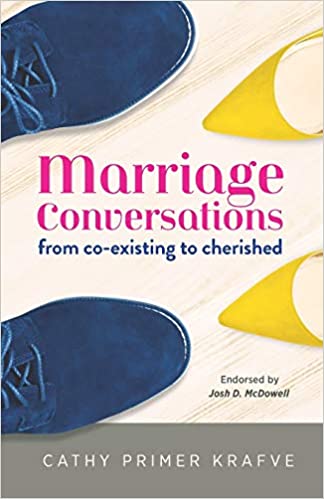
“Mary, Did You Know?” is one of the stories included in the Christmas Fiction Off the Beaten Path anthology. Ask for it at your favorite bookstore.

Amazon

A Christmas Tradition: Christmas Trees

by Sandra Merville Hart

About a thousand years ago, people living in what is now Scandinavia were captivated by the way evergreen trees survived their harsh winters. They chopped down the trees and took them into their homes in the hopes they’d bring strength to survive the winter season.

The French and Germans hung evergreen trees upside down from the ceiling in the twelfth century, a practice that continued for about 200 years.

In December, fir trees, called “paradise trees,” were placed outside Catholic churches during medieval times in Europe’s Baltic region. Apples were hung on its branches for a play about Adam and Eve.

Fir trees were displayed on the ground in homes instead of hung from the ceiling by late in the 16th century.

Martin Luther, after a walk in the forest on a moonlit night, is generally credited with placing the first lit candles on a Christmas tree. To him the evergreen tree represented God’s everlasting love for us. The hope that the birth of Jesus brought into the world was symbolized by the candles or lights on the tree.

Americans of German descent living in Pennsylvania in the 1820s are said to have brought the tradition of Christmas trees to the United States to stay. It took the marriage of Prince Albert of Germany to Queen Victoria of England for the tradition to really take hold in the United States.

Toys, candy, popcorn, and candles decorated those Victorian trees.

It was easy for those living in rural areas to chop down an evergreen tree for their home. Those in cities had a tougher challenge. In 1851, Mark Carr recognized the need. He filled a large horse-drawn carriage with evergreens and sold them in a vacant lot in New York City.

Lots like that one can be found in cities and towns today. An estimated 81% of homes display an artificial tree, but there’s something about the traditional sight and smell of a real tree that keeps others buying them year after year.

Sources

“Christmas Trees,” Encyclopaedia Britannica, 2020/11/12 https://www.britannica.com/print/article/115737.

Collins, Ace. Stories Behind the Great Traditions of Christmas, Zondervan, 2003.

Kennedy, Lesley. “How 25 Christmas Traditions Got Their Start,” History, 2020/11/12

https://www.history.com/news/christmas-traditions-history.

An Ivy Hill Christmas by Julie Klassen

A Tales from Ivy Hill Novella

Richard Brockwell wouldn’t be going home for Christmas if his mother hadn’t insisted. She held the purse strings so he left London on a cold December day in 1822. He’s lived a selfish lifestyle for so long that he doesn’t know how to rise above it … not that he wants to.

His mother, brother, and sister-in-law have invited guests to stay for the Twelve Days of Christmas. Among them is Arabella Awdry, who makes it clear she’s not interested in him.

But coming home reminds him of all the childhood hurts he has run from for years.

I loved this story! The author does a great job portraying Richard as a selfish bachelor that I didn’t like him for a while. The characters are believable and they tugged at my heart.

An especially fun part of this story for me was taking part (vicariously through the story) in the Christmas traditions of nearly 200 years ago. The parlor games, decorating for Christmas, and Christmas and Boxing Day traditions were an intriguing look at how our ancestors celebrated the holidays.

I’d love to read more books in this series!

-Sandra Merville Hart

Christianbook.com

Cyber Monday Sale!!!

40% Off Plus FREE Standard Shipping at ShopLPC.com with Coupon Code CYBERMONDAY40

Yes, this includes my books!

A Musket in My Hands

Two sisters have no choice but to join the men they love and muster into the Confederate army and in the fall of 1864—in time for things to go very badly for Southerners at the Battle of Franklin. This book is 2019 Serious Writer Medal Fiction Winner and a 2019 Selah Award Finalist.


ShopLPC

A Rebel in My House

A wounded Confederate soldier on the first day of battle leaves a Gettysburg seamstress with a heart-wrenching decision. Both have made promises. Some promises are impossible to keep. This book won the 2018 Illumination Silver Award and second place in 2018 Faith, Hope and Love Readers’ Choice Award. 

ShopLPC

A Stranger in My House

A young woman finds a wounded Union soldier outside her Tennessee home in this 2015 IRCA Finalist and Christian Small Publishing Book of the Year 2016 Finalist.

ShopLPC

The Cowboys

Taming the West … one heart at a time

Hart’s novella, Trail’s End, in “Smitten Novella Collection: The Cowboys” is set in the wild cattle town of Abilene, Kansas, in 1870.

ShopLPC


Mt. Zion Ridge Press is also having a Cyber Monday Sale!

From November 30 – December 2, all books are 10% off with the coupon code CYBER

Yes, this includes my books!

Christmas Fiction Off the Beaten Path

Not This Year in “Christmas Fiction Off the Beaten Path,” is Sandra Hart’s heartwarming, nostalgic story of a hardworking family man facing difficult times at Christmas.

Mt. Zion Ridge Press

From the Lake to the River

A collection of stories set in Ohio by Ohio authors

Everyday citizens become heroes in Sandra Hart’s Surprised by Love novella in “From the Lake to the River,” set during the 1913 flood in Troy, Ohio.

Mt. Zion Ridge Press


31 Verses Every Believer Should Know by Sean Bess

He was Born to be

Jesus was born to be God with us, human like us, our servant, our light, and our Savior.

What a great devotional book for preparing our hearts for Christmas!

Each devotion begins with a scripture. Several of the devotional thoughts used examples from historical figures like Paul Revere, President Abraham Lincoln, and Harriet Tubman. Then it shifts our thoughts back to Jesus’ birth and shows how the example ties in.

Each chapter ends with thought-provoking questions.

I really liked reading this devotional to prepare my heart for the Christmas season. It’s creative with insightful devotions.

A great book for Christians and those seeking to know what the Bible teaches us about Jesus.

-Sandra Merville Hart

Amazon


Mom’s Chicken and Dumplings

by Sandra Merville Hart

My mom made chicken and dumplings fairly often when I was growing up. As the cold weather approaches, this is still one of my favorite comfort meals. My family likes it almost as much as I do, especially my husband. My grandmother rolled out dumplings but my mom used a recipe for “drop” dumplings, which I like because it’s quicker.

3 chicken breasts

1 quart of chicken stock or chicken broth or 1 quart of water with 5 chicken bouillon cubes

3 cups all-purpose flour

1 ½ teaspoons salt

4 ½ teaspoons baking powder

6 tablespoons Crisco shortening

1 ½ cups milk

Cover chicken with broth (or chicken stock or water with bouillon cubes) in a crockpot and cook on low at least five hours or until tender.

When chicken is done, remove from broth and allow it to cool. Save this broth. Then shred the meat with 2 forks.

In a large saucepan, add the reserved broth and chicken. Bring to a low boil.

Sift together the flour, salt, and baking powder. Add shortening and blend it into the flour mixture with a pastry blender or a fork. Stir in milk until blended together.

When the broth gently bubbles (on medium to medium high heat) drop the dumplings into the broth by rounded teaspoon.

Cook about 10-15 minutes and then serve.

I’d love to hear if you try this recipe. Enjoy!

Interview with the Heroine of A Musket in My Hands

by Sandra Merville Hart

Today I am interviewing the heroine of my Civil War romance, A Musket in My Hands, Callie Jennings. I hope you enjoy meeting this feisty, courageous woman from Tennessee!

1) Callie, just where is Cageville, Tennessee? What is your home like?

The town of Cageville is in western Tennessee. It was named for Licurgus Cage, one of our first merchants. The town became known as Alamo in 1869. They renamed it as a memorial to folks who died at Battle of the Alamo—and to Davy Crockett.

Our farm is about a mile outside of town. We don’t have any close neighbors, just lots of trees near our cleared fields. Empty now, except for an acre plot that I planted to keep us from starving. I hope it’s too small for the Yankees to notice it much.

The biggest city nearby that you might have heard of is Jackson. I’ve never been there, but Louisa—my sister—and I told our soldier comrades that we came from a place outside of Jackson. We didn’t want the other soldiers to find out where we were from and tell our pa where to find us.

2) What are the living conditions like where you are in the summer of 1864?

Oh, things are bad. After the Yankees took our crops, Pa stopped planting. Said he wasn’t going to plow and plant just so the Yankees could steal it from us.

Louisa works at the mercantile. They pay her in food so that helps put meals on the table. I planted a garden, hoping the Federal soldiers that ride by our farm don’t take notice of it. It’s not much, but that food should keep us alive this winter.

 Other folks in town are doing about the same as us.

3) I hear your pa is a Confederate ranger. What are he and the Confederate soldiers fighting for? And has it been worth the toll it’s taken?

Yep, Pa is too old for soldiering, but he found a way to fight for his country. He and his friend, Ezra Culpepper, joined a cavalry guerrilla group. They go out on missions and then come home, pretending to be nothing more than average citizens while in town.

I know the South needs all the help they can get to win this war, but I hate what being a ranger has done to my pa. He never used to drink like this. I think he drinks to forget about those missions.

4) Are you really engaged to your pa’s friend? Rumor has it that your heart belongs to someone else.

No! I’m not going to marry a man thirty years my senior, no matter what Pa agreed to on my behalf. Pa’s mind is made up so I have to figure out something.

 I love Zachariah Pearson. Zach never courted me before the war and now the fighting is about all he thinks of. But I’m the only girl in town he writes to—I know because I asked all the other single ladies. That makes me special, doesn’t it?

5) Tell us something about your true beau, Zach?

Oh, what I could tell you about Zach. We’ve been friends since his aunt and uncle took him in after his parents drowned. That was when he was fourteen, eight years ago. It was a tough time for him. He and his cousin, Nate McClary, grew as close as brothers.

Zach is a handsome man, especially in his Confederate gray. I love his green eyes and the way his brown hair curls right before it gets cut. I always thought he might court me … and then the war started. He trained at Camp Trenton in September of 1861. I’ve only seen him on his furloughs since then.

6) How would you describe yourself?

Oh, I’m not much to look at. Louisa takes after Ma. With her blue eyes and blonde hair, she’s the real beauty of the family. She knows it, too.

I got my auburn hair from Pa. His brown eyes, too. My hair is curly so I have to keep it pinned in a bun on top of my head. Wish I was prettier, though. Maybe Zach would notice me.

7) How do you plan to avoid marriage to your pa’s friend and how does your sister, Louisa, fit into all this?

Oh, Louisa’s got a plan. She’s the adventurous one. She’s been reading newspaper reports about women disguising themselves as Confederate soldiers. She’s been after me to muster into the army to avoid marrying Mr. Culpepper.

But Louisa has her own reasons for joining the army. She’s heard reports that her fiancé, Nate McClary, has been flirting with other women. I don’t want to think badly of him … but I’m afraid the reports are true.

8) Disguising yourselves as men to join the Confederate army is risky. Aren’t you worried your disguises might be found out?

Louisa and I have done our best to disguise ourselves as men so we can muster into the army. I’ve sewn trousers, coats, and blouses for both of us. Louisa sewed padding onto our underclothing to hide our shapes. Our blouses and coats fit loosely so that should help.

We’ve practiced walking like men, talking like men.

 I hope we’re ready.

Back Cover Blurb for A Musket in My Hands

Can I count on you in times of great need?”

 Callie Jennings reels from her pa’s decision that she must marry his friend, a man older than him. Her heart belongs to her soldier hero, Zach Pearson, but Pa won’t change his mind. Callie has no place to hide. Then her sister, Louisa, proposes a shocking alternative.

Zach still hears his pa’s scornful word—quitter. He’s determined to make something of himself as a soldier. He’ll serve the Confederacy until they win the war. If they win the war.

Callie and Louisa disguise themselves as soldiers and muster into the Confederate army in the fall of 1864. Times are tough and getting tougher for their Confederacy. For Callie, shooting anyone, especially former countrymen, is out of the question—until truth and love and honor come together on the battlefield.

Available at Lighthouse Publishing of the Carolinas

2020 Angel Book Award Winners Announced

The Faith & Fellowship Book Festival announced the 2020 Angel Book Award winners at the conclusion of their online book festival on November 6th.

The Angel Book Awards recognize outstanding books written by Christian authors and published in the previous year. This year there were six categories: Nonfiction, Children’s, Youth Fiction, Historical Fiction, Mystery/Suspense, and Contemporary Fiction.


The winners are:

Nonfiction:

Third place – Know Thyself: The Imperfectionist’s Guide to Sorting Your Stuff

by Lisa Lawmaster Hess

Second place –This Much I Know … The Space Between by Sue Bowles

First place –I Am Cyrus: Harry S. Truman and the Rebirth of Israel by Dr. Craig Von Buseck


Children’s:

Third place –Good Night, Fireflies by Janet L. Christensen

Second place –God’s Protection Covers Me by Amy Houts

First place winner with a PERFECT SCORE –How Much Does God Love You? by Michelle Medlock Adams


Youth Fiction:

Third place –The Heart Changer by Jarm Del Boccio

Second place –Selah’s Stolen Dream by Susan Count

First place –The Crown and the Axe by Darcy Fornier


Historical Fiction:

Third place –Aiming for Love by Mary Connealy

Second place –The List by Buck Storm & Bill Perkins

First place  –Devotion by Olivia Rae


Mystery/Suspense:

Angel Book Honorable Mentions:

Deadly Guardian by Deborah Sprinkle

Murder in the Family by Ramona Richards


Third place –ROAR by Linda K. Rodante

Second place –The Gryphon Heist by James R. Hannibal

First place—The Silver Lode by Suzanne J. Bratcher


Contemporary:

Third place –The Death of Mungo Blackwell by Lauren H. Brandenburg

Second place—Chasing Dreams by Deborah Raney

First place— Meant for Her by Joy Avery Melville


For more information about the Angel Book Awards and the Faith & Fellowship Book Festival, visit www.ffbookfestival.com


Yolonda Tonette Sanders and Cindy Thomson

cofounders of the Faith & Fellowship Book Festival

Sandra Merville Hart, committee member


The Civil War on Hatteras Island, North Carolina by Drew Pullen

What a wonderful resource of information about the Civil War on Hatteras Island!

Many folks who visit the island on vacation have little idea about its rich history—and even less about what occurred at this strategic location during the Civil War.

I love the photos and sketches from the 1860s included by the author.

Portions of journals and letters from soldiers on both sides enrich this book’s value as a resource for historians, Civil War enthusiasts, and also for novelists like me who write during that time period.

Well-written. Recommend!

-Sandra Merville Hart

Amazon

Marshmallows


by Sandra Merville Hart

Marshmallow root has been used for at least 2,000 years to soothe respiratory and digestive issues. It’s been used in desserts, beverages, and cosmetics. Most mallows are edible and were a delicacy for Romans. Folks in other European countries boiled it and then fried it in butter and onions.

Marshmallow root (Althaea officinalis) is a flowering plant that grows along rivers and marshes. The root is a brown, fibrous husk. It produces mucilage, a substance similar to sap, that has been used as an herbal medicine to treat coughs, dry mouth, and to soothe skin irritations. It may reduce digestive issues like ulcers.

Dried marshmallow root can be used to make a cup of tea.

The marshmallows that we are used to eating today usually don’t contain marshmallow root and had its beginnings in France about 170 years ago. In 1900, corn syrup, egg whites, and water were heated along with marshmallow root and poured into molds.

I followed the Food Network’s recipe to make marshmallows, a new dish for me. I halved the recipe—a mistake because I used a 13 x 9 pan to rest them in and this made a thin layer of marshmallow. (If you halve the recipe, I suggest using a 8 x 8 pan.)

This mistake turned out to be a good thing.

I needed to take a dessert to a family gathering so instead of slicing them into 1-inch squares, I sliced them into cracker-sized shapes for s’mores. It was perfect!

Family members loved this novelty dessert! If you want that “roasted over the fire” gooey taste, then layer a slice on top of a cracker, half of a Hershey’s chocolate bar and microwave for about 5 seconds. I preferred it unmelted (less messy) but everyone else preferred it melted.

Homemade marshmallows have to set for at least 4 hours or overnight so plan accordingly if you want to use them for your next campfire.

Sources

“Althaea (plant),” Wikipedia, 2020/10/12 https://en.wikipedia.org/wiki/Althaea_(plant).

“Homemade Marshmallows,” Food Network, 2020/10/12 https://www.foodnetwork.com/recipes/alton-brown/homemade-marshmallows-recipe-1953933.

“Marshmallow Root,” Mountain Rose Herbs, 2020/10/12 https://mountainroseherbs.com/marshmallow-root.

“What are the Benefits of Marshmallow Root?” MedicalNewsToday, 2020/10/12 https://www.medicalnewstoday.com/articles/324860.