William Lewis, a Blacksmith Who Earned his Freedom

by Sandra Merville Hart

William Lewis was born on a plantation in Winchester, Tennessee. Sources disagree on the year of his birth, but it seems to have been either 1810 or 1815. Colonel James Lewis, a Revolutionary Soldier, was his father, yet his son remained enslaved.

Bill learned blacksmithing skills at an early age, becoming so skilled that he earned money for both the colonel and himself. Bill saved his own money toward his freedom.

Emboldened by his success, Bill asked the Colonel’s permission to move to Ross’s Landing—later known as Chattanooga—to start a blacksmith shop, which was granted. He had to pay $350 annually because he was still enslaved. He worked hard and paid installments toward his freedom.

He married Jane in the early 1840s. A son, Eldridge, was born. Both of them were enslaved. Since all of Jane’s children would be enslaved, Bill’s priority was to buy her freedom before they had any other children. Sources disagree whether Bill purchased his own freedom or his wife’s first. He paid $1,000 in installments for himself, which was paid in full soon after he moved to Chattanooga. He also paid $1,000 for Jane’s freedom, ensuring their future children were born free.

Bill’s hard work earned him respect in the community. His focus was on saving enough to free the rest of his family. Eldridge was six when Bill paid the $400 for his freedom. His mother and aunt were freed for $150 each. He purchased both of his brothers’ freedom for $1,000 each and, later, his sister’s for $400.

The townspeople respected Bill as an honest, intelligent man. They began to call him “Uncle Bill”.

After Bill’s family was safely with him in Chattanooga, he bought a large house. His business expanded. He rightly foresaw the fall of the Confederacy. He bought tobacco and sold it for a profit to provide for his family.

By the time of the Civil War, he had hired a crew for the heavy work he was no longer able to do and supervised them.

The war brought hard times. Hugh, Bill’s son, fought bravely with a U.S. Colored Troops regiment beginning in 1864. Unfortunately, in 1865, he died of a fever in Wilmington, North Carolina.

The South suffered many economic losses during the war, which also affected Bill. Union soldiers seized his blacksmith shop when they took over Chattanooga. His holdings that had been worth $7,000 in the 1860 census had dropped to $300 during the next decade.

Bill and Jane accomplished all this without being able to read or write. They encouraged their children’s education—several of their children were sent to northern schools.

Bill’s entrepreneurial spirit was a legacy to his children. His daughter Marion graduated from Oberlin College and later taught there.

Two of Bill’s sons were blacksmiths. One worked as a mail carrier. Another daughter was a teacher. A third daughter worked as a milliner.

Bill’s spirit and hard work through many difficulties are an inspiration to this day.  

Sources

Hubbard, Rita Lorraine. Hammering For Freedom, Lee & Low Books Inc., 2018.

Lorraine, Rita. “The Entrepreneur Who Bought…Himself, Part I,”  The Black History Channel, 2025/10/26 https://theblackhistorychannel.com/2021/the-entrepreneur-who-boughthimself-part-i/.  

Lorraine, Rita. “The Entrepreneur Who Bought…Himself, Part II,”  The Black History Channel, 2025/10/26 https://theblackhistorychannel.com/2021/the-entrepreneur-who-boughthimself-part-ii/.  

Lorraine, Rita. “The Entrepreneur Who Bought…Himself, Part III,”  The Black History Channel, 2025/10/26   https://theblackhistorychannel.com/2021/the-entrepreneur-who-boughthimself-part-iii/.

Lorraine, Rita. “The Entrepreneur Who Bought…Himself, Part IV,”  The Black History Channel, 2025/10/26   https://theblackhistorychannel.com/2021/the-entrepreneur-who-boughthimself-part-iv/.

“William T. ‘Bill’ Lewis: Chattanooga’s Blacksmith,” National Park Service, 2025/10/26 https://www.nps.gov/chch/learn/news/lewisprogram2021.htm.

Wilson, John. “William Lewis, Blacksmith Who Bought His Family Out Of Slavery, Lived on the West Side,” Chattanoogan.com, May 25, 2022, 2025/10/26 https://www.chattanoogan.com/2022/5/25/441637/William-Lewis-Blacksmith-Who-Bought.aspx.

Vicksburg Didn’t Celebrate Independence Day for About a Century

by Sandra Merville Hart

Learning that citizens of Vicksburg, Mississippi, didn’t celebrate our country’s Independence Day for about a century prompted me to dig into the city’s history during the Civil War.

What I discovered so touched me that I had to write about it—and it required three books to tell the story. The main characters are fictional…the historical backdrop is real.

Vicksburg’s strategic location on bluffs along the mighty Mississippi River during the war was often a topic among leaders of both sides. Confederate President Jefferson Davis sent troops early in the war to protect the city and keep Union ships from passing on the river. More troops were sent as the focus on Vicksburg increased from the Union army.

President Abraham Lincoln felt that “Vicksburg is the key” to winning the war. Union General Ulysses S. Grant was determined to capture the city.

That was easier said than done.

The Union Navy bombarded the city for sixty-seven days from May to July of 1862. Confederate soldiers fired cannons on the fleet while citizens hunkered in hastily dug cave shelters. One battered Confederate ship called the Arkansas possessed enough power to convince the Union fleet to head south on July 27th.

The defeat only whetted Grant’s desire to take Vicksburg by force. The following year, Union ships once again attacked the town for weeks from the Mississippi River—this time while the Union army battled the Confederate army surrounding Vicksburg.

The surprising discoveries found while digging into Vicksburg’s history inspired books four, five, and six in my Spies of the Civil War Series.

Streams of Courage, Book 4, begins before the war starts in early 1861 and goes to the fall of 1862.

River of Peril, Book 5, tells the story of Felicity and Luke. It begins in December of 1862.

Tides of Healing, the sixth and final book, tells the story of Vicksburg resident Savannah Adair and Union First Lieutenant Travis Lawson, who was among those who march into the city to seize control on July 4, 1863. Their first meeting begins with fireworks—and not the kind typically associated with an Independence Day celebration.

Beginning in 1861, three fictional heroine friends living in Vicksburg, Mississippi, at the start of the Civil War are each affected in different ways by the events of the Civil War as their city becomes a target for the Union Army.  

Streams of Courage, Book 4, Julia and Ash fall in love against her mother’s wishes. Townspeople accuse Ash of cowardice because he doesn’t become a soldier in the Confederate army. He begins spying for the North in his Mississippi city, a dangerous undertaking that puts his family and Julia’s family at risk. The story starts before the first battle in early 1861 and goes to the fall of 1862.

River of Peril, Book 5, tells the story of Felicity and Luke. They started courting before the war began. She volunteers as a nurse to distract her worry for her soldier—then her worst nightmare happens. Luke has been wounded in battle. Worse, he doesn’t remember her…or why he was fighting for the Confederacy when his loyalty is with the North. It begins in December of 1862.

Tragedy strikes one of the friends, Savannah, in Streams of Courage, Book 4 in my Spies of the Civil War Series. This feisty, spirited Southern belle has been chomping at the bit to tell her story. She gets her chance as our heroine in Tides of Healing, Book 6!

Here’s the back cover blurb for Tides of Healing:

A Southern belle fights to reclaim her home, but will her spying destroy the Union officer she never meant to love? 

Savannah Adair has endured the unimaginable, hiding in a cave while her beloved Vicksburg was under siege. With the city now occupied by Union soldiers, Savannah cannot stand by and do nothing. So when one of the gaunt, half-starved Confederate prisoners asks her to spy for the South, she can’t refuse the chance to take back her home. 

First Lieutenant Travis Lawson takes pride in the Union army’s hard-fought victory, but he quickly realizes that the challenges of rebuilding and reconciliation are just beginning . . . and not everyone is appreciative of changes he’s making. Namely, the fiery and alluring Savannah Adair. Despite their differing loyalties and the societal divide between them, Travis cannot deny the growing feelings he has for her. When he is tasked with finding Southern spies in Vicksburg and he captures a female spy, Travis is forced to consider that the woman he’s beginning to love may be the enemy. 

I hope that you enjoy the whole series!

Sources

Bearss, Edwin C. with Hills, J. Parker. Receding Tide: Vicksburg and Gettysburg, the Campaigns that Changed the Civil War, National Geographic, 2010.

“Vicksburg National Military Park,” National Park Service, 2025/02/09 https://www.nps.gov/vick/index.htm.

Spying for Love – New Wild Heart Books eBook Collection Released Today!

Spying for Love: Five Espionage Historical Romance Novels, released on September 16, 2025.

            Sandra’s novel in the collection: Byway to Danger

Love blooms in the shadows of history’s most pivotal moments as five extraordinary couples risk everything for duty, honor, and love.

Spark of the Revolution by Megan Soja

Patience Abbott has long felt unsettled and anxious to leave behind her painful memories in England for a fresh start in America. As tension grows in her new home of Boston, so does the distance between Patience and her estranged father. So when Josiah Wagner walks into her life, it finally feels like she’s not alone. His patriotic leanings put him at odds with her father’s loyalties.

Josiah Wagner yearns for a true home and family, something he works toward forging tools as a blacksmith, and forging plans with the Sons of Liberty. With the destruction of tea in Boston Harbor, Josiah finds himself drawn into its tumultuous wake, pulling the woman he loves along with him.

A Conflicted Betrothal by Denise Weimer

As a King’s Ranger, Ansel Anderson loves his independent life. He’s also a second son, which means he’ll need the favor of someone influential to secure a land grant to settle his future. What better way to win support than by marrying the daughter of a member of the Governor’s Council?

When Savannah erupts into riots and intrigue following the passage of the Stamp Act, Ansel is tasked with identifying a spy passing sensitive information to the Liberty Boys and the author of anonymous letters threatening those loyal to the governor. And as suspicions focus on the Scott family, which is he prepared to sacrifice—love or loyalty?

Petticoat Spy by Elva Cobb Martin

When Anna Grace Laurens’s parents are murdered and plantation burned, she seizes her only option for escape—a desperate leap into the Cooper River. She’ll do anything to survive…and get revenge.

John Cooper Vargas is used to danger as he sails his sloop upriver through war-torn colonies, but seeing a woman plunge into the river amidst Tory gunfire is something he wouldn’t have thought possible. Until now.

Rescuing her draws him into a web of intrigue, but he can’t let her fight the British on her own. As the American Revolution closes in around them, it may take a miracle for them—and their love—to survive.

The Sword and the Secret by Jan Davis Warren

Lord John Stanton is the last male heir of his royal lineage. He has the responsibility to marry and carry on the family name, but a secret vow to God could change his future from royal heir to humble servant of the church. His journey to the monastery to become a monk is interrupted when he meets a dangerous, but beautiful, woman who has secrets of her own.

Raised as property of the Crown, Julianna Westerfield longs to be free to pursue love and have a family of her own. Trained to be a spy and assassin, she has a chance to earn her freedom by completing a mission to uncover a murderous plot and the identities of the Black Guard. Now the assassins are after her. To survive she must depend on a handsome monk and his cantankerous donkey.

Byway to Danger by Sandra Merville Hart

Meg Brooks didn’t stop spying for the Union when her job at the Pinkerton National Detective Agency ended, especially now that she lives in the Confederate capital. Her job at the Yancey bakery provides many opportunities to discover vital information to pass on to her Union contact.

Cade Yancey knows the beautiful widow is a spy when he hires her, and he has secrets of his own. The more his feelings for the courageous woman grow, the greater his determination to protect her by guarding his secrets. Her own investigations place her in enough peril.

Five complete novels in one collection, each a sweeping tale of intrigue, faith, and romance set against the backdrop of America’s most defining conflicts.

Amazon

Multiple Flowers with Multiple Meanings

by Sandra Merville Hart

Floral bouquets are heartwarming gifts, as welcome today as in previous eras. Yet deeper thought was put into both the color and flower choices in the nineteenth century because both held meaning.

Even different shades of the same flower varied in meaning. Both the giver and receiver understood these nuances in bygone centuries.

Various shades of carnations, chrysanthemums, hyacinths, jasmine, lilies, and roses altered the hidden message of the bouquet.

Carnation, light red—Admiration

Carnation, pink—I’ll never forget you, a mother’s undying love, beauty, pride

Carnation, purple—Capriciousness

Carnation, red—Deep love

Carnation, striped—Refusal of love

Carnation, yellow—Rejection, Disdain, Disappointment

Carnation, white—Symbol of democracy, pure love, good luck, innocence, sweet love

Chrysanthemum, red—Love

Chrysanthemum, yellow—Slighted love

Chrysanthemum, white—Truthfulness

Hyacinth, blue—Constancy

Hyacinth, purple—Sorrow

Hyacinth, yellow—Jealousy

Hyacinth, white—Loveliness, prayers for someone

Jasmine, yellow—Grace, elegance

Jasmine, white—Sweet love, amiability

Lily, orange—Hatred

Lily, tiger—Wealth, pride

Lily, yellow—Happy

Lily, white—Purity, virginity

Rose, amethyst—I will love you forever

Rose, blue—Mystery, uniqueness

Rose, coral—Admiration, desire, longevity

Rose, cream—Perfection

Rose, golden—Jealousy

Rose, green—Growth, abundance

Rose, ivory—Grace, charm

Rose, lavender—Love at first sight, rarity, wonder, enchantment

Rose, orange—Energy, desire, enthusiasm, fascination

Rose, peach—Sincerity, modesty, gratitude

Rose, pink—Grace, beauty, youth, innocent love, elegance, sweetness

Rose, red—Love, passion

Rose, rose—Pride, shyness

Rose, white—Innocence, young love, birth, beauty and respect, silence, keep my secret

Rose, yellow—Joy, friendship, I love another, jealousy

Rose, white/pink—Unity, commitment

It’s fun to learn the hidden meaning of flowers. These are fun facts that I, as an author of inspirational historical romances, love to incorporate into my novels!

Sources:

Boeckmann, Catherine. “What Does Each Flower Symbolize?” Almanac, 2025/04/21 https://www.almanac.com/flower-meanings-language-flowers.

“Rose Color Meanings,” Fifty Colors, 2025/04/22 https://fiftyflowers.com/blogs/flowers/rose-color-meanings.

Hawkins, Linda J. The Unspoken Language of Fans & Flowers, Heart to Heart Publishing, 2007.

The Hidden Meaning of Flowers

by Sandra Merville Hart

While researching the secret language of the fan, I discovered some fascinating facts about the hidden meaning of flowers. As a writer of inspirational historical romance novels, I’m always searching for fun facts lost in time.

My grandmother wore a plain silver wedding band. The painted orange blossoms that originally decorated it had long since faded by the time I was born. A century ago, orange blossoms were often part of wedding decorations. Blossoms might have been worn in the bride’s hair or included in the bouquet. Orange blossoms symbolized fidelity, chastity, and loving thoughts.

The gift of flowers held deeper meaning in bygone eras. The type of flower and its shade varied in meaning.

Even the way they were given held hidden meaning. If the giver extended the flowers in the right hand, it meant “yes” while the left hand meant “no.”

There are a myriad of floral meanings—and not all of them are good. Here is a list of popular flowers with their own language:

Amaryllis—Pride

Azalea—Temperance, womanhood

Baby’s Breath—Pure heart, everlasting love

Begonia—Beware

Bluebell—Humility

Borage—Bravery, bluntness

Calla Lily, white—Sophistication, seduction

Carnation, pink—I’ll never forget you, a mother’s undying love, beauty, pride

Carnation, red—Deep love

Carnation, striped—Refusal of love

Carnation, yellow—Rejection, Disdain, Disappointment

Chamomile—Wisdom, patience

Chrysanthemum, red—Love

Chrysanthemum, yellow—Slighted love

Cornflower—Delicacy, felicity, unity

Dahlia—Good taste

Daisy—Innocence, simplicity, gentleness, loyal love

Dandelion—Wishes come true

Eucalyptus—Protection

Forget-me-not—Remembrance, true love, good memories

Gardenia—Secret love, ecstasy

Geranium, red—Comfort, beauty without virtue

Goldenrod—Encouragement, precaution

Hyacinth, blue—Constancy

Hyacinth, purple—Sorrow

Hyacinth, yellow—Jealousy

Hyacinth, white—Loveliness, prayers for someone

Hydrangea—Thanks for understanding, boastfulness

Iris—Faith, wisdom, valor, hope, trust

Jasmine, yellow—Grace, elegance

Larkspur—An open heart

Lavender—Devotion, luck, success

Linden branches—Romance

Lily, orange—Hatred

Lily, tiger—Wealth, pride

Magnolia—Perseverance, sweetness, love of nature

Marigold—Remembrance, grief

Mint—Warmth of feeling, protection from illness

Mistletoe—Fertility

Morning Glory—Affection

Peach blossom—Captive heart

Peony—Wedded bliss, aphrodisiac

Petunia—Don’t despair

Phlox—Proposal of love, agreement

Rose, golden—Jealousy

Rose, lavender—Love at first sight, rarity, wonder, enchantment

Rose, orange—Energy, desire, enthusiasm, fascination

Rose, peach—Sincerity, modesty, gratitude

Rose, pink—Grace, beauty, youth, innocent love, elegance, sweetness

Rose, red—Love, passion

Rose, yellow—Joy, friendship, I love another, jealousy

Sweet Basil—Best wishes

Sweet Pea—Delicate pleasures, birth, goodbye

Thistle—Sternness

Tuberose—Dangerous pleasures

Tulip, white—Lost love

Tulip, yellow—Hopeless love

Verbena—May you get your wish

Zinnia—Thoughts of an absent friend

Those who gave and received floral bouquets would have been aware of the hidden meanings behind the gift two hundred years ago. It’s fun to learn—or perhaps re-learn—about the hidden meaning of flowers.

Sources:

Boeckmann, Catherine. “What Does Each Flower Symbolize?” Almanac, 2025/04/21 https://www.almanac.com/flower-meanings-language-flowers.

“Rose Color Meanings,” Fifty Colors, 2025/04/22 https://fiftyflowers.com/blogs/flowers/rose-color-meanings.

Hawkins, Linda J. The Unspoken Language of Fans & Flowers, Heart to Heart Publishing, 2007.

The True Story Behind Thousand Islands’ Boldt Castle

by Susan G. Mathis

Susan G. Mathis, fellow author and friend, gives some historical background for her new release, Madison’s Mission. It’s a great read! Welcome back to Historical Nibbles, Susan!

Amid the sparkling waters of the St. Lawrence River, nestled within the enchanting Thousand Islands, stands one of North America’s most romantic landmarks—Boldt Castle. For many, it is a fairytale fortress. But behind its towering spires and elegant stonework lies a story both beautiful and bittersweet—a testament to love, loss, and the legacy of dreams left unfinished.

At the turn of the 20th century, George C. Boldt—hotel magnate and proprietor of New York’s famed Waldorf-Astoria—set out to build something extraordinary: a summer home that would express his deep affection for his beloved wife, Louise.

Boldt had already fallen in love with the Thousand Islands, a lush archipelago straddling the U.S.-Canada border. In 1900, he purchased Heart Island as the canvas for his romantic vision—and even reshaped the island itself into the form of a heart. This was no ordinary construction project. It was a love letter in stone.

George Boldt commissioned hundreds of workers to build a Rhineland-style castle featuring 120 rooms, grand staircases, balconies, and ornate towers. The castle was only one part of an ambitious estate. The plans included a powerhouse to supply electricity, Italian-style gardens, a dove cote, a children’s playhouse known as Alster Tower, and a stately yacht house on nearby Wellesley Island. Every detail reflected George Boldt’s desire to create a haven of luxury and love—a private paradise for Louise and their family.

But in 1904, just four years into construction, tragedy struck. Louise Boldt died suddenly at the age of 41. Heartbroken, George Boldt called an immediate halt to all work on the island. The laborers put down their tools and walked away. Boldt never returned.

For the next 73 years, Boldt Castle stood silent—weathered by time, vandalized by visitors, and abandoned to the elements. What had begun as a dream became a haunting monument to grief. And yet, even in ruin, the castle captivated the imagination. Passing boaters gazed at its crumbling silhouette and wondered about the love story it represented.

Then, in 1977, hope was reborn. The Thousand Islands Bridge Authority acquired the property for the symbolic price of one dollar, pledging to preserve and restore the estate for public enjoyment. What followed was one of the most significant preservation efforts in the region’s history. Craftsmen and restoration experts worked tirelessly to revive the castle—not only repairing its damage but finishing what George Boldt had begun.

Today, visitors arrive by boat to explore this magnificent site. They wander through ornately decorated rooms, stroll along the restored gardens, and marvel at the castle’s transformation. The once-abandoned estate now tells a story not just of sorrow, but of enduring love and visionary beauty.

To my knowledge, no accident ever occurred during the construction of Boldt Castle. Its abandonment came not from disaster, but from a broken heart. In many ways, the story of Boldt Castle mirrors the emotional journey of Madison, the heroine in my novel Madison’s Mission. Like George Boldt, she carries the weight of loss—afraid to love again, afraid of what the future might bring. But just as Boldt’s dream was eventually redeemed, so too is Madison’s journey one of restoration, hope, and the healing power of love.

Boldt Castle now stands not as a symbol of what was lost, but of what can be reclaimed. It reminds us that even in our most fragile moments, beauty can rise from brokenness—and that love, though it may grieve, can leave a lasting legacy.

About Madison’s Mission:

Step into the captivating world of Boldt Castle in 1903, where dreams are forged in the fires of adversity and love.

Madison Murray, the devoted maid to the legendary Louise Boldt, harbors a singular mission—to care for her ailing mistress while hiding her own painful past. Her life takes an unexpected turn when she meets Emmett O’Connor, the distinguished foreman overseeing Boldt Castle’s extravagant construction. Their connection sparks with promise, yet the chasm of class difference and hidden secrets loom large.

Just as their budding romance begins to flourish, tragedy strikes, shattering their world. A deadly accident leaves Emmett wrestling with guilt and at the center of an investigation that could unravel everything he holds dear. Then Madison finds herself ensnared in a dangerous coverup that threatens her very life.

When Mrs. Boldt passes away, Madison is left reeling—jobless and burdened by the weight of her perceived failures. In a world filled with uncertainty, can she summon the strength to move forward and confront her past? Will Emmett rise above his challenges to forge a future alongside the woman who has captured his heart?

Susan G Mathis is an international award-winning, multi-published author of stories set in the beautiful Thousand Islands, her childhood stomping ground in upstate NY. Susan has been published more than thirty times in full-length novels, novellas, and non-fiction books. She has fifteen in her fiction line including, The Fabric of Hope: An Irish Family Legacy, Christmas Charity, Katelyn’s Choice, Devyn’s Dilemma, Sara’s Surprise, Reagan’s Reward, Colleen’s Confession, Peyton’s Promise, Rachel’s Reunion, Mary’s Moment, A Summer at Thousand Island House, Libby’s Lighthouse, Julia’s Joy, Emma’s Engagement and Madison’s Mission. Her book awards include four Illumination Book Awards, four American Fiction Awards, three Indie Excellence Book Awards, five Literary Titan Book Awards, two Golden Scroll Awards, a Living Now Book Award, and a Selah Award. Susan is also a published author of two premarital books, two children’s picture books, stories in a dozen compilations, and hundreds of published articles. Susan makes her home in Northern Virginia and enjoys traveling around the world but returns each summer to enjoy the Thousand Islands. Visit www.SusanGMathis.com/fiction for more.

Buy links: Amazon | Barnes&Nobles |

Madison’s Mission book trailer: https://www.youtube.com/watch?v=viMY4EJLRZc

The Secret Language of Fans

by Sandra Merville Hart

Hand fans have been used for about 4,000 years, beginning with the Egyptians. They were used in ancient Greece to shoo flies and to fan the flames while cooking by the 4th century BC. In ancient China, fans were made of silk, bamboo, wood, paper, or feathers.

Folding fans were heavily imported from China to European countries beginning in the 1600s. Some fifteenth-century fans that still survive contain cut-out designs in a lacy pattern. After a while, the fans were painted with leaves, flowers, and scenes commemorating special occasions. The sticks were made of bone, ivory, horn, mother of pearl, tortoise shell, or wood.

It seems that a language was associated with the fans, though it’s unclear how much it was used. When it began, the communication was done with individual letters. This evolved into making gestures in a secret flirtatious language first published by Fanella, a Spanish man. Then Fran Bartholomew wrote them in German.

In 1827, Jean-Pierre Duvelleroy opened a fan-making house in Paris. His fans sparked a wider use of fans at balls. Jean-Pierre gave his London Duvelleroy house to Jules Duvelleroy, his son. Jules published an English version of “The Language of the Fan”.

Here are a few of the codes:

Carrying the fan in the right hand in front of the face: Follow me

Draw the fan across the face: I love you

Place the fan on the left ear: I wish to get rid of you

Touch the fan’s tip with finger: I wish to speak to you

Let the fan rest on right cheek: Yes

Let the fan rest on left cheek: No

Fan slowly: I am married

Fan quickly: I am engaged

Open wide: Wait for me

With little finger extended: Goodbye

Of course, the young man must understand the meaning or the young woman’s efforts are in vain.

Some sources question how much this coded language was used. The best source would be novels written during that time.

Sources:

“Duvelleroy,” Wikipedia, 2025/04/21 https://en.wikipedia.org/wiki/Duvelleroy.

“Hand Fan,” Wikipedia, 2025/04/19 https://en.wikipedia.org/wiki/Hand_fan.

Hawkins, Linda J. The Unspoken Language of Fans & Flowers, Heart to Heart Publishing, 2007.

Luckel, Madeleine. “Why It’s Time to Revisit the Handheld Fan—And Its Secret Language,” Vogue, 2025/04/19 https://www.vogue.com/article/secret-language-of-the-fan-eighteenth-century-fans-de-young-museum.

Sayers, Rachel. “Let the Fan Do the Talking: Flirting in the Victorian Era,” The National Trust for Scotland Foundation USA, 2025/04/19 https://ntsusa.org/fan-victorian-flirting/.

Starp, Alexandra. “The Secret Language of Fans,” Sotheby’s, 2025/04/10 https://www.sothebys.com/en/articles/the-secret-language-of-fans.

Exploring the St. Lawrence River’s Rock Island Lighthouse

I’m thrilled that fellow author and friend, Susan G. Mathis, is with us today. Susan is sharing historical background for her latest release, Emma’s Engagement. Welcome back to Historical Nibbles, Susan!

by Susan G Mathis

Nestled in the picturesque Thousand Islands, Rock Island Lighthouse stands as a historic lighthouse. Located near Fisher’s Landing, New York, the lighthouse has guided vessels through the St. Lawrence River since its construction in 1847. Though modern technology has replaced its traditional purpose, the lighthouse remains a symbol of resilience and dedication.

One of the most memorable stewards of this historic beacon is Michael Diepolder, who served as a lightkeeper during its operational years, the hero of my story and husband of Emma. Diepolder’s commitment to the lighthouse exemplifies the unwavering dedication required of keepers, often living in isolation and braving harsh winters, stormy waters, and the solitude of island life along with his wife. His vigilance ensured that mariners could safely navigate the treacherous currents and rocky shoals surrounding the islands.

Today, Rock Island Lighthouse is a popular tourist destination managed by the New York State Office of Parks, Recreation, and Historic Preservation. Visitors can climb its spiral staircase for breathtaking views, explore the renovated keeper’s quarters, and learn about the lives of those, like Diepolder, who maintained the light. The museum showcases artifacts and stories that bring history to life, allowing guests to appreciate the challenges and triumphs of lighthouse keepers.

For those who cherish history, faith, and the beauty of nature, Rock Island Lighthouse is more than a landmark—it’s a window into the past. The legacy of keepers like Michael Diepolder serves as an inspiring reminder of dedication, perseverance, and the human spirit’s ability to overcome adversity.

Whether you’re a history enthusiast or simply seeking a scenic adventure, the story of Emma’s Engagement and a visit to Rock Island Lighthouse offers an unforgettable glimpse into the maritime heritage of the Thousand Islands.

About Emma’s Engagement (100 WORDS)

Emma Row marries the Rock Island Lightkeeper, but navigating the treacherous waters of isolation and the bitter rejection of her new stepdaughter, Ada, isn’t easy. Michael Diepolder, the widowed lightkeeper, realizes that the path to happiness is far more turbulent than he ever anticipated. As a storm brews on the horizon, Emma and Michael must confront the tempestuous waves of doubt, jealousy, and isolation that threaten to extinguish the light of their love. Can they weather the storm and find the strength to keep their family together, or will the darkness consume them all?

Amazon

Susan G Mathis is an international award-winning, multi-published author of stories set in the beautiful Thousand Islands in upstate NY. Susan has been published more than thirty times in full-length novels, novellas, and non-fiction books. She has fourteen in her fiction line including Emma’s Engagement. Find out more at www.SusanGMathis.com.

Christmas Trees Become an American Holiday Tradition

by Sandra Merville Hart

The French and Germans hung evergreen trees upside down from the ceiling in the twelfth century, a practice that continued for about 200 years.

In December, fir trees, called “paradise trees,” were placed outside Catholic churches during medieval times in Europe’s Baltic region. Apples were hung on its branches for a play about Adam and Eve.

Fir trees were displayed on the ground in homes instead of the ceiling by late in the 16th century.

Martin Luther, after a walk in the forest on a moonlit night, is generally credited with placing the first lit candles on a Christmas tree. To him the evergreen tree represented God’s everlasting love for us. The hope that the birth of Jesus brought into the world was symbolized by the candles or lights on the tree.

Americans of German descent living in Pennsylvania in the 1820s are said to have brought the tradition of Christmas trees to the United States to stay. It took the marriage of Prince Albert of Germany to Queen Victoria of England for the tradition to really take hold in the United States.

Toys, candy, popcorn, and candles decorated those Victorian trees.

As an author of inspirational historical romances, I love discovering when holiday traditions began and incorporating them into my novels when possible.

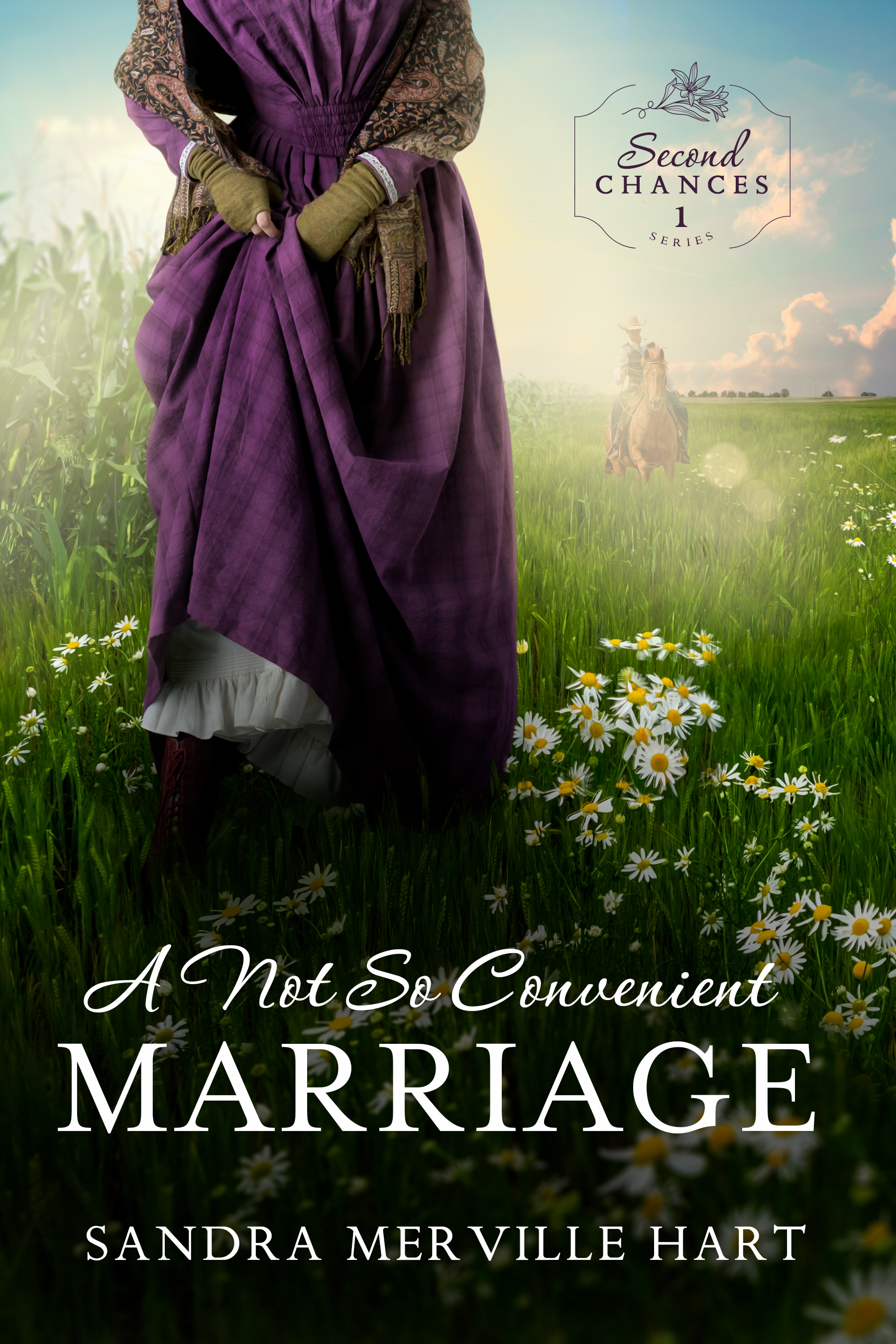
For instance, part of A Not So Convenient Marriage, Book 1 in my Second Chances Series set in Ohio in 1877, takes place at Christmas. A nostalgic scene where the characters string popcorn and hang ribbons and bows on the tree is an example of historical traditions or events that add authenticity to my stories.

Sources

“Christmas Trees,” Encyclopaedia Britannica, 2020/11/12 https://www.britannica.com/print/article/115737.

Collins, Ace. Stories Behind the Great Traditions of Christmas, Zondervan, 2003.

Kennedy, Lesley. “How 25 Christmas Traditions Got Their Start,” History, 2020/11/12

https://www.history.com/news/christmas-traditions-history.

Announcing the Upcoming Civil War Book Release of Tides of Healing!

by Sandra Merville Hart

I’m thrilled to announce that  Tides of Healing , Book 6 of my Spies of the Civil War Series, will release on February 11, 2025!

Books 4 – 6 of the series are set in historic Vicksburg, Mississippi—a city the Union is as determined to capture as the Confederacy is to retain. Much happens here during the Civil War, not the least of which is spying.

I can hardly believe that the final book in the series will soon be releasing.

You might wonder if authors fall in love with their characters as much as readers. Speaking for myself, I do! It’s fun to spend time with the characters I’ve grown to love on the written page.

Savannah Adair is the last of our three heroines to get to tell her Vicksburg story and she’s been chomping at the bit to show readers what happened.

Savannah has long been friends of Julia and Felicity, whom we first met in Streams of Courage, Book 4, when all three strong women resided in Vicksburg at the beginning of the Civil War.

Here’s a bit about the book:

A Southern belle fights to reclaim her home, but will her spying destroy the Union officer she never meant to love? 

Savannah Adair has endured the unimaginable, hiding in a cave while her beloved Vicksburg was under siege. With the city now occupied by Union soldiers, Savannah cannot stand by and do nothing. So when one of the gaunt, half-starved Confederate prisoners asks her to spy for the South, she can’t refuse the chance to take back her home. 

First Lieutenant Travis Lawson takes pride in the Union army’s hard-fought victory, but he quickly realizes that the challenges of rebuilding and reconciliation are just beginning . . . and not everyone is appreciative of changes he’s making. Namely, the fiery and alluring Savannah Adair. Despite their differing loyalties and the societal divide between them, Travis cannot deny the growing feelings he has for her. When he is tasked with finding Southern spies in Vicksburg and he captures a female spy, Travis is forced to consider that the woman he’s beginning to love may be the enemy. 

Preorder your copy today on Amazon, Barnes & Noble, Kobo, Apple, and Books2Read.