The True Story Behind Thousand Islands’ Boldt Castle

by Susan G. Mathis

Susan G. Mathis, fellow author and friend, gives some historical background for her new release, Madison’s Mission. It’s a great read! Welcome back to Historical Nibbles, Susan!

Amid the sparkling waters of the St. Lawrence River, nestled within the enchanting Thousand Islands, stands one of North America’s most romantic landmarks—Boldt Castle. For many, it is a fairytale fortress. But behind its towering spires and elegant stonework lies a story both beautiful and bittersweet—a testament to love, loss, and the legacy of dreams left unfinished.

At the turn of the 20th century, George C. Boldt—hotel magnate and proprietor of New York’s famed Waldorf-Astoria—set out to build something extraordinary: a summer home that would express his deep affection for his beloved wife, Louise.

Boldt had already fallen in love with the Thousand Islands, a lush archipelago straddling the U.S.-Canada border. In 1900, he purchased Heart Island as the canvas for his romantic vision—and even reshaped the island itself into the form of a heart. This was no ordinary construction project. It was a love letter in stone.

George Boldt commissioned hundreds of workers to build a Rhineland-style castle featuring 120 rooms, grand staircases, balconies, and ornate towers. The castle was only one part of an ambitious estate. The plans included a powerhouse to supply electricity, Italian-style gardens, a dove cote, a children’s playhouse known as Alster Tower, and a stately yacht house on nearby Wellesley Island. Every detail reflected George Boldt’s desire to create a haven of luxury and love—a private paradise for Louise and their family.

But in 1904, just four years into construction, tragedy struck. Louise Boldt died suddenly at the age of 41. Heartbroken, George Boldt called an immediate halt to all work on the island. The laborers put down their tools and walked away. Boldt never returned.

For the next 73 years, Boldt Castle stood silent—weathered by time, vandalized by visitors, and abandoned to the elements. What had begun as a dream became a haunting monument to grief. And yet, even in ruin, the castle captivated the imagination. Passing boaters gazed at its crumbling silhouette and wondered about the love story it represented.

Then, in 1977, hope was reborn. The Thousand Islands Bridge Authority acquired the property for the symbolic price of one dollar, pledging to preserve and restore the estate for public enjoyment. What followed was one of the most significant preservation efforts in the region’s history. Craftsmen and restoration experts worked tirelessly to revive the castle—not only repairing its damage but finishing what George Boldt had begun.

Today, visitors arrive by boat to explore this magnificent site. They wander through ornately decorated rooms, stroll along the restored gardens, and marvel at the castle’s transformation. The once-abandoned estate now tells a story not just of sorrow, but of enduring love and visionary beauty.

To my knowledge, no accident ever occurred during the construction of Boldt Castle. Its abandonment came not from disaster, but from a broken heart. In many ways, the story of Boldt Castle mirrors the emotional journey of Madison, the heroine in my novel Madison’s Mission. Like George Boldt, she carries the weight of loss—afraid to love again, afraid of what the future might bring. But just as Boldt’s dream was eventually redeemed, so too is Madison’s journey one of restoration, hope, and the healing power of love.

Boldt Castle now stands not as a symbol of what was lost, but of what can be reclaimed. It reminds us that even in our most fragile moments, beauty can rise from brokenness—and that love, though it may grieve, can leave a lasting legacy.

About Madison’s Mission:

Step into the captivating world of Boldt Castle in 1903, where dreams are forged in the fires of adversity and love.

Madison Murray, the devoted maid to the legendary Louise Boldt, harbors a singular mission—to care for her ailing mistress while hiding her own painful past. Her life takes an unexpected turn when she meets Emmett O’Connor, the distinguished foreman overseeing Boldt Castle’s extravagant construction. Their connection sparks with promise, yet the chasm of class difference and hidden secrets loom large.

Just as their budding romance begins to flourish, tragedy strikes, shattering their world. A deadly accident leaves Emmett wrestling with guilt and at the center of an investigation that could unravel everything he holds dear. Then Madison finds herself ensnared in a dangerous coverup that threatens her very life.

When Mrs. Boldt passes away, Madison is left reeling—jobless and burdened by the weight of her perceived failures. In a world filled with uncertainty, can she summon the strength to move forward and confront her past? Will Emmett rise above his challenges to forge a future alongside the woman who has captured his heart?

Susan G Mathis is an international award-winning, multi-published author of stories set in the beautiful Thousand Islands, her childhood stomping ground in upstate NY. Susan has been published more than thirty times in full-length novels, novellas, and non-fiction books. She has fifteen in her fiction line including, The Fabric of Hope: An Irish Family Legacy, Christmas Charity, Katelyn’s Choice, Devyn’s Dilemma, Sara’s Surprise, Reagan’s Reward, Colleen’s Confession, Peyton’s Promise, Rachel’s Reunion, Mary’s Moment, A Summer at Thousand Island House, Libby’s Lighthouse, Julia’s Joy, Emma’s Engagement and Madison’s Mission. Her book awards include four Illumination Book Awards, four American Fiction Awards, three Indie Excellence Book Awards, five Literary Titan Book Awards, two Golden Scroll Awards, a Living Now Book Award, and a Selah Award. Susan is also a published author of two premarital books, two children’s picture books, stories in a dozen compilations, and hundreds of published articles. Susan makes her home in Northern Virginia and enjoys traveling around the world but returns each summer to enjoy the Thousand Islands. Visit www.SusanGMathis.com/fiction for more.

Buy links: Amazon | Barnes&Nobles |

Madison’s Mission book trailer: https://www.youtube.com/watch?v=viMY4EJLRZc

The Secret Language of Fans

by Sandra Merville Hart

Hand fans have been used for about 4,000 years, beginning with the Egyptians. They were used in ancient Greece to shoo flies and to fan the flames while cooking by the 4th century BC. In ancient China, fans were made of silk, bamboo, wood, paper, or feathers.

Folding fans were heavily imported from China to European countries beginning in the 1600s. Some fifteenth-century fans that still survive contain cut-out designs in a lacy pattern. After a while, the fans were painted with leaves, flowers, and scenes commemorating special occasions. The sticks were made of bone, ivory, horn, mother of pearl, tortoise shell, or wood.

It seems that a language was associated with the fans, though it’s unclear how much it was used. When it began, the communication was done with individual letters. This evolved into making gestures in a secret flirtatious language first published by Fanella, a Spanish man. Then Fran Bartholomew wrote them in German.

In 1827, Jean-Pierre Duvelleroy opened a fan-making house in Paris. His fans sparked a wider use of fans at balls. Jean-Pierre gave his London Duvelleroy house to Jules Duvelleroy, his son. Jules published an English version of “The Language of the Fan”.

Here are a few of the codes:

Carrying the fan in the right hand in front of the face: Follow me

Draw the fan across the face: I love you

Place the fan on the left ear: I wish to get rid of you

Touch the fan’s tip with finger: I wish to speak to you

Let the fan rest on right cheek: Yes

Let the fan rest on left cheek: No

Fan slowly: I am married

Fan quickly: I am engaged

Open wide: Wait for me

With little finger extended: Goodbye

Of course, the young man must understand the meaning or the young woman’s efforts are in vain.

Some sources question how much this coded language was used. The best source would be novels written during that time.

Sources:

“Duvelleroy,” Wikipedia, 2025/04/21 https://en.wikipedia.org/wiki/Duvelleroy.

“Hand Fan,” Wikipedia, 2025/04/19 https://en.wikipedia.org/wiki/Hand_fan.

Hawkins, Linda J. The Unspoken Language of Fans & Flowers, Heart to Heart Publishing, 2007.

Luckel, Madeleine. “Why It’s Time to Revisit the Handheld Fan—And Its Secret Language,” Vogue, 2025/04/19 https://www.vogue.com/article/secret-language-of-the-fan-eighteenth-century-fans-de-young-museum.

Sayers, Rachel. “Let the Fan Do the Talking: Flirting in the Victorian Era,” The National Trust for Scotland Foundation USA, 2025/04/19 https://ntsusa.org/fan-victorian-flirting/.

Starp, Alexandra. “The Secret Language of Fans,” Sotheby’s, 2025/04/10 https://www.sothebys.com/en/articles/the-secret-language-of-fans.

Exploring the St. Lawrence River’s Rock Island Lighthouse

I’m thrilled that fellow author and friend, Susan G. Mathis, is with us today. Susan is sharing historical background for her latest release, Emma’s Engagement. Welcome back to Historical Nibbles, Susan!

by Susan G Mathis

Nestled in the picturesque Thousand Islands, Rock Island Lighthouse stands as a historic lighthouse. Located near Fisher’s Landing, New York, the lighthouse has guided vessels through the St. Lawrence River since its construction in 1847. Though modern technology has replaced its traditional purpose, the lighthouse remains a symbol of resilience and dedication.

One of the most memorable stewards of this historic beacon is Michael Diepolder, who served as a lightkeeper during its operational years, the hero of my story and husband of Emma. Diepolder’s commitment to the lighthouse exemplifies the unwavering dedication required of keepers, often living in isolation and braving harsh winters, stormy waters, and the solitude of island life along with his wife. His vigilance ensured that mariners could safely navigate the treacherous currents and rocky shoals surrounding the islands.

Today, Rock Island Lighthouse is a popular tourist destination managed by the New York State Office of Parks, Recreation, and Historic Preservation. Visitors can climb its spiral staircase for breathtaking views, explore the renovated keeper’s quarters, and learn about the lives of those, like Diepolder, who maintained the light. The museum showcases artifacts and stories that bring history to life, allowing guests to appreciate the challenges and triumphs of lighthouse keepers.

For those who cherish history, faith, and the beauty of nature, Rock Island Lighthouse is more than a landmark—it’s a window into the past. The legacy of keepers like Michael Diepolder serves as an inspiring reminder of dedication, perseverance, and the human spirit’s ability to overcome adversity.

Whether you’re a history enthusiast or simply seeking a scenic adventure, the story of Emma’s Engagement and a visit to Rock Island Lighthouse offers an unforgettable glimpse into the maritime heritage of the Thousand Islands.

About Emma’s Engagement (100 WORDS)

Emma Row marries the Rock Island Lightkeeper, but navigating the treacherous waters of isolation and the bitter rejection of her new stepdaughter, Ada, isn’t easy. Michael Diepolder, the widowed lightkeeper, realizes that the path to happiness is far more turbulent than he ever anticipated. As a storm brews on the horizon, Emma and Michael must confront the tempestuous waves of doubt, jealousy, and isolation that threaten to extinguish the light of their love. Can they weather the storm and find the strength to keep their family together, or will the darkness consume them all?

Amazon

Susan G Mathis is an international award-winning, multi-published author of stories set in the beautiful Thousand Islands in upstate NY. Susan has been published more than thirty times in full-length novels, novellas, and non-fiction books. She has fourteen in her fiction line including Emma’s Engagement. Find out more at www.SusanGMathis.com.

Christmas Trees Become an American Holiday Tradition

by Sandra Merville Hart

The French and Germans hung evergreen trees upside down from the ceiling in the twelfth century, a practice that continued for about 200 years.

In December, fir trees, called “paradise trees,” were placed outside Catholic churches during medieval times in Europe’s Baltic region. Apples were hung on its branches for a play about Adam and Eve.

Fir trees were displayed on the ground in homes instead of the ceiling by late in the 16th century.

Martin Luther, after a walk in the forest on a moonlit night, is generally credited with placing the first lit candles on a Christmas tree. To him the evergreen tree represented God’s everlasting love for us. The hope that the birth of Jesus brought into the world was symbolized by the candles or lights on the tree.

Americans of German descent living in Pennsylvania in the 1820s are said to have brought the tradition of Christmas trees to the United States to stay. It took the marriage of Prince Albert of Germany to Queen Victoria of England for the tradition to really take hold in the United States.

Toys, candy, popcorn, and candles decorated those Victorian trees.

As an author of inspirational historical romances, I love discovering when holiday traditions began and incorporating them into my novels when possible.

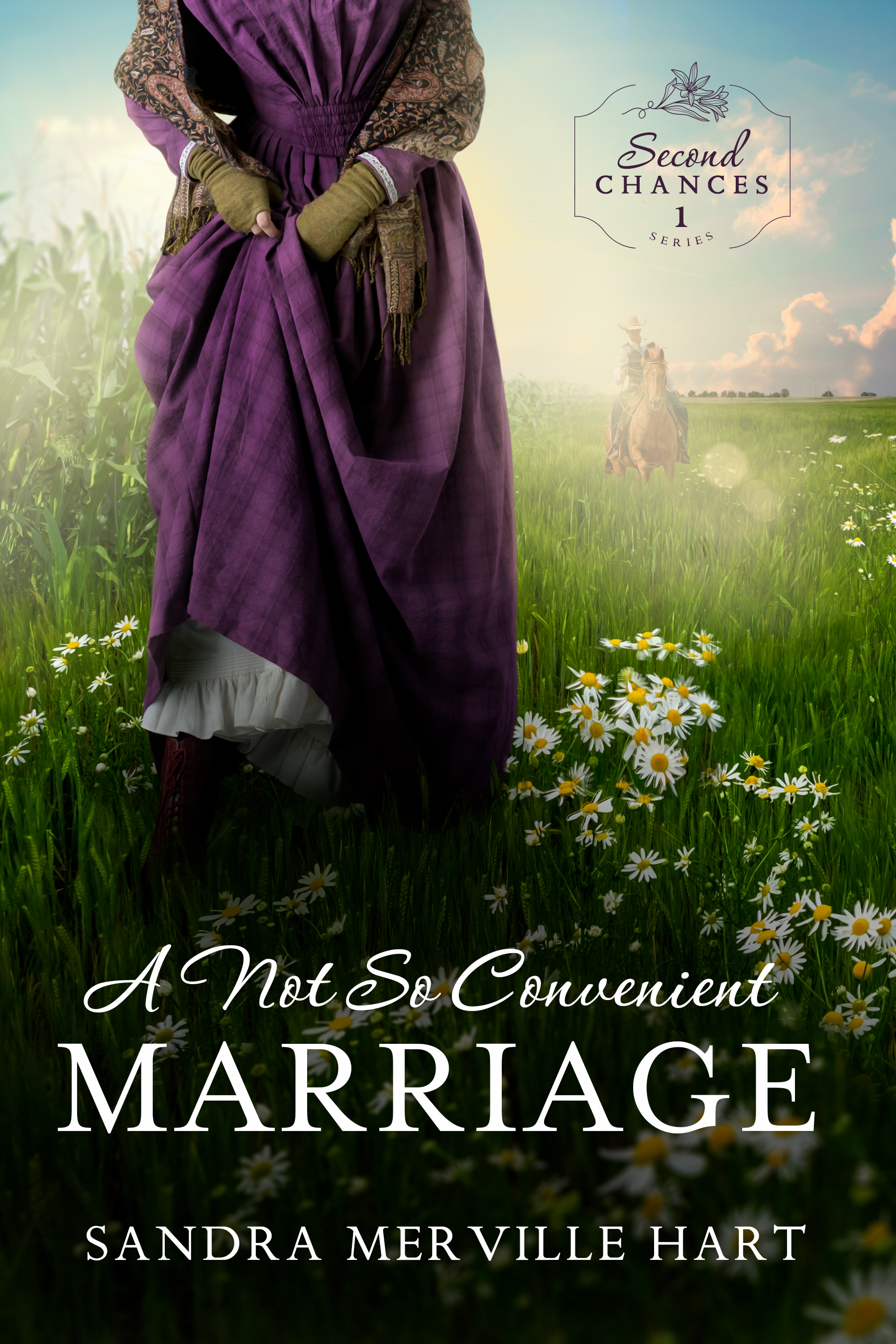
For instance, part of A Not So Convenient Marriage, Book 1 in my Second Chances Series set in Ohio in 1877, takes place at Christmas. A nostalgic scene where the characters string popcorn and hang ribbons and bows on the tree is an example of historical traditions or events that add authenticity to my stories.

Sources

“Christmas Trees,” Encyclopaedia Britannica, 2020/11/12 https://www.britannica.com/print/article/115737.

Collins, Ace. Stories Behind the Great Traditions of Christmas, Zondervan, 2003.

Kennedy, Lesley. “How 25 Christmas Traditions Got Their Start,” History, 2020/11/12

https://www.history.com/news/christmas-traditions-history.

Announcing the Upcoming Civil War Book Release of Tides of Healing!

by Sandra Merville Hart

I’m thrilled to announce that  Tides of Healing , Book 6 of my Spies of the Civil War Series, will release on February 11, 2025!

Books 4 – 6 of the series are set in historic Vicksburg, Mississippi—a city the Union is as determined to capture as the Confederacy is to retain. Much happens here during the Civil War, not the least of which is spying.

I can hardly believe that the final book in the series will soon be releasing.

You might wonder if authors fall in love with their characters as much as readers. Speaking for myself, I do! It’s fun to spend time with the characters I’ve grown to love on the written page.

Savannah Adair is the last of our three heroines to get to tell her Vicksburg story and she’s been chomping at the bit to show readers what happened.

Savannah has long been friends of Julia and Felicity, whom we first met in Streams of Courage, Book 4, when all three strong women resided in Vicksburg at the beginning of the Civil War.

Here’s a bit about the book:

A Southern belle fights to reclaim her home, but will her spying destroy the Union officer she never meant to love? 

Savannah Adair has endured the unimaginable, hiding in a cave while her beloved Vicksburg was under siege. With the city now occupied by Union soldiers, Savannah cannot stand by and do nothing. So when one of the gaunt, half-starved Confederate prisoners asks her to spy for the South, she can’t refuse the chance to take back her home. 

First Lieutenant Travis Lawson takes pride in the Union army’s hard-fought victory, but he quickly realizes that the challenges of rebuilding and reconciliation are just beginning . . . and not everyone is appreciative of changes he’s making. Namely, the fiery and alluring Savannah Adair. Despite their differing loyalties and the societal divide between them, Travis cannot deny the growing feelings he has for her. When he is tasked with finding Southern spies in Vicksburg and he captures a female spy, Travis is forced to consider that the woman he’s beginning to love may be the enemy. 

Preorder your copy today on Amazon, Barnes & Noble, Kobo, Apple, and Books2Read.

How Did Thanksgiving Become an American Tradition?

by Sandra Merville Hart

As an author of several Civil War novels, I’ve read many soldiers’ diaries and daily journals. It’s a fascinating glimpse into army camps, battles, attitudes, beliefs, and even the weather.

One tidbit I learned in a soldier’s diary is that the annual celebration of Thanksgiving in his state took place in October. That made me curious about those early celebrations.

On October 3, 1789, President Washington issued a proclamation declaring Thursday, November 26, 1789, a national day of thanks to God. He reminded Americans that the Almighty’s care and provision had led them through the Revolution and helped them establish a new government and Constitution.

There were public celebrations and church services. Washington attended St. Paul’s Chapel in New York City. Those who were imprisoned for debts in the city weren’t forgotten—Washington gave them food and beer.

The proclamation did not establish Thanksgiving as a national holiday. Presidents John Adams and James Madison issued their own proclamations but none of these established a yearly celebration.

Some states began to choose days for an annual Thanksgiving, with New York as the first in 1817. There was no uniformity of the date selected and not every state participated.

Beginning in 1827, Sarah Josepha Hale, writer of “Mary Had a Little Lamb” and editor of Godey’s Lady Book, wrote letters to presidents and other politicians in hopes they’d establish a national day of Thanksgiving. Those letters continued for 36 years. As the unrest between the North and South escalated, Sarah hoped that declaring the holiday would unite people. She urged President Lincoln to make it a permanent custom and became known as the “Mother of Thanksgiving” for her efforts.

President Lincoln was the one to set aside the last Thursday in November as an annual observance of the day in 1863—during the middle of the Civil War.

In 1941, President Franklin Roosevelt moved the holiday to the fourth Thursday in November to allow for an extra week of Christmas shopping.

Today we celebrate the holiday with family and friends. Turkey is the traditional main dish with a variety of side dishes and pumpkin pie for dessert. Macy’s Thanksgiving Day Parade and watching sports are also a mainstay. I enjoy watching Christmas movies after the dishes are done.

Happy Thanksgiving!

Sources

History.com Editors. “Thanksgiving 2024,” History.com, 2024/11/20 https://www.history.com/topics/thanksgiving/history-of-thanksgiving.

Maranzani, Barbara. “How the ‘Mother of Thanksgiving’ Lobbied Abraham Lincoln to Proclaim the National Holiday,” History.com, 2024/11/20 https://www.history.com/news/abraham-lincoln-and-the-mother-of-thanksgiving.

Silverman, David J. “Thanksgiving Day,” Britannica, 2024/11/20 https://www.britannica.com/place/Turkey/The-central-massif.

“Thanksgiving (United States),” Wikipedia, 2024/11/20 https://en.wikipedia.org/wiki/Thanksgiving_(United_States).

The Legacy of Captain William Dodge: Civil War Hero and Lighthouse Keeper

By Susan G Mathis

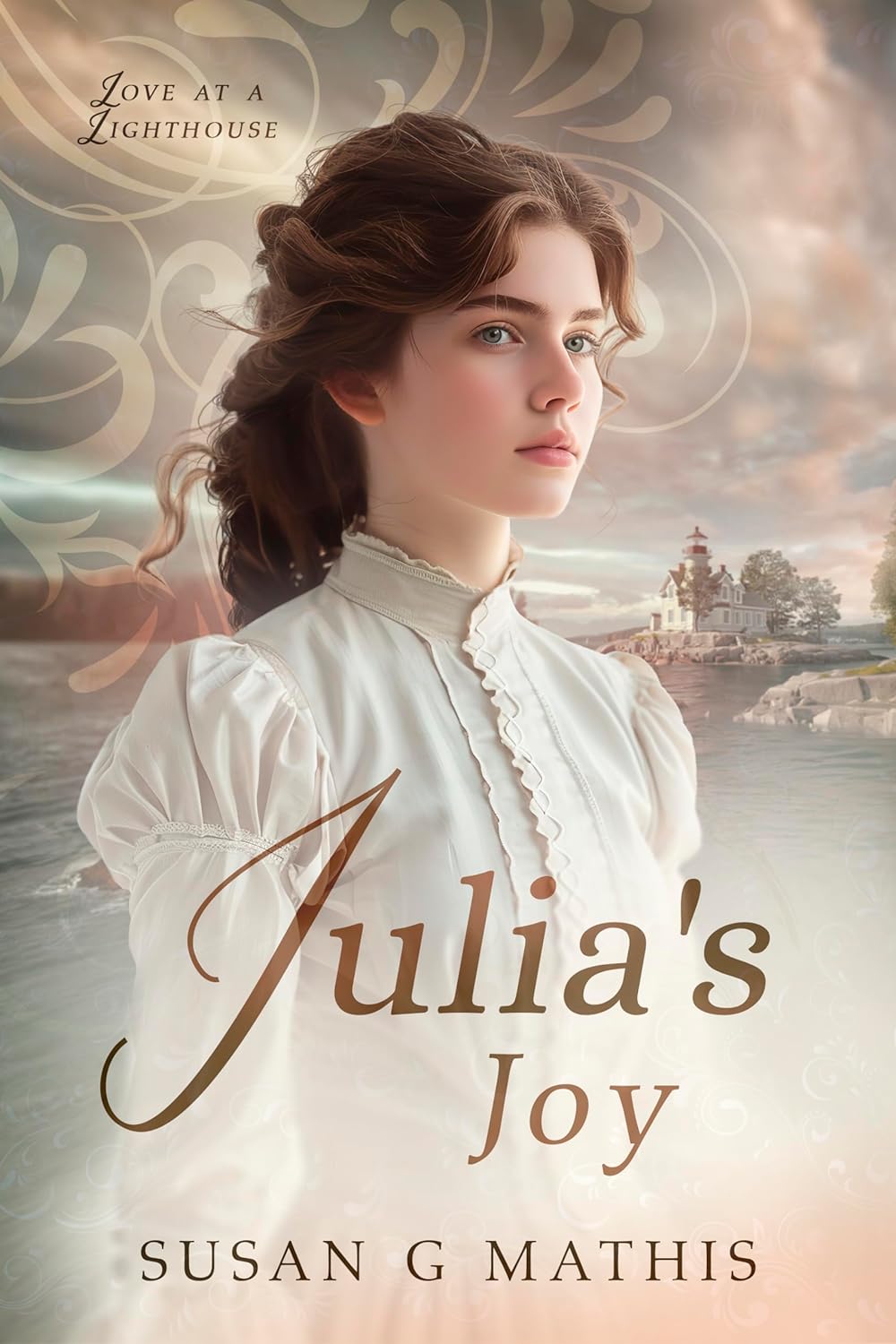
Welcome back to friend and fellow author, Susan G. Mathis! She’s sharing a bit of background for her newest release, Julia’s Joy.

In the annals of maritime history, few figures shine as brightly as Captain William Dodge, the first keeper of the Sister Island Lighthouse in the Thousand Islands, NY. This man was not just a guardian of the St. Lawrence River and his ships but also a hero of the Civil War and a remarkable man.

Before stepping into the role of lighthouse keeper, Dodge was a captain—a hero forged in the crucible of the Civil War. He fought with the New York volunteers, but not without his share of scars. His left foot was badly wounded in battle, so he limped the rest of his life.

But he wasn’t just a hero and a keeper of the light. He was a craftsman too. Before the lighthouse, he was a man of many trades—a cabinetmaker, a tax collector, a census enumerator. A life woven with diverse endeavors, each one contributing to the rich testimony of his existence.

In 1870, following his appointment as the first keeper of Sister Island Lighthouse, he served faithfully and cheerfully. For twenty-three years, he tended to this tower, the keeper of both the light and its stories. As he worked, he prepared his son to take his place as the second lightkeeper. Known as a stalwart guardian of the river, guiding ships through stormy nights, he taught his son well.

Through the story of Captain William Dodge, we discover a man who not only illuminated the paths of ships but also shaped the lives of those around him. His legacy endures, a beacon of resilience and craftsmanship, woven into the very fabric of Sister Island and the hearts of those who remember him.

About Julia’s Joy:

She came to claim her inheritance, but the mysterious scarred lighthouse keeper makes her question all her plans.

When Julia Collins reluctantly sets foot on Sister Island, compelled by her wealthy grandmother’s will, she is intent on claiming her inheritance and moving on. But when she experiences the peaceful, faith-filled island life, and connects with the handsome lightkeeper, William, Julia finds herself confronting her open wounds from her parents’ deaths.

William Dodge, lightkeeper of Sister Island, harbors a heart hardened by a past betrayal. Between that and his chronic pleurisy, he wants nothing to do with love. But when Julia arrives on the island bursting with vitality and unconventional notions, William’s world is turned upside down. As she chips away at the walls William has built for himself, he finds his reluctance waning.

But just as love begins to blossom between them, Julia is faced with a tempting proposal from a prominent Brockville family. Will she succumb to societal expectations or choose the richness of her island life and the love of the steadfast lightkeeper?

About Susan:

Susan G Mathis is an international award-winning, multi-published author of stories set in the beautiful Thousand Islands, her childhood stomping ground in upstate NY. Susan has been published more than thirty times in full-length novels, novellas, and non-fiction books. She has thirteen in her fiction line including, The Fabric of Hope: An Irish Family Legacy, Christmas Charity, Katelyn’s Choice, Devyn’s Dilemma, Sara’s Surprise, Reagan’s Reward, Colleen’s Confession, Peyton’s Promise, Rachel’s Reunion, Mary’s Moment, A Summer at Thousand Island House, Libby’s Lighthouse, and Julia’s Joy, the second in her three-book lighthouse series. Her book awards include three Illumination Book Awards, four American Fiction Awards, three Indie Excellence Book Awards, five Literary Titan Book Awards, two Golden Scroll Awards, and a Selah Award. Susan is also a published author of two premarital books, two children’s picture books, stories in a dozen compilations, and hundreds of published articles. Susan makes her home in Northern Virginia and enjoys traveling around the world but returns each summer to enjoy the Thousand Islands. Visit www.SusanGMathis.com/fiction for more.

Where can people find you online?

Susan’s website: https://www.susangmathis.com/fiction-books

Buy links: Amazon | Barnes&Nobles | Wild Heart Books

Julia’s Joy book trailer: https://www.youtube.com/watch?v=Rq7XLUohjrA

Narrative of Sojourner Truth

Reviewed by Sandra Merville Hart

Narrative of Sojourner Truth by Sojourner Truth

Isabella Baumfree was born into slavery in New York in 1797. That state passed a law freeing all slaves 40 years and older 1817. Everyone younger than 40, which included Isabella, were to be emancipated ten years later.

Isabella endured many hardships and cruelty during part of that time. Her mother raised her to have faith and to pray to God before she was sold away from her parents at nine. She spoke Dutch only as a young child and didn’t understand English, which made it impossible to understand the new owners. Isabella endured many hardships and cruelty after her separations from her parents just a few miles away.

She wasn’t allowed to marry a man from a neighboring home. Her husband was much older and she had children with him. After her emancipation, Isabella parted from him.

This her story in her words, as dictated to Olive Gilbert, after Isabella changed her name to Sojourner Truth. Sojourner became an inspiring speaker, sharing her faith as well as advocating for black freedom, women’s rights, and temperance.

A powerful story about a powerful woman. Her story held my attention from page one.

Definitely recommend!

Amazon

My Cave Life in Vicksburg

Reviewed by Sandra Merville Hart

My Cave Life in Vicksburg, with Letters of Trial and Travel By A Lady.

The anonymous author is Mary Webster Loughborough, who arrived on April 15, 1863, for a pleasant visit to Vicksburg. She became an unwilling guest during the bombardment and siege.

Excellent account of the trials and hardships suffered by the townspeople who endured the Siege of Vicksburg in 1863.

Mary’s husband paid to have a cave dug in the city of Vicksburg for her and their toddler. The Union navy shelled the city, sending the citizens scurrying for the relative safety of the caves. Some died from shells that penetrated the ceilings. Others died when they ventured out during lulls in the shelling.

Parrott shells came directly toward their cave often and danger was everywhere.

Food ran low as the siege continued. There is no sense of time in the book so the days and hours must have run together into a nightmare from which they couldn’t awaken.

I purchased this book to discover the history for the siege. I was researching the background for my book, River of Peril, Book 5 in my Spies of the Civil War Series.

Recommended for readers of American Civil War history and American history.

Amazon

The American Gilded Age

by Susan G. Mathis

Welcome back to Susan G. Mathis, friend and fellow author at Wild Heart Books. Libby’s Lighthouse is her latest   Thousand Islands Gilded Age story. I loved it! Thanks for joining us today, Susan!

The American Gilded Age was a time of rapid technical advances, industrialization, and thousands of new inventions from about 1870-1910. Mark Twain coined the term in his 1873 novel The Gilded Age: A Tale of Today that satirized the era of social problems that were masked by a layer of thin, gold gilding. It’s a fascinating time in history, especially in the Thousand Islands.

All of my books are set during the Thousand Islands Gilded Age, when the wealthy came and scooped up the islands and built lavish summer homes, mansions, and castles. It was an era of economic growth. Since wages were higher than Europe, massive immigration drew about twenty million to the U.S. shores.

Unfortunately, it was also a time of unequal distribution of wealth where the rich got richer and the poor working class suffered. Many young women worked as servants until they married, and that’s what my stories are about—those nameless, faithful women who cooked and cleaned and served tables for the rich and famous. These “downstairs” women had fascinating stories to tell, and I plan to tell many of them.

During the Gilded Age, America led the world in innovation. A half-million patents were issued for new inventions including hundreds by Thomas Edison, Westinghouse, and others. Thanks to inventions such as delivery of electric power, the world became lighter, safer, more convenient and comfortable, and all around better.

About Susan’s latest Thousand Islands Gilded Age story, Libby’s Lighthouse:

Elizabeth Montonna, daughter of the Tibbett’s Point Lighthouse keeper, finds a mysterious sailor with amnesia, his kindness and character steal a little more of her heart each day. But secrets haunt Libby and may change her life forever. When Owen is ship wrecked, he accepts the hospitality of the lighthouse keeper and his lovely daughter. His relationship with Libby turns into something more, but their budding romance can go no further until he uncovers his past. As Owen inches closer to discovering the secrets of his identity, will the revelations bring him closer to Libby or tear them apart forever?

Amazon

About Susan G Mathis:

Susan G Mathis is an international award-winning, multi-published author of stories set in the beautiful Thousand Islands in upstate NY. Susan has been published more than thirty times in full-length novels, novellas, and non-fiction books. She has twelve in her fiction line including Libby’s Lighthouse. Find out more at www.SusanGMathis.com/fiction