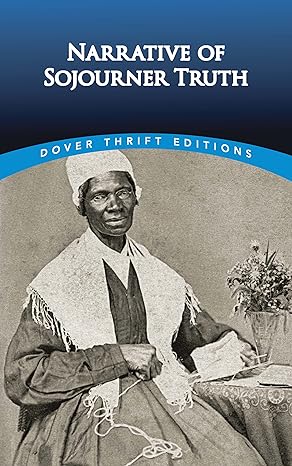
Isabella Baumfree was born into slavery in New York in 1797. That state passed a law freeing all slaves 40 years and older 1817. Everyone younger than 40, which included Isabella, were to be emancipated ten years later.
Isabella endured many hardships and cruelty during part of that time. Her mother raised her to have faith and to pray to God before she was sold away from her parents at nine. She spoke Dutch only as a young child and didn’t understand English, which made it impossible to understand the new owners. Isabella endured many hardships and cruelty after her separations from her parents just a few miles away.
She wasn’t allowed to marry a man from a neighboring home. Her husband was much older and she had children with him. After her emancipation, Isabella parted from him.
This her story in her words, as dictated to Olive Gilbert, after Isabella changed her name to Sojourner Truth. Sojourner became an inspiring speaker, sharing her faith as well as advocating for black freedom, women’s rights, and temperance.
A powerful story about a powerful woman. Her story held my attention from page one.
My Cave Life in Vicksburg, with Letters of Trial and Travel By A Lady.
The anonymous author is Mary Webster Loughborough, who arrived on April 15, 1863, for a pleasant visit to Vicksburg. She became an unwilling guest during the bombardment and siege.
Excellent account of the trials and hardships suffered by the townspeople who endured the Siege of Vicksburg in 1863.
Mary’s husband paid to have a cave dug in the city of Vicksburg for her and their toddler. The Union navy shelled the city, sending the citizens scurrying for the relative safety of the caves. Some died from shells that penetrated the ceilings. Others died when they ventured out during lulls in the shelling.
Parrott shells came directly toward their cave often and danger was everywhere.
Food ran low as the siege continued. There is no sense of time in the book so the days and hours must have run together into a nightmare from which they couldn’t awaken.
I purchased this book to discover the history for the siege. I was researching the background for my book, River of Peril, Book 5 in my Spies of the Civil War Series.
Recommended for readers of American Civil War history and American history.
Welcome back to Susan G. Mathis, friend and fellow author at Wild Heart Books. Libby’s Lighthouse is her latestThousand Islands Gilded Age story. I loved it! Thanks for joining us today, Susan!
The American Gilded Age was a time of rapid technical advances, industrialization, and thousands of new inventions from about 1870-1910. Mark Twain coined the term in his 1873 novel The Gilded Age: A Tale of Today that satirized the era of social problems that were masked by a layer of thin, gold gilding. It’s a fascinating time in history, especially in the Thousand Islands.
All of my books are set during the Thousand Islands Gilded Age, when the wealthy came and scooped up the islands and built lavish summer homes, mansions, and castles. It was an era of economic growth. Since wages were higher than Europe, massive immigration drew about twenty million to the U.S. shores.
Unfortunately, it was also a time of unequal distribution of wealth where the rich got richer and the poor working class suffered. Many young women worked as servants until they married, and that’s what my stories are about—those nameless, faithful women who cooked and cleaned and served tables for the rich and famous. These “downstairs” women had fascinating stories to tell, and I plan to tell many of them.
During the Gilded Age, America led the world in innovation. A half-million patents were issued for new inventions including hundreds by Thomas Edison, Westinghouse, and others. Thanks to inventions such as delivery of electric power, the world became lighter, safer, more convenient and comfortable, and all around better.
Elizabeth Montonna, daughter of the Tibbett’s Point Lighthouse keeper, finds a mysterious sailor with amnesia, his kindness and character steal a little more of her heart each day. But secrets haunt Libby and may change her life forever. When Owen is ship wrecked, he accepts the hospitality of the lighthouse keeper and his lovely daughter. His relationship with Libby turns into something more, but their budding romance can go no further until he uncovers his past. As Owen inches closer to discovering the secrets of his identity, will the revelations bring him closer to Libby or tear them apart forever?
Susan G Mathis is an international award-winning, multi-published author of stories set in the beautiful Thousand Islands in upstate NY. Susan has been published more than thirty times in full-length novels, novellas, and non-fiction books. She has twelve in her fiction line including Libby’s Lighthouse. Find out more at www.SusanGMathis.com/fiction
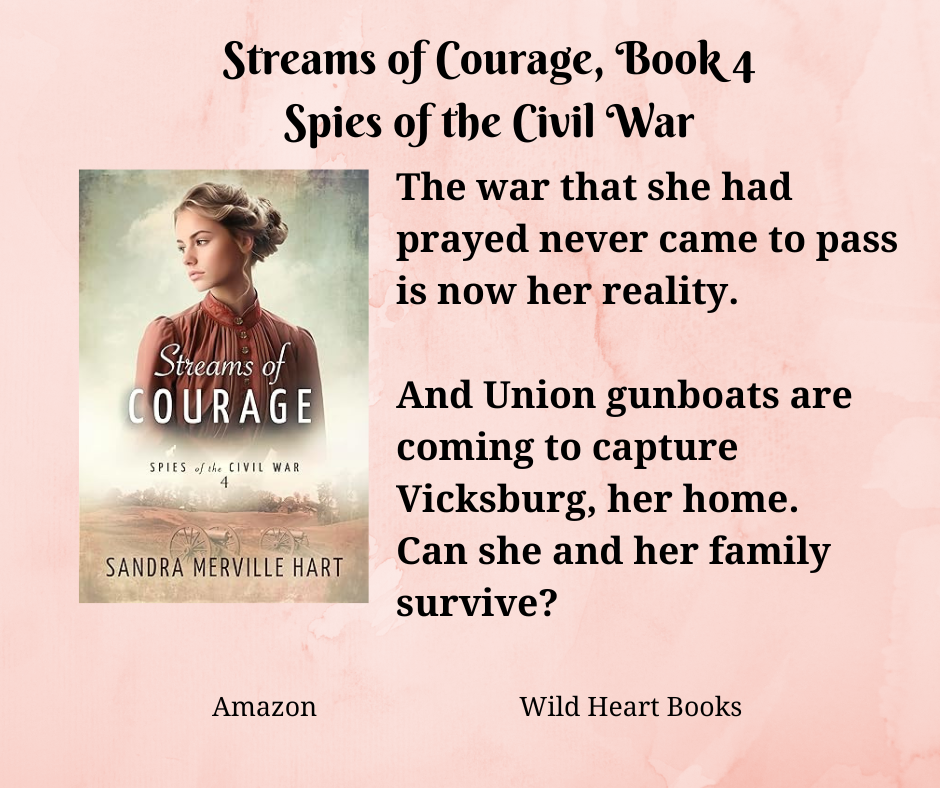
In Streams of Courage, Book 4 in my Spies of the Civil War Series, Julia, our heroine, has suffered several significant losses in her life, including her father and two siblings. Her mother’s insistence that Julia stop courting Ash, a saddler, and find instead a rich suitor makes no sense. Surely her father had provided for her.
Then she discovers that her parents have only provided for her younger brother, whom her mother had always adored. Julia will be penniless when her mother dies. The knowledge crushes her.
Ash is already supporting his mother and siblings. As Mama points out, adding a wife and children will stretch his income to the limits. Mama will not give her blessing should Ash propose. Julia, who had been raised in comfort, must find some means of support.
As I considered how Julia could make money in a war-time economy, it was clear her mother, as the daughter of a wealthy plantation owner, would never condone her working in a shop. What can she do?
Tatting lace.
Her lace patterns have received compliments in the past. With fewer ships bringing goods into the city, lace is in short supply. Granted, the demand for lace has diminished because even dress fabric isn’t as available as before the war.
I enjoyed researching this skill that was once so prevalent among young ladies in society. I watched videos on making lace with a special needle called a tatting needle.
The most basic stitch is the double-stitch. There is a special way to hold the needle and thread so that the first stitch grabs thread from under the thumb and the second stitch grabs it from over the thumb. There is a rhythm to the stitching in the hands of a skilled lacemaker.
I watched videos that demonstrated making rings with picot trim. There is a variety of stitching. The variations create beautiful patterns. The lace is then rolled for storage.
Fascinating. It’s mesmerizing to watch the different patterns emerge.
Tatting is a small yet interesting aspect in the adventurous story. Ash has become a Union spy. For her and her family’s safety, he keeps his dangerous activities a secret from Julia.
Part of my research for this novel and the next two novels included a trip to Vicksburg, Mississippi. I toured the museums and walked the streets of the historic city. Though I wasn’t certain of my story at the time of my visit, I was inspired by the history.
Avenue of Betrayal, Book 1,is set in the Union capital of Washington City (Washington DC) in 1861, where a surprising number of Confederate sympathizers and spies lived. Boulevard of Confusion and Byway to Danger are set in Richmond, the Confederate capital in 1862. Actual historical spies touch the lives of our fictional family.
Through both real and fictional characters, this series highlights activities spies were involved in and some of the motives behind their decisions.
I invite you to read the whole “Spies of the Civil War” series!
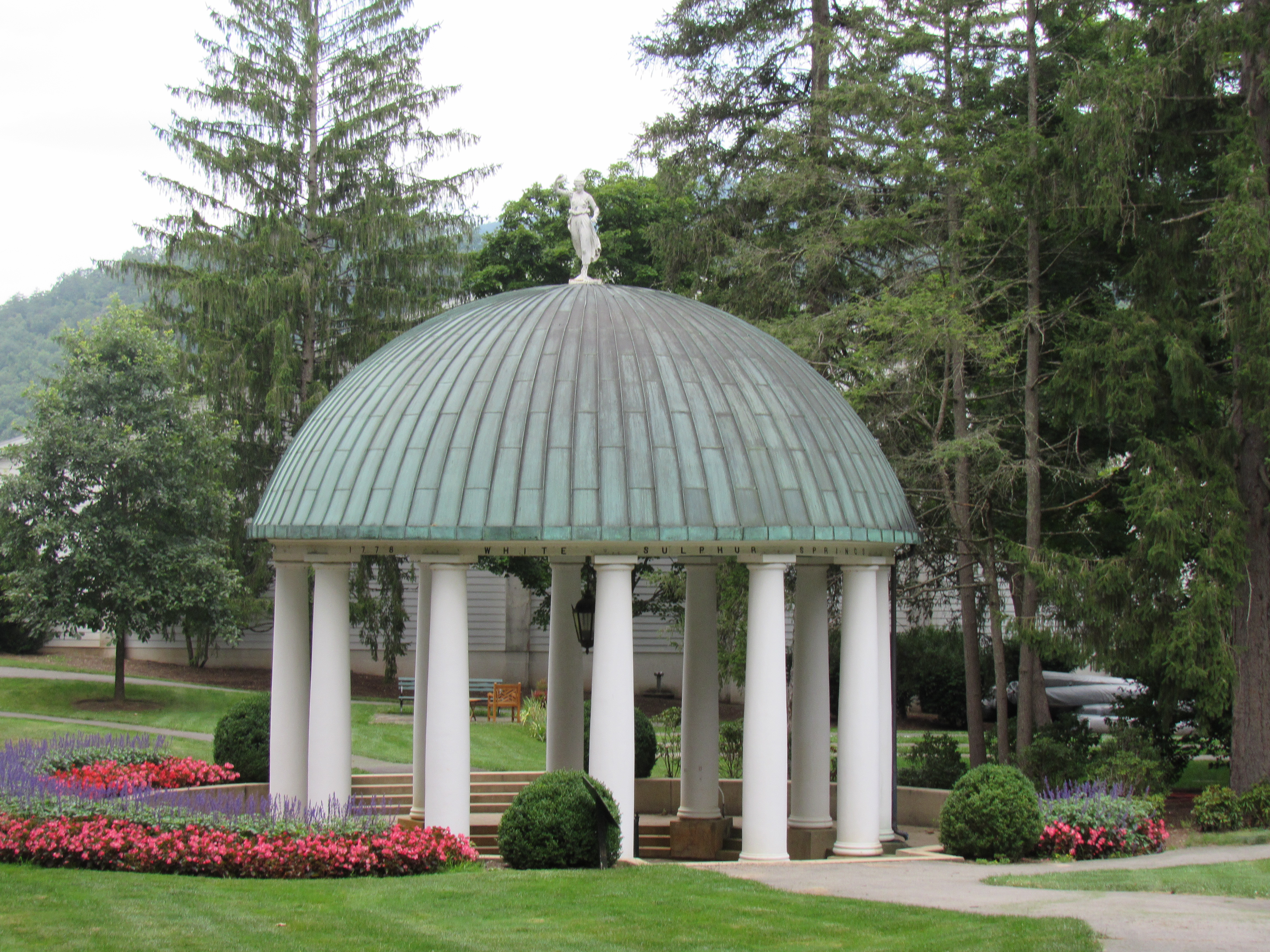
Healings from the sulphur springs in White Sulphur Springs date back to the Revolutionary although the Shawnee already knew of its health benefits.
Mrs. Anderson, an early homesteader in the area, suffered from chronic rheumatism and may have learned of the spring from the Shawnee. In 1778, her family took her to the spring. They erected a tent and hollowed out a log for a tub. Mrs. Anderson drank the water and bathed in heated water. After a few weeks, her improvement was so dramatic that the news quickly spread to local settlers, some of whom came to the springs for healing and the reduction of pain from rheumatism.
The first resort began in 1785, when early guests stayed in tents. Buildings were erected and many improvements were made over the years as it changed ownership. New owners purchased the resort in 1910, who closed it for renovations. A new bath wing opened in the grand reopening in 1913.
Mosaic tile enhanced the beauty of a beautiful rectangular pool on the first floor. At 100 feet x 42 feet, it was one of the largest pools in the world at the time. A high glass dome enclosed it. Ladies sat to sew on the comfortable chairs among hot-house plants outside the pool.
The second and third floors of the Bath Wing had heated sulphur spring bathing rooms and mud baths. The Men’s Department was on the second floor and the Women’s Department was on the third floor. Doctors sent their wealthy patients to the springs with a recommended regimen of bathing that might also include drinking the spring water. Folks suffering from a variety of ailments sought benefits from the spring waters, including gout, rheumatism, arthritis, neuritis, dyspepsia, jaundice, scurvy, chronic splenitis, pyrosis, and chronic diseases of the skin.
The first guest signed the registry in the newly remodeled resort on September 25, 1913. The Greenbrier’s grand reopening brought another change—it was now open year-round.,
InA Spring at The Greenbrier, Book 7 in Romance at the Gilded Age Resorts Series, Marilla, our heroine, works at The Greenbrier in 1914. Her first job at the resort was serving guests tumblers of sulphur spring water, a tradition at the historic hotel. When the doctor suggests that her younger sister would benefit from bathing in heated spring waters, Marilla moves to the Bath Wing, an important part of the story because two little girls need its benefits.
Sources
Conte, Robert S. The History of The Greenbrier: America’s Resort, Pictorial Histories Publishing Co., 1989.
Moorman, J.J., Md. Directory for Use of White Sulphur Waters with Practical Remarks on their Medicinal Properties, T.K. & P.G. Collins, 1839.
Mutter, Thomas Dent, M.D. Classic Reprint Series: The Salt Sulphur Springs, Monroe County, VA, T.K. & P.G. Collins, Printer, 1840.
InA Spring at The Greenbrier, Book 7 in Romance at the Gilded Age Resorts Series, Marilla, our heroine, works at The Greenbrier in 1914. Her first job at the resort was serving guests tumblers of sulphur spring water, a tradition at the historic hotel, one that dates back to 1785, when Michael Bowyer owned the land. He hired a couple to manage his health resort and early guests stayed in their own tents to partake of the waters.
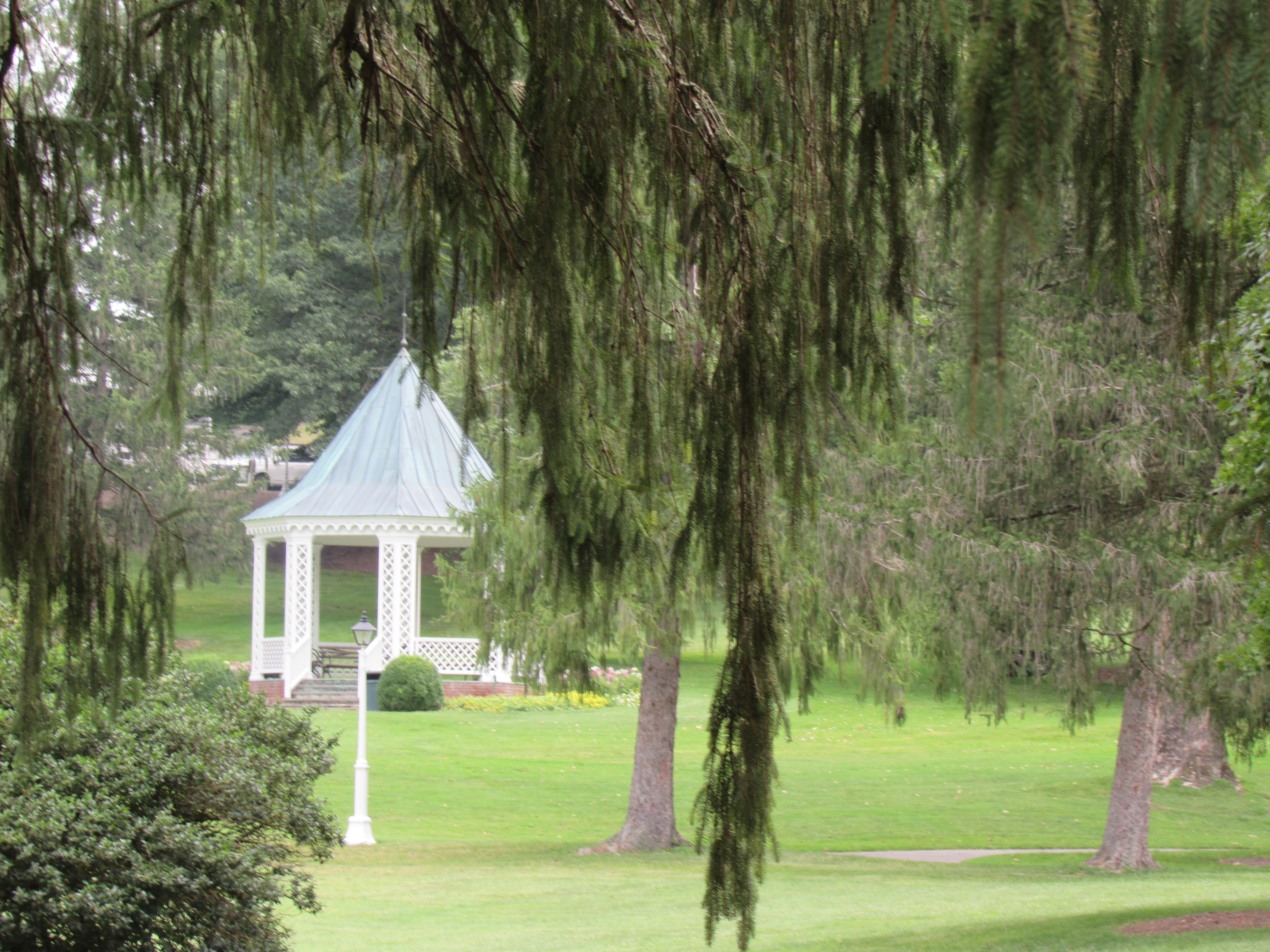
The health resort grew from those humble beginnings to become a place where the wealthy came to drink the waters. Guests brought their whole families and stayed for weeks in the summer. They walked across the lawn to the Springhouse to drink tumblers of water before breakfast, lunch, and supper.
Dr. Moorman served resort guests in the 1800s for decades. He recommended starting with 4 – 8 glasses daily, growing to a maximum of 12 glasses daily in two weeks. He felt that guests would see health benefits for the bowels, liver, kidneys, and skin in 3 – 6 weeks.
Dyspepsia, jaundice, chronic rheumatism, scurvy, and neuralgia were a few of the conditions he saw improvement among guests drinking spring water. Other doctors sent their patients to the resort for a variety of ailments.
To satisfy guests’ demand for the waters in between visits, it was sent in bottles and barrels to apothecaries in major cities. Nearly every drug store in America sold cases of 24 bottles for $5 by 1902. It was labeled as A Natural Laxative and was sold until 1942.
The spring waters are an important part of the story in A Spring at The Greenbrier, where two little girls need its benefits.
Sources
Conte, Robert S. The History of The Greenbrier: America’s Resort, Pictorial Histories Publishing Co., 1989.
Moorman, J.J., Md. Directory for Use of White Sulphur Waters with Practical Remarks on their Medicinal Properties, T.K. & P.G. Collins, 1839.
Historic Springs of the Virginias: A Pictorial History
I purchased this book to learn more about the springs in West Virginia. I was researching the background for my book, A Spring at The Greenbrier, Book 7 in Romance at the Gilded Age Resorts Series. Not only does my heroine work there in the new Bath Wing but also her younger sister needs to bathe in the spring waters to possibly help her.
This book is well-written. It gives a broad view of the many springs in Virginia and West Virginia. I had no idea there were so many or that several of them were associated with health resorts at some point. The Greenbrier, which began as a health resort in the 1700s, is located in White Sulphur Springs.
The book is filled with interesting history. Photos, maps, sketches, and nostalgic advertisements greatly enhance the book.
Lots of tidbits and historical facts for the springs in West Virginia and Virginia.
Recommended for readers of American history and those interested in learning the sulphur springs.
InA Spring at The Greenbrier, Book 7 in Romance at the Gilded Age Resorts Series, Marilla, our heroine, works at The Greenbrier. This historic resort had been purchased from previous owners in 1910, who renamed it “The White”. Guests who had been returning for long stays year after year chose to affectionately refer to the hotel as “The Old White”.
Three churches held Sunday services at The Greenbrier around the time it changed hands. St. Thomas’ Episcopal Chapel had been built in 1885. Local residents had built a Methodist church in 1855, and it was largely attended by guests as well as townspeople. From its high position on the resort, St. Charles, Church of Rome, offered breathtaking views to churchgoers.
The grounds had changed little for fifty years before the new owners took over in 1910. Dramatic changes were made in the remodeling and not only in the addition of wings.
New walkways were laid on the center of the grounds after the old dining room was torn down. Romantic trails were created in the woods, giving couples plenty of choices—Lover’s Walk, Hesitance Row, Lover’s Leap, Courtship Maze, Rejection Row, and Acceptance Way to Paradise.
Although the needs of her family has forced Marilla, our heroine in A Spring at The Greenbrier, to push aside dreams of a husband and family, she still longs to walk the romantic trails with a handsome beau.
Sources
Conte, Robert S. The History of The Greenbrier: America’s Resort, Pictorial Histories Publishing Co., 1989.
McDowell, Aubin Aydelotte. Greenbrier White Sulphur Springs: White Sulphur Springs as known in History and Tradition, W.F. Roberts & Co, 1909.
I purchased this book to discover the history for The Greenbrier, the beautiful resort in White Sulphur Springs, West Virginia. I was researching the background for my book, A Spring at The Greenbrier, Book 7 in Romance at the Gilded Age Resorts Series. Not only does my heroine work there in the new Bath Wing but also her younger sister needs to bathe in the spring waters to possibly help her.
This book is well-written and easy to read. It traces the history of the health resort from its humble beginning.
Lots of tidbits, historical facts, and stories about early guests make this a delightful read. Because the resort soon catered to wealthy guests who stayed for weeks at a time, there were many famous visitors, including United States Presidents.
Recommended for readers of American history and those interested in learning the sulphur springs.
From the Pen of a She-Rebel: The Civil War Diary of Emilie Riley McKinley
This is the Diary of Emilie Riley McKinley, who lived a few miles outside of Vicksburg. It spans 10 months—from May 1863 to March 1864, covering the Siege of Vicksburg, the surrender, of part of occupation of Vicksburg.
Emilie lived on a plantation. Groups of Union soldiers came to the home and took away livestock, pistols, and rifles. They continued to come, and took the family’s meat and produce away in the family’s wagons without payment, despite the owner’s protests.
Sometimes different groups of soldiers came several times a day. This happened before the Battle of Vicksburg, during the Siege of Vicksburg, and continued after the surrender.
Soldiers and others, armed with weapons, searched homes for valuables and dug up hidden treasures like silver. These were taken.
As I read the book, I was shocked at what one family and their neighbors endured. The account held my attention.
I purchased this book to discover the history for the siege.
Recommended for readers of American Civil War history and American history.